SUBSCRIBE TO OUR FREE NEWSLETTER
Daily news & progressive opinion—funded by the people, not the corporations—delivered straight to your inbox.
5
#000000
#FFFFFF
To donate by check, phone, or other method, see our More Ways to Give page.
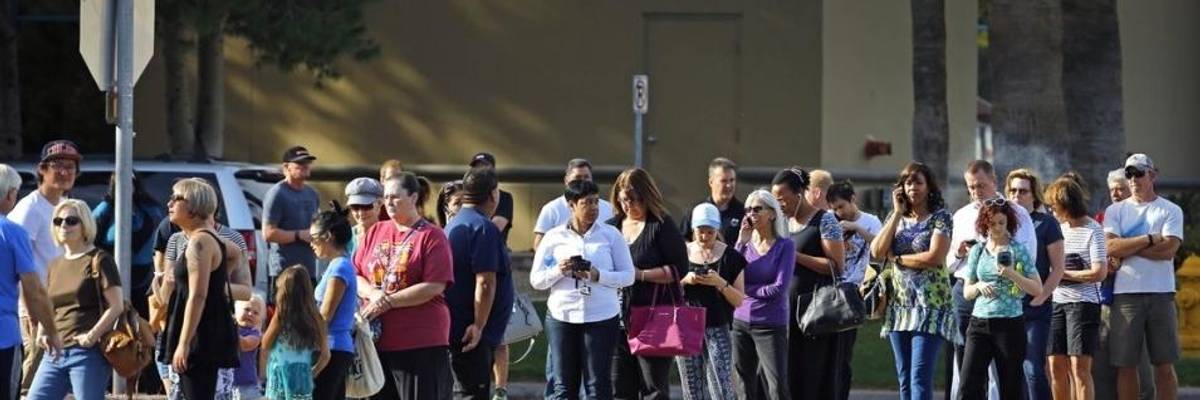
"No citizen should have to wait more than 30 minutes to vote," declared a 2014 federal report on how to conduct elections. That report was responding to the long lines in the 2012 presidential election, when more than 5 million Americans were forced to wait longer than an hour to cast their ballots.
The 2016 election seemed better: The average wait to vote nationwide was 19 minutes. That average, however, hid wide variations between states - Vermont had the shortest waits, Florida the longest--and, more importantly, race. Voters in all-Black neighborhoods had longer waits than those in all-white neighborhoods and were 74% more likely to wait more than half an hour.
In 2018, turnout increased 39% compared with 2014, marking the first time since 1914 that half of eligible voters had participated in a nonpresidential election. That in itself led to some delays, as polling places dealt with more people than they had expected. Regardless of reasons, twice as many voters--6%--reported waiting more than 30 minutes in 2018 than in 2014.
However, no federal law governs wait times. Nearly two-thirds of voters in 2012 and three-quarters in 2018 waited less than 10 minutes. But long wait times are a chronic problem primarily for Latino and Black voters in "precincts with high minority populations, high population, and low incomes."
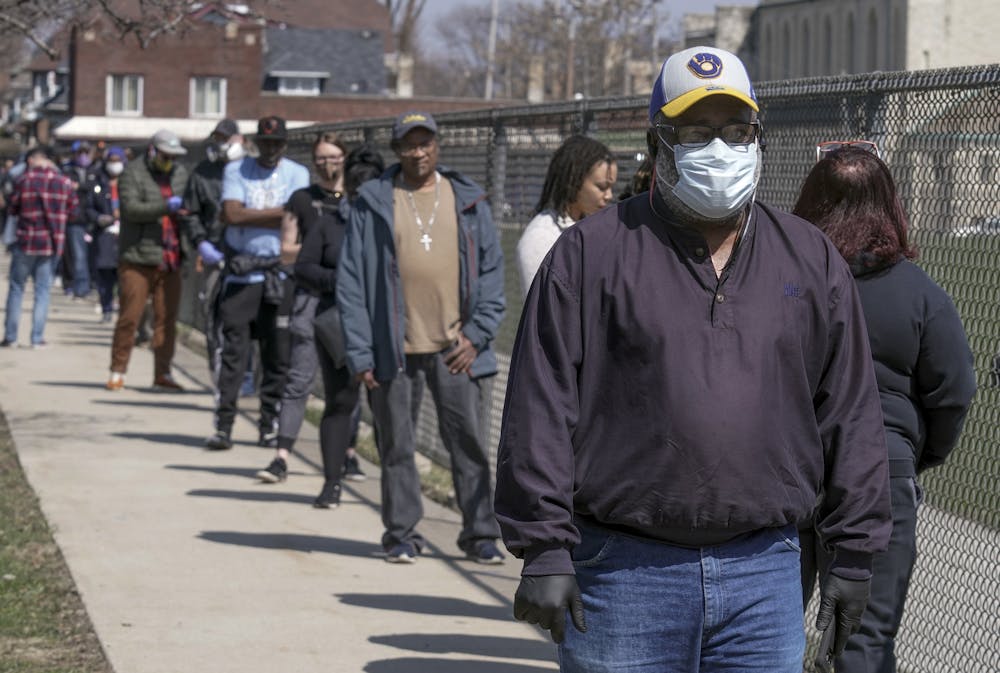
Delays at polling places are just the latest barrier to Black Americans' ability to vote because, like other Americans, they cannot wait possibly hours to vote while jobs or children at home demand their presence. The country's long, troubled history of racist voting practices include poll taxes, literacy tests and, more recently, photo-identification requirements and voter-list purges, all of which hurt poorer, less educated people more than they do wealthier and better educated people.
In 1965, Congress tried to fix those problems by passing the Voting Rights Act, which required states with histories of voter discrimination to get federal approval before changing their voting rules. The goal was to ensure the new rules wouldn't be discriminatory. But in 2013, the U.S. Supreme Court threw out the criteria used to determine that preapproval - so states can make any changes they want to their voting laws, with no federal standards or oversight.
By 2018, those 15 states had closed 1,688 polling places since 2012. Racism was again at play: Of the 750 sites closed in my state, Texas, 542 were in the 50 counties that had seen the largest increases during those years of Black and Latino populations.
In 2018, Black and Latino voters waited 11 minutes and white voters 9 minutes, on average. But as the percentage of nonwhite voters in a precinct increased, so did wait times--from 5 minutes in districts that were 90% white or more, to 32 minutes in districts that were 90% nonwhite or more.
Long wait times discourage people from voting--reducing voting by an estimated 500,000 to 700,000 out of 123 million votes in 2012--and disproportionately affect poorer people with less flexibility at work. That's a big number, but it is far fewer than the roughly 90 million Americans who don't vote at all.
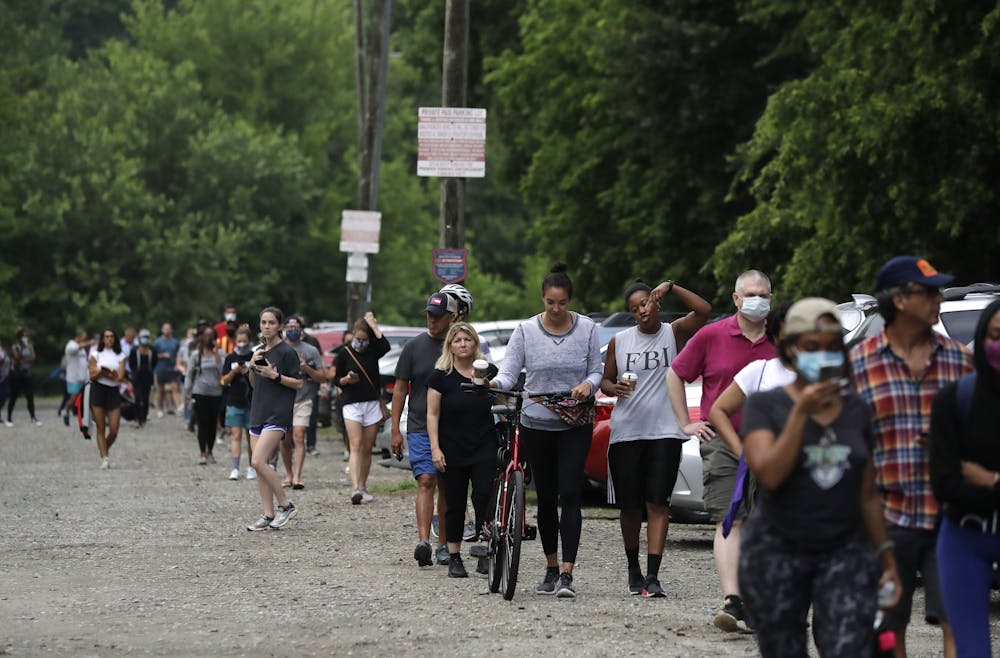
So far in 2020, voters have seen major delays, especially in majority Black neighborhoods: The March primary in Texas saw long lines at polling places, with waits up to six hours, forcing officials to extend voting hours to accommodate the crowds. In April, Wisconsin voters had long waits, too. On June 9, many Georgia voters waited between four and eight hours.
Kentucky's primary on June 23 went better than many had feared--thanks to bipartisan agreement to allow everyone to vote by mail if they wanted, and expanded opportunities to vote in person before Election Day. But still, the one polling place open for 600,000 Louisville residents, including many of the state's Black voters, needed a court order to remain open after the official closing time to accommodate people still waiting in line.
The coronavirus pandemic has played a role in these delays: The main reason state officials gave for keeping only one polling place open in each county was to limit the number of election workers needed and to discourage in-person voting, in favor of voting by mail.
But the effects of all these changes fall more heavily on Black voters' shoulders because of the inefficient use of inadequate resources, so race is still a factor in how easy it is for people to vote.
As the American public pays more attention to racism, the Black Lives Matter movement and similar organizations, including Black Voters Matter, are calling attention to the importance of voting safely in November--such as voting by mail and expanding early voting.
There are other ways to reduce delays, too, including training staff better and making sure equipment works properly--as well as finding ways to have a steady stream of voters throughout the day, rather than huge surges in early and late hours. One way to encourage people to vote during the work day could be for employers to give workers paid time off to go to the polls.
There are ways to shorten wait times at the polls--so that someday no voter will have to wait more than 30 minutes to have their voice heard.
"No citizen should have to wait more than 30 minutes to vote," declared a 2014 federal report on how to conduct elections. That report was responding to the long lines in the 2012 presidential election, when more than 5 million Americans were forced to wait longer than an hour to cast their ballots.
The 2016 election seemed better: The average wait to vote nationwide was 19 minutes. That average, however, hid wide variations between states - Vermont had the shortest waits, Florida the longest--and, more importantly, race. Voters in all-Black neighborhoods had longer waits than those in all-white neighborhoods and were 74% more likely to wait more than half an hour.
In 2018, turnout increased 39% compared with 2014, marking the first time since 1914 that half of eligible voters had participated in a nonpresidential election. That in itself led to some delays, as polling places dealt with more people than they had expected. Regardless of reasons, twice as many voters--6%--reported waiting more than 30 minutes in 2018 than in 2014.
However, no federal law governs wait times. Nearly two-thirds of voters in 2012 and three-quarters in 2018 waited less than 10 minutes. But long wait times are a chronic problem primarily for Latino and Black voters in "precincts with high minority populations, high population, and low incomes."
Delays at polling places are just the latest barrier to Black Americans' ability to vote because, like other Americans, they cannot wait possibly hours to vote while jobs or children at home demand their presence. The country's long, troubled history of racist voting practices include poll taxes, literacy tests and, more recently, photo-identification requirements and voter-list purges, all of which hurt poorer, less educated people more than they do wealthier and better educated people.
In 1965, Congress tried to fix those problems by passing the Voting Rights Act, which required states with histories of voter discrimination to get federal approval before changing their voting rules. The goal was to ensure the new rules wouldn't be discriminatory. But in 2013, the U.S. Supreme Court threw out the criteria used to determine that preapproval - so states can make any changes they want to their voting laws, with no federal standards or oversight.
By 2018, those 15 states had closed 1,688 polling places since 2012. Racism was again at play: Of the 750 sites closed in my state, Texas, 542 were in the 50 counties that had seen the largest increases during those years of Black and Latino populations.
In 2018, Black and Latino voters waited 11 minutes and white voters 9 minutes, on average. But as the percentage of nonwhite voters in a precinct increased, so did wait times--from 5 minutes in districts that were 90% white or more, to 32 minutes in districts that were 90% nonwhite or more.
Long wait times discourage people from voting--reducing voting by an estimated 500,000 to 700,000 out of 123 million votes in 2012--and disproportionately affect poorer people with less flexibility at work. That's a big number, but it is far fewer than the roughly 90 million Americans who don't vote at all.
So far in 2020, voters have seen major delays, especially in majority Black neighborhoods: The March primary in Texas saw long lines at polling places, with waits up to six hours, forcing officials to extend voting hours to accommodate the crowds. In April, Wisconsin voters had long waits, too. On June 9, many Georgia voters waited between four and eight hours.
Kentucky's primary on June 23 went better than many had feared--thanks to bipartisan agreement to allow everyone to vote by mail if they wanted, and expanded opportunities to vote in person before Election Day. But still, the one polling place open for 600,000 Louisville residents, including many of the state's Black voters, needed a court order to remain open after the official closing time to accommodate people still waiting in line.
The coronavirus pandemic has played a role in these delays: The main reason state officials gave for keeping only one polling place open in each county was to limit the number of election workers needed and to discourage in-person voting, in favor of voting by mail.
But the effects of all these changes fall more heavily on Black voters' shoulders because of the inefficient use of inadequate resources, so race is still a factor in how easy it is for people to vote.
As the American public pays more attention to racism, the Black Lives Matter movement and similar organizations, including Black Voters Matter, are calling attention to the importance of voting safely in November--such as voting by mail and expanding early voting.
There are other ways to reduce delays, too, including training staff better and making sure equipment works properly--as well as finding ways to have a steady stream of voters throughout the day, rather than huge surges in early and late hours. One way to encourage people to vote during the work day could be for employers to give workers paid time off to go to the polls.
There are ways to shorten wait times at the polls--so that someday no voter will have to wait more than 30 minutes to have their voice heard.
"No citizen should have to wait more than 30 minutes to vote," declared a 2014 federal report on how to conduct elections. That report was responding to the long lines in the 2012 presidential election, when more than 5 million Americans were forced to wait longer than an hour to cast their ballots.
The 2016 election seemed better: The average wait to vote nationwide was 19 minutes. That average, however, hid wide variations between states - Vermont had the shortest waits, Florida the longest--and, more importantly, race. Voters in all-Black neighborhoods had longer waits than those in all-white neighborhoods and were 74% more likely to wait more than half an hour.
In 2018, turnout increased 39% compared with 2014, marking the first time since 1914 that half of eligible voters had participated in a nonpresidential election. That in itself led to some delays, as polling places dealt with more people than they had expected. Regardless of reasons, twice as many voters--6%--reported waiting more than 30 minutes in 2018 than in 2014.
However, no federal law governs wait times. Nearly two-thirds of voters in 2012 and three-quarters in 2018 waited less than 10 minutes. But long wait times are a chronic problem primarily for Latino and Black voters in "precincts with high minority populations, high population, and low incomes."
Delays at polling places are just the latest barrier to Black Americans' ability to vote because, like other Americans, they cannot wait possibly hours to vote while jobs or children at home demand their presence. The country's long, troubled history of racist voting practices include poll taxes, literacy tests and, more recently, photo-identification requirements and voter-list purges, all of which hurt poorer, less educated people more than they do wealthier and better educated people.
In 1965, Congress tried to fix those problems by passing the Voting Rights Act, which required states with histories of voter discrimination to get federal approval before changing their voting rules. The goal was to ensure the new rules wouldn't be discriminatory. But in 2013, the U.S. Supreme Court threw out the criteria used to determine that preapproval - so states can make any changes they want to their voting laws, with no federal standards or oversight.
By 2018, those 15 states had closed 1,688 polling places since 2012. Racism was again at play: Of the 750 sites closed in my state, Texas, 542 were in the 50 counties that had seen the largest increases during those years of Black and Latino populations.
In 2018, Black and Latino voters waited 11 minutes and white voters 9 minutes, on average. But as the percentage of nonwhite voters in a precinct increased, so did wait times--from 5 minutes in districts that were 90% white or more, to 32 minutes in districts that were 90% nonwhite or more.
Long wait times discourage people from voting--reducing voting by an estimated 500,000 to 700,000 out of 123 million votes in 2012--and disproportionately affect poorer people with less flexibility at work. That's a big number, but it is far fewer than the roughly 90 million Americans who don't vote at all.
So far in 2020, voters have seen major delays, especially in majority Black neighborhoods: The March primary in Texas saw long lines at polling places, with waits up to six hours, forcing officials to extend voting hours to accommodate the crowds. In April, Wisconsin voters had long waits, too. On June 9, many Georgia voters waited between four and eight hours.
Kentucky's primary on June 23 went better than many had feared--thanks to bipartisan agreement to allow everyone to vote by mail if they wanted, and expanded opportunities to vote in person before Election Day. But still, the one polling place open for 600,000 Louisville residents, including many of the state's Black voters, needed a court order to remain open after the official closing time to accommodate people still waiting in line.
The coronavirus pandemic has played a role in these delays: The main reason state officials gave for keeping only one polling place open in each county was to limit the number of election workers needed and to discourage in-person voting, in favor of voting by mail.
But the effects of all these changes fall more heavily on Black voters' shoulders because of the inefficient use of inadequate resources, so race is still a factor in how easy it is for people to vote.
As the American public pays more attention to racism, the Black Lives Matter movement and similar organizations, including Black Voters Matter, are calling attention to the importance of voting safely in November--such as voting by mail and expanding early voting.
There are other ways to reduce delays, too, including training staff better and making sure equipment works properly--as well as finding ways to have a steady stream of voters throughout the day, rather than huge surges in early and late hours. One way to encourage people to vote during the work day could be for employers to give workers paid time off to go to the polls.
There are ways to shorten wait times at the polls--so that someday no voter will have to wait more than 30 minutes to have their voice heard.