SUBSCRIBE TO OUR FREE NEWSLETTER
Daily news & progressive opinion—funded by the people, not the corporations—delivered straight to your inbox.
5
#000000
#FFFFFF
To donate by check, phone, or other method, see our More Ways to Give page.
Daily news & progressive opinion—funded by the people, not the corporations—delivered straight to your inbox.
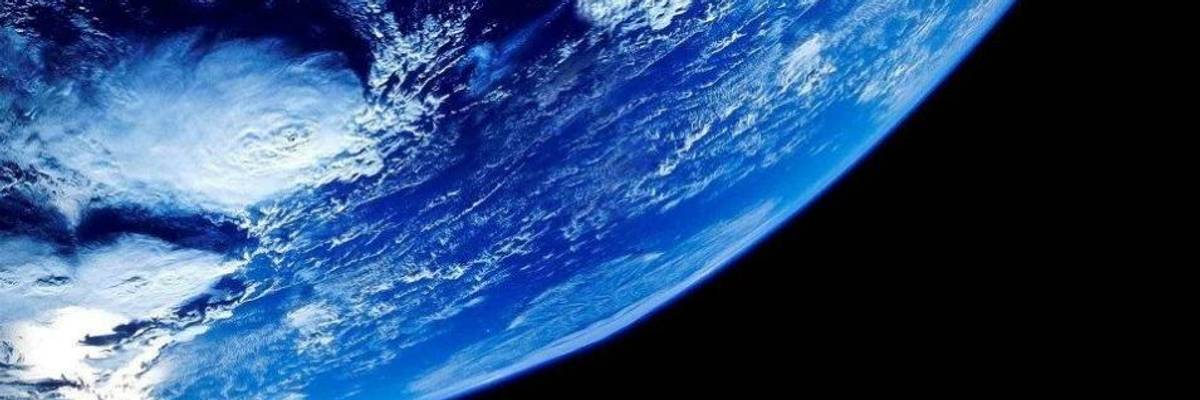
Consider this your all-hands-on-deck, siren-blaring warning that we need to act comprehensively to mitigate climate change now -- or forever hold our peace. (Photo: Beth Scupham/flickr/cc)
Pull on the seat-belt in your gas-guzzling car, folks, and strap in for the worst ride of our lives.
This fall, the United Nations Intergovernmental Panel on Climate Change (IPCC) released a critical report warning that humans have about 12 years -- until 2030 -- before global warming reaches a catastrophic level.
The report concludes, frighteningly, that the world can't allow global temperatures to warm past 1.5 degrees Celsius, or there will quite literally be hell to pay. And unless we take drastic action, we're already all set to get there.
Consider this your all-hands-on-deck, siren-blaring warning that we need to act comprehensively to mitigate climate change now -- or forever hold our peace.
The IPCC predicts an increased risk of devastating climate-related risks to health, livelihoods, food, water, security, and economic growth.
As sea levels and global temperatures rise, low-lying communities will disappear and heat-related deaths will increase, along with diseases like dengue fever and malaria. Areas that cease to be inhabitable by humans will fuel an accelerated refugee crisis, while resources like agriculture and crops will be decimated in key areas impacted by climate change.
That's just a few of the highlights of the Ten Plagues-like punishment we'll get for endangering our planet. We're facing a pretty grim future -- and that's even if we manage to cap the rise at 1.5 degrees, which we're not on track to do.
For those of us who are pretty young like me, our golden years may be anything but.
Before you slip quietly into your doomsday bunker or start praying that someone invents interstellar space travel, there's an urgent message of hope: We've got a little bit of time to save the only home planet we've got. And it's going to take all of us to do it.
While dire, the report also contains some critically useful recommendations.
Governments, companies, indigenous peoples, local communities, and individuals all have a critical role to play to solve this crisis. We can and must act quickly and collaboratively on a local and global scale before it's too late. Acting alone or failing to cooperate, the IPCC report emphasizes, will fall short.
The Paris Climate Agreement isn't going to be enough -- we need massive, World War Two-level mobilization. The victory will be that we get a living, healthy planet.
The report also highlights the need to consider justice and equity as we consider solutions.
Some nations, like the United States, are leading contributors to greenhouse gas emissions and other accelerants of climate change. Others contribute less to emissions but are more vulnerable to catastrophic damage. A number of low-lying nations (on whose approval the Paris Agreement depended) will literally be underwater if temperatures rise beyond the IPCC's limit.
The point being: The countries that have contributed the most to climate change need to contribute the most to fixing it -- and to helping those who suffer most to adapt.
What can you do, right here, right now, besides giving up meat, your car, or plastic bags and straws?
Urge your local or state government to commit to 100 percent renewable energy in the next decade. Get your community and your state to ban the use of fracking and other fossil fuel production that will drive us to doomsday that much quicker, not to mention the other dangerous risks to people's health.
Call on the federal government to implement the recommendations of the IPCC report, and commit to working with the rest of the world to act swiftly.
And if you vote, remember the planet when you do.
Dear Common Dreams reader, It’s been nearly 30 years since I co-founded Common Dreams with my late wife, Lina Newhouser. We had the radical notion that journalism should serve the public good, not corporate profits. It was clear to us from the outset what it would take to build such a project. No paid advertisements. No corporate sponsors. No millionaire publisher telling us what to think or do. Many people said we wouldn't last a year, but we proved those doubters wrong. Together with a tremendous team of journalists and dedicated staff, we built an independent media outlet free from the constraints of profits and corporate control. Our mission has always been simple: To inform. To inspire. To ignite change for the common good. Building Common Dreams was not easy. Our survival was never guaranteed. When you take on the most powerful forces—Wall Street greed, fossil fuel industry destruction, Big Tech lobbyists, and uber-rich oligarchs who have spent billions upon billions rigging the economy and democracy in their favor—the only bulwark you have is supporters who believe in your work. But here’s the urgent message from me today. It's never been this bad out there. And it's never been this hard to keep us going. At the very moment Common Dreams is most needed, the threats we face are intensifying. We need your support now more than ever. We don't accept corporate advertising and never will. We don't have a paywall because we don't think people should be blocked from critical news based on their ability to pay. Everything we do is funded by the donations of readers like you. When everyone does the little they can afford, we are strong. But if that support retreats or dries up, so do we. Will you donate now to make sure Common Dreams not only survives but thrives? —Craig Brown, Co-founder |
Pull on the seat-belt in your gas-guzzling car, folks, and strap in for the worst ride of our lives.
This fall, the United Nations Intergovernmental Panel on Climate Change (IPCC) released a critical report warning that humans have about 12 years -- until 2030 -- before global warming reaches a catastrophic level.
The report concludes, frighteningly, that the world can't allow global temperatures to warm past 1.5 degrees Celsius, or there will quite literally be hell to pay. And unless we take drastic action, we're already all set to get there.
Consider this your all-hands-on-deck, siren-blaring warning that we need to act comprehensively to mitigate climate change now -- or forever hold our peace.
The IPCC predicts an increased risk of devastating climate-related risks to health, livelihoods, food, water, security, and economic growth.
As sea levels and global temperatures rise, low-lying communities will disappear and heat-related deaths will increase, along with diseases like dengue fever and malaria. Areas that cease to be inhabitable by humans will fuel an accelerated refugee crisis, while resources like agriculture and crops will be decimated in key areas impacted by climate change.
That's just a few of the highlights of the Ten Plagues-like punishment we'll get for endangering our planet. We're facing a pretty grim future -- and that's even if we manage to cap the rise at 1.5 degrees, which we're not on track to do.
For those of us who are pretty young like me, our golden years may be anything but.
Before you slip quietly into your doomsday bunker or start praying that someone invents interstellar space travel, there's an urgent message of hope: We've got a little bit of time to save the only home planet we've got. And it's going to take all of us to do it.
While dire, the report also contains some critically useful recommendations.
Governments, companies, indigenous peoples, local communities, and individuals all have a critical role to play to solve this crisis. We can and must act quickly and collaboratively on a local and global scale before it's too late. Acting alone or failing to cooperate, the IPCC report emphasizes, will fall short.
The Paris Climate Agreement isn't going to be enough -- we need massive, World War Two-level mobilization. The victory will be that we get a living, healthy planet.
The report also highlights the need to consider justice and equity as we consider solutions.
Some nations, like the United States, are leading contributors to greenhouse gas emissions and other accelerants of climate change. Others contribute less to emissions but are more vulnerable to catastrophic damage. A number of low-lying nations (on whose approval the Paris Agreement depended) will literally be underwater if temperatures rise beyond the IPCC's limit.
The point being: The countries that have contributed the most to climate change need to contribute the most to fixing it -- and to helping those who suffer most to adapt.
What can you do, right here, right now, besides giving up meat, your car, or plastic bags and straws?
Urge your local or state government to commit to 100 percent renewable energy in the next decade. Get your community and your state to ban the use of fracking and other fossil fuel production that will drive us to doomsday that much quicker, not to mention the other dangerous risks to people's health.
Call on the federal government to implement the recommendations of the IPCC report, and commit to working with the rest of the world to act swiftly.
And if you vote, remember the planet when you do.
Pull on the seat-belt in your gas-guzzling car, folks, and strap in for the worst ride of our lives.
This fall, the United Nations Intergovernmental Panel on Climate Change (IPCC) released a critical report warning that humans have about 12 years -- until 2030 -- before global warming reaches a catastrophic level.
The report concludes, frighteningly, that the world can't allow global temperatures to warm past 1.5 degrees Celsius, or there will quite literally be hell to pay. And unless we take drastic action, we're already all set to get there.
Consider this your all-hands-on-deck, siren-blaring warning that we need to act comprehensively to mitigate climate change now -- or forever hold our peace.
The IPCC predicts an increased risk of devastating climate-related risks to health, livelihoods, food, water, security, and economic growth.
As sea levels and global temperatures rise, low-lying communities will disappear and heat-related deaths will increase, along with diseases like dengue fever and malaria. Areas that cease to be inhabitable by humans will fuel an accelerated refugee crisis, while resources like agriculture and crops will be decimated in key areas impacted by climate change.
That's just a few of the highlights of the Ten Plagues-like punishment we'll get for endangering our planet. We're facing a pretty grim future -- and that's even if we manage to cap the rise at 1.5 degrees, which we're not on track to do.
For those of us who are pretty young like me, our golden years may be anything but.
Before you slip quietly into your doomsday bunker or start praying that someone invents interstellar space travel, there's an urgent message of hope: We've got a little bit of time to save the only home planet we've got. And it's going to take all of us to do it.
While dire, the report also contains some critically useful recommendations.
Governments, companies, indigenous peoples, local communities, and individuals all have a critical role to play to solve this crisis. We can and must act quickly and collaboratively on a local and global scale before it's too late. Acting alone or failing to cooperate, the IPCC report emphasizes, will fall short.
The Paris Climate Agreement isn't going to be enough -- we need massive, World War Two-level mobilization. The victory will be that we get a living, healthy planet.
The report also highlights the need to consider justice and equity as we consider solutions.
Some nations, like the United States, are leading contributors to greenhouse gas emissions and other accelerants of climate change. Others contribute less to emissions but are more vulnerable to catastrophic damage. A number of low-lying nations (on whose approval the Paris Agreement depended) will literally be underwater if temperatures rise beyond the IPCC's limit.
The point being: The countries that have contributed the most to climate change need to contribute the most to fixing it -- and to helping those who suffer most to adapt.
What can you do, right here, right now, besides giving up meat, your car, or plastic bags and straws?
Urge your local or state government to commit to 100 percent renewable energy in the next decade. Get your community and your state to ban the use of fracking and other fossil fuel production that will drive us to doomsday that much quicker, not to mention the other dangerous risks to people's health.
Call on the federal government to implement the recommendations of the IPCC report, and commit to working with the rest of the world to act swiftly.
And if you vote, remember the planet when you do.