

SUBSCRIBE TO OUR FREE NEWSLETTER
Daily news & progressive opinion—funded by the people, not the corporations—delivered straight to your inbox.
5
#000000
#FFFFFF
To donate by check, phone, or other method, see our More Ways to Give page.
Daily news & progressive opinion—funded by the people, not the corporations—delivered straight to your inbox.
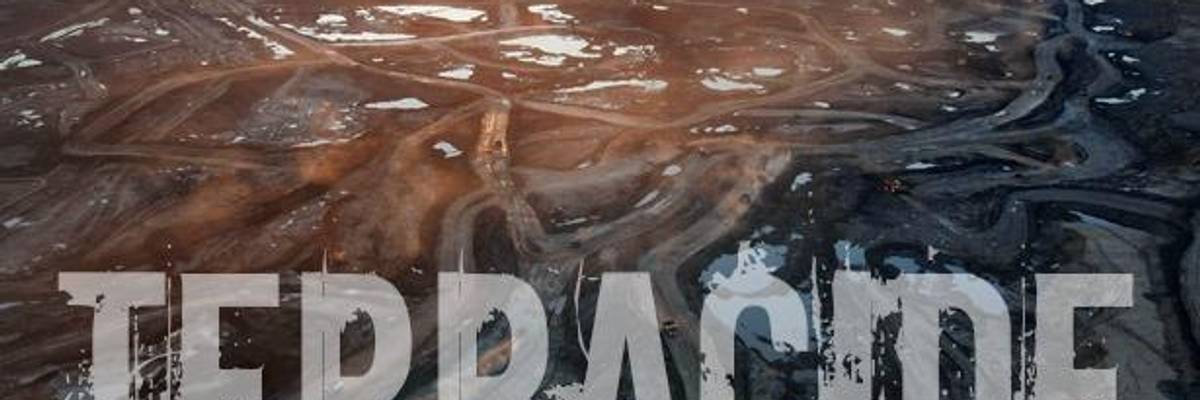
This dynamic is particularly upsetting when we consider how little time remains to halt the course toward environmental catastrophe. (Photo: Screenshot)
In their 1979 book The Washington Connection and Third World Fascism, Noam Chomsky and the late Edward S. Herman drew a distinction between retail and wholesale acts of terrorism. Retail acts were those carried out by individuals or small groups; wholesale, those committed by vast national military forces.
Tom Engelhardt, in a recent column explaining the deeply criminal thrust of the Trump legacy, recalls to our attention a term coined in 2013 by journalist Nick Turse: terracide, meaning the total destruction of the earth-system -- next to which the common crimes committed by isolated individuals pale in magnitude.
The distinction here is one of scale and not of principle, as in the classic juxtaposition of robbing a bank ("retail") versus owning one and fleecing the entire public ("wholesale"). This point is easy enough for anyone to see, but, sadly, it has not become a matter of common awareness.
Why is it so difficult for people to perceive the criminality of the dominant priorities? This is where the political culture - aka the politics of mass deception - comes into play.
The political culture is many-faced, depending on which part of the public is being addressed. Above all, the political culture is shaped not only by those most fervently committed to a particular agenda, but also by all those who serve the central actors as buffers or enablers.
Typically, the buffers or enablers try to project a certain distance between themselves and the main actors. This was exemplified in the anonymous New York Times column of Sept. 5, whose author denounced Trump while embracing the Trump agenda.
The agenda cannot be rationally defended. It rests on lies - most conspicuously, about the climate crisis - and therefore requires shameless hacks to defend it.
Such dissociation, however, is fraudulent. The fit between Trump's persona and his government's agenda is not accidental. The agenda cannot be rationally defended. It rests on lies - most conspicuously, about the climate crisis - and therefore requires shameless hacks to defend it.
Not all of them are exactly like Trump, of course, but Trump got to play the flagship role because of the media's wall-to-wall coverage of him throughout the run-up to the 2016 election.
Another type of enabler is the evasive lawyer, whom we now see in the person of Supreme Court nominee Brett Kavanaugh. Where Trump peddles the dominant agenda with bombast (sometimes embarrassing to his staff-enablers), Kavanaugh and his strategists rely on stealth, specifically, concealing the legal trickery in which he took part in advancing the anti-popular agenda (e.g., on reproductive rights) of the Bush administration (see William Rivers Pitt's incisive analysis). Behind Kavanaugh's evasiveness lies an unambiguous commitment to corporate interests over citizen rights, as illustrated in his contention that Net Neutrality violates the free-speech rights of corporations.
They have legitimized Trump by failing to offer policies in the interest of the majority and then by attacking both his election and his administration on false grounds - focusing disproportional attention on alleged Russian influences and not giving the electorate the understanding and the organizational tools that they would need in order to effectively advance an alternative agenda.
A less direct but no less vital set of enablers is Trump's "loyal opposition": the top Democrats and the corporate media, who in this context act very much as a unit. Basically, they have legitimized Trump by failing to offer policies in the interest of the majority and then by attacking both his election and his administration on false grounds - focusing disproportional attention on alleged Russian influences and not giving the electorate the understanding and the organizational tools that they would need in order to effectively advance an alternative agenda.
The Democrats out of power get to play the role of "good guys," but their unwillingness to advocate and work toward ambitious policy changes means that when they return to office, they will succeed only in driving a still passive citizenry back into the arms of the Republicans.
This dynamic is particularly upsetting when we consider how little time remains to halt the course toward environmental catastrophe - the terracide that Engelhardt speaks of. It's a matter of urgency to get rid of profit-driven economic decisions and replace them with a structure in which decisions are grounded in the real interests of the natural world and of human society as a whole. Until such a structure is attained, the currently dominant forces will only tighten their grip even further, thereby accelerating the drive to destruction.
Dear Common Dreams reader, It’s been nearly 30 years since I co-founded Common Dreams with my late wife, Lina Newhouser. We had the radical notion that journalism should serve the public good, not corporate profits. It was clear to us from the outset what it would take to build such a project. No paid advertisements. No corporate sponsors. No millionaire publisher telling us what to think or do. Many people said we wouldn't last a year, but we proved those doubters wrong. Together with a tremendous team of journalists and dedicated staff, we built an independent media outlet free from the constraints of profits and corporate control. Our mission has always been simple: To inform. To inspire. To ignite change for the common good. Building Common Dreams was not easy. Our survival was never guaranteed. When you take on the most powerful forces—Wall Street greed, fossil fuel industry destruction, Big Tech lobbyists, and uber-rich oligarchs who have spent billions upon billions rigging the economy and democracy in their favor—the only bulwark you have is supporters who believe in your work. But here’s the urgent message from me today. It's never been this bad out there. And it's never been this hard to keep us going. At the very moment Common Dreams is most needed, the threats we face are intensifying. We need your support now more than ever. We don't accept corporate advertising and never will. We don't have a paywall because we don't think people should be blocked from critical news based on their ability to pay. Everything we do is funded by the donations of readers like you. When everyone does the little they can afford, we are strong. But if that support retreats or dries up, so do we. Will you donate now to make sure Common Dreams not only survives but thrives? —Craig Brown, Co-founder |
In their 1979 book The Washington Connection and Third World Fascism, Noam Chomsky and the late Edward S. Herman drew a distinction between retail and wholesale acts of terrorism. Retail acts were those carried out by individuals or small groups; wholesale, those committed by vast national military forces.
Tom Engelhardt, in a recent column explaining the deeply criminal thrust of the Trump legacy, recalls to our attention a term coined in 2013 by journalist Nick Turse: terracide, meaning the total destruction of the earth-system -- next to which the common crimes committed by isolated individuals pale in magnitude.
The distinction here is one of scale and not of principle, as in the classic juxtaposition of robbing a bank ("retail") versus owning one and fleecing the entire public ("wholesale"). This point is easy enough for anyone to see, but, sadly, it has not become a matter of common awareness.
Why is it so difficult for people to perceive the criminality of the dominant priorities? This is where the political culture - aka the politics of mass deception - comes into play.
The political culture is many-faced, depending on which part of the public is being addressed. Above all, the political culture is shaped not only by those most fervently committed to a particular agenda, but also by all those who serve the central actors as buffers or enablers.
Typically, the buffers or enablers try to project a certain distance between themselves and the main actors. This was exemplified in the anonymous New York Times column of Sept. 5, whose author denounced Trump while embracing the Trump agenda.
The agenda cannot be rationally defended. It rests on lies - most conspicuously, about the climate crisis - and therefore requires shameless hacks to defend it.
Such dissociation, however, is fraudulent. The fit between Trump's persona and his government's agenda is not accidental. The agenda cannot be rationally defended. It rests on lies - most conspicuously, about the climate crisis - and therefore requires shameless hacks to defend it.
Not all of them are exactly like Trump, of course, but Trump got to play the flagship role because of the media's wall-to-wall coverage of him throughout the run-up to the 2016 election.
Another type of enabler is the evasive lawyer, whom we now see in the person of Supreme Court nominee Brett Kavanaugh. Where Trump peddles the dominant agenda with bombast (sometimes embarrassing to his staff-enablers), Kavanaugh and his strategists rely on stealth, specifically, concealing the legal trickery in which he took part in advancing the anti-popular agenda (e.g., on reproductive rights) of the Bush administration (see William Rivers Pitt's incisive analysis). Behind Kavanaugh's evasiveness lies an unambiguous commitment to corporate interests over citizen rights, as illustrated in his contention that Net Neutrality violates the free-speech rights of corporations.
They have legitimized Trump by failing to offer policies in the interest of the majority and then by attacking both his election and his administration on false grounds - focusing disproportional attention on alleged Russian influences and not giving the electorate the understanding and the organizational tools that they would need in order to effectively advance an alternative agenda.
A less direct but no less vital set of enablers is Trump's "loyal opposition": the top Democrats and the corporate media, who in this context act very much as a unit. Basically, they have legitimized Trump by failing to offer policies in the interest of the majority and then by attacking both his election and his administration on false grounds - focusing disproportional attention on alleged Russian influences and not giving the electorate the understanding and the organizational tools that they would need in order to effectively advance an alternative agenda.
The Democrats out of power get to play the role of "good guys," but their unwillingness to advocate and work toward ambitious policy changes means that when they return to office, they will succeed only in driving a still passive citizenry back into the arms of the Republicans.
This dynamic is particularly upsetting when we consider how little time remains to halt the course toward environmental catastrophe - the terracide that Engelhardt speaks of. It's a matter of urgency to get rid of profit-driven economic decisions and replace them with a structure in which decisions are grounded in the real interests of the natural world and of human society as a whole. Until such a structure is attained, the currently dominant forces will only tighten their grip even further, thereby accelerating the drive to destruction.
In their 1979 book The Washington Connection and Third World Fascism, Noam Chomsky and the late Edward S. Herman drew a distinction between retail and wholesale acts of terrorism. Retail acts were those carried out by individuals or small groups; wholesale, those committed by vast national military forces.
Tom Engelhardt, in a recent column explaining the deeply criminal thrust of the Trump legacy, recalls to our attention a term coined in 2013 by journalist Nick Turse: terracide, meaning the total destruction of the earth-system -- next to which the common crimes committed by isolated individuals pale in magnitude.
The distinction here is one of scale and not of principle, as in the classic juxtaposition of robbing a bank ("retail") versus owning one and fleecing the entire public ("wholesale"). This point is easy enough for anyone to see, but, sadly, it has not become a matter of common awareness.
Why is it so difficult for people to perceive the criminality of the dominant priorities? This is where the political culture - aka the politics of mass deception - comes into play.
The political culture is many-faced, depending on which part of the public is being addressed. Above all, the political culture is shaped not only by those most fervently committed to a particular agenda, but also by all those who serve the central actors as buffers or enablers.
Typically, the buffers or enablers try to project a certain distance between themselves and the main actors. This was exemplified in the anonymous New York Times column of Sept. 5, whose author denounced Trump while embracing the Trump agenda.
The agenda cannot be rationally defended. It rests on lies - most conspicuously, about the climate crisis - and therefore requires shameless hacks to defend it.
Such dissociation, however, is fraudulent. The fit between Trump's persona and his government's agenda is not accidental. The agenda cannot be rationally defended. It rests on lies - most conspicuously, about the climate crisis - and therefore requires shameless hacks to defend it.
Not all of them are exactly like Trump, of course, but Trump got to play the flagship role because of the media's wall-to-wall coverage of him throughout the run-up to the 2016 election.
Another type of enabler is the evasive lawyer, whom we now see in the person of Supreme Court nominee Brett Kavanaugh. Where Trump peddles the dominant agenda with bombast (sometimes embarrassing to his staff-enablers), Kavanaugh and his strategists rely on stealth, specifically, concealing the legal trickery in which he took part in advancing the anti-popular agenda (e.g., on reproductive rights) of the Bush administration (see William Rivers Pitt's incisive analysis). Behind Kavanaugh's evasiveness lies an unambiguous commitment to corporate interests over citizen rights, as illustrated in his contention that Net Neutrality violates the free-speech rights of corporations.
They have legitimized Trump by failing to offer policies in the interest of the majority and then by attacking both his election and his administration on false grounds - focusing disproportional attention on alleged Russian influences and not giving the electorate the understanding and the organizational tools that they would need in order to effectively advance an alternative agenda.
A less direct but no less vital set of enablers is Trump's "loyal opposition": the top Democrats and the corporate media, who in this context act very much as a unit. Basically, they have legitimized Trump by failing to offer policies in the interest of the majority and then by attacking both his election and his administration on false grounds - focusing disproportional attention on alleged Russian influences and not giving the electorate the understanding and the organizational tools that they would need in order to effectively advance an alternative agenda.
The Democrats out of power get to play the role of "good guys," but their unwillingness to advocate and work toward ambitious policy changes means that when they return to office, they will succeed only in driving a still passive citizenry back into the arms of the Republicans.
This dynamic is particularly upsetting when we consider how little time remains to halt the course toward environmental catastrophe - the terracide that Engelhardt speaks of. It's a matter of urgency to get rid of profit-driven economic decisions and replace them with a structure in which decisions are grounded in the real interests of the natural world and of human society as a whole. Until such a structure is attained, the currently dominant forces will only tighten their grip even further, thereby accelerating the drive to destruction.

