

We begin our tour in West Virginia, where the state supreme court apparently became so swampy that it has made the state legislature there want to holler, throw up both its hands, as Marvin Gaye once counseled--and in the loudest possible way, too. The legislature is moving toward impeaching the lot of them. From The Charleston Gazette-Mail:
The West Virginia House Judiciary Committee approved 14 articles of impeachment against the four sitting justices of the West Virginia Supreme Court of Appeals on Tuesday. The eighth day of the committee's meetings regarding possible impeachment produced the first material results when 14 articles of impeachment were introduced at 9:25 a.m. By the time the committee adjourned at 6:15 p.m., its members had added two new articles to their draft and rejected two of the original proposed articles, advancing the possibility of impeachment for the majority of the elected officials in the Mountain State's judicial branch of government.
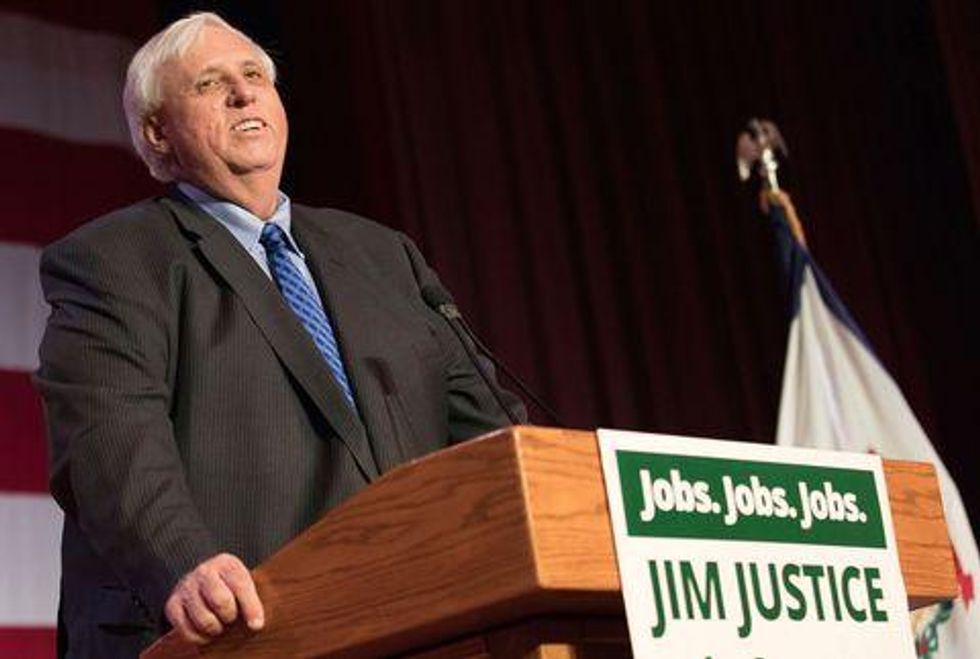
You may wonder if this is some sort of ideological rock fight between branches of government. And at least some of the state's Democrats are wondering if this mass impeachment is just a way to allow Republican Governor Jim Justice to appoint four justices at once. However, at least according to the formal charges, the justices were operating according to the precedent set in the case of Avarice v. Grabitall.
Each justice is charged with "unnecessary and lavish" spending of state taxpayer dollars to renovate their offices in the East Wing of the Capitol. All four of them also are charged with failing to develop and maintain court policies regarding the use of state resources, including cars, computers and funds in general. Loughry faces additional charges related to his alleged use of state vehicles for personal travel, having state furniture and computers in his home, having personal photos, documents, photos and artwork framed on the state's dime, and handing down an administrative order authorizing payments of senior status judges in excess of what is allowable in state law. Davis and Workman are charged with signing documents authorizing that senior status judges be paid in excess of what's allowable in state law.
Does West Virginia elect these judges? Of course it does. Second-worst idea in American politics, and coming up fast on the outside.
It appeared, according to the Georgia Secretary of State's website, that Habersham County's Mud Creek precinct in northeastern Georgia had 276 registered voters ahead of the state's primary elections in May. Some 670 ballots were cast, according to the Georgia secretary of state's office, indicating a 243 percent turnout.
Wow. Good job Mud Creekers! Turning out 243 percent of yourselves. Wait. (Checks calculator. Takes off shoes.) That seems odd.
But on Tuesday at 10 a.m., the number of registered voters on the secretary of state's website was changed for Mud Creek to 3,704 registered voters, reflecting a more likely turnout of about 18 percent.The odd turnout figures last Friday were filed as part of a federal lawsuit against the state by election security activists that included a number of sworn statements and exhibits from activists and voters who experienced a series of bizarre and confusing issues at the state's polling places.
The court filings highlight various issues with Georgia's 16-year-old voting machines, as well as the system that runs them and handles voter registration information. In one sworn statement, a voter explains that she and her husband, who were registered to vote at the same address, were assigned different polling places and different city council districts. In another, a voting machine froze on Election Day. In several instances, voters showed up at their polling places as listed on the secretary of state's website, only to be told they were supposed to vote elsewhere. An Atlanta Democrat's voting machine provided him a ballot including the 5th Congressional District, for which longtime Rep. John Lewis ran unopposed, instead of his 6th Congressional District ballot, which featured a competitive Democratic race.
Some issues, like the freezing machines, could be chalked up to the the age of the polling infrastructure, said Harri Hursti, a computer programmer who studies election cybersecurity. But others, like the incorrect ballots, could have been caused by anything from a clerical error to a malicious manipulation of voter data, said Hursti, who is also the organizer for the Voting Village at hacking conference DEF CON, where participants demonstrate hacking into some state voting machines. It's possible that there's a connection between the security issues reported at Georgia's Center for Election Systems and the issues chronicled in the court statements, but an immediate switch to paper ballots is necessary regardless, Hursti said.
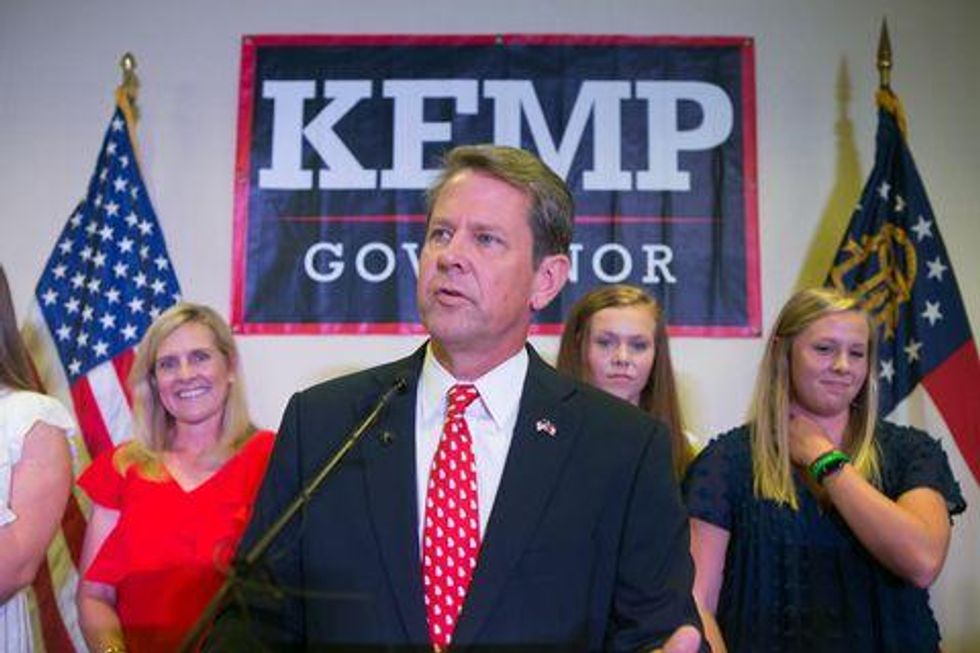
I mention this because Georgia is going to elect a governor this November. The Democratic candidate is Stacey Abrams, who would be the first African-American governor in the state's history. The Republican candidate is Brian Kemp, who brags about his guns and his "big old truck" that he could use to "round up illegals," and he is currently the Georgia Secretary of State. He runs the elections, including his own.
In a statement, the office of Georgia's Secretary of State Brian Kemp defended the security of state elections. "Alongside federal, local, and private sector partners, we continue to fight every day to ensure secure and accurate elections in Georgia that are free from interference. To this day, due to the vigilance, dedication, and hard work of those partners, our elections system and voting equipment remain secure," spokeswoman Candice Broce wrote in an email. Kemp has set up a bipartisan commission to look into changing state voting machines ahead of the 2020 elections, but not in time for the midterm elections this November.
It's not like there's any rush or anything.
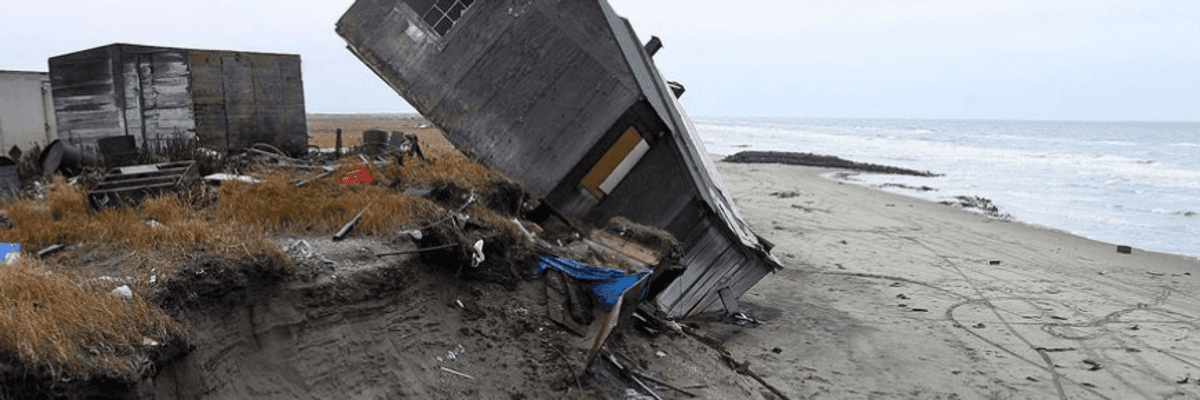
So when a wall of coffee-colored smoke rolled toward the small village of Nuiqsut in 2012, there was no mistaking--something was wrong. Martha Itta, of the native village government, was at her desk when a colleague burst through the door and shouted "Check Facebook!" A worker on an oil well site 18 miles away, owned by the Spanish company Repsol, had posted a video. "Rig's having a blowout here. They're evacuating the rig," the worker said as drilling mud and smoke spewed into the air and onto the tundra. "Ain't f---ing looking so good." Itta scrambled to dial any authority she could think of--the North Slope Bureau, the EPA--to find out if Nuiqsut should be evacuated. "We weren't getting any answers," she said. Air monitoring in Nuiqsut is done by ConocoPhillips because it owns major drill sites just beyond town, but the monitor was down for routine maintenance at the time of the explosion.
This is Alaska's North Slope, which already was heavily drilled and which the current administration and its landlords are planning to turn into another bonanza for themselves.
Nuiqsut is the only town planted in the midst of Alaska's most prolific oil region on the state's North Slope, which today is poised for another drilling boom. Just eight miles from the grid of single family homes, government offices, a grocery store and schools, more than 50,000 barrels of oil--or roughly a tenth of the state's oil production--is pumped each day from oil fields owned by ConocoPhillips. Repsol, Armstrong and Oil Search also have oil fields just outside town. Parents get a view of the newest well, three miles from town, when they drop their kids at school. That number will balloon in the coming years as three new projects come online, including one that will go after an estimated 500 million to 3 billion barrels of recoverable oil. As the Trump administration clears the way for even more Arctic drilling, major companies have made more discoveries--oil the state hopes can revitalize its struggling economy.
Amid this development, Nuiqsut--where more than three-quarters of residents still live off the fish they catch, the whales they harvest and the caribou they hunt--has found itself on the frontlines of a modern crisis. Fossil fuel burning has already brought climate change to the town's doorstep, causing Arctic temperatures to rise twice as fast as the global average, changing the sea ice and impacting species that people rely on for hunting.
This is your democracy, America. Cherish it.
We begin our tour in West Virginia, where the state supreme court apparently became so swampy that it has made the state legislature there want to holler, throw up both its hands, as Marvin Gaye once counseled--and in the loudest possible way, too. The legislature is moving toward impeaching the lot of them. From The Charleston Gazette-Mail:
The West Virginia House Judiciary Committee approved 14 articles of impeachment against the four sitting justices of the West Virginia Supreme Court of Appeals on Tuesday. The eighth day of the committee's meetings regarding possible impeachment produced the first material results when 14 articles of impeachment were introduced at 9:25 a.m. By the time the committee adjourned at 6:15 p.m., its members had added two new articles to their draft and rejected two of the original proposed articles, advancing the possibility of impeachment for the majority of the elected officials in the Mountain State's judicial branch of government.
You may wonder if this is some sort of ideological rock fight between branches of government. And at least some of the state's Democrats are wondering if this mass impeachment is just a way to allow Republican Governor Jim Justice to appoint four justices at once. However, at least according to the formal charges, the justices were operating according to the precedent set in the case of Avarice v. Grabitall.
Each justice is charged with "unnecessary and lavish" spending of state taxpayer dollars to renovate their offices in the East Wing of the Capitol. All four of them also are charged with failing to develop and maintain court policies regarding the use of state resources, including cars, computers and funds in general. Loughry faces additional charges related to his alleged use of state vehicles for personal travel, having state furniture and computers in his home, having personal photos, documents, photos and artwork framed on the state's dime, and handing down an administrative order authorizing payments of senior status judges in excess of what is allowable in state law. Davis and Workman are charged with signing documents authorizing that senior status judges be paid in excess of what's allowable in state law.
Does West Virginia elect these judges? Of course it does. Second-worst idea in American politics, and coming up fast on the outside.
It appeared, according to the Georgia Secretary of State's website, that Habersham County's Mud Creek precinct in northeastern Georgia had 276 registered voters ahead of the state's primary elections in May. Some 670 ballots were cast, according to the Georgia secretary of state's office, indicating a 243 percent turnout.
Wow. Good job Mud Creekers! Turning out 243 percent of yourselves. Wait. (Checks calculator. Takes off shoes.) That seems odd.
But on Tuesday at 10 a.m., the number of registered voters on the secretary of state's website was changed for Mud Creek to 3,704 registered voters, reflecting a more likely turnout of about 18 percent.The odd turnout figures last Friday were filed as part of a federal lawsuit against the state by election security activists that included a number of sworn statements and exhibits from activists and voters who experienced a series of bizarre and confusing issues at the state's polling places.
The court filings highlight various issues with Georgia's 16-year-old voting machines, as well as the system that runs them and handles voter registration information. In one sworn statement, a voter explains that she and her husband, who were registered to vote at the same address, were assigned different polling places and different city council districts. In another, a voting machine froze on Election Day. In several instances, voters showed up at their polling places as listed on the secretary of state's website, only to be told they were supposed to vote elsewhere. An Atlanta Democrat's voting machine provided him a ballot including the 5th Congressional District, for which longtime Rep. John Lewis ran unopposed, instead of his 6th Congressional District ballot, which featured a competitive Democratic race.
Some issues, like the freezing machines, could be chalked up to the the age of the polling infrastructure, said Harri Hursti, a computer programmer who studies election cybersecurity. But others, like the incorrect ballots, could have been caused by anything from a clerical error to a malicious manipulation of voter data, said Hursti, who is also the organizer for the Voting Village at hacking conference DEF CON, where participants demonstrate hacking into some state voting machines. It's possible that there's a connection between the security issues reported at Georgia's Center for Election Systems and the issues chronicled in the court statements, but an immediate switch to paper ballots is necessary regardless, Hursti said.
I mention this because Georgia is going to elect a governor this November. The Democratic candidate is Stacey Abrams, who would be the first African-American governor in the state's history. The Republican candidate is Brian Kemp, who brags about his guns and his "big old truck" that he could use to "round up illegals," and he is currently the Georgia Secretary of State. He runs the elections, including his own.
In a statement, the office of Georgia's Secretary of State Brian Kemp defended the security of state elections. "Alongside federal, local, and private sector partners, we continue to fight every day to ensure secure and accurate elections in Georgia that are free from interference. To this day, due to the vigilance, dedication, and hard work of those partners, our elections system and voting equipment remain secure," spokeswoman Candice Broce wrote in an email. Kemp has set up a bipartisan commission to look into changing state voting machines ahead of the 2020 elections, but not in time for the midterm elections this November.
It's not like there's any rush or anything.
So when a wall of coffee-colored smoke rolled toward the small village of Nuiqsut in 2012, there was no mistaking--something was wrong. Martha Itta, of the native village government, was at her desk when a colleague burst through the door and shouted "Check Facebook!" A worker on an oil well site 18 miles away, owned by the Spanish company Repsol, had posted a video. "Rig's having a blowout here. They're evacuating the rig," the worker said as drilling mud and smoke spewed into the air and onto the tundra. "Ain't f---ing looking so good." Itta scrambled to dial any authority she could think of--the North Slope Bureau, the EPA--to find out if Nuiqsut should be evacuated. "We weren't getting any answers," she said. Air monitoring in Nuiqsut is done by ConocoPhillips because it owns major drill sites just beyond town, but the monitor was down for routine maintenance at the time of the explosion.
This is Alaska's North Slope, which already was heavily drilled and which the current administration and its landlords are planning to turn into another bonanza for themselves.
Nuiqsut is the only town planted in the midst of Alaska's most prolific oil region on the state's North Slope, which today is poised for another drilling boom. Just eight miles from the grid of single family homes, government offices, a grocery store and schools, more than 50,000 barrels of oil--or roughly a tenth of the state's oil production--is pumped each day from oil fields owned by ConocoPhillips. Repsol, Armstrong and Oil Search also have oil fields just outside town. Parents get a view of the newest well, three miles from town, when they drop their kids at school. That number will balloon in the coming years as three new projects come online, including one that will go after an estimated 500 million to 3 billion barrels of recoverable oil. As the Trump administration clears the way for even more Arctic drilling, major companies have made more discoveries--oil the state hopes can revitalize its struggling economy.
Amid this development, Nuiqsut--where more than three-quarters of residents still live off the fish they catch, the whales they harvest and the caribou they hunt--has found itself on the frontlines of a modern crisis. Fossil fuel burning has already brought climate change to the town's doorstep, causing Arctic temperatures to rise twice as fast as the global average, changing the sea ice and impacting species that people rely on for hunting.
This is your democracy, America. Cherish it.
We begin our tour in West Virginia, where the state supreme court apparently became so swampy that it has made the state legislature there want to holler, throw up both its hands, as Marvin Gaye once counseled--and in the loudest possible way, too. The legislature is moving toward impeaching the lot of them. From The Charleston Gazette-Mail:
The West Virginia House Judiciary Committee approved 14 articles of impeachment against the four sitting justices of the West Virginia Supreme Court of Appeals on Tuesday. The eighth day of the committee's meetings regarding possible impeachment produced the first material results when 14 articles of impeachment were introduced at 9:25 a.m. By the time the committee adjourned at 6:15 p.m., its members had added two new articles to their draft and rejected two of the original proposed articles, advancing the possibility of impeachment for the majority of the elected officials in the Mountain State's judicial branch of government.
You may wonder if this is some sort of ideological rock fight between branches of government. And at least some of the state's Democrats are wondering if this mass impeachment is just a way to allow Republican Governor Jim Justice to appoint four justices at once. However, at least according to the formal charges, the justices were operating according to the precedent set in the case of Avarice v. Grabitall.
Each justice is charged with "unnecessary and lavish" spending of state taxpayer dollars to renovate their offices in the East Wing of the Capitol. All four of them also are charged with failing to develop and maintain court policies regarding the use of state resources, including cars, computers and funds in general. Loughry faces additional charges related to his alleged use of state vehicles for personal travel, having state furniture and computers in his home, having personal photos, documents, photos and artwork framed on the state's dime, and handing down an administrative order authorizing payments of senior status judges in excess of what is allowable in state law. Davis and Workman are charged with signing documents authorizing that senior status judges be paid in excess of what's allowable in state law.
Does West Virginia elect these judges? Of course it does. Second-worst idea in American politics, and coming up fast on the outside.
It appeared, according to the Georgia Secretary of State's website, that Habersham County's Mud Creek precinct in northeastern Georgia had 276 registered voters ahead of the state's primary elections in May. Some 670 ballots were cast, according to the Georgia secretary of state's office, indicating a 243 percent turnout.
Wow. Good job Mud Creekers! Turning out 243 percent of yourselves. Wait. (Checks calculator. Takes off shoes.) That seems odd.
But on Tuesday at 10 a.m., the number of registered voters on the secretary of state's website was changed for Mud Creek to 3,704 registered voters, reflecting a more likely turnout of about 18 percent.The odd turnout figures last Friday were filed as part of a federal lawsuit against the state by election security activists that included a number of sworn statements and exhibits from activists and voters who experienced a series of bizarre and confusing issues at the state's polling places.
The court filings highlight various issues with Georgia's 16-year-old voting machines, as well as the system that runs them and handles voter registration information. In one sworn statement, a voter explains that she and her husband, who were registered to vote at the same address, were assigned different polling places and different city council districts. In another, a voting machine froze on Election Day. In several instances, voters showed up at their polling places as listed on the secretary of state's website, only to be told they were supposed to vote elsewhere. An Atlanta Democrat's voting machine provided him a ballot including the 5th Congressional District, for which longtime Rep. John Lewis ran unopposed, instead of his 6th Congressional District ballot, which featured a competitive Democratic race.
Some issues, like the freezing machines, could be chalked up to the the age of the polling infrastructure, said Harri Hursti, a computer programmer who studies election cybersecurity. But others, like the incorrect ballots, could have been caused by anything from a clerical error to a malicious manipulation of voter data, said Hursti, who is also the organizer for the Voting Village at hacking conference DEF CON, where participants demonstrate hacking into some state voting machines. It's possible that there's a connection between the security issues reported at Georgia's Center for Election Systems and the issues chronicled in the court statements, but an immediate switch to paper ballots is necessary regardless, Hursti said.
I mention this because Georgia is going to elect a governor this November. The Democratic candidate is Stacey Abrams, who would be the first African-American governor in the state's history. The Republican candidate is Brian Kemp, who brags about his guns and his "big old truck" that he could use to "round up illegals," and he is currently the Georgia Secretary of State. He runs the elections, including his own.
In a statement, the office of Georgia's Secretary of State Brian Kemp defended the security of state elections. "Alongside federal, local, and private sector partners, we continue to fight every day to ensure secure and accurate elections in Georgia that are free from interference. To this day, due to the vigilance, dedication, and hard work of those partners, our elections system and voting equipment remain secure," spokeswoman Candice Broce wrote in an email. Kemp has set up a bipartisan commission to look into changing state voting machines ahead of the 2020 elections, but not in time for the midterm elections this November.
It's not like there's any rush or anything.
So when a wall of coffee-colored smoke rolled toward the small village of Nuiqsut in 2012, there was no mistaking--something was wrong. Martha Itta, of the native village government, was at her desk when a colleague burst through the door and shouted "Check Facebook!" A worker on an oil well site 18 miles away, owned by the Spanish company Repsol, had posted a video. "Rig's having a blowout here. They're evacuating the rig," the worker said as drilling mud and smoke spewed into the air and onto the tundra. "Ain't f---ing looking so good." Itta scrambled to dial any authority she could think of--the North Slope Bureau, the EPA--to find out if Nuiqsut should be evacuated. "We weren't getting any answers," she said. Air monitoring in Nuiqsut is done by ConocoPhillips because it owns major drill sites just beyond town, but the monitor was down for routine maintenance at the time of the explosion.
This is Alaska's North Slope, which already was heavily drilled and which the current administration and its landlords are planning to turn into another bonanza for themselves.
Nuiqsut is the only town planted in the midst of Alaska's most prolific oil region on the state's North Slope, which today is poised for another drilling boom. Just eight miles from the grid of single family homes, government offices, a grocery store and schools, more than 50,000 barrels of oil--or roughly a tenth of the state's oil production--is pumped each day from oil fields owned by ConocoPhillips. Repsol, Armstrong and Oil Search also have oil fields just outside town. Parents get a view of the newest well, three miles from town, when they drop their kids at school. That number will balloon in the coming years as three new projects come online, including one that will go after an estimated 500 million to 3 billion barrels of recoverable oil. As the Trump administration clears the way for even more Arctic drilling, major companies have made more discoveries--oil the state hopes can revitalize its struggling economy.
Amid this development, Nuiqsut--where more than three-quarters of residents still live off the fish they catch, the whales they harvest and the caribou they hunt--has found itself on the frontlines of a modern crisis. Fossil fuel burning has already brought climate change to the town's doorstep, causing Arctic temperatures to rise twice as fast as the global average, changing the sea ice and impacting species that people rely on for hunting.
This is your democracy, America. Cherish it.