SUBSCRIBE TO OUR FREE NEWSLETTER
Daily news & progressive opinion—funded by the people, not the corporations—delivered straight to your inbox.
5
#000000
#FFFFFF
To donate by check, phone, or other method, see our More Ways to Give page.
Daily news & progressive opinion—funded by the people, not the corporations—delivered straight to your inbox.
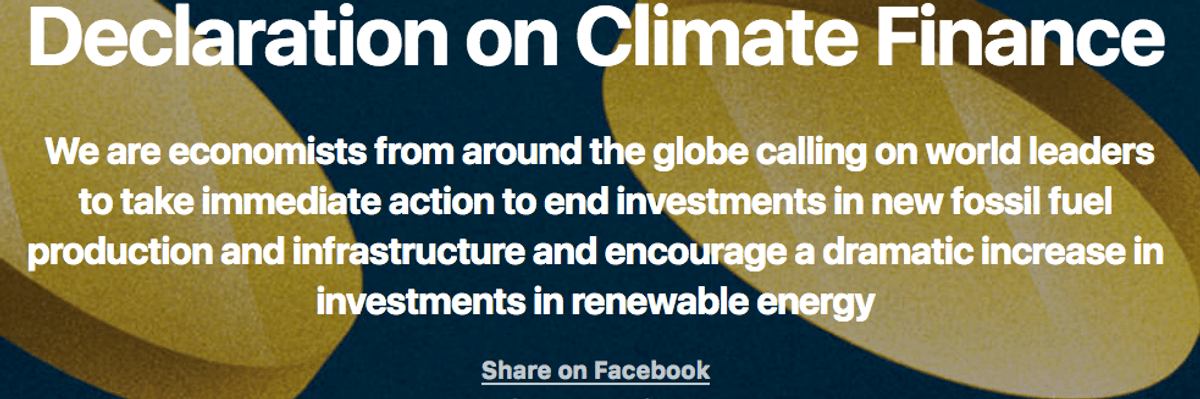
"We cannot continue to allow governments and industry to expand and finance new fossil fuel production that only digs us deeper into the hole we are trying to get out of." (Photo: Screenshot)
Today, a pair of declarations representing close to 500 organizations and 140 leading economists respectively were submitted to the United Nations Framework Convention on Climate Change (UNFCCC) calling on countries and the process to address fossil fuel production and financing as a critical way of increasing ambition and meeting our shared climate goals.
The Lofoten Declaration and the Not A Penny More Declaration are a call to stop letting fossil fuels, and the governments and money that enable them, off the hook. Despite decades of negotiations and agreements, and being the biggest driver of the climate crisis, fossil fuels aren't even mentioned in the Paris Agreement.
It is time for this to change: if we are going to avert the worst of global climate change we must address fossil fuel demand AND supply. We know that there is more carbon in already producing reserves to take us beyond 1.5 or even 2 degrees. We cannot continue to allow governments and industry to expand and finance new fossil fuel production that only digs us deeper into the hole we are trying to get out of.
The Declarations affirm that it is the urgent responsibility and moral obligation of wealthy fossil fuel producers as well as public and private investors and development institutions to lead in "stopping exploration and expansion of fossil fuel projects and managing the decline of existing production in line with what is necessary to achieve the Paris climate goals."
These submissions to the UNFCCC's "Talanoa Dialogue" add to growing calls for action on ending fossil fuels within the UN process and beyond. Outside of these walls, movements around the world are standing up to fossil fuel infrastructure and expansion. From First Nations and allies in British Columbia standing up to the Kinder Morgan tar sands pipeline to civil society and frontline communities in Argentina demanding a different development pathway to avoid the dangerous exploitation of massive shale oil and gas reserves, the resistance is global.
Some countries and institutions are also showing leadership and introducing policies that begin to tackle this problem at its source. On Saturday, panelists from New Zealand, France, and the World Bank addressed a packed room here at the latest round of climate talks in Bonn to share stories about how and why they are making moves to stop approving and financing fossil fuel expansion. These First Movers are setting important precedents that pave the way for even more ambitious actions to begin a managed decline and just transition towards a zero-carbon economy.
In order for this list of First Movers to grow, more political and financial decision makers must see the writing on the wall and say no to the fossil fuel industry. As Lofoten Declaration signatory Secretary General Martel of the Pacific Island Development Forum importantly notes, "the only reason why fossil fuel exploration continues is because of powerful people with vested interests and the political influence that they wield. The Lofoten Declaration is sending the message that there is no future for fossil fuels in a planet experiencing the current level of climate change. It stands to reason that fossil fuel exploration, and eventually production, must come to an end if we are to fulfil the commitments of the Paris Agreement which almost all countries in the world have now ratified."
We look forward to these powerful Declarations joining the many other calls heard in the Talanoa Dialogue for the need to address fossil fuel supply. The role of fossil fuel production in the climate crisis must be confronted head on, and the UNFCCC is no exception.
Dear Common Dreams reader, It’s been nearly 30 years since I co-founded Common Dreams with my late wife, Lina Newhouser. We had the radical notion that journalism should serve the public good, not corporate profits. It was clear to us from the outset what it would take to build such a project. No paid advertisements. No corporate sponsors. No millionaire publisher telling us what to think or do. Many people said we wouldn't last a year, but we proved those doubters wrong. Together with a tremendous team of journalists and dedicated staff, we built an independent media outlet free from the constraints of profits and corporate control. Our mission has always been simple: To inform. To inspire. To ignite change for the common good. Building Common Dreams was not easy. Our survival was never guaranteed. When you take on the most powerful forces—Wall Street greed, fossil fuel industry destruction, Big Tech lobbyists, and uber-rich oligarchs who have spent billions upon billions rigging the economy and democracy in their favor—the only bulwark you have is supporters who believe in your work. But here’s the urgent message from me today. It's never been this bad out there. And it's never been this hard to keep us going. At the very moment Common Dreams is most needed, the threats we face are intensifying. We need your support now more than ever. We don't accept corporate advertising and never will. We don't have a paywall because we don't think people should be blocked from critical news based on their ability to pay. Everything we do is funded by the donations of readers like you. When everyone does the little they can afford, we are strong. But if that support retreats or dries up, so do we. Will you donate now to make sure Common Dreams not only survives but thrives? —Craig Brown, Co-founder |
Today, a pair of declarations representing close to 500 organizations and 140 leading economists respectively were submitted to the United Nations Framework Convention on Climate Change (UNFCCC) calling on countries and the process to address fossil fuel production and financing as a critical way of increasing ambition and meeting our shared climate goals.
The Lofoten Declaration and the Not A Penny More Declaration are a call to stop letting fossil fuels, and the governments and money that enable them, off the hook. Despite decades of negotiations and agreements, and being the biggest driver of the climate crisis, fossil fuels aren't even mentioned in the Paris Agreement.
It is time for this to change: if we are going to avert the worst of global climate change we must address fossil fuel demand AND supply. We know that there is more carbon in already producing reserves to take us beyond 1.5 or even 2 degrees. We cannot continue to allow governments and industry to expand and finance new fossil fuel production that only digs us deeper into the hole we are trying to get out of.
The Declarations affirm that it is the urgent responsibility and moral obligation of wealthy fossil fuel producers as well as public and private investors and development institutions to lead in "stopping exploration and expansion of fossil fuel projects and managing the decline of existing production in line with what is necessary to achieve the Paris climate goals."
These submissions to the UNFCCC's "Talanoa Dialogue" add to growing calls for action on ending fossil fuels within the UN process and beyond. Outside of these walls, movements around the world are standing up to fossil fuel infrastructure and expansion. From First Nations and allies in British Columbia standing up to the Kinder Morgan tar sands pipeline to civil society and frontline communities in Argentina demanding a different development pathway to avoid the dangerous exploitation of massive shale oil and gas reserves, the resistance is global.
Some countries and institutions are also showing leadership and introducing policies that begin to tackle this problem at its source. On Saturday, panelists from New Zealand, France, and the World Bank addressed a packed room here at the latest round of climate talks in Bonn to share stories about how and why they are making moves to stop approving and financing fossil fuel expansion. These First Movers are setting important precedents that pave the way for even more ambitious actions to begin a managed decline and just transition towards a zero-carbon economy.
In order for this list of First Movers to grow, more political and financial decision makers must see the writing on the wall and say no to the fossil fuel industry. As Lofoten Declaration signatory Secretary General Martel of the Pacific Island Development Forum importantly notes, "the only reason why fossil fuel exploration continues is because of powerful people with vested interests and the political influence that they wield. The Lofoten Declaration is sending the message that there is no future for fossil fuels in a planet experiencing the current level of climate change. It stands to reason that fossil fuel exploration, and eventually production, must come to an end if we are to fulfil the commitments of the Paris Agreement which almost all countries in the world have now ratified."
We look forward to these powerful Declarations joining the many other calls heard in the Talanoa Dialogue for the need to address fossil fuel supply. The role of fossil fuel production in the climate crisis must be confronted head on, and the UNFCCC is no exception.
Today, a pair of declarations representing close to 500 organizations and 140 leading economists respectively were submitted to the United Nations Framework Convention on Climate Change (UNFCCC) calling on countries and the process to address fossil fuel production and financing as a critical way of increasing ambition and meeting our shared climate goals.
The Lofoten Declaration and the Not A Penny More Declaration are a call to stop letting fossil fuels, and the governments and money that enable them, off the hook. Despite decades of negotiations and agreements, and being the biggest driver of the climate crisis, fossil fuels aren't even mentioned in the Paris Agreement.
It is time for this to change: if we are going to avert the worst of global climate change we must address fossil fuel demand AND supply. We know that there is more carbon in already producing reserves to take us beyond 1.5 or even 2 degrees. We cannot continue to allow governments and industry to expand and finance new fossil fuel production that only digs us deeper into the hole we are trying to get out of.
The Declarations affirm that it is the urgent responsibility and moral obligation of wealthy fossil fuel producers as well as public and private investors and development institutions to lead in "stopping exploration and expansion of fossil fuel projects and managing the decline of existing production in line with what is necessary to achieve the Paris climate goals."
These submissions to the UNFCCC's "Talanoa Dialogue" add to growing calls for action on ending fossil fuels within the UN process and beyond. Outside of these walls, movements around the world are standing up to fossil fuel infrastructure and expansion. From First Nations and allies in British Columbia standing up to the Kinder Morgan tar sands pipeline to civil society and frontline communities in Argentina demanding a different development pathway to avoid the dangerous exploitation of massive shale oil and gas reserves, the resistance is global.
Some countries and institutions are also showing leadership and introducing policies that begin to tackle this problem at its source. On Saturday, panelists from New Zealand, France, and the World Bank addressed a packed room here at the latest round of climate talks in Bonn to share stories about how and why they are making moves to stop approving and financing fossil fuel expansion. These First Movers are setting important precedents that pave the way for even more ambitious actions to begin a managed decline and just transition towards a zero-carbon economy.
In order for this list of First Movers to grow, more political and financial decision makers must see the writing on the wall and say no to the fossil fuel industry. As Lofoten Declaration signatory Secretary General Martel of the Pacific Island Development Forum importantly notes, "the only reason why fossil fuel exploration continues is because of powerful people with vested interests and the political influence that they wield. The Lofoten Declaration is sending the message that there is no future for fossil fuels in a planet experiencing the current level of climate change. It stands to reason that fossil fuel exploration, and eventually production, must come to an end if we are to fulfil the commitments of the Paris Agreement which almost all countries in the world have now ratified."
We look forward to these powerful Declarations joining the many other calls heard in the Talanoa Dialogue for the need to address fossil fuel supply. The role of fossil fuel production in the climate crisis must be confronted head on, and the UNFCCC is no exception.