SUBSCRIBE TO OUR FREE NEWSLETTER
Daily news & progressive opinion—funded by the people, not the corporations—delivered straight to your inbox.
5
#000000
#FFFFFF
To donate by check, phone, or other method, see our More Ways to Give page.
Daily news & progressive opinion—funded by the people, not the corporations—delivered straight to your inbox.
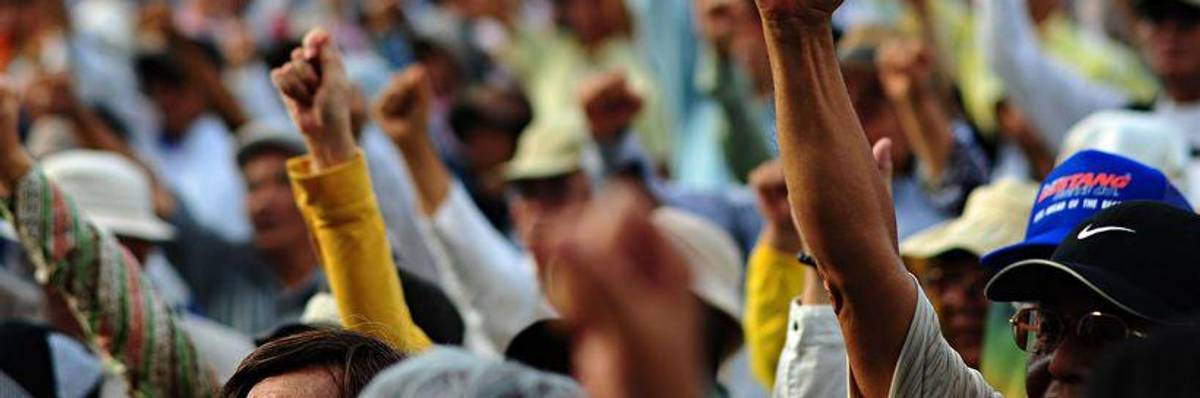
"Those who are fighting for civil rights here in the United States, should also be concerned about the civil rights violations and environmental damage caused by the sprawling network of U.S. military bases around the world." (Photo: WikiCommons)
Last week tens of thousands of people gathered to demonstrate for human rights and against harmful U.S. government policies. At a huge racetrack, they held thousands of identical signs that carried a simple message "NO."
Last week tens of thousands of people gathered to demonstrate for human rights and against harmful U.S. government policies. At a huge racetrack, they held thousands of identical signs that carried a simple message "NO."
Was this in Boston? Atlanta? New York? And what were they saying no to?
The protest was on the island of Okinawa and demonstrators were saying a resounding "NO" to the planned expansion of a U.S. military base that could destroy communities and the pristine ecosystems near the quiet villages of farmers and anglers along Oura Bay in Henoko district on the main island of Okinawa.
The U.S. military is pushing forward with the blessing of the central Japanese government in the face of overwhelming opposition from Okinawa's people and their elected representatives. The protesters were also saying "NO" to flights over Okinawa of the dangerous -- and maddeningly loud -- Osprey aircraft. The Osprey is nicknamed the "Widow-Maker" for its tendency to fall out of the sky.
Last December, an Osprey crash-landed off the Okinawan coast. Earlier this month an Osprey based out of Okinawa crashed off the coast of Australia killing three U.S. Marines. During a brief pause after the crash, Okinawans begged for an end to the flights. But then the U.S. quickly announced the resumption of flights. Governor Takeshi Onaga expressed his fellow Okinawans' frustration saying, "With [the central Japanese government] quickly backtracking after being told [the Osprey overflights] were necessary for proper operations, we have to conclude that Japanese independence is nothing but a myth."
Given the widespread opposition to the base, Okinawans view the development as not only harmful to the environment and public safety but as an attack on democracy and the basic freedoms of Okinawans. Okinawa has roughly three-fourths of the military facilities in Japan and many Americans are probably unaware of the long and painful history of the oppression of Okinawa. After a brutal invasion during World War II in which many civilians died, the U.S. occupied Okinawa for 27 years until 1972, when the island was turned back over to Japan. Since then the U.S. has continued to control much of the island. The presence of thousands of U.S. troops has exacerbated the situation as the young military men, "have not been perfect guests." According to the Okinawan group Women Against Military Violence, U.S. troops stationed there have committed hundreds of serious crimes including rapes and murders.
As the protests have grown the Japanese government has reacted with a crackdown on political rights. Protesters have been forcibly and violently removed and protest leaders have been singled out for detention. One of the indefatigable protest leaders is antiwar activist Hiroji Yamashiro of the Okinawa Peace Movement Center. He was held for five months without due process and without being able to see his family. The right to protest has historically been respected in Japan so Hiroji Yamashiro's case is a sign that Okinawans' rights may be an exception.
Those who are fighting for civil rights here in the United States, should also be concerned about the civil rights violations and environmental damage caused by the sprawling network of U.S. military bases around the world. We need to educate the U.S. public and our representatives about these violations of human rights being made in our name. Just as there have been solidarity actions all over the country in support of the Standing Rock water protectors, Americans should support the protectors of the pristine blue waters and the impacted communities of Okinawa.
Dear Common Dreams reader, It’s been nearly 30 years since I co-founded Common Dreams with my late wife, Lina Newhouser. We had the radical notion that journalism should serve the public good, not corporate profits. It was clear to us from the outset what it would take to build such a project. No paid advertisements. No corporate sponsors. No millionaire publisher telling us what to think or do. Many people said we wouldn't last a year, but we proved those doubters wrong. Together with a tremendous team of journalists and dedicated staff, we built an independent media outlet free from the constraints of profits and corporate control. Our mission has always been simple: To inform. To inspire. To ignite change for the common good. Building Common Dreams was not easy. Our survival was never guaranteed. When you take on the most powerful forces—Wall Street greed, fossil fuel industry destruction, Big Tech lobbyists, and uber-rich oligarchs who have spent billions upon billions rigging the economy and democracy in their favor—the only bulwark you have is supporters who believe in your work. But here’s the urgent message from me today. It's never been this bad out there. And it's never been this hard to keep us going. At the very moment Common Dreams is most needed, the threats we face are intensifying. We need your support now more than ever. We don't accept corporate advertising and never will. We don't have a paywall because we don't think people should be blocked from critical news based on their ability to pay. Everything we do is funded by the donations of readers like you. When everyone does the little they can afford, we are strong. But if that support retreats or dries up, so do we. Will you donate now to make sure Common Dreams not only survives but thrives? —Craig Brown, Co-founder |
Last week tens of thousands of people gathered to demonstrate for human rights and against harmful U.S. government policies. At a huge racetrack, they held thousands of identical signs that carried a simple message "NO."
Was this in Boston? Atlanta? New York? And what were they saying no to?
The protest was on the island of Okinawa and demonstrators were saying a resounding "NO" to the planned expansion of a U.S. military base that could destroy communities and the pristine ecosystems near the quiet villages of farmers and anglers along Oura Bay in Henoko district on the main island of Okinawa.
The U.S. military is pushing forward with the blessing of the central Japanese government in the face of overwhelming opposition from Okinawa's people and their elected representatives. The protesters were also saying "NO" to flights over Okinawa of the dangerous -- and maddeningly loud -- Osprey aircraft. The Osprey is nicknamed the "Widow-Maker" for its tendency to fall out of the sky.
Last December, an Osprey crash-landed off the Okinawan coast. Earlier this month an Osprey based out of Okinawa crashed off the coast of Australia killing three U.S. Marines. During a brief pause after the crash, Okinawans begged for an end to the flights. But then the U.S. quickly announced the resumption of flights. Governor Takeshi Onaga expressed his fellow Okinawans' frustration saying, "With [the central Japanese government] quickly backtracking after being told [the Osprey overflights] were necessary for proper operations, we have to conclude that Japanese independence is nothing but a myth."
Given the widespread opposition to the base, Okinawans view the development as not only harmful to the environment and public safety but as an attack on democracy and the basic freedoms of Okinawans. Okinawa has roughly three-fourths of the military facilities in Japan and many Americans are probably unaware of the long and painful history of the oppression of Okinawa. After a brutal invasion during World War II in which many civilians died, the U.S. occupied Okinawa for 27 years until 1972, when the island was turned back over to Japan. Since then the U.S. has continued to control much of the island. The presence of thousands of U.S. troops has exacerbated the situation as the young military men, "have not been perfect guests." According to the Okinawan group Women Against Military Violence, U.S. troops stationed there have committed hundreds of serious crimes including rapes and murders.
As the protests have grown the Japanese government has reacted with a crackdown on political rights. Protesters have been forcibly and violently removed and protest leaders have been singled out for detention. One of the indefatigable protest leaders is antiwar activist Hiroji Yamashiro of the Okinawa Peace Movement Center. He was held for five months without due process and without being able to see his family. The right to protest has historically been respected in Japan so Hiroji Yamashiro's case is a sign that Okinawans' rights may be an exception.
Those who are fighting for civil rights here in the United States, should also be concerned about the civil rights violations and environmental damage caused by the sprawling network of U.S. military bases around the world. We need to educate the U.S. public and our representatives about these violations of human rights being made in our name. Just as there have been solidarity actions all over the country in support of the Standing Rock water protectors, Americans should support the protectors of the pristine blue waters and the impacted communities of Okinawa.
Last week tens of thousands of people gathered to demonstrate for human rights and against harmful U.S. government policies. At a huge racetrack, they held thousands of identical signs that carried a simple message "NO."
Was this in Boston? Atlanta? New York? And what were they saying no to?
The protest was on the island of Okinawa and demonstrators were saying a resounding "NO" to the planned expansion of a U.S. military base that could destroy communities and the pristine ecosystems near the quiet villages of farmers and anglers along Oura Bay in Henoko district on the main island of Okinawa.
The U.S. military is pushing forward with the blessing of the central Japanese government in the face of overwhelming opposition from Okinawa's people and their elected representatives. The protesters were also saying "NO" to flights over Okinawa of the dangerous -- and maddeningly loud -- Osprey aircraft. The Osprey is nicknamed the "Widow-Maker" for its tendency to fall out of the sky.
Last December, an Osprey crash-landed off the Okinawan coast. Earlier this month an Osprey based out of Okinawa crashed off the coast of Australia killing three U.S. Marines. During a brief pause after the crash, Okinawans begged for an end to the flights. But then the U.S. quickly announced the resumption of flights. Governor Takeshi Onaga expressed his fellow Okinawans' frustration saying, "With [the central Japanese government] quickly backtracking after being told [the Osprey overflights] were necessary for proper operations, we have to conclude that Japanese independence is nothing but a myth."
Given the widespread opposition to the base, Okinawans view the development as not only harmful to the environment and public safety but as an attack on democracy and the basic freedoms of Okinawans. Okinawa has roughly three-fourths of the military facilities in Japan and many Americans are probably unaware of the long and painful history of the oppression of Okinawa. After a brutal invasion during World War II in which many civilians died, the U.S. occupied Okinawa for 27 years until 1972, when the island was turned back over to Japan. Since then the U.S. has continued to control much of the island. The presence of thousands of U.S. troops has exacerbated the situation as the young military men, "have not been perfect guests." According to the Okinawan group Women Against Military Violence, U.S. troops stationed there have committed hundreds of serious crimes including rapes and murders.
As the protests have grown the Japanese government has reacted with a crackdown on political rights. Protesters have been forcibly and violently removed and protest leaders have been singled out for detention. One of the indefatigable protest leaders is antiwar activist Hiroji Yamashiro of the Okinawa Peace Movement Center. He was held for five months without due process and without being able to see his family. The right to protest has historically been respected in Japan so Hiroji Yamashiro's case is a sign that Okinawans' rights may be an exception.
Those who are fighting for civil rights here in the United States, should also be concerned about the civil rights violations and environmental damage caused by the sprawling network of U.S. military bases around the world. We need to educate the U.S. public and our representatives about these violations of human rights being made in our name. Just as there have been solidarity actions all over the country in support of the Standing Rock water protectors, Americans should support the protectors of the pristine blue waters and the impacted communities of Okinawa.