SUBSCRIBE TO OUR FREE NEWSLETTER
Daily news & progressive opinion—funded by the people, not the corporations—delivered straight to your inbox.
5
#000000
#FFFFFF
To donate by check, phone, or other method, see our More Ways to Give page.
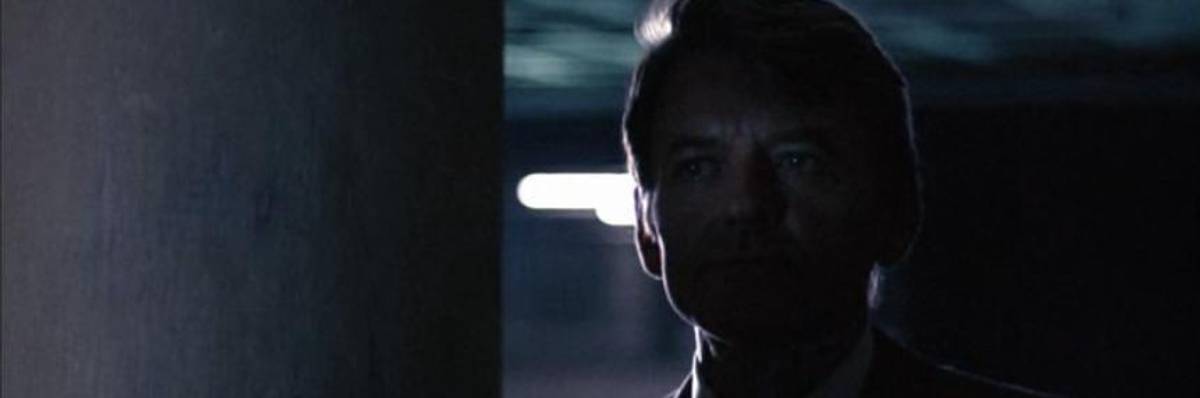
If an anonymous source knowingly and maliciously feeds a media outlet false information, should they continue to be granted anonymity? If media continue to protect the deceptive source's identity, doesn't that ensure the continuance of a disinformation conveyor belt?
On Monday, three CNN journalists resigned after an article alleging Trump associates' ties to Russia was retracted by the network. Brian Stelter, CNN's media reporter (6/27/17), wrote:
The story, which reported that Congress was investigating a "Russian investment fund with ties to Trump officials," cited a single anonymous source. These types of stories are typically reviewed by several departments within CNN--including factcheckers, journalism standards experts and lawyers--before publication.
The original story has been taken down, replaced by an editor's note that states: "That story did not meet CNN's editorial standards and has been retracted. Links to the story have been disabled. CNN apologizes to Mr. [Anthony] Scaramucci," a Trump ally named in the piece. Scaramucci, a financier who was part of the Trump transition team and was recently named chief strategy officer of the US Export/Import Bank, frequently appears on CNN as a Trump surrogate.
Stelter reported: "'CNN did the right thing. Classy move. Apology accepted,' Scaramucci tweeted the next morning. 'Everyone makes mistakes. Moving on.'"
There are several problems here, but it's hard to determine what the underlying issues are, given CNN's and Scaramucci's desire to simply "move on." Firing the individual journalists and sweeping the original piece under the rug, rather than openly examining what the issues are, seems more about damage control, and possibly avoiding lawsuits from well-connected individuals, than about protecting the integrity of the news process.
One serious question that arises in this and other critical cases is: What was the role of the "single anonymous source"? Did this source knowingly feed CNN false information? If so, why is the anonymity preserved for the source? So they can do it again and again?
Of course, identity protection for whistleblowers and other sources is a cornerstone of good journalism. And sources can pass on false or flawed reporting without any ill intent. But what of sources that intentionally use media outlets to disseminate dubious information?
FAIR has noted this problem for decades. For example, after the crash of TWA 800 in 1996 (Extra!, 1-2/97):
From the moment the media began covering the 747 crash near the media capital of New York City, terrorism was clearly the preferred scenario. This view was disseminated by investigators hiding behind anonymous quotes and reporters hiding behind anonymous sources. Here's how Dan Rather introduced the CBS Evening News (7/19/96): "They don't say it publicly yet, but crash investigators now believe it was a bomb that brought down TWA 800." With such reporting, theories could be put forward with no evidence--and no one to hold responsible if the theories turned out to be guesses.
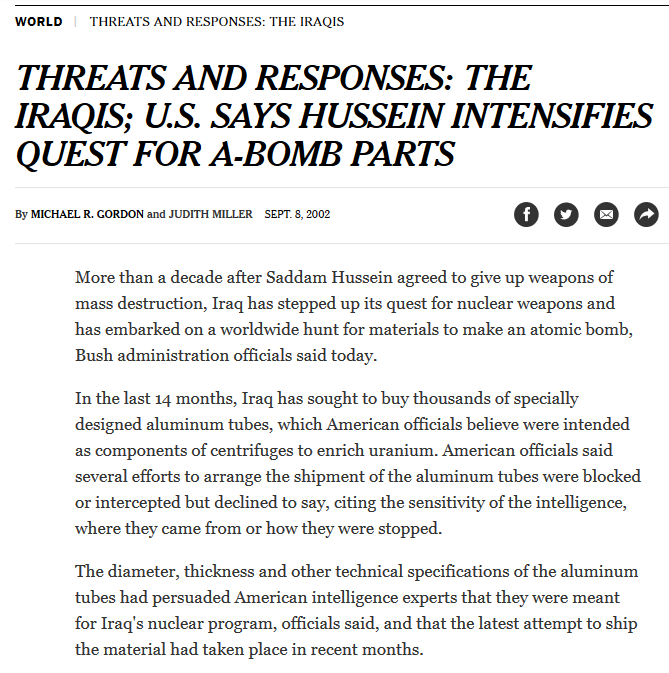
The notorious aluminum tubes story: Why were its sources not held accountable?
A prime example of the abuse of anonymous sourcing was the aluminum tubes story. In 2005, I confronted Judy Miller, the infamous former New York Times reporter, about this issue. She and Times colleague Michael Gordon had written a critical piece (9/8/02) during the buildup to the invasion of Iraq that cited anonymous administration officials claiming Iraq had "embarked on a worldwide hunt for materials to make an atomic bomb," including the tubes (which turned out to be conventional rocket parts).
Vice President Richard Cheney appeared on Meet the Press (9/8/02) the morning of this New York Times report, citing it as evidence of Saddam Hussein's alleged drive to obtain a nuclear program. Miller and Gordon had written:
An administration official called discussions about the aluminum tubes and Iraq's intentions "a normal part of the intelligence process."... He added that the best technical experts and nuclear scientists at laboratories like Oak Ridge supported the CIA assessment [that the tubes were for a nuclear program].
In fact, the nuclear scientists did not support such an assessment. When I questioned her, Miller refused to name the source that fed her this false information and Marvin Kalb, the moderator of the event, ran interference, stopping further followups (Sam Husseini, 11/16/05).

Deep Throat (Hal Holbrook) in All the President's Men: What if he had lied to Woodward and Bernstein?
As this case illustrates, the current structure is like having a loaded gun lying around. When a crisis happens, a government source wanting to smear a foreign government, or even help provoke war, has the mechanisms to do so without fear of consequence or accountability. They hide behind anonymous quotes, and their media contact hides behind anonymous sources. Both are effectively off the hook.
It's often viewed as sacred tenet of journalistic ethics that a source should never be divulged, no matter what, but that's not true. In The Elements of Journalism, first published in 2001, Bill Kovach and Tom Rosenstiel wrote:
A growing number of journalists believe that if a source who has been granted anonymity is found to have misled the reporter, the sources' identity should be revealed. Part of the bargain of anonymity is truthfulness.
And there is at least one highly notable precedent. In 1996, the Wall Street Journal (2/1/96) published a story: "Getting Personal: Brown & Williamson Has 500-Page Dossier Attacking Chief Critic." The Journal had been given dubious and exaggerated dirt on cigarette whistleblower Jeffrey Wigand. Rather than running with it--or just passing on it--they exposed it. Writers Suein L. Hwang and Milo Geyelin effectively turned on a source and outed the information they were provided as part of an oppressive smear campaign.
In a series of pieces, Glenn Greenwald and other media critics have derided dubious stories that rely on questionable anonymous sources over the last year, especially regarding Russia--for example, "CNN Journalists Resign: Latest Example of Media Recklessness on the Russia Threat" (Intercept, 6/27/17) and "Russia Hysteria Infects WashPost Again: False Story About Hacking US Electric Grid" (Intercept, 12/31/16). But the focus has generally been on the journalistic failings of the reporters who conveyed the false claims, not on holding the sources of those claims accountable. One exception was a Twitter exchange with me, where Greenwald responded with respect to the Post utility hacking story: "Right. Two US officials told WPost that Russia invaded US electric grid. This was totally false. Why is Post protecting their identity still??"

One way to prevent recurrence of deceptive stories is to expose sources who deliberately deceive you.
Similarly, Washington Post media writer Erik Wemple (1/4/17) wrote about the Post's false story about Russian electrical hacking, in "Washington Post Cites 'Discussions' Aimed at Preventing Recurrence of Vermont Utility Story," but didn't raise the question of why the dubious anonymous source should continue to have protection.
Obviously, anonymous sourcing is not the only issue. In the Vermont utility story, the Post didn't initially contact the utility in question, which would have likely shot down that story. But the anonymity question is still critical, especially when the named subject of a story cannot, for whatever reason, be contacted or relied upon.
The dynamics of exposing a mendacious source are seen in the case of a relatively small paper, the Memphis Commercial Appeal, which in 2011 was examining rumors that a local food chain, Schnucks, was going to sell its area stores. A Schnucks spokesperson denied the story, and the paper didn't publish anything. Soon thereafter, the rumors turned out to be true, the stores were sold. The Commercial Appeal then published a piece that included the false denial--with the source's name (CJR, "Calling Out a Source that Lied," 9/9/11).
But some of the unique aspects of this episode suggest why it happens so rarely. The stores were sold, so Schnucks didn't have to care what anyone thought of them anymore. And the Commercial Appeal, it would seem, no longer had any use for maintaining good relations with sources at Schnucks.
As it is, the prospect that a source can maintain their anonymity after placing false stores ensures that it will happen again and again. The source can simply go to another media outlet the next day. Or, worse still, the same outlet, as if nothing wrong was going on.
Protection cannot be an invitation to falsification. If there's evidence of malicious intent on the part of the source--perhaps malicious intent that the journalist shares for ideological or other reasons--then both should be effectively exposed. A media outlet should indeed have an ethical obligation to expose a falsifying source.
Either way, the news organization should offer some sort of meaningful explanation beyond simple retraction, as in the recent CNN case--more like a journalistic autopsy. It's possible that the source in direct contact with the media outlet simply passed on information they thought was accurate. It's possible that someone further up the information food chain was the one with malicious intent. That is to be determined by the outlet after serious examination of the particulars of stories. If the outlet won't name a seemingly falsifying source, it should give a serious explanation as to why. This is not to be confused in any way with sources who give controversial information, or actual documentation, to media organizations, and are derided or even prosecuted for such truth-telling.The Gordian knot of deceptive anonymous sources must be cut. That is virtually impossible to do without exposing such sources' identities, when warranted--unless outlets in the news business would rather be in the disinformation business.
Special thanks to John Hanrahan for pointing out several examples cited in this piece.
If an anonymous source knowingly and maliciously feeds a media outlet false information, should they continue to be granted anonymity? If media continue to protect the deceptive source's identity, doesn't that ensure the continuance of a disinformation conveyor belt?
On Monday, three CNN journalists resigned after an article alleging Trump associates' ties to Russia was retracted by the network. Brian Stelter, CNN's media reporter (6/27/17), wrote:
The story, which reported that Congress was investigating a "Russian investment fund with ties to Trump officials," cited a single anonymous source. These types of stories are typically reviewed by several departments within CNN--including factcheckers, journalism standards experts and lawyers--before publication.
The original story has been taken down, replaced by an editor's note that states: "That story did not meet CNN's editorial standards and has been retracted. Links to the story have been disabled. CNN apologizes to Mr. [Anthony] Scaramucci," a Trump ally named in the piece. Scaramucci, a financier who was part of the Trump transition team and was recently named chief strategy officer of the US Export/Import Bank, frequently appears on CNN as a Trump surrogate.
Stelter reported: "'CNN did the right thing. Classy move. Apology accepted,' Scaramucci tweeted the next morning. 'Everyone makes mistakes. Moving on.'"
There are several problems here, but it's hard to determine what the underlying issues are, given CNN's and Scaramucci's desire to simply "move on." Firing the individual journalists and sweeping the original piece under the rug, rather than openly examining what the issues are, seems more about damage control, and possibly avoiding lawsuits from well-connected individuals, than about protecting the integrity of the news process.
One serious question that arises in this and other critical cases is: What was the role of the "single anonymous source"? Did this source knowingly feed CNN false information? If so, why is the anonymity preserved for the source? So they can do it again and again?
Of course, identity protection for whistleblowers and other sources is a cornerstone of good journalism. And sources can pass on false or flawed reporting without any ill intent. But what of sources that intentionally use media outlets to disseminate dubious information?
FAIR has noted this problem for decades. For example, after the crash of TWA 800 in 1996 (Extra!, 1-2/97):
From the moment the media began covering the 747 crash near the media capital of New York City, terrorism was clearly the preferred scenario. This view was disseminated by investigators hiding behind anonymous quotes and reporters hiding behind anonymous sources. Here's how Dan Rather introduced the CBS Evening News (7/19/96): "They don't say it publicly yet, but crash investigators now believe it was a bomb that brought down TWA 800." With such reporting, theories could be put forward with no evidence--and no one to hold responsible if the theories turned out to be guesses.
The notorious aluminum tubes story: Why were its sources not held accountable?
A prime example of the abuse of anonymous sourcing was the aluminum tubes story. In 2005, I confronted Judy Miller, the infamous former New York Times reporter, about this issue. She and Times colleague Michael Gordon had written a critical piece (9/8/02) during the buildup to the invasion of Iraq that cited anonymous administration officials claiming Iraq had "embarked on a worldwide hunt for materials to make an atomic bomb," including the tubes (which turned out to be conventional rocket parts).
Vice President Richard Cheney appeared on Meet the Press (9/8/02) the morning of this New York Times report, citing it as evidence of Saddam Hussein's alleged drive to obtain a nuclear program. Miller and Gordon had written:
An administration official called discussions about the aluminum tubes and Iraq's intentions "a normal part of the intelligence process."... He added that the best technical experts and nuclear scientists at laboratories like Oak Ridge supported the CIA assessment [that the tubes were for a nuclear program].
In fact, the nuclear scientists did not support such an assessment. When I questioned her, Miller refused to name the source that fed her this false information and Marvin Kalb, the moderator of the event, ran interference, stopping further followups (Sam Husseini, 11/16/05).
Deep Throat (Hal Holbrook) in All the President's Men: What if he had lied to Woodward and Bernstein?
As this case illustrates, the current structure is like having a loaded gun lying around. When a crisis happens, a government source wanting to smear a foreign government, or even help provoke war, has the mechanisms to do so without fear of consequence or accountability. They hide behind anonymous quotes, and their media contact hides behind anonymous sources. Both are effectively off the hook.
It's often viewed as sacred tenet of journalistic ethics that a source should never be divulged, no matter what, but that's not true. In The Elements of Journalism, first published in 2001, Bill Kovach and Tom Rosenstiel wrote:
A growing number of journalists believe that if a source who has been granted anonymity is found to have misled the reporter, the sources' identity should be revealed. Part of the bargain of anonymity is truthfulness.
And there is at least one highly notable precedent. In 1996, the Wall Street Journal (2/1/96) published a story: "Getting Personal: Brown & Williamson Has 500-Page Dossier Attacking Chief Critic." The Journal had been given dubious and exaggerated dirt on cigarette whistleblower Jeffrey Wigand. Rather than running with it--or just passing on it--they exposed it. Writers Suein L. Hwang and Milo Geyelin effectively turned on a source and outed the information they were provided as part of an oppressive smear campaign.
In a series of pieces, Glenn Greenwald and other media critics have derided dubious stories that rely on questionable anonymous sources over the last year, especially regarding Russia--for example, "CNN Journalists Resign: Latest Example of Media Recklessness on the Russia Threat" (Intercept, 6/27/17) and "Russia Hysteria Infects WashPost Again: False Story About Hacking US Electric Grid" (Intercept, 12/31/16). But the focus has generally been on the journalistic failings of the reporters who conveyed the false claims, not on holding the sources of those claims accountable. One exception was a Twitter exchange with me, where Greenwald responded with respect to the Post utility hacking story: "Right. Two US officials told WPost that Russia invaded US electric grid. This was totally false. Why is Post protecting their identity still??"
One way to prevent recurrence of deceptive stories is to expose sources who deliberately deceive you.
Similarly, Washington Post media writer Erik Wemple (1/4/17) wrote about the Post's false story about Russian electrical hacking, in "Washington Post Cites 'Discussions' Aimed at Preventing Recurrence of Vermont Utility Story," but didn't raise the question of why the dubious anonymous source should continue to have protection.
Obviously, anonymous sourcing is not the only issue. In the Vermont utility story, the Post didn't initially contact the utility in question, which would have likely shot down that story. But the anonymity question is still critical, especially when the named subject of a story cannot, for whatever reason, be contacted or relied upon.
The dynamics of exposing a mendacious source are seen in the case of a relatively small paper, the Memphis Commercial Appeal, which in 2011 was examining rumors that a local food chain, Schnucks, was going to sell its area stores. A Schnucks spokesperson denied the story, and the paper didn't publish anything. Soon thereafter, the rumors turned out to be true, the stores were sold. The Commercial Appeal then published a piece that included the false denial--with the source's name (CJR, "Calling Out a Source that Lied," 9/9/11).
But some of the unique aspects of this episode suggest why it happens so rarely. The stores were sold, so Schnucks didn't have to care what anyone thought of them anymore. And the Commercial Appeal, it would seem, no longer had any use for maintaining good relations with sources at Schnucks.
As it is, the prospect that a source can maintain their anonymity after placing false stores ensures that it will happen again and again. The source can simply go to another media outlet the next day. Or, worse still, the same outlet, as if nothing wrong was going on.
Protection cannot be an invitation to falsification. If there's evidence of malicious intent on the part of the source--perhaps malicious intent that the journalist shares for ideological or other reasons--then both should be effectively exposed. A media outlet should indeed have an ethical obligation to expose a falsifying source.
Either way, the news organization should offer some sort of meaningful explanation beyond simple retraction, as in the recent CNN case--more like a journalistic autopsy. It's possible that the source in direct contact with the media outlet simply passed on information they thought was accurate. It's possible that someone further up the information food chain was the one with malicious intent. That is to be determined by the outlet after serious examination of the particulars of stories. If the outlet won't name a seemingly falsifying source, it should give a serious explanation as to why. This is not to be confused in any way with sources who give controversial information, or actual documentation, to media organizations, and are derided or even prosecuted for such truth-telling.The Gordian knot of deceptive anonymous sources must be cut. That is virtually impossible to do without exposing such sources' identities, when warranted--unless outlets in the news business would rather be in the disinformation business.
Special thanks to John Hanrahan for pointing out several examples cited in this piece.
If an anonymous source knowingly and maliciously feeds a media outlet false information, should they continue to be granted anonymity? If media continue to protect the deceptive source's identity, doesn't that ensure the continuance of a disinformation conveyor belt?
On Monday, three CNN journalists resigned after an article alleging Trump associates' ties to Russia was retracted by the network. Brian Stelter, CNN's media reporter (6/27/17), wrote:
The story, which reported that Congress was investigating a "Russian investment fund with ties to Trump officials," cited a single anonymous source. These types of stories are typically reviewed by several departments within CNN--including factcheckers, journalism standards experts and lawyers--before publication.
The original story has been taken down, replaced by an editor's note that states: "That story did not meet CNN's editorial standards and has been retracted. Links to the story have been disabled. CNN apologizes to Mr. [Anthony] Scaramucci," a Trump ally named in the piece. Scaramucci, a financier who was part of the Trump transition team and was recently named chief strategy officer of the US Export/Import Bank, frequently appears on CNN as a Trump surrogate.
Stelter reported: "'CNN did the right thing. Classy move. Apology accepted,' Scaramucci tweeted the next morning. 'Everyone makes mistakes. Moving on.'"
There are several problems here, but it's hard to determine what the underlying issues are, given CNN's and Scaramucci's desire to simply "move on." Firing the individual journalists and sweeping the original piece under the rug, rather than openly examining what the issues are, seems more about damage control, and possibly avoiding lawsuits from well-connected individuals, than about protecting the integrity of the news process.
One serious question that arises in this and other critical cases is: What was the role of the "single anonymous source"? Did this source knowingly feed CNN false information? If so, why is the anonymity preserved for the source? So they can do it again and again?
Of course, identity protection for whistleblowers and other sources is a cornerstone of good journalism. And sources can pass on false or flawed reporting without any ill intent. But what of sources that intentionally use media outlets to disseminate dubious information?
FAIR has noted this problem for decades. For example, after the crash of TWA 800 in 1996 (Extra!, 1-2/97):
From the moment the media began covering the 747 crash near the media capital of New York City, terrorism was clearly the preferred scenario. This view was disseminated by investigators hiding behind anonymous quotes and reporters hiding behind anonymous sources. Here's how Dan Rather introduced the CBS Evening News (7/19/96): "They don't say it publicly yet, but crash investigators now believe it was a bomb that brought down TWA 800." With such reporting, theories could be put forward with no evidence--and no one to hold responsible if the theories turned out to be guesses.
The notorious aluminum tubes story: Why were its sources not held accountable?
A prime example of the abuse of anonymous sourcing was the aluminum tubes story. In 2005, I confronted Judy Miller, the infamous former New York Times reporter, about this issue. She and Times colleague Michael Gordon had written a critical piece (9/8/02) during the buildup to the invasion of Iraq that cited anonymous administration officials claiming Iraq had "embarked on a worldwide hunt for materials to make an atomic bomb," including the tubes (which turned out to be conventional rocket parts).
Vice President Richard Cheney appeared on Meet the Press (9/8/02) the morning of this New York Times report, citing it as evidence of Saddam Hussein's alleged drive to obtain a nuclear program. Miller and Gordon had written:
An administration official called discussions about the aluminum tubes and Iraq's intentions "a normal part of the intelligence process."... He added that the best technical experts and nuclear scientists at laboratories like Oak Ridge supported the CIA assessment [that the tubes were for a nuclear program].
In fact, the nuclear scientists did not support such an assessment. When I questioned her, Miller refused to name the source that fed her this false information and Marvin Kalb, the moderator of the event, ran interference, stopping further followups (Sam Husseini, 11/16/05).
Deep Throat (Hal Holbrook) in All the President's Men: What if he had lied to Woodward and Bernstein?
As this case illustrates, the current structure is like having a loaded gun lying around. When a crisis happens, a government source wanting to smear a foreign government, or even help provoke war, has the mechanisms to do so without fear of consequence or accountability. They hide behind anonymous quotes, and their media contact hides behind anonymous sources. Both are effectively off the hook.
It's often viewed as sacred tenet of journalistic ethics that a source should never be divulged, no matter what, but that's not true. In The Elements of Journalism, first published in 2001, Bill Kovach and Tom Rosenstiel wrote:
A growing number of journalists believe that if a source who has been granted anonymity is found to have misled the reporter, the sources' identity should be revealed. Part of the bargain of anonymity is truthfulness.
And there is at least one highly notable precedent. In 1996, the Wall Street Journal (2/1/96) published a story: "Getting Personal: Brown & Williamson Has 500-Page Dossier Attacking Chief Critic." The Journal had been given dubious and exaggerated dirt on cigarette whistleblower Jeffrey Wigand. Rather than running with it--or just passing on it--they exposed it. Writers Suein L. Hwang and Milo Geyelin effectively turned on a source and outed the information they were provided as part of an oppressive smear campaign.
In a series of pieces, Glenn Greenwald and other media critics have derided dubious stories that rely on questionable anonymous sources over the last year, especially regarding Russia--for example, "CNN Journalists Resign: Latest Example of Media Recklessness on the Russia Threat" (Intercept, 6/27/17) and "Russia Hysteria Infects WashPost Again: False Story About Hacking US Electric Grid" (Intercept, 12/31/16). But the focus has generally been on the journalistic failings of the reporters who conveyed the false claims, not on holding the sources of those claims accountable. One exception was a Twitter exchange with me, where Greenwald responded with respect to the Post utility hacking story: "Right. Two US officials told WPost that Russia invaded US electric grid. This was totally false. Why is Post protecting their identity still??"
One way to prevent recurrence of deceptive stories is to expose sources who deliberately deceive you.
Similarly, Washington Post media writer Erik Wemple (1/4/17) wrote about the Post's false story about Russian electrical hacking, in "Washington Post Cites 'Discussions' Aimed at Preventing Recurrence of Vermont Utility Story," but didn't raise the question of why the dubious anonymous source should continue to have protection.
Obviously, anonymous sourcing is not the only issue. In the Vermont utility story, the Post didn't initially contact the utility in question, which would have likely shot down that story. But the anonymity question is still critical, especially when the named subject of a story cannot, for whatever reason, be contacted or relied upon.
The dynamics of exposing a mendacious source are seen in the case of a relatively small paper, the Memphis Commercial Appeal, which in 2011 was examining rumors that a local food chain, Schnucks, was going to sell its area stores. A Schnucks spokesperson denied the story, and the paper didn't publish anything. Soon thereafter, the rumors turned out to be true, the stores were sold. The Commercial Appeal then published a piece that included the false denial--with the source's name (CJR, "Calling Out a Source that Lied," 9/9/11).
But some of the unique aspects of this episode suggest why it happens so rarely. The stores were sold, so Schnucks didn't have to care what anyone thought of them anymore. And the Commercial Appeal, it would seem, no longer had any use for maintaining good relations with sources at Schnucks.
As it is, the prospect that a source can maintain their anonymity after placing false stores ensures that it will happen again and again. The source can simply go to another media outlet the next day. Or, worse still, the same outlet, as if nothing wrong was going on.
Protection cannot be an invitation to falsification. If there's evidence of malicious intent on the part of the source--perhaps malicious intent that the journalist shares for ideological or other reasons--then both should be effectively exposed. A media outlet should indeed have an ethical obligation to expose a falsifying source.
Either way, the news organization should offer some sort of meaningful explanation beyond simple retraction, as in the recent CNN case--more like a journalistic autopsy. It's possible that the source in direct contact with the media outlet simply passed on information they thought was accurate. It's possible that someone further up the information food chain was the one with malicious intent. That is to be determined by the outlet after serious examination of the particulars of stories. If the outlet won't name a seemingly falsifying source, it should give a serious explanation as to why. This is not to be confused in any way with sources who give controversial information, or actual documentation, to media organizations, and are derided or even prosecuted for such truth-telling.The Gordian knot of deceptive anonymous sources must be cut. That is virtually impossible to do without exposing such sources' identities, when warranted--unless outlets in the news business would rather be in the disinformation business.
Special thanks to John Hanrahan for pointing out several examples cited in this piece.