SUBSCRIBE TO OUR FREE NEWSLETTER
Daily news & progressive opinion—funded by the people, not the corporations—delivered straight to your inbox.
5
#000000
#FFFFFF
To donate by check, phone, or other method, see our More Ways to Give page.
Daily news & progressive opinion—funded by the people, not the corporations—delivered straight to your inbox.
Nearly every week a new record is being broken on climate.
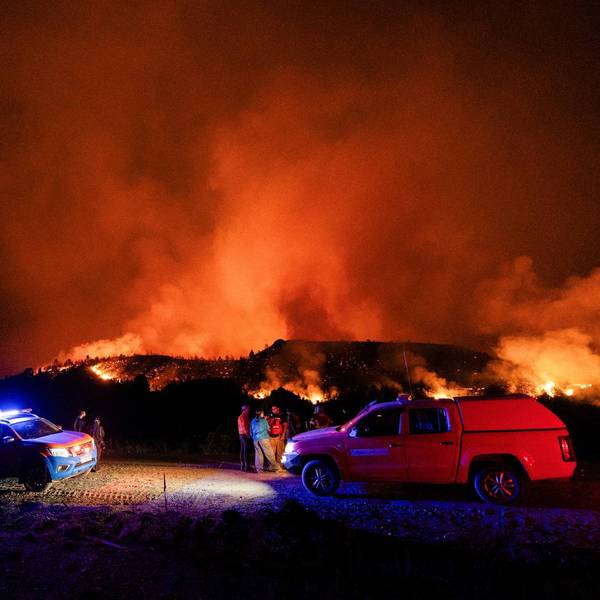
So far this year we have had warnings that the Great Barrier reef is "dying on our watch" due to coral bleaching caused by record temperatures; dramatic early seasonal melting of the Arctic Ocean sea ice and Greenland's massive ice sheet; devastating wild-fires in Canada which are being linked to climate change, and month after month of record temperatures.
And now a city in the north of India has registered the highest temperature ever recorded in the country at 51 C, during a chronic heatwave which has been going on for weeks. In nearby Pakistan, three cities recorded temperatures of 50 C or higher last Friday too.
The new Indian record, which breaks the previous one which was set sixty years ago in 1956, was set in the city of Phalodi, in the desert state of Rajasthan. It is the equivalent of 123.8F.
The heatwave is having a devastating effect and has caused the deaths of several hundred so far. Tens of thousands of farmers have also abandoned their land with crops devastated in 13 states. Rivers, lakes and even dams have dried up. Hundreds of farmers who have been left destitute have reportedly committed suicide.
Further south in Gujarat the sizzling temperatures are so bad that bats are falling lifeless from trees and pedestrians are getting their shoes stuck in the melting roads.
The Director General of the Indian Meteorological Association, Laxman Singh Rathore, has blamed climate change for the unprecedented temperatures: "It has been observed that since 2001, places in northern India, especially in Rajasthan, are witnessing a rising temperature trend every year."
He added: "The main reason is the excessive use of energy and emission of carbon dioxide. Factors like urbanization and industrialization too have added to the global warming phenomenon. I think similar trend would be maintained in Rajasthan in coming days."
The warnings have been getting stronger. Two months ago, Indian forecasters warned that heat waves are getting longer and more intense. Last year some 2,500 died from heat-related issues too.
And things are going to get worse.
As InsideClimate News reported last week about the annual greenhouse gas index released by the US National Oceanic and Atmospheric Administration: "The level of carbon dioxide in the atmosphere is not just rising, it's accelerating".
Last year, the average global concentration of CO2 increased to 399 parts per million, a record jump of almost 3 ppm from the year before.
Jim Butler, director of NOAA's Global Monitoring Division, said: "This isn't a model. These are precise and accurate measurements, and they tell us about how humans are changing the balance of heat in the Earth system. We're dialing up Earth's thermostat in a way that will lock more heat into the ocean and atmosphere for thousands of years."
And now scientists, writing in the journal Nature Climate Change, are predicting that we could heat up the earth by a totally unsustainable 10C, if and its a big if, all fossil fuels are burnt. The Arctic could heat up by some 20C within a couple of centuries.
It goes without saying that temperatures like these would cause massive destruction on an unprecedented scale.
"I think it is really important to know what would happen if we don't take any action to mitigate climate change," said Katarzyna Tokarska, at the University of Victoria in Canada, the lead author on the research. "Even though we have the Paris climate change agreement, so far there hasn't been any action."
Tokarska called the research "a warning message."
Dear Common Dreams reader, It’s been nearly 30 years since I co-founded Common Dreams with my late wife, Lina Newhouser. We had the radical notion that journalism should serve the public good, not corporate profits. It was clear to us from the outset what it would take to build such a project. No paid advertisements. No corporate sponsors. No millionaire publisher telling us what to think or do. Many people said we wouldn't last a year, but we proved those doubters wrong. Together with a tremendous team of journalists and dedicated staff, we built an independent media outlet free from the constraints of profits and corporate control. Our mission has always been simple: To inform. To inspire. To ignite change for the common good. Building Common Dreams was not easy. Our survival was never guaranteed. When you take on the most powerful forces—Wall Street greed, fossil fuel industry destruction, Big Tech lobbyists, and uber-rich oligarchs who have spent billions upon billions rigging the economy and democracy in their favor—the only bulwark you have is supporters who believe in your work. But here’s the urgent message from me today. It's never been this bad out there. And it's never been this hard to keep us going. At the very moment Common Dreams is most needed, the threats we face are intensifying. We need your support now more than ever. We don't accept corporate advertising and never will. We don't have a paywall because we don't think people should be blocked from critical news based on their ability to pay. Everything we do is funded by the donations of readers like you. When everyone does the little they can afford, we are strong. But if that support retreats or dries up, so do we. Will you donate now to make sure Common Dreams not only survives but thrives? —Craig Brown, Co-founder |
Nearly every week a new record is being broken on climate.
So far this year we have had warnings that the Great Barrier reef is "dying on our watch" due to coral bleaching caused by record temperatures; dramatic early seasonal melting of the Arctic Ocean sea ice and Greenland's massive ice sheet; devastating wild-fires in Canada which are being linked to climate change, and month after month of record temperatures.
And now a city in the north of India has registered the highest temperature ever recorded in the country at 51 C, during a chronic heatwave which has been going on for weeks. In nearby Pakistan, three cities recorded temperatures of 50 C or higher last Friday too.
The new Indian record, which breaks the previous one which was set sixty years ago in 1956, was set in the city of Phalodi, in the desert state of Rajasthan. It is the equivalent of 123.8F.
The heatwave is having a devastating effect and has caused the deaths of several hundred so far. Tens of thousands of farmers have also abandoned their land with crops devastated in 13 states. Rivers, lakes and even dams have dried up. Hundreds of farmers who have been left destitute have reportedly committed suicide.
Further south in Gujarat the sizzling temperatures are so bad that bats are falling lifeless from trees and pedestrians are getting their shoes stuck in the melting roads.
The Director General of the Indian Meteorological Association, Laxman Singh Rathore, has blamed climate change for the unprecedented temperatures: "It has been observed that since 2001, places in northern India, especially in Rajasthan, are witnessing a rising temperature trend every year."
He added: "The main reason is the excessive use of energy and emission of carbon dioxide. Factors like urbanization and industrialization too have added to the global warming phenomenon. I think similar trend would be maintained in Rajasthan in coming days."
The warnings have been getting stronger. Two months ago, Indian forecasters warned that heat waves are getting longer and more intense. Last year some 2,500 died from heat-related issues too.
And things are going to get worse.
As InsideClimate News reported last week about the annual greenhouse gas index released by the US National Oceanic and Atmospheric Administration: "The level of carbon dioxide in the atmosphere is not just rising, it's accelerating".
Last year, the average global concentration of CO2 increased to 399 parts per million, a record jump of almost 3 ppm from the year before.
Jim Butler, director of NOAA's Global Monitoring Division, said: "This isn't a model. These are precise and accurate measurements, and they tell us about how humans are changing the balance of heat in the Earth system. We're dialing up Earth's thermostat in a way that will lock more heat into the ocean and atmosphere for thousands of years."
And now scientists, writing in the journal Nature Climate Change, are predicting that we could heat up the earth by a totally unsustainable 10C, if and its a big if, all fossil fuels are burnt. The Arctic could heat up by some 20C within a couple of centuries.
It goes without saying that temperatures like these would cause massive destruction on an unprecedented scale.
"I think it is really important to know what would happen if we don't take any action to mitigate climate change," said Katarzyna Tokarska, at the University of Victoria in Canada, the lead author on the research. "Even though we have the Paris climate change agreement, so far there hasn't been any action."
Tokarska called the research "a warning message."
Nearly every week a new record is being broken on climate.
So far this year we have had warnings that the Great Barrier reef is "dying on our watch" due to coral bleaching caused by record temperatures; dramatic early seasonal melting of the Arctic Ocean sea ice and Greenland's massive ice sheet; devastating wild-fires in Canada which are being linked to climate change, and month after month of record temperatures.
And now a city in the north of India has registered the highest temperature ever recorded in the country at 51 C, during a chronic heatwave which has been going on for weeks. In nearby Pakistan, three cities recorded temperatures of 50 C or higher last Friday too.
The new Indian record, which breaks the previous one which was set sixty years ago in 1956, was set in the city of Phalodi, in the desert state of Rajasthan. It is the equivalent of 123.8F.
The heatwave is having a devastating effect and has caused the deaths of several hundred so far. Tens of thousands of farmers have also abandoned their land with crops devastated in 13 states. Rivers, lakes and even dams have dried up. Hundreds of farmers who have been left destitute have reportedly committed suicide.
Further south in Gujarat the sizzling temperatures are so bad that bats are falling lifeless from trees and pedestrians are getting their shoes stuck in the melting roads.
The Director General of the Indian Meteorological Association, Laxman Singh Rathore, has blamed climate change for the unprecedented temperatures: "It has been observed that since 2001, places in northern India, especially in Rajasthan, are witnessing a rising temperature trend every year."
He added: "The main reason is the excessive use of energy and emission of carbon dioxide. Factors like urbanization and industrialization too have added to the global warming phenomenon. I think similar trend would be maintained in Rajasthan in coming days."
The warnings have been getting stronger. Two months ago, Indian forecasters warned that heat waves are getting longer and more intense. Last year some 2,500 died from heat-related issues too.
And things are going to get worse.
As InsideClimate News reported last week about the annual greenhouse gas index released by the US National Oceanic and Atmospheric Administration: "The level of carbon dioxide in the atmosphere is not just rising, it's accelerating".
Last year, the average global concentration of CO2 increased to 399 parts per million, a record jump of almost 3 ppm from the year before.
Jim Butler, director of NOAA's Global Monitoring Division, said: "This isn't a model. These are precise and accurate measurements, and they tell us about how humans are changing the balance of heat in the Earth system. We're dialing up Earth's thermostat in a way that will lock more heat into the ocean and atmosphere for thousands of years."
And now scientists, writing in the journal Nature Climate Change, are predicting that we could heat up the earth by a totally unsustainable 10C, if and its a big if, all fossil fuels are burnt. The Arctic could heat up by some 20C within a couple of centuries.
It goes without saying that temperatures like these would cause massive destruction on an unprecedented scale.
"I think it is really important to know what would happen if we don't take any action to mitigate climate change," said Katarzyna Tokarska, at the University of Victoria in Canada, the lead author on the research. "Even though we have the Paris climate change agreement, so far there hasn't been any action."
Tokarska called the research "a warning message."