SUBSCRIBE TO OUR FREE NEWSLETTER
Daily news & progressive opinion—funded by the people, not the corporations—delivered straight to your inbox.
5
#000000
#FFFFFF
To donate by check, phone, or other method, see our More Ways to Give page.
The first thing you notice on the cab ride from the airport to downtown Panama City is the skyscrapers. They're architecturally beautiful, but jumbled together as if there was no plan or consideration for how they might look next to one another.
What you might not notice is that they're nearly all empty.
Panama, a small Central American country with just 4 million people, has dominated the news in recent weeks.
For that you can thank the Panama Papers -- a massive leak of private documents from the Panamanian law firm Mossack Fonseca, which serves well-heeled companies and individuals all over the world. The leaks exposed a vast global system of shady offshore tax shelters and the global elites that benefit from them.
A few months before Panama landed on the front pages of nearly every newspaper in the world, I visited the country and got a look at those empty buildings firsthand.
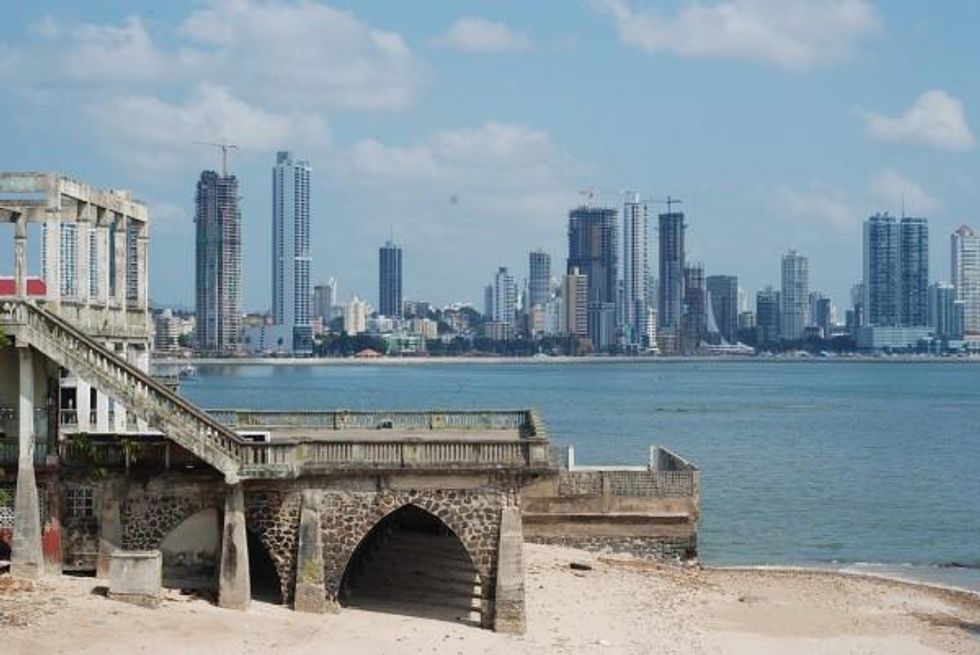
(Photo: Celine Massa / Flickr)
Unlike many travelers, I wasn't in Panama City to launder my ill-gotten cash or to hide my profits from meddling tax collectors (not least because I have neither). I was in search of beautiful beaches and perfect waves, both of which the country is well known for.
It was striking, however, that the most attractive resource the country advertises to the global elite is a hands-off business and tax climate seemingly designed for exploitation.
According to my cab driver (and Reuters), drug cartels are responsible for much of the building boom in Panama City.
For cash-laden criminals unable to drop their funds in a checking account, investing in a Panamanian commercial building makes a lot of sense. They carry excess cash into the country by hand and convert it into an appreciating asset that can remain empty for years. Never mind that many Panamanians live in rickety shacks and dire poverty.
Many who take advantage of Panama's lax business climate never have to step foot in the country. Named in the Panama Papers were 12 current or former world leaders, 128 other public officials and politicians, and hundreds of other elites -- from well known celebrities to enigmatic businessmen -- from over 200 countries.
They each in some way used Mossack Fonseca to create hard-to-trace shell companies to hide their assets. Those companies helped their owners evade taxes, public scrutiny, legal action, or all three.
Iceland's prime minister, Sigmundur Gunnlaugsson, was forced to step down in the face of massive public protests after he was named in the leak. British Prime Minister David Cameron, Russian leader Vladimir Putin, and famous soccer player Lionel Messi have faced significant public scrutiny as well.
Notably, few American names have been listed to date. That could change in revelations to come, but it also might not. States like Delaware offer very similar hands-off approaches to regulation that individuals and companies can exploit to hide their business dealings without going overseas.
One single address in Wilmington, for example -- 1209 North Orange Street -- is listed as the headquarters for 285,000 separate businesses exploiting Delaware's lax laws. Indeed, both Hillary Clinton and Donald Trump have firms registered in that two-story office building.
In fact, the Tax Justice Network ranks the United States third in the world for financial secrecy, behind only Switzerland and Hong Kong. Panama is No.13.
As the saying goes, behind every great fortune is a great crime. And the Panama Papers provide the tools to begin prosecuting some of the more egregious crimes of tax evasion and corporate irresponsibility. Many countries have already begun to take action on this front, the United States included.
Perhaps more importantly, the leak provides an impetus for much-needed public pressure to fix our rules so they work for everyone -- not just the tax-dodging elites and their shady shell corporations.
The first thing you notice on the cab ride from the airport to downtown Panama City is the skyscrapers. They're architecturally beautiful, but jumbled together as if there was no plan or consideration for how they might look next to one another.
What you might not notice is that they're nearly all empty.
Panama, a small Central American country with just 4 million people, has dominated the news in recent weeks.
For that you can thank the Panama Papers -- a massive leak of private documents from the Panamanian law firm Mossack Fonseca, which serves well-heeled companies and individuals all over the world. The leaks exposed a vast global system of shady offshore tax shelters and the global elites that benefit from them.
A few months before Panama landed on the front pages of nearly every newspaper in the world, I visited the country and got a look at those empty buildings firsthand.
(Photo: Celine Massa / Flickr)
Unlike many travelers, I wasn't in Panama City to launder my ill-gotten cash or to hide my profits from meddling tax collectors (not least because I have neither). I was in search of beautiful beaches and perfect waves, both of which the country is well known for.
It was striking, however, that the most attractive resource the country advertises to the global elite is a hands-off business and tax climate seemingly designed for exploitation.
According to my cab driver (and Reuters), drug cartels are responsible for much of the building boom in Panama City.
For cash-laden criminals unable to drop their funds in a checking account, investing in a Panamanian commercial building makes a lot of sense. They carry excess cash into the country by hand and convert it into an appreciating asset that can remain empty for years. Never mind that many Panamanians live in rickety shacks and dire poverty.
Many who take advantage of Panama's lax business climate never have to step foot in the country. Named in the Panama Papers were 12 current or former world leaders, 128 other public officials and politicians, and hundreds of other elites -- from well known celebrities to enigmatic businessmen -- from over 200 countries.
They each in some way used Mossack Fonseca to create hard-to-trace shell companies to hide their assets. Those companies helped their owners evade taxes, public scrutiny, legal action, or all three.
Iceland's prime minister, Sigmundur Gunnlaugsson, was forced to step down in the face of massive public protests after he was named in the leak. British Prime Minister David Cameron, Russian leader Vladimir Putin, and famous soccer player Lionel Messi have faced significant public scrutiny as well.
Notably, few American names have been listed to date. That could change in revelations to come, but it also might not. States like Delaware offer very similar hands-off approaches to regulation that individuals and companies can exploit to hide their business dealings without going overseas.
One single address in Wilmington, for example -- 1209 North Orange Street -- is listed as the headquarters for 285,000 separate businesses exploiting Delaware's lax laws. Indeed, both Hillary Clinton and Donald Trump have firms registered in that two-story office building.
In fact, the Tax Justice Network ranks the United States third in the world for financial secrecy, behind only Switzerland and Hong Kong. Panama is No.13.
As the saying goes, behind every great fortune is a great crime. And the Panama Papers provide the tools to begin prosecuting some of the more egregious crimes of tax evasion and corporate irresponsibility. Many countries have already begun to take action on this front, the United States included.
Perhaps more importantly, the leak provides an impetus for much-needed public pressure to fix our rules so they work for everyone -- not just the tax-dodging elites and their shady shell corporations.