

SUBSCRIBE TO OUR FREE NEWSLETTER
Daily news & progressive opinion—funded by the people, not the corporations—delivered straight to your inbox.
5
#000000
#FFFFFF
To donate by check, phone, or other method, see our More Ways to Give page.


Daily news & progressive opinion—funded by the people, not the corporations—delivered straight to your inbox.
When scholars at University of California, Berkeley, recently released a study finding that low wages in the fast food industry cost taxpayers $7 billion every year in social supports to subsidize salaries of low-income workers, they ran into a respectable-sounding opponent. The professors had argued that the minimum wage should be increased to relieve the burden on taxpayers who underwrite supersize restaurant industry profits.
But as the bona fide academic study rolled out, multiple media outlets ran comments criticizing the report's numbers and methodology from the scholarly sounding "Employment Policies Institute." The Austin Business Journal characterized EPI as a think tank "which studies employment growth," while the Miami Herald ran a quote from Michael Saltsman, whom the paper named as EPI's "research director."
For his part, Saltsman ran aggressive Op-Eds against any minimum wage increase in papers such as the the Missoulian, where he was described as EPI's "research fellow." In an Op-Ed he wrote for the Washington Post, his title was listed as EPI's "research director" but with a notation that EPI "receives funding from restaurants, among other sources." But even this partial disclosure provides a disservice to readers in the nation's capital.
In fact, the Employment Policies Institute operates from the same office suite as Berman and Co., a public relations firm owned by Richard Berman. This is not an opinion; it's a fact anyone can verify by viewing EPI and Berman and Co.'s websites. In such a depressed media environment -- where there are four public relations flacks for every reporter, compared to a 1-to-1 ratio in the 1960s - it is not surprising that a P.R. company could successfully rebrand itself as a think tank and capitalize on an acronym held by an actual think tank, the Economic Policy Institute, with 20 staff and 36 respected research associates.

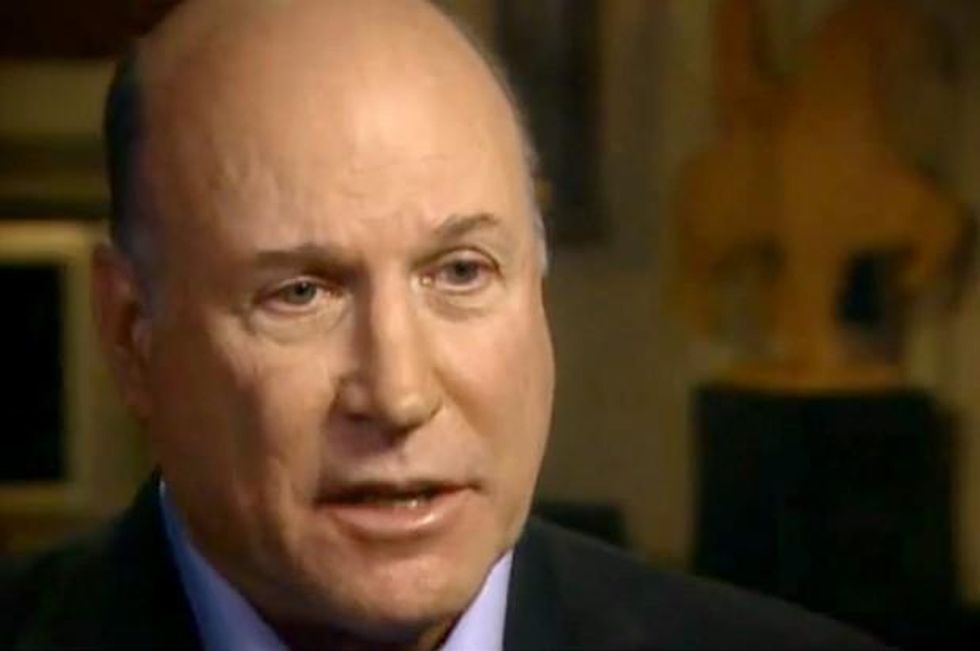
At the Center for Media and Democracy, we have spent 20 years tracking disinformation and spin, and Richard Berman has long been one of our favorite research subjects. Berman came out of the restaurant industry, spending several years as a top executive at Steak and Ale before launching Berman and Co. to help advocate for corporate America. His clients have included tobacco companies (for which he formed an entity he called the Center for Consumer Freedom) and the soda makers (for which he created the American Beverage Institute). He was once profiled on a "60 Minutes" piece titled "Dr. Evil." But one of his most successful products has been the Employment Policies Institute.
EPI regularly opines in the press on a host of topics. Recently it has been working to show that restaurant workers don't need higher wages or paid sick days, but few Americans are informed by the press that this "think tank" is just one or two individuals working for spinmeister Berman, likely on a contract for the restaurant industry.
We recently analyzed three years of newspaper stories from across the country that quoted from EPI or Michael Saltsman.
In 83 percent of the stories we examined, reporters provided readers with no information about EPI's relationship with Berman and Co. In most cases, journalists stated that EPI is a "Washington DC nonprofit" and called Saltsman a "research director." In some instances, reporters took tentative steps in the right direction and called EPI "conservative" or "pro-business." Only about 3 percent of the time did they correctly link EPI to Berman and Co.
Failing to note EPI's role as an arm of Berman and Co. fools readers into thinking it is a legitimate and independent voice in national politics. In 37 percent of stories we found reporters tapped EPI to counter positions by government experts or politicians; in 39 percent EPI was used to counter policy experts at nonprofits; and 22 percent of the time, EPI was used as a counterpoint to academics at American universities.
Certainly corporations have a right to have their voice heard, but that voice should be their own, not that of a phony expert on retainer.
Dear Common Dreams reader, It’s been nearly 30 years since I co-founded Common Dreams with my late wife, Lina Newhouser. We had the radical notion that journalism should serve the public good, not corporate profits. It was clear to us from the outset what it would take to build such a project. No paid advertisements. No corporate sponsors. No millionaire publisher telling us what to think or do. Many people said we wouldn't last a year, but we proved those doubters wrong. Together with a tremendous team of journalists and dedicated staff, we built an independent media outlet free from the constraints of profits and corporate control. Our mission has always been simple: To inform. To inspire. To ignite change for the common good. Building Common Dreams was not easy. Our survival was never guaranteed. When you take on the most powerful forces—Wall Street greed, fossil fuel industry destruction, Big Tech lobbyists, and uber-rich oligarchs who have spent billions upon billions rigging the economy and democracy in their favor—the only bulwark you have is supporters who believe in your work. But here’s the urgent message from me today. It's never been this bad out there. And it's never been this hard to keep us going. At the very moment Common Dreams is most needed, the threats we face are intensifying. We need your support now more than ever. We don't accept corporate advertising and never will. We don't have a paywall because we don't think people should be blocked from critical news based on their ability to pay. Everything we do is funded by the donations of readers like you. When everyone does the little they can afford, we are strong. But if that support retreats or dries up, so do we. Will you donate now to make sure Common Dreams not only survives but thrives? —Craig Brown, Co-founder |
When scholars at University of California, Berkeley, recently released a study finding that low wages in the fast food industry cost taxpayers $7 billion every year in social supports to subsidize salaries of low-income workers, they ran into a respectable-sounding opponent. The professors had argued that the minimum wage should be increased to relieve the burden on taxpayers who underwrite supersize restaurant industry profits.

But as the bona fide academic study rolled out, multiple media outlets ran comments criticizing the report's numbers and methodology from the scholarly sounding "Employment Policies Institute." The Austin Business Journal characterized EPI as a think tank "which studies employment growth," while the Miami Herald ran a quote from Michael Saltsman, whom the paper named as EPI's "research director."
For his part, Saltsman ran aggressive Op-Eds against any minimum wage increase in papers such as the the Missoulian, where he was described as EPI's "research fellow." In an Op-Ed he wrote for the Washington Post, his title was listed as EPI's "research director" but with a notation that EPI "receives funding from restaurants, among other sources." But even this partial disclosure provides a disservice to readers in the nation's capital.
In fact, the Employment Policies Institute operates from the same office suite as Berman and Co., a public relations firm owned by Richard Berman. This is not an opinion; it's a fact anyone can verify by viewing EPI and Berman and Co.'s websites. In such a depressed media environment -- where there are four public relations flacks for every reporter, compared to a 1-to-1 ratio in the 1960s - it is not surprising that a P.R. company could successfully rebrand itself as a think tank and capitalize on an acronym held by an actual think tank, the Economic Policy Institute, with 20 staff and 36 respected research associates.
At the Center for Media and Democracy, we have spent 20 years tracking disinformation and spin, and Richard Berman has long been one of our favorite research subjects. Berman came out of the restaurant industry, spending several years as a top executive at Steak and Ale before launching Berman and Co. to help advocate for corporate America. His clients have included tobacco companies (for which he formed an entity he called the Center for Consumer Freedom) and the soda makers (for which he created the American Beverage Institute). He was once profiled on a "60 Minutes" piece titled "Dr. Evil." But one of his most successful products has been the Employment Policies Institute.
EPI regularly opines in the press on a host of topics. Recently it has been working to show that restaurant workers don't need higher wages or paid sick days, but few Americans are informed by the press that this "think tank" is just one or two individuals working for spinmeister Berman, likely on a contract for the restaurant industry.
We recently analyzed three years of newspaper stories from across the country that quoted from EPI or Michael Saltsman.
In 83 percent of the stories we examined, reporters provided readers with no information about EPI's relationship with Berman and Co. In most cases, journalists stated that EPI is a "Washington DC nonprofit" and called Saltsman a "research director." In some instances, reporters took tentative steps in the right direction and called EPI "conservative" or "pro-business." Only about 3 percent of the time did they correctly link EPI to Berman and Co.
Failing to note EPI's role as an arm of Berman and Co. fools readers into thinking it is a legitimate and independent voice in national politics. In 37 percent of stories we found reporters tapped EPI to counter positions by government experts or politicians; in 39 percent EPI was used to counter policy experts at nonprofits; and 22 percent of the time, EPI was used as a counterpoint to academics at American universities.
Certainly corporations have a right to have their voice heard, but that voice should be their own, not that of a phony expert on retainer.
When scholars at University of California, Berkeley, recently released a study finding that low wages in the fast food industry cost taxpayers $7 billion every year in social supports to subsidize salaries of low-income workers, they ran into a respectable-sounding opponent. The professors had argued that the minimum wage should be increased to relieve the burden on taxpayers who underwrite supersize restaurant industry profits.

But as the bona fide academic study rolled out, multiple media outlets ran comments criticizing the report's numbers and methodology from the scholarly sounding "Employment Policies Institute." The Austin Business Journal characterized EPI as a think tank "which studies employment growth," while the Miami Herald ran a quote from Michael Saltsman, whom the paper named as EPI's "research director."
For his part, Saltsman ran aggressive Op-Eds against any minimum wage increase in papers such as the the Missoulian, where he was described as EPI's "research fellow." In an Op-Ed he wrote for the Washington Post, his title was listed as EPI's "research director" but with a notation that EPI "receives funding from restaurants, among other sources." But even this partial disclosure provides a disservice to readers in the nation's capital.
In fact, the Employment Policies Institute operates from the same office suite as Berman and Co., a public relations firm owned by Richard Berman. This is not an opinion; it's a fact anyone can verify by viewing EPI and Berman and Co.'s websites. In such a depressed media environment -- where there are four public relations flacks for every reporter, compared to a 1-to-1 ratio in the 1960s - it is not surprising that a P.R. company could successfully rebrand itself as a think tank and capitalize on an acronym held by an actual think tank, the Economic Policy Institute, with 20 staff and 36 respected research associates.
At the Center for Media and Democracy, we have spent 20 years tracking disinformation and spin, and Richard Berman has long been one of our favorite research subjects. Berman came out of the restaurant industry, spending several years as a top executive at Steak and Ale before launching Berman and Co. to help advocate for corporate America. His clients have included tobacco companies (for which he formed an entity he called the Center for Consumer Freedom) and the soda makers (for which he created the American Beverage Institute). He was once profiled on a "60 Minutes" piece titled "Dr. Evil." But one of his most successful products has been the Employment Policies Institute.
EPI regularly opines in the press on a host of topics. Recently it has been working to show that restaurant workers don't need higher wages or paid sick days, but few Americans are informed by the press that this "think tank" is just one or two individuals working for spinmeister Berman, likely on a contract for the restaurant industry.
We recently analyzed three years of newspaper stories from across the country that quoted from EPI or Michael Saltsman.
In 83 percent of the stories we examined, reporters provided readers with no information about EPI's relationship with Berman and Co. In most cases, journalists stated that EPI is a "Washington DC nonprofit" and called Saltsman a "research director." In some instances, reporters took tentative steps in the right direction and called EPI "conservative" or "pro-business." Only about 3 percent of the time did they correctly link EPI to Berman and Co.
Failing to note EPI's role as an arm of Berman and Co. fools readers into thinking it is a legitimate and independent voice in national politics. In 37 percent of stories we found reporters tapped EPI to counter positions by government experts or politicians; in 39 percent EPI was used to counter policy experts at nonprofits; and 22 percent of the time, EPI was used as a counterpoint to academics at American universities.
Certainly corporations have a right to have their voice heard, but that voice should be their own, not that of a phony expert on retainer.