SUBSCRIBE TO OUR FREE NEWSLETTER
Daily news & progressive opinion—funded by the people, not the corporations—delivered straight to your inbox.
5
#000000
#FFFFFF
To donate by check, phone, or other method, see our More Ways to Give page.
Over the couple days, several media outlets have reported that the salmonella outbreak that has sickened nearly 300 people in 17 states has become a symbol of the government shutdown or its "worst-case scenario realized." And while the shutdown has absolutely made things worse (I'll get to how later), it's important to realize that this crisis has been brewing for months and its origins go much deeper than this latest episode of House Republicans holding our economy hostage.
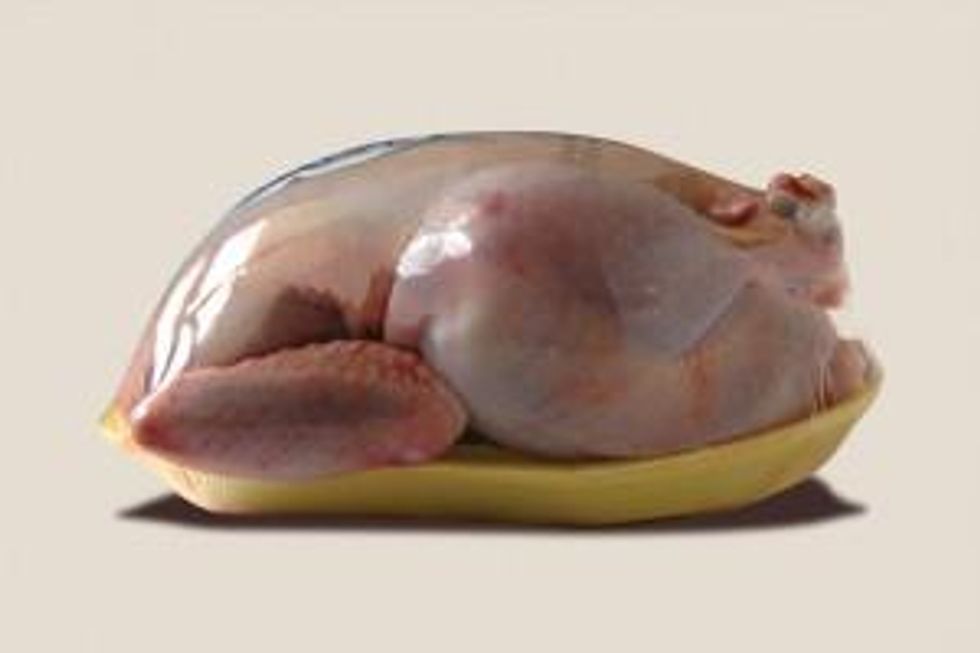
The Centers for Disease Control (CDC) has been leading the investigation into this outbreak and it reported yesterday that the first reported illness associated with this outbreak occurred in March but it took over seven months to figure out that it was poultry from these three Foster Farm facilities that caused the illnesses. Unfortunately, CDC's investigation was interrupted by the Federal Government shutdown on October 1 when most of their foodborne illness analysts were furloughed. Some of them have been called back to work as a result of the action taken by FSIS on October 7 in order to resume their investigation.
Despite the quantity and severity of these illnesses and FSIS fingering these three Foster Farms plants as the culprits for putting this contaminated chicken into commerce, no recalls have been issued of any products from these plants that might still be in grocery stores or in people's homes. Why? FSIS claims that it still does not know the specific products implicated in the outbreak.
There a bigger issue at play here. Unlike E.coli 0157:H7 in beef, no strain of salmonella is considered to be an adulterant in poultry. Poultry processors can put products into commerce that have salmonella contamination on them and FSIS does not the legal authority to stop them until people get sick. Spokespersons for Foster Farms have argued in recent press statements that it was the consumers' fault that they got sick because they did not cook the chicken thoroughly. Nice try, but there is something drastically wrong going on at Foster Farms that is putting consumers at great risk.
The current foodborne illness outbreak is the second one this year that has implicated Foster Farms products. Between June 2012 and July 2013, the CDC investigated an outbreak of foodborne illnesses also involving poultry from two other Foster Farms plants. In that outbreak, 134 consumers got sick and 33 were hospitalized. It also involved Salmonella Heidelberg. What did FSIS do in that case? Nothing. Not even a "public health alert." The agency claimed that there was not enough evidence linking specific products to the outbreak. Sounds like a broken record, doesn't it? According to the last CDC update on this earlier outbreak, FSIS was supposed to write a report on its findings. Guess what? It still has not been written yet and now we are involved with another outbreak involving the same company. I wonder how long the report on the current outbreak will take to write.
FSIS did manage to hold a briefing call with consumer groups today on the status of its actions related to the current Foster Farms outbreak. I was on that call. FSIS officials revealed that the agency conducted intensified salmonella testing in four Foster Farms plants during the month of September. The agency found that the salmonella strains implicated in the current outbreak were found in three plants. That led the agency to issue the October 7 "public health alert" and the agency put Foster Farms on notice that it had 72-hours to change its plant processes to deal with the high levels of salmonella on its poultry products or the agency would shut them down.
The company can still put its products into commerce while taking its corrective actions during the 72-hour window. It not acceptable, but at least the agency finally acknowledged that Foster Farms has a problem; small consolation to the consumers who have already gotten sick. The FSIS officials also revealed that the USDA inspectors assigned to those plants had cited Foster Farms for regulatory violations that indicated a loss of food safety process controls, which contributed to the October 7 notice to the company.
Foster Farms is a big operation. It is fully vertically integrated, which means it owns its own hatcheries, raises its own poultry for slaughter and does its own processing and packaging. I used to work for a member of Congress who represented the headquarters of Foster Farms. Whenever someone from Foster Farms called the office, everything came to a screeching halt. What has been looming in the back of my mind is that Foster Farms is pulling all of its political strings to prevent stronger regulatory action from being taken. I hope I am wrong, but I am also a realist.
These latest salmonella outbreaks show that we need more government oversight, not less. Which is why we've been sounding the alarms about USDA's rigged salmonella testing and its proposal to deregulate poultry inspection by drastically reducing the number of USDA inspectors assigned to poultry plants and turning those inspection responsibilities over to companies so that they can police themselves.
Then there's the serious problem of antibiotic misuse in the raising of food animals, which is contributing to the ineffectiveness of antibiotics to treat human diseases. The fact that some consumers have gotten sick from strains of antibiotic resistant salmonella should send a wake-up call to our policymakers. But in case your elected representatives have hit the snooze button, send them another wake-up call now.
Over the couple days, several media outlets have reported that the salmonella outbreak that has sickened nearly 300 people in 17 states has become a symbol of the government shutdown or its "worst-case scenario realized." And while the shutdown has absolutely made things worse (I'll get to how later), it's important to realize that this crisis has been brewing for months and its origins go much deeper than this latest episode of House Republicans holding our economy hostage.
The Centers for Disease Control (CDC) has been leading the investigation into this outbreak and it reported yesterday that the first reported illness associated with this outbreak occurred in March but it took over seven months to figure out that it was poultry from these three Foster Farm facilities that caused the illnesses. Unfortunately, CDC's investigation was interrupted by the Federal Government shutdown on October 1 when most of their foodborne illness analysts were furloughed. Some of them have been called back to work as a result of the action taken by FSIS on October 7 in order to resume their investigation.
Despite the quantity and severity of these illnesses and FSIS fingering these three Foster Farms plants as the culprits for putting this contaminated chicken into commerce, no recalls have been issued of any products from these plants that might still be in grocery stores or in people's homes. Why? FSIS claims that it still does not know the specific products implicated in the outbreak.
There a bigger issue at play here. Unlike E.coli 0157:H7 in beef, no strain of salmonella is considered to be an adulterant in poultry. Poultry processors can put products into commerce that have salmonella contamination on them and FSIS does not the legal authority to stop them until people get sick. Spokespersons for Foster Farms have argued in recent press statements that it was the consumers' fault that they got sick because they did not cook the chicken thoroughly. Nice try, but there is something drastically wrong going on at Foster Farms that is putting consumers at great risk.
The current foodborne illness outbreak is the second one this year that has implicated Foster Farms products. Between June 2012 and July 2013, the CDC investigated an outbreak of foodborne illnesses also involving poultry from two other Foster Farms plants. In that outbreak, 134 consumers got sick and 33 were hospitalized. It also involved Salmonella Heidelberg. What did FSIS do in that case? Nothing. Not even a "public health alert." The agency claimed that there was not enough evidence linking specific products to the outbreak. Sounds like a broken record, doesn't it? According to the last CDC update on this earlier outbreak, FSIS was supposed to write a report on its findings. Guess what? It still has not been written yet and now we are involved with another outbreak involving the same company. I wonder how long the report on the current outbreak will take to write.
FSIS did manage to hold a briefing call with consumer groups today on the status of its actions related to the current Foster Farms outbreak. I was on that call. FSIS officials revealed that the agency conducted intensified salmonella testing in four Foster Farms plants during the month of September. The agency found that the salmonella strains implicated in the current outbreak were found in three plants. That led the agency to issue the October 7 "public health alert" and the agency put Foster Farms on notice that it had 72-hours to change its plant processes to deal with the high levels of salmonella on its poultry products or the agency would shut them down.
The company can still put its products into commerce while taking its corrective actions during the 72-hour window. It not acceptable, but at least the agency finally acknowledged that Foster Farms has a problem; small consolation to the consumers who have already gotten sick. The FSIS officials also revealed that the USDA inspectors assigned to those plants had cited Foster Farms for regulatory violations that indicated a loss of food safety process controls, which contributed to the October 7 notice to the company.
Foster Farms is a big operation. It is fully vertically integrated, which means it owns its own hatcheries, raises its own poultry for slaughter and does its own processing and packaging. I used to work for a member of Congress who represented the headquarters of Foster Farms. Whenever someone from Foster Farms called the office, everything came to a screeching halt. What has been looming in the back of my mind is that Foster Farms is pulling all of its political strings to prevent stronger regulatory action from being taken. I hope I am wrong, but I am also a realist.
These latest salmonella outbreaks show that we need more government oversight, not less. Which is why we've been sounding the alarms about USDA's rigged salmonella testing and its proposal to deregulate poultry inspection by drastically reducing the number of USDA inspectors assigned to poultry plants and turning those inspection responsibilities over to companies so that they can police themselves.
Then there's the serious problem of antibiotic misuse in the raising of food animals, which is contributing to the ineffectiveness of antibiotics to treat human diseases. The fact that some consumers have gotten sick from strains of antibiotic resistant salmonella should send a wake-up call to our policymakers. But in case your elected representatives have hit the snooze button, send them another wake-up call now.
Over the couple days, several media outlets have reported that the salmonella outbreak that has sickened nearly 300 people in 17 states has become a symbol of the government shutdown or its "worst-case scenario realized." And while the shutdown has absolutely made things worse (I'll get to how later), it's important to realize that this crisis has been brewing for months and its origins go much deeper than this latest episode of House Republicans holding our economy hostage.
The Centers for Disease Control (CDC) has been leading the investigation into this outbreak and it reported yesterday that the first reported illness associated with this outbreak occurred in March but it took over seven months to figure out that it was poultry from these three Foster Farm facilities that caused the illnesses. Unfortunately, CDC's investigation was interrupted by the Federal Government shutdown on October 1 when most of their foodborne illness analysts were furloughed. Some of them have been called back to work as a result of the action taken by FSIS on October 7 in order to resume their investigation.
Despite the quantity and severity of these illnesses and FSIS fingering these three Foster Farms plants as the culprits for putting this contaminated chicken into commerce, no recalls have been issued of any products from these plants that might still be in grocery stores or in people's homes. Why? FSIS claims that it still does not know the specific products implicated in the outbreak.
There a bigger issue at play here. Unlike E.coli 0157:H7 in beef, no strain of salmonella is considered to be an adulterant in poultry. Poultry processors can put products into commerce that have salmonella contamination on them and FSIS does not the legal authority to stop them until people get sick. Spokespersons for Foster Farms have argued in recent press statements that it was the consumers' fault that they got sick because they did not cook the chicken thoroughly. Nice try, but there is something drastically wrong going on at Foster Farms that is putting consumers at great risk.
The current foodborne illness outbreak is the second one this year that has implicated Foster Farms products. Between June 2012 and July 2013, the CDC investigated an outbreak of foodborne illnesses also involving poultry from two other Foster Farms plants. In that outbreak, 134 consumers got sick and 33 were hospitalized. It also involved Salmonella Heidelberg. What did FSIS do in that case? Nothing. Not even a "public health alert." The agency claimed that there was not enough evidence linking specific products to the outbreak. Sounds like a broken record, doesn't it? According to the last CDC update on this earlier outbreak, FSIS was supposed to write a report on its findings. Guess what? It still has not been written yet and now we are involved with another outbreak involving the same company. I wonder how long the report on the current outbreak will take to write.
FSIS did manage to hold a briefing call with consumer groups today on the status of its actions related to the current Foster Farms outbreak. I was on that call. FSIS officials revealed that the agency conducted intensified salmonella testing in four Foster Farms plants during the month of September. The agency found that the salmonella strains implicated in the current outbreak were found in three plants. That led the agency to issue the October 7 "public health alert" and the agency put Foster Farms on notice that it had 72-hours to change its plant processes to deal with the high levels of salmonella on its poultry products or the agency would shut them down.
The company can still put its products into commerce while taking its corrective actions during the 72-hour window. It not acceptable, but at least the agency finally acknowledged that Foster Farms has a problem; small consolation to the consumers who have already gotten sick. The FSIS officials also revealed that the USDA inspectors assigned to those plants had cited Foster Farms for regulatory violations that indicated a loss of food safety process controls, which contributed to the October 7 notice to the company.
Foster Farms is a big operation. It is fully vertically integrated, which means it owns its own hatcheries, raises its own poultry for slaughter and does its own processing and packaging. I used to work for a member of Congress who represented the headquarters of Foster Farms. Whenever someone from Foster Farms called the office, everything came to a screeching halt. What has been looming in the back of my mind is that Foster Farms is pulling all of its political strings to prevent stronger regulatory action from being taken. I hope I am wrong, but I am also a realist.
These latest salmonella outbreaks show that we need more government oversight, not less. Which is why we've been sounding the alarms about USDA's rigged salmonella testing and its proposal to deregulate poultry inspection by drastically reducing the number of USDA inspectors assigned to poultry plants and turning those inspection responsibilities over to companies so that they can police themselves.
Then there's the serious problem of antibiotic misuse in the raising of food animals, which is contributing to the ineffectiveness of antibiotics to treat human diseases. The fact that some consumers have gotten sick from strains of antibiotic resistant salmonella should send a wake-up call to our policymakers. But in case your elected representatives have hit the snooze button, send them another wake-up call now.