
Undoubtedly, this is a huge victory for the activists who have been doing work around the issue of stop-and-frisk for years, and perhaps an even bigger victory for the black and Latino young men whose lives have been disproportionately disrupted by repeated violations of their rights. In her ruling, Scheindlin wrote that "the policy encourages the targeting of young black and Hispanic men based on their prevalence in local crime complaints. This is a form of racial profiling." The ruling may not put an end to stop-and-frisk in its entirety, but at the very least there was a recognition from the court that for years the city's police force has engaged in a racist practice that has infringed upon the rights of millions.
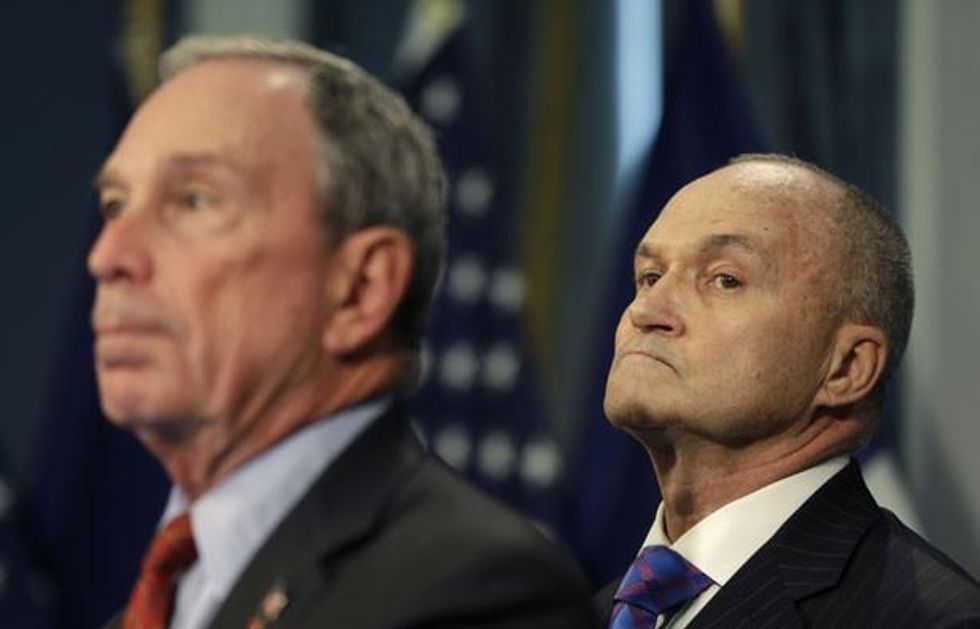
The same can't be said of NYC's current political leadership. In a press conference yesterday afternoon, Mayor Michael Bloomberg and police commissioner Ray Kelly were visibly dismayed with the ruling. Stop-and-frisk has been a signature crime-fighting tool during the Bloomberg years, one that defines his legacy. Kelly has received praise from high places, in large part because of the work he has done in executing the stop-and-frisk policy. For a judge to rule their "success" unconstitutional surely grates. But their defense of "stop-and-frisk," despite weak attempts to deny as much, went on to show just how racist it is.
To start, Bloomberg noted the racial diversity of the NYPD, presumably to protect against charges of racism by pointing to the fact that people of color are active parts of the police force. But having your rights violated by someone who looks like you doesn't somehow make that violation less racist. The fact is that out of roughly 5 million stops conducted over a decade, an alarming majority of them involved black or Latino men, and almost 90 percent of those stops turned up no evidence of wrongdoing. You can add some color to the faces conducting the stops, but that's an institutionalized form of racism that doesn't rely on white skin to operate.
He didn't stop there. Bloomberg then deployed some lazy racist rhetoric about how the greatest perpetrators of crime happen to be young black and Latino men, so it only makes sense that the stops would disproportionately affect them. It's the close relative to his argument that the NYPD has been, given crime statistics, stopping too many white people. Bloomberg and Kelly added the paternalistic line of reasoning that it was young black and Latino men who would also disproportionately be the victims of crimes stop-and-frisk has prevented, so the policy is really for their own benefit. Aside from erasing the opinions of those whom the policy is supposedly meant to protect, that reasoning also perpetuates the racist idea that black and Latino men are inherently violent and criminal, and therefore ignoring their rights is a necessary measure of protection. It also flies in the face of the evidence--stops of white people turn up higher rates of criminal activity. Based on the results of their own policy, it would have been prudent to shift the tactic to include more stops of white people, something that never happened and would likely have caused actual riots in the street.
But none of that is what Bloomberg and Kelly wanted us to focus on. Their most compelling argument: stop-and-frisk works. The city's homicide rates are down and the police have recovered more than 8,000 guns that may have been used in potential crimes. For the sake of argument, let's say that stop-and-frisk actually did reduce crime (a claim for which there is no actual evidence, only Bloomberg's anecdotal belief that it instills fear in would-be criminals to the point they decide a life of crime isn't worth the police harassment they're going to receive). Even if that were the case, it still does not justify the use of a racist tactic that violates basic rights guaranteed to every citizen of this country. It's disingenuous to suggest that the only way to reduce crime is to decide that the rights of certain segments of the population can and should be violated. Not only does this ignore the true drivers of crime (and not call into question whether some of these infractions should even be crimes, e.g., marijuana possession), it's a frustratingly insidious justification for racism.
To recap: Bloomberg and Kelly denied that stop-and-frisk is racist, but then claimed it wasn't racist enough, and now want everyone to believe that even if it is racist it doesn't matter because it works. This is post-racial colorblind racism in all its glory.
Going forward, it will be interesting to see what type of reforms to stop-and-frisk are implemented in order to make it constitutional, though I doubt it can be any less racist. We are a society that starts with the presumption the greatest purveyors of crime are young black and Latino men. Any policy based around the idea of reasonable suspicion that then leaves that up to the discretion of people reared with that pervasive racist ideology will be disproportionately suspicious of men of color. Declaring stop-and-frisk unconstitutional is an important first step, but undoing the racism that creates the justification for the policy will be a much longer process.
Undoubtedly, this is a huge victory for the activists who have been doing work around the issue of stop-and-frisk for years, and perhaps an even bigger victory for the black and Latino young men whose lives have been disproportionately disrupted by repeated violations of their rights. In her ruling, Scheindlin wrote that "the policy encourages the targeting of young black and Hispanic men based on their prevalence in local crime complaints. This is a form of racial profiling." The ruling may not put an end to stop-and-frisk in its entirety, but at the very least there was a recognition from the court that for years the city's police force has engaged in a racist practice that has infringed upon the rights of millions.
The same can't be said of NYC's current political leadership. In a press conference yesterday afternoon, Mayor Michael Bloomberg and police commissioner Ray Kelly were visibly dismayed with the ruling. Stop-and-frisk has been a signature crime-fighting tool during the Bloomberg years, one that defines his legacy. Kelly has received praise from high places, in large part because of the work he has done in executing the stop-and-frisk policy. For a judge to rule their "success" unconstitutional surely grates. But their defense of "stop-and-frisk," despite weak attempts to deny as much, went on to show just how racist it is.
To start, Bloomberg noted the racial diversity of the NYPD, presumably to protect against charges of racism by pointing to the fact that people of color are active parts of the police force. But having your rights violated by someone who looks like you doesn't somehow make that violation less racist. The fact is that out of roughly 5 million stops conducted over a decade, an alarming majority of them involved black or Latino men, and almost 90 percent of those stops turned up no evidence of wrongdoing. You can add some color to the faces conducting the stops, but that's an institutionalized form of racism that doesn't rely on white skin to operate.
He didn't stop there. Bloomberg then deployed some lazy racist rhetoric about how the greatest perpetrators of crime happen to be young black and Latino men, so it only makes sense that the stops would disproportionately affect them. It's the close relative to his argument that the NYPD has been, given crime statistics, stopping too many white people. Bloomberg and Kelly added the paternalistic line of reasoning that it was young black and Latino men who would also disproportionately be the victims of crimes stop-and-frisk has prevented, so the policy is really for their own benefit. Aside from erasing the opinions of those whom the policy is supposedly meant to protect, that reasoning also perpetuates the racist idea that black and Latino men are inherently violent and criminal, and therefore ignoring their rights is a necessary measure of protection. It also flies in the face of the evidence--stops of white people turn up higher rates of criminal activity. Based on the results of their own policy, it would have been prudent to shift the tactic to include more stops of white people, something that never happened and would likely have caused actual riots in the street.
But none of that is what Bloomberg and Kelly wanted us to focus on. Their most compelling argument: stop-and-frisk works. The city's homicide rates are down and the police have recovered more than 8,000 guns that may have been used in potential crimes. For the sake of argument, let's say that stop-and-frisk actually did reduce crime (a claim for which there is no actual evidence, only Bloomberg's anecdotal belief that it instills fear in would-be criminals to the point they decide a life of crime isn't worth the police harassment they're going to receive). Even if that were the case, it still does not justify the use of a racist tactic that violates basic rights guaranteed to every citizen of this country. It's disingenuous to suggest that the only way to reduce crime is to decide that the rights of certain segments of the population can and should be violated. Not only does this ignore the true drivers of crime (and not call into question whether some of these infractions should even be crimes, e.g., marijuana possession), it's a frustratingly insidious justification for racism.
To recap: Bloomberg and Kelly denied that stop-and-frisk is racist, but then claimed it wasn't racist enough, and now want everyone to believe that even if it is racist it doesn't matter because it works. This is post-racial colorblind racism in all its glory.
Going forward, it will be interesting to see what type of reforms to stop-and-frisk are implemented in order to make it constitutional, though I doubt it can be any less racist. We are a society that starts with the presumption the greatest purveyors of crime are young black and Latino men. Any policy based around the idea of reasonable suspicion that then leaves that up to the discretion of people reared with that pervasive racist ideology will be disproportionately suspicious of men of color. Declaring stop-and-frisk unconstitutional is an important first step, but undoing the racism that creates the justification for the policy will be a much longer process.
Undoubtedly, this is a huge victory for the activists who have been doing work around the issue of stop-and-frisk for years, and perhaps an even bigger victory for the black and Latino young men whose lives have been disproportionately disrupted by repeated violations of their rights. In her ruling, Scheindlin wrote that "the policy encourages the targeting of young black and Hispanic men based on their prevalence in local crime complaints. This is a form of racial profiling." The ruling may not put an end to stop-and-frisk in its entirety, but at the very least there was a recognition from the court that for years the city's police force has engaged in a racist practice that has infringed upon the rights of millions.
The same can't be said of NYC's current political leadership. In a press conference yesterday afternoon, Mayor Michael Bloomberg and police commissioner Ray Kelly were visibly dismayed with the ruling. Stop-and-frisk has been a signature crime-fighting tool during the Bloomberg years, one that defines his legacy. Kelly has received praise from high places, in large part because of the work he has done in executing the stop-and-frisk policy. For a judge to rule their "success" unconstitutional surely grates. But their defense of "stop-and-frisk," despite weak attempts to deny as much, went on to show just how racist it is.
To start, Bloomberg noted the racial diversity of the NYPD, presumably to protect against charges of racism by pointing to the fact that people of color are active parts of the police force. But having your rights violated by someone who looks like you doesn't somehow make that violation less racist. The fact is that out of roughly 5 million stops conducted over a decade, an alarming majority of them involved black or Latino men, and almost 90 percent of those stops turned up no evidence of wrongdoing. You can add some color to the faces conducting the stops, but that's an institutionalized form of racism that doesn't rely on white skin to operate.
He didn't stop there. Bloomberg then deployed some lazy racist rhetoric about how the greatest perpetrators of crime happen to be young black and Latino men, so it only makes sense that the stops would disproportionately affect them. It's the close relative to his argument that the NYPD has been, given crime statistics, stopping too many white people. Bloomberg and Kelly added the paternalistic line of reasoning that it was young black and Latino men who would also disproportionately be the victims of crimes stop-and-frisk has prevented, so the policy is really for their own benefit. Aside from erasing the opinions of those whom the policy is supposedly meant to protect, that reasoning also perpetuates the racist idea that black and Latino men are inherently violent and criminal, and therefore ignoring their rights is a necessary measure of protection. It also flies in the face of the evidence--stops of white people turn up higher rates of criminal activity. Based on the results of their own policy, it would have been prudent to shift the tactic to include more stops of white people, something that never happened and would likely have caused actual riots in the street.
But none of that is what Bloomberg and Kelly wanted us to focus on. Their most compelling argument: stop-and-frisk works. The city's homicide rates are down and the police have recovered more than 8,000 guns that may have been used in potential crimes. For the sake of argument, let's say that stop-and-frisk actually did reduce crime (a claim for which there is no actual evidence, only Bloomberg's anecdotal belief that it instills fear in would-be criminals to the point they decide a life of crime isn't worth the police harassment they're going to receive). Even if that were the case, it still does not justify the use of a racist tactic that violates basic rights guaranteed to every citizen of this country. It's disingenuous to suggest that the only way to reduce crime is to decide that the rights of certain segments of the population can and should be violated. Not only does this ignore the true drivers of crime (and not call into question whether some of these infractions should even be crimes, e.g., marijuana possession), it's a frustratingly insidious justification for racism.
To recap: Bloomberg and Kelly denied that stop-and-frisk is racist, but then claimed it wasn't racist enough, and now want everyone to believe that even if it is racist it doesn't matter because it works. This is post-racial colorblind racism in all its glory.
Going forward, it will be interesting to see what type of reforms to stop-and-frisk are implemented in order to make it constitutional, though I doubt it can be any less racist. We are a society that starts with the presumption the greatest purveyors of crime are young black and Latino men. Any policy based around the idea of reasonable suspicion that then leaves that up to the discretion of people reared with that pervasive racist ideology will be disproportionately suspicious of men of color. Declaring stop-and-frisk unconstitutional is an important first step, but undoing the racism that creates the justification for the policy will be a much longer process.