

Every man holds his property subject to the general right of the community to regulate its use to whatever degree the public welfare may require it.
-- Theodore Roosevelt, August 31 Speech at Osawatomie
The difference in the devastation was enormous-so was the difference in the response.
When the nine-story building in Dhaka, Bangladesh, collapsed, 1127 people were killed. When the fertilizer plant in the town of West, Texas, exploded 15 people died. The property damage in both places was extensive. Bangladesh has said what it intends to do to try to prevent such future disasters. So has Texas.
Eight days after the Bangladesh explosion Bangladesh's prime minister, Sheikh Hasina, told CNN's Christine Amanpour that there are problems that beset the garment industry in that country (an acknowledgement that seems almost unnecessary given the number of accidents that have taken place there) but said the country was intent on taking steps to improve industry safety there. (In November 112 people were killed in a factory fire in Dhaka.) The prime minister said that a committee had been formed to make sure buildings and workers were safe and said: "This committee will submit the findings to the Cabinet committee and, side by side, we have been trying our best to improve the situation."
There are thousands of textile factories in Bangladesh and safety has long been a concern and a professed priority for the government although its professions have often been more aspirational than realized. Nonetheless, it is aware of the need to do more than has been done in the past and, as in the past, promises to do better in the future. A hopeful bit of news appeared when on May 14, 2013 it was announced that global retailers had agreed to a plan to help pay for fire safety and building improvements in Bangladesh. Texas offers a different perspective on the problem.
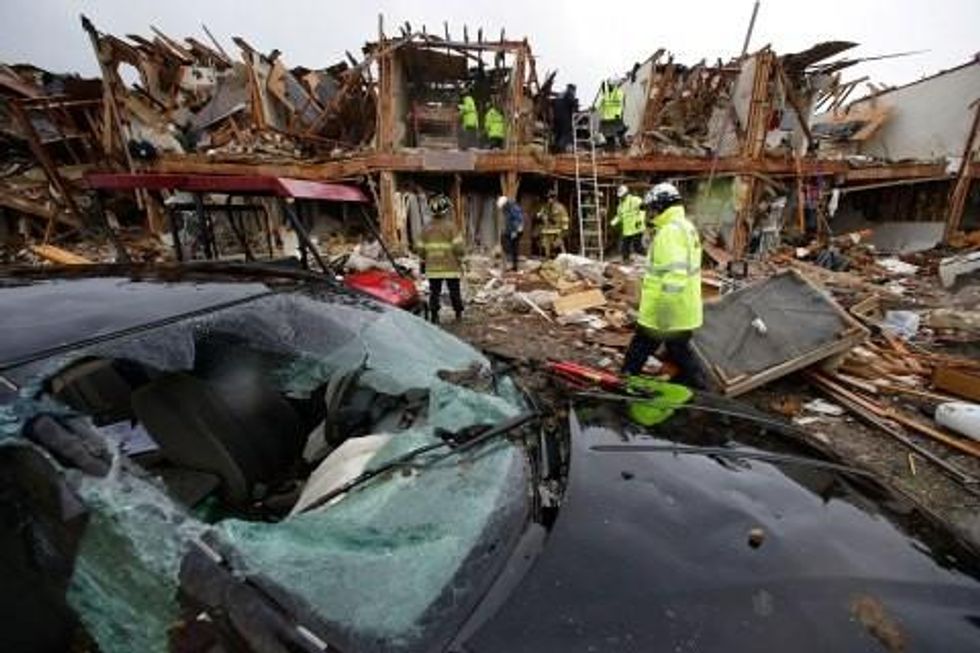
On April 17, 2013, the fertilizer plant in West exploded killing 15 people, injuring close to 200 people and damaging or destroying 150 buildings and homes. By Bangladeshi catastrophe standards it was barely worth reporting on. Nor did the April 17 explosion hold a candle to the Texas fertilizer explosion on April 16, 1947 that occurred while fertilizer was being loaded onto a freighter in Texas City, Texas. In that explosion some 581 people were killed, 3,500 were injured and property damages were in the neighborhood of $100 million. Nonetheless, the explosion in West that occurred almost 66 years to the day after the Texas City explosion was not an explosion to be sneezed at, even applying Texas "bigger is better" standards. What was most remarkable about the West explosion was not the explosion itself but the response of Texas officialdom to it.
According to the New York Times, five days after the explosion Governor Rick Perry was addressing a group of executives of companies he was hoping to lure to Texas because of its low taxes and aversion to regulation. The Dallas Morning News reported that he told those he was wooing, without further explanation, that spending more money on inspections would not have prevented the explosion. He said that he is comfortable with the state's level of oversight and explained that people "through their elected officials clearly send the message of their comfort with the amount of oversight." Chuck DeVore, the vice president of policy at the Texas Public Policy Foundation, agreed with the governor. He was quoted in the NYT as saying that the wrong response to such a disaster [West] would be for the state to hire "battalions of government regulators who are deployed into industry and presume to know more about running the factory than the people who own the factory and work there every day. " Included among those experts, of course, were the people who owned and worked at the West plant every day. As if to prove Mr. DeVore's point, the Houston Chronicle reports that Texas lawmakers have cut funding to those agencies in charge of workplace safety protections.
Like Bangladesh, Texas is not a stranger to terrible accidents in the work place. The New York Times reports that Texas has more work place casualties than any other state in the country. During each of the past 10 years it has had more than 400 fatalities. Between 2007 and 2012 fires and explosions at its chemical and industrial plants have inflicted as much property damage as explosions in all the other states combined. Texas has no statewide fire code and by statute small communities may not enact their own. Some commentators have said that if a fire code had been in place the West explosion might have been prevented. After the explosion one state legislator introduced a bill that would permit small rural counties to enact fire codes. The sponsor says he has already heard from business owners that such regulations could be financially burdensome.
The families of the West may think the loss of loved ones and the loss of property are financially burdensome. Those kinds of losses, however, do not make Texas a less business friendly state. Regulations do that. Bangladesh is trying to fix the problem that arose because it was too business friendly. Texas doesn't believe it has a problem. It will remain business friendly.
Every man holds his property subject to the general right of the community to regulate its use to whatever degree the public welfare may require it.
-- Theodore Roosevelt, August 31 Speech at Osawatomie
The difference in the devastation was enormous-so was the difference in the response.
When the nine-story building in Dhaka, Bangladesh, collapsed, 1127 people were killed. When the fertilizer plant in the town of West, Texas, exploded 15 people died. The property damage in both places was extensive. Bangladesh has said what it intends to do to try to prevent such future disasters. So has Texas.
Eight days after the Bangladesh explosion Bangladesh's prime minister, Sheikh Hasina, told CNN's Christine Amanpour that there are problems that beset the garment industry in that country (an acknowledgement that seems almost unnecessary given the number of accidents that have taken place there) but said the country was intent on taking steps to improve industry safety there. (In November 112 people were killed in a factory fire in Dhaka.) The prime minister said that a committee had been formed to make sure buildings and workers were safe and said: "This committee will submit the findings to the Cabinet committee and, side by side, we have been trying our best to improve the situation."
There are thousands of textile factories in Bangladesh and safety has long been a concern and a professed priority for the government although its professions have often been more aspirational than realized. Nonetheless, it is aware of the need to do more than has been done in the past and, as in the past, promises to do better in the future. A hopeful bit of news appeared when on May 14, 2013 it was announced that global retailers had agreed to a plan to help pay for fire safety and building improvements in Bangladesh. Texas offers a different perspective on the problem.
On April 17, 2013, the fertilizer plant in West exploded killing 15 people, injuring close to 200 people and damaging or destroying 150 buildings and homes. By Bangladeshi catastrophe standards it was barely worth reporting on. Nor did the April 17 explosion hold a candle to the Texas fertilizer explosion on April 16, 1947 that occurred while fertilizer was being loaded onto a freighter in Texas City, Texas. In that explosion some 581 people were killed, 3,500 were injured and property damages were in the neighborhood of $100 million. Nonetheless, the explosion in West that occurred almost 66 years to the day after the Texas City explosion was not an explosion to be sneezed at, even applying Texas "bigger is better" standards. What was most remarkable about the West explosion was not the explosion itself but the response of Texas officialdom to it.
According to the New York Times, five days after the explosion Governor Rick Perry was addressing a group of executives of companies he was hoping to lure to Texas because of its low taxes and aversion to regulation. The Dallas Morning News reported that he told those he was wooing, without further explanation, that spending more money on inspections would not have prevented the explosion. He said that he is comfortable with the state's level of oversight and explained that people "through their elected officials clearly send the message of their comfort with the amount of oversight." Chuck DeVore, the vice president of policy at the Texas Public Policy Foundation, agreed with the governor. He was quoted in the NYT as saying that the wrong response to such a disaster [West] would be for the state to hire "battalions of government regulators who are deployed into industry and presume to know more about running the factory than the people who own the factory and work there every day. " Included among those experts, of course, were the people who owned and worked at the West plant every day. As if to prove Mr. DeVore's point, the Houston Chronicle reports that Texas lawmakers have cut funding to those agencies in charge of workplace safety protections.
Like Bangladesh, Texas is not a stranger to terrible accidents in the work place. The New York Times reports that Texas has more work place casualties than any other state in the country. During each of the past 10 years it has had more than 400 fatalities. Between 2007 and 2012 fires and explosions at its chemical and industrial plants have inflicted as much property damage as explosions in all the other states combined. Texas has no statewide fire code and by statute small communities may not enact their own. Some commentators have said that if a fire code had been in place the West explosion might have been prevented. After the explosion one state legislator introduced a bill that would permit small rural counties to enact fire codes. The sponsor says he has already heard from business owners that such regulations could be financially burdensome.
The families of the West may think the loss of loved ones and the loss of property are financially burdensome. Those kinds of losses, however, do not make Texas a less business friendly state. Regulations do that. Bangladesh is trying to fix the problem that arose because it was too business friendly. Texas doesn't believe it has a problem. It will remain business friendly.
Every man holds his property subject to the general right of the community to regulate its use to whatever degree the public welfare may require it.
-- Theodore Roosevelt, August 31 Speech at Osawatomie
The difference in the devastation was enormous-so was the difference in the response.
When the nine-story building in Dhaka, Bangladesh, collapsed, 1127 people were killed. When the fertilizer plant in the town of West, Texas, exploded 15 people died. The property damage in both places was extensive. Bangladesh has said what it intends to do to try to prevent such future disasters. So has Texas.
Eight days after the Bangladesh explosion Bangladesh's prime minister, Sheikh Hasina, told CNN's Christine Amanpour that there are problems that beset the garment industry in that country (an acknowledgement that seems almost unnecessary given the number of accidents that have taken place there) but said the country was intent on taking steps to improve industry safety there. (In November 112 people were killed in a factory fire in Dhaka.) The prime minister said that a committee had been formed to make sure buildings and workers were safe and said: "This committee will submit the findings to the Cabinet committee and, side by side, we have been trying our best to improve the situation."
There are thousands of textile factories in Bangladesh and safety has long been a concern and a professed priority for the government although its professions have often been more aspirational than realized. Nonetheless, it is aware of the need to do more than has been done in the past and, as in the past, promises to do better in the future. A hopeful bit of news appeared when on May 14, 2013 it was announced that global retailers had agreed to a plan to help pay for fire safety and building improvements in Bangladesh. Texas offers a different perspective on the problem.
On April 17, 2013, the fertilizer plant in West exploded killing 15 people, injuring close to 200 people and damaging or destroying 150 buildings and homes. By Bangladeshi catastrophe standards it was barely worth reporting on. Nor did the April 17 explosion hold a candle to the Texas fertilizer explosion on April 16, 1947 that occurred while fertilizer was being loaded onto a freighter in Texas City, Texas. In that explosion some 581 people were killed, 3,500 were injured and property damages were in the neighborhood of $100 million. Nonetheless, the explosion in West that occurred almost 66 years to the day after the Texas City explosion was not an explosion to be sneezed at, even applying Texas "bigger is better" standards. What was most remarkable about the West explosion was not the explosion itself but the response of Texas officialdom to it.
According to the New York Times, five days after the explosion Governor Rick Perry was addressing a group of executives of companies he was hoping to lure to Texas because of its low taxes and aversion to regulation. The Dallas Morning News reported that he told those he was wooing, without further explanation, that spending more money on inspections would not have prevented the explosion. He said that he is comfortable with the state's level of oversight and explained that people "through their elected officials clearly send the message of their comfort with the amount of oversight." Chuck DeVore, the vice president of policy at the Texas Public Policy Foundation, agreed with the governor. He was quoted in the NYT as saying that the wrong response to such a disaster [West] would be for the state to hire "battalions of government regulators who are deployed into industry and presume to know more about running the factory than the people who own the factory and work there every day. " Included among those experts, of course, were the people who owned and worked at the West plant every day. As if to prove Mr. DeVore's point, the Houston Chronicle reports that Texas lawmakers have cut funding to those agencies in charge of workplace safety protections.
Like Bangladesh, Texas is not a stranger to terrible accidents in the work place. The New York Times reports that Texas has more work place casualties than any other state in the country. During each of the past 10 years it has had more than 400 fatalities. Between 2007 and 2012 fires and explosions at its chemical and industrial plants have inflicted as much property damage as explosions in all the other states combined. Texas has no statewide fire code and by statute small communities may not enact their own. Some commentators have said that if a fire code had been in place the West explosion might have been prevented. After the explosion one state legislator introduced a bill that would permit small rural counties to enact fire codes. The sponsor says he has already heard from business owners that such regulations could be financially burdensome.
The families of the West may think the loss of loved ones and the loss of property are financially burdensome. Those kinds of losses, however, do not make Texas a less business friendly state. Regulations do that. Bangladesh is trying to fix the problem that arose because it was too business friendly. Texas doesn't believe it has a problem. It will remain business friendly.