SUBSCRIBE TO OUR FREE NEWSLETTER
Daily news & progressive opinion—funded by the people, not the corporations—delivered straight to your inbox.
5
#000000
#FFFFFF
To donate by check, phone, or other method, see our More Ways to Give page.
David Couper was the police chief in Madison, Wisconsin, for more than twenty years. During that time he transformed the force from the film bad guys who knocked heads in the documentary, The War At Home into a model of collaborative leadership, community outreach, and inclusive hiring of minorities and women.
I caught up with Couper by phone at his home near Heartland, Wisconsin, where he has retired to lead a small congregation as an Episcopal priest.
The author of the 2011 book Arrested Development: A Veteran Police Chief Sounds Off About Protest, Racsim, Corruption and the Seven Steps Necessary to Improve our Nation's Police.
Couper has been thinking about how to make law enforcement a true partner in our democracy for a long time.
He seemed like the perfect person to talk to about how we regain our balance after the Boston bombings, and avoid making civil society collateral damage in the war on terror.
Watching live news coverage of Boston was "bizarre," Couper said. "It should have been a movie--the shutdown of an American city."
But while the Hollywood version would have featured a rogue terrorist with a suitcase-sized atomic bomb or a vial of some lethal chemical or biological agent, "Now we have a pressure cooker!"
"Maybe I was a cop too long before I was a priest, but I keep thinking this is going to make terrorism easy," Couper said. "Every religious crackpot and unbalanced person has a way to make a name for himself."
One remedy, Couper says, is to renew legislative efforts to put identifying tags on all explosives--an effort that has been thwarted by explosives manufacturers--and, of course, gun control.
Like a lot of cops, Couper is no fan of the NRA.
"I gave up on the NRA when I was chief and we were looking at legislation to ban Teflon-coated bullets, because the Teflon tip allows them to penetrate the protective vests police wear," he says. "The NRA fought vehemently against it, and we did not get any legislation passed."
But Couper's special insight, contained in his book, is how community policing can contribute to national security.
"Police have a unique ability to be accepted in the community. They are important partners because they know so much about the community, if they're doing their jobs right," he says.
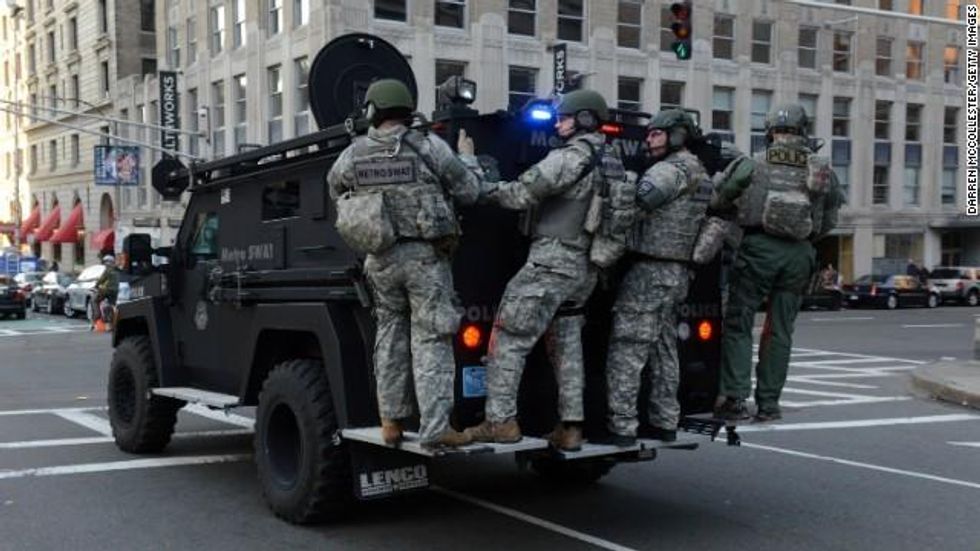
The militarized response to terrorist attacks jeopardizes this special relationship.
In Arrested Development, Couper explores the costs when "police officers look and act more like robots than peacekeepers."
"It seems to me, if we work with people and show them respect, they'll work with us," he says.
"Every faith system has its wackos," he adds. "But people don't want to live next door to a guy who's making bombs."
Keeping the wackos at bay comes down to maintaining an emphasis on shared values.
"We all have the same goals. We want to be safe, to pursue our careers, to have medical care and jobs, and to be happy. We don't want someone to take us away from all that."
That's why the paranoid, war-on-terror mindset is such a loss--not just for the victims of racial profiling, but also for law-enforcement.
"We all have a responsibility to try to keep explosives and guns out of the hands of the wrong people," says Couper. "The only way we're going to do that is to keep talking to each other."
From his bucolic retirement near Heartland, Wisconsin, where he leads a small congregation, Couper sounds downright optimistic.
"Given how easy it is to be a terrorist, after September 11, I thought we'd have terrorism in cities once a month. I was surprised it didn't happen. It says something about how resilient we are."
On a recent visit with his grandchildren in New York City, Couper marveled at how 8 to 10 million people move in and out of the city every day without incident. He was reminded of the description of American as "a mosaic of moral worlds."
"It's amazing how that mosaic still holds together," he says. "New York City has seventy languages spoken in its public school system. Maybe we ought to study how that works."
Clearly, Couper doesn't watch enough cable TV.
"Sure some bad stuff happens, and we tend to focus on it," he says. "But is seems every day we fairly well get along with one another."
Getting along with each other--instead of hyping our feelings of paranoia and alienation--sounds like a pretty good guiding principle at the moment.
David Couper was the police chief in Madison, Wisconsin, for more than twenty years. During that time he transformed the force from the film bad guys who knocked heads in the documentary, The War At Home into a model of collaborative leadership, community outreach, and inclusive hiring of minorities and women.
I caught up with Couper by phone at his home near Heartland, Wisconsin, where he has retired to lead a small congregation as an Episcopal priest.
The author of the 2011 book Arrested Development: A Veteran Police Chief Sounds Off About Protest, Racsim, Corruption and the Seven Steps Necessary to Improve our Nation's Police.
Couper has been thinking about how to make law enforcement a true partner in our democracy for a long time.
He seemed like the perfect person to talk to about how we regain our balance after the Boston bombings, and avoid making civil society collateral damage in the war on terror.
Watching live news coverage of Boston was "bizarre," Couper said. "It should have been a movie--the shutdown of an American city."
But while the Hollywood version would have featured a rogue terrorist with a suitcase-sized atomic bomb or a vial of some lethal chemical or biological agent, "Now we have a pressure cooker!"
"Maybe I was a cop too long before I was a priest, but I keep thinking this is going to make terrorism easy," Couper said. "Every religious crackpot and unbalanced person has a way to make a name for himself."
One remedy, Couper says, is to renew legislative efforts to put identifying tags on all explosives--an effort that has been thwarted by explosives manufacturers--and, of course, gun control.
Like a lot of cops, Couper is no fan of the NRA.
"I gave up on the NRA when I was chief and we were looking at legislation to ban Teflon-coated bullets, because the Teflon tip allows them to penetrate the protective vests police wear," he says. "The NRA fought vehemently against it, and we did not get any legislation passed."
But Couper's special insight, contained in his book, is how community policing can contribute to national security.
"Police have a unique ability to be accepted in the community. They are important partners because they know so much about the community, if they're doing their jobs right," he says.
The militarized response to terrorist attacks jeopardizes this special relationship.
In Arrested Development, Couper explores the costs when "police officers look and act more like robots than peacekeepers."
"It seems to me, if we work with people and show them respect, they'll work with us," he says.
"Every faith system has its wackos," he adds. "But people don't want to live next door to a guy who's making bombs."
Keeping the wackos at bay comes down to maintaining an emphasis on shared values.
"We all have the same goals. We want to be safe, to pursue our careers, to have medical care and jobs, and to be happy. We don't want someone to take us away from all that."
That's why the paranoid, war-on-terror mindset is such a loss--not just for the victims of racial profiling, but also for law-enforcement.
"We all have a responsibility to try to keep explosives and guns out of the hands of the wrong people," says Couper. "The only way we're going to do that is to keep talking to each other."
From his bucolic retirement near Heartland, Wisconsin, where he leads a small congregation, Couper sounds downright optimistic.
"Given how easy it is to be a terrorist, after September 11, I thought we'd have terrorism in cities once a month. I was surprised it didn't happen. It says something about how resilient we are."
On a recent visit with his grandchildren in New York City, Couper marveled at how 8 to 10 million people move in and out of the city every day without incident. He was reminded of the description of American as "a mosaic of moral worlds."
"It's amazing how that mosaic still holds together," he says. "New York City has seventy languages spoken in its public school system. Maybe we ought to study how that works."
Clearly, Couper doesn't watch enough cable TV.
"Sure some bad stuff happens, and we tend to focus on it," he says. "But is seems every day we fairly well get along with one another."
Getting along with each other--instead of hyping our feelings of paranoia and alienation--sounds like a pretty good guiding principle at the moment.
David Couper was the police chief in Madison, Wisconsin, for more than twenty years. During that time he transformed the force from the film bad guys who knocked heads in the documentary, The War At Home into a model of collaborative leadership, community outreach, and inclusive hiring of minorities and women.
I caught up with Couper by phone at his home near Heartland, Wisconsin, where he has retired to lead a small congregation as an Episcopal priest.
The author of the 2011 book Arrested Development: A Veteran Police Chief Sounds Off About Protest, Racsim, Corruption and the Seven Steps Necessary to Improve our Nation's Police.
Couper has been thinking about how to make law enforcement a true partner in our democracy for a long time.
He seemed like the perfect person to talk to about how we regain our balance after the Boston bombings, and avoid making civil society collateral damage in the war on terror.
Watching live news coverage of Boston was "bizarre," Couper said. "It should have been a movie--the shutdown of an American city."
But while the Hollywood version would have featured a rogue terrorist with a suitcase-sized atomic bomb or a vial of some lethal chemical or biological agent, "Now we have a pressure cooker!"
"Maybe I was a cop too long before I was a priest, but I keep thinking this is going to make terrorism easy," Couper said. "Every religious crackpot and unbalanced person has a way to make a name for himself."
One remedy, Couper says, is to renew legislative efforts to put identifying tags on all explosives--an effort that has been thwarted by explosives manufacturers--and, of course, gun control.
Like a lot of cops, Couper is no fan of the NRA.
"I gave up on the NRA when I was chief and we were looking at legislation to ban Teflon-coated bullets, because the Teflon tip allows them to penetrate the protective vests police wear," he says. "The NRA fought vehemently against it, and we did not get any legislation passed."
But Couper's special insight, contained in his book, is how community policing can contribute to national security.
"Police have a unique ability to be accepted in the community. They are important partners because they know so much about the community, if they're doing their jobs right," he says.
The militarized response to terrorist attacks jeopardizes this special relationship.
In Arrested Development, Couper explores the costs when "police officers look and act more like robots than peacekeepers."
"It seems to me, if we work with people and show them respect, they'll work with us," he says.
"Every faith system has its wackos," he adds. "But people don't want to live next door to a guy who's making bombs."
Keeping the wackos at bay comes down to maintaining an emphasis on shared values.
"We all have the same goals. We want to be safe, to pursue our careers, to have medical care and jobs, and to be happy. We don't want someone to take us away from all that."
That's why the paranoid, war-on-terror mindset is such a loss--not just for the victims of racial profiling, but also for law-enforcement.
"We all have a responsibility to try to keep explosives and guns out of the hands of the wrong people," says Couper. "The only way we're going to do that is to keep talking to each other."
From his bucolic retirement near Heartland, Wisconsin, where he leads a small congregation, Couper sounds downright optimistic.
"Given how easy it is to be a terrorist, after September 11, I thought we'd have terrorism in cities once a month. I was surprised it didn't happen. It says something about how resilient we are."
On a recent visit with his grandchildren in New York City, Couper marveled at how 8 to 10 million people move in and out of the city every day without incident. He was reminded of the description of American as "a mosaic of moral worlds."
"It's amazing how that mosaic still holds together," he says. "New York City has seventy languages spoken in its public school system. Maybe we ought to study how that works."
Clearly, Couper doesn't watch enough cable TV.
"Sure some bad stuff happens, and we tend to focus on it," he says. "But is seems every day we fairly well get along with one another."
Getting along with each other--instead of hyping our feelings of paranoia and alienation--sounds like a pretty good guiding principle at the moment.