

A new initiative is re-energising the Occupy movement. Called the Rolling Jubilee, it is a plan to use money from donations to buy distressed consumer debt from lenders at a marked down price, just as debt collection agencies normally would. But instead of hounding debtors for payments, it will simply cancel the debts. The hope is that the liberated debtors will themselves contribute to the fund, "rolling" the jubilee forward.
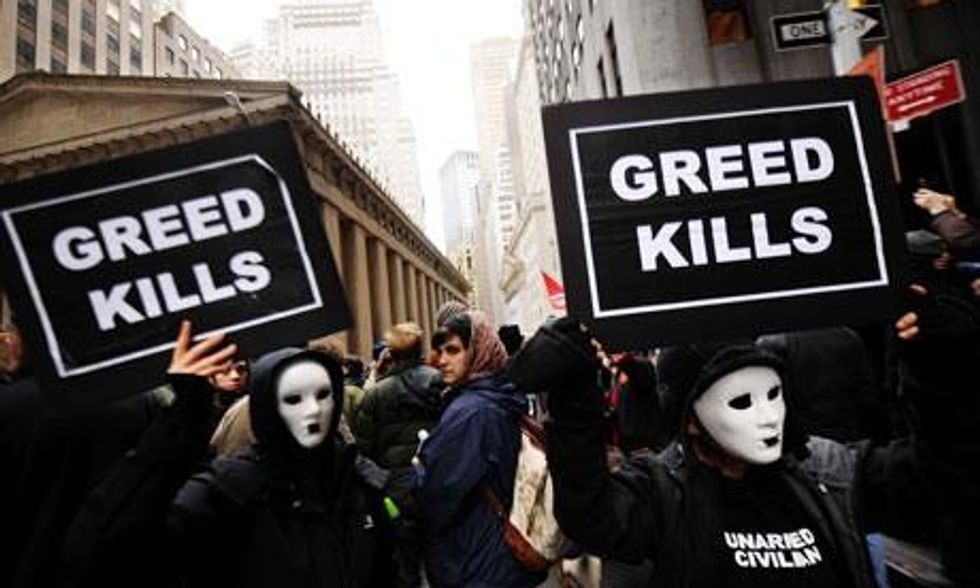
The Rolling Jubilee is a genius move for several reasons. First, debt relief is a transpartisan message that eludes conventional political categorisation. As such, it returns Occupy to its origins as an advocate for the wellbeing of ordinary people, neither leftwing nor rightwing. The Rolling Jubilee says, non-threateningly, "We just want to help people in this unfair system."
But despite its non-threatening appearance, the Rolling Jubilee has significant transformative potential. Two pillars uphold the present debt regime: the moral legitimacy of debt in society's eyes, ie, the idea that a person "should" pay back what he owes; and the coercive mechanisms that enforce repayment, such as harassment, seizure of assets, garnishment of wages, denial of employment or housing, and even imprisonment. The Rolling Jubilee erodes both. It destigmatises debt by saying, "we're all in this together, we believe your situation is unfair, not shameful, so we're going to help you out". And it lessens the severity of the consequences of default. If defaulting means you might get bailed out, why keep paying?
For this reason, we might expect lenders to balk at co-operating with the Rolling Jubilee, perhaps by refusing to sell loans to anyone who doesn't agree to seek collection. So here is a third reason why the idea is so brilliant: if the lenders block debt cancellation even when it comes at no cost to themselves (as they would have sold it at the same price to a collection agency), they appear as a bunch of greedy, vindictive Scrooges. Given their current vulnerability, banks might not want to incite hostility by preventing people from helping each other out.
Accordingly, it is important that the Jubilee organisers continue to frame it in precisely that way: people helping each other out of hardship. Yes, they might understand that its political significance runs deeper, but if they portray it as a political ploy then it will be met as such by the banks or other authorities. Public opinion might also not be as sympathetic.
This also goes for the way the organisers portray it to themselves. In a political system that is lost in a maelstrom of hype, spin and messaging, we crave authenticity in others and in ourselves. Let the Rolling Jubilee stay grounded in the simple goal of freeing people from debt. The political effect will be greater, not less, when it comes from a place of sincerity.
The Rolling Jubilee could influence economic policy as a model for a very different kind of bailout in response to the next financial crisis. The problem of unpayable debts bedevils every corner of our financial system - public, corporate, and personal. So far, the response of the monetary and fiscal authorities to nearly every financial crisis has been to bail out the creditors but not the debtors. Governments and central banks purchase all kinds of shoddy loans from the private sector, but rather than reduce interest or principal on those loans, they merely become the new creditor. The underwater homeowner, the indebted university graduate, the laid-off worker juggling credit cards ... they get no relief at all.
The Rolling Jubilee brings a different kind of solution into the public consciousness. The next time a systemic crisis breaks, central banks can rescue the banking system by once again buying the delinquent loans - and then cancel them or reduce the amount borrowers owe. Central banks, with their unlimited capacity to print money, have the power to do this at no cost to the taxpayer. The result would be a release of pent-up consumer purchasing power that had been stuck in debt service. Rising demand would fuel employment, wages, and a broad-based economic expansion.
Would this solution be inflationary? Yes. But a little inflation isn't necessarily a bad thing, as long as wages rise as fast as prices. Then it is an equalizer of wealth, as the relative value of hoarded wealth shrinks.
Debt cancellation, whether a "people's bailout" or government policy, is only part of the solution to our economic woes. Deep systemic reforms are necessary, especially given the reality that we are operating a growth-dependent system on a finite planet. But right now, debt is the issue staring us in the face. As always, the most innovative solutions rise from the margins. The Rolling Jubilee may be showing us a glimpse of what is to come.
A new initiative is re-energising the Occupy movement. Called the Rolling Jubilee, it is a plan to use money from donations to buy distressed consumer debt from lenders at a marked down price, just as debt collection agencies normally would. But instead of hounding debtors for payments, it will simply cancel the debts. The hope is that the liberated debtors will themselves contribute to the fund, "rolling" the jubilee forward.
The Rolling Jubilee is a genius move for several reasons. First, debt relief is a transpartisan message that eludes conventional political categorisation. As such, it returns Occupy to its origins as an advocate for the wellbeing of ordinary people, neither leftwing nor rightwing. The Rolling Jubilee says, non-threateningly, "We just want to help people in this unfair system."
But despite its non-threatening appearance, the Rolling Jubilee has significant transformative potential. Two pillars uphold the present debt regime: the moral legitimacy of debt in society's eyes, ie, the idea that a person "should" pay back what he owes; and the coercive mechanisms that enforce repayment, such as harassment, seizure of assets, garnishment of wages, denial of employment or housing, and even imprisonment. The Rolling Jubilee erodes both. It destigmatises debt by saying, "we're all in this together, we believe your situation is unfair, not shameful, so we're going to help you out". And it lessens the severity of the consequences of default. If defaulting means you might get bailed out, why keep paying?
For this reason, we might expect lenders to balk at co-operating with the Rolling Jubilee, perhaps by refusing to sell loans to anyone who doesn't agree to seek collection. So here is a third reason why the idea is so brilliant: if the lenders block debt cancellation even when it comes at no cost to themselves (as they would have sold it at the same price to a collection agency), they appear as a bunch of greedy, vindictive Scrooges. Given their current vulnerability, banks might not want to incite hostility by preventing people from helping each other out.
Accordingly, it is important that the Jubilee organisers continue to frame it in precisely that way: people helping each other out of hardship. Yes, they might understand that its political significance runs deeper, but if they portray it as a political ploy then it will be met as such by the banks or other authorities. Public opinion might also not be as sympathetic.
This also goes for the way the organisers portray it to themselves. In a political system that is lost in a maelstrom of hype, spin and messaging, we crave authenticity in others and in ourselves. Let the Rolling Jubilee stay grounded in the simple goal of freeing people from debt. The political effect will be greater, not less, when it comes from a place of sincerity.
The Rolling Jubilee could influence economic policy as a model for a very different kind of bailout in response to the next financial crisis. The problem of unpayable debts bedevils every corner of our financial system - public, corporate, and personal. So far, the response of the monetary and fiscal authorities to nearly every financial crisis has been to bail out the creditors but not the debtors. Governments and central banks purchase all kinds of shoddy loans from the private sector, but rather than reduce interest or principal on those loans, they merely become the new creditor. The underwater homeowner, the indebted university graduate, the laid-off worker juggling credit cards ... they get no relief at all.
The Rolling Jubilee brings a different kind of solution into the public consciousness. The next time a systemic crisis breaks, central banks can rescue the banking system by once again buying the delinquent loans - and then cancel them or reduce the amount borrowers owe. Central banks, with their unlimited capacity to print money, have the power to do this at no cost to the taxpayer. The result would be a release of pent-up consumer purchasing power that had been stuck in debt service. Rising demand would fuel employment, wages, and a broad-based economic expansion.
Would this solution be inflationary? Yes. But a little inflation isn't necessarily a bad thing, as long as wages rise as fast as prices. Then it is an equalizer of wealth, as the relative value of hoarded wealth shrinks.
Debt cancellation, whether a "people's bailout" or government policy, is only part of the solution to our economic woes. Deep systemic reforms are necessary, especially given the reality that we are operating a growth-dependent system on a finite planet. But right now, debt is the issue staring us in the face. As always, the most innovative solutions rise from the margins. The Rolling Jubilee may be showing us a glimpse of what is to come.
A new initiative is re-energising the Occupy movement. Called the Rolling Jubilee, it is a plan to use money from donations to buy distressed consumer debt from lenders at a marked down price, just as debt collection agencies normally would. But instead of hounding debtors for payments, it will simply cancel the debts. The hope is that the liberated debtors will themselves contribute to the fund, "rolling" the jubilee forward.
The Rolling Jubilee is a genius move for several reasons. First, debt relief is a transpartisan message that eludes conventional political categorisation. As such, it returns Occupy to its origins as an advocate for the wellbeing of ordinary people, neither leftwing nor rightwing. The Rolling Jubilee says, non-threateningly, "We just want to help people in this unfair system."
But despite its non-threatening appearance, the Rolling Jubilee has significant transformative potential. Two pillars uphold the present debt regime: the moral legitimacy of debt in society's eyes, ie, the idea that a person "should" pay back what he owes; and the coercive mechanisms that enforce repayment, such as harassment, seizure of assets, garnishment of wages, denial of employment or housing, and even imprisonment. The Rolling Jubilee erodes both. It destigmatises debt by saying, "we're all in this together, we believe your situation is unfair, not shameful, so we're going to help you out". And it lessens the severity of the consequences of default. If defaulting means you might get bailed out, why keep paying?
For this reason, we might expect lenders to balk at co-operating with the Rolling Jubilee, perhaps by refusing to sell loans to anyone who doesn't agree to seek collection. So here is a third reason why the idea is so brilliant: if the lenders block debt cancellation even when it comes at no cost to themselves (as they would have sold it at the same price to a collection agency), they appear as a bunch of greedy, vindictive Scrooges. Given their current vulnerability, banks might not want to incite hostility by preventing people from helping each other out.
Accordingly, it is important that the Jubilee organisers continue to frame it in precisely that way: people helping each other out of hardship. Yes, they might understand that its political significance runs deeper, but if they portray it as a political ploy then it will be met as such by the banks or other authorities. Public opinion might also not be as sympathetic.
This also goes for the way the organisers portray it to themselves. In a political system that is lost in a maelstrom of hype, spin and messaging, we crave authenticity in others and in ourselves. Let the Rolling Jubilee stay grounded in the simple goal of freeing people from debt. The political effect will be greater, not less, when it comes from a place of sincerity.
The Rolling Jubilee could influence economic policy as a model for a very different kind of bailout in response to the next financial crisis. The problem of unpayable debts bedevils every corner of our financial system - public, corporate, and personal. So far, the response of the monetary and fiscal authorities to nearly every financial crisis has been to bail out the creditors but not the debtors. Governments and central banks purchase all kinds of shoddy loans from the private sector, but rather than reduce interest or principal on those loans, they merely become the new creditor. The underwater homeowner, the indebted university graduate, the laid-off worker juggling credit cards ... they get no relief at all.
The Rolling Jubilee brings a different kind of solution into the public consciousness. The next time a systemic crisis breaks, central banks can rescue the banking system by once again buying the delinquent loans - and then cancel them or reduce the amount borrowers owe. Central banks, with their unlimited capacity to print money, have the power to do this at no cost to the taxpayer. The result would be a release of pent-up consumer purchasing power that had been stuck in debt service. Rising demand would fuel employment, wages, and a broad-based economic expansion.
Would this solution be inflationary? Yes. But a little inflation isn't necessarily a bad thing, as long as wages rise as fast as prices. Then it is an equalizer of wealth, as the relative value of hoarded wealth shrinks.
Debt cancellation, whether a "people's bailout" or government policy, is only part of the solution to our economic woes. Deep systemic reforms are necessary, especially given the reality that we are operating a growth-dependent system on a finite planet. But right now, debt is the issue staring us in the face. As always, the most innovative solutions rise from the margins. The Rolling Jubilee may be showing us a glimpse of what is to come.