SUBSCRIBE TO OUR FREE NEWSLETTER
Daily news & progressive opinion—funded by the people, not the corporations—delivered straight to your inbox.
5
#000000
#FFFFFF
To donate by check, phone, or other method, see our More Ways to Give page.
We could argue over who killed it, but what's the point? It's increasingly obvious that a continued insistence on zombie peace talks between Israelis and Palestinians is deluded, because the two-state principle framing them is dead. To precis: it's now impossible to remove half a million Jewish settlers and infrastructure from the occupied West Bank and East Jerusalem; the international community is opposed to settlements on paper but does nothing in practice, and after 19 years of failed two-state talks, the fault plainly lies in the plan, not the leadership.
This view has been expressed more vocally of late on both sides, from unlikely quarters and for different reasons. Prominent Israeli commentators have declared the end of the two-state period. The latest to do so was the mainstream, veteran journalist Nahum Barnea, who in August wrote in the mass-circulation daily Yediot Aharonot that the Oslo two-state peace process is dead. His view - "Everybody knows how this will end. There will be a bi-national [state]," he clarified on Israeli TV - is shared by others once supportive of the Oslo framework but now calling time on it. "I do not give up on the two-state solution on ideological grounds," wrote Haaretz columnist Carlo Strenger last month. "I give up on it because it will not happen."
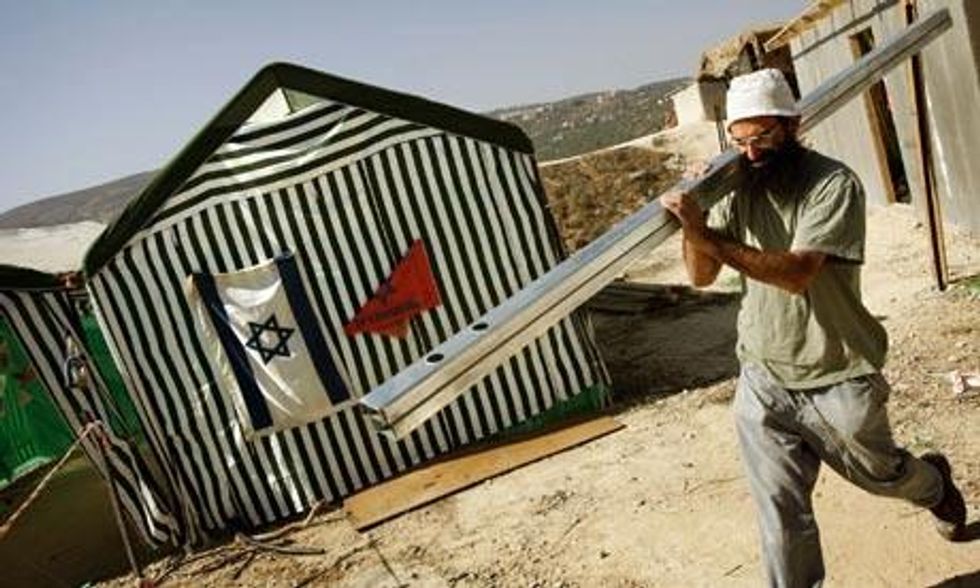
Alongside that, we're starting to see the practical consequences of those Jewish settlers who, surprisingly, started talking about one-state approaches two years ago. Last week, a Palestinian village in an Israel-controlled area of the West Bank was given building permits - the first time that's happened during a 45-year Israeli occupation - thanks to petitions from their Jewish settler neighbours.
Meanwhile, rightwing Israeli politicians such as Knesset speaker Reuven Rivlin and ex-defence minister Moshe Arens have been arguing for one state - and while their vision isn't premised on immediate equal citizenship, they have taken the sting out of the subject.
Among Palestinians, support for a one-state approach is also growing. A poll last month showed that support for a one-state formulation premised on equal rights has inched up among both Palestinians and Israelis. In the West Bank, there are fresh peaks of disillusion with the Palestinian Authority - whose tenure was always supposed to be temporary, pending statehood, as set out in the Oslo Accords. Unelected, tainted by corruption, aid-dependent and viewed as enforcers of the Israeli occupation, the PA's last stab at credibility was probably its statehood bid at the UN last year. But you could practically hear the hope hissing out of that media-inflated bid when, pressured by the US, Palestinian president Mahmoud Abbas switched to a hollowed-out version that was meaningless and destined to fail. Now a new generation of Palestinian activists, in part inspired by the Arab uprisings in the region, are bypassing territorial demands to focus on civil rights and freedoms.
In Israel, there are green shoots of debate around practical questions of how to share the space between the Mediterranean and the Jordan River. Weeks ago, Israeli analyst and blogger Dahlia Scheindlin - previously a two-state advocate - set out a list of key questions and suggestions, concerning issues such as national symbols, voting systems, refugees and land rights. Already, Israeli intellectuals are working out the idea that Jewish claims to the region - currently enforced with guns and walls - would need instead to be enshrined by law, alongside equally guaranteed Palestinian protections. In his new book, Beyond the Two State Solution, Israeli sociologist Yehouda Shenhav draws on a pre-Israeli, bi-national strain of Zionism that was historically drowned out but should now, he argues, be reclaimed.
Countering a common criticism of one-state proposals, these emerging formulations don't insist that Palestinians and Israelis give up outdated attachments to nationalism - which is helpful, because it seems that neither side wants to, yet. A small group of Palestinians, Israelis and Jewish settlers, Eretz Yoshveyha - "land of its inhabitants" - set out "principles for a single spatial polity" last year, among them safeguarding the collective rights of the two nations. One settler tells me of a consensus emerging within nascent, one-state settler groups that, while national identity may be important, exclusive Jewish sovereignty is not.
It's all germinal and there are problems, of course. Most polled Palestinians and Israelis still support a two-state framework, even while at the same time believing it doomed. Shared-space alternatives have grassroots momentum, but no leadership support. The left needs to ensure that Gaza remains part of the picture. And doubtless some West Bank settlers support one-stateism as a way of avoiding potential eviction, with scant regard for Palestinian rights. A recent poll suggests Israelis agree, with a majority supporting discriminatory policies if the West Bank were annexed. Tentative meetings between settlers and Palestinians could crash once they progress beyond relatively safe, community issues - a belief in the power of people sitting together over apolitical cups of tea was a theme tune of the peace process years, and look how that turned out.
But one idea is crystallising: that clinging to a two-state approach is, by default, a victory for the far-right claims of one state called "Greater Israel", with a Jewish minority and two, ethnically coded tiers of rights and freedoms.
That's the reality on the ground, cemented by Israel while paying lip-service to the idea of Palestinian statehood. Now the Israeli government wants to consolidate this even further, through approval of a report that declares all settlements legal under international law - enshrining the idea that the West Bank isn't occupied. In this context it's heartening that peace camps on both sides are starting to break a period of paralysis, discarding the spent husks of the Oslo phase to claw back fresh thinking space. It's only when freed from the dead weight of a two-state paradigm that a just, dignified and peaceful solution has the chance to flourish.
We could argue over who killed it, but what's the point? It's increasingly obvious that a continued insistence on zombie peace talks between Israelis and Palestinians is deluded, because the two-state principle framing them is dead. To precis: it's now impossible to remove half a million Jewish settlers and infrastructure from the occupied West Bank and East Jerusalem; the international community is opposed to settlements on paper but does nothing in practice, and after 19 years of failed two-state talks, the fault plainly lies in the plan, not the leadership.
This view has been expressed more vocally of late on both sides, from unlikely quarters and for different reasons. Prominent Israeli commentators have declared the end of the two-state period. The latest to do so was the mainstream, veteran journalist Nahum Barnea, who in August wrote in the mass-circulation daily Yediot Aharonot that the Oslo two-state peace process is dead. His view - "Everybody knows how this will end. There will be a bi-national [state]," he clarified on Israeli TV - is shared by others once supportive of the Oslo framework but now calling time on it. "I do not give up on the two-state solution on ideological grounds," wrote Haaretz columnist Carlo Strenger last month. "I give up on it because it will not happen."
Alongside that, we're starting to see the practical consequences of those Jewish settlers who, surprisingly, started talking about one-state approaches two years ago. Last week, a Palestinian village in an Israel-controlled area of the West Bank was given building permits - the first time that's happened during a 45-year Israeli occupation - thanks to petitions from their Jewish settler neighbours.
Meanwhile, rightwing Israeli politicians such as Knesset speaker Reuven Rivlin and ex-defence minister Moshe Arens have been arguing for one state - and while their vision isn't premised on immediate equal citizenship, they have taken the sting out of the subject.
Among Palestinians, support for a one-state approach is also growing. A poll last month showed that support for a one-state formulation premised on equal rights has inched up among both Palestinians and Israelis. In the West Bank, there are fresh peaks of disillusion with the Palestinian Authority - whose tenure was always supposed to be temporary, pending statehood, as set out in the Oslo Accords. Unelected, tainted by corruption, aid-dependent and viewed as enforcers of the Israeli occupation, the PA's last stab at credibility was probably its statehood bid at the UN last year. But you could practically hear the hope hissing out of that media-inflated bid when, pressured by the US, Palestinian president Mahmoud Abbas switched to a hollowed-out version that was meaningless and destined to fail. Now a new generation of Palestinian activists, in part inspired by the Arab uprisings in the region, are bypassing territorial demands to focus on civil rights and freedoms.
In Israel, there are green shoots of debate around practical questions of how to share the space between the Mediterranean and the Jordan River. Weeks ago, Israeli analyst and blogger Dahlia Scheindlin - previously a two-state advocate - set out a list of key questions and suggestions, concerning issues such as national symbols, voting systems, refugees and land rights. Already, Israeli intellectuals are working out the idea that Jewish claims to the region - currently enforced with guns and walls - would need instead to be enshrined by law, alongside equally guaranteed Palestinian protections. In his new book, Beyond the Two State Solution, Israeli sociologist Yehouda Shenhav draws on a pre-Israeli, bi-national strain of Zionism that was historically drowned out but should now, he argues, be reclaimed.
Countering a common criticism of one-state proposals, these emerging formulations don't insist that Palestinians and Israelis give up outdated attachments to nationalism - which is helpful, because it seems that neither side wants to, yet. A small group of Palestinians, Israelis and Jewish settlers, Eretz Yoshveyha - "land of its inhabitants" - set out "principles for a single spatial polity" last year, among them safeguarding the collective rights of the two nations. One settler tells me of a consensus emerging within nascent, one-state settler groups that, while national identity may be important, exclusive Jewish sovereignty is not.
It's all germinal and there are problems, of course. Most polled Palestinians and Israelis still support a two-state framework, even while at the same time believing it doomed. Shared-space alternatives have grassroots momentum, but no leadership support. The left needs to ensure that Gaza remains part of the picture. And doubtless some West Bank settlers support one-stateism as a way of avoiding potential eviction, with scant regard for Palestinian rights. A recent poll suggests Israelis agree, with a majority supporting discriminatory policies if the West Bank were annexed. Tentative meetings between settlers and Palestinians could crash once they progress beyond relatively safe, community issues - a belief in the power of people sitting together over apolitical cups of tea was a theme tune of the peace process years, and look how that turned out.
But one idea is crystallising: that clinging to a two-state approach is, by default, a victory for the far-right claims of one state called "Greater Israel", with a Jewish minority and two, ethnically coded tiers of rights and freedoms.
That's the reality on the ground, cemented by Israel while paying lip-service to the idea of Palestinian statehood. Now the Israeli government wants to consolidate this even further, through approval of a report that declares all settlements legal under international law - enshrining the idea that the West Bank isn't occupied. In this context it's heartening that peace camps on both sides are starting to break a period of paralysis, discarding the spent husks of the Oslo phase to claw back fresh thinking space. It's only when freed from the dead weight of a two-state paradigm that a just, dignified and peaceful solution has the chance to flourish.
We could argue over who killed it, but what's the point? It's increasingly obvious that a continued insistence on zombie peace talks between Israelis and Palestinians is deluded, because the two-state principle framing them is dead. To precis: it's now impossible to remove half a million Jewish settlers and infrastructure from the occupied West Bank and East Jerusalem; the international community is opposed to settlements on paper but does nothing in practice, and after 19 years of failed two-state talks, the fault plainly lies in the plan, not the leadership.
This view has been expressed more vocally of late on both sides, from unlikely quarters and for different reasons. Prominent Israeli commentators have declared the end of the two-state period. The latest to do so was the mainstream, veteran journalist Nahum Barnea, who in August wrote in the mass-circulation daily Yediot Aharonot that the Oslo two-state peace process is dead. His view - "Everybody knows how this will end. There will be a bi-national [state]," he clarified on Israeli TV - is shared by others once supportive of the Oslo framework but now calling time on it. "I do not give up on the two-state solution on ideological grounds," wrote Haaretz columnist Carlo Strenger last month. "I give up on it because it will not happen."
Alongside that, we're starting to see the practical consequences of those Jewish settlers who, surprisingly, started talking about one-state approaches two years ago. Last week, a Palestinian village in an Israel-controlled area of the West Bank was given building permits - the first time that's happened during a 45-year Israeli occupation - thanks to petitions from their Jewish settler neighbours.
Meanwhile, rightwing Israeli politicians such as Knesset speaker Reuven Rivlin and ex-defence minister Moshe Arens have been arguing for one state - and while their vision isn't premised on immediate equal citizenship, they have taken the sting out of the subject.
Among Palestinians, support for a one-state approach is also growing. A poll last month showed that support for a one-state formulation premised on equal rights has inched up among both Palestinians and Israelis. In the West Bank, there are fresh peaks of disillusion with the Palestinian Authority - whose tenure was always supposed to be temporary, pending statehood, as set out in the Oslo Accords. Unelected, tainted by corruption, aid-dependent and viewed as enforcers of the Israeli occupation, the PA's last stab at credibility was probably its statehood bid at the UN last year. But you could practically hear the hope hissing out of that media-inflated bid when, pressured by the US, Palestinian president Mahmoud Abbas switched to a hollowed-out version that was meaningless and destined to fail. Now a new generation of Palestinian activists, in part inspired by the Arab uprisings in the region, are bypassing territorial demands to focus on civil rights and freedoms.
In Israel, there are green shoots of debate around practical questions of how to share the space between the Mediterranean and the Jordan River. Weeks ago, Israeli analyst and blogger Dahlia Scheindlin - previously a two-state advocate - set out a list of key questions and suggestions, concerning issues such as national symbols, voting systems, refugees and land rights. Already, Israeli intellectuals are working out the idea that Jewish claims to the region - currently enforced with guns and walls - would need instead to be enshrined by law, alongside equally guaranteed Palestinian protections. In his new book, Beyond the Two State Solution, Israeli sociologist Yehouda Shenhav draws on a pre-Israeli, bi-national strain of Zionism that was historically drowned out but should now, he argues, be reclaimed.
Countering a common criticism of one-state proposals, these emerging formulations don't insist that Palestinians and Israelis give up outdated attachments to nationalism - which is helpful, because it seems that neither side wants to, yet. A small group of Palestinians, Israelis and Jewish settlers, Eretz Yoshveyha - "land of its inhabitants" - set out "principles for a single spatial polity" last year, among them safeguarding the collective rights of the two nations. One settler tells me of a consensus emerging within nascent, one-state settler groups that, while national identity may be important, exclusive Jewish sovereignty is not.
It's all germinal and there are problems, of course. Most polled Palestinians and Israelis still support a two-state framework, even while at the same time believing it doomed. Shared-space alternatives have grassroots momentum, but no leadership support. The left needs to ensure that Gaza remains part of the picture. And doubtless some West Bank settlers support one-stateism as a way of avoiding potential eviction, with scant regard for Palestinian rights. A recent poll suggests Israelis agree, with a majority supporting discriminatory policies if the West Bank were annexed. Tentative meetings between settlers and Palestinians could crash once they progress beyond relatively safe, community issues - a belief in the power of people sitting together over apolitical cups of tea was a theme tune of the peace process years, and look how that turned out.
But one idea is crystallising: that clinging to a two-state approach is, by default, a victory for the far-right claims of one state called "Greater Israel", with a Jewish minority and two, ethnically coded tiers of rights and freedoms.
That's the reality on the ground, cemented by Israel while paying lip-service to the idea of Palestinian statehood. Now the Israeli government wants to consolidate this even further, through approval of a report that declares all settlements legal under international law - enshrining the idea that the West Bank isn't occupied. In this context it's heartening that peace camps on both sides are starting to break a period of paralysis, discarding the spent husks of the Oslo phase to claw back fresh thinking space. It's only when freed from the dead weight of a two-state paradigm that a just, dignified and peaceful solution has the chance to flourish.