

Let us now access the state of the free press in this land of ... well, of press freedom. The assessment? Pathetic. Not because of any government clampdown, but because of increasing press pusillanimity.
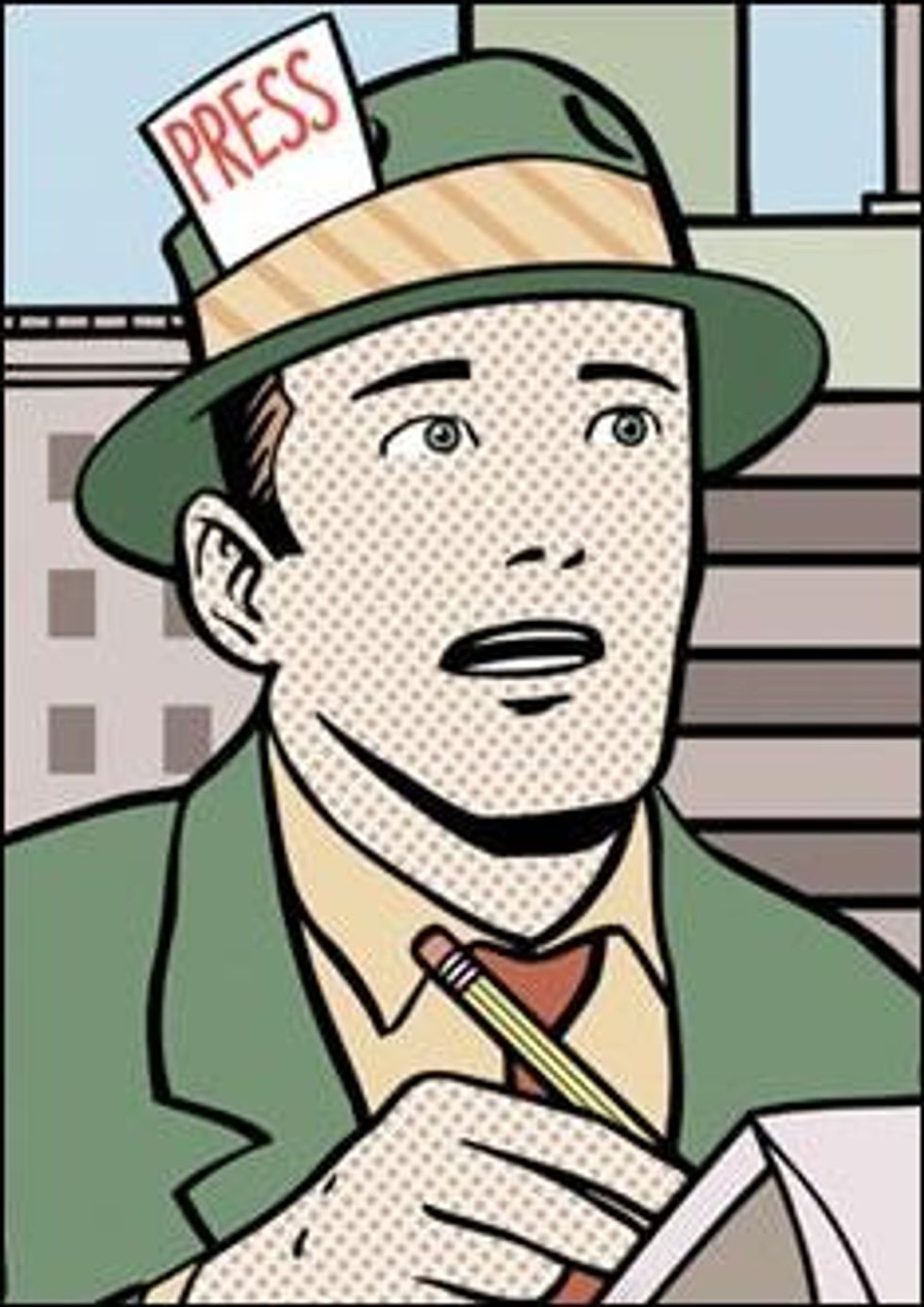
In recent years, newspaper reporting had already been severely weakened by drastic cutbacks in newsrooms (including the near-abandonment of hard-nosed investigative reporting by conglomerate CEOs and bean-counters more interested in upping the corporate stock price than in providing journalistic exposes). But the latest decline comes from newsroom managers and staff who've chosen to compromise on a core aspect of good reporting: conducting untainted, straightforward interviews.
Those in charge of running major newspapers and blogs these days have gone all wonky on their basic job of getting public and corporate figures to provide honest, informative answers to important who-what-when-where-and-why questions that inform the citizenry.
The compromise they've made is a pernicious practice called "quote approval." This began with PR flacks for public officials and political candidates demanding that reporters agree -- as a price of being granted an interview -- to submit any quotes they intend to use from the interview to the interviewee's staff for approval. Thus, when Mr. Big blurts out something shocking, stupid or actually newsworthy, Mr. Big's staff of bowdlerizers can tidy it up or just erase it. The comment might've been news, but -- zzzzzzztt -- it's gone, as though it were never uttered.
It's not surprising that today's media-sensitive political figures (including Barack Obama and Mitt Romney) would demand this extraordinary right to censor what they themselves said, but it's utterly despicable that media bosses and reporters have so gutlessly caved in to the demand. It reduces reporters from hard-nosed diggers to brown-nosed beggars, and it makes a mockery of our democracy's need for a free press. Yet many of America's major publications -- from Bloomberg News to The New York Times -- have meekly surrendered to this restraint.
And now, corporate executives have realized that, hey, we can emasculate the press, too! Thus, Wall Street barons, Silicon Valley hotshots and even the bosses of media conglomerates are demanding (and getting) quote approval for stories about their operations.
David Carr, the media columnist for The New York Times, admits that he's also succumbed to these demands: "Most of the time," he wrote in a Sept. 17 column about the insidious giveaway of journalistic control, "I push back, but if it's (a quote) I feel I absolutely need, I start negotiating."
Of course, it's his independence and journalistic integrity that he's bargaining away -- a troubling fact that Carr acknowledged at the end of his column: "Inch by inch, story by story, deal by deal, we are giving away our right to ask a simple question and expect a simple answer, one that can't be taken back."
As an exasperated Casey Stengel asked about the bumbling 1962 New York Mets baseball team he was managing, "Can't anybody here play this game?"
Yes. Young journalists can -- and they are. Editors of student papers are beginning to reassert reportorial ethics by rebelling against the absurdity of quote approval. The editors of the Harvard Crimson student newspaper, for example, declared in "A Letter to Our Readers" on Sept. 4 that they will no longer submit quotations by Harvard honchos back to them for cleansing.
Calling the shift a matter of trust with readers, the editors rightly noted that quote approval defeats the ability of their reporters "to capture and channel the forthright, honest words of Harvard's decision-makers to all those who might be affected. It's time for these constrained interviews to come to an end."
Likewise, the editor of Princeton University's student paper has halted the use of email interviews favored by chary school officials who seek to barricade themselves from rigorous reporting. The prevalence of email-only responses, he wrote, produces "stilted, manicured quotes that often hide any real meaning."
Bingo! Now, if only some of this youthful integrity and journalistic gutsiness would rub off on the poltroonery of America's press elders.
To learn more and to help stiffen the Jell-O backbones of other "news" sources, connect with Fair and Accuracy In Reporting at fair.org.
Let us now access the state of the free press in this land of ... well, of press freedom. The assessment? Pathetic. Not because of any government clampdown, but because of increasing press pusillanimity.
In recent years, newspaper reporting had already been severely weakened by drastic cutbacks in newsrooms (including the near-abandonment of hard-nosed investigative reporting by conglomerate CEOs and bean-counters more interested in upping the corporate stock price than in providing journalistic exposes). But the latest decline comes from newsroom managers and staff who've chosen to compromise on a core aspect of good reporting: conducting untainted, straightforward interviews.
Those in charge of running major newspapers and blogs these days have gone all wonky on their basic job of getting public and corporate figures to provide honest, informative answers to important who-what-when-where-and-why questions that inform the citizenry.
The compromise they've made is a pernicious practice called "quote approval." This began with PR flacks for public officials and political candidates demanding that reporters agree -- as a price of being granted an interview -- to submit any quotes they intend to use from the interview to the interviewee's staff for approval. Thus, when Mr. Big blurts out something shocking, stupid or actually newsworthy, Mr. Big's staff of bowdlerizers can tidy it up or just erase it. The comment might've been news, but -- zzzzzzztt -- it's gone, as though it were never uttered.
It's not surprising that today's media-sensitive political figures (including Barack Obama and Mitt Romney) would demand this extraordinary right to censor what they themselves said, but it's utterly despicable that media bosses and reporters have so gutlessly caved in to the demand. It reduces reporters from hard-nosed diggers to brown-nosed beggars, and it makes a mockery of our democracy's need for a free press. Yet many of America's major publications -- from Bloomberg News to The New York Times -- have meekly surrendered to this restraint.
And now, corporate executives have realized that, hey, we can emasculate the press, too! Thus, Wall Street barons, Silicon Valley hotshots and even the bosses of media conglomerates are demanding (and getting) quote approval for stories about their operations.
David Carr, the media columnist for The New York Times, admits that he's also succumbed to these demands: "Most of the time," he wrote in a Sept. 17 column about the insidious giveaway of journalistic control, "I push back, but if it's (a quote) I feel I absolutely need, I start negotiating."
Of course, it's his independence and journalistic integrity that he's bargaining away -- a troubling fact that Carr acknowledged at the end of his column: "Inch by inch, story by story, deal by deal, we are giving away our right to ask a simple question and expect a simple answer, one that can't be taken back."
As an exasperated Casey Stengel asked about the bumbling 1962 New York Mets baseball team he was managing, "Can't anybody here play this game?"
Yes. Young journalists can -- and they are. Editors of student papers are beginning to reassert reportorial ethics by rebelling against the absurdity of quote approval. The editors of the Harvard Crimson student newspaper, for example, declared in "A Letter to Our Readers" on Sept. 4 that they will no longer submit quotations by Harvard honchos back to them for cleansing.
Calling the shift a matter of trust with readers, the editors rightly noted that quote approval defeats the ability of their reporters "to capture and channel the forthright, honest words of Harvard's decision-makers to all those who might be affected. It's time for these constrained interviews to come to an end."
Likewise, the editor of Princeton University's student paper has halted the use of email interviews favored by chary school officials who seek to barricade themselves from rigorous reporting. The prevalence of email-only responses, he wrote, produces "stilted, manicured quotes that often hide any real meaning."
Bingo! Now, if only some of this youthful integrity and journalistic gutsiness would rub off on the poltroonery of America's press elders.
To learn more and to help stiffen the Jell-O backbones of other "news" sources, connect with Fair and Accuracy In Reporting at fair.org.
Let us now access the state of the free press in this land of ... well, of press freedom. The assessment? Pathetic. Not because of any government clampdown, but because of increasing press pusillanimity.
In recent years, newspaper reporting had already been severely weakened by drastic cutbacks in newsrooms (including the near-abandonment of hard-nosed investigative reporting by conglomerate CEOs and bean-counters more interested in upping the corporate stock price than in providing journalistic exposes). But the latest decline comes from newsroom managers and staff who've chosen to compromise on a core aspect of good reporting: conducting untainted, straightforward interviews.
Those in charge of running major newspapers and blogs these days have gone all wonky on their basic job of getting public and corporate figures to provide honest, informative answers to important who-what-when-where-and-why questions that inform the citizenry.
The compromise they've made is a pernicious practice called "quote approval." This began with PR flacks for public officials and political candidates demanding that reporters agree -- as a price of being granted an interview -- to submit any quotes they intend to use from the interview to the interviewee's staff for approval. Thus, when Mr. Big blurts out something shocking, stupid or actually newsworthy, Mr. Big's staff of bowdlerizers can tidy it up or just erase it. The comment might've been news, but -- zzzzzzztt -- it's gone, as though it were never uttered.
It's not surprising that today's media-sensitive political figures (including Barack Obama and Mitt Romney) would demand this extraordinary right to censor what they themselves said, but it's utterly despicable that media bosses and reporters have so gutlessly caved in to the demand. It reduces reporters from hard-nosed diggers to brown-nosed beggars, and it makes a mockery of our democracy's need for a free press. Yet many of America's major publications -- from Bloomberg News to The New York Times -- have meekly surrendered to this restraint.
And now, corporate executives have realized that, hey, we can emasculate the press, too! Thus, Wall Street barons, Silicon Valley hotshots and even the bosses of media conglomerates are demanding (and getting) quote approval for stories about their operations.
David Carr, the media columnist for The New York Times, admits that he's also succumbed to these demands: "Most of the time," he wrote in a Sept. 17 column about the insidious giveaway of journalistic control, "I push back, but if it's (a quote) I feel I absolutely need, I start negotiating."
Of course, it's his independence and journalistic integrity that he's bargaining away -- a troubling fact that Carr acknowledged at the end of his column: "Inch by inch, story by story, deal by deal, we are giving away our right to ask a simple question and expect a simple answer, one that can't be taken back."
As an exasperated Casey Stengel asked about the bumbling 1962 New York Mets baseball team he was managing, "Can't anybody here play this game?"
Yes. Young journalists can -- and they are. Editors of student papers are beginning to reassert reportorial ethics by rebelling against the absurdity of quote approval. The editors of the Harvard Crimson student newspaper, for example, declared in "A Letter to Our Readers" on Sept. 4 that they will no longer submit quotations by Harvard honchos back to them for cleansing.
Calling the shift a matter of trust with readers, the editors rightly noted that quote approval defeats the ability of their reporters "to capture and channel the forthright, honest words of Harvard's decision-makers to all those who might be affected. It's time for these constrained interviews to come to an end."
Likewise, the editor of Princeton University's student paper has halted the use of email interviews favored by chary school officials who seek to barricade themselves from rigorous reporting. The prevalence of email-only responses, he wrote, produces "stilted, manicured quotes that often hide any real meaning."
Bingo! Now, if only some of this youthful integrity and journalistic gutsiness would rub off on the poltroonery of America's press elders.
To learn more and to help stiffen the Jell-O backbones of other "news" sources, connect with Fair and Accuracy In Reporting at fair.org.