SUBSCRIBE TO OUR FREE NEWSLETTER
Daily news & progressive opinion—funded by the people, not the corporations—delivered straight to your inbox.
5
#000000
#FFFFFF
To donate by check, phone, or other method, see our More Ways to Give page.
Why do CEOs make so much? Do they just have more smarts than the rest of us?
About 43 percent of Americans apparently think so, pollsters at the Pew Research Center recently reported. They rate CEOs and other rich folks as more intelligent than the average person.
An even greater share of us, on the other hand, sees avarice as the driving force behind grand personal fortunes. Over half of Americans, 55 percent, consider the rich "more likely" to be greedy than the typical American.
But if we really want to understand why so few have so much in the United States today, why the gap between CEO and worker pay has soared tenfold since 1980, speculating about smarts and greed isn't really going to help us all that much.
We need to look instead at our overall political and economic environment, that complex array of laws, regulations, tax rates, and court rulings that determine what the rich can and cannot do -- and get away with.
Back in the 1950s and 1960s, this environment tended to discourage the concentration of individual and corporate wealth and power. Stiff tax rates on high incomes, for instance, put a damper on executive pay. And judges looked skeptically on CEO claims that they deserved whatever rewards they could grab.
In one case decided after the Korean War, a federal appeals court ruled that lavishly paid executives at an Indiana machine tool company could not claim the full amount of their massive paychecks as a legitimate business expense on their corporate tax returns. The execs, the court ruled, owed their fabulous pay to the sudden demand the Korean War had created for industrial retooling, not to any business "sagacity" on the part of the executives.
Judges, lawmakers, and government officials today seldom display this level of skepticism toward corporate executives. Our contemporary legal and political environment more often than not accepts their claims at face value.
Take our current patent and copyright system, for instance. We've let CEOs and their corporations claim as their private "intellectual property" ideas and ways of doing things that have their roots in our common human heritage. One food company, Smucker's, has even claimed a patent for a "method of making crustless peanut butter sandwiches."
How much can companies reap playing patent games? More money than you can cram in a vault. In a just-decided Silicon Valley federal district court case, Apple, the world's most highly valued corporation, has won $1.05 billion in damages from Samsung, its biggest smartphone competitor.
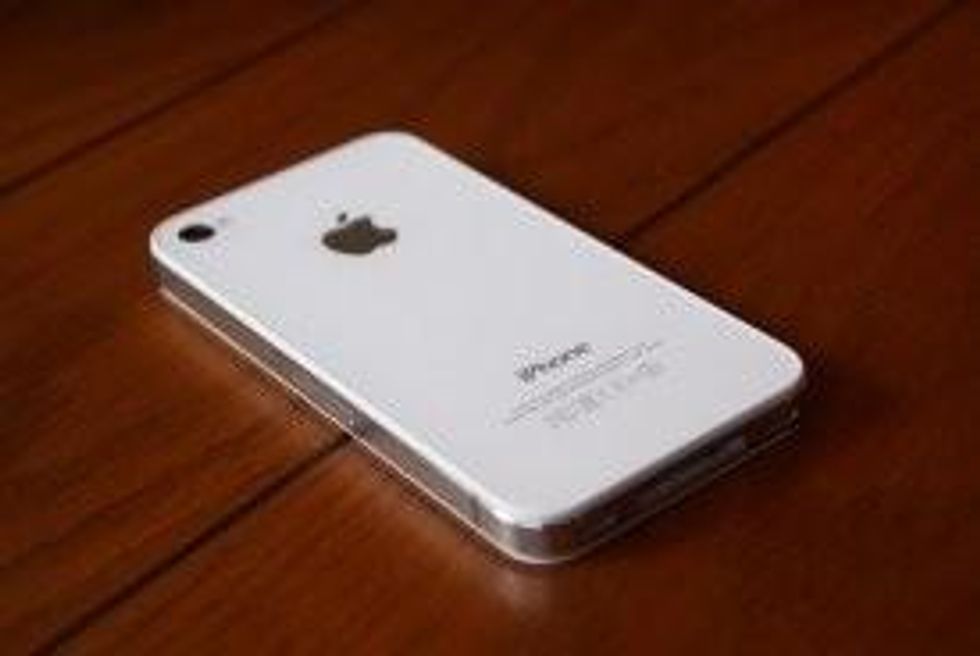
Apple executives claimed that Samsung had done Apple "irreparable harm" by copying its patented intellectual property. And what had Apple patented as its intellectual property? Everything Apple executives could think of, even the iPhone's rectangular shape and rounded edges.
Apple has dozens of other "patent infringement" cases pending, and one Seattle design firm creative director told The New York Times last week that the Samsung ruling may have product designers "constantly second-guessing" whether they're stepping on someone else's patents.
By patenting most everything under the sun, adds Financial Times contributing editor Sebastian Mallaby, tech giants like Apple "prevent rivals from using yesterday's inventions to create tomorrow's improved ones."
Samsung is appealing the Apple ruling. If the ruling holds, economist Dean Baker noted last week with "zero doubt," Apple will charge consumers more for its products over the next decade than the company otherwise would, hundreds of billions more.
Some of those dollars have already begun settling into the pockets of Apple CEO Timothy Cook. He started as the company's chief exec a year ago with a pay deal that awarded him 1 million shares of its stock. Those shares had a $376 million market value last August. Their current value: over $670 million.
Why do CEOs make so much? Do they just have more smarts than the rest of us?
About 43 percent of Americans apparently think so, pollsters at the Pew Research Center recently reported. They rate CEOs and other rich folks as more intelligent than the average person.
An even greater share of us, on the other hand, sees avarice as the driving force behind grand personal fortunes. Over half of Americans, 55 percent, consider the rich "more likely" to be greedy than the typical American.
But if we really want to understand why so few have so much in the United States today, why the gap between CEO and worker pay has soared tenfold since 1980, speculating about smarts and greed isn't really going to help us all that much.
We need to look instead at our overall political and economic environment, that complex array of laws, regulations, tax rates, and court rulings that determine what the rich can and cannot do -- and get away with.
Back in the 1950s and 1960s, this environment tended to discourage the concentration of individual and corporate wealth and power. Stiff tax rates on high incomes, for instance, put a damper on executive pay. And judges looked skeptically on CEO claims that they deserved whatever rewards they could grab.
In one case decided after the Korean War, a federal appeals court ruled that lavishly paid executives at an Indiana machine tool company could not claim the full amount of their massive paychecks as a legitimate business expense on their corporate tax returns. The execs, the court ruled, owed their fabulous pay to the sudden demand the Korean War had created for industrial retooling, not to any business "sagacity" on the part of the executives.
Judges, lawmakers, and government officials today seldom display this level of skepticism toward corporate executives. Our contemporary legal and political environment more often than not accepts their claims at face value.
Take our current patent and copyright system, for instance. We've let CEOs and their corporations claim as their private "intellectual property" ideas and ways of doing things that have their roots in our common human heritage. One food company, Smucker's, has even claimed a patent for a "method of making crustless peanut butter sandwiches."
How much can companies reap playing patent games? More money than you can cram in a vault. In a just-decided Silicon Valley federal district court case, Apple, the world's most highly valued corporation, has won $1.05 billion in damages from Samsung, its biggest smartphone competitor.
Apple executives claimed that Samsung had done Apple "irreparable harm" by copying its patented intellectual property. And what had Apple patented as its intellectual property? Everything Apple executives could think of, even the iPhone's rectangular shape and rounded edges.
Apple has dozens of other "patent infringement" cases pending, and one Seattle design firm creative director told The New York Times last week that the Samsung ruling may have product designers "constantly second-guessing" whether they're stepping on someone else's patents.
By patenting most everything under the sun, adds Financial Times contributing editor Sebastian Mallaby, tech giants like Apple "prevent rivals from using yesterday's inventions to create tomorrow's improved ones."
Samsung is appealing the Apple ruling. If the ruling holds, economist Dean Baker noted last week with "zero doubt," Apple will charge consumers more for its products over the next decade than the company otherwise would, hundreds of billions more.
Some of those dollars have already begun settling into the pockets of Apple CEO Timothy Cook. He started as the company's chief exec a year ago with a pay deal that awarded him 1 million shares of its stock. Those shares had a $376 million market value last August. Their current value: over $670 million.
Why do CEOs make so much? Do they just have more smarts than the rest of us?
About 43 percent of Americans apparently think so, pollsters at the Pew Research Center recently reported. They rate CEOs and other rich folks as more intelligent than the average person.
An even greater share of us, on the other hand, sees avarice as the driving force behind grand personal fortunes. Over half of Americans, 55 percent, consider the rich "more likely" to be greedy than the typical American.
But if we really want to understand why so few have so much in the United States today, why the gap between CEO and worker pay has soared tenfold since 1980, speculating about smarts and greed isn't really going to help us all that much.
We need to look instead at our overall political and economic environment, that complex array of laws, regulations, tax rates, and court rulings that determine what the rich can and cannot do -- and get away with.
Back in the 1950s and 1960s, this environment tended to discourage the concentration of individual and corporate wealth and power. Stiff tax rates on high incomes, for instance, put a damper on executive pay. And judges looked skeptically on CEO claims that they deserved whatever rewards they could grab.
In one case decided after the Korean War, a federal appeals court ruled that lavishly paid executives at an Indiana machine tool company could not claim the full amount of their massive paychecks as a legitimate business expense on their corporate tax returns. The execs, the court ruled, owed their fabulous pay to the sudden demand the Korean War had created for industrial retooling, not to any business "sagacity" on the part of the executives.
Judges, lawmakers, and government officials today seldom display this level of skepticism toward corporate executives. Our contemporary legal and political environment more often than not accepts their claims at face value.
Take our current patent and copyright system, for instance. We've let CEOs and their corporations claim as their private "intellectual property" ideas and ways of doing things that have their roots in our common human heritage. One food company, Smucker's, has even claimed a patent for a "method of making crustless peanut butter sandwiches."
How much can companies reap playing patent games? More money than you can cram in a vault. In a just-decided Silicon Valley federal district court case, Apple, the world's most highly valued corporation, has won $1.05 billion in damages from Samsung, its biggest smartphone competitor.
Apple executives claimed that Samsung had done Apple "irreparable harm" by copying its patented intellectual property. And what had Apple patented as its intellectual property? Everything Apple executives could think of, even the iPhone's rectangular shape and rounded edges.
Apple has dozens of other "patent infringement" cases pending, and one Seattle design firm creative director told The New York Times last week that the Samsung ruling may have product designers "constantly second-guessing" whether they're stepping on someone else's patents.
By patenting most everything under the sun, adds Financial Times contributing editor Sebastian Mallaby, tech giants like Apple "prevent rivals from using yesterday's inventions to create tomorrow's improved ones."
Samsung is appealing the Apple ruling. If the ruling holds, economist Dean Baker noted last week with "zero doubt," Apple will charge consumers more for its products over the next decade than the company otherwise would, hundreds of billions more.
Some of those dollars have already begun settling into the pockets of Apple CEO Timothy Cook. He started as the company's chief exec a year ago with a pay deal that awarded him 1 million shares of its stock. Those shares had a $376 million market value last August. Their current value: over $670 million.