SUBSCRIBE TO OUR FREE NEWSLETTER
Daily news & progressive opinion—funded by the people, not the corporations—delivered straight to your inbox.
5
#000000
#FFFFFF
To donate by check, phone, or other method, see our More Ways to Give page.
A group of international scientists says that the earth is dangerously close to its tipping point of irreversible damage. Clearly, we need a way out of the mess we've made of the planet.
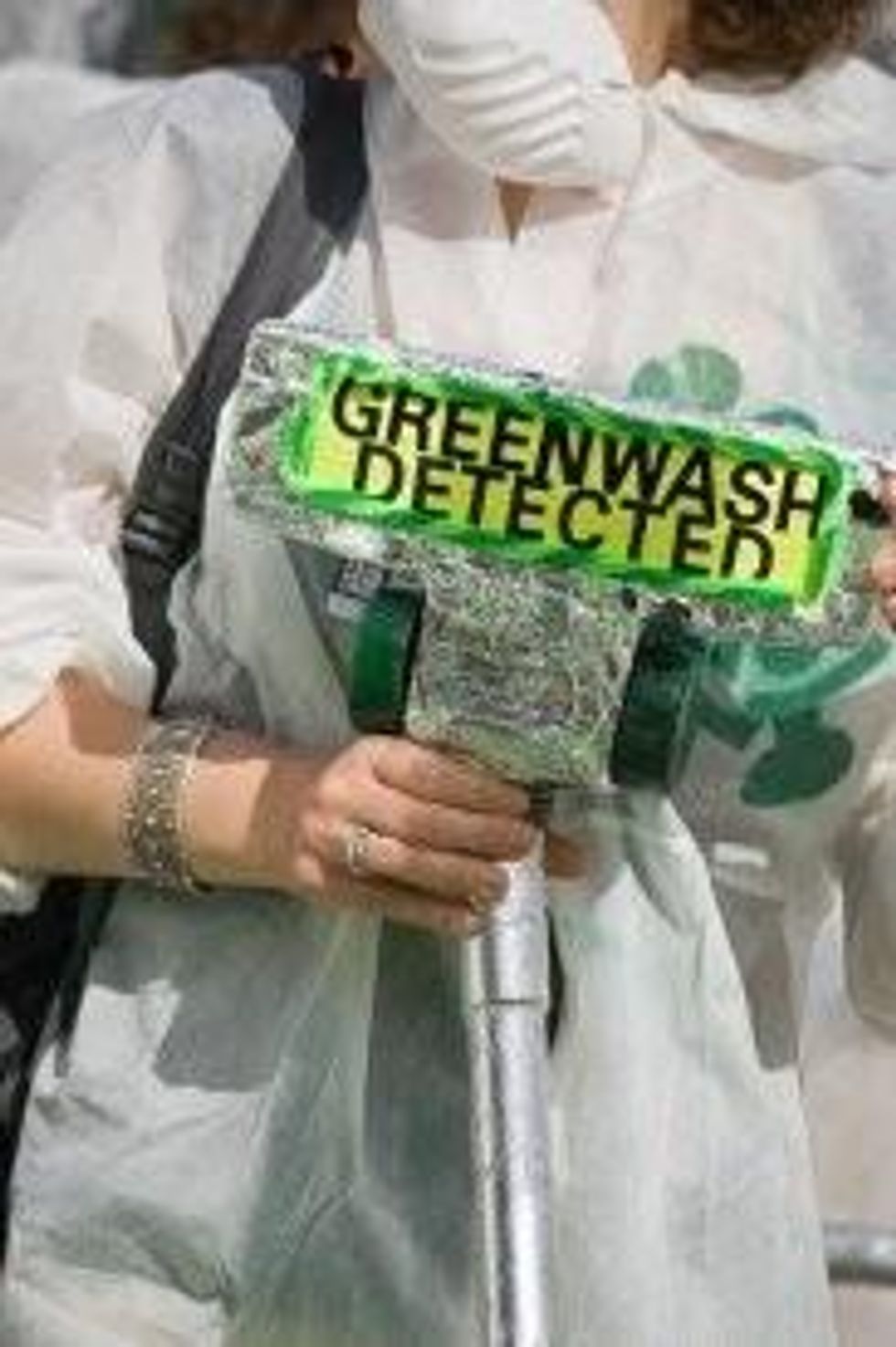
The so-called "green economy," which governments, business leaders, and some environmental organizations touted at last month's United Nations Earth Summit in Rio de Janeiro, is actually a greenwashed economy. Its proponents ask questions such as: How can we put a price on nature so as to better manage it? Or, how can we make it financially undesirable to pollute? Those are the wrong questions, and they don't lead us to real solutions.
Putting a price on nature -- as if it were a widget to be bought and sold on the market -- devalues its life-giving properties. It partitions the environment off as a commodity, leaving it for sale to the highest bidder. And pollution trading is like paying a robber not to steal from your home. Neither gets to the root causes of our environmental problems: the failure to take meaningful regulatory actions and the undemocratic means by which our natural resources are managed worldwide.
As our access to the planet's resources that once seemed endless has become limited, corporations, multinational institutions, industry-funded non-profits, and policymakers are eagerly offering market-based solutions. They typically position private interests to profit from our increased need for shared natural resources.
Calling this dangerous trend "the green economy" just isn't appropriate. It's more accurate to say that these special interests are promoting the same old dirty economy under a new banner. And this failure to prevent pollution threatens our ability to pursue sustainable development.
Through clever greenwashing campaigns, huge companies have somehow created the ability to buy and trade credits that they claim will curb pollution. These cap-and-trade programs do little but encourage larger companies with deeper pockets to continue with business as usual. That ultimately leads to the continued disposal of contaminants into our waterways and our atmosphere.
Likewise, thanks to relentless lobbying and a hefty advertising campaign, the oil and gas industry has managed to convince key lawmakers and consumers alike that fracking for natural gas is the key to energy independence. However, that process -- formally called hydraulic fracturing or shale-gas drilling -- requires large quantities of water and a cocktail of toxic chemicals. Fracking can poison drinking water supplies, air, and farmland, endangering public health.
Meanwhile, some of us are struggling to protect the marine environment from pollution and overfishing of endangered species, while large commercial interests try to privatize access to fish or acquire permits to establish aquaculture enterprises in federal waters. These factory fish farms threaten the health of ocean ecosystems. What's "green" about that?
And while we struggle to maintain that water is a human right, multinational corporations are privatizing public water utilities in communities around the world and profiting in places where safe drinking water is scarce.
Our food system is also rigged to benefit a select few companies who monopolize markets and profit from farmers who have no choice but to sell their goods cheaply. Walmart, for example, says it wants to offer healthier food options at affordable prices, but until it changes its business model -- which squeezes farmers and workers and drives food production to become more consolidated and industrialized -- highly processed foods will remain more accessible than healthier, better quality food.
We must promote real solutions that involve communities in the decision making, not just companies. We must protect the land and our water and decrease carbon emissions for the benefit of the public -- not for the profits of private interests.
A group of international scientists says that the earth is dangerously close to its tipping point of irreversible damage. Clearly, we need a way out of the mess we've made of the planet.
The so-called "green economy," which governments, business leaders, and some environmental organizations touted at last month's United Nations Earth Summit in Rio de Janeiro, is actually a greenwashed economy. Its proponents ask questions such as: How can we put a price on nature so as to better manage it? Or, how can we make it financially undesirable to pollute? Those are the wrong questions, and they don't lead us to real solutions.
Putting a price on nature -- as if it were a widget to be bought and sold on the market -- devalues its life-giving properties. It partitions the environment off as a commodity, leaving it for sale to the highest bidder. And pollution trading is like paying a robber not to steal from your home. Neither gets to the root causes of our environmental problems: the failure to take meaningful regulatory actions and the undemocratic means by which our natural resources are managed worldwide.
As our access to the planet's resources that once seemed endless has become limited, corporations, multinational institutions, industry-funded non-profits, and policymakers are eagerly offering market-based solutions. They typically position private interests to profit from our increased need for shared natural resources.
Calling this dangerous trend "the green economy" just isn't appropriate. It's more accurate to say that these special interests are promoting the same old dirty economy under a new banner. And this failure to prevent pollution threatens our ability to pursue sustainable development.
Through clever greenwashing campaigns, huge companies have somehow created the ability to buy and trade credits that they claim will curb pollution. These cap-and-trade programs do little but encourage larger companies with deeper pockets to continue with business as usual. That ultimately leads to the continued disposal of contaminants into our waterways and our atmosphere.
Likewise, thanks to relentless lobbying and a hefty advertising campaign, the oil and gas industry has managed to convince key lawmakers and consumers alike that fracking for natural gas is the key to energy independence. However, that process -- formally called hydraulic fracturing or shale-gas drilling -- requires large quantities of water and a cocktail of toxic chemicals. Fracking can poison drinking water supplies, air, and farmland, endangering public health.
Meanwhile, some of us are struggling to protect the marine environment from pollution and overfishing of endangered species, while large commercial interests try to privatize access to fish or acquire permits to establish aquaculture enterprises in federal waters. These factory fish farms threaten the health of ocean ecosystems. What's "green" about that?
And while we struggle to maintain that water is a human right, multinational corporations are privatizing public water utilities in communities around the world and profiting in places where safe drinking water is scarce.
Our food system is also rigged to benefit a select few companies who monopolize markets and profit from farmers who have no choice but to sell their goods cheaply. Walmart, for example, says it wants to offer healthier food options at affordable prices, but until it changes its business model -- which squeezes farmers and workers and drives food production to become more consolidated and industrialized -- highly processed foods will remain more accessible than healthier, better quality food.
We must promote real solutions that involve communities in the decision making, not just companies. We must protect the land and our water and decrease carbon emissions for the benefit of the public -- not for the profits of private interests.
A group of international scientists says that the earth is dangerously close to its tipping point of irreversible damage. Clearly, we need a way out of the mess we've made of the planet.
The so-called "green economy," which governments, business leaders, and some environmental organizations touted at last month's United Nations Earth Summit in Rio de Janeiro, is actually a greenwashed economy. Its proponents ask questions such as: How can we put a price on nature so as to better manage it? Or, how can we make it financially undesirable to pollute? Those are the wrong questions, and they don't lead us to real solutions.
Putting a price on nature -- as if it were a widget to be bought and sold on the market -- devalues its life-giving properties. It partitions the environment off as a commodity, leaving it for sale to the highest bidder. And pollution trading is like paying a robber not to steal from your home. Neither gets to the root causes of our environmental problems: the failure to take meaningful regulatory actions and the undemocratic means by which our natural resources are managed worldwide.
As our access to the planet's resources that once seemed endless has become limited, corporations, multinational institutions, industry-funded non-profits, and policymakers are eagerly offering market-based solutions. They typically position private interests to profit from our increased need for shared natural resources.
Calling this dangerous trend "the green economy" just isn't appropriate. It's more accurate to say that these special interests are promoting the same old dirty economy under a new banner. And this failure to prevent pollution threatens our ability to pursue sustainable development.
Through clever greenwashing campaigns, huge companies have somehow created the ability to buy and trade credits that they claim will curb pollution. These cap-and-trade programs do little but encourage larger companies with deeper pockets to continue with business as usual. That ultimately leads to the continued disposal of contaminants into our waterways and our atmosphere.
Likewise, thanks to relentless lobbying and a hefty advertising campaign, the oil and gas industry has managed to convince key lawmakers and consumers alike that fracking for natural gas is the key to energy independence. However, that process -- formally called hydraulic fracturing or shale-gas drilling -- requires large quantities of water and a cocktail of toxic chemicals. Fracking can poison drinking water supplies, air, and farmland, endangering public health.
Meanwhile, some of us are struggling to protect the marine environment from pollution and overfishing of endangered species, while large commercial interests try to privatize access to fish or acquire permits to establish aquaculture enterprises in federal waters. These factory fish farms threaten the health of ocean ecosystems. What's "green" about that?
And while we struggle to maintain that water is a human right, multinational corporations are privatizing public water utilities in communities around the world and profiting in places where safe drinking water is scarce.
Our food system is also rigged to benefit a select few companies who monopolize markets and profit from farmers who have no choice but to sell their goods cheaply. Walmart, for example, says it wants to offer healthier food options at affordable prices, but until it changes its business model -- which squeezes farmers and workers and drives food production to become more consolidated and industrialized -- highly processed foods will remain more accessible than healthier, better quality food.
We must promote real solutions that involve communities in the decision making, not just companies. We must protect the land and our water and decrease carbon emissions for the benefit of the public -- not for the profits of private interests.