SUBSCRIBE TO OUR FREE NEWSLETTER
Daily news & progressive opinion—funded by the people, not the corporations—delivered straight to your inbox.
5
#000000
#FFFFFF
To donate by check, phone, or other method, see our More Ways to Give page.
Criminally investigating the kinds of leaks that are the bread and butter of national security investigative reporting is a noxious overreaction by hyper-controlling government officials who don't want us to know what's being done in our name.
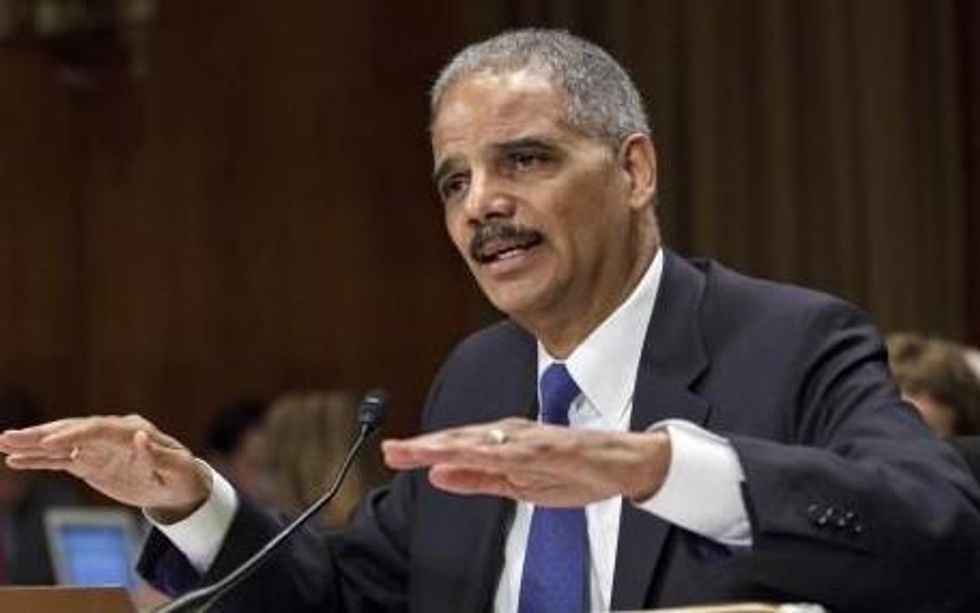
Attorney General Eric Holder announced last week that he has assigned two U.S. attorneys to lead criminal leak investigations into recent media reports about topics including how drone attacks are approved at the White House and how a computer virus attack was launched against Iran's nuclear program.
There is such a thing as a criminal leak -- for instance, when an administration official intentionally outs a covert CIA operative in an attempt to discredit an administration critic.
But leaks that expose secrets that have momentous public policy implications need to be treated differently, because they are a critical part of our nation's system of checks and balances. Knowledge is essential to the public's ability to restrain executive (and legislative) power.
In this case, part of the pressure for an investigation came from Congress -- from Sen. John McCain, who accused the Obama administration of leaking for political gain, and from the bipartisan leaders of the House and Senate intelligence committees, whose most righteous anger seems to be reserved not for violations of international law, torture statues or civil liberties, but for those occasions when the public, thanks to aggressive reporting by journalists, knows more than they do about something.
If President Obama is truly concerned about these leaks -- which I'm not at all sure he is -- there's a very simple solution. He can call in top national security staffers and other top officials and demand to know what role they played in these stories. If they leaked, and did so without his implicit or explicit approval, and he really thinks that was the wrong thing to do, he can fire them. If they lie to him (like Karl Rove did to George Bush about his role in the Valerie Plame leak) then Obama has bigger problems with his staff than leaks.
Outsourcing the investigation to the Department of Justice instead is a cowardly ducking of responsibility -- with tremendously dangerous potential. This is especially the case because under Obama and Holder, the DOJ -- presumably to build up good will with the intelligence community -- has taken to charging such leaks as violations of the draconian Espionage Act, a 1917 law intended for the prosecution of people who are aiding the enemy. Furthermore, the official DOJ position now seems to be that there is no reporter's privilege at all in such maters, and therefore no need to even consider the nature of the leak, how much if any damage it actually caused, what the intentions of the leaker were, and how much it served the public interest.
The six previous times the Obama administration has charged government officials who leaked to the press with Espionage Act violations -- more than all previous presidents combined -- have already sent a chilling message to investigative reporters and the whistleblowers they depend on.
That is ultimately not a good thing for our democracy. And one would have hoped that a president ostensibly devoted to transparency would recognize that.
Criminally investigating the kinds of leaks that are the bread and butter of national security investigative reporting is a noxious overreaction by hyper-controlling government officials who don't want us to know what's being done in our name.
Attorney General Eric Holder announced last week that he has assigned two U.S. attorneys to lead criminal leak investigations into recent media reports about topics including how drone attacks are approved at the White House and how a computer virus attack was launched against Iran's nuclear program.
There is such a thing as a criminal leak -- for instance, when an administration official intentionally outs a covert CIA operative in an attempt to discredit an administration critic.
But leaks that expose secrets that have momentous public policy implications need to be treated differently, because they are a critical part of our nation's system of checks and balances. Knowledge is essential to the public's ability to restrain executive (and legislative) power.
In this case, part of the pressure for an investigation came from Congress -- from Sen. John McCain, who accused the Obama administration of leaking for political gain, and from the bipartisan leaders of the House and Senate intelligence committees, whose most righteous anger seems to be reserved not for violations of international law, torture statues or civil liberties, but for those occasions when the public, thanks to aggressive reporting by journalists, knows more than they do about something.
If President Obama is truly concerned about these leaks -- which I'm not at all sure he is -- there's a very simple solution. He can call in top national security staffers and other top officials and demand to know what role they played in these stories. If they leaked, and did so without his implicit or explicit approval, and he really thinks that was the wrong thing to do, he can fire them. If they lie to him (like Karl Rove did to George Bush about his role in the Valerie Plame leak) then Obama has bigger problems with his staff than leaks.
Outsourcing the investigation to the Department of Justice instead is a cowardly ducking of responsibility -- with tremendously dangerous potential. This is especially the case because under Obama and Holder, the DOJ -- presumably to build up good will with the intelligence community -- has taken to charging such leaks as violations of the draconian Espionage Act, a 1917 law intended for the prosecution of people who are aiding the enemy. Furthermore, the official DOJ position now seems to be that there is no reporter's privilege at all in such maters, and therefore no need to even consider the nature of the leak, how much if any damage it actually caused, what the intentions of the leaker were, and how much it served the public interest.
The six previous times the Obama administration has charged government officials who leaked to the press with Espionage Act violations -- more than all previous presidents combined -- have already sent a chilling message to investigative reporters and the whistleblowers they depend on.
That is ultimately not a good thing for our democracy. And one would have hoped that a president ostensibly devoted to transparency would recognize that.
Criminally investigating the kinds of leaks that are the bread and butter of national security investigative reporting is a noxious overreaction by hyper-controlling government officials who don't want us to know what's being done in our name.
Attorney General Eric Holder announced last week that he has assigned two U.S. attorneys to lead criminal leak investigations into recent media reports about topics including how drone attacks are approved at the White House and how a computer virus attack was launched against Iran's nuclear program.
There is such a thing as a criminal leak -- for instance, when an administration official intentionally outs a covert CIA operative in an attempt to discredit an administration critic.
But leaks that expose secrets that have momentous public policy implications need to be treated differently, because they are a critical part of our nation's system of checks and balances. Knowledge is essential to the public's ability to restrain executive (and legislative) power.
In this case, part of the pressure for an investigation came from Congress -- from Sen. John McCain, who accused the Obama administration of leaking for political gain, and from the bipartisan leaders of the House and Senate intelligence committees, whose most righteous anger seems to be reserved not for violations of international law, torture statues or civil liberties, but for those occasions when the public, thanks to aggressive reporting by journalists, knows more than they do about something.
If President Obama is truly concerned about these leaks -- which I'm not at all sure he is -- there's a very simple solution. He can call in top national security staffers and other top officials and demand to know what role they played in these stories. If they leaked, and did so without his implicit or explicit approval, and he really thinks that was the wrong thing to do, he can fire them. If they lie to him (like Karl Rove did to George Bush about his role in the Valerie Plame leak) then Obama has bigger problems with his staff than leaks.
Outsourcing the investigation to the Department of Justice instead is a cowardly ducking of responsibility -- with tremendously dangerous potential. This is especially the case because under Obama and Holder, the DOJ -- presumably to build up good will with the intelligence community -- has taken to charging such leaks as violations of the draconian Espionage Act, a 1917 law intended for the prosecution of people who are aiding the enemy. Furthermore, the official DOJ position now seems to be that there is no reporter's privilege at all in such maters, and therefore no need to even consider the nature of the leak, how much if any damage it actually caused, what the intentions of the leaker were, and how much it served the public interest.
The six previous times the Obama administration has charged government officials who leaked to the press with Espionage Act violations -- more than all previous presidents combined -- have already sent a chilling message to investigative reporters and the whistleblowers they depend on.
That is ultimately not a good thing for our democracy. And one would have hoped that a president ostensibly devoted to transparency would recognize that.