SUBSCRIBE TO OUR FREE NEWSLETTER
Daily news & progressive opinion—funded by the people, not the corporations—delivered straight to your inbox.
5
#000000
#FFFFFF
To donate by check, phone, or other method, see our More Ways to Give page.
So it turns out that mass-murder suspect Robert Bales once used a bad word in a Facebook conversation.
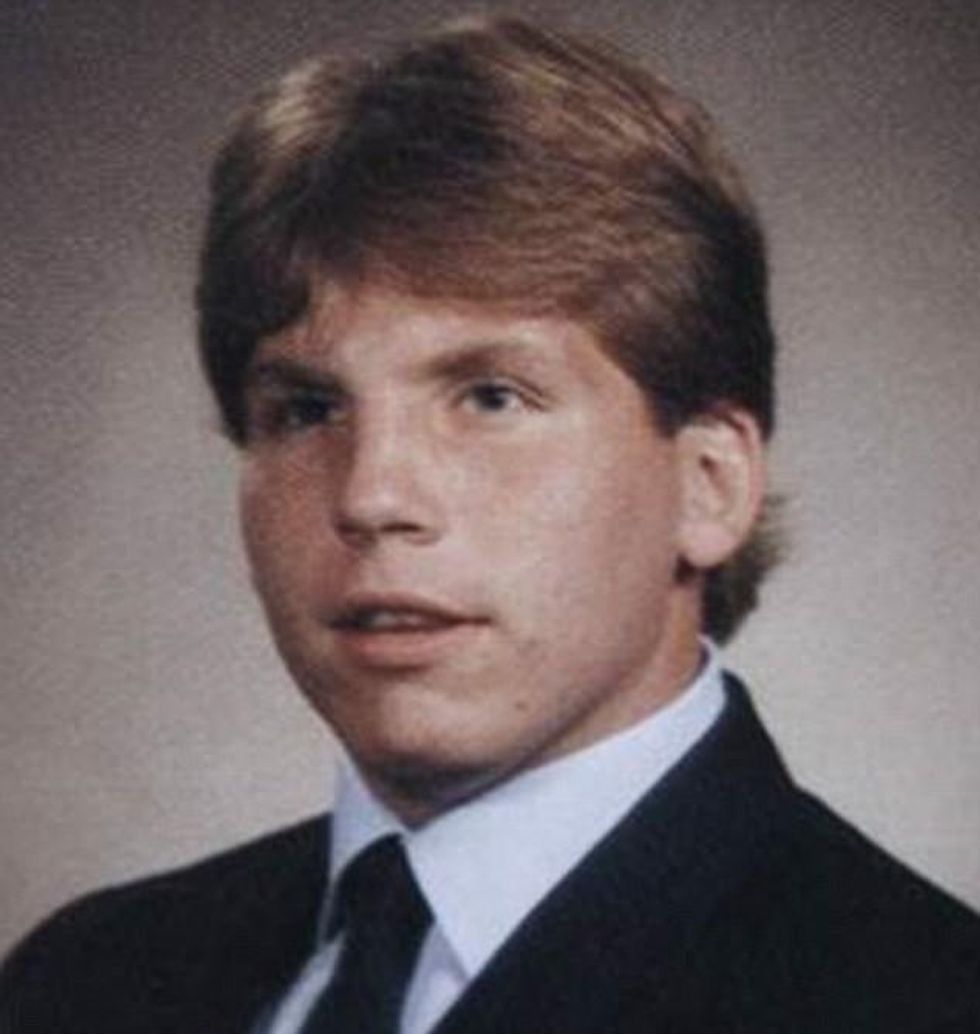
This is one of the more bizarre details of his life that has come breathlessly to light in the media, along with his big smile, arrest record and disastrous financial dealings. The word was "hadji" (misspelled "hagi"), which is the racial slur of choice among U.S. troops to denigrate Iraqis; and stories where I have read about his use of it fixate on it judgmentally, as though to suggest it might explain something: the tiny flaw that reveals a propensity for massacring children.
Something had to be wrong with him, right? As always, the mainstream media's unquestioning assumption is that the atrocity is the work of an individual nut . . . a flawed patriot, a bad apple. Oh so quietly ignored is the possibility that there's something wrong with the military system and culture that produced him.
Indeed, a Wall Street Journal article reporting on the "hadji" story saw fit to point out that "U.S. commanders spent years trying in vain to end the use of the term" -- implying a crisply righteous sense of social responsibility at the highest levels of the military, a pervasive culture of political correctness enforced by the chain of command, which, alas, sometimes breaks down in the ranks. What can you do? Sigh. Boys will be boys.
The media obsession with Bales' individuality -- flawed, perhaps, but heart-breakingly all-American as well ("At Home, Asking How 'Our Bobby' Became War Crime Suspect," ran the New York Times headline) -- ignores basic systems psychology, which understands that nobody exists in a vacuum. One person's aberrant behavior releases the pressure building up in the whole system. In this case, the system is the Army. Could there be something for the media to explore here that would be even more productive than talking to Robert Bales' childhood neighbor or former principal?
Could there be, for instance, something in the dehumanization of the enemy -- a process that makes it possible for soldiers to go against their own nature and take human lives -- that results in their own dehumanization as well?
In the midst of the outpouring of news about the Afghan massacre, I started thinking about the extraordinary Winter Soldier hearings held outside Washington, D.C., four years ago. There were four days of testimony on the cruelly dysfunctional war on terror. Two panels were devoted to the topic "Racism and War: the Dehumanization of the Enemy." The panelists talked about how they learned contempt and disgust for all Iraqis and how it manifested on the ground in Iraq, where Robert Bales served three tours.
Here are some salient quotes:
"I joined the Army on my 18th birthday. When I joined I was told racism was gone from the military. After 9/11, I (began hearing) towel head, camel jockey, sand nigger. These came from up the chain of command. The new word was hadji. A hadji is someone who takes a pilgrimage to Mecca. We took the best thing from Islam and made it the worst thing." -- Mike Prysner
"Hadji was used to dehumanize anyone there who is not us. KBR employees who did our laundry became hadji. Not a person, not a name, but a hadji. 'They're just hadjis. Who cares?' The highest ranking officer, Gen. Casey, used the word. He called Iraqi people hadjis. These things start at the top, not the bottom." -- Geoff Millard
"The military turned hadji into a disempowering word. My sergeant major said, 'The hadji is an obstacle. Get him out of the way.' Denying a person their name gave us permission to separate ourselves from the people of Iraq." Thus when a boy was hit by a truck, the CO said: "He's gone, move out." -- Mike Totten
"A freshly captured detainee had been denied his insulin. He was a hadji and probably he won't die, but it wouldn't matter if he did. This is what the CO said in denying permission to hospitalize him. His diabetic stroke was mistaken for insubordination. They pepper-sprayed him and put him in a holding cell, where he died." -- Andrew Duffy
"It's almost impossible to act on your morality. . . . You remove the humanity from them -- beat them -- and in doing so you remove humanity from yourself." -- Carlos Mejia
Does this begin to penetrate the mystery that so confounds the New York Times and the rest of the mainstream media? Stories of American troops' horrific treatment of Iraqis and Afghans are endless. Most of the time, such treatment was well within the context of orders. Contempt for the people we were "liberating" permeated the chain of command. In 2003, the Washington Post reported that a Defense Department computer program for calculating collateral damage was called "Bugsplat."
And as the aunt of former Pfc. Steven Green, who was convicted of raping a 14-year-old Iraqi girl and murdering her, her parents and her 7-year-old sister, said at Green's sentencing, "We did not send a rapist and murderer to Iraq."
The time has come to challenge the military at the level of its reason for being. The time has come to add up its suicides, its war crimes and the rest of its horrific legacy. How long can it survive an honest accounting?
So it turns out that mass-murder suspect Robert Bales once used a bad word in a Facebook conversation.
This is one of the more bizarre details of his life that has come breathlessly to light in the media, along with his big smile, arrest record and disastrous financial dealings. The word was "hadji" (misspelled "hagi"), which is the racial slur of choice among U.S. troops to denigrate Iraqis; and stories where I have read about his use of it fixate on it judgmentally, as though to suggest it might explain something: the tiny flaw that reveals a propensity for massacring children.
Something had to be wrong with him, right? As always, the mainstream media's unquestioning assumption is that the atrocity is the work of an individual nut . . . a flawed patriot, a bad apple. Oh so quietly ignored is the possibility that there's something wrong with the military system and culture that produced him.
Indeed, a Wall Street Journal article reporting on the "hadji" story saw fit to point out that "U.S. commanders spent years trying in vain to end the use of the term" -- implying a crisply righteous sense of social responsibility at the highest levels of the military, a pervasive culture of political correctness enforced by the chain of command, which, alas, sometimes breaks down in the ranks. What can you do? Sigh. Boys will be boys.
The media obsession with Bales' individuality -- flawed, perhaps, but heart-breakingly all-American as well ("At Home, Asking How 'Our Bobby' Became War Crime Suspect," ran the New York Times headline) -- ignores basic systems psychology, which understands that nobody exists in a vacuum. One person's aberrant behavior releases the pressure building up in the whole system. In this case, the system is the Army. Could there be something for the media to explore here that would be even more productive than talking to Robert Bales' childhood neighbor or former principal?
Could there be, for instance, something in the dehumanization of the enemy -- a process that makes it possible for soldiers to go against their own nature and take human lives -- that results in their own dehumanization as well?
In the midst of the outpouring of news about the Afghan massacre, I started thinking about the extraordinary Winter Soldier hearings held outside Washington, D.C., four years ago. There were four days of testimony on the cruelly dysfunctional war on terror. Two panels were devoted to the topic "Racism and War: the Dehumanization of the Enemy." The panelists talked about how they learned contempt and disgust for all Iraqis and how it manifested on the ground in Iraq, where Robert Bales served three tours.
Here are some salient quotes:
"I joined the Army on my 18th birthday. When I joined I was told racism was gone from the military. After 9/11, I (began hearing) towel head, camel jockey, sand nigger. These came from up the chain of command. The new word was hadji. A hadji is someone who takes a pilgrimage to Mecca. We took the best thing from Islam and made it the worst thing." -- Mike Prysner
"Hadji was used to dehumanize anyone there who is not us. KBR employees who did our laundry became hadji. Not a person, not a name, but a hadji. 'They're just hadjis. Who cares?' The highest ranking officer, Gen. Casey, used the word. He called Iraqi people hadjis. These things start at the top, not the bottom." -- Geoff Millard
"The military turned hadji into a disempowering word. My sergeant major said, 'The hadji is an obstacle. Get him out of the way.' Denying a person their name gave us permission to separate ourselves from the people of Iraq." Thus when a boy was hit by a truck, the CO said: "He's gone, move out." -- Mike Totten
"A freshly captured detainee had been denied his insulin. He was a hadji and probably he won't die, but it wouldn't matter if he did. This is what the CO said in denying permission to hospitalize him. His diabetic stroke was mistaken for insubordination. They pepper-sprayed him and put him in a holding cell, where he died." -- Andrew Duffy
"It's almost impossible to act on your morality. . . . You remove the humanity from them -- beat them -- and in doing so you remove humanity from yourself." -- Carlos Mejia
Does this begin to penetrate the mystery that so confounds the New York Times and the rest of the mainstream media? Stories of American troops' horrific treatment of Iraqis and Afghans are endless. Most of the time, such treatment was well within the context of orders. Contempt for the people we were "liberating" permeated the chain of command. In 2003, the Washington Post reported that a Defense Department computer program for calculating collateral damage was called "Bugsplat."
And as the aunt of former Pfc. Steven Green, who was convicted of raping a 14-year-old Iraqi girl and murdering her, her parents and her 7-year-old sister, said at Green's sentencing, "We did not send a rapist and murderer to Iraq."
The time has come to challenge the military at the level of its reason for being. The time has come to add up its suicides, its war crimes and the rest of its horrific legacy. How long can it survive an honest accounting?
So it turns out that mass-murder suspect Robert Bales once used a bad word in a Facebook conversation.
This is one of the more bizarre details of his life that has come breathlessly to light in the media, along with his big smile, arrest record and disastrous financial dealings. The word was "hadji" (misspelled "hagi"), which is the racial slur of choice among U.S. troops to denigrate Iraqis; and stories where I have read about his use of it fixate on it judgmentally, as though to suggest it might explain something: the tiny flaw that reveals a propensity for massacring children.
Something had to be wrong with him, right? As always, the mainstream media's unquestioning assumption is that the atrocity is the work of an individual nut . . . a flawed patriot, a bad apple. Oh so quietly ignored is the possibility that there's something wrong with the military system and culture that produced him.
Indeed, a Wall Street Journal article reporting on the "hadji" story saw fit to point out that "U.S. commanders spent years trying in vain to end the use of the term" -- implying a crisply righteous sense of social responsibility at the highest levels of the military, a pervasive culture of political correctness enforced by the chain of command, which, alas, sometimes breaks down in the ranks. What can you do? Sigh. Boys will be boys.
The media obsession with Bales' individuality -- flawed, perhaps, but heart-breakingly all-American as well ("At Home, Asking How 'Our Bobby' Became War Crime Suspect," ran the New York Times headline) -- ignores basic systems psychology, which understands that nobody exists in a vacuum. One person's aberrant behavior releases the pressure building up in the whole system. In this case, the system is the Army. Could there be something for the media to explore here that would be even more productive than talking to Robert Bales' childhood neighbor or former principal?
Could there be, for instance, something in the dehumanization of the enemy -- a process that makes it possible for soldiers to go against their own nature and take human lives -- that results in their own dehumanization as well?
In the midst of the outpouring of news about the Afghan massacre, I started thinking about the extraordinary Winter Soldier hearings held outside Washington, D.C., four years ago. There were four days of testimony on the cruelly dysfunctional war on terror. Two panels were devoted to the topic "Racism and War: the Dehumanization of the Enemy." The panelists talked about how they learned contempt and disgust for all Iraqis and how it manifested on the ground in Iraq, where Robert Bales served three tours.
Here are some salient quotes:
"I joined the Army on my 18th birthday. When I joined I was told racism was gone from the military. After 9/11, I (began hearing) towel head, camel jockey, sand nigger. These came from up the chain of command. The new word was hadji. A hadji is someone who takes a pilgrimage to Mecca. We took the best thing from Islam and made it the worst thing." -- Mike Prysner
"Hadji was used to dehumanize anyone there who is not us. KBR employees who did our laundry became hadji. Not a person, not a name, but a hadji. 'They're just hadjis. Who cares?' The highest ranking officer, Gen. Casey, used the word. He called Iraqi people hadjis. These things start at the top, not the bottom." -- Geoff Millard
"The military turned hadji into a disempowering word. My sergeant major said, 'The hadji is an obstacle. Get him out of the way.' Denying a person their name gave us permission to separate ourselves from the people of Iraq." Thus when a boy was hit by a truck, the CO said: "He's gone, move out." -- Mike Totten
"A freshly captured detainee had been denied his insulin. He was a hadji and probably he won't die, but it wouldn't matter if he did. This is what the CO said in denying permission to hospitalize him. His diabetic stroke was mistaken for insubordination. They pepper-sprayed him and put him in a holding cell, where he died." -- Andrew Duffy
"It's almost impossible to act on your morality. . . . You remove the humanity from them -- beat them -- and in doing so you remove humanity from yourself." -- Carlos Mejia
Does this begin to penetrate the mystery that so confounds the New York Times and the rest of the mainstream media? Stories of American troops' horrific treatment of Iraqis and Afghans are endless. Most of the time, such treatment was well within the context of orders. Contempt for the people we were "liberating" permeated the chain of command. In 2003, the Washington Post reported that a Defense Department computer program for calculating collateral damage was called "Bugsplat."
And as the aunt of former Pfc. Steven Green, who was convicted of raping a 14-year-old Iraqi girl and murdering her, her parents and her 7-year-old sister, said at Green's sentencing, "We did not send a rapist and murderer to Iraq."
The time has come to challenge the military at the level of its reason for being. The time has come to add up its suicides, its war crimes and the rest of its horrific legacy. How long can it survive an honest accounting?