SUBSCRIBE TO OUR FREE NEWSLETTER
Daily news & progressive opinion—funded by the people, not the corporations—delivered straight to your inbox.
5
#000000
#FFFFFF
To donate by check, phone, or other method, see our More Ways to Give page.
President Obama held his ground on Iran during the last several days of dueling I-love-Israel speeches, making clear that the U.S. position did not match the Israeli demand for an immediate military strike against Iran's non-existent nuclear weapons program. But Prime Minister Netanyahu scored a big victory as well, with Iran-as-a-threat completely dominating the discussion, and Israel's occupation of Palestine off the agenda.
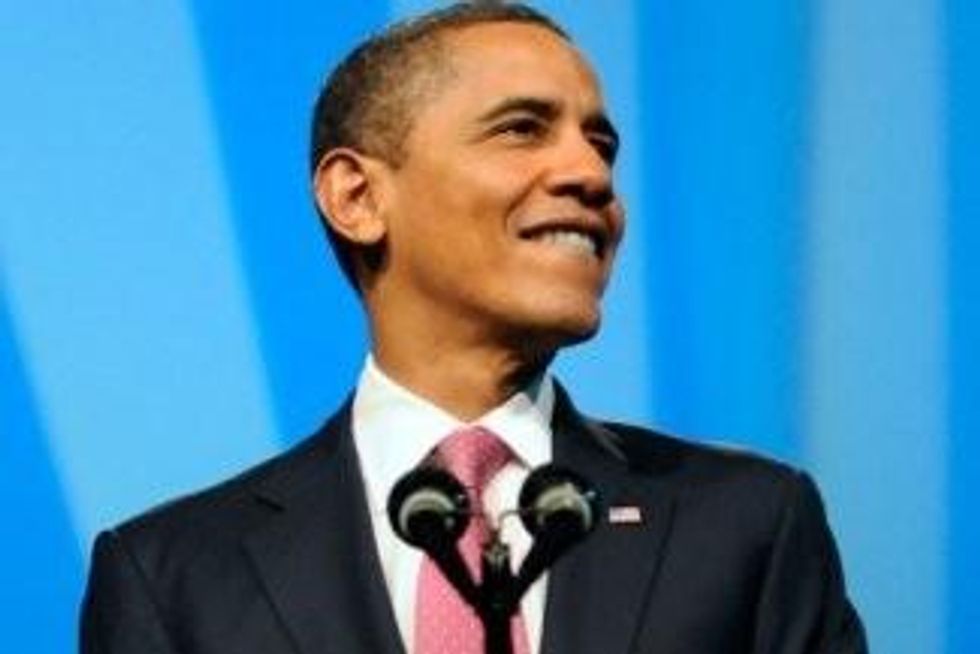
AIPAC and the rest of the pro-Israel lobby remain influential despite the extraordinary shift in public opinion and popular discourse over the last several years that has put the lobby on the defensive everywhere but Congress. Obama's AIPAC speech reflected that influence and the perceived need of mainstream politicians to adhere to its demands, especially during the pressures of an election cycle. It would give, he and his advisers hope, a powerful boost to his campaign.
But on the critical question of Iran, his speech also highlighted the small but significant divide that continues to split U.S. from Israeli policy. Obama offered a rhetorical embrace, but a much less-than-desired military promise to Israel on Iran, while delivering a slap in the face to human rights, international law, and any U.S. responsibility for ending support for Israel's anti-Palestinian occupation and apartheid policies.
The Atlantic's longtime correspondent James Fallows noted "what I found odd about the AIPAC performance is that an American president was expected to make similar pleas about his reliability in support of another country's government." But that denies the longevity and intensity of the U.S.-Israeli "special relationship." As that relationship was consolidated during the post-1967 Cold War years, it was shaped by the mutually reinforcing influences of the pro-Israel lobby and those of the powerful military-strategic forces, from the Pentagon to the weapons manufacturers to members of Congress.
[...]
In an unmistakable recognition of how civil society activism is cutting into the once-uncritical pro-Israel discourse of the United States, Obama won applause for his declaration that "when there are efforts to boycott or divest from Israel, we will stand against them. And whenever an effort is made to de-legitimize the state of Israel, my administration has opposed them."
President Obama also endeared himself to the crowd by referring to the "Jewish state of Israel." In the last couple of years Washington has accepted Israel's demand for Palestinian recognition of Israel as a "Jewish state" as a new precondition to restarting the long-failed peace talks. But accepting Israel as a "Jewish state" is widely viewed as legitimizing the inequality of rights and privileges available to Jews and not to Palestinians both inside Israel and in the occupied territories.
Bomb Iran?
The president was clear that the Iran war gap between Washington and Tel Aviv remains. On the critical question of whether the U.S. would join, defend, participate in, or even lead an Israeli military strike, Obama made it clear at AIPAC that he really doesn't want to go to war against Iran. It shouldn't be a surprise, given what $5.00/gallon gasoline would do to his November re-election prospects.
Obama's talk was rhetorically tough-"The entire world has an interest in preventing Iran from acquiring a nuclear weapon"-but he rejected Israel's demand, reasserting the U.S. position that only the actual acquisition of a nuclear weapon by Iran might trigger a U.S. military response. For Tel Aviv (along with AIPAC and several U.S. senators), that red line is Iran reaching nuclear weapons capability, which really means the scientific know-how (remember Israeli officials' chortling over those assassinated scientists?) and enrichment facilities.
Read the full article at Salon.com
President Obama held his ground on Iran during the last several days of dueling I-love-Israel speeches, making clear that the U.S. position did not match the Israeli demand for an immediate military strike against Iran's non-existent nuclear weapons program. But Prime Minister Netanyahu scored a big victory as well, with Iran-as-a-threat completely dominating the discussion, and Israel's occupation of Palestine off the agenda.
AIPAC and the rest of the pro-Israel lobby remain influential despite the extraordinary shift in public opinion and popular discourse over the last several years that has put the lobby on the defensive everywhere but Congress. Obama's AIPAC speech reflected that influence and the perceived need of mainstream politicians to adhere to its demands, especially during the pressures of an election cycle. It would give, he and his advisers hope, a powerful boost to his campaign.
But on the critical question of Iran, his speech also highlighted the small but significant divide that continues to split U.S. from Israeli policy. Obama offered a rhetorical embrace, but a much less-than-desired military promise to Israel on Iran, while delivering a slap in the face to human rights, international law, and any U.S. responsibility for ending support for Israel's anti-Palestinian occupation and apartheid policies.
The Atlantic's longtime correspondent James Fallows noted "what I found odd about the AIPAC performance is that an American president was expected to make similar pleas about his reliability in support of another country's government." But that denies the longevity and intensity of the U.S.-Israeli "special relationship." As that relationship was consolidated during the post-1967 Cold War years, it was shaped by the mutually reinforcing influences of the pro-Israel lobby and those of the powerful military-strategic forces, from the Pentagon to the weapons manufacturers to members of Congress.
[...]
In an unmistakable recognition of how civil society activism is cutting into the once-uncritical pro-Israel discourse of the United States, Obama won applause for his declaration that "when there are efforts to boycott or divest from Israel, we will stand against them. And whenever an effort is made to de-legitimize the state of Israel, my administration has opposed them."
President Obama also endeared himself to the crowd by referring to the "Jewish state of Israel." In the last couple of years Washington has accepted Israel's demand for Palestinian recognition of Israel as a "Jewish state" as a new precondition to restarting the long-failed peace talks. But accepting Israel as a "Jewish state" is widely viewed as legitimizing the inequality of rights and privileges available to Jews and not to Palestinians both inside Israel and in the occupied territories.
Bomb Iran?
The president was clear that the Iran war gap between Washington and Tel Aviv remains. On the critical question of whether the U.S. would join, defend, participate in, or even lead an Israeli military strike, Obama made it clear at AIPAC that he really doesn't want to go to war against Iran. It shouldn't be a surprise, given what $5.00/gallon gasoline would do to his November re-election prospects.
Obama's talk was rhetorically tough-"The entire world has an interest in preventing Iran from acquiring a nuclear weapon"-but he rejected Israel's demand, reasserting the U.S. position that only the actual acquisition of a nuclear weapon by Iran might trigger a U.S. military response. For Tel Aviv (along with AIPAC and several U.S. senators), that red line is Iran reaching nuclear weapons capability, which really means the scientific know-how (remember Israeli officials' chortling over those assassinated scientists?) and enrichment facilities.
Read the full article at Salon.com
President Obama held his ground on Iran during the last several days of dueling I-love-Israel speeches, making clear that the U.S. position did not match the Israeli demand for an immediate military strike against Iran's non-existent nuclear weapons program. But Prime Minister Netanyahu scored a big victory as well, with Iran-as-a-threat completely dominating the discussion, and Israel's occupation of Palestine off the agenda.
AIPAC and the rest of the pro-Israel lobby remain influential despite the extraordinary shift in public opinion and popular discourse over the last several years that has put the lobby on the defensive everywhere but Congress. Obama's AIPAC speech reflected that influence and the perceived need of mainstream politicians to adhere to its demands, especially during the pressures of an election cycle. It would give, he and his advisers hope, a powerful boost to his campaign.
But on the critical question of Iran, his speech also highlighted the small but significant divide that continues to split U.S. from Israeli policy. Obama offered a rhetorical embrace, but a much less-than-desired military promise to Israel on Iran, while delivering a slap in the face to human rights, international law, and any U.S. responsibility for ending support for Israel's anti-Palestinian occupation and apartheid policies.
The Atlantic's longtime correspondent James Fallows noted "what I found odd about the AIPAC performance is that an American president was expected to make similar pleas about his reliability in support of another country's government." But that denies the longevity and intensity of the U.S.-Israeli "special relationship." As that relationship was consolidated during the post-1967 Cold War years, it was shaped by the mutually reinforcing influences of the pro-Israel lobby and those of the powerful military-strategic forces, from the Pentagon to the weapons manufacturers to members of Congress.
[...]
In an unmistakable recognition of how civil society activism is cutting into the once-uncritical pro-Israel discourse of the United States, Obama won applause for his declaration that "when there are efforts to boycott or divest from Israel, we will stand against them. And whenever an effort is made to de-legitimize the state of Israel, my administration has opposed them."
President Obama also endeared himself to the crowd by referring to the "Jewish state of Israel." In the last couple of years Washington has accepted Israel's demand for Palestinian recognition of Israel as a "Jewish state" as a new precondition to restarting the long-failed peace talks. But accepting Israel as a "Jewish state" is widely viewed as legitimizing the inequality of rights and privileges available to Jews and not to Palestinians both inside Israel and in the occupied territories.
Bomb Iran?
The president was clear that the Iran war gap between Washington and Tel Aviv remains. On the critical question of whether the U.S. would join, defend, participate in, or even lead an Israeli military strike, Obama made it clear at AIPAC that he really doesn't want to go to war against Iran. It shouldn't be a surprise, given what $5.00/gallon gasoline would do to his November re-election prospects.
Obama's talk was rhetorically tough-"The entire world has an interest in preventing Iran from acquiring a nuclear weapon"-but he rejected Israel's demand, reasserting the U.S. position that only the actual acquisition of a nuclear weapon by Iran might trigger a U.S. military response. For Tel Aviv (along with AIPAC and several U.S. senators), that red line is Iran reaching nuclear weapons capability, which really means the scientific know-how (remember Israeli officials' chortling over those assassinated scientists?) and enrichment facilities.
Read the full article at Salon.com