
In 2010 the world watched in horror as the Gulf of Mexico filled with 5m barrels of oil from an undersea leak caused by the careless handling of equipment on the part of BP and its partner Halliburton. Shocking images of uncontrolled spillage erupting from the ocean floor traveled around the world for weeks, sparking a media frenzy, a range of stern governmental responses and a huge amount of public outrage. BP has spent millions on the clean-up and millions more on a public relations campaign, all in an effort to repair the damage it caused to the Gulf but also to its image and, perhaps more importantly for BP, to its share price.
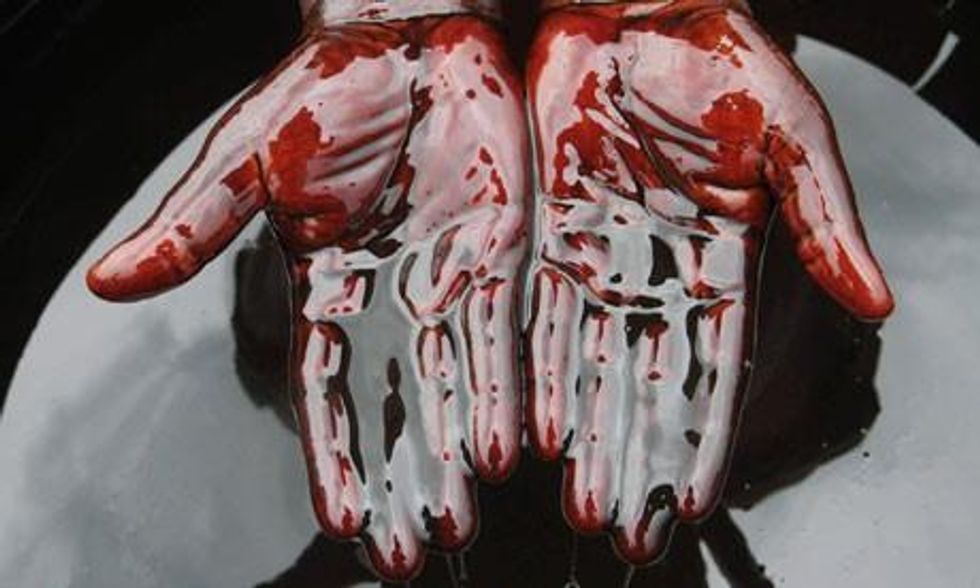
Last month, on the other side of the Atlantic, the oil giant Royal Dutch Shell's operation caused from 1m to 2m gallons of oil to spill into the ocean off the coast of Nigeria, also as the result of an industrial accident. It was the worst spill in Nigeria in 13 years in a part of that country where the oil and gas industry has been despoiling the environment for more than 50 years, on a scale that dwarfs the Deepwater Horizon spill in the Gulf of Mexico by a wide margin. Shell claims it has completely cleaned up the mess, but villages counterclaim the oil has been washing up on their coastline. The world's media seem to be uninterested in checking the facts.
You may wonder where the outrage against Shell is? To say that it is nonexistent except for a few responses from the environmental community would be an understatement. The simple fact is that Shell and its "sisters" in the West African oil patches are rarely scrutinized except in the most egregious cases - which this one surely is - and the world seems to simply expect that the people of Nigeria should live with these sorts of occurrences because they unfortunately lack the political and media clout to do otherwise.
In any other region of the world the behavior of the companies involved would result in major sanctions and criminal prosecutions. Hundreds of square miles of sensitive coastal wetlands have been poisoned, perhaps forever. Fishing areas have been turned into toxic waste zones. Village life has been grotesquely refashioned as a result of flaring gas fumes and pipelines that sometimes run through people's homes. Disease, birth-defects and chronic illnesses are all part and parcel of an unregulated industry that operates outside the range of global media but with the full complicity of the Nigerian government that wants nothing whatsoever to upset its unctuous cash-cow.
A recent report on the Ogoniland region conducted over a period of 14 months by a team from the United Nations environmental program suggests that it would take upwards of 30 years to clean up the Niger Delta, with an initial price tag of more than $1bn. However, it is unclear whether Shell or the Nigerian government will put one dollar towards this effort without continuous international pressure.
In 1995, Shell was implicated in the government-sanctioned death by hanging of Nigerian activist Ken Saro-Wiwa who led one of the first and best organized campaigns against the oil giant and its irresponsible behavior in the Delta, as well as its corrupt practices in its dealing with the Nigerian government. As a result of the outcry that followed the death of Saro-Wiwa, Shell stopped production in the Ogoniland region, but it still maintains - rather poorly, in fact - a large pipeline and storage infrastructure, which are the cause of a continuous stream of oil flowing into the waters surrounding hundreds of desperately poor communities. While Shell claims that most of these spills come from sabotage attacks, the fact is that it does little policing and almost no effort is expended on clean-ups.
This is a circumstance that would simply be impossible in a country with the slightest bit of rule of law or the decency to look after its most vulnerable citizens. Nigeria has been reeling from a series of terrorist attacks on Christian churches, which certainly did capture the world's media attention over the Christmas weekend. However, in the case of this latest oil spill and the hundreds of others that have destroyed the lives of tens of thousands of people, the global media have had very little to say.
Unlike BP's share prices, which plummeted in 2010 after the spill, Shell's have barely had a hiccup. Chalk it up to the difficulty of reporting from such a remote region or chalk it up to racism. Whatever you want to call it, it is a disgrace but also a call to action to anyone who cares about fairness and the health of our planet.
In 2010 the world watched in horror as the Gulf of Mexico filled with 5m barrels of oil from an undersea leak caused by the careless handling of equipment on the part of BP and its partner Halliburton. Shocking images of uncontrolled spillage erupting from the ocean floor traveled around the world for weeks, sparking a media frenzy, a range of stern governmental responses and a huge amount of public outrage. BP has spent millions on the clean-up and millions more on a public relations campaign, all in an effort to repair the damage it caused to the Gulf but also to its image and, perhaps more importantly for BP, to its share price.
Last month, on the other side of the Atlantic, the oil giant Royal Dutch Shell's operation caused from 1m to 2m gallons of oil to spill into the ocean off the coast of Nigeria, also as the result of an industrial accident. It was the worst spill in Nigeria in 13 years in a part of that country where the oil and gas industry has been despoiling the environment for more than 50 years, on a scale that dwarfs the Deepwater Horizon spill in the Gulf of Mexico by a wide margin. Shell claims it has completely cleaned up the mess, but villages counterclaim the oil has been washing up on their coastline. The world's media seem to be uninterested in checking the facts.
You may wonder where the outrage against Shell is? To say that it is nonexistent except for a few responses from the environmental community would be an understatement. The simple fact is that Shell and its "sisters" in the West African oil patches are rarely scrutinized except in the most egregious cases - which this one surely is - and the world seems to simply expect that the people of Nigeria should live with these sorts of occurrences because they unfortunately lack the political and media clout to do otherwise.
In any other region of the world the behavior of the companies involved would result in major sanctions and criminal prosecutions. Hundreds of square miles of sensitive coastal wetlands have been poisoned, perhaps forever. Fishing areas have been turned into toxic waste zones. Village life has been grotesquely refashioned as a result of flaring gas fumes and pipelines that sometimes run through people's homes. Disease, birth-defects and chronic illnesses are all part and parcel of an unregulated industry that operates outside the range of global media but with the full complicity of the Nigerian government that wants nothing whatsoever to upset its unctuous cash-cow.
A recent report on the Ogoniland region conducted over a period of 14 months by a team from the United Nations environmental program suggests that it would take upwards of 30 years to clean up the Niger Delta, with an initial price tag of more than $1bn. However, it is unclear whether Shell or the Nigerian government will put one dollar towards this effort without continuous international pressure.
In 1995, Shell was implicated in the government-sanctioned death by hanging of Nigerian activist Ken Saro-Wiwa who led one of the first and best organized campaigns against the oil giant and its irresponsible behavior in the Delta, as well as its corrupt practices in its dealing with the Nigerian government. As a result of the outcry that followed the death of Saro-Wiwa, Shell stopped production in the Ogoniland region, but it still maintains - rather poorly, in fact - a large pipeline and storage infrastructure, which are the cause of a continuous stream of oil flowing into the waters surrounding hundreds of desperately poor communities. While Shell claims that most of these spills come from sabotage attacks, the fact is that it does little policing and almost no effort is expended on clean-ups.
This is a circumstance that would simply be impossible in a country with the slightest bit of rule of law or the decency to look after its most vulnerable citizens. Nigeria has been reeling from a series of terrorist attacks on Christian churches, which certainly did capture the world's media attention over the Christmas weekend. However, in the case of this latest oil spill and the hundreds of others that have destroyed the lives of tens of thousands of people, the global media have had very little to say.
Unlike BP's share prices, which plummeted in 2010 after the spill, Shell's have barely had a hiccup. Chalk it up to the difficulty of reporting from such a remote region or chalk it up to racism. Whatever you want to call it, it is a disgrace but also a call to action to anyone who cares about fairness and the health of our planet.
In 2010 the world watched in horror as the Gulf of Mexico filled with 5m barrels of oil from an undersea leak caused by the careless handling of equipment on the part of BP and its partner Halliburton. Shocking images of uncontrolled spillage erupting from the ocean floor traveled around the world for weeks, sparking a media frenzy, a range of stern governmental responses and a huge amount of public outrage. BP has spent millions on the clean-up and millions more on a public relations campaign, all in an effort to repair the damage it caused to the Gulf but also to its image and, perhaps more importantly for BP, to its share price.
Last month, on the other side of the Atlantic, the oil giant Royal Dutch Shell's operation caused from 1m to 2m gallons of oil to spill into the ocean off the coast of Nigeria, also as the result of an industrial accident. It was the worst spill in Nigeria in 13 years in a part of that country where the oil and gas industry has been despoiling the environment for more than 50 years, on a scale that dwarfs the Deepwater Horizon spill in the Gulf of Mexico by a wide margin. Shell claims it has completely cleaned up the mess, but villages counterclaim the oil has been washing up on their coastline. The world's media seem to be uninterested in checking the facts.
You may wonder where the outrage against Shell is? To say that it is nonexistent except for a few responses from the environmental community would be an understatement. The simple fact is that Shell and its "sisters" in the West African oil patches are rarely scrutinized except in the most egregious cases - which this one surely is - and the world seems to simply expect that the people of Nigeria should live with these sorts of occurrences because they unfortunately lack the political and media clout to do otherwise.
In any other region of the world the behavior of the companies involved would result in major sanctions and criminal prosecutions. Hundreds of square miles of sensitive coastal wetlands have been poisoned, perhaps forever. Fishing areas have been turned into toxic waste zones. Village life has been grotesquely refashioned as a result of flaring gas fumes and pipelines that sometimes run through people's homes. Disease, birth-defects and chronic illnesses are all part and parcel of an unregulated industry that operates outside the range of global media but with the full complicity of the Nigerian government that wants nothing whatsoever to upset its unctuous cash-cow.
A recent report on the Ogoniland region conducted over a period of 14 months by a team from the United Nations environmental program suggests that it would take upwards of 30 years to clean up the Niger Delta, with an initial price tag of more than $1bn. However, it is unclear whether Shell or the Nigerian government will put one dollar towards this effort without continuous international pressure.
In 1995, Shell was implicated in the government-sanctioned death by hanging of Nigerian activist Ken Saro-Wiwa who led one of the first and best organized campaigns against the oil giant and its irresponsible behavior in the Delta, as well as its corrupt practices in its dealing with the Nigerian government. As a result of the outcry that followed the death of Saro-Wiwa, Shell stopped production in the Ogoniland region, but it still maintains - rather poorly, in fact - a large pipeline and storage infrastructure, which are the cause of a continuous stream of oil flowing into the waters surrounding hundreds of desperately poor communities. While Shell claims that most of these spills come from sabotage attacks, the fact is that it does little policing and almost no effort is expended on clean-ups.
This is a circumstance that would simply be impossible in a country with the slightest bit of rule of law or the decency to look after its most vulnerable citizens. Nigeria has been reeling from a series of terrorist attacks on Christian churches, which certainly did capture the world's media attention over the Christmas weekend. However, in the case of this latest oil spill and the hundreds of others that have destroyed the lives of tens of thousands of people, the global media have had very little to say.
Unlike BP's share prices, which plummeted in 2010 after the spill, Shell's have barely had a hiccup. Chalk it up to the difficulty of reporting from such a remote region or chalk it up to racism. Whatever you want to call it, it is a disgrace but also a call to action to anyone who cares about fairness and the health of our planet.