
'Any time you have an opportunity to make a difference in this world and you don't, then you are wasting your time on Earth.'' -- Roberto Clemente
Would baseball legend Roberto Clemente have played in next week's Major League All Star baseball game or joined a boycott in protest of Arizona's controversial SB 1070 "papers please" law?
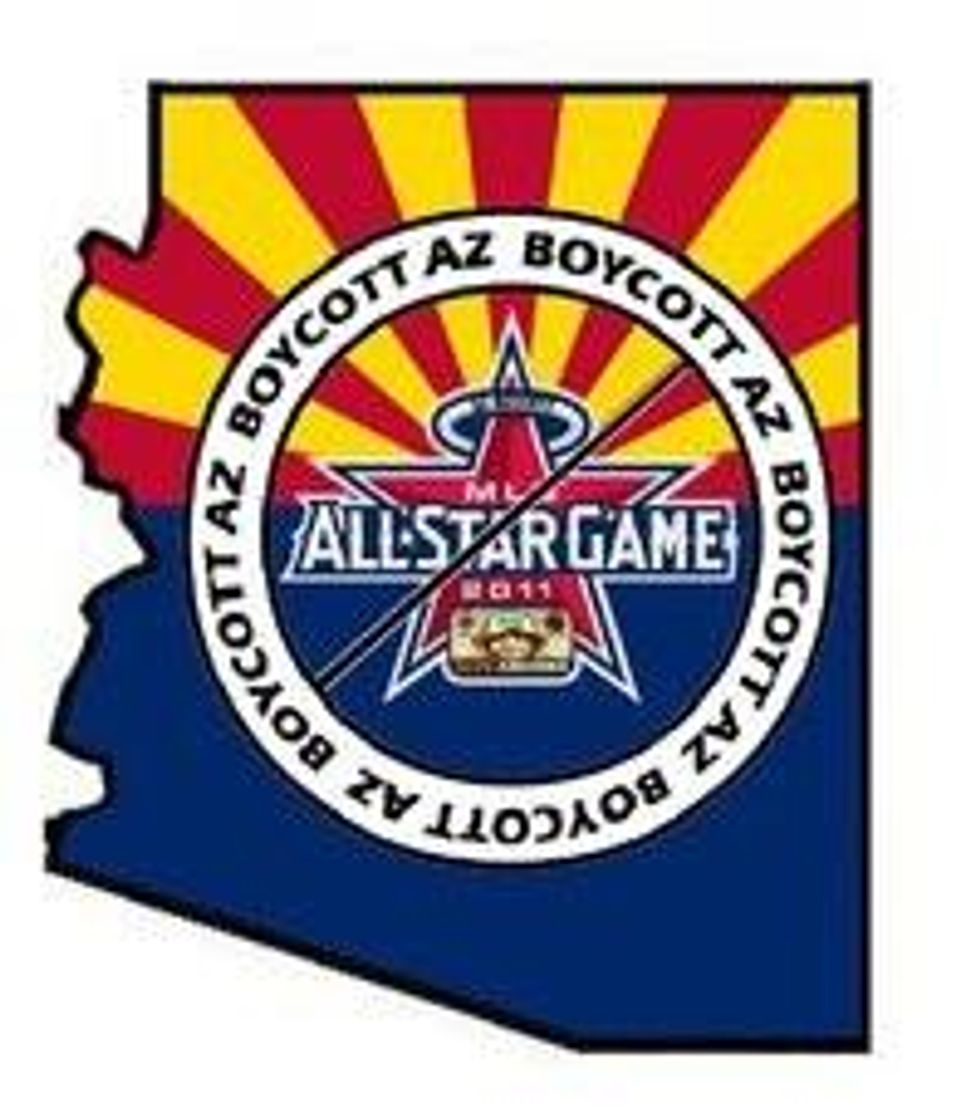
While that question, among many, continues to be bantered around the nation, the 82nd annual showdown between the American and National League baseball stars will also feature a political double-header inside and outside Chase Field in Phoenix. As the last votes for the All Star rosters are tallied and an estimated 37,000 ticket holders pack the ballpark, two strategies are emerging to get players, fans and millions of viewers to "take a stand against divisive, hate-based legislation."
Various immigrant and civil rights groups led by Phoenix-based Puente are still calling on players to not cross Arizona's boycott picket line, while others under the UNITE AZ banner are urging players and attendees to don white ribbons.
In the meantime, the Arizona All Star game will make history on one positive front: Jacoby Ellsbury, an enrolled member of the Colorado River Indian tribes, will become the first Native American with Arizona roots to play in an All Star game.
Not to be overshadowed, on the eve of the All Star game on July 11th, Arizona Governor Jan Brewer's administration will file its appeal to the Supreme Court to overturn a lower court injunction against the state's dubious anti-immigrant laws. And a year since the first boycott calls were issued, Arizona's imprint on state's rights immigration maneuvers has spread to the baseball-playing arenas in Georgia, South Carolina, Alabama and Indiana.
The response from Major League Baseball Players Association and league officials? Caught looking, you could say.
No one has taken more heat than baseball commissioner Bud Selig, the son of Romanian-Ukrainian immigrants and a part-time Arizona snowbird, who has effectively sidestepped the boycott through the politics of silence. Selig critics abound. AP sports columnist Jim Litke gave Selig an "F" for missing his place in history; in a column for the New York Times, Jonathan Mahler chastised Selig for "putting his Latino players in the impossible position of having to choose between showing solidarity to their people or to the game that has enriched them even as they have enriched it."
The Nation sports writer Dave Zirin, among others, has taken Latino players like Adrian Gonzalez to task for not holding to their earlier promises to boycott the game.
In an interview with AP's Litke last week, Major League Baseball Players Association spokesperson Greg Bouris backed off any action, but declared,"...we think the All-Star game is a chance to celebrate the contribution of all baseball players -- including our international players."
Which means what, in terms of the All Star game?
Will Selig or ball players like Adrian Gonzalez hold a press conference before the game and take a stand on SB 1070?
Will Selig or Bouris ask former All Star legend and Sonora, Mexico native Fernando Valenzuela -- or even Arizona's 94-year-old former governor Raul Castro -- to throw out the first ball in a special ceremony recognizing the legacy of Mexican and Latino players?
On the 60th anniversary of his historic role as the first Latino in an All Star game, will Chico Carrasquel's legacy be publicly honored or recognized? Will the Hispanic Heritage Baseball Museum be promoted?
In the spirit of Roberto Clemente, will Selig and the MLBPA donate to immigrant rights and education organizations in Arizona -- like UNITE AZ inside the park, and PUENTE, outside the park?
I asked Dr. Carlos Munoz, the founding chair of the first Chicano Studies department in the nation and former ball player, about his views on the All Star game.
JB: Are you planning on attending or watching the All Star game, and describe your own connection to baseball and the history of Latino ball players?
CM: I love the game of baseball. I played it during my youth, coached little league baseball, and played it again after I retired, as an infielder in the over 60 Men's Senior Baseball League (MSBL). I won't attend the All Star game, but will watch it on TV.
JB: How do you view two of the planned strategies around the All Star game: One of the original boycott groups in Phoenix, Puente, is still calling on players to boycott and will be holding protests at Chase Field in Phoenix. Another immigrant rights organization, Somos America, is sponsoring Unite AZ, a move to ask ball players to wear a white ribbon in protest of Arizona's SB 1070 law.
CM: I understand and sympathize with Puente's boycott of the game and request for Latino Players to also boycott it because I also oppose the racist SB1070 law. But I think the Somos America strategy is more effective. If Latino ballplayers wear white ribbons, it will have more of an impact. The TV cameras will ignore the protest outside the stadium, they can't ignore the white ribbons.
JB: While Latino stars like Adrian Gonzalez once said he might not play in the All Star game, if it was held in Phoenix, it appears that any coordinated boycott by the Players Association or union has faltered. At this point, would it make more sense for Gonzalez and other All Stars to boycott the game or make some sort of statement on the field?
CM: Yes, the white ribbons would be a powerful statement. I think Adrain Gonzalez should be approached and asked to have a press conference to restate his opposition to SB1070. As I recall there were other players who, like him also expressed their opposition around the time he did. It would be great if they all could be part of the press conference.
JB: Sixty years ago, Chico Carrasquel was the first Latino to play in an All Star game. In lieu of the boycott, should the All Star game honor certain Latino stars, such as Carrasquel, and how?
CM: It's a good idea if MLB would approve it to underscore the contributions Latinos have made to the game, especially the immigrant players. All groups could also approach Bud Selig for a statement of support and to acknowledge the important contributions Latinos have continued to make since Chico played I the game.
JB: The Arizona boycott, in general, has effectively targeted the state's tourism and convention industries. With new anti-immigrant legislation now passed in Georgia, Alabama, Indiana, and South Carolina, do you think such the boycott needs to shift widen its focus or shift tactics?
CM: No doubt, I think the boycott should be extended to those states.
'Any time you have an opportunity to make a difference in this world and you don't, then you are wasting your time on Earth.'' -- Roberto Clemente
Would baseball legend Roberto Clemente have played in next week's Major League All Star baseball game or joined a boycott in protest of Arizona's controversial SB 1070 "papers please" law?
While that question, among many, continues to be bantered around the nation, the 82nd annual showdown between the American and National League baseball stars will also feature a political double-header inside and outside Chase Field in Phoenix. As the last votes for the All Star rosters are tallied and an estimated 37,000 ticket holders pack the ballpark, two strategies are emerging to get players, fans and millions of viewers to "take a stand against divisive, hate-based legislation."
Various immigrant and civil rights groups led by Phoenix-based Puente are still calling on players to not cross Arizona's boycott picket line, while others under the UNITE AZ banner are urging players and attendees to don white ribbons.
In the meantime, the Arizona All Star game will make history on one positive front: Jacoby Ellsbury, an enrolled member of the Colorado River Indian tribes, will become the first Native American with Arizona roots to play in an All Star game.
Not to be overshadowed, on the eve of the All Star game on July 11th, Arizona Governor Jan Brewer's administration will file its appeal to the Supreme Court to overturn a lower court injunction against the state's dubious anti-immigrant laws. And a year since the first boycott calls were issued, Arizona's imprint on state's rights immigration maneuvers has spread to the baseball-playing arenas in Georgia, South Carolina, Alabama and Indiana.
The response from Major League Baseball Players Association and league officials? Caught looking, you could say.
No one has taken more heat than baseball commissioner Bud Selig, the son of Romanian-Ukrainian immigrants and a part-time Arizona snowbird, who has effectively sidestepped the boycott through the politics of silence. Selig critics abound. AP sports columnist Jim Litke gave Selig an "F" for missing his place in history; in a column for the New York Times, Jonathan Mahler chastised Selig for "putting his Latino players in the impossible position of having to choose between showing solidarity to their people or to the game that has enriched them even as they have enriched it."
The Nation sports writer Dave Zirin, among others, has taken Latino players like Adrian Gonzalez to task for not holding to their earlier promises to boycott the game.
In an interview with AP's Litke last week, Major League Baseball Players Association spokesperson Greg Bouris backed off any action, but declared,"...we think the All-Star game is a chance to celebrate the contribution of all baseball players -- including our international players."
Which means what, in terms of the All Star game?
Will Selig or ball players like Adrian Gonzalez hold a press conference before the game and take a stand on SB 1070?
Will Selig or Bouris ask former All Star legend and Sonora, Mexico native Fernando Valenzuela -- or even Arizona's 94-year-old former governor Raul Castro -- to throw out the first ball in a special ceremony recognizing the legacy of Mexican and Latino players?
On the 60th anniversary of his historic role as the first Latino in an All Star game, will Chico Carrasquel's legacy be publicly honored or recognized? Will the Hispanic Heritage Baseball Museum be promoted?
In the spirit of Roberto Clemente, will Selig and the MLBPA donate to immigrant rights and education organizations in Arizona -- like UNITE AZ inside the park, and PUENTE, outside the park?
I asked Dr. Carlos Munoz, the founding chair of the first Chicano Studies department in the nation and former ball player, about his views on the All Star game.
JB: Are you planning on attending or watching the All Star game, and describe your own connection to baseball and the history of Latino ball players?
CM: I love the game of baseball. I played it during my youth, coached little league baseball, and played it again after I retired, as an infielder in the over 60 Men's Senior Baseball League (MSBL). I won't attend the All Star game, but will watch it on TV.
JB: How do you view two of the planned strategies around the All Star game: One of the original boycott groups in Phoenix, Puente, is still calling on players to boycott and will be holding protests at Chase Field in Phoenix. Another immigrant rights organization, Somos America, is sponsoring Unite AZ, a move to ask ball players to wear a white ribbon in protest of Arizona's SB 1070 law.
CM: I understand and sympathize with Puente's boycott of the game and request for Latino Players to also boycott it because I also oppose the racist SB1070 law. But I think the Somos America strategy is more effective. If Latino ballplayers wear white ribbons, it will have more of an impact. The TV cameras will ignore the protest outside the stadium, they can't ignore the white ribbons.
JB: While Latino stars like Adrian Gonzalez once said he might not play in the All Star game, if it was held in Phoenix, it appears that any coordinated boycott by the Players Association or union has faltered. At this point, would it make more sense for Gonzalez and other All Stars to boycott the game or make some sort of statement on the field?
CM: Yes, the white ribbons would be a powerful statement. I think Adrain Gonzalez should be approached and asked to have a press conference to restate his opposition to SB1070. As I recall there were other players who, like him also expressed their opposition around the time he did. It would be great if they all could be part of the press conference.
JB: Sixty years ago, Chico Carrasquel was the first Latino to play in an All Star game. In lieu of the boycott, should the All Star game honor certain Latino stars, such as Carrasquel, and how?
CM: It's a good idea if MLB would approve it to underscore the contributions Latinos have made to the game, especially the immigrant players. All groups could also approach Bud Selig for a statement of support and to acknowledge the important contributions Latinos have continued to make since Chico played I the game.
JB: The Arizona boycott, in general, has effectively targeted the state's tourism and convention industries. With new anti-immigrant legislation now passed in Georgia, Alabama, Indiana, and South Carolina, do you think such the boycott needs to shift widen its focus or shift tactics?
CM: No doubt, I think the boycott should be extended to those states.
'Any time you have an opportunity to make a difference in this world and you don't, then you are wasting your time on Earth.'' -- Roberto Clemente
Would baseball legend Roberto Clemente have played in next week's Major League All Star baseball game or joined a boycott in protest of Arizona's controversial SB 1070 "papers please" law?
While that question, among many, continues to be bantered around the nation, the 82nd annual showdown between the American and National League baseball stars will also feature a political double-header inside and outside Chase Field in Phoenix. As the last votes for the All Star rosters are tallied and an estimated 37,000 ticket holders pack the ballpark, two strategies are emerging to get players, fans and millions of viewers to "take a stand against divisive, hate-based legislation."
Various immigrant and civil rights groups led by Phoenix-based Puente are still calling on players to not cross Arizona's boycott picket line, while others under the UNITE AZ banner are urging players and attendees to don white ribbons.
In the meantime, the Arizona All Star game will make history on one positive front: Jacoby Ellsbury, an enrolled member of the Colorado River Indian tribes, will become the first Native American with Arizona roots to play in an All Star game.
Not to be overshadowed, on the eve of the All Star game on July 11th, Arizona Governor Jan Brewer's administration will file its appeal to the Supreme Court to overturn a lower court injunction against the state's dubious anti-immigrant laws. And a year since the first boycott calls were issued, Arizona's imprint on state's rights immigration maneuvers has spread to the baseball-playing arenas in Georgia, South Carolina, Alabama and Indiana.
The response from Major League Baseball Players Association and league officials? Caught looking, you could say.
No one has taken more heat than baseball commissioner Bud Selig, the son of Romanian-Ukrainian immigrants and a part-time Arizona snowbird, who has effectively sidestepped the boycott through the politics of silence. Selig critics abound. AP sports columnist Jim Litke gave Selig an "F" for missing his place in history; in a column for the New York Times, Jonathan Mahler chastised Selig for "putting his Latino players in the impossible position of having to choose between showing solidarity to their people or to the game that has enriched them even as they have enriched it."
The Nation sports writer Dave Zirin, among others, has taken Latino players like Adrian Gonzalez to task for not holding to their earlier promises to boycott the game.
In an interview with AP's Litke last week, Major League Baseball Players Association spokesperson Greg Bouris backed off any action, but declared,"...we think the All-Star game is a chance to celebrate the contribution of all baseball players -- including our international players."
Which means what, in terms of the All Star game?
Will Selig or ball players like Adrian Gonzalez hold a press conference before the game and take a stand on SB 1070?
Will Selig or Bouris ask former All Star legend and Sonora, Mexico native Fernando Valenzuela -- or even Arizona's 94-year-old former governor Raul Castro -- to throw out the first ball in a special ceremony recognizing the legacy of Mexican and Latino players?
On the 60th anniversary of his historic role as the first Latino in an All Star game, will Chico Carrasquel's legacy be publicly honored or recognized? Will the Hispanic Heritage Baseball Museum be promoted?
In the spirit of Roberto Clemente, will Selig and the MLBPA donate to immigrant rights and education organizations in Arizona -- like UNITE AZ inside the park, and PUENTE, outside the park?
I asked Dr. Carlos Munoz, the founding chair of the first Chicano Studies department in the nation and former ball player, about his views on the All Star game.
JB: Are you planning on attending or watching the All Star game, and describe your own connection to baseball and the history of Latino ball players?
CM: I love the game of baseball. I played it during my youth, coached little league baseball, and played it again after I retired, as an infielder in the over 60 Men's Senior Baseball League (MSBL). I won't attend the All Star game, but will watch it on TV.
JB: How do you view two of the planned strategies around the All Star game: One of the original boycott groups in Phoenix, Puente, is still calling on players to boycott and will be holding protests at Chase Field in Phoenix. Another immigrant rights organization, Somos America, is sponsoring Unite AZ, a move to ask ball players to wear a white ribbon in protest of Arizona's SB 1070 law.
CM: I understand and sympathize with Puente's boycott of the game and request for Latino Players to also boycott it because I also oppose the racist SB1070 law. But I think the Somos America strategy is more effective. If Latino ballplayers wear white ribbons, it will have more of an impact. The TV cameras will ignore the protest outside the stadium, they can't ignore the white ribbons.
JB: While Latino stars like Adrian Gonzalez once said he might not play in the All Star game, if it was held in Phoenix, it appears that any coordinated boycott by the Players Association or union has faltered. At this point, would it make more sense for Gonzalez and other All Stars to boycott the game or make some sort of statement on the field?
CM: Yes, the white ribbons would be a powerful statement. I think Adrain Gonzalez should be approached and asked to have a press conference to restate his opposition to SB1070. As I recall there were other players who, like him also expressed their opposition around the time he did. It would be great if they all could be part of the press conference.
JB: Sixty years ago, Chico Carrasquel was the first Latino to play in an All Star game. In lieu of the boycott, should the All Star game honor certain Latino stars, such as Carrasquel, and how?
CM: It's a good idea if MLB would approve it to underscore the contributions Latinos have made to the game, especially the immigrant players. All groups could also approach Bud Selig for a statement of support and to acknowledge the important contributions Latinos have continued to make since Chico played I the game.
JB: The Arizona boycott, in general, has effectively targeted the state's tourism and convention industries. With new anti-immigrant legislation now passed in Georgia, Alabama, Indiana, and South Carolina, do you think such the boycott needs to shift widen its focus or shift tactics?
CM: No doubt, I think the boycott should be extended to those states.