SUBSCRIBE TO OUR FREE NEWSLETTER
Daily news & progressive opinion—funded by the people, not the corporations—delivered straight to your inbox.
5
#000000
#FFFFFF
To donate by check, phone, or other method, see our More Ways to Give page.
If you listen to the pundits and TV commentators, the federal budget problem has a simple solution: cuts, cuts, and more cuts. They cheer politicians for making "tough choices," which usually entails taking money away from schools, stiffing public workers, and telling the poor and the elderly they need to make do with even less. Tough choices, indeed -- but for whom?
The funny thing is, regular people aren't buying the idea that this is the only way to balance the country's books. Maybe there's something about a millionaire TV host talking about "shared sacrifice" that rubs Bob and Betty Sixpack the wrong way. Or maybe the American people just feel like there's got to be another way -- one that doesn't require scrapping Medicare or slashing Social Security.
If you look at the polls, the public's message is clear: protect Medicare and Social Security, spend less on the military, and raise taxes on the wealthy. And while we're at it, let's tax the Wall Street speculators who wrecked our economy.
But if you look at the newspapers or your TV screen, those ideas are rarely, if ever, part of the budget debate. Is there no one in Washington who is sticking up for what the majority of the public wants?
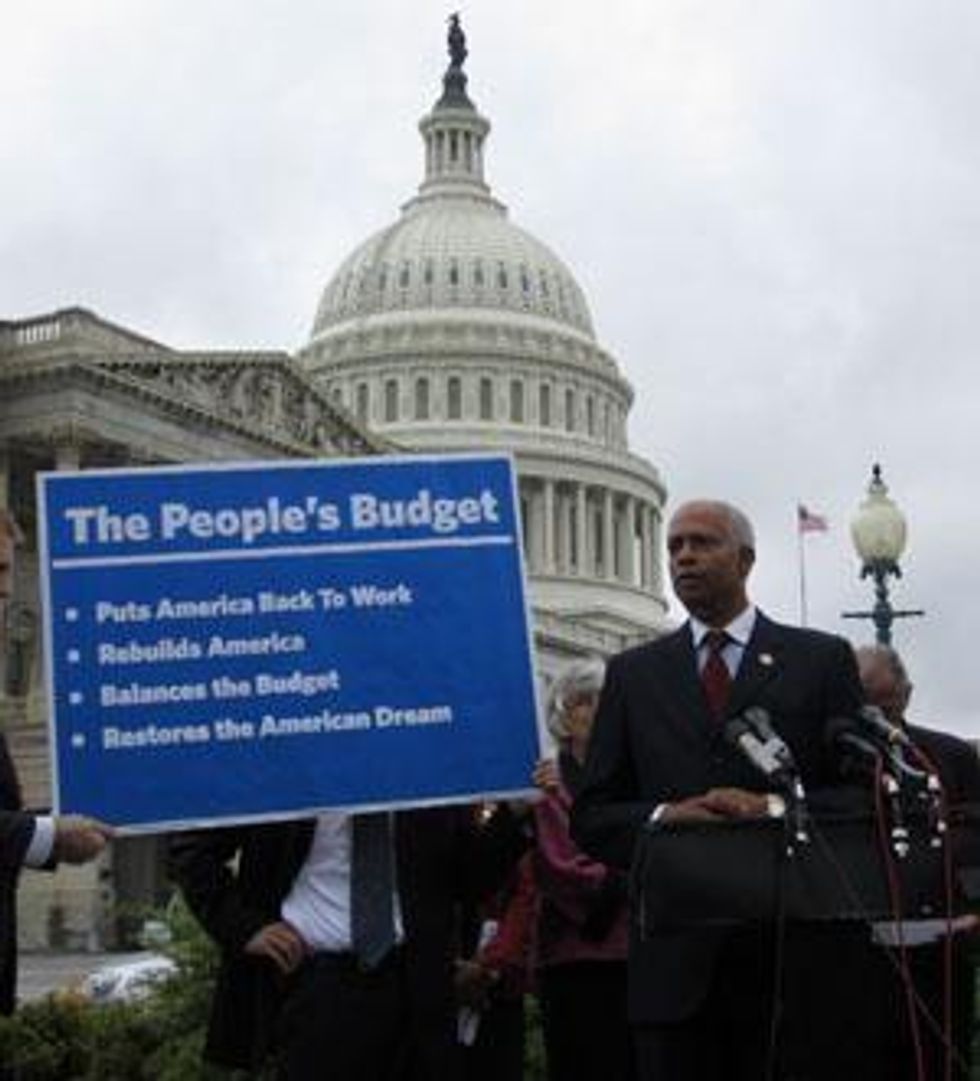
But wait. The Congressional Progressive Caucus, which includes 74 House Democrats and Sen. Bernie Sanders (I-VT), released an alternative budget blueprint back in April. This "People's Budget" would achieve a better balance by taxing the wealthy, reining in runaway military spending, and protecting the New Deal social safety net -- just what people tell pollsters that they want.
There's a good chance you've never heard about this part of the budget debate, though there's been a mountain of media coverage of the budget mess -- thousands of articles and television programs. If you've paid attention to any of it, you're probably well acquainted with Rep. Paul Ryan. The Wisconsin Republican has "jet black hair and a touch of Eagle Scout to him," according to one magazine profile. The New York Times told readers about his "piercing blue eyes." It's not just his looks that impress the media. His budget plan, which pairs yet more big tax breaks for the rich with spending cuts for everyone else, is constantly touted as being "bold" and "serious."
And the People's Budget? Well, it's not even mentioned. There were no hard news stories about it in the big papers. Washington Post columnist Dana Milbank wrote about the press conference unveiling the People's Budget only to mock it -- right down to poking fun at one lawmaker's tie.
Milbank spelled out some of the details of the People's Budget, but only because he thought the ideas were absurd on their face: "No cuts in Social Security benefits, government-negotiated Medicare drug prices, and increased income and Social Security taxes for the wealthy. Corporations and investors would be hit with a variety of new fees and taxes...The wars in Iraq and Afghanistan would end."
Ending wars and making the wealthy pay their fair share? That probably doesn't sound so crazy to most people. But that the Post considers Milbank to be one of its "left-leaning" columnists is completely nuts.
The budget debate is locked up in a partisan stalemate. That makes it as good a time as any to tell the people about the People's Budget. Most newspapers and TV networks aren't doing that. And when you look at who stands to gain -- and who stands to lose -- it's no mystery why corporate-owned media are keeping us in the dark.
If you listen to the pundits and TV commentators, the federal budget problem has a simple solution: cuts, cuts, and more cuts. They cheer politicians for making "tough choices," which usually entails taking money away from schools, stiffing public workers, and telling the poor and the elderly they need to make do with even less. Tough choices, indeed -- but for whom?
The funny thing is, regular people aren't buying the idea that this is the only way to balance the country's books. Maybe there's something about a millionaire TV host talking about "shared sacrifice" that rubs Bob and Betty Sixpack the wrong way. Or maybe the American people just feel like there's got to be another way -- one that doesn't require scrapping Medicare or slashing Social Security.
If you look at the polls, the public's message is clear: protect Medicare and Social Security, spend less on the military, and raise taxes on the wealthy. And while we're at it, let's tax the Wall Street speculators who wrecked our economy.
But if you look at the newspapers or your TV screen, those ideas are rarely, if ever, part of the budget debate. Is there no one in Washington who is sticking up for what the majority of the public wants?
But wait. The Congressional Progressive Caucus, which includes 74 House Democrats and Sen. Bernie Sanders (I-VT), released an alternative budget blueprint back in April. This "People's Budget" would achieve a better balance by taxing the wealthy, reining in runaway military spending, and protecting the New Deal social safety net -- just what people tell pollsters that they want.
There's a good chance you've never heard about this part of the budget debate, though there's been a mountain of media coverage of the budget mess -- thousands of articles and television programs. If you've paid attention to any of it, you're probably well acquainted with Rep. Paul Ryan. The Wisconsin Republican has "jet black hair and a touch of Eagle Scout to him," according to one magazine profile. The New York Times told readers about his "piercing blue eyes." It's not just his looks that impress the media. His budget plan, which pairs yet more big tax breaks for the rich with spending cuts for everyone else, is constantly touted as being "bold" and "serious."
And the People's Budget? Well, it's not even mentioned. There were no hard news stories about it in the big papers. Washington Post columnist Dana Milbank wrote about the press conference unveiling the People's Budget only to mock it -- right down to poking fun at one lawmaker's tie.
Milbank spelled out some of the details of the People's Budget, but only because he thought the ideas were absurd on their face: "No cuts in Social Security benefits, government-negotiated Medicare drug prices, and increased income and Social Security taxes for the wealthy. Corporations and investors would be hit with a variety of new fees and taxes...The wars in Iraq and Afghanistan would end."
Ending wars and making the wealthy pay their fair share? That probably doesn't sound so crazy to most people. But that the Post considers Milbank to be one of its "left-leaning" columnists is completely nuts.
The budget debate is locked up in a partisan stalemate. That makes it as good a time as any to tell the people about the People's Budget. Most newspapers and TV networks aren't doing that. And when you look at who stands to gain -- and who stands to lose -- it's no mystery why corporate-owned media are keeping us in the dark.
If you listen to the pundits and TV commentators, the federal budget problem has a simple solution: cuts, cuts, and more cuts. They cheer politicians for making "tough choices," which usually entails taking money away from schools, stiffing public workers, and telling the poor and the elderly they need to make do with even less. Tough choices, indeed -- but for whom?
The funny thing is, regular people aren't buying the idea that this is the only way to balance the country's books. Maybe there's something about a millionaire TV host talking about "shared sacrifice" that rubs Bob and Betty Sixpack the wrong way. Or maybe the American people just feel like there's got to be another way -- one that doesn't require scrapping Medicare or slashing Social Security.
If you look at the polls, the public's message is clear: protect Medicare and Social Security, spend less on the military, and raise taxes on the wealthy. And while we're at it, let's tax the Wall Street speculators who wrecked our economy.
But if you look at the newspapers or your TV screen, those ideas are rarely, if ever, part of the budget debate. Is there no one in Washington who is sticking up for what the majority of the public wants?
But wait. The Congressional Progressive Caucus, which includes 74 House Democrats and Sen. Bernie Sanders (I-VT), released an alternative budget blueprint back in April. This "People's Budget" would achieve a better balance by taxing the wealthy, reining in runaway military spending, and protecting the New Deal social safety net -- just what people tell pollsters that they want.
There's a good chance you've never heard about this part of the budget debate, though there's been a mountain of media coverage of the budget mess -- thousands of articles and television programs. If you've paid attention to any of it, you're probably well acquainted with Rep. Paul Ryan. The Wisconsin Republican has "jet black hair and a touch of Eagle Scout to him," according to one magazine profile. The New York Times told readers about his "piercing blue eyes." It's not just his looks that impress the media. His budget plan, which pairs yet more big tax breaks for the rich with spending cuts for everyone else, is constantly touted as being "bold" and "serious."
And the People's Budget? Well, it's not even mentioned. There were no hard news stories about it in the big papers. Washington Post columnist Dana Milbank wrote about the press conference unveiling the People's Budget only to mock it -- right down to poking fun at one lawmaker's tie.
Milbank spelled out some of the details of the People's Budget, but only because he thought the ideas were absurd on their face: "No cuts in Social Security benefits, government-negotiated Medicare drug prices, and increased income and Social Security taxes for the wealthy. Corporations and investors would be hit with a variety of new fees and taxes...The wars in Iraq and Afghanistan would end."
Ending wars and making the wealthy pay their fair share? That probably doesn't sound so crazy to most people. But that the Post considers Milbank to be one of its "left-leaning" columnists is completely nuts.
The budget debate is locked up in a partisan stalemate. That makes it as good a time as any to tell the people about the People's Budget. Most newspapers and TV networks aren't doing that. And when you look at who stands to gain -- and who stands to lose -- it's no mystery why corporate-owned media are keeping us in the dark.