SUBSCRIBE TO OUR FREE NEWSLETTER
Daily news & progressive opinion—funded by the people, not the corporations—delivered straight to your inbox.
5
#000000
#FFFFFF
To donate by check, phone, or other method, see our More Ways to Give page.
As an organizer, I go to a lot of meetings, panels and discussions and often leave feeling like I'm caught in the movie Groundhog Day, where I am reliving the same discussions and debates over and over again, and wondering if they hold any relevance for anyone else. That's why I was so surprised when my secretly taped comments about the need to challenge Wall Street and corporate power using direct action, delivered on March 19 at the Left Forum in New York City, set off a right-wing firestorm.
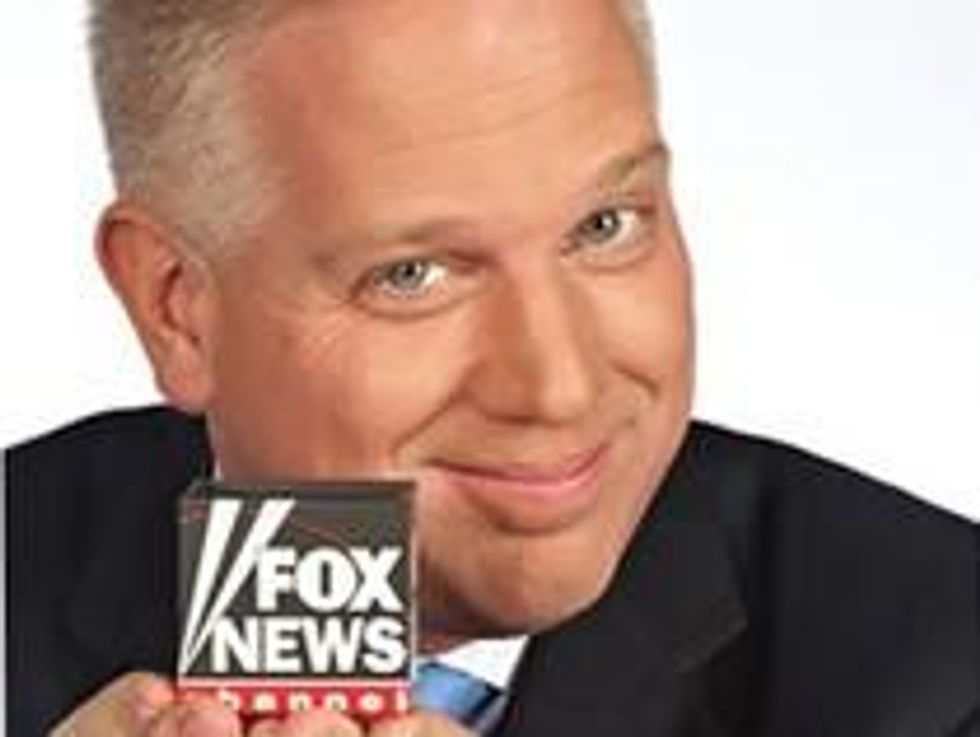
What did I say that led Beck to spend two nights attacking me and defending big banks and Wall Street CEOs?
I think I may have found part of the answer in what disgraced former Wall Street stock analyst Henry Blodget admitted when he echoed Beck's wild theories on Business Insider. Describing my remarks, he wrote, "Many Americans will undoubtedly sympathize with and support them."
So that was it: Beck, right-wingers and Wall Street sympathizers went ballistic because they knew the ideas I talked about are far from being a secret leftist conspiracy; in fact, they're in sync with the thinking of most Americans. In my talk, I raised a very simple yet powerful idea: that homeowners, students, citizens and workers should make the same practical decisions Wall Street and corporate CEOs make every day--they should reject bad financial deals.
Beck and Wall Street are terrified that regular Americans will begin to challenge the double standard that allows one set of rules for the rich and another for the rest of us. They are petrified of the growing understanding, among people of diverse political backgrounds, that our country isn't broke; that the tiny elite at the top has manipulated the economic crisis it created to grow even richer and more powerful while the rest of us suffer the consequences; and that Wall Street and corporations, sitting on record profits, are holding the country hostage, essentially threatening a capital strike if they don't get further tax and regulatory breaks.
As long as Wall Street and the superrich feel secure and confident, they have no reason to negotiate a fair deal with the rest of us. Only by creating uncertainty and instability for them--by disrupting unfair business as usual--can we build the strength to challenge their stranglehold on our economy and our democracy.
But I don't think it was just my theorizing about power relationships and the economy that set off such a frenzy. It was the prospect that average Americans could take a series of concrete and practical steps, including direct action and civil disobedience, to make Wall Street pay for the trillions it stole from us. Ordinary Americans have the power and the opportunity to go on offense right now--with the immediate goals of keeping millions of people in their homes and raising revenue for cities and states to save jobs and critical services.
Here's how we can start:
So let's give Wall Street, Glenn Beck and the right something to be scared about. It's time to use our collective power to challenge the economic and political stranglehold they have on our country.
Join thousands of Americans on April 4 in cities across the country for a dramatic series of actions to stand up for the middle class. On April 5, join the national teach-in with Frances Piven and Cornel West. Or start organizing in your own community to challenge the power of Wall Street and corporate CEOs.
As an organizer, I go to a lot of meetings, panels and discussions and often leave feeling like I'm caught in the movie Groundhog Day, where I am reliving the same discussions and debates over and over again, and wondering if they hold any relevance for anyone else. That's why I was so surprised when my secretly taped comments about the need to challenge Wall Street and corporate power using direct action, delivered on March 19 at the Left Forum in New York City, set off a right-wing firestorm.
What did I say that led Beck to spend two nights attacking me and defending big banks and Wall Street CEOs?
I think I may have found part of the answer in what disgraced former Wall Street stock analyst Henry Blodget admitted when he echoed Beck's wild theories on Business Insider. Describing my remarks, he wrote, "Many Americans will undoubtedly sympathize with and support them."
So that was it: Beck, right-wingers and Wall Street sympathizers went ballistic because they knew the ideas I talked about are far from being a secret leftist conspiracy; in fact, they're in sync with the thinking of most Americans. In my talk, I raised a very simple yet powerful idea: that homeowners, students, citizens and workers should make the same practical decisions Wall Street and corporate CEOs make every day--they should reject bad financial deals.
Beck and Wall Street are terrified that regular Americans will begin to challenge the double standard that allows one set of rules for the rich and another for the rest of us. They are petrified of the growing understanding, among people of diverse political backgrounds, that our country isn't broke; that the tiny elite at the top has manipulated the economic crisis it created to grow even richer and more powerful while the rest of us suffer the consequences; and that Wall Street and corporations, sitting on record profits, are holding the country hostage, essentially threatening a capital strike if they don't get further tax and regulatory breaks.
As long as Wall Street and the superrich feel secure and confident, they have no reason to negotiate a fair deal with the rest of us. Only by creating uncertainty and instability for them--by disrupting unfair business as usual--can we build the strength to challenge their stranglehold on our economy and our democracy.
But I don't think it was just my theorizing about power relationships and the economy that set off such a frenzy. It was the prospect that average Americans could take a series of concrete and practical steps, including direct action and civil disobedience, to make Wall Street pay for the trillions it stole from us. Ordinary Americans have the power and the opportunity to go on offense right now--with the immediate goals of keeping millions of people in their homes and raising revenue for cities and states to save jobs and critical services.
Here's how we can start:
So let's give Wall Street, Glenn Beck and the right something to be scared about. It's time to use our collective power to challenge the economic and political stranglehold they have on our country.
Join thousands of Americans on April 4 in cities across the country for a dramatic series of actions to stand up for the middle class. On April 5, join the national teach-in with Frances Piven and Cornel West. Or start organizing in your own community to challenge the power of Wall Street and corporate CEOs.
As an organizer, I go to a lot of meetings, panels and discussions and often leave feeling like I'm caught in the movie Groundhog Day, where I am reliving the same discussions and debates over and over again, and wondering if they hold any relevance for anyone else. That's why I was so surprised when my secretly taped comments about the need to challenge Wall Street and corporate power using direct action, delivered on March 19 at the Left Forum in New York City, set off a right-wing firestorm.
What did I say that led Beck to spend two nights attacking me and defending big banks and Wall Street CEOs?
I think I may have found part of the answer in what disgraced former Wall Street stock analyst Henry Blodget admitted when he echoed Beck's wild theories on Business Insider. Describing my remarks, he wrote, "Many Americans will undoubtedly sympathize with and support them."
So that was it: Beck, right-wingers and Wall Street sympathizers went ballistic because they knew the ideas I talked about are far from being a secret leftist conspiracy; in fact, they're in sync with the thinking of most Americans. In my talk, I raised a very simple yet powerful idea: that homeowners, students, citizens and workers should make the same practical decisions Wall Street and corporate CEOs make every day--they should reject bad financial deals.
Beck and Wall Street are terrified that regular Americans will begin to challenge the double standard that allows one set of rules for the rich and another for the rest of us. They are petrified of the growing understanding, among people of diverse political backgrounds, that our country isn't broke; that the tiny elite at the top has manipulated the economic crisis it created to grow even richer and more powerful while the rest of us suffer the consequences; and that Wall Street and corporations, sitting on record profits, are holding the country hostage, essentially threatening a capital strike if they don't get further tax and regulatory breaks.
As long as Wall Street and the superrich feel secure and confident, they have no reason to negotiate a fair deal with the rest of us. Only by creating uncertainty and instability for them--by disrupting unfair business as usual--can we build the strength to challenge their stranglehold on our economy and our democracy.
But I don't think it was just my theorizing about power relationships and the economy that set off such a frenzy. It was the prospect that average Americans could take a series of concrete and practical steps, including direct action and civil disobedience, to make Wall Street pay for the trillions it stole from us. Ordinary Americans have the power and the opportunity to go on offense right now--with the immediate goals of keeping millions of people in their homes and raising revenue for cities and states to save jobs and critical services.
Here's how we can start:
So let's give Wall Street, Glenn Beck and the right something to be scared about. It's time to use our collective power to challenge the economic and political stranglehold they have on our country.
Join thousands of Americans on April 4 in cities across the country for a dramatic series of actions to stand up for the middle class. On April 5, join the national teach-in with Frances Piven and Cornel West. Or start organizing in your own community to challenge the power of Wall Street and corporate CEOs.