We're Conflating Proper Dissent and Terrorism
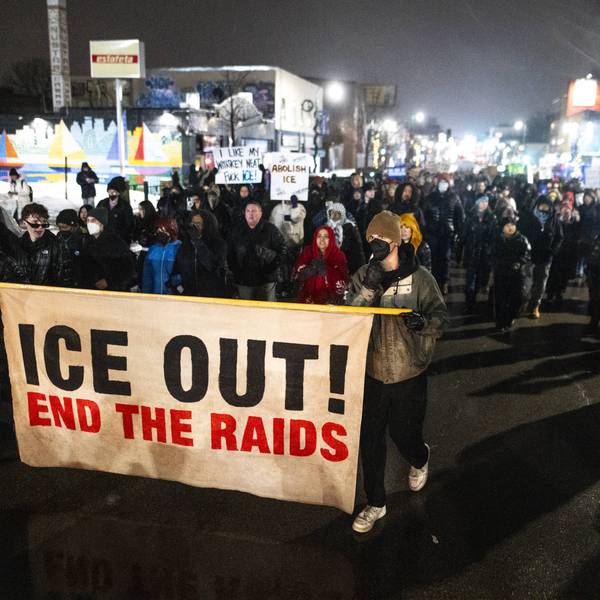
It's both misguided and distracting to direct our homeland security efforts against protesters.
A secretive, unaccountable, post-9/11 homeland security apparatus has increasingly turned inward on American citizens.
The evidence includes everything from controversial airport body scanners to the FBI's raids last September on antiwar activists' homes in Minneapolis and Chicago. A federal grand jury investigation in Chicago was recently expanded.
Unless the erosion of proper legal safeguards is halted, we risk a return to Vietnam-era abuses on the part of the FBI and other security agencies.
Agents are now given a green light, for instance, to check off "statistical achievements" by sending well-paid, manipulative informants into mosques and peace groups.
Forgotten are worries about targeting and entrapping people not predisposed to violence.
Forgotten also are the scandals that came to light just months before 9/11 of decades-long FBI operations involving "top echelon informants" (high-level violent criminals) such as Boston crime boss Whitey Bulger.
Even if government officials are well-intentioned, the current tactics and incentives have opened the floodgates of error and opportunism.
Most important, what's been forgotten is that the protection of civil liberties does not weaken our overall security but actually helps to strengthen it.
When security agencies expend their energy against war protesters and environmental advocates, they lose effectiveness in preventing real terrorist violence.
No agency connected the dots before Nidal Malik Hasan allegedly killed 13 and wounded over 40 at Fort Hood, or before airline passenger Umar Farouk Abdulmutallab attempted to detonate his "underwear bomb" on Christmas Day 2009, or before Faisal Shahzad planted his car bomb in Times Square.
Tragedy was averted in the latter two incidents only because alert people happened to be on the scene. Yet the perpetrators of these three major events on U.S. soil were in direct communication with the same Yemeni cleric who was allegedly connected to three of the 9/11 hijackers.
A good place to begin reform is by challenging the handful of words in the "Patriot Act" that enlarged the definition of "material support of terrorism" to encompass "expert advice and assistance" given to designated "foreign terrorist organizations."
This phrase essentially makes mere advocacy of peace and humanitarian issues illegal with respect to groups listed by the State Department.
The Patriot Act thus condemns a large range of nongovernmental efforts, which have tended to be more effective than government-backed ones at furthering education, providing humanitarian assistance, and ensuring free and fair elections throughout the world.
Such a chilling effect only makes nonviolent conflict resolution and mediation more difficult and terrorism more likely.
Next, it's necessary to reverse the erosion of attorney general guidelines governing initiation of domestic investigations, which were adopted after the Church Committee uncovered abuses in the 1970s.
In one of its last official acts, the Bush administration lowered the level of necessary suspicion to the point where the FBI needs only deny that it is targeting a group based solely on its exercise of First Amendment rights.
Like the Patriot Act provision, this opens the door wide to FBI harassment of nonviolent activists.
In 2003, a spokesman for the California Anti-Terrorism Information Center said, apparently without thinking too hard, that evidence wasn't needed to issue warnings about war protesters: "You can make an easy kind of a link that, if you have a protest group protesting a war where the cause that's being fought against is international terrorism, you might have terrorism at that [protest]. ... You can almost argue that a protest against [the war] is a terrorist act."
In a similar vein, the Department of Defense asked on its annual mandatory antiterrorism test, "What is an example of low-level terrorism activity?" The correct answer was "protest."
But protest and civil disobedience are not terrorism. Until that distinction is made at every level of the security system, and proper institutional safeguards are implemented, the "war on terror" will continue to shred civil liberties while failing to prevent terrorist outrages.
The massive and largely irrelevant data collection now occurring only adds hay to the haystack, making it even harder to see patterns and anticipate events.
"Top Secret America" needs to ask itself who is more guilty of furnishing "material aid to terrorism" -- its own operatives, or the activists and protesters it so wrongheadedly targets.
An Urgent Message From Our Co-Founder
Dear Common Dreams reader, It’s been nearly 30 years since I co-founded Common Dreams with my late wife, Lina Newhouser. We had the radical notion that journalism should serve the public good, not corporate profits. It was clear to us from the outset what it would take to build such a project. No paid advertisements. No corporate sponsors. No millionaire publisher telling us what to think or do. Many people said we wouldn't last a year, but we proved those doubters wrong. Together with a tremendous team of journalists and dedicated staff, we built an independent media outlet free from the constraints of profits and corporate control. Our mission has always been simple: To inform. To inspire. To ignite change for the common good. Building Common Dreams was not easy. Our survival was never guaranteed. When you take on the most powerful forces—Wall Street greed, fossil fuel industry destruction, Big Tech lobbyists, and uber-rich oligarchs who have spent billions upon billions rigging the economy and democracy in their favor—the only bulwark you have is supporters who believe in your work. But here’s the urgent message from me today. It's never been this bad out there. And it's never been this hard to keep us going. At the very moment Common Dreams is most needed, the threats we face are intensifying. We need your support now more than ever. We don't accept corporate advertising and never will. We don't have a paywall because we don't think people should be blocked from critical news based on their ability to pay. Everything we do is funded by the donations of readers like you. When everyone does the little they can afford, we are strong. But if that support retreats or dries up, so do we. Will you donate now to make sure Common Dreams not only survives but thrives? —Craig Brown, Co-founder |
A secretive, unaccountable, post-9/11 homeland security apparatus has increasingly turned inward on American citizens.
The evidence includes everything from controversial airport body scanners to the FBI's raids last September on antiwar activists' homes in Minneapolis and Chicago. A federal grand jury investigation in Chicago was recently expanded.
Unless the erosion of proper legal safeguards is halted, we risk a return to Vietnam-era abuses on the part of the FBI and other security agencies.
Agents are now given a green light, for instance, to check off "statistical achievements" by sending well-paid, manipulative informants into mosques and peace groups.
Forgotten are worries about targeting and entrapping people not predisposed to violence.
Forgotten also are the scandals that came to light just months before 9/11 of decades-long FBI operations involving "top echelon informants" (high-level violent criminals) such as Boston crime boss Whitey Bulger.
Even if government officials are well-intentioned, the current tactics and incentives have opened the floodgates of error and opportunism.
Most important, what's been forgotten is that the protection of civil liberties does not weaken our overall security but actually helps to strengthen it.
When security agencies expend their energy against war protesters and environmental advocates, they lose effectiveness in preventing real terrorist violence.
No agency connected the dots before Nidal Malik Hasan allegedly killed 13 and wounded over 40 at Fort Hood, or before airline passenger Umar Farouk Abdulmutallab attempted to detonate his "underwear bomb" on Christmas Day 2009, or before Faisal Shahzad planted his car bomb in Times Square.
Tragedy was averted in the latter two incidents only because alert people happened to be on the scene. Yet the perpetrators of these three major events on U.S. soil were in direct communication with the same Yemeni cleric who was allegedly connected to three of the 9/11 hijackers.
A good place to begin reform is by challenging the handful of words in the "Patriot Act" that enlarged the definition of "material support of terrorism" to encompass "expert advice and assistance" given to designated "foreign terrorist organizations."
This phrase essentially makes mere advocacy of peace and humanitarian issues illegal with respect to groups listed by the State Department.
The Patriot Act thus condemns a large range of nongovernmental efforts, which have tended to be more effective than government-backed ones at furthering education, providing humanitarian assistance, and ensuring free and fair elections throughout the world.
Such a chilling effect only makes nonviolent conflict resolution and mediation more difficult and terrorism more likely.
Next, it's necessary to reverse the erosion of attorney general guidelines governing initiation of domestic investigations, which were adopted after the Church Committee uncovered abuses in the 1970s.
In one of its last official acts, the Bush administration lowered the level of necessary suspicion to the point where the FBI needs only deny that it is targeting a group based solely on its exercise of First Amendment rights.
Like the Patriot Act provision, this opens the door wide to FBI harassment of nonviolent activists.
In 2003, a spokesman for the California Anti-Terrorism Information Center said, apparently without thinking too hard, that evidence wasn't needed to issue warnings about war protesters: "You can make an easy kind of a link that, if you have a protest group protesting a war where the cause that's being fought against is international terrorism, you might have terrorism at that [protest]. ... You can almost argue that a protest against [the war] is a terrorist act."
In a similar vein, the Department of Defense asked on its annual mandatory antiterrorism test, "What is an example of low-level terrorism activity?" The correct answer was "protest."
But protest and civil disobedience are not terrorism. Until that distinction is made at every level of the security system, and proper institutional safeguards are implemented, the "war on terror" will continue to shred civil liberties while failing to prevent terrorist outrages.
The massive and largely irrelevant data collection now occurring only adds hay to the haystack, making it even harder to see patterns and anticipate events.
"Top Secret America" needs to ask itself who is more guilty of furnishing "material aid to terrorism" -- its own operatives, or the activists and protesters it so wrongheadedly targets.
A secretive, unaccountable, post-9/11 homeland security apparatus has increasingly turned inward on American citizens.
The evidence includes everything from controversial airport body scanners to the FBI's raids last September on antiwar activists' homes in Minneapolis and Chicago. A federal grand jury investigation in Chicago was recently expanded.
Unless the erosion of proper legal safeguards is halted, we risk a return to Vietnam-era abuses on the part of the FBI and other security agencies.
Agents are now given a green light, for instance, to check off "statistical achievements" by sending well-paid, manipulative informants into mosques and peace groups.
Forgotten are worries about targeting and entrapping people not predisposed to violence.
Forgotten also are the scandals that came to light just months before 9/11 of decades-long FBI operations involving "top echelon informants" (high-level violent criminals) such as Boston crime boss Whitey Bulger.
Even if government officials are well-intentioned, the current tactics and incentives have opened the floodgates of error and opportunism.
Most important, what's been forgotten is that the protection of civil liberties does not weaken our overall security but actually helps to strengthen it.
When security agencies expend their energy against war protesters and environmental advocates, they lose effectiveness in preventing real terrorist violence.
No agency connected the dots before Nidal Malik Hasan allegedly killed 13 and wounded over 40 at Fort Hood, or before airline passenger Umar Farouk Abdulmutallab attempted to detonate his "underwear bomb" on Christmas Day 2009, or before Faisal Shahzad planted his car bomb in Times Square.
Tragedy was averted in the latter two incidents only because alert people happened to be on the scene. Yet the perpetrators of these three major events on U.S. soil were in direct communication with the same Yemeni cleric who was allegedly connected to three of the 9/11 hijackers.
A good place to begin reform is by challenging the handful of words in the "Patriot Act" that enlarged the definition of "material support of terrorism" to encompass "expert advice and assistance" given to designated "foreign terrorist organizations."
This phrase essentially makes mere advocacy of peace and humanitarian issues illegal with respect to groups listed by the State Department.
The Patriot Act thus condemns a large range of nongovernmental efforts, which have tended to be more effective than government-backed ones at furthering education, providing humanitarian assistance, and ensuring free and fair elections throughout the world.
Such a chilling effect only makes nonviolent conflict resolution and mediation more difficult and terrorism more likely.
Next, it's necessary to reverse the erosion of attorney general guidelines governing initiation of domestic investigations, which were adopted after the Church Committee uncovered abuses in the 1970s.
In one of its last official acts, the Bush administration lowered the level of necessary suspicion to the point where the FBI needs only deny that it is targeting a group based solely on its exercise of First Amendment rights.
Like the Patriot Act provision, this opens the door wide to FBI harassment of nonviolent activists.
In 2003, a spokesman for the California Anti-Terrorism Information Center said, apparently without thinking too hard, that evidence wasn't needed to issue warnings about war protesters: "You can make an easy kind of a link that, if you have a protest group protesting a war where the cause that's being fought against is international terrorism, you might have terrorism at that [protest]. ... You can almost argue that a protest against [the war] is a terrorist act."
In a similar vein, the Department of Defense asked on its annual mandatory antiterrorism test, "What is an example of low-level terrorism activity?" The correct answer was "protest."
But protest and civil disobedience are not terrorism. Until that distinction is made at every level of the security system, and proper institutional safeguards are implemented, the "war on terror" will continue to shred civil liberties while failing to prevent terrorist outrages.
The massive and largely irrelevant data collection now occurring only adds hay to the haystack, making it even harder to see patterns and anticipate events.
"Top Secret America" needs to ask itself who is more guilty of furnishing "material aid to terrorism" -- its own operatives, or the activists and protesters it so wrongheadedly targets.