SUBSCRIBE TO OUR FREE NEWSLETTER
Daily news & progressive opinion—funded by the people, not the corporations—delivered straight to your inbox.
5
#000000
#FFFFFF
To donate by check, phone, or other method, see our More Ways to Give page.
Daily news & progressive opinion—funded by the people, not the corporations—delivered straight to your inbox.
Now that the era of "change" is upon us, in the form of health care reform, it's enlightening to watch the process unfold.
Actually, enlightening may not exactly be the right word. How about excruciating? Or infuriating? Or, how about we just admit we are not graced to live in an era when the words substantive, progress, and health care are ever likely to be inked with anything Washington's elected representatives manage to accomplish.
Now that the era of "change" is upon us, in the form of health care reform, it's enlightening to watch the process unfold.
Actually, enlightening may not exactly be the right word. How about excruciating? Or infuriating? Or, how about we just admit we are not graced to live in an era when the words substantive, progress, and health care are ever likely to be inked with anything Washington's elected representatives manage to accomplish.
As Obama's health reform initiative confronts the reality of the beltway culture that is Washington, it's clear that real health care justice will not come easy to the United States. But why should this be a surprise? In contrast to the 1960s when Medicare and Medicaid were first introduced, U.S. health care today is primarily less a social service than just another investor-driven sector of America's hyper-capitalist culture. The days when religious non-profits, stand-alone community hospitals, and independent physician offices were the norm are long gone. In most major markets, two or three hospital organizations dominate the local health care scene. The nation's largest hospital corporation, HCA, for example, owns 278 hospitals and freestanding surgery centers. In turn, Wall Street equity firms lurk behind the scenes of most large hospital corporations.
Likewise, select health insurance companies now dominate most major markets. WellPoint and UnitedHealth Group, for example, alone sell insurance to some 67 million Americans, according to recent Senate hearings. It's well established that such private insurers have dumped enormous administrative waste into the system. They also take out a lot lavishing hundreds of millions of dollars in pay, bonuses, and stock options on high-paid executives.
But how many more times do we have to go over all this before things change? How many more tragic stories have to be told about sick people denied care by insurance giants? Or great arguments made about the value of single-payer? How much injustice exactly do we as a nation have to endure before our health care system lives and breathes in service to the universal right of every person to the best care possible? But then the resistance to health care reform has never been about rational argument or even ideology. It's about entrenched financial interests who cannot be expected to give up a good thing without a fight. No doubt Congress's ability to parse even the mildest vision of reform shows they've got that fight covered.
That's not to say the insurance industry is opposed to all health reforms, especially if under new legislation tens of millions of uninsured Americans become legally compelled to buy some form of insurance. In return, the industry might go along with new restrictions on their ability to deny coverage for "preexisting conditions" or medical history. Still, they continue to oppose any form of "public option" insurance. It's debatable now whether this component of "universal coverage" will even survive in the final legislation, or offer coverage worth anything if it does.
Of course, none of this has stopped the cuckoo right from portraying Obama's health reforms as "socialistic." But if conservative ideologues want to envision Bolsheviks manning the HMO help line next time they call to make a doctor's appointment, let them. The more daunting reality is that it is going to take an extraordinary mass political campaign if the American health care system is ever going to catch up with an industrialized world that has long recognized health care as a public resource similar to education or fire protection.
What makes such a humanitarian goal especially daunting in the United States is not just the crazy talk resistance of far-right Republicans. The other obstacle to progress is the endless genuflecting before corporate power on the part of the Democratic Party leadership. Tellingly, Obama has admitted single-payer health care would probably be the best health care system, if we were starting from scratch. Instead, Obama wants to promote a more socially palatable version of the existing health care system while preserving the industry's profits. This is another way of saying the President is not about to risk his political career on some "wild plan" to root out the scourge of private insurers and investment firms who are ruining health care.
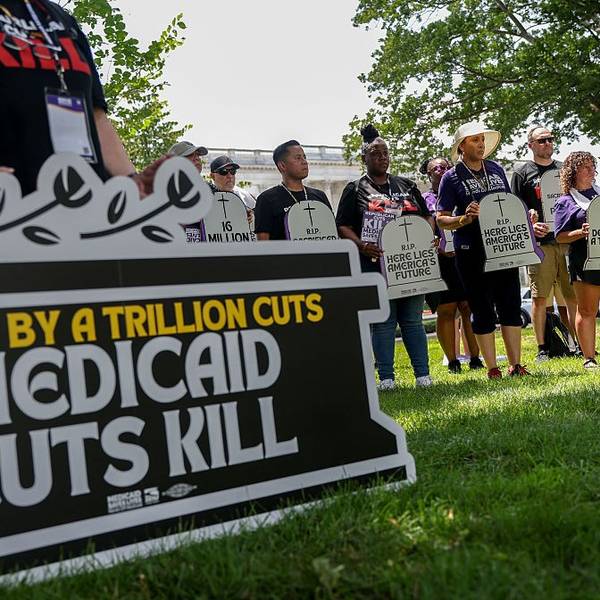
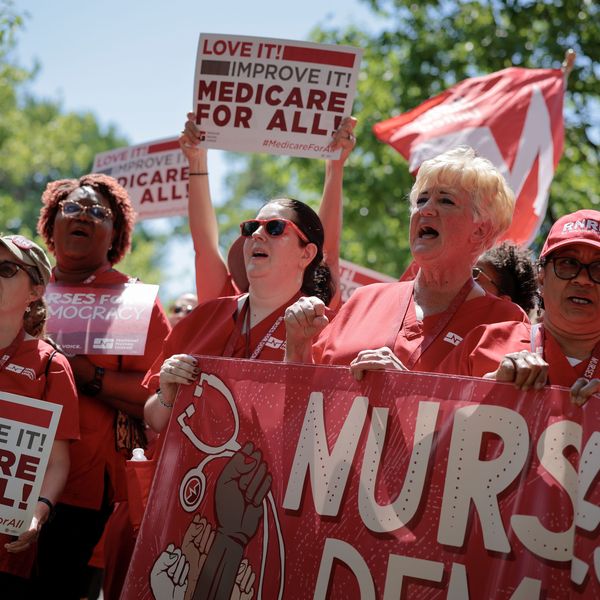
In place of the current wheeling and dealing among Washington lawmakers that now defines health care reform, imagine instead if Obama called upon the roughly 13 million voters who enlisted as the grassroots base of his presidential campaign to rally on the steps of Congress and demand comprehensive universal health care reform. Unfortunately, despite the grassroots vigor of his presidential campaign, a mass action campaign for health care justice does not appear to be on Obama's to do list for anytime soon.
In contrast, right-wing zealots appear more than ready for mass action, as Democratic supporters of health reform recently learned when confronted by shouting mobs opposing "socialized medicine" at town hall meetings. MSNBC's Rachel Maddow, Sen. Dick Durbin (D-IL), and others have accused health insurance lobbyists and GOP activists of orchestrating these hooligan hootenannies.
Whatever the dismal particulars of the legislation to emerge from Congress, there is growing public recognition that health care should be a universal human right. Indeed, support for single-payer is far greater now than during the early 1990s when President Clinton pushed his version of reform. There's also far more healthy grassroots activism and discussion taking place.
Accordingly, it is safe to say that the debate over the future of health care justice in the United States has only just begun.
Dear Common Dreams reader, It’s been nearly 30 years since I co-founded Common Dreams with my late wife, Lina Newhouser. We had the radical notion that journalism should serve the public good, not corporate profits. It was clear to us from the outset what it would take to build such a project. No paid advertisements. No corporate sponsors. No millionaire publisher telling us what to think or do. Many people said we wouldn't last a year, but we proved those doubters wrong. Together with a tremendous team of journalists and dedicated staff, we built an independent media outlet free from the constraints of profits and corporate control. Our mission has always been simple: To inform. To inspire. To ignite change for the common good. Building Common Dreams was not easy. Our survival was never guaranteed. When you take on the most powerful forces—Wall Street greed, fossil fuel industry destruction, Big Tech lobbyists, and uber-rich oligarchs who have spent billions upon billions rigging the economy and democracy in their favor—the only bulwark you have is supporters who believe in your work. But here’s the urgent message from me today. It's never been this bad out there. And it's never been this hard to keep us going. At the very moment Common Dreams is most needed, the threats we face are intensifying. We need your support now more than ever. We don't accept corporate advertising and never will. We don't have a paywall because we don't think people should be blocked from critical news based on their ability to pay. Everything we do is funded by the donations of readers like you. When everyone does the little they can afford, we are strong. But if that support retreats or dries up, so do we. Will you donate now to make sure Common Dreams not only survives but thrives? —Craig Brown, Co-founder |
Now that the era of "change" is upon us, in the form of health care reform, it's enlightening to watch the process unfold.
Actually, enlightening may not exactly be the right word. How about excruciating? Or infuriating? Or, how about we just admit we are not graced to live in an era when the words substantive, progress, and health care are ever likely to be inked with anything Washington's elected representatives manage to accomplish.
As Obama's health reform initiative confronts the reality of the beltway culture that is Washington, it's clear that real health care justice will not come easy to the United States. But why should this be a surprise? In contrast to the 1960s when Medicare and Medicaid were first introduced, U.S. health care today is primarily less a social service than just another investor-driven sector of America's hyper-capitalist culture. The days when religious non-profits, stand-alone community hospitals, and independent physician offices were the norm are long gone. In most major markets, two or three hospital organizations dominate the local health care scene. The nation's largest hospital corporation, HCA, for example, owns 278 hospitals and freestanding surgery centers. In turn, Wall Street equity firms lurk behind the scenes of most large hospital corporations.
Likewise, select health insurance companies now dominate most major markets. WellPoint and UnitedHealth Group, for example, alone sell insurance to some 67 million Americans, according to recent Senate hearings. It's well established that such private insurers have dumped enormous administrative waste into the system. They also take out a lot lavishing hundreds of millions of dollars in pay, bonuses, and stock options on high-paid executives.
But how many more times do we have to go over all this before things change? How many more tragic stories have to be told about sick people denied care by insurance giants? Or great arguments made about the value of single-payer? How much injustice exactly do we as a nation have to endure before our health care system lives and breathes in service to the universal right of every person to the best care possible? But then the resistance to health care reform has never been about rational argument or even ideology. It's about entrenched financial interests who cannot be expected to give up a good thing without a fight. No doubt Congress's ability to parse even the mildest vision of reform shows they've got that fight covered.
That's not to say the insurance industry is opposed to all health reforms, especially if under new legislation tens of millions of uninsured Americans become legally compelled to buy some form of insurance. In return, the industry might go along with new restrictions on their ability to deny coverage for "preexisting conditions" or medical history. Still, they continue to oppose any form of "public option" insurance. It's debatable now whether this component of "universal coverage" will even survive in the final legislation, or offer coverage worth anything if it does.
Of course, none of this has stopped the cuckoo right from portraying Obama's health reforms as "socialistic." But if conservative ideologues want to envision Bolsheviks manning the HMO help line next time they call to make a doctor's appointment, let them. The more daunting reality is that it is going to take an extraordinary mass political campaign if the American health care system is ever going to catch up with an industrialized world that has long recognized health care as a public resource similar to education or fire protection.
What makes such a humanitarian goal especially daunting in the United States is not just the crazy talk resistance of far-right Republicans. The other obstacle to progress is the endless genuflecting before corporate power on the part of the Democratic Party leadership. Tellingly, Obama has admitted single-payer health care would probably be the best health care system, if we were starting from scratch. Instead, Obama wants to promote a more socially palatable version of the existing health care system while preserving the industry's profits. This is another way of saying the President is not about to risk his political career on some "wild plan" to root out the scourge of private insurers and investment firms who are ruining health care.
In place of the current wheeling and dealing among Washington lawmakers that now defines health care reform, imagine instead if Obama called upon the roughly 13 million voters who enlisted as the grassroots base of his presidential campaign to rally on the steps of Congress and demand comprehensive universal health care reform. Unfortunately, despite the grassroots vigor of his presidential campaign, a mass action campaign for health care justice does not appear to be on Obama's to do list for anytime soon.
In contrast, right-wing zealots appear more than ready for mass action, as Democratic supporters of health reform recently learned when confronted by shouting mobs opposing "socialized medicine" at town hall meetings. MSNBC's Rachel Maddow, Sen. Dick Durbin (D-IL), and others have accused health insurance lobbyists and GOP activists of orchestrating these hooligan hootenannies.
Whatever the dismal particulars of the legislation to emerge from Congress, there is growing public recognition that health care should be a universal human right. Indeed, support for single-payer is far greater now than during the early 1990s when President Clinton pushed his version of reform. There's also far more healthy grassroots activism and discussion taking place.
Accordingly, it is safe to say that the debate over the future of health care justice in the United States has only just begun.
Now that the era of "change" is upon us, in the form of health care reform, it's enlightening to watch the process unfold.
Actually, enlightening may not exactly be the right word. How about excruciating? Or infuriating? Or, how about we just admit we are not graced to live in an era when the words substantive, progress, and health care are ever likely to be inked with anything Washington's elected representatives manage to accomplish.
As Obama's health reform initiative confronts the reality of the beltway culture that is Washington, it's clear that real health care justice will not come easy to the United States. But why should this be a surprise? In contrast to the 1960s when Medicare and Medicaid were first introduced, U.S. health care today is primarily less a social service than just another investor-driven sector of America's hyper-capitalist culture. The days when religious non-profits, stand-alone community hospitals, and independent physician offices were the norm are long gone. In most major markets, two or three hospital organizations dominate the local health care scene. The nation's largest hospital corporation, HCA, for example, owns 278 hospitals and freestanding surgery centers. In turn, Wall Street equity firms lurk behind the scenes of most large hospital corporations.
Likewise, select health insurance companies now dominate most major markets. WellPoint and UnitedHealth Group, for example, alone sell insurance to some 67 million Americans, according to recent Senate hearings. It's well established that such private insurers have dumped enormous administrative waste into the system. They also take out a lot lavishing hundreds of millions of dollars in pay, bonuses, and stock options on high-paid executives.
But how many more times do we have to go over all this before things change? How many more tragic stories have to be told about sick people denied care by insurance giants? Or great arguments made about the value of single-payer? How much injustice exactly do we as a nation have to endure before our health care system lives and breathes in service to the universal right of every person to the best care possible? But then the resistance to health care reform has never been about rational argument or even ideology. It's about entrenched financial interests who cannot be expected to give up a good thing without a fight. No doubt Congress's ability to parse even the mildest vision of reform shows they've got that fight covered.
That's not to say the insurance industry is opposed to all health reforms, especially if under new legislation tens of millions of uninsured Americans become legally compelled to buy some form of insurance. In return, the industry might go along with new restrictions on their ability to deny coverage for "preexisting conditions" or medical history. Still, they continue to oppose any form of "public option" insurance. It's debatable now whether this component of "universal coverage" will even survive in the final legislation, or offer coverage worth anything if it does.
Of course, none of this has stopped the cuckoo right from portraying Obama's health reforms as "socialistic." But if conservative ideologues want to envision Bolsheviks manning the HMO help line next time they call to make a doctor's appointment, let them. The more daunting reality is that it is going to take an extraordinary mass political campaign if the American health care system is ever going to catch up with an industrialized world that has long recognized health care as a public resource similar to education or fire protection.
What makes such a humanitarian goal especially daunting in the United States is not just the crazy talk resistance of far-right Republicans. The other obstacle to progress is the endless genuflecting before corporate power on the part of the Democratic Party leadership. Tellingly, Obama has admitted single-payer health care would probably be the best health care system, if we were starting from scratch. Instead, Obama wants to promote a more socially palatable version of the existing health care system while preserving the industry's profits. This is another way of saying the President is not about to risk his political career on some "wild plan" to root out the scourge of private insurers and investment firms who are ruining health care.
In place of the current wheeling and dealing among Washington lawmakers that now defines health care reform, imagine instead if Obama called upon the roughly 13 million voters who enlisted as the grassroots base of his presidential campaign to rally on the steps of Congress and demand comprehensive universal health care reform. Unfortunately, despite the grassroots vigor of his presidential campaign, a mass action campaign for health care justice does not appear to be on Obama's to do list for anytime soon.
In contrast, right-wing zealots appear more than ready for mass action, as Democratic supporters of health reform recently learned when confronted by shouting mobs opposing "socialized medicine" at town hall meetings. MSNBC's Rachel Maddow, Sen. Dick Durbin (D-IL), and others have accused health insurance lobbyists and GOP activists of orchestrating these hooligan hootenannies.
Whatever the dismal particulars of the legislation to emerge from Congress, there is growing public recognition that health care should be a universal human right. Indeed, support for single-payer is far greater now than during the early 1990s when President Clinton pushed his version of reform. There's also far more healthy grassroots activism and discussion taking place.
Accordingly, it is safe to say that the debate over the future of health care justice in the United States has only just begun.