SUBSCRIBE TO OUR FREE NEWSLETTER
Daily news & progressive opinion—funded by the people, not the corporations—delivered straight to your inbox.
5
#000000
#FFFFFF
To donate by check, phone, or other method, see our More Ways to Give page.
Daily news & progressive opinion—funded by the people, not the corporations—delivered straight to your inbox.
I've been spending this winter much as I spent last: recovering from testicular cancer. Some readers are probably muttering, "thank you for sharing," and are ready to move on. I understand that. My purpose in writing this column is not to talk about my personal woes. But some of you are wondering where I have been.
More to the point, one of my motives as a writer is to mine larger truths out of personal experience and observation in order to connect with, and hopefully enlighten or entertain, at least some of my readers. A lot of us have difficulty in talking about illness. We suspect it as a mark of weakness, shame -- or moral turpitude. I would insist, not. Illness has to be talked about. What people know and have experienced of disability and disease has to be shared.
Moreover, illness brings one face to face with our health care system. And I know, because that's what visitors at my bedside want to talk about, everybody has a horror story to tell.
My first cancer incident was treated by surgery. It's not as bad as it sounds. The testes are redundant; having one is quite enough. At the time, friends had more serious types of cancer. I, at least, got to tell some awful jokes. I'll spare you the shtick.
This year, the cancer jumped to my 5th lumbar vertebrae on my lower back. Ouch! That's close to where the sciatic nerve starts its course to the hip, thigh, and foot. The unfortunate location of the tumor, rather than the fact of the tumor, is what has laid me out, so I can't walk and, up until now, work. Radiation, and later chemo, should, I hope, effectively treat the cancer. It may take me more time before I can sit-up comfortably or walk downtown.
Years ago, doctors would make house calls to see their cancer patients. In reality what they were doing was holding the patient's hand and preparing them for death.
Now cancer can be brought under remission, even cured. The technology is amazing, but also expensive and not portable. My main doctor is in Brattleboro, but I went to Keene, NH for radiation therapy and to Dartmouth Hitchcock for help with my spine. Trying to coordinate these visits is a bureaucratic nightmare. The medical staff spends wasteful and costly hours coordinating with one another. Mistakes happen. X-rays shipped between doctors and hospitals get lost. Caregivers who need to be in the loop are sometimes dropped.
Moreover, as a patient, I'm sick, with no energy to maneuver my way through the bureaucracy. Fortunately my partner is a determined advocate and I've friends who know the medical field. Without their assistance, I wonder if I'd be getting the care I need and deserve. Sick people need advocates, but many have to navigate through the system on their own. It's difficult, exhausting, and unfair. The system isn't working. It affects the ability of the professionals to do their jobs and the ability of the patients to rest, relax and to heal.
To keep down costs, the health care system places a huge burden on family, friends, neighbors, people with no training in medical care-giving. Many have full-time jobs, families of their own, other lives. Yet sick people need care or, at a minimum, someone to be at home with them almost around the clock. Again, I've been fortunate in this regard. But what of the many people who live alone or do not have the necessary volunteer help? The visiting nurses are wonderful, but insurance constraints minimize their visits. Willing but untrained volunteer health-care givers keep the system going. They and the value they provide are rarely acknowledged. The system needs an overhaul.
And I'm one of the lucky ones. I have insurance. Though with deductibles, co-payments, and high premiums there still are debts. What of the millions without insurance, who face financial disaster because of illnesses beyond their control? From a medical standpoint, stress over medical bills is not conducive to healing. From my experience in the system (and by the evidence of professional studies and in comparison with other countries' health insurance systems), the administrative and bureaucratic costs of the American system are way out of line. A good deal of the premiums I pay go to feed the bureaucracy; my money is not buying me health care.
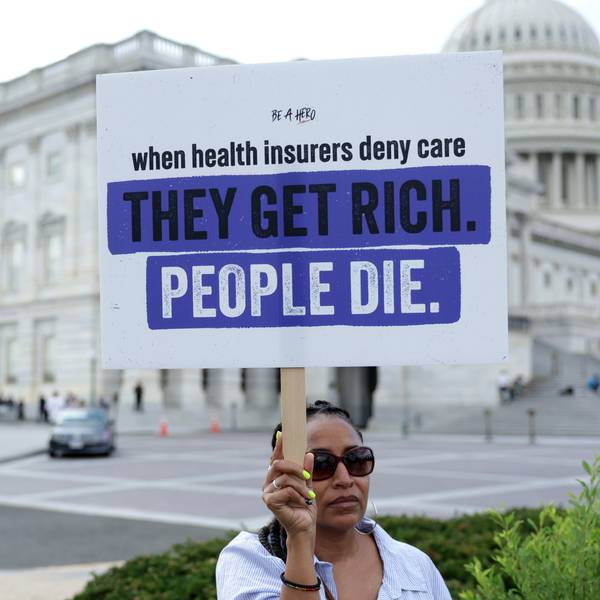
It's been frustrating not being able to write my weekly column with so many important events happening in the world. I'll get back to them in coming weeks, at least to the degree that my medical condition allows me to sit at the computer. But it's the health care system I'm facing now. The nurses, doctors and support staff are great, but the system desperately needs reform! We require a universal system of health insurance like every other modern, democratic, industrial nation.
Most immediately, we need to stymie the intentions of Vermont Republicans to do away with the current system of community ratings. If the GOP has its way, private insurers will be able to come into the state and cherry-pick the healthiest citizens, leaving those like myself, with pre-existing conditions, to the mercies of an under-funded state.
There will be a lot to write about in the coming year, much to live for. I very much intend to be part of the political battles ahead.
Dear Common Dreams reader, It’s been nearly 30 years since I co-founded Common Dreams with my late wife, Lina Newhouser. We had the radical notion that journalism should serve the public good, not corporate profits. It was clear to us from the outset what it would take to build such a project. No paid advertisements. No corporate sponsors. No millionaire publisher telling us what to think or do. Many people said we wouldn't last a year, but we proved those doubters wrong. Together with a tremendous team of journalists and dedicated staff, we built an independent media outlet free from the constraints of profits and corporate control. Our mission has always been simple: To inform. To inspire. To ignite change for the common good. Building Common Dreams was not easy. Our survival was never guaranteed. When you take on the most powerful forces—Wall Street greed, fossil fuel industry destruction, Big Tech lobbyists, and uber-rich oligarchs who have spent billions upon billions rigging the economy and democracy in their favor—the only bulwark you have is supporters who believe in your work. But here’s the urgent message from me today. It's never been this bad out there. And it's never been this hard to keep us going. At the very moment Common Dreams is most needed, the threats we face are intensifying. We need your support now more than ever. We don't accept corporate advertising and never will. We don't have a paywall because we don't think people should be blocked from critical news based on their ability to pay. Everything we do is funded by the donations of readers like you. When everyone does the little they can afford, we are strong. But if that support retreats or dries up, so do we. Will you donate now to make sure Common Dreams not only survives but thrives? —Craig Brown, Co-founder |
I've been spending this winter much as I spent last: recovering from testicular cancer. Some readers are probably muttering, "thank you for sharing," and are ready to move on. I understand that. My purpose in writing this column is not to talk about my personal woes. But some of you are wondering where I have been.
More to the point, one of my motives as a writer is to mine larger truths out of personal experience and observation in order to connect with, and hopefully enlighten or entertain, at least some of my readers. A lot of us have difficulty in talking about illness. We suspect it as a mark of weakness, shame -- or moral turpitude. I would insist, not. Illness has to be talked about. What people know and have experienced of disability and disease has to be shared.
Moreover, illness brings one face to face with our health care system. And I know, because that's what visitors at my bedside want to talk about, everybody has a horror story to tell.
My first cancer incident was treated by surgery. It's not as bad as it sounds. The testes are redundant; having one is quite enough. At the time, friends had more serious types of cancer. I, at least, got to tell some awful jokes. I'll spare you the shtick.
This year, the cancer jumped to my 5th lumbar vertebrae on my lower back. Ouch! That's close to where the sciatic nerve starts its course to the hip, thigh, and foot. The unfortunate location of the tumor, rather than the fact of the tumor, is what has laid me out, so I can't walk and, up until now, work. Radiation, and later chemo, should, I hope, effectively treat the cancer. It may take me more time before I can sit-up comfortably or walk downtown.
Years ago, doctors would make house calls to see their cancer patients. In reality what they were doing was holding the patient's hand and preparing them for death.
Now cancer can be brought under remission, even cured. The technology is amazing, but also expensive and not portable. My main doctor is in Brattleboro, but I went to Keene, NH for radiation therapy and to Dartmouth Hitchcock for help with my spine. Trying to coordinate these visits is a bureaucratic nightmare. The medical staff spends wasteful and costly hours coordinating with one another. Mistakes happen. X-rays shipped between doctors and hospitals get lost. Caregivers who need to be in the loop are sometimes dropped.
Moreover, as a patient, I'm sick, with no energy to maneuver my way through the bureaucracy. Fortunately my partner is a determined advocate and I've friends who know the medical field. Without their assistance, I wonder if I'd be getting the care I need and deserve. Sick people need advocates, but many have to navigate through the system on their own. It's difficult, exhausting, and unfair. The system isn't working. It affects the ability of the professionals to do their jobs and the ability of the patients to rest, relax and to heal.
To keep down costs, the health care system places a huge burden on family, friends, neighbors, people with no training in medical care-giving. Many have full-time jobs, families of their own, other lives. Yet sick people need care or, at a minimum, someone to be at home with them almost around the clock. Again, I've been fortunate in this regard. But what of the many people who live alone or do not have the necessary volunteer help? The visiting nurses are wonderful, but insurance constraints minimize their visits. Willing but untrained volunteer health-care givers keep the system going. They and the value they provide are rarely acknowledged. The system needs an overhaul.
And I'm one of the lucky ones. I have insurance. Though with deductibles, co-payments, and high premiums there still are debts. What of the millions without insurance, who face financial disaster because of illnesses beyond their control? From a medical standpoint, stress over medical bills is not conducive to healing. From my experience in the system (and by the evidence of professional studies and in comparison with other countries' health insurance systems), the administrative and bureaucratic costs of the American system are way out of line. A good deal of the premiums I pay go to feed the bureaucracy; my money is not buying me health care.
It's been frustrating not being able to write my weekly column with so many important events happening in the world. I'll get back to them in coming weeks, at least to the degree that my medical condition allows me to sit at the computer. But it's the health care system I'm facing now. The nurses, doctors and support staff are great, but the system desperately needs reform! We require a universal system of health insurance like every other modern, democratic, industrial nation.
Most immediately, we need to stymie the intentions of Vermont Republicans to do away with the current system of community ratings. If the GOP has its way, private insurers will be able to come into the state and cherry-pick the healthiest citizens, leaving those like myself, with pre-existing conditions, to the mercies of an under-funded state.
There will be a lot to write about in the coming year, much to live for. I very much intend to be part of the political battles ahead.
I've been spending this winter much as I spent last: recovering from testicular cancer. Some readers are probably muttering, "thank you for sharing," and are ready to move on. I understand that. My purpose in writing this column is not to talk about my personal woes. But some of you are wondering where I have been.
More to the point, one of my motives as a writer is to mine larger truths out of personal experience and observation in order to connect with, and hopefully enlighten or entertain, at least some of my readers. A lot of us have difficulty in talking about illness. We suspect it as a mark of weakness, shame -- or moral turpitude. I would insist, not. Illness has to be talked about. What people know and have experienced of disability and disease has to be shared.
Moreover, illness brings one face to face with our health care system. And I know, because that's what visitors at my bedside want to talk about, everybody has a horror story to tell.
My first cancer incident was treated by surgery. It's not as bad as it sounds. The testes are redundant; having one is quite enough. At the time, friends had more serious types of cancer. I, at least, got to tell some awful jokes. I'll spare you the shtick.
This year, the cancer jumped to my 5th lumbar vertebrae on my lower back. Ouch! That's close to where the sciatic nerve starts its course to the hip, thigh, and foot. The unfortunate location of the tumor, rather than the fact of the tumor, is what has laid me out, so I can't walk and, up until now, work. Radiation, and later chemo, should, I hope, effectively treat the cancer. It may take me more time before I can sit-up comfortably or walk downtown.
Years ago, doctors would make house calls to see their cancer patients. In reality what they were doing was holding the patient's hand and preparing them for death.
Now cancer can be brought under remission, even cured. The technology is amazing, but also expensive and not portable. My main doctor is in Brattleboro, but I went to Keene, NH for radiation therapy and to Dartmouth Hitchcock for help with my spine. Trying to coordinate these visits is a bureaucratic nightmare. The medical staff spends wasteful and costly hours coordinating with one another. Mistakes happen. X-rays shipped between doctors and hospitals get lost. Caregivers who need to be in the loop are sometimes dropped.
Moreover, as a patient, I'm sick, with no energy to maneuver my way through the bureaucracy. Fortunately my partner is a determined advocate and I've friends who know the medical field. Without their assistance, I wonder if I'd be getting the care I need and deserve. Sick people need advocates, but many have to navigate through the system on their own. It's difficult, exhausting, and unfair. The system isn't working. It affects the ability of the professionals to do their jobs and the ability of the patients to rest, relax and to heal.
To keep down costs, the health care system places a huge burden on family, friends, neighbors, people with no training in medical care-giving. Many have full-time jobs, families of their own, other lives. Yet sick people need care or, at a minimum, someone to be at home with them almost around the clock. Again, I've been fortunate in this regard. But what of the many people who live alone or do not have the necessary volunteer help? The visiting nurses are wonderful, but insurance constraints minimize their visits. Willing but untrained volunteer health-care givers keep the system going. They and the value they provide are rarely acknowledged. The system needs an overhaul.
And I'm one of the lucky ones. I have insurance. Though with deductibles, co-payments, and high premiums there still are debts. What of the millions without insurance, who face financial disaster because of illnesses beyond their control? From a medical standpoint, stress over medical bills is not conducive to healing. From my experience in the system (and by the evidence of professional studies and in comparison with other countries' health insurance systems), the administrative and bureaucratic costs of the American system are way out of line. A good deal of the premiums I pay go to feed the bureaucracy; my money is not buying me health care.
It's been frustrating not being able to write my weekly column with so many important events happening in the world. I'll get back to them in coming weeks, at least to the degree that my medical condition allows me to sit at the computer. But it's the health care system I'm facing now. The nurses, doctors and support staff are great, but the system desperately needs reform! We require a universal system of health insurance like every other modern, democratic, industrial nation.
Most immediately, we need to stymie the intentions of Vermont Republicans to do away with the current system of community ratings. If the GOP has its way, private insurers will be able to come into the state and cherry-pick the healthiest citizens, leaving those like myself, with pre-existing conditions, to the mercies of an under-funded state.
There will be a lot to write about in the coming year, much to live for. I very much intend to be part of the political battles ahead.