

SUBSCRIBE TO OUR FREE NEWSLETTER
Daily news & progressive opinion—funded by the people, not the corporations—delivered straight to your inbox.
5
#000000
#FFFFFF
To donate by check, phone, or other method, see our More Ways to Give page.
Daily news & progressive opinion—funded by the people, not the corporations—delivered straight to your inbox.

About 40 years ago, a right-wing codger named Eddie Chiles became a momentary political celebrity in my state by buying airtime on hundreds of radio stations to broadcast his daily political rants. Having made a fortune in the Texas oil fields, he pitched himself as a rags-to-riches, self-made success story. "I'm Mad Eddie," as he was known, repeatedly proclaimed that he was "mad" about big government -- particularly federal programs that taxed him to help poor people, who should help themselves by becoming oil entrepreneurs like him. It's simple, he instructed in the tagline to his tirades: "If you don't own an oil well, get one."
Well, maybe you can't afford an oil well, but what if you could own something even bigger -- an entire electric utility? What if you were to control an energy business that's also an economic development engine and a grassroots force for advancing social justice? You wouldn't own it all by yourself, but you would indeed be a full-fledged owner, with a voice on everything from hiring to setting rates, from green energy to community investment.
This empowering populist possibility has quietly existed for millions of Americans since 1937, when then-President Franklin Delano Roosevelt's New Deal helped people create a vast network of member-owned and member-run rural electric cooperatives, or RECs. While the barons of corporate-owned utilities serviced densely populated, easy-to-wire cities, they ignored rural areas as unprofitable, leaving families, businesses, schools and communities literally in the dark. Co-op ownership offered a bridge across this rural gap in our country's vital infrastructure -- and the people rushed to cross it. Before the New Deal, some 90% of farm families had no electricity. By 1953, just 16 years later, more than 90% of them were wired, opening rural America to a world of new economic, social and cultural opportunities.
Co-op electricity has transformed rural America, but the co-ops offer something even more electrifying: democratic power.
By law, every household that uses the electricity is a member and can vote for a board that has actual decision-making authority to control resources including cash flow, good jobs, a customer base, facilities and financial acumen. Moreover, unlike the corporate ethic of shareholder supremacy (in which maximizing profits of investor elites reigns supreme), these decentralized, grassroots utilities were guided by an egalitarian ethic formulated in 1937: the seven Rochdale Principles of cooperative organization:
With such a potent combination of power and principles -- later expanded to include anti-discrimination, financial fairness and other components -- RECs can be a mighty force for helping rural Americans make broad-based social progress. Indeed, in the past 30 years, some RECs have formally expanded their official purpose from simply providing electricity to also investing in such community needs as solar power, high-speed internet and financing for conservation retrofits.
Despite the strength and popular appeal of the co-op approach, RECs in regions where they are large and numerous (the South, Midwest and Plains) have hardly been models of dynamic progress. Even when they face stagnant economies and widespread poverty, many co-ops charge exorbitant rates and cling to a toxic legacy of coal-fired power plants spewing pollutants.
What happened? In effect, these co-ops got taken over by closed networks of entrenched rural power (bankers, real estate developers, ag-biz execs, old money families, trusted political retainers, et al.). These interests have steadily tightened their grip on these valuable utilities by using their financial power, social standing and legal cunning to dominate board elections.
Once in, these boards throw Rochdale principles out the window. Professional managers slide the decision-making and co-op books behind closed doors. In co-ops like these, the term "member" has effectively been shriveled to mean powerless consumer. Thus, shut out of the governing circle, members lose the will to participate, leaving the co-op a hollowed-out shell of its big democratic idea. A 2016 survey by the Institute for Local Self-Reliance found that 72% of America's REC board directors were elected by less than 10% of members.
But as a co-op member, you do have a voice. The good folks at the New Economy Coalition recently released their Rural Electric Cooperative Toolkit with resources for member-owners seeking to reassert the democratic principles on which their co-ops were founded. The NEC works for an economy "that meets human needs, enhances the quality of life, and allows us to live in balance with nature." Doesn't that sound good? Check them out: neweconomy.net.
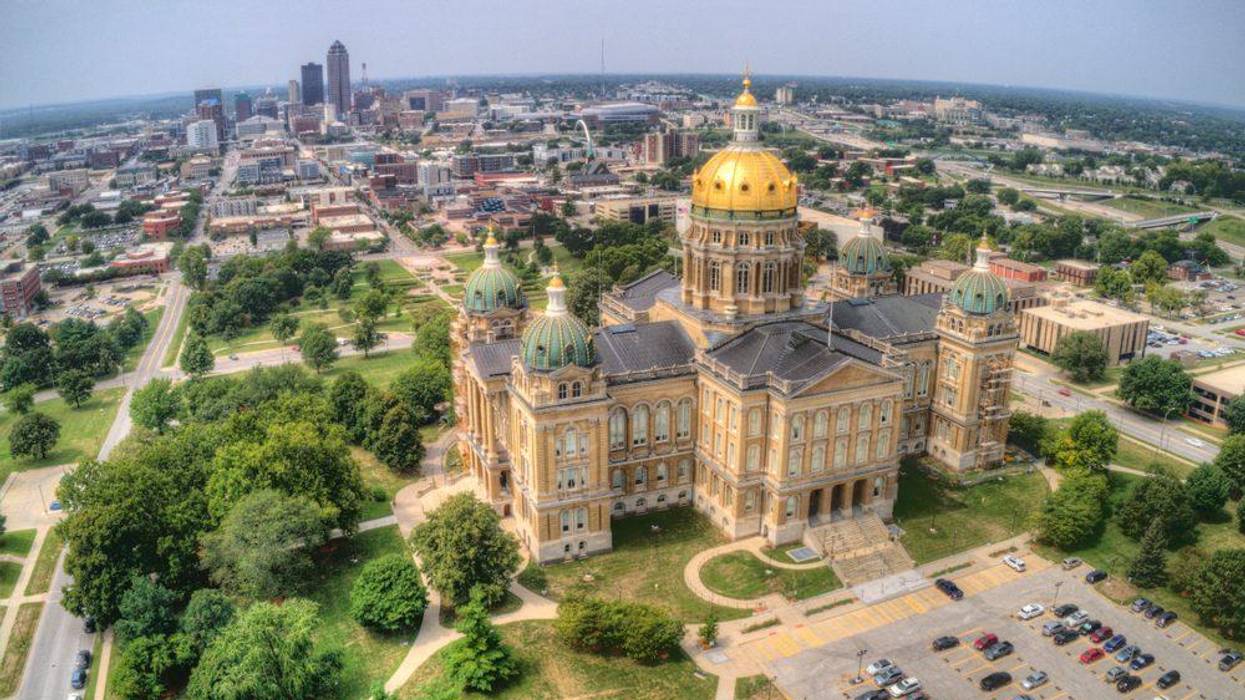
I'm a retired public school teacher living in Des Moines.
I grew up here close to the city limits, with an easy escape to the countryside that was once dotted with miles and miles of small family farms. The sight and even the smells of those small farms were a welcome respite from the congested and busy neighborhood life I was growing up around.
There were cows, pigs, sheep, chickens, and usually lots of cats. Barns were exciting and full of life. It's an idyllic memory many Iowans still relish today.
In contrast, pig production now happens inside gigantic industrial buildings warehousing thousands of animals subjected to a rectangular cubicle for life. They're left to eat and drink in these confined spaces, and in about five months they're slaughtered.
The stench from millions of gallons of manure percolating under their feet and spread on fields travels across our countryside and is toxic and nauseating to breathe.
Iowa is now close to being decimated for the sake of massive profits for a few giant corporations like Smithfield, Iowa Select, Prestage Farms, Hormel, and Tyson Foods.
For 40 years, my biggest worries focused on my middle school students: Were there enough new grammar books? Could they get to school in the snow? Did they have enough to eat at home? But eventually, I started worrying if they, or any of us, should be drinking or cooking with the water coming out of our facets, or swimming or fishing in the water in our countryside.
Those small family farms in the countryside have given way to an explosion of more than 7,000 factory hog sites. Iowa is now close to being decimated for the sake of massive profits for a few giant corporations like Smithfield, Iowa Select, Prestage Farms, Hormel, and Tyson Foods.
These concentrated animal feeding operations (CAFOs) are practically unregulated and unmonitored. Our state's factory farm inspectors can't even begin to keep track of what happens at thousands of sites.
Tons and tons of manure laden with nitrate, phosphorus, antibiotics, and other chemicals soak into the ground or run off fields and flow into the Des Moines water system. Both of our rivers, the Des Moines River and Raccoon River, are polluted regularly with high levels of nitrate. Iowa taxpayers and water customers have shelled out millions of dollars to clean the poisoned water.
Less discussed are the people who work in these factories and the slaughterhouses where the animals are butchered. Thousands of immigrants fill these brutal and dangerous jobs.
For decades, politicians spread nasty lies about these workers that have wormed their way into the public mythology in Iowa: that immigrants are taking our jobs, driving up our medical costs, or overcrowding our schools.
We know these families. They go to church with us, we pass them in the grocery aisles and at the post office, and sit next to them at the grandkids' soccer games. No one should believe these lies, but they've seeped into our community like the factory farm manure that poisons our rivers.
It's in the best interest of the factory farm, slaughterhouse, and feedlot owners--and the politicians they support--to keep us at each other's throats. They pit us against each other and make us fear each other. Imagine what would happen if all all of Iowa's struggling rural families and workers cooperated and worked together?
We'd fight wage theft, and demand higher wages and better conditions in the slaughterhouses. We'd crack down on hog factories and clean up our waterways. We'd give more money to our schools so everyone has a great education. We'd fight to get profits out of health care and have Medicare For All.
Iowans, and people in other rural states, were fooled once. I hope we won't be fooled again -- and certainly not pitted against each other. Take it from this retired schoolteacher: we've learned our lesson.

As capitalism drives itself into ever-greater inequality, instability and injustice, its critics multiply. Worried defenders react in two ways. Many dismiss the criticisms. After all, capitalism has been around a long time and weathered ups and downs before. They presume or hope that criticism will fade as little really changes despite the critics, and frustrations set in. It's just losers who complain. The winners will surely carry the system forward. Some defenders insist that there simply is no alternative to capitalism, so criticism becomes pointless.
A second sort of defenders takes a different approach. They place adjectives in front of the word capitalism and argue for some and against other such adjectives. Thus we get criticisms of statist or state-interventionist capitalism in favor of "free-market" capitalism and of "regressive" capitalism in favor of "progressive" capitalism. Greedy capitalism, we are told, must give way to "sharing" capitalism. Similarly it is said that "Crony" capitalism or capitalism without a social conscience should be dissolved.
Capitalism's defenders of both types clearly want the basic system to continue. But exactly what is the system? It turns out that its defenders are neither agreed nor clear about the definition of what they are defending. So to get at what the real debate here is requires a short detour through the thicket of un-worked-out definitions.
"Modern society's systemic problem is capitalism, not this or that kind of capitalism."
Is capitalism a "market" system? If that means markets are the institutional mechanism whereby resources and products are distributed--by voluntary exchanges between owners of goods and services--then the problem is that capitalism is hardly the only "system" that utilizes markets. Slavery certainly did (think slaves and cotton in the US south). Feudal plantations often did too. And both Soviet and contemporary Chinese socialisms have made use of markets.
Is capitalism a "private enterprise" system versus a "state enterprise" system? Such a definition is also problematic. Slavery and feudalism exhibit co-existences of enterprises owned and operated by private individuals holding no position within any state apparatus alongside those owned and operated by state officials. There have been private and state enterprises within slave, feudal, and capitalist systems. The presence of state enterprises, like the presence of markets, is thus not system-specific. Few observers removed the label socialist from the USSR, PRC, etc., because private enterprises (collective farms, private plots, etc.) co-existed there with state enterprises.
In short, markets and private enterprises do not work as definitions because they inadequately differentiate among capitalism, slavery, feudalism, and socialism. Yet definitions' purpose is to enable clear discussion and debate.
An adequate definition exists that focuses on the organization of production and distribution within enterprises: the human relations governing their internal structures of authority and responsibility. Slavery is thus defined in terms of the master-slave organization of its workplaces. Workers there are the owned property of those who take the product. Feudalism names the quite different relationship of lord and serf (personal, mutually obligational, non-ownership of persons) inside workplaces. Serfs work and deliver one agreed portion of their product to the lord: the portion above what serfs get to keep for themselves.
Capitalism entails an altogether different workplace organization: instead of ownership of persons or personal obligation quid-pro-quo exchange. Employers buy the labor power of employees and combine it with other means of production owned by the employers. The product is divided among (1) wages paid to workers, (2) replacement of used up means of production, and (3) employers' net revenues. Capitalist enterprises can be owned and operated by private persons, state officials or both. Resources and products can be distributed via markets or non-market mechanisms such as planning.
This definition of capitalism dissolves notions of "socialism" into varieties of state capitalism when state enterprises--like their private counterparts--are organized around the employer-employee dichotomy. This definition of capitalism points clearly toward a system beyond the employer-employee dichotomy of capitalism (and likewise the other dualistic dichotomies).
What defines such a post-capitalist economic system is that employers and employees merge into one. Individually, each is an employee. Collectively, all employees comprise the employer. Each employee/employer has an equal voice in democratic business decisions governing what, how, and where production occurs and what is done with the net revenues.
Capitalism's basic problems are intrinsic. They comprise the employer-employee relationship at its core and that relationship's results for the broader economy, politics and culture. Modern society's systemic problem is capitalism, not this or that kind of capitalism. Reforms have replaced one kind of capitalism with another. Beside the problems that reforms could not solve, the reforms themselves proved temporary and insecure. Usually won by employees' long battles, the reforms get lost because capitalists have the incentives (profits) and resources (profits) to evade, weaken or repeal them. For example, progressive give way to regressive taxes, once-separated commercial investment banking are allowed to recombine, minimum wages are not adjusted to inflations, and so on. Struggles for reforms proposed today increasingly get the response: been there, done that.
Today's central political question: are contemporary capitalist societies ready to embark on transitions to genuinely non- or post-capitalist societies? Such transitions' central strategy is to displace the hierarchical, undemocratic, employer-employee organization of capitalist enterprises with democratized workplaces. Notions of economies built on workers' self-governing cooperatives existed throughout human history. They rise now again as small and medium-sized capitalists retire and realize that selling their businesses to their workers is their preferred next step. Building out its worker cooperatives made Spain's Mondragon Cooperative Corporation famous across the world. Sustaining a huge sector of worker coops brought exceptional economic well-being to Emilia-Romagna in Italy.
Other kinds of coops--those that buy, sell, or own collectively--can and should be way stations to democratizing the work itself. There are welcome signs that is happening. By democratizing our workplaces, we can do better than capitalism. One step in that process is getting on the same page about what capitalism is and what its alternatives were and are.

Fresh off an introduction of a historic resolution on the Green New Deal, Rep. Alexandria Ocasio-Cortez (D-NY) on Thursday evening did not have a problem grappling with the question over whether the ideologies of democratic socialism and capitalism can coexist, saying she is not one who thinks in simplistic terms about the nature of the economy but believes the most important thing is the power and voice that workers enjoy within businesses and beyond.
"Can you be a democratic socialist and a capitalist?" asked MSNBC's Chuck Todd in an one-on-one interview.
Without falling for the binary gotcha format of the question, Ocasio-Cortez responded, "Well, I think it depends on your interpretation. So there are some democratic socialists that would say, 'Absolutly not.' There are other people who are democratic socialists that would say, 'I think it's possible.'"
Asked which camp she fell into, Ocasio-Cortez said, "I think it's possible."
"Do you say, 'I'm a capitalist, but...'?" asked Todd.
"I don't say that," Ocasio-Cortez quickly shot back. "If anything, I would say, 'I believe in a democratic economy, but...'" With a smile she added, "But, the 'but' is there."
Watch the exchange:
While acknowledging there are things the private sector does better, like providing markets with consumer goods, but also noted that even businesses operating in the private sector can themselves be socially democratic and offered worker cooperatives as a great example. Democratic socialism, she said, is "not about government takeover, it's about how much of a say do workers have in your business. Do you have workers on the board? Do workers enjoy a decent amount of the wealth they are creating? Or is the majority of these profits going to shareholders while you're paying a worker $15 an hour to live in a New York City apartment? And so that to me is the difference.
"It's not that the public sector is democratically socialist and the private sector is not. It's really about a more nuanced understanding of how our economy should work."
Later in the interview she was asked about democratic socialism's ability to win elections, to which she noted that Sen. Bernie Sanders (I-Vt.), the most high-profile elected in the U.S. Congress, showed in 2016 just how potent the message can be:
Watch the full interview below:

The recent IPCC report has received widespread attention. The report states that rapid and bold actions are necessary to avoid the catastrophic impacts of climate change and that the goals of the Paris Accord will be insufficient. This has resulted in an outpouring of opinion pieces calling for individuals to take actions in their daily lives to reduce greenhouse gas (GHG) emissions and to pressure elected officials to take significant steps to support renewable energy. This sense of urgency is critically needed, yet most of these calls for action are misguided due to a widespread misdiagnosis of the climate change problem.
To address a problem, it is most effective to identify the root cause. One might argue that the root cause of climate change is fossil fuel combustion. However, this overlooks how our current economic system not only continues to protect and sustain the fossil fuel industry but also drives the continuous increases in production and consumption causing environmental degradation at large. What is this system? Growth-dependent capitalism. Here we focus on the impacts of that growth. The prioritization of economic growth is what makes highly effective actions, such as buying-out or nationalizing fossil fuels and keeping them in the ground, infeasible. A recently released UN document, related to the 2019 Global Sustainable Development Report, suggests that the root cause of climate change is the economic system, namely one that prioritizes profits at the expense of ecological and social well-being.
"We need to move beyond an economy that prioritizes growth."
Evidence is mounting that demonstrates how prioritizing a growing economy is the true driver of climate change. Data shows a positive relationship between economic growth and GHG emissions. This makes sense since GDP growth correlates with material production, including carbon: GDP growth by 1% equals a 0.6% growth in material use and a 0.5-0.7% increase in carbon emissions. Even scientists working on carbon budgets have come forward stating that reducing GHG emissions is incompatible with economic growth. While proponents of "green growth" support the idea of increasing GDP while reducing GHG emissions (known as absolute decoupling), this has yet to be realized. Studies show that decoupling in developed nations has been a result of increased carbon-intensive production in developing nations.
Greening growth through alternative energy, efficient technology, and carbon markets has had limited and paradoxical impacts. Efficiency gains are in many cases partially or completely offset by increased consumption. Because we are not implementing policies to decrease fossil fuel use, a unit of energy produced by alternative energy does not replace a unit of energy produced by fossil fuels and is correlated with increased total energy use. In a system prioritizing economic growth, the effectiveness of green alternatives will continue to be constrained by increasing levels of production and consumption. In addition, market mechanisms that prioritize profit have not slowed climate change. The EU Emissions Trading System, the oldest and largest carbon market, has not dramatically reduced emissions. In 2017, the EU policy director stated that "the EU carbon market will continue to fail at its task to spur green investments and phase out coal." Due to these realities, we need to move beyond an economy that prioritizes growth.
But isn't economic growth critical for a thriving society and human well-being? Actually, economic growth has only been a social priority for a relatively short time. As stated by ecological economist Herman Daly, it is largely believed that "without economic growth all progress is at an end." He counters this belief by asserting, "[o]n the contrary, without growth . . . true progress finally will have a chance." Stopping economic growth doesn't mean we cannot meet our needs. We will still have enough. We will simply put an end to the production and consumption of more and more unnecessary things that harm us and the environment for the sake of a 3% annual increase in GDP. In fact, studies show that economic growth that goes beyond satisfying basic needs does not increase happiness. What it does is push us beyond ecological limits in dangerous ways. By putting growth in its place, we can prioritize people, climate, and prosperity before profit. More and more people are starting to question whether a capitalist system that prioritizes profit and growth above all is really a good thing.
"To accurately diagnose the climate change problem, we have to get at the root - our economic system."
These ideas are spurring on an increasing number of academic and activist projects that offer alternatives. For example, the degrowth movement supports planned economic contraction and dematerialization in developed nations. Degrowth proponents explain why people would be happier in this new economic system. While there would be reduced total material production and consumption, there would be growth in social services, well-being, sharing, community agriculture, energy and worker cooperatives, not to mention a stronger sense of community. This does not necessitate living without modern conveniences, just not more and more of them. A range of degrowth policies have been proposed, including work time reduction, which has been shown to reduce material production, energy use, and GHG emissions while increasing health and well-being. Policies to reduce working hours would represent a critical step in restructuring our economy to address climate change.
Perhaps this all seems radical. That would be appropriate, as the word "radical" from the Latin radicalis means relating to the root. To accurately diagnose the climate change problem, we have to get at the root - our economic system. As the authors of the UN document explains, we need to "focus on life-improving and emissions-reducing goals rather than abstract economic goals." They call for a new system where "economic activity will gain meaning not by achieving economic growth but by rebuilding infrastructure and practices toward a post-fossil fuel world with a radically smaller burden on natural ecosystems." They conclude by making clear that "states are the only actors that have the legitimacy and capacity to fund and organize large-scale transitions." While communities move forward with important projects that put ecosystems and people first, we also need to push our governments to recognize economic growth as the root cause of climate change and implement policies to re-create our economy.

This past Friday in Afghanistan's Ghazni province, Hazara girls joined young Pashto boys to sing Afghanistan's national anthem as a welcome to Pashto men walking 400 miles from Helmand to Kabul. The walkers are calling on warring parties in Afghanistan to end the war. Most of the men making the journey are wearing sandals. At rest stops, they must tend to their torn and blistered feet. But their mission grows stronger as they walk. In Ghazni, hundreds of residents, along with religious leaders, showed remarkable readiness to embrace the courage and vision of the Helmand-to-Kabul peace walk participants. It seems likely that ordinary Afghans, no matter their tribal lineages, share a profound desire to end forty years of war. The 17-year U.S. war in Afghanistan exceeds the lifetimes of the youngsters in Ghazni who greeted the peace walkers.
On June 7th, Afghanistan's president, Ashraf Ghani, declared a week-long halt to attacks against the Taliban. Spokespersons representing an undetermined number of Taliban affiliates accepted the ceasefire on June 9th, with the U.S. also agreeing to suspend attacks against Taliban fighters.
"Rather than extending a hand of friendship to people in other lands and, in the case of Afghanistan, paying reparations for the terrible suffering we've caused, the U.S. continues to seek security through dominance and military might. It's a futile effort."
Can the declared cease-fire lead to negotiations and an end to the war? Given the desperate circumstances I saw during a visit to Kabul in early June, it seems clear that a lasting peace will require finding ways to employ people and enable them to provide food and water for their families.
Destitution has caused numerous Afghan people to enlist in military forces, pro-government or insurgent. It's extremely difficult to earn a living wage in Afghanistan, but military and paramilitary units, answerable to various warlords, including the U.S., pay wages which many Afghan families can't afford to dismiss. My young friends in Kabul assure me their family members who joined military groups don't want to cause bloodshed and they don't want to be killed. They simply don't have other viable options.
Almost 54 percent of Afghan citizens live below the poverty line, according to Afghanistan's Tolo News coverage of a recent joint survey undertaken by the Central Statistics Organization and an international NGO.
The Afghan Peace Volunteers (APV), who welcomed me as their guest last week, want to help build a more egalitarian economy that will provide basic human needs. This year, they're forging ahead in establishing worker cooperatives. During my visit, they celebrated the opening of a shoe-making cooperative. They've also devised a one-year plan for seamstresses to form a tailoring cooperative and explored possibilities for a carpentry cooperative.
"Once up-and-running," their blog explains, "these worker cooperatives will pledge part of their earnings to the long-term, self-reliant work of the Afghan Peace Volunteers."
The APV find inspiration in the story of Badshah Khan, sometimes referred to as "the Muslim Gandhi."
After meeting Gandhi in 1919, Badshah Khan educated and organized members of the Pashtun (or "Pathan") tribe, in an area that is now a border between Pakistan and Afghanistan, steadily building a movement to rebel against British occupation. The "khidmatgyars" - Servants of God - refused to cooperate with the British and instead practiced self-reliance. They created their own constructive projects and persisted even when British repression became increasingly brutal.
Describing the growth of the "Servants" movement, Michael Nagler writes: "After perpetrating a terrible massacre in 1930 in Peshawar, the British saw the ranks of the Servants swell from several hundred to 80,000." They continued rejecting armed struggle, choosing instead to experiment with Gandhi's methods of nonviolent resistance. To the astonishment of onlookers, they were a key element in the eventual liberation from British rule.
"The Helmand to Kabul peace walkers display a better means of securing peace: the path of fellowship with our neighbors on this planet, of living simply so that others might simply live, and of willingness to share, even partially, in the human hardship and precarity others face."
Badshah Kahn's preferred method of transportation was walking. He trod along paths linking mountain villages and small towns, relying upon goodwill and the truth of his cause, not on weaponry, for his defense.
A likeness of Badshah Khan decorates the entrance to the APV center in Kabul. Stenciled underneath is his fundamental belief: "My religion is truth, love and service to God and humankind."
I worry that in my country, the U.S., the dominant religion has become militarism. Rather than extending a hand of friendship to people in other lands and, in the case of Afghanistan, paying reparations for the terrible suffering we've caused, the U.S. continues to seek security through dominance and military might. It's a futile effort. The Helmand to Kabul peace walkers display a better means of securing peace: the path of fellowship with our neighbors on this planet, of living simply so that others might simply live, and of willingness to share, even partially, in the human hardship and precarity others face.
I hope those walking for peace, working for equality, and imploring a different way forward can be heard and celebrated not only in Afghanistan, but in every country and amongst every group that has ever caused bloodshed and ruin in Afghanistan.

Some of the leading thinkers of our time are unleashing a stream of warnings about the threat of artificial intelligence taking over from humans. Earlier this month, Stephen Hawking predicted it could be "the worst event in the history of our civilization" unless we find a way to control its development. Billionaire Elon Musk has formed a company to try to keep humans one step ahead of what he sees as an existential AI threat.
The scenario that terrifies them is that, in spite of the best intentions, we might create a force more powerful than all of humanity with a value system that doesn't necessarily incorporate human welfare. Once it reaches a critical mass, this force could take over the world, control human activity, and essentially suck all life out of the earth while it optimizes for its own ends. Prominent futurist Nick Bostrom gives an example of a superintelligence designed with the goal of manufacturing paperclips that transforms the entire earth into one gigantic paperclip manufacturing facility.
These futurists are right to voice their concerns, but they're missing the fact that humans have already created a force that is well on its way to devouring both humanity and the earth in just the way they fear. It's called the Corporation.
When corporations were first formed back in the seventeenth century, their inventors--just like modern software engineers--acted with what they believed were good intentions. The first corporate charters were simply designed to limit an investor's liability to the amount of their investment, thus encouraging them to finance risky expeditions to India and Southeast Asia. However, an unintended consequence soon emerged, known as moral hazard: with the potential upside greater than the downside, reckless behavior ensued, leading to a series of spectacular frauds and a market crash that resulted in corporations being temporarily banned in England in 1720.
Thomas Jefferson and other leaders of the United States, aware of the English experience, were deeply suspicious of corporations, giving them limited charters with tightly constrained powers. However, during the turmoil of the Civil War, industrialists took advantage of the disarray, leveraging widespread political corruption to expand their influence.
"This is a government of the people, by the people, and for the people no longer. It is a government of corporations, by corporations, and for corporations," lamented Rutherford Hayes who became President in 1877.
Corporations took full advantage of their new-found dominance, influencing state legislatures to issue charters in perpetuity giving them the right to do anything not explicitly prohibited by law. The tipping point in their path to domination came in 1886 when the Supreme Court designated corporations as "persons" entitled to the protections of the Fourteenth Amendment, which had been passed to give equal rights to former slaves enfranchised after the Civil War. Since then, corporate dominance has only been further enhanced by law, culminating in the notorious Citizen United case of 2010, which lifted restrictions on political spending by corporations in elections.
Corporations, just like a potential runaway AI, have no intrinsic interest in human welfare. They are legal constructions: abstract entities designed with the ultimate goal of maximizing financial returns for their investors above all else. If corporations were in fact real persons, they would be sociopaths, completely lacking the ability for empathy that is a crucial element of normal human behavior. Unlike humans, however, corporations are theoretically immortal, cannot be put in prison, and the larger multinationals are not constrained by the laws of any individual country.
With the incalculable advantage of their superhuman powers, corporations have literally taken over the world. They have grown so massive that an astonishing sixty-nine of the largest hundred economies in the world are not nation states but corporate entities.
Corporations have been able to use their transnational powers to dictate their own terms to virtually any country in the world. As a result of decades of globalization, corporations can exploit the free movement of capital to build factories in nations with the weakest labor unions, or locate polluting plants in countries with lax environmental laws, basing their decisions solely on maximizing returns for their shareholders. Governments compete with each other to make their nations the most attractive for corporate investment.
Corporations wield their vast powers to control the minds of consumers, enthralling them into a state of perpetual consumption. In the early twentieth century, Paul Bernays, a mastermind of corporate empowerment, boldly stated his game plan as "the conscious and intelligent manipulation of the organized habits and opinions of the masses." He declared ominously that "those who manipulate this unseen mechanism of society constitute an invisible government that is the true ruling power of this country." The sinister words of Wayne Chilicki, chief executive of General Mills, show how Bernays' vision has been perpetuated: "When it comes to targeting kid consumers, we at General Mills... believe in getting them early and having them for life."
The result of this corporate takeover of humanity is a world careening out of control, where nature is mercilessly ransacked to extract the raw materials required to increase shareholder value in a vortex of perpetual economic growth, without regard to the quality of human life and with no concern for the welfare of future generations.
Instead of being pilloried for their vast destruction, those who dedicate themselves to their corporate overlords are richly rewarded and elevated to positions of even greater power and prestige. ExxonMobil, for example, has been exposed as having lied shamelessly about climate change, knowing for decades about its consequences and yet deliberately concealing the facts, thus condemning present and future generations to havoc. Instead of facing jail time, the CEO during much of this period, Rex Tillerson, is now the U.S. Secretary of State, overseeing the global relationships of the most powerful country in the world.
In fact, the current U.S. cabinet represents the most complete takeover yet of the U.S. government by corporations, with nearly 70% of top administration jobs filled by corporate executives. In the words of Robert Weissman, president of Public Citizen, "In the Trump administration, auto industry lobbyists are setting transportation policy, Boeing has a top perch at the Department of Defense, Wall Street is in control of financial policy and regulatory agencies, and corporate defense lawyers staff the key positions in the Justice Department."
Corporations are inserting themselves into international agreements, so they can further their interests even more effectively. At the 2015 World Economic Forum in Davos, a new Global Redesign Initiative set out an agenda for multinational corporations to engage directly in global governance. The UN's Sustainable Development Goals, proudly announced in 2015 as a vision to reduce poverty, adopted their approach by inviting corporations to a seat at its table to impact UN policy, while calling for further globalization. Fossil fuel companies have infiltrated the annual global COP meetings on climate change, ensuring they can compromise any actions that might hurt them, even as the world faces the threat of climate catastrophe.
The takeover of global governance by multinational corporations has permitted them to undermine human welfare everywhere in the pursuit of profit. Nestle remorselessly buys control of rural communities' groundwater reservoirs to sell as bottled water, leaving them to foot the bill for environmental cleanup, with the result that in countries such as Columbia sugary bottled drinks are frequently cheaper than plain water. As a result of the chemicals sold by global agribusiness companies such as Cargill and Monsanto, it's been estimated by UN officials that the world's topsoil can only support about sixty more years of harvests. In these cases, and countless others like them, humans and the earth alike are mere fodder for the insatiable appetite of an amoral, inhuman intelligence run amok.
The corporate takeover of humanity is so all-encompassing that it's difficult to visualize any other possible global system. Alternatives do, however, exist. Around the world, worker-owned cooperatives have demonstrated that they can be as effective as corporations--or more so--without pursuing shareholder wealth as their primary consideration. The Mondragon cooperative in Spain, with revenues exceeding EUR12 billion, shows how this form of organization can efficiently scale.
There are also structural changes that can be made to corporations to realign their values system with human welfare. Corporate charters can be amended to optimize for a triple bottom line of social, environmental, and financial outcomes (the so-called "triple Ps" of people, planet, and profit.) A "beneficial" or B-Corp certification, which holds companies to social and environmental performance standards, is becoming more widely adopted and is now held by over 2,000 corporations in over fifty countries around the world.
Ultimately, if we are stop this force from completely taking over humanity, these alternative approaches need to be codified into our national and international governance. Imagine a world where corporate charters were only granted if they adopted a triple bottom line, and where shareholder lawsuits threatened every time a company broke one of its own social and environmental standards. Until that happens, it may be that the "worst event in the history of our civilization" is not the future development of modern AI, but the decision by a group of 17th century politicians to unleash the power of the Corporation on an unsuspecting humanity.
The original version of this article included a quote from Abraham Lincoln that has since been demonstrated by some readers not to have been authentic.
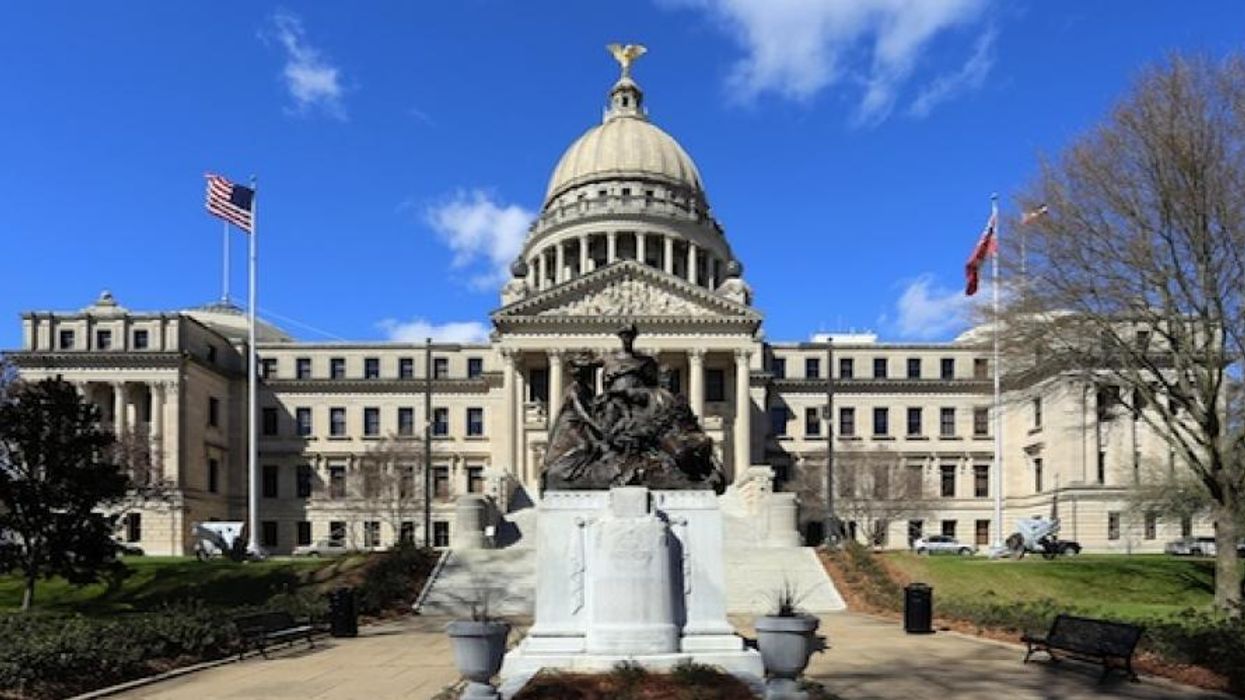
In July 2017, 34 year old Chokwe Antar Lumumba was sworn in as Mayor of Jackson Mississippi. He soon announced that the city was going to be "the most radical city on the planet." This was not an idle boast because Jackson Mississippi, of all places, is where one of the country's most radical experiments in social and economic transformation is happening.
For years, people in Jackson have been organizing to build and sustain community power. They created Cooperation Jackson to take concrete steps to make human rights a reality for all by changing their democratic process and their economy.
Their goal is self-determination for people of African descent, particularly the Black working class. The vehicle is the building of a solidarity economy in Jackson Mississippi on a democratic economic base. The long range plan is to participate in a radical transformation of the entire state of Mississippi and ultimately the radical democratic and economic transformation of the United States itself.
The story of how Jackson Mississippi is being transformed and its plans for the future are set out in the new book JACKSON RISING: The Struggle for Economic Democracy, Socialism and Black Self-Determination in Jackson, Mississippi, edited by Kali Akuno and Ajamu Nangwaya.
This book details the history of how Jackson became the center of an epic campaign of organizing for Black self-determination politically and economically. It explains the philosophy undergirding this work, how cooperative economics works, and the community's concrete plans for present and future building.
History
Mississippi, despite arguably the most racist and violent government in the country, has always had its freedom fighters. It has also been the home to outstanding organizing. While no social movement can be captured in one person's story, one narrative is instructive to highlight important markers along the road to progress in Jackson Mississippi.
In 1971, Chokwe Lumumba, father of the current mayor, first came to Jackson along with a number of seasoned organizers who were part of the Republic of New Afrika Peoples Organization, a group advocating for Black self-governance and self-determination in the U.S. South. Though he left Mississippi to finish law school he returned and with others co-founded the Malcom X Grassroots Movement, a progressive multiracial organizing community, in 1990.
One of their organizing efforts was the creation of a series of Peoples' Assemblies. The assemblies, often hosted at Black churches, were vehicles for local low income residents to practice self-determination and local governance. These assemblies have become a building block in the philosophy and practice of the changing of Jackson.
The first Peoples' Assembly was organized in a city council district that in 2009 elected Chokwe Lumumba as their city council representative. Peoples' Assemblies began organizing citywide. They focused both on self-determination projects and changing city policies. Citywide organizing by Peoples' Assemblies ultimately set the foundation for a mayoral run for Chokwe Lumumba.
The 2013 election of Chokwe Lumumba as Mayor of Jackson signaled the beginning of a new phase of community driven economic democracy.
Unfortunately, he unexpectedly died in February 2014 on the exact day that significant plans were due to be presented to the city council. Those plans were further derailed when his son, Chokwe Antar Lumumba, who was openly dedicated to continuing the work, was defeated in a special election.
Now with Chokwe Antar Lumumba as Mayor, the nation's attention has turned back to Jackson, but it has been organizing for years. And the progress is not just political, it is economic as well.
Cooperation Jackson
Despite the death of Chokwe Lumumba in 2014, Cooperation Jackson was launched in 2014.
Cooperation Jackson is an initiative to help address the material needs of Jackson's low income and working class communities through cooperative economic efforts. Without government support it rose autonomously and created a network of worker cooperatives, a community land trust and a network of urban farms.
The book explains the basics of cooperative economics and documents a long tradition of cooperative economic models in the African American community. Ella Baker, Marcus Garvey, Fannie Lou Hamer, A. Philip Randolph and many others pressed for coops seeing them as pathways for economic liberation. Dr. W.E. DuBois wrote in 1933 "We can by consumers and producers cooperation establish a progressively self-supporting economy that will weld the majority of our people into an impregnable, economic phalanx."
A federation of local cooperatives and mutual aid networks, Cooperation Jackson, has many concrete forms including an urban farming coop, a food coop, a cooperative credit union, a hardware coop, and a cooperative insurance plan. They plan to be an incubator for more coop startups, a school, a training center, a cooperative credit union, a bank, a community land trust, community financial institutions like credit unions, housing cooperative, childcare cooperative, solar and retrofitting cooperative, tool lending and resource libraries, community energy production. They are also working to build an organizing institute and a workers union.
Cooperation Jackson is an economic movement, a human rights movement and a movement insistent on environmentally sustainable progress. They work for clean air and water, zero waste, and against toxic industries. They explicitly recognize the wisdom of James Farmer, "If we do not save the environment, then whatever we do in civil rights, or in a war against poverty, then whatever we do will be of no meaning because then we will have the equality of extinction."
The book includes essays on Jackson by a beautiful mix of radical voices including Hakima Abbas, Kali Akuno, Kate Aronoff, Ajamu Baraka, Sara Bernard, Thandisizwe Chimurenga, Carl Davidson, Bruce Dixon, Laura Flanders, Kamau Franklin, Katie Gilbert, Sacajawea "Saki" Hall, Rukia Lumumba, Ajamu Nangwaya, Jessica Gordon Nembhard, Max Rameau, Michael Siegel, Bhaskar Sunkara, Makani Themba-Nixon, Jazmine Walker and Elandria Williams.
Whether Jackson Mississippi can indeed become the most radical city in the world is as yet unknown. But it is definitely off to a concrete start and that itself is both instructive and inspirational.
The best-kept business model secret of our age is about to get the spotlight it has long deserved. It's employee ownership--a proven, common-sense pathway to reduce inequality, anchor jobs at home, and rebuild a strong and stable economy, using a vehicle that's as American as apple pie: making entrepreneurs out of regular, working folks.
Two progressive champions--Senators Bernie Sanders (I-Vt.) and Kirsten Gillibrand (D-NY)--are teaming up to put their weight behind a pair of federal bills to make employee ownership more accessible. And--believe it or not--this is a policy idea that might actually have a chance, since prominent Republicans like Ronald Reagan have long favored employee ownership, which leverages firm structure, rather than social programs, to improve family economic outcomes. In an era of hunger for solutions to inequality, this may be an idea whose time has finally come.
"In an era of hunger for solutions to inequality, [employee ownership] may be an idea whose time has finally come."
Employee ownership works: for the workers who get a direct share in the economy, for the companies whose performance is demonstrably improved by a workforce invested in their jobs, and for the communities that need jobs anchored locally, in America, and not racing around the globe chasing the lowest wages. And crucially, it's a strategy for greater equality and shared prosperity with a proven track record: there are more than ten million employee owners in the United States today who work and own a stake in companies like Publix Supermarkets, Wawa Convenience Stores, or New Belgium Brewing. And while there are a wide range of social enterprise approaches being piloted in communities across the United States, none can match employee ownership for proven, scalable impact, with models that are nationally-vetted and that have been successfully deployed for decades.
The two bills introduced today by Sanders--the Worker Ownership, Readiness and Knowledge (WORK) Act and the U.S. Employee Ownership Bank Act--are critically important tools in the effort to scale employee ownership in the U.S.. (The initial research we carried out here at The Democracy Collaborative, through our Fifty by Fifty Initiative, a collaborative partnership between leading employee ownership advocates like the National Center for Employee Ownership, the Democracy at Work Institute, the ICA Group, and Certified Employee-Owned, has suggested that a target of fifty million employee owners in the US workforce by 2050--or roughly 25% of the projected future workforce--is an attainable goal, if key barriers are addressed.)
Historically, adoption of employee ownership in the U.S. has been largely driven by powerful tax incentives, primarily at the federal level, that assist owners who want to sell their business to their employees and provide a range of game-changing tax deductions to companies operating under various employee ownership structures--like Employee Stock Ownership Plans (ESOPs) and worker cooperatives.
The two new bills introduced in the Senate would further incentivize uptake of this key strategy for broadening access to business ownership. First, the U.S. Employee Ownership Bank Act would establish an important source of public financing to help founders who want to sell their company to the employees who helped them build it. By providing loan guarantees or subordinated debt to help employees buy their workplaces--particularly when the owners try to move their jobs overseas--this legislation doesn't assume that the government can do everything, but instead encourages the creation of a smarter, more sustainable, and more cost effective public-private ecosystem of financial support for transitions to employee ownership. Such ecosystems of support for broad-based ownership are critical, as we highlighted in our report Strategies For Financing the Inclusive Economy.
The second bill, the WORK Act, is another key piece of the puzzle. All the tax breaks and financing options in the world won't create a single employee-owned company if no one is aware of the option or doesn't have the technical capacity to make the transition happen. Indeed, our Fifty by Fifty research found that lack of awareness is one of the critical factors preventing employee ownership from scaling to its full potential. The Worker Ownership, Readiness and Knowledge (WORK) Act addresses this barrier head on, making grants available to local entities doing the necessary work of employee ownership education and training. We profiled one of the leading examples of this approach, the Ohio Employee Ownership Center, in our report Educate and Empower: Tools For Building Community Wealth--and found that this kind of education paired with technical assistance is not only incredibly effective but also highly cost-efficient.
"A U.S. economy anchored in widespread employee ownership would represent a fundamentally different kind of economy, in which millions more families enjoy greater financial stability, increased income, and greater retirement security."
Over the course of three decades, OEOC has helped over 90 companies convert to employee ownership, creating 15,000 employee-owners at an estimated cost of just $772 a job. The recent success of a similar, smaller-scale initiative in NYC shows that this kind of public support for technical assistance is even more essential for worker cooperative development, employee-owned startups, and employee buyouts of smaller shops. While larger, more established businesses can access the necessary financing and absorb the transaction costs of an ownership transition, launching new employee owned businesses or transitioning mom and pop shops to worker ownership requires a more robust ecosystem of technical support.
Here at the Democracy Collaborative, we've recognized with many others the incredible threat presented by the "silver tsunami": as the Baby Boomer generation prepares to retire, too many of the businesses they own lack a succession plan. Without plans for ownership transitions, businesses shutter, workers lose their jobs, and communities suffer. But Federal support for employee ownership can help turn this looming threat into an incredible opportunity to rebuild a strong U.S. economy where all can prosper. A U.S. economy anchored in widespread employee ownership would represent a fundamentally different kind of economy, in which millions more families enjoy greater financial stability, increased income, and greater retirement security.
Moreover, in times when Washington is unlikely to agree on much, employee ownership's proven track and record and demonstrated bipartisan appeal offers a chance to build towards a stronger and more just economy when many other avenues of transformative reform may prove blocked.
Welcome to everyday life in Quebec--Canada's 2nd largest province with 8.2 million people. Yet these scenes of economic activity are different in a notable way from similar ones occurring throughout North America.
Each enterprise involves a cooperative or non-profit organization--which together make up 8-10 percent of the province's GDP. More than 7000 of these "social economy" enterprises ring up $17 billion in annual sales and hold $40 billion in assets (Canadian dollars). They account for about 215,000 jobs across Quebec.
Quebec's social economy (also translated as "solidarity economy") extends far beyond the province's two major cities, and includes manufacturing, agricultural cooperatives, daycare centers, homecare services, affordable housing, social service initiatives, food coops, ecotourism, arts programs, public markets, media and funeral homes. The capital that fuels all this economic activity comes from union pension funds, non-profit loan funds, credit unions, government investment and philanthropy.
"We always say the social economy is simply the formalization of the commons. It's social ownership, the goal of which is a sustainable, democratic economy with a market--instead of a market economy," explains Nancy Neamtan, co-founder of Chantier de l'Economie Sociale, a network of social economy organizations whose anniversary banquet is described above. "Our mission is building a broader vision of what the economy actually is."
"When Chantier started out, a lot of people said it wouldn't work. We had unions, women's organizations, green groups, and many thought it was too diverse," Neamtan says. "But it does work." Evidence for her assertion is visible all around--Chantier's office is tucked into a six story building that takes up most of a city block, all of which is filled with social economy organizations.
Not all of these social businesses are new--some of the credit unions, cooperatives and union pension funds go back a hundred years. "But they were largely invisible to many people until the name social economy became popular," Neamtan adds.
Quebec's social economy ranges from a video game creator's cooperative to a social integration program for Haitian immigrants to a coop grocery in a remote town on the Gaspe peninsula to a network of 8000 home healthcare workers, half of whom were on welfare before being trained for the field. Here are more examples showing the range of these enterprises:
Groupe Paradoxe: Chantier de l'Economie Sociale's 20th Anniversary celebration was staged in a renovated church run by Groupe Paradoxe, which teaches at-risk young people job skills in the booming audio-visual presentation, events and meetings industries.
Desjardins Group: The banker honored for his work at Chantier's banquet was former president of the Desjardins credit union, founded in 1900 and today the province's largest financial institution.
The Nitaskinam Cooperative: Also on hand at the banquet was Nitaskinam, an Inuit-run cooperative which designs clothing inspired by art of the Atikamekw people, which has doubled from three to six members in its first year. "The social economy is our traditional economic model and fits with our values," explains co-founder Karine Awashish, who is also an economic development official of this tribal nation. "I see good opportunities for us to create new social economy jobs in forestry, health services, tourism, arts festivals and youth projects."
UTILE Student Housing Cooperative: One of the youngest entrepreneurs at the banquet, Laurent Levesque, helped launch a student housing development organization with other activists involved in the headline-grabbing 2012 Quebec Student Strike, collaborating with Chantier de l'economie Trust. "Students pay 70-80 percent more in rent on average," he explained, "which creates an inflationary spiral" that hurts not just them, but their low-income neighbors. With start-up capital from the Concordia Student Union and further funding from social economy partners like Desjardins and the province of Quebec, UTILE is set to break ground on apartments for 160 students.
Technopole Angus: It's no coincidence that that the Desjardins credit union has a branch in the new Technopole Angus sustainable urban village, which brings opportunities to a working class neighborhood that was rocked when the Canadian Pacific Railway shuttered its machine shops in 1992. A number of historic brick structures were repurposed, and new eco-friendly buildings constructed, with more planned for the project's phase II. The community will eventually include 500 affordable housing units, 450,000 square-feet of office space, 20 local shops, four public squares, a bike-pedestrian main street and a one-acre urban farm growing organic produce.
Recylage Vanier: A non-profit organization started 30 years ago by two out-of-work men who realized the recycling industry could benefit the disadvantaged as well as the earth, Recylage Vanier offers training for people struggling to find work because of low job skills, recent immigration, substance abuse, mental illness, disability, or other challenges. Jobseekers arrive here for a 24-week program that emphasizes work readiness and life skills as well as on-the-job experience. Most are long-term unemployed, who have been sent by the Quebec employment bureau and social service groups.
"They have to get along with a boss, get along with colleagues, master simple tasks and then take on new ones with more responsibility, all the way up to driving a forklift," says Nicolas Reeves, one of Vanier's managers. For the final four weeks, they split their time between the recycling plant and job hunting with the help of staff counselors. About 85 percent of graduates find work, and 10 percent seek further education, according to Reeves. Recylage Vanier faces stiff competition from two private companies in the field, so clients who value the organization's mission are important to their success--including the province of Quebec, which provides about half their business.
Cinema Beaubien: This is non-profit neighborhood moviehouse explicitly proclaims its mission to "defend the primacy of persons and labor over capital in the distribution of its surpluses and incomes." The cinema's importance as a community gathering spot can be witnessed in the long lines at the ticket booth, where patrons merrily chat with one another rather than staring at their phones. Taxis wait across the streets to whisk moviegoers to their next destination, about half of which are from the Taxi Coop Montreal. (In Quebec City, all taxi drivers belong to a cooperative.)
La Barberie Cooperative Microbrewery: Operating as a worker cooperative for the past 20 years explains the success of this brewery and brewpub, says general manager Jean-Francois Genest, who joined La Barberie three years ago after running his family's bookstore and later converting another bookstore into a cooperative. "The coop is a good plan to keep a place going. Sharing the profits means you attract the best workers. For our part, we try to make their jobs as interesting as possible, offer more holidays and higher pay." Emilie DuMais, who's tended bar here for eight years, notes, "You have much more ambition working for yourself than working for someone else."
Le Monastere des Augustines: A convent dating back to 1700s in the heart of Quebec City's walled city has just opened as an elegantly renovated hotel, spa, museum and conference center. It is organized as a non-profit in accordance with the social mission of nuns still living there to promote holistic health and spiritual renewal. Besides tourists, spa patrons and participants in corporate meetings, guests also include activist groups holding retreats and health care workers seeking a reprieve from the stress of their jobs.
RISQ: In 1997 Chantier created RISQ (Reseau d'Investissement Social du Quebec), which has invested $25 million in technical aid and capital for social economy businesses, resulting in: 1786 new jobs, 5,119 jobs maintained and job training for 1527 marginalized workers across Quebec, according to their calculations. RISQ financial analyst Nathalie Villemure, who worked for many years in private banking, notes that they see fewer defaults than commercial lenders. "These people have a cause bigger than themselves, so they work harder and we help them find solutions."
Fiducie: In 2007 Chantier launched Fiducie, a $50 million "patient capital" (or slow money) fund that provides long term, non-guaranteed loans of $50,000-1.5 million to promising cooperatives and non-profits with less than 200 employees. "We don't expect to see anything in repayment for 15 years," says General Manager Jacques Charest. Thirty million of the investment came from union pension funds with the rest from the federal and provincial governments.
What We Can Learn from Quebec's Social Economy
While Quebec possesses a distinct culture and history, the emergence of a strong social economy across the province provides practical lessons for other places.
*Recognize the Social Economy When You See It
Cooperatives and non-profit initiatives already exist throughout the US and most other countries, so the first step is seeing, naming and claiming the social economy as part of the commons we all share.
*Look Widely for Inspiration & Ideas
Neamtan points out that the American tradition of community organizing was a big influence on their early work, especially community development corporations (CDCs) that arose to tackle problems of disinvestment in urban neighborhoods. The Dudley Street Initiative, which transformed a low-income community in the Roxbury district of Boston, was a particular inspiration for her. The proliferation of cooperatives in the Basque and Catalonian regions of Spain provided another model for bottom-up economic development.
*Seek Solidarity
Social economy initiatives benefit from the longstanding sense of solidarity in Quebec, where French speakers were discriminated against and their local economy dominated by English-speaking Canadians, Americans and English. A analogous situation can be found among racial and social minorities, and in rural and deindustrialized regions where economic power is wielded from outside.
*Tap the Power of Government
Government agencies have been a partners and funders in many projects through the years. Social economy initiatives often arose even when conservative politicians were slashing government programs to provide a more humane alternative to strictly market-oriented development. Legislation passed by the left-center Parti Quebecois in 1997 gave the social economy movement a big boost by offering local governments more leeway in supporting community and cooperative efforts to create jobs and promote entrepreneurship.
*Partner with Unions
"The labor movement boosted the social economy by making the choice in the 1980s not to just negotiate contracts but to create jobs and support civic enterprises," explains Neamtan, which led to the creation of the landmark Quebec Solidarity Fund, an $11-billion-dollar pension fund, of which 65 percent is invested in small- and medium-sized Quebec-owned businesses.
*Partner with Faith Organizations
Historically, the Catholic church controlled many aspects of life in the province, and priests enthusiastically promoted cooperatives and non-profit institutions as models of the church's social teaching. By the end of the 20th century when the church's influence waned in the face of increasing secularization, social economy organizations found numerous opportunities to set up shop in closed churches and convents. The church remains an ally, Neamtan notes, "especially now that Pope Francis talks all the time about the Solidarity Economy."