
SUBSCRIBE TO OUR FREE NEWSLETTER
Daily news & progressive opinion—funded by the people, not the corporations—delivered straight to your inbox.
5
#000000
#FFFFFF
To donate by check, phone, or other method, see our More Ways to Give page.


Daily news & progressive opinion—funded by the people, not the corporations—delivered straight to your inbox.
I’m at an age where my friends are indeed beginning to die and it pains me that, when I go, I’ll be leaving such a mess of an all-American planet to my poor grandchildren. They truly deserve better.
Okay, here’s what this old man remembers nearly a quarter of a century later.
I was living in New York City (as I still am) when, on September 11, 2001, two hijacked planes full of passengers hit the Twin Towers of the World Trade Center, killing almost 3,000 innocent people. Until that moment, of course, such a thing would have been beyond inconceivable, no less watchable on TV, in the United States of America. Had someone written up such a plot with Osama bin Laden and crew in the cast of characters, it would have been treated as the worst kind of unpublishable science fiction.
But, of course, it did indeed happen and, in some strange sense, in its wake (an all-too-appropriate word under the circumstances), our world did indeed seem to flip upside down. That was, of course, after President George W. Bush responded early that October by — god save us! — invading Afghanistan (which, at least to me, was a shock and a half in its own right) and launching his disastrous “Global War on Terror.” Sometime in the weeks that followed, my memory (not exactly trustworthy at almost 82 years of age) is that I saw an article deep inside the print New York Times (which, by the way, I still read daily on actual paper) noting that U.S. soldiers were by then fighting in parts of Afghanistan where the troops of the Soviet Union had struggled endlessly (and lost badly) during that imperial power’s disastrous Afghan war of the previous century, which did indeed help take it down. And that, too, in some grim fashion, stunned me. Talk about mistakes that history had all too clearly signaled should never happen again (and again and again)!
I was at the time (even if barely) online and so I copied that piece into an email and sent it out with a note to a small set of friends. And somehow that began the process that led to TomDispatch.
In a sense, it might even be possible to think of Donald Trump as the possible final chapter in this country’s global war on terror. Think of him, in fact, as the way that war came home.
I soon realized that, thanks to the online world, I could actually read around the globe — the British Guardian, Le Monde Diplomatique, etc. — and that out there in the rest of the universe, there were other ways this ever-stranger world of ours was being looked at than the ones that largely dominated attention here in the U.S., post-9/11. And so, as I began stumbling across ever more pieces that seemed to offer different perspectives on our increasingly eerie world, I started emailing them to a growing list of friends and acquaintances. And after a time — to my complete surprise — people I hardly knew or didn’t know at all emailed me that they wanted to be added to my list. And with those send-outs, I began including little introductory explanatory notes or sets of comments (which launched the future TomDispatch form with my eternal little introductions — literally thousands of them over these nearly 25 years — to every piece I posted at TD except my own).
And I remember exactly the moment when I suddenly realized that something out of the ordinary was happening not just in the ever-stranger world out there, but to me, too. Susan Sontag, a writer I had long admired but didn’t know from a hole in the wall, suddenly emailed me out of the blue and asked to be added to what would become the TomDispatch email list (though it wasn’t yet called that). I was stunned. And soon, I was sending out to — I no longer remember exactly how many — but certainly several hundred people (with more being added every week). And that was the moment when someone I hardly knew (though he, too, was on my mailing list), Hamilton Fish of the Nation Institute, called me out of the blue and asked if I might, in the future, be interested in turning those emails of mine into a website that he then did indeed set up for me and that he — not I — called “TomDispatch.”
Initially, at the new site, I simply did what I had been doing in my emails. I continued to find interesting pieces published elsewhere about our ever stranger and more disturbing world, wrote little introductions of my own, and then put in their headlines and first paragraphs with a link to the full piece wherever it had first appeared. At some point, however, I started writing longer commentaries of my own on a world that seemed to grow stranger by the week. Then it suddenly occurred to me that I knew a surprising number of writers whose voices, I thought, were distinctly needed in the strange post-9/11 world we were already living through.
After all, among other things, I had been an editor, first at Pantheon Books for 15 years in the previous century and later, in this one, at Metropolitan Books, the publishing house my old friend (and Pantheon coeditor) Sara Bershtel had set up. I had, for instance, published Chalmers Johnson’s remarkable book Blowback: The Costs and Consequences of American Empire at Metropolitan in 2000 to essentially no attention, minimal (and not particularly good) reviews, and few sales. Osama bin Laden’s assault on New York City and Washington, D.C., however, turned that book into a nationwide bestseller and put that title word of his into the language in a big-time fashion (and he would indeed write for TomDispatch memorably in the War on Terror years that followed).
The War on Terror Comes Home, A Terrible Science Fiction Novel
And yes, Osama bin Laden’s 9/11 attacks were indeed a nightmare, but this country responded to them almost unimaginably badly by creating a full-scale, seemingly never-ending set of further nightmares in Afghanistan and Iraq (and, of course, over the years from Guantánamo Bay, Cuba, to Somalia in Africa, not to speak of all those global CIA “black sites” meant for the torture of Global War on Terror prisoners). And out of all those nightmares and so much more (none of which I ever would have imagined possible once upon a time) came the presidencies (and who would have believed that there could be two of them!) of Donald (the mad duck) Trump.
From the start, TomDispatch was witnessing and reporting on America’s distinctly imperial fate. I was watching with both horror and fascination as the greatest power (perhaps ever) on planet Earth (once the Soviet Union collapsed in 1991) was somehow going down, down, down, without even a helping hand from an opposing imperial power. After all, early in this century, China had yet truly to rise and now that it has, it’s not acting like a typical imperial power of history. It has (at least as yet) not launched its own version of a Global War on Terror and its leaders seem remarkably intent not on colonizing the rest of Asia in some unexpected fashion, but on making a fortune producing the world’s green energy machinery (including, at the moment, 80% of global solar energy panels), even if they’re also still outdoing every other country on this planet — despite Donald Trump’s efforts — in burning fossil fuels and pouring greenhouse gases into the atmosphere).
In some strange fashion, I watched and recorded at TomDispatch just how my country was playing out its grim version of the predictable decline of all imperial powers, historically speaking, in a distinctly up-close-and-personal fashion. And of course, in 2016, this country gave decline a remarkable new meaning on an increasingly strange and disturbed planet by electing Donald J. Trump as president.
As my version of TomDispatch ends (and Nick Turse’s launches), I find myself at my advanced age (with my friends beginning to die around me) in a world I simply could never have imagined. Don’t even get me started on artificial intelligence, which, as Bernie Sanders has pointed out, could someday “replace humans in controlling the planet”! Unreligious as I may be, I’m with the Pope on AI — though perhaps even more so. My own feeling is that no genuine intelligence could have been senseless enough to create such an obvious nightmare to come.
And the War on Terror Comes Home Yet Again in the Form of Donald Trump
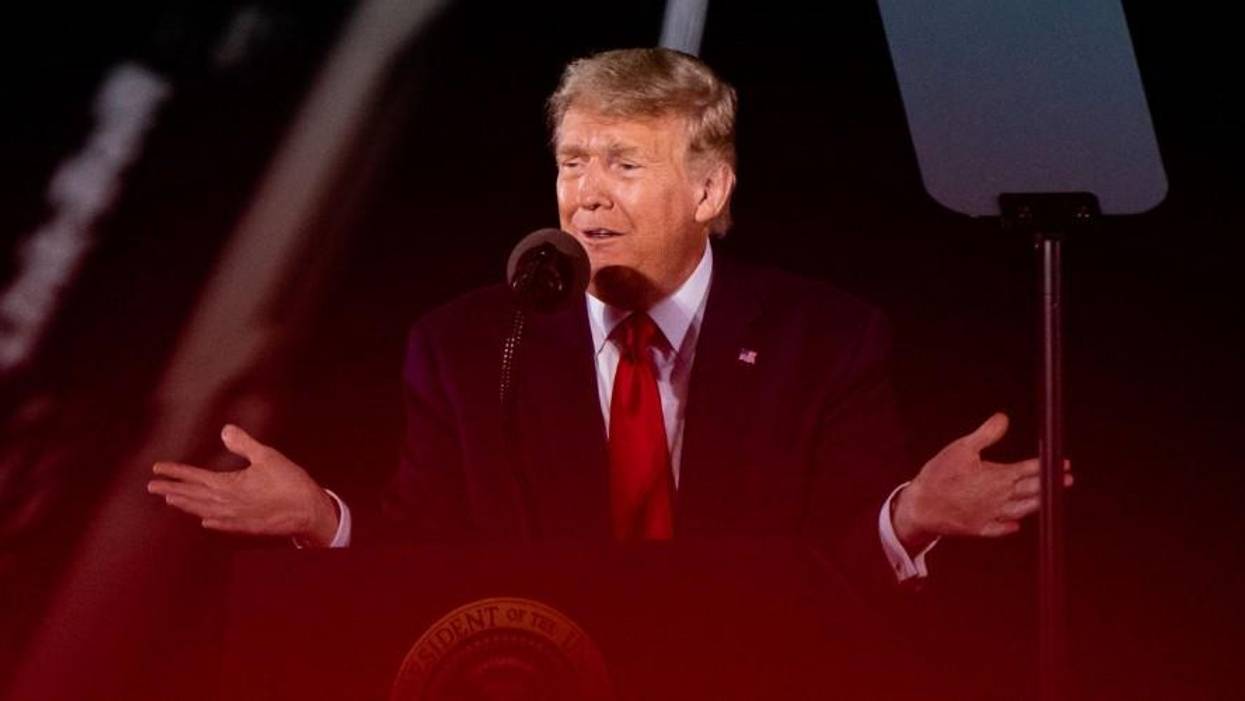
In a sense, it might even be possible to think of Donald Trump as the possible final chapter in this country’s global war on terror. Think of him, in fact, as the way that war came home, big time! In his own fashion, he could hardly have been more of a terror and, to make matters so much worse, in 2026, a year expected to be the second hottest in recorded history, he seems remarkably intent on making war not just on Iran, or any other random country like Somalia or Nigeria, but on this very planet itself. Even his anti-immigrant agenda is, as the Guardian recently reported, ensuring that ever more fossil fuels go into the atmosphere via the stunning number of planes deporting those immigrants, helping make ever more areas of the planet ever hotter, and — of course! — ensuring that ever more people will end up as — yes! — migrants.
In short, whether it’s climate change, Iran, or you name it, Donald Trump (the second time around) is already giving heat new meaning.
And none of this (not a bit!) would I have believed in November 2001 when all of it began for me. Had you tried to show me such a future then, I would have simply laughed you out of the room and gone about my business.
In a sense, you might say that the war on terror simply never ended, since my country has never stopped bombing other countries around the world, the latest (but undoubtedly not the last), of course, being Iran. And I suspect that, without that “war,” Donald Trump would have been inconceivable.
Yes, all in all, we humans are truly a strange (and strangely unnerving) crew and, worse yet, over the decades from atomic warfare to full-scale war on the planet itself, we seem eerily driven to develop the means to be ever more destructive.
I’m at an age where my friends are indeed beginning to die and it pains me that, when I go, I’ll be leaving such a mess of an all-American planet to my poor grandchildren. They truly deserve better. And once upon a time (if I even imagined them coming into this world of ours), I might have hoped that someday in the then-distant future I would have signed off TomDispatch by claiming that I was indeed leaving them on at least a modestly better planet than when I began so long ago.
No such luck, of course, and that makes me sad indeed. I mean, we already knew that we were truly on the planet from hell when, on his third try, Donald Trump actually managed to garner 49.8% of the popular vote and win another four unbelievable years as president of the anything but United States.
Yes, anyone (even I) certainly could have hoped for better. In fact, I certainly did — even if such hopes proved unrealistic indeed. Of course, one can (and should) still hope that the next great imperial power, obviously China (if, in fact, there are to be more great powers on this ever less great planet of ours), might indeed prove more reasonable and less Trumpian. At least, that country’s leadership plans to make a fortune off the decarbonization of Planet Earth by producing the equipment, from electric vehicles to solar panels, needed to green this world of ours (even while continuing to pour record amounts of fossil fuels into the atmosphere).
Let’s also not forget that other former great power, Russia, which continues fighting its miserable war in Ukraine into its fifth year, while, of course, pouring ever more greenhouse gases into the atmosphere (as all wars now do), while only recently launching actual nuclear missiles (though with dummy warheads instead of nuclear payloads) against Ukraine. (Just what we need on this planet of ours, of course — the threat of actual nuclear warfare!)
Yes, all in all, we humans are truly a strange (and strangely unnerving) crew and, worse yet, over the decades from atomic warfare to full-scale war on the planet itself, we seem eerily driven to develop the means to be ever more destructive. And with that grimly in mind and only wishing things were better, let me sign off on almost 25 years at TomDispatch. Sigh…
There are natural borders and natural differences between people, but to arm those differences and make them absolute, utterly, utterly ignores the connectedness that is also present and crucial.
I call it “naked insanity,” as in: The emperor has no clothes.
He has no sane and transcendent values, no wisdom—not when it comes to survival. Global governance is consumed by power. Those who have it insist on keeping it, no matter the cost. Hence: nuclear weapons... and the threat to use them! Hence: climate change, a.k.a., ecocide.
I stroke the unknown,
the dark silence, the
soul of a mother. I
pray, if that’s what
prayer is: to stir the certainties of
pride and flag and brittle
God, to stir
the hollow lost.
I pray open
the big craters
and trenches of
obedience and manhood.
This is the beginning of a poem I wrote a few years ago. I called it “The Gods Get in Touch with Their Feminine Side,” by which I meant, “Mom! The world’s all messed up. Can you fix it?”
Now is the time
to cherish the apple,
to touch the wound and love even
the turned cheeks and bullet tips,
to swaddle anew
the helpless future
and know
and not know
what happens next.
Sometimes, when I’m bleeding political confusion, I try to patch the wound with poetry, that is to say, I try to define and understand the present moment, with all its chaos, suffering and cruelty, from the perspective of the future... the helpless future, the great unknown, which is at our mercy.
What I cradle continually these days is the transcendence of a divided world: us vs. them. Indeed, this is an ironically understandable concept. “Us” is a linked portion of humanity; “them” is a dark force out there, apparently also linked but hating us and, therefore, linking us ever more tightly as we go to war with them, as we try to eliminate them. How can we escape this paradox? How can we avoid committing ecocide and suicide, which seem to be the inescapable outcomes of our high-tech global separation from one another and from the living planet as a whole?
How can we transform and reorganize ourselves around a belief in connectedness? How can we make it our guiding political principle, even when we’re surrounded by doubt, uncertainty, and fear? Let’s take this question out of the realm of abstraction: How can we transcend the borders we’ve created?
Can we birth an awareness bigger than militarized sovereignty and the paradigm of us vs. them?
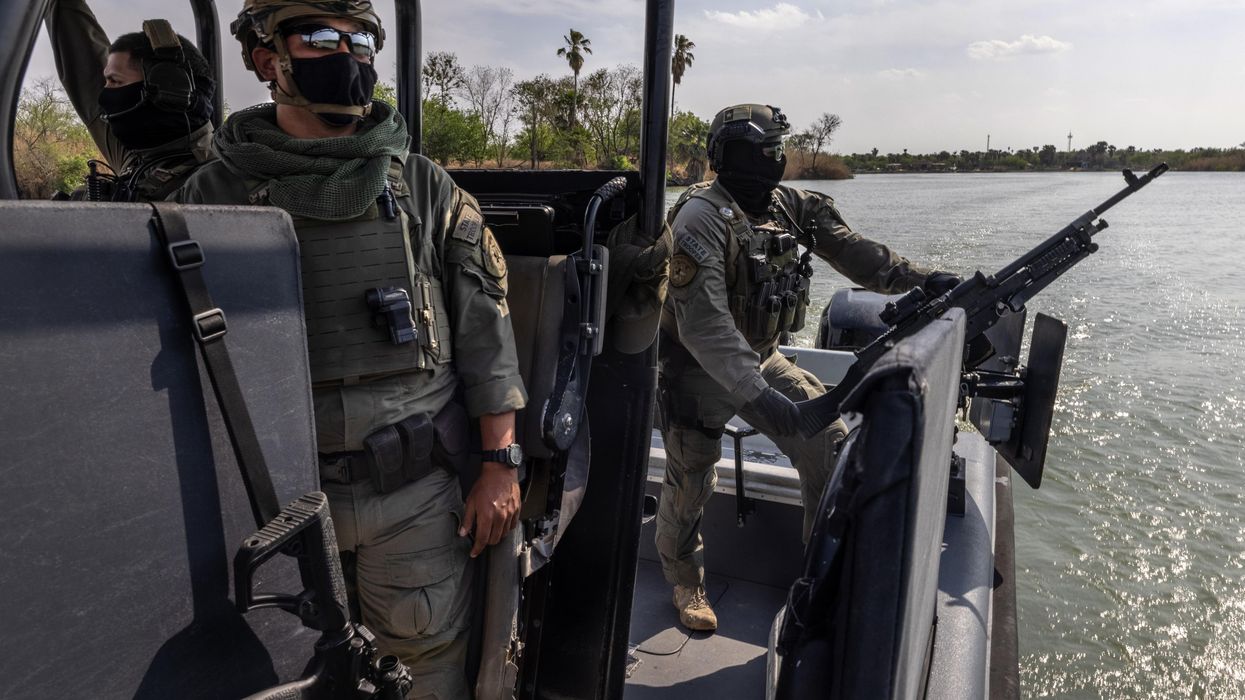
Addressing this question, Todd Miller, in his book Build Bridges, Not Walls: A Journey to a World Without Borders, writes about a town called Ambos Nogales, which is actually—against the will of its own population—two towns, or rather, a town divided in two, with a national border running through it. Ambos Nogales, which means “both Nogales,” is a split community on the Arizona-Mexican border. It was whole until the so-called Gadsden Purchase in 1853. Even so, for most of the time since then, Nogales residents were able to ignore the invented “boundary” and cross it with impunity—when, for instance, they wanted to visit family members.
But by the early ’90s, U.S. border police got increasingly serious, pointlessly dividing family members from one another in the name of... what? “...communities on both sides of the border share deep familial, community, social, economic, and political ties,” Miller writes.
“The border cannot stop the roots of trees and the vast mycelium networks symbiotically entangled with them from reaching across to the other side.”
Yes, there are natural borders and natural differences between people—culture, language, whatever else—but to arm those differences and make them absolute, utterly, utterly ignores the connectedness that is also present and crucial. And to militarize national sovereignty, in the process dehumanizing the designated enemy so that “they” can be killed when necessary, so that their existence can be obliterated, creates a state of permanent hell.
Humanity’s worst instincts, you might say, have seized control not only of the present but of the future. After the end of the Cold War, for instance, back in those same early ’90s, when peace could have bloomed across the whole planet (right?)... those still in power had a different agenda. They created a new enemy! The new “them” were terrorists, not communists. War was—and is—still the emperor.
The emperor has no clothes.
And the wars we wage get messier and messier, cutting ever more deeply into the organic connections across the whole planet. As Tom Engelhardt writes: “We’re on a planet that can’t take it anymore.”
“Think of climate change,” he goes on, “as a kind of slow-motion World War III. After all, it couldn’t be more global or, in the end, more destructive than a world war of the worst sort.”
We know this. We stroke the unknown and call out for peace, awareness, wisdom. Can we birth an awareness bigger than militarized sovereignty and the paradigm of us vs. them? Can we birth a sane and lasting—loving—future?
I must admit that AI, whatever its positives, looks like anything but what the world needs right now to save us from a hell on earth.
After almost 79 years on this beleaguered planet, let me say one thing: this can’t end well. Really, it can’t. And no, I’m not talking about the most obvious issues ranging from the war in Ukraine to the climate disaster. What I have in mind is that latest, greatest human invention: artificial intelligence.
It doesn’t seem that complicated to me. As a once-upon-a-time historian, I’ve long thought about what, in these centuries, unartificial and — all too often — unartful intelligence has “accomplished” (and yes, I’d prefer to put that in quotation marks). But the minute I try to imagine what that seemingly ultimate creation AI, already a living abbreviation of itself, might do, it makes me shiver. Brrr…
Let me start with honesty, which isn’t an artificial feeling at all. What I know about AI you could put in a trash bag and throw out with the garbage. Yes, I’ve recently read whatever I could in the media about it and friends of mine have already fiddled with it. TomDispatch regular William Astore, for instance, got ChatGPT to write a perfectly passable “critical essay” on the military-industrial complex for his Bracing Views newsletter — and that, I must admit, was kind of amazing.
Still, it’s not for me. Never me. I hate to say never because we humans truly don’t know what we’ll do in the future. Still, consider it my best guess that I won’t have anything actively to do with AI. (Although my admittedly less than artificially intelligent spellcheck system promptly changed “chatbox” to “hatbox” when I was emailing Astore to ask him for the URL to that piece of his.)
But let’s stop here a minute. Before we even get to AI, let’s think a little about LTAI (Less Than Artificial Intelligence, just in case you don’t know the acronym) on this planet. Who could deny that it’s had some remarkable successes? It created the Mona Lisa, Starry Night, and Diego and I. Need I say more? It’s figured out how to move us around this world in style and even into outer space. It’s built vast cities and great monuments, while creating cuisines beyond compare. I could, of course, go on. Who couldn’t? In certain ways, the creations of human intelligence should take anyone’s breath away. Sometimes, they even seem to give “miracle” a genuine meaning.
And yet, from the dawn of time, that same LTAI went in far grimmer directions, too. It invented weaponry of every kind, from the spear and the bow and arrow to artillery and jet fighter planes. It created the AR-15 semiautomatic rifle, now largely responsible (along with so many disturbed individual LTAIs) for our seemingly never-ending mass killings, a singular phenomenon in this “peacetime” country of ours.
And we’re talking, of course, about the same Less Than Artificial Intelligence that created the Holocaust, Joseph Stalin’s Russian gulag, segregation and lynch mobs in the United States., and so many other monstrosities of (in)human history. Above all, we’re talking about the LTAI that turned much of our history into a tale of war and slaughter beyond compare, something that, no matter how “advanced” we became, has never — as the brutal, deeply destructive conflict in Ukraine suggests — shown the slightest sign of cessation. Although I haven’t seen figures on the subject, I suspect that there has hardly been a moment in our history when, somewhere on this planet (and often that somewhere would have to be pluralized), we humans weren’t killing each other in significant numbers.
And keep in mind that in none of the above have I even mentioned the horrors of societies regularly divided between and organized around the staggeringly wealthy and the all too poor. But enough, right? You get the idea.
Oops, I left one thing out in judging the creatures that have now created AI. In the last century or two, the “intelligence” that did all of the above also managed to come up with two different ways of potentially destroying this planet and more or less everything living on it. The first of them it created largely unknowingly. After all, the massive, never-ending burning of fossil fuels that began with the nineteenth-century industrialization of much of the planet was what led to an increasingly climate-changed Earth. Though we’ve now known what we were doing for decades (the scientists of one of the giant fossil-fuel companies first grasped what was happening in the 1970s), that hasn’t stopped us. Not by a long shot. Not yet anyway.
Over the decades to come, if not taken in hand, the climate emergency could devastate this planet that houses humanity and so many other creatures. It’s a potentially world-ending phenomenon (at least for a habitable planet as we’ve known it). And yet, at this very moment, the two greatest greenhouse gas emitters, the United States and China (that country now being in the lead, but the U.S. remaining historically number one), have proven incapable of developing a cooperative relationship to save us from an all-too-literal hell on Earth. Instead, they’ve continued to arm themselves to the teeth and face off in a threatening fashion while their leaders are now not exchanging a word, no less consulting on the overheating of the planet.
The second path to hell created by humanity was, of course, nuclear weaponry, used only twice to devastating effect in August 1945 on the Japanese cities of Hiroshima and Nagasaki. Still, even relatively small numbers of weapons from the vast nuclear arsenals now housed on Planet Earth would be capable of creating a nuclear winter that could potentially wipe out much of humanity.
And mind you, knowing that, LTAI beings continue to create ever larger stockpiles of just such weaponry as ever more countries — the latest being North Korea — come to possess them. Under the circumstances and given the threat that the Ukraine War could go nuclear, it’s hard not to think that it might just be a matter of time. In the decades to come, the government of my own country is, not atypically, planning to put another $2 trillion into ever more advanced forms of such weaponry and ways of delivering them.
Entering the AI Era
Given such a history, you’d be forgiven for imagining that it might be a glorious thing for artificial intelligence to begin taking over from the intelligence responsible for so many dangers, some of them of the ultimate variety. And I have no doubt that, like its ancestor (us), AI will indeed prove anything but one-sided. It will undoubtedly produce wonders in forms that may as yet be unimaginable.
Still, let’s not forget that AI was created by those of us with LTAI. If now left to its own devices (with, of course, a helping hand from the powers that be), it seems reasonable to assume that it will, in some way, essentially repeat the human experience. In fact, consider that a guarantee of sorts. That means it will create beauty and wonder and — yes! — horror beyond compare (and perhaps even more efficiently so). Lest you doubt that, just consider which part of humanity already seems the most intent on pushing artificial intelligence to its limits.
Yes, across the planet, departments of “defense” are pouring money into AI research and development, especially the creation of unmanned autonomous vehicles (think: killer robots) and weapons systems of various kinds, as Michael Klare pointed out recently at TomDispatch when it comes to the Pentagon. In fact, it shouldn’t shock you to know that five years ago (yes, five whole years!), the Pentagon was significantly ahead of the game in creating a Joint Artificial Intelligence Center to, as the New York Times put it, “explore the use of artificial intelligence in combat.” There, it might, in the end — and “end” is certainly an operative word here — speed up battlefield action in such a way that we could truly be entering unknown territory. We could, in fact, be entering a realm in which human intelligence in wartime decision-making becomes, at best, a sideline activity.
Only recently, AI creators, tech leaders, and key potential users, more than 1,000 of them, including Apple co-founder Steve Wozniak and billionaire Elon Musk, had grown anxious enough about what such a thing — such a brain, you might say — let loose on this planet might do that they called for a six-month moratorium on its development. They feared “profound risks to society and humanity” from AI and wondered whether we should even be developing “nonhuman minds that might eventually outnumber, outsmart, obsolete, and replace us.”
The Pentagon, however, instantly responded to that call this way, as David Sanger reported in the New York Times: “Pentagon officials, speaking at technology forums, said they thought the idea of a six-month pause in developing the next generations of ChatGPT and similar software was a bad idea: The Chinese won’t wait, and neither will the Russians.” So, full-speed ahead and skip any international attempts to slow down or control the development of the most devastating aspects of AI!
And I haven’t even bothered to mention how, in a world already seemingly filled to the brim with mis- and disinformation and wild conspiracy theories, AI is likely to be used to create yet more of the same of every imaginable sort, a staggering variety of “hallucinations,” not to speak of churning out everything from remarkable new versions of art to student test papers. I mean, do I really need to mention anything more than those recent all-too-realistic-looking “photos of Donald Trump being aggressively arrested by the NYPD and Pope Francis sporting a luxurious Balenciaga puffy coat circulating widely online”?
I doubt it. After all, image-based AI technology, including striking fake art, is on the rise in a significant fashion and, soon enough, you may not be able to detect whether the images you see are “real” or “fake.” The only way you’ll know, as Meghan Bartels reports in Scientific American, could be thanks to AI systems trained to detect — yes! — artificial images. In the process, of course, all of us will, in some fashion, be left out of the picture.
On the Future, Artificially Speaking
And of course, that’s almost the good news when, with our present all-too-Trumpian world in mind, you begin to think about how Artificial Intelligence might make political and social fools of us all. Given that I’m anything but one of the better-informed people when it comes to AI (though on Less Than Artificial Intelligence I would claim to know a fair amount more), I’m relieved not to be alone in my fears.
In fact, among those who have spoken out fearfully on the subject is the man known as “the godfather of AI,” Geoffrey Hinton, a pioneer in the field of artificial intelligence. He only recently quit his job at Google to express his fears about where we might indeed be heading, artificially speaking. As he told the New York Times recently, “The idea that this stuff could actually get smarter than people — a few people believed that, but most people thought it was way off. And I thought it was way off. I thought it was 30 to 50 years or even longer away. Obviously, I no longer think that.”
Now, he fears not just the coming of killer robots beyond human control but, as he told Geoff Bennett of the PBS NewsHour, “the risk of super intelligent AI taking over control from people… I think it’s an area in which we can actually have international collaboration, because the machines taking over is a threat for everybody. It’s a threat for the Chinese and for the Americans and for the Europeans, just like a global nuclear war was.”
And that, indeed, is a hopeful thought, just not one that fits our present world of hot war in Europe, cold war in the Pacific, and division globally.
I, of course, have no way of knowing whether Less Than Artificial Intelligence of the sort I’ve lived with all my life will indeed be sunk by the AI carrier fleet or whether, for that matter, humanity will leave AI in the dust by, in some fashion, devastating this planet all on our own. But I must admit that AI, whatever its positives, looks like anything but what the world needs right now to save us from a hell on earth. I hope for the best and fear the worst as I prepare to make my way into a future that I have no doubt is beyond my imagining.