
SUBSCRIBE TO OUR FREE NEWSLETTER
Daily news & progressive opinion—funded by the people, not the corporations—delivered straight to your inbox.
5
#000000
#FFFFFF
To donate by check, phone, or other method, see our More Ways to Give page.


Daily news & progressive opinion—funded by the people, not the corporations—delivered straight to your inbox.
Amid an ongoing lawsuit challenging what critics call deceptive Trump-era U.S. Department of Agriculture regulations for labeling genetically engineered foods, a leading advocacy group on Wednesday announced the launch of a consumer action campaign ahead of the new rules taking effect on January 1.
"These regulations are not about informing the public but rather designed to allow corporations to hide their use of genetically engineered ingredients from their customers."
"Consumers have fought for decades for their right to know what's in their food and how it's produced," Meredith Stevenson, an attorney for the Center for Food Safety (CFS), said in a statement. "But instead of providing meaningful labeling, USDA's final rules will only create more uncertainty for consumers, retailers, and manufacturers."
CFS is set to launch a nationwide consumer campaign using "citizen investigators" to identify corporations using QR codes instead of on-package text or symbol labeling to conceal their use of GMOs. Those companies will then be pressured to adopt on-package text or symbol labeling in addition to QR codes.
The use of QR codes has been called discriminatory against millions of poor, elderly, and rural people who don't own smartphones, or who live in areas where grocery stores lack internet connections.
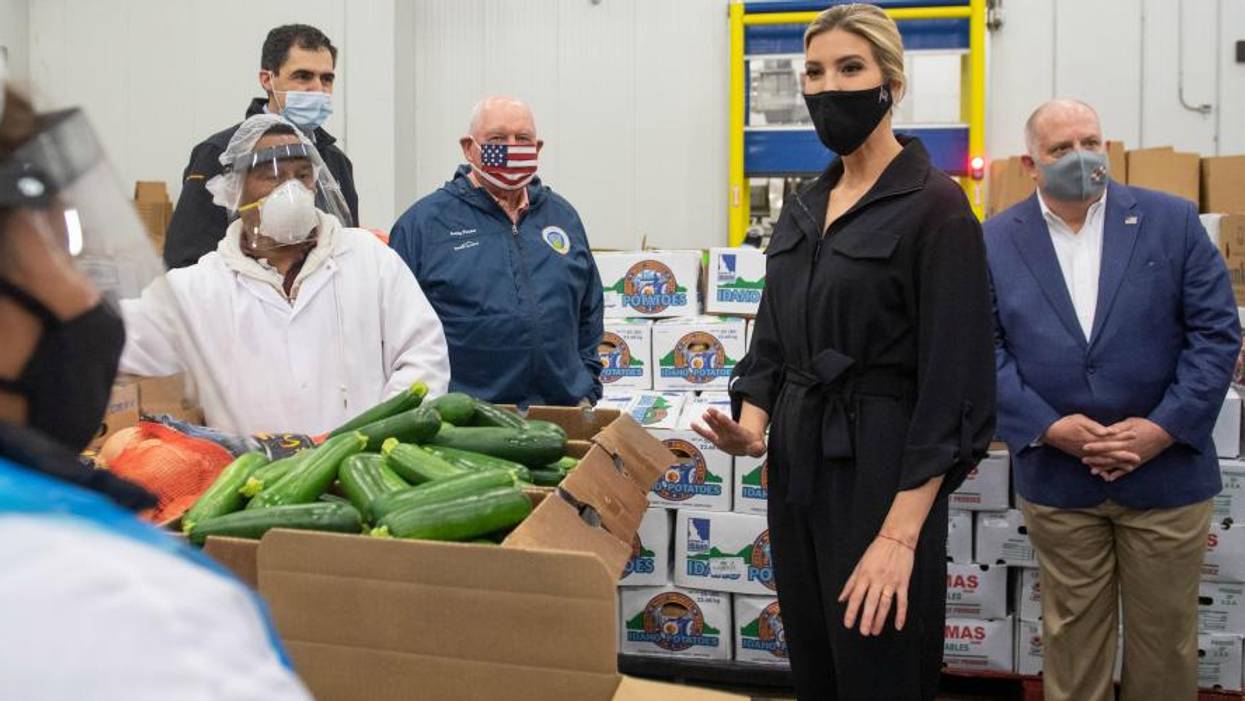
In December 2018, the USDA released the new labeling rules two years after the Republican-controlled Congress passed the National Bioengineered Food Disclosure Law. Sonny Perdue, Trump's industry-friendly agriculture secretary, claimed the new standards for genetically engineerd (GE or GMO) foods would increase "the transparency of our nation's food system" and provide "clear information and labeling consistency for consumers."
Critics, however, said the regulations are an insidious attempt to conceal Big Ag's increasing use of genetically engineered ingredients in food products, and that the new rules leave most GMO-derived foods unlabeled.
"These regulations are not about informing the public but rather designed to allow corporations to hide their use of genetically engineered ingredients from their customers," Andrew Kimbrell, CFS executive director said in a statement.
"It is a regulatory scam which we are seeking to rescind in federal court," he added. "In addition, we are urging our million CFS members and others to become citizen investigators and find and expose the companies that are using QR codes instead of on-package text or symbol labeling, thereby trying to keep us in the dark about what they have put in our food."
In July 2020, CFS filed a lawsuit in a San Francisco federal court on behalf of a coalition of advocacy groups and retailers--including Natural Grocers, which has 157 stores in 20 states, and Puget Consumers Co-op, the largest U.S. community-owned food market--challenging the USDA rules.
"A disclosure law that exempts 70% of the foods it is supposed to disclose is not a meaningful disclosure law," Tara Cook Littman of Citizens for GMO Labeling, a plaintiff in the case, said at the time of its filing. The new rules are a "fraud," she said, that allow "producers to keep their GMO ingredients secret."
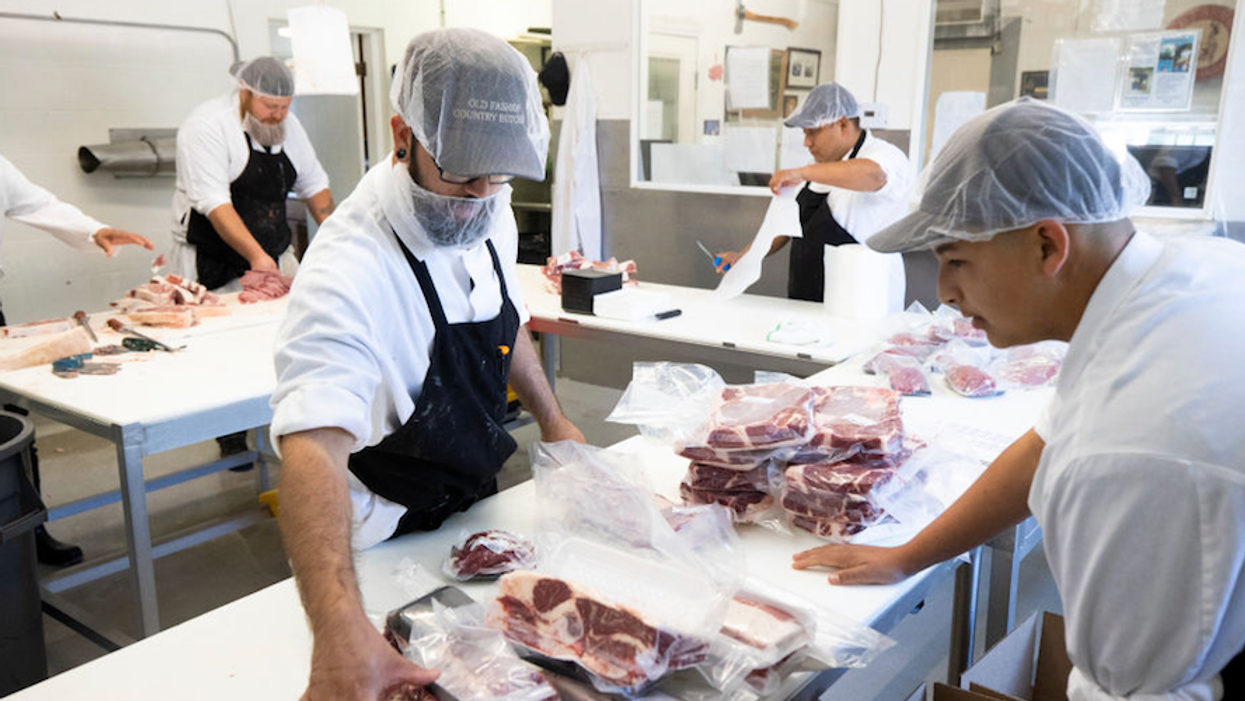
Iowa regulators on Thursday levied their first coronavirus-related fine against a meatpacking plant--a $957 citation for a minor record-keeping violation by a subsidiary of one of the nation's biggest beef processing companies.
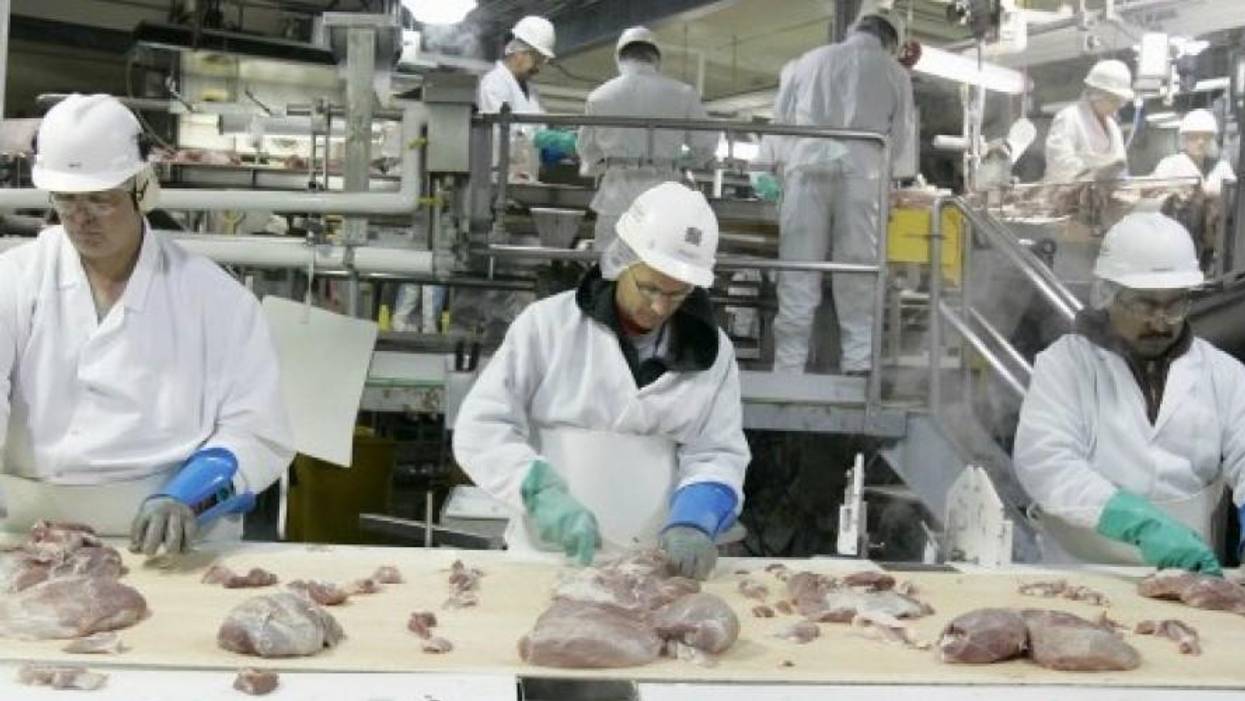
The Associated Press reports the Iowa Occupational Safety and Health Administration issued the citation to the Iowa Premium Beef Plant in Tama, where 338 of the facility's 850 employees tested positive for Covid-19 during an April outbreak that produced one of the state's first "hot spots." That's 80 more workers than the state previously acknowledged, according to inspection records.
Iowa OSHA announced on June 1 that it would investigate the Tama plant and four other meat processing facilities in the state where thousands of workers had tested positive for coronavirus. Records reviewed by the AP showed that none of the other plants were fined, despite at least nine Covid-19 deaths among them.
The other facilities that were investigated by the agency are Tyson Foods plants in Waterloo, Columbus Junction, and Perry, and the JBS plant in Marshalltown.
Iowa OSHA cited two "other-than-serious" violations committed by the Tama plant: failure to keep a required log of workplace-related injuries and illnesses, and failure to provide the document within four hours after inspectors requested it.
The fine was originally meant to be twice as high. However, Iowa OSHA Administrator Russell Perry approved a settlement with the company cutting the amount in half. Iowa Premium Beef--which last year was purchased by National Beef, the nation's fourth-largest beef processor--also agreed to correct the violations.
Observers reacted to the fine with disbelief and derision:
The first Iowa fine comes less than two weeks after the U.S. Labor Department fined JBS Foods, the U.S. subsidiary of Brazilian giant JBS SA--which, with over $50 billion in annual sales, is the world's largest meat processing company--a paltry $15,615 for failing to adequately protect workers against coronavirus.
Beatriz Rangel, daughter of Saul Sanchez--the first JBS Foods employee to die of Covid-19--called the small fine "a slap in the face."
News of the Tama fine also follows the revelation earlier this month that the U.S. Department of Agriculture and the meatpacking industry collaborated to downplay and disregard risks to worker health during the Covid-19 pandemic.
Secretary of Agriculture Sonny Perdue--an agribusiness tycoon and former Georgia governor with a long history of corruption--has been criticized for pushing meat processing facilities to remain open or quickly reopen during the coronavirus pandemic. The meatpacking industry in Iowa has been described as "too big too fail," wielding tremendous political power in the heavily agricultural Midwestern state.
The U.S. Department of Agriculture (USDA) and the meatpacking industry worked together to downplay and disregard risks to worker health during the Covid-19 pandemic, as shown in documents published Monday by Public Citizen and American Oversight.
The documents (pdf), which the groups obtained through Freedom of Information Act (FOIA) requests, reveal that a week before President Donald Trump issued his controversial executive order in April to keep meatpacking plants open--overriding closure orders from local health officials--a leading meat industry lobby group drafted a proposed executive order that was strikingly similar to Trump's directive.
"The USDA impeded the efforts of state and local governments to contain the virus; the blood of meatpacking workers is on their hands."
--Adam Pulver, Public Citizen
North American Meat Institute president Julie Anna Potts drafted the document, which invoked the Korean War-era Defense Production Act in proposing a presidential proclamation that orders "critical infrastructure food companies continue their operations to the fullest extent possible."
The documents also show that the North American Meat Institute repeatedly requested that USDA Secretary Sonny Perdue discourage workers who were afraid to return to work from staying home, that meatpacking plants asked the USDA to intervene on multiple occasions when state and local governments either shut them down over health and safety concerns or sought to impose worker health and safety standards, and that pork producer and food processing giant Smithfield Foods repeatedly requested that the USDA "order" it to reopen its meat processing plant in Sioux Falls, South Dakota--even though the agency lacks the legal authority for such a move.
"While we knew that the meatpacking industry was lobbying the Trump administration to take steps to protect its profits regardless of the cost to workers' lives, the degree of collaboration these documents show is astounding," said Adam Pulver, attorney for Public Citizen.
"As outbreaks continue to emerge in meatpacking plants, it is stunning to see the cavalier attitude officials took to the health and safety of workers in the early part of the pandemic," Pulver added. "To the extent that the USDA impeded the efforts of state and local governments to contain the virus, the blood of meatpacking workers is on their hands."
According to July data from the U.S. Centers for Disease Control and Prevention (CDC), 23 states reported Covid-19 outbreaks in meat and poultry processing facilities, with 16,233 cases and 86 deaths reported in 239 facilities. Fully 87% of those cases occurred among racial or ethnic minorities. The problem is global, with other countries from Britain to Brazil reporting widespread Covid-19 infection among their meatpackers.
A common theme connects all of these outbreaks around the world, critics said Tuesday--the prioritization of profit over people.
"This is corruption that came at the cost of lives and safety. We know now that Trump knew the coronavirus was a deadly threat even while he played it down and took steps he knew were at odds with what experts advised."
--Austin Evers, American Oversight
"During a global pandemic, Americans should be able to trust that public health experts are drafting public health standards, not big businesses looking out for their bottom lines," said Austin Evers, executive director at American Oversight. "This is corruption that came at the cost of lives and safety. Making matters worse, we know now that Trump knew the coronavirus was a deadly threat even while he played it down and took steps he knew were at odds with what experts advised."
The poultry industry, already the target of a massive class-action lawsuit alleging some of the biggest animal agriculture corporations in the nation conspired to suppress worker wages and benefits, has been roiled by accusations of worker mistreatment during the pandemic.
"For us employees that work in production, we are treated like modern-day slaves," Tara Williams, an employee at a Tyson Foods poultry plant in Camilla, Georgia, told The Guardian in May.
"Excuse my language, but Tyson really aren't going to give a fuck about us at all," Williams--who has worked at the plant for five years and currently earns $13.55 an hour--said of the $22 billion company after her colleague Elose Willis, who worked at the plant for 35 years, died of Covid-19 in April.
"It was like they were keeping a secret," Williams said of Willis' death. "It took them about two weeks just to put a picture up, to acknowledge that she had died."
In related news, the U.S. Occupational Safety and Health Administration fined Smithfield's Sioux Falls plant just $13,494 last Thursday for failing to take adequate steps to contain the virus, leading to the infection of more than 1,200 plant employees and the deaths of four plant workers between March and June. Critics said the fine isn't nearly enough.
The United Food and Commercial Workers (UFCW) International Union, which represents Smithfield Foods workers, slammed the fine as "insulting and a slap on the wrist."
"How much is the health, safety, and life of an essential worker worth? Based on the actions of the Trump administration, clearly not much," said UFCW president Marc Perrone.
"This so-called 'fine' is a slap on the wrist for Smithfield, and a slap in the face of the thousands of American meatpacking workers who have been putting their lives on the line to help feed America since the beginning of this pandemic," Perrone added.
Other critics, including vegans, vegetarians, and animal rights and environmental advocates argued that the accelerated spread of Covid-19 from meatpacking facilities is but the latest compelling argument in favor of reducing--or eliminating--meat consumption.
"We know that Covid-19 originated in a meat market and that previous influenza viruses originated in pigs and chickens," People for the Ethical Treatment of Animals (PETA) said in April amid news that a Foster Farms slaughterhouse in Livingston, California was ordered closed by local health authorities due to a Covid-19 outbreak that killed eight employees.
"It's not a matter of whether using and killing animals for food will give rise to another disease outbreak--it's a matter of when," said PETA. "There has never been a better, more obvious time for businesses to put an end to their dirty trade of slaughtering animals for their flesh."