

SUBSCRIBE TO OUR FREE NEWSLETTER
Daily news & progressive opinion—funded by the people, not the corporations—delivered straight to your inbox.
5
#000000
#FFFFFF
To donate by check, phone, or other method, see our More Ways to Give page.
Daily news & progressive opinion—funded by the people, not the corporations—delivered straight to your inbox.
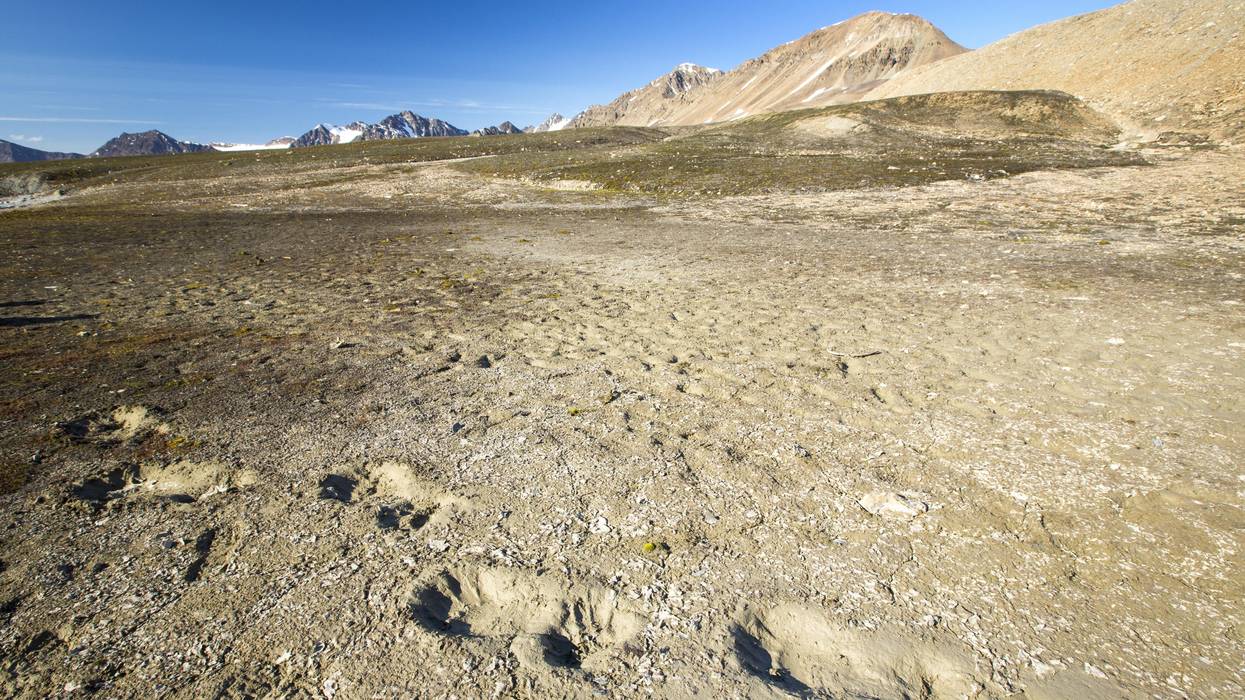
As our world continues to warm up, vast areas of permafrost are rapidly melting, releasing material that's been trapped for up to a million years. This includes uncountable numbers of microbes that have been lying dormant for hundreds of millennia.
To study these emerging microbes, scientists from the French National Center for Scientific Research have now revived a number of these "zombie viruses" from the Siberian permafrost, including one thought to be nearly 50,000 years old - a record age for a frozen virus returning to a state capable of infecting other organisms.
The team behind the study, led by microbiologist Jean-Marie, says these ancient viruses are potentially a significant threat to public health, and further study needs to be done to assess the danger that these infectious agents could pose as the permafrost melts.
The researchers warned it may just be the tip of the iceberg:
"One-quarter of the Northern Hemisphere is underlain by permanently frozen ground, referred to as permafrost," researchers wrote in the paper.
"Due to climate warming, irreversibly thawing permafrost is releasing organic matter frozen for up to a million years, most of which decomposes into carbon dioxide and methane, further enhancing the greenhouse effect. Part of this organic matter also consists of revived cellular microbes (prokaryotes, unicellular eukaryotes) as well as viruses that remained dormant since prehistorical times."
According to Global News:
In 2014, the same researchers unearthed a 30,000-year-old virus trapped in permafrost, the BBC reported. The discovery was groundbreaking because after all that time, the virus was still able to infect organisms. But now, they've beaten their own record by reviving a virus that is 48,500 years old.
"If the authors are indeed isolating live viruses from ancient permafrost, it is likely that the even smaller, simpler mammalian viruses would also survive frozen for eons," virologist Eric Delwart from the University of California, San Francisco told New Scientist.
The World Meteorological Organization on Tuesday confirmed that a new record-high Arctic temperature was set during this summer's devastating Siberian heatwave when the Russian town of Verkhoyansk hit 38degC or 100.4degF.
"The WMO Archive of Weather and Climate Extremes has never had so many ongoing simultaneous investigations."
"The temperature, more befitting the Mediterranean than the Arctic," was measured at a meteorological observing station on June 20 amid an "exceptional and prolonged" Siberian heatwave, the United Nations weather agency said.
"Average temperatures over Arctic Siberia reached as high as 10degC above normal for much of summer last year, fueling devastating fires, driving massive sea ice loss, and playing a major role in 2020 being one of the three warmest years on record," the agency explained.
The Arctic, which has been heating up for over a century due to greenhouse gas pollution, is one of the fastest-warming regions in the world. That is especially alarming considering that thawing permafrost portends the release of additional carbon dioxide and methane--leading to accelerated warming that causes further thawing in a vicious feedback loop.
According to a recent study, the Arctic has been heating up three times faster than the rest of the globe for the past five decades--one of many developments that climate scientists and activists have pointed to when appealing for more ambitious policies to transition away from fossil fuels rapidly, the primary source of planet-wrecking emissions.
According to WMO Secretary-General Petteri Taalas, "This new Arctic record is one of a series of observations reported to the WMO Archive of Weather and Climate Extremes that sound the alarm bells about our changing climate."
In addition to Mediterranean-like temperatures in the Arctic, the Antarctic continent also experienced a new record-high temperature of 18.3degC in 2020, said Taalas.
Moreover, he added, "WMO investigators are currently seeking to verify temperature readings of 54.4degC recorded in both 2020 and 2021 in the world's hottest place, Death Valley in California, and to validate a new reported European temperature record of 48.8degC in the Italian island of Sicily this summer."
"The WMO Archive of Weather and Climate Extremes has never had so many ongoing simultaneous investigations," Taalas lamented.
This year, in light of recent trends, a panel of experts created the new category of "highest recorded temperature at or north of 66.50, the Arctic Circle," for the U.N. weather agency's archive.
As a result of the new Arctic category being added, both Polar regions are now represented in the international record books. The WMO has listed temperature extremes for Antarctica and its environs since 2007.
Alluding to the 38degC temperature recorded in Verkhoyansk in June, WMO evaluation committee member Blair Trewin from Australia's Bureau of Meteorology said that "verifying records of this type is important in having a reliable base of evidence as to how our climate's most extreme extremes are changing."
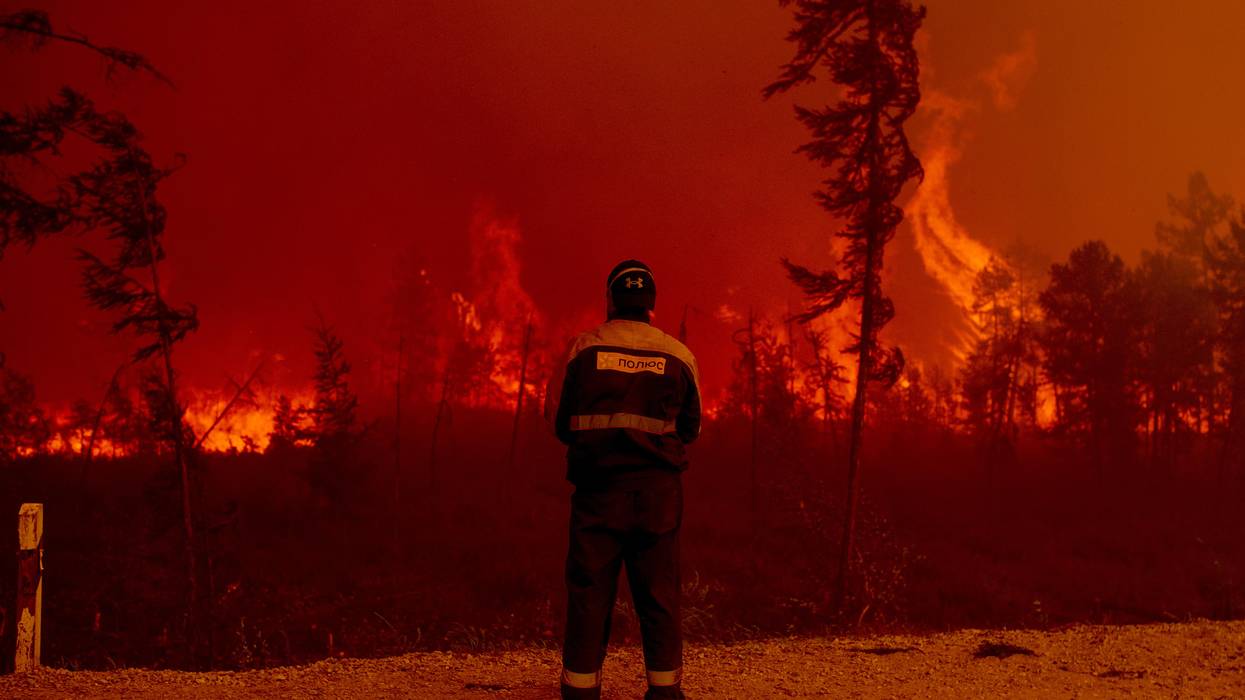
A monitoring service warned Wednesday that the Siberian city of Yakutsk is experiencing an "airpocalypse" as devastating wildfires engulf the typically frigid--but, thanks to the climate crisis, increasingly warm--region in toxic smoke.
Throughout late Wednesday afternoon and early evening local time, according to Plume Labs, air quality in Yakutsk ranged from "dire" to "extreme" to "airpocalypse," categories that indicate dangerous levels of pollutants in the atmosphere. Earlier this week, Yakutsk was forced to suspend flights at its airport due to poor visibility.
"High levels of particulate matter and possibly also chemicals including ozone, benzene, and hydrogen cyanide are thought likely to make this one of the world's worst ever air pollution events," The Guardian reported, referring to the fires that have scorched 3.7 million acres of land in northeastern Siberia in recent days.
Alexey Yaroshenko, head of the forest department at Greenpeace Russia, told the U.K.-based newspaper that "for many years, propaganda has made people think that the climate crisis is a fiction, and if not fiction, that it will only benefit Russia, since it will become warmer and more comfortable."
"Now the situation is starting to change," said Yaroshenko. "Little by little, people are beginning to understand that the climate is really changing, and the consequences are really catastrophic. But the majority of society and the majority of politicians are still very far from understanding the real scale of the problem."
Aysen Nikolayev, governor of Siberia's Yakutia region, told reporters over the weekend that "the situation with wildfires in our republic is very difficult."
"We are experiencing the driest summer in the past 150 years in Yakutia, and the month of June was the hottest on record," said Nikolayev. "This, together with the dry thunderstorms that occur nearly daily in our republic, brought about significant wildfires."
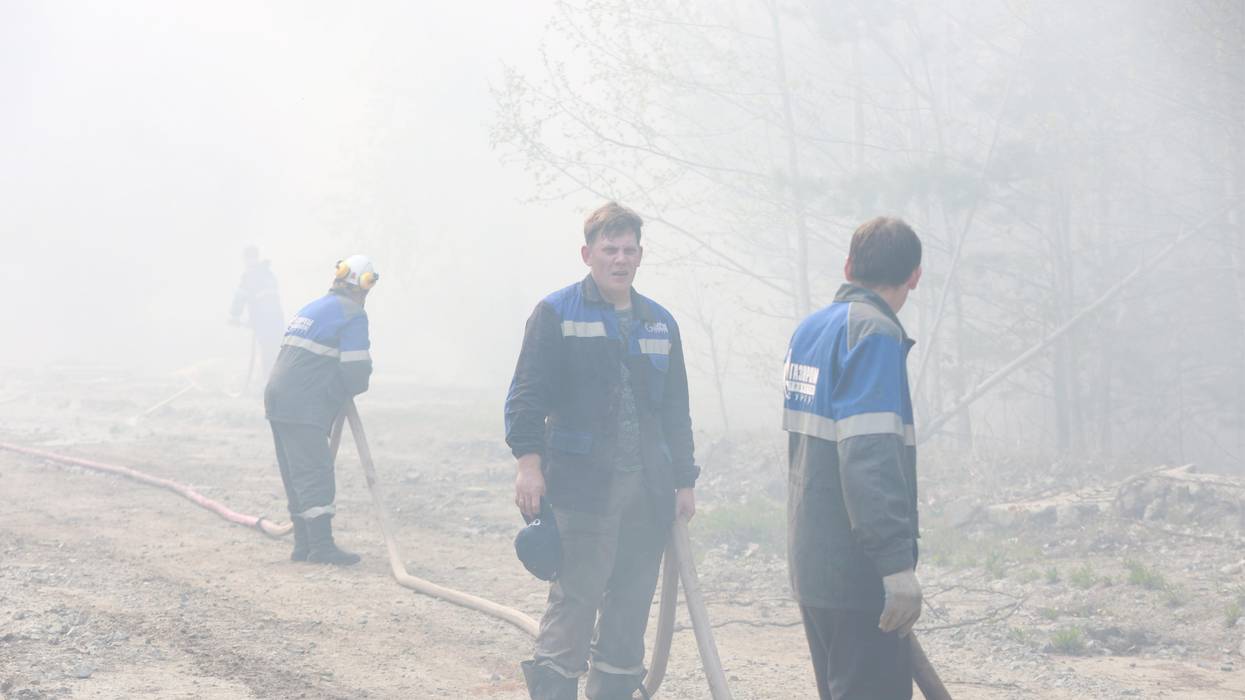
Speaking to the Associated Press, one local resident said that "we can't see each other because of the smoke, our eyes are burning, and overall the smoke is very dangerous for the health of us villagers."
"We see on television planes that are dropping water on the burning forest but they aren't sending these planes to help us for some reason," he added. "Why is there no help?"
The latest wildfires mark the third consecutive year that Siberia has been ravaged by historic blazes, which scientists have attributed to dramatic warming fueled by the human-caused climate crisis.
"Last year, the record-setting fires in the remote Siberian region of Yakutia released roughly as much carbon dioxide as did all the fuel consumption in Mexico in 2018," the New York Times reported late last week. "On some days this month, thick smoke hung over the capital, Yakutsk, the coldest city in the world, making residents' eyes water and scraping their throats. Outside the city, villagers are consumed by the battle with fire, shoveling trenches to keep it away from their homes and fields, quenching their thirst by digging up the ice sheets embedded in the ground."

An international team of researchers aboard a Russian research ship has discovered evidence that frozen methane deposits in the Arctic Ocean have been dispersing over a large area of Siberia, potentially fueling a dangerous new climate feedback loop.
The Guardian reports the International Siberian Shelf Study (ISSS-2020) found that slope sediments spreading over much of the continental shelf are rich in frozen methane hydrates that have been detected to a depth of 1,150 feet in the Laptev Sea.
Although the scientists said that most of the methane hydrate bubbles are dissolving in the water, methane levels at the sea surface are four to eight times higher than normal and the gas is venting into the atmosphere. What makes methane especially dangerous is that its heating effect is 80 times stronger than CO2 over 20 years. The new discovery has raised serious concerns that a new climate feedback loop may be starting.
According to ISSS-2020:
One of the greatest uncertainties surrounding climate warming [concerns] the emission of naturally accurring greenhouse gases, such as methane, carbon dioxide, and nitrous oxide (N2O) from Arctic thawing permafrost, and collapsing methane hydrates--crystals made of methane gas molecules "caged" between solid water molecules--in the seabed north of Siberia will increase in the future.
"At this moment, there is unlikely to be any major impact on global warming, but the point is that this process has now been triggered," Stockholm University researcher Orjan Gustafsson told The Guardian. "This East Siberian slope methane hydrate system has been perturbed and the process will be ongoing."
Gustafsson, a member of the research team, warned last month that "climate warming is awakening the 'sleeping giants' of the carbon cycle, namely permafrost and methane hydrates."
"How much this will lead to added emissions of the strong greenhouse gas methane is poorly understood," he said. "This is one of the grand challenges in current climate change research and a central goal of the expedition to address."
The chief scientist aboard the vessel, Igor Semiletov of the Russian Academy of Sciences, called the hydrate discharges "significantly larger" than anything previously seen.
"The discovery of actively releasing shelf slope hydrates is very important and unknown until now," Semiletov told The Guardian. "This is a new page. Potentially they can have serious climate consequences, but we need more study before we can confirm that."

Climate scientists and activists responded with alarm Thursday to reporting that this is the latest date in recorded history that "the main nursery of Arctic sea ice in Siberia has yet to start freezing," another example of the present-day consequences of human-caused global heating.
According to the Guardian, "The delayed annual freeze in the Laptev Sea has been caused by freakishly protracted warmth in northern Russia and the intrusion of Atlantic waters, say climate scientists who warn of possible knock-on effects across the polar region."
"The lack of freeze-up so far this fall is unprecedented in the Siberian Arctic region," Zachary Labe, a postdoctoral researcher at Colorado State University, told the newspaper, adding that the current conditions are in line with scientists' expectations about the consequences of anthropogenic climate change.
"2020 is another year that is consistent with a rapidly changing Arctic," added Labe, who also shared a series of related graphics on Twitter. "Without a systematic reduction in greenhouse gases, the likelihood of our first 'ice-free' summer will continue to increase by the mid-21st century."
As the Guardian detailed:
The Laptev Sea is known as the birthplace of ice, which forms along the coast there in early winter, then drifts westward carrying nutrients across the Arctic, before breaking up in the spring in the Fram Strait between Greenland and Svalbard. If ice forms late in the Laptev, it will be thinner and thus more likely to melt before it reaches the Fram Strait. This could mean fewer nutrients for Arctic plankton, which will then have a reduced capacity to draw down carbon dioxide from the atmosphere.
More open sea also means more turbulence in the upper layer of the Arctic ocean, which draws up more warm water from the depths.
In a series of tweets about the reporting, climate scientist Peter Kalmus declared, "Goodbye to the delicate sheet of ice at the top of our planet."
Kalmus was far from alone in expressing concern and frustration over the conditions in the Arctic and pointing to the new record as just the latest evidence that policymakers must urgently address the climate crisis.
"This is a frightening milestone," Food & Water Watch tweeted about the lack of ice in the Laptev Sea. "Our leaders must act to curb and mitigate climate change."
The Green Party in the United Kingdom also shared the report and warned that "we're breaking the wrong records."
"Time is running out," tweeted former congressional candidate Skylar D. Hurwitz, calling on Americans to vote for Democratic presidential candidate Joe Biden. Although the former vice president remains under pressure from progressives to embrace bolder policies, the contrast between his positions and those of President Donald Trump has won him widespread support from climate experts and advocates.
The latest climate crisis record comes after Arctic sea ice shrank to the second-lowest documented extent last month, which the National Oceanic and Atmospheric Administration found was the hottest September ever recorded. Global scientists warned earlier this month that 2020 is on track to be the warmest year on record.

The unprecedented heat and fires that ravaged Siberia last month came at the tail end of a 12-month period that European researchers revealed Tuesday effectively tied with the hottest year on record based on global surface temperatures, bolstering calls from activists for international bodies and governments across the globe to take immediate action to tackle the climate crisis.
As Carbon Brief noted on Twitter, the 12-month period ending in June aligned with a record from August 2015 to September 2016. The findings come from the Copernicus Climate Change Service (C3S), which is implemented by the European Center for Medium-Range Weather Forecasts (ECMWF) on behalf of the European Commission.
Swedish 17-year-old climate activist Greta Thunberg, founder of the global youth-led Fridays for Future movement, responded to Carbon Brief's tweets about the new C3S report with a series of questions reiterating her challenge to reporters, governments, and other "adults" to take the planetary emergency seriously:
The European researchers found that during June 2020 alone, global temperatures were 0.53degC warmer than the average for June 1981-2010. Last month was also less than 0.01degC cooler than the warmest June on record in 2019 and 0.1degC warmer than the third warmest June in 2016.
In a press statement Tuesday, C3S explained that in terms of data from June 2020,
the most striking regional feature was exceptional warmth over Arctic Siberia, where average temperatures reached as high as 10degC above normal for June. The temperature averaged over all land in Arctic Siberia combined was more than five degrees above normal, and more than a degree higher than in 2018 and 2019, the two previous warmest Junes.
"Finding what caused these record temperatures is not a straightforward endeavor as there are many contributing factors interacting with each other," said C3S director Carlo Buontempo. "Siberia and the Arctic Circle in general have large fluctuations from year to year and have experienced other relatively warm Junes before."
"What is worrisome is that the Arctic is warming faster than the rest of the world," he continued. "Western Siberia experiencing warmer-than-average temperatures so long during the winter and spring is unusual, and the exceptionally high temperatures in Arctic Siberia that have occurred now in June 2020 are equally a cause for concern."
As Common Dreams reported June 27, experts linked the temperatures and fires in Siberia last month to the climate crisis. "Had the climate not changed due to man-made greenhouse gases, the heat we've seen in parts of Siberia would have been a 100,000-year event," said Weather Channel meteorologist Carl Parker.
Copernicus Atmosphere Monitoring Service (CAMS) senior scientist and ECMWF wildfire expert Mark Parrington said Tuesday that "what is remarkable with these fires in Siberia is the striking similarity with what we saw over the same period of last year in terms of both the area affected and the scale of the fires."
"Last year was already by far an unusual, and record, summer for fires in the Arctic Circle in our Global Fire Assimilation System dataset, which goes back to 2003," said Parrington. "This year has evolved in a very similar way and if it continues to progress like last year, we could see intense activity for the next few weeks."
"Higher temperatures and drier surface conditions are providing ideal conditions for these fires to burn and to persist for so long over such a large area," he added. "We have seen very similar patterns in the fire activity and soil moisture anomalies across the region in our fire monitoring activities over the last few years."
During the July 2019-June 2020 period, global temperatures were "well above the 1981-2010 average over a large part of Siberia and the Arctic Ocean to the north, to the north of Alaska, and over parts of West Antarctica" as well as "above average over virtually all of Europe," according to C3S.
"Globally, the 12-month period from July 2019 to June 2020 was 0.65degC warmer than the 1981-2010 average," the new C3S report says. "The value for this period is very close to that of the 12-month periods ending in May 2020 and September 2016, the two warmest such periods in this record."

The number of fires in the vast north Asian region of Siberia increased fivefold this week, according to the Russian forest fire aerial protection service, as temperatures in the Arctic continued higher than normal in the latest sign of the ongoing climate crisis.
The news of the increase comes a week after the small Siberian town of Verkhoyansk reported a high temperature of 100.4deg F on June 20, a reading that, if confirmed, would mark the hottest day ever recorded in the region.
"While fires are common at this time of year, record temperatures and strong winds are making the situation particularly worrying," the European Union's Earth Observation Programme, which is monitoring the situation, said in a statement.
As the Associated Press reported:
According to figures reported Saturday by Avialesookhrana, Russia's agency for aerial forest fire management, 1.15 million hectares (2.85 million acres) were burning in Siberia in areas that cannot be reached by firefighters.
The worst-hit area is the Sakha Republic, where Verkhoyansk is located, with 929,000 hectares (2.295 million acres) burning.
The Sakha Republic's fire service reported 127 natural fires in the Russian federal sector.
The fires and heat are due to the climate crisis, Weather Channel meteorologist Carl Parker told Newsweek.
"What climate change is doing is moving the distribution of weather events, such that historically low-frequency, extreme events occur more frequently," said Parker. "Had the climate not changed due to man-made greenhouse gases, the heat we've seen in parts of Siberia would have been a 100,000-year event."
Parker warned that the fires are part of a dangerous feedback loop in the northern region.
"What's scary about the warming in Siberia is that there are huge quantities of carbon in permafrost, which can be unleashed during periods like this, particularly as fires develop in the region," said Parker.
Jonathan Overpeck, University of Michigan environmental school dean, told AP in an email on June 24 that the situation in the Arctic region is unprecedented.
"The Arctic is figuratively and literally on fire," wrote Overpeck. "It's warming much faster than we thought it would in response to rising levels of carbon dioxide and other greenhouse gases in the atmosphere, and this warming is leading to a rapid meltdown and increase in wildfires."
"The record warming in Siberia is a warning sign of major proportions," he added.
Temperatures in Siberia for the first five months of 2020 were an average 14deg F over normal.
"That's much, much warmer than it's ever been over that region in that period of time," Zeke Hausfather, a Berkeley Earth climate scientist, told AP.
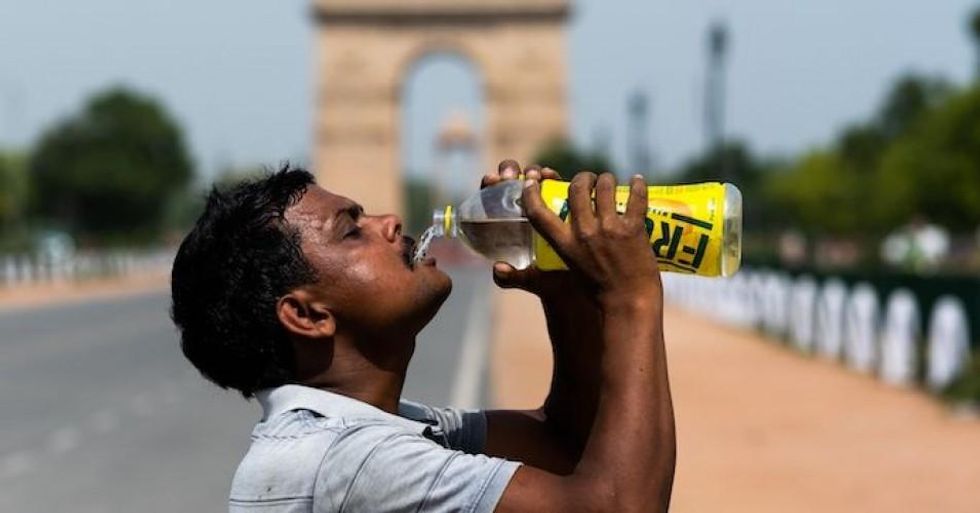
The Earth just experienced its hottest May on record; scientists said Friday--just a day after it was announced that atmospheric CO2 levels hit a new high.
Scientists at Europe's Copernicus Climate Change Service (C3S) announced the temperature record Friday. The agency said that globally, last month was 0.63degC warmer than May's 1981-2020 average. That tops the previous warmest May, which occurred in 2016, by 0.05degC.
The last 12-month period, C3S added, was nearly 0.7degC warmer than average.
"The last month has been the warmest May on record globally, and this is unquestionably an alarming sign," Freja Vamborg, a scientist at C3S, told CNBC.
The agency added in its new findings:
Outside Europe, temperatures were most above average over parts of Siberia, where they were up to 10degC above average. They were also much above average over western Alaska, along the Andes bordering Chile and Argentina, and over regions in West and East Antarctica. It was also much warmer than average over western North America, the far north and south of South America, north-western, central and south-western Africa, and south-eastern Asia.
The "highly anomalous" temperatures in parts of Siberia follow a warmer than-ever April for the Arctic and evidence of the emergence of so-called "zombie fires"--reignited fires from last year's Arctic wildfires that continued to survive by smoldering underground.
The new data from European scientists follows NOAA's Thursday announcement that atmospheric CO2 levels also hit new highs last month.
The levels recorded at the Mauna Loa Observatory show a seasonal peak of 417.1 parts per million in May, the highest monthly reading ever recorded.
Record high daily averages hit last month had already sparked urgent calls for bold climate action.
The trend of the planet-heating gas in the atmosphere is unmistakable.
"Progress in emissions reductions is not visible in the CO2 record," Pieter Tans, senior scientist with NOAA's Global Monitoring Laboratory, said. "We continue to commit our planet--for centuries or longer--to more global heating, sea level rise, and extreme weather events every year."
The record atmospheric CO2 levels come as the global coronavirus pandemic has triggered global economic shutdowns, but the resulting emissions drops and pollution declines were not enough to budge CO2 levels.
Geochemist Ralph Keeling, who runs the Scripps Oceanography program at Mauna Loa, explained why global emissions are likened to "trash in a landfill."
"People may be surprised to hear that the response to the coronavirus outbreak hasn't done more to influence CO2 levels," he said. "But the buildup of CO2 is a bit like trash in a landfill. As we keep emitting, it keeps piling up."
"The crisis has slowed emissions, but not enough to show up perceptibly at Mauna Loa," Keeling continued. "What will matter much more is the trajectory we take coming out of this situation."
The new data comes as global policymakers mark World Environment Day, a moment United Nations Secretary-General Antonio Guterres took to say, "To care for humanity, we MUST care for nature."
"Climate disruption is getting worse," Guterres said in his message, urging all parties to "commit to a green and resilient future."