
SUBSCRIBE TO OUR FREE NEWSLETTER
Daily news & progressive opinion—funded by the people, not the corporations—delivered straight to your inbox.
5
#000000
#FFFFFF
To donate by check, phone, or other method, see our More Ways to Give page.


Daily news & progressive opinion—funded by the people, not the corporations—delivered straight to your inbox.
His life and legacy are reminders that individual acts of moral courage depend on examples set by others, and they have the potential to spark more, far into the future.
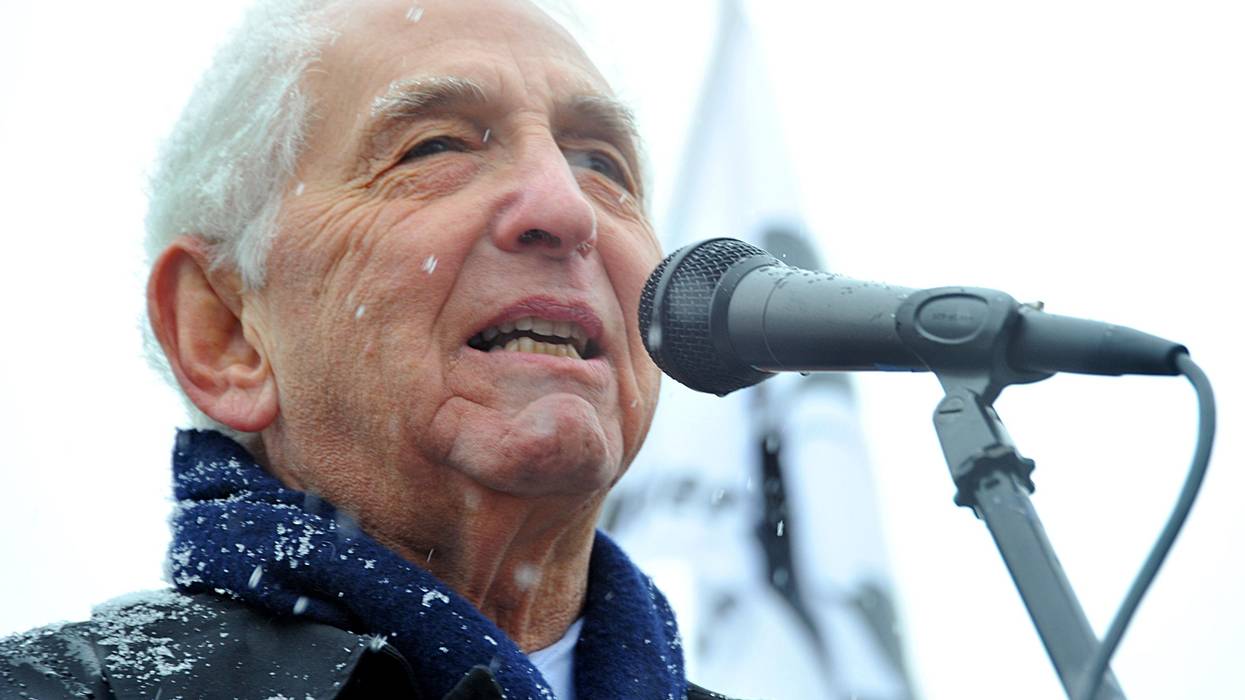
In 1971, when Daniel Ellsberg arrived at a federal court in Boston, a journalist asked if he was concerned about the prospect of going to prison for leaking a 7,000-page top-secret history of the Vietnam War. Ellsberg responded with a question of his own: “Wouldn’t you go to prison to help end this war?”
The classified documents Ellsberg released to The New York Times and 18 other newspapers were quickly dubbed the Pentagon Papers. They exposed more than two decades of government deceit about U.S. involvement in Vietnam, from 1945 to 1968.
Ellsberg died June 16, 2023, three months after announcing that he had been diagnosed with terminal cancer. To millions of Americans who opposed the war, his whistleblowing was an act of patriotism – but millions of others regarded it as treason. In Ellsberg’s own papers at UMass Amherst, where I teach history and direct the Ellsberg Initiative for Peace and Democracy, you can read hundreds of letters to him from ordinary citizens expressing both extremes: the highest possible praise, and vitriolic, often antisemitic, hostility.
How a young war planner became a peace activist is one of the most striking conversion stories in American history. But Ellsberg’s political and moral transformation did not happen in a vacuum.
How a young war planner became a peace activist is one of the most striking conversion stories in American history. But Ellsberg’s political and moral transformation did not happen in a vacuum. It reflected a titanic shift in public attitudes about the Vietnam War. The massive anti-war movement inspired and reinforced Ellsberg’s dissent – and, in turn, his example has emboldened activists and whistleblowers in the decades since.
Once a fervent Cold Warrior, Ellsberg joined the Marine Corps in the mid-1950s, earned his doctorate in economics from Harvard and in 1959 became a nuclear war analyst for the Rand Corp., a think tank that, at the time, was funded mostly by the Air Force. In 1964, he was one of the brainy young analysts, dubbed “whiz kids” by the media, that Defense Secretary Robert McNamara recruited to the Pentagon.
Throughout his 20s and early 30s, Ellsberg believed that serving the president was a “knightly calling,” even if it required lying to the public. So how did he come to believe that loyalty to truth-telling superseded loyalty to the chief of state?
From 1965 to 1967, Ellsberg went to Vietnam for the State Department, believing the war was a challenging but necessary part of a global struggle to contain communism. Yet he became deeply disillusioned, convinced that the war could not be won. He was particularly disturbed by indiscriminate U.S. bombing and shelling, most of it on South Vietnam, the land the U.S. claimed to be protecting. About 20,000 American lives had already been lost, and roughly a million Vietnamese people had been killed, about half of them civilians. By the war’s end eight years later, 58,000 Americans and 3 million Vietnamese had died.
By 1968, Ellsberg was trying to persuade U.S. leaders to seek a negotiated end to the war. On his own time, meanwhile, he was beginning to meet anti-war activists who advocated a bottom-up effort to demand immediate U.S. withdrawal.
One of them, a Gandhian pacifist named Janaki Natarajan, convinced Ellsberg that he should study leading advocates of nonviolent resistance, such as Martin Luther King Jr., Henry David Thoreau and Barbara Deming. To this day, one of Ellsberg’s favorite quotations comes from Thoreau’s “Civil Disobedience”: “Cast your whole vote, not a strip of paper merely, but your whole influence.”
But most galvanizing for Ellsberg were the Pentagon Papers, which he helped compile for McNamara. Full of technocratic euphemisms for lethal policies, the documents convinced him that the entire history of U.S. involvement in Vietnam was marked by deception: that it was an aggressive counterrevolution that denied the Vietnamese people the right of self-determination, disguised as a battle for democracy.
Ellsberg had first viewed the Vietnam War as a just cause to be won, then as an unwinnable stalemate to be gradually abandoned. By late 1969, however, he saw it as an immoral war to be ended unilaterally and immediately.
Millions of Americans had already come to that conclusion. Back in 1965, in fact, Ellsberg’s future wife, Patricia Marx, agreed to a first date only if it included an anti-war demonstration in Washington.
Just as he finished reading the Pentagon Papers, Ellsberg attended a War Resisters League conference that proved pivotal to his decision to leak the documents. There he met a few of the 3,250 young Americans who were sentenced to up to three years in prison for resisting the draft. Deeply moved by their courage, Ellsberg asked himself what he could do if he were willing to risk prison and his career.
A month later, with help from his friend and Rand colleague Anthony Russo, Ellsberg began photocopying the Pentagon Papers.
For the next year and a half, Ellsberg tried to get anti-war members of Congress to put the documents into the congressional record and hold hearings. None was willing, so he eventually offered them to war correspondent Neil Sheehan at The New York Times – the first newspaper to report on the papers’ revelations.
Public interest was scant, however, until President Richard Nixon began attacking the press and Ellsberg. Although the Pentagon Papers did not include Nixon’s time in office, the White House feared that Ellsberg might leak more documents – especially about Nixon’s 1968 effort to sabotage the Vietnam peace talks to improve his odds of winning the presidential election.
The government indicted Ellsberg on a dozen felony counts with a possible 115-year prison sentence. He was the first American ever criminally charged under the Espionage Act of 1917 for disclosing classified documents to the press and public rather than to a foreign agent or nation.
Ellsberg was spared prison. Late in his 1973 trial, Watergate prosecutors discovered that the White House had authorized crimes against him, including a break-in at his psychiatrist’s office, in a failed search for incriminating information. The judge had little choice but to declare a mistrial.
Ellsberg was a free man, but the personal cost of his dissent was severe. He lost many friends and had to forge a new career as a writer and lecturer. For more than five decades he has been an activist and has been arrested for nonviolent civil disobedience some 80 times on behalf of peace, nuclear disarmament, government accountability, and First Amendment rights.
In early March 2023, Ellsberg made public a letter to friends and supporters announcing that he had only months to live. He closed by thanking fellow activists whose “dedication, courage, and determination to act have inspired and sustained my own efforts.”
Ellsberg’s life and legacy are reminders that individual acts of moral courage depend on examples set by others, and they have the potential to spark more, far into the future. As Ellsberg often said, “civil courage is contagious.”
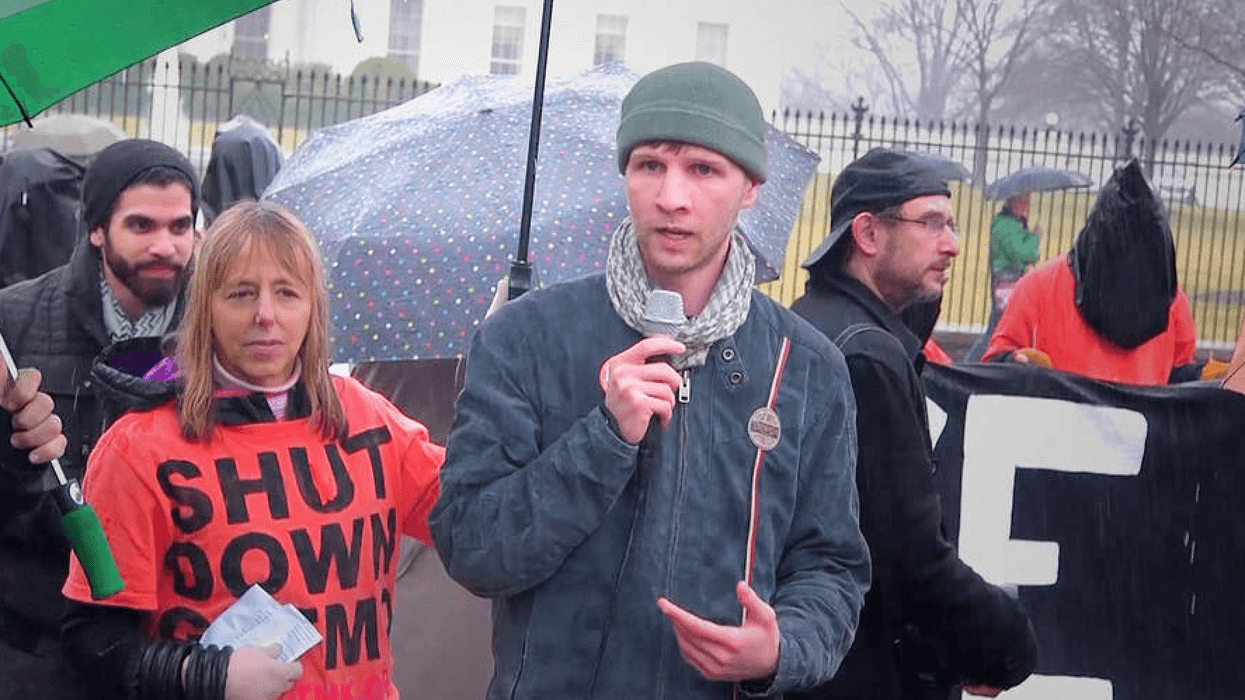
Press freedom, peace, and human rights advocates are rallying behind Daniel Hale, the former intelligence analyst who blew the whistle on the U.S. government's drone assassination program, and who pleaded guilty Wednesday in federal court to violating the Espionage Act.
"The U.S. government's policy of punishing people who provide journalists with information in the public interest is a profound threat to free speech, free press, and a healthy democracy."
--Jesselyn Radack,
Hale's attorney
The Washington Post reports Hale, who was set to go on trial next week, pleaded guilty to a single count of violating the 1917 law that has been used to target whistleblowers including Julian Assange, John Kiriakou, Chelsea Manning, Edward Snowden, Jeffrey Sterling, Reality Winner, and others.
Hale was charged in 2019 during the Trump administration after he leaked classified information on the U.S. government's targeted assassination program to a reporter, who according to court documents, matches the description of The Intercept founding editor Jeremy Scahill. He is the first person to face sentencing for an Espionage Act offense during the administration of President Joe Biden.
As vice president under President Barack Obama, Biden contributed to the creation of whistleblower protections in the Dodd-Frank Wall Street Reform and Consumer Protection Act, while simultaneously serving in an administration that, while promising "a new era of open government," relentlessly targeted individuals who revealed U.S. war crimes and other classified information.
Kiriakou--a former CIA agent who under Obama was sentenced to 30 months' imprisonment for exposing U.S. torture--told Kevin Gosztola that he is "dissapointed that Daniel Hale's case was continued in the Biden Justice Department."
"I had hopes that Biden's Justice Department appointee would recognize the public service that Daniel Hale provided when he revealed illegality and abuse in the drone program," said Kiriakou.
Hale, who was an intelligence analyst for the U.S. Air Force before moving on to the National Security Agency and then the National Geospatial-Intelligence Agency, "knowingly took highly classified documents and disclosed them without authorization, thereby violating his solemn obligations to our country," according to a statement from Raj Parekh, the acting U.S. attorney for the Eastern District of Virginia.
According to Gosztola, Hale's whistleblowing led to the revelation by The Intercept that "nearly half of the people on the U.S. government's widely shared database of terrorist suspects are not connected to any known terrorist group," details on how the Obama administration approved targeted assassinations, and information about Bilal el-Berjawi, a Briton "who was stripped of his citizenship before being killed in a U.S. drone strike in 2012."
The Post reports that Hale admitted in court to writing an anonymous chapter in Scahill's 2016 book, The Assassination Complex: Inside the Government's Secret Drone Warfare Program, which divulged information taken from top-secret documents about drone strike protocols, civilian casualties, and Pentagon officials' debate about the accuracy of intelligence.
"These documents detailed a secret, unaccountable process for targeting and killing people around the world, including U.S. citizens, through drone strikes," Betsy Reed, editor-in-chief of The Intercept, said after Hale's indictment. "They are of vital public importance, and activity related to their disclosure is protected by the First Amendment."
Hale had initially centered his defense on First Amendment grounds, and his numerous defenders condemned his prosecution as a violation of press freedom and freedom of speech. His lawyer, Jesselyn Radack, issued a statement saying "the U.S. government's policy of punishing people who provide journalists with information in the public interest is a profound threat to free speech, free press, and a healthy democracy."
"Classified information is published in the press every day; in fact, the biggest leaker of classified information is the U.S. government," wrote Radack. "However, the Espionage Act is used uniquely to punish those sources who give journalists information that embarrasses the government or exposes its lies."
"Every whistleblower jailed under the Espionage Act is a threat to the work of national security journalists and the sources they rely upon to hold the government accountable," she added.
Medea Benjamin, co-founder of the women-led peace group CodePink, tweeted that it's "outrageous that drone whistleblower Daniel Hale will be going to prison for exposing the drone murders by the U.S. military. Why don't the murderers go to jail? Or the ones who ok the murders? Or the ones who make the killer drones and profit from murder?"
Hale's sentencing is scheduled for July 13. He faces up to 10 years behind bars. Kiriakou told Gosztola that he hopes the judge "recognizes the good in what Daniel Hale has done and gives him the lightest possible sentence."
"We must determine the whistleblower's identity," tweeted Donald Trump, who has become obsessed with finding and punishing the individual(s) that blew the whistle on the president's dealings with Ukraine.
"Our primary interest right now is making sure that...they are protected," responded Adam Schiff (D-CA) on Face the Nation, noting that two whistleblowers had now come forward from within the intelligence community to expose Trump's phone call with his Ukrainian counterpart.
The ongoing public battle between Trump and Schiff, who chairs the House Intelligence Committee, is part of an escalating war between Democrats and Republicans over the Ukraine whistleblowers. While Democrats hail the whistleblowers' bravery, Republicans accuse them of espionage and treason.
We are entering an age of partisan whistleblowing, in which whistleblowers are legitimized and judged kindly when their disclosures advantage one party over the other.
The partisan treatment of whistleblowers is new. Until now, congress has joined with the executive to wage a bipartisan war on all public interest whistleblowing. With politicians and pundits fixated on impeachment and democracy, what this moment portends for the future of whistleblowing and democracy has been largely ignored.
Who is a whistleblower?
Disclosures of national security information have always been controversial.
They follow a familiar pattern. Immediately after a disclosure, the whistleblower is branded either a hero or a traitor. Politicians and pundits debate whether they are a "legitimate" whistleblower and obsess over hidden political motives. The whistleblower is often punished, usually incarcerated. Over time the obsession with the whistleblower displaces debates about the contents of the actual disclosure.
This pattern has played out with every episode of national security whistleblowing since the early 20th century, including high-profile public interest disclosures by Daniel Ellsberg and Edward Snowden.
Consider the recent case of Reality Winner.
In 2017, the twenty-six-year-old NSA contractor revealed intelligence analysis of Russian interference in the 2016 election to The Intercept. The Trump administration branded her a "leaker" and convicted her under the Espionage Act, with the longest sentence ever given to a whistleblower. The press briefly obsessed about her name and personality, before the news cycle moved on.
Winner had no advocates in Congress. The only ones who branded her a hero were whistleblowing watchdogs and advocacy groups.
So why the different treatment for the Ukraine whistleblowers?
In disclosing the contents of the phone call and efforts to hide the full transcript, the Ukraine whistleblowers are presented as organizational defenders, protecting the national interest against corrupt presidential behavior. This fits within deliberately narrow state definitions of whistleblowing against "waste, fraud, and abuse."
Although Winner exposed the failure of the White House to address Russia's election meddling, she did not use the right language, go through official channels, or conform to the image of a legitimate whistleblower.
Before now, Republicans and Democrats have come together to sanction, delegitimize, and prosecute anyone who discloses information related to national security.
"Snowden and his defenders claim that he is a whistleblower, but he isn't," said Schiff, only three years ago. "Most of the material he stole," Schiff claimed, "has been of great value to America's adversaries and those who mean to do America harm."
These polarized political times have broken that bipartisan consensus. As attempts to investigate presidential behavior through establishment types like James Comey and Robert Mueller have failed, Democrats have looked to the Ukraine whistleblowers to build a case for dislodging Trump. And Republican have questioned whether these cases involve whistleblowing at all.
As the political trenches are dug, we should ask who defines national security whistleblowing and what protections whistleblowers actually receive.
Who are the gatekeepers?
The Ukraine whistleblowers have used internal reporting channels to deliver their complaints to the Inspector General of the intelligence community. These channels were designed to keep concerns within the executive branch away from congressional and public scrutiny.
The public typically never knows about these complaints. The first one only reached congress because Democratic members pressed acting director of national intelligence Joseph Maguire after his office deferred to the Justice Department's Office of Legal Counsel and refused to pass it on.
Insider channels have failed to protect whistleblowers from retaliation.
In 2002, Thomas Drake, a senior NSA official used them to report waste and illegality in the "Trailblazer Project," a massive secret surveillance program. Instead of protecting Drake, the insider channel became a tool of his undoing. The inspector general counsel passed documents to the FBI, which raided Drake's home. When the Defense Department's assistant investigator general advocated on behalf of Drake, he was fired.
In 2006, the Defense Department acting inspector general said it was a "misnomer" to call the existing legislation whistleblower protection statutes. A recent report on internal reporting channels found that one quarter of all inspector general employees and one third of all reprisal investigators said they feared reprisal.
While the Ukraine episode is hailed for its potential political impact, the most consequential cases of whistleblowing have historically involved insiders going directly to the press.
Ellsberg first went to The New York Times with the Pentagon Papers, and Snowden shared his disclosures with The Guardian and The Washington Post. These actions led to landmark Supreme Court rulings on the right to publish and the passage of the USA Freedom Act. They also prompted increased penalties for whistleblowers and for journalists reporting on national security.
The national security state and politicians should not be the sole gatekeepers of what information circulates in the public sphere. Instead of simply celebrating or condemning the new whistleblowers along party lines, this moment should spark a conversation about the place of national security whistleblowing in a democratic society.
Let's not misread the rise of partisan support for whistleblowers as a sign of progress. National security whistleblowing predated Trump, and it will survive his presidency. What happens when the next whistleblower's revelations are hailed by Republicans against Democratic administrations?
The defense agreed to the plea deal in part to bring closure to Winner and her family. Her mother, Billie Winner-Davis, said when the plea was first announced that it was in her daughter's "best interest" since the Espionage Act does not afford her any public interest defense.
But it should not bring closure to the crucial issues raised by this case, namely, the Justice Department's contention that "national security" claims by the executive branch can never be challenged; that the executive branch has the sole authority to decide when information should be secret; and that the DOJ can prosecute journalists' sources for "harming" national security with no public evidence whatsoever.
The Justice Department's contention that "national security" claims by the executive branch can never be challenged; that the executive branch has the sole authority to decide when information should be secret; and that the DOJ can prosecute journalists' sources for "harming" national security with no public evidence whatsoever.
At issue in Winner's case is a document she leaked to a news outlet. The Intercept published an article on June 5, 2017 about a five-page National Security Agency report that detailed how alleged Russian hackers targeted election vendors with phishing attacks in an attempt to access voters rolls in several states. The Intercept was not aware of the identity of the source who provided the document, though other news organizations connected it to Winner.
In its sentencing memorandum two weeks ago, the prosecution made several dubious statements about why a sentence of this unprecedented length was necessary, chiefly that "the defendant's unauthorized disclosure caused exceptionally grave harm to our national security," a claim that was repeated several times. U.S. Attorney for the Southern District of Georgia Bobby Christine, who was appointed last year by President Donald Trump, went further on Thursday, calling Winner "a quintessential example of an insider threat."
"Winner will serve a term of incarceration that will give pause to others who are entrusted with our country's sensitive national security information and would consider compromising it," Christine told reporters after the sentencing at the federal courthouse in Augusta, Ga. "Anyone else who may think of committing such an egregious and damaging wrong should take note of the prison sentence imposed today and the very real damage done."
The government did not produce one iota of public evidence to back up its claims, citing only an unnamed "expert" whose comments are completely classified, and referring to the "top secret" marking on the document that they say "by definition" proves their point.
But new evidence published by The Intercept for the first time today, along with one of Special Counsel Robert Mueller's recent indictments, undercuts the government's claims.
A key phrase that the government wanted withheld was the specific name of the Russian unit identified in the document. The government was particularly insistent on that point. Since it wasn't vital to the story that the unit's name be revealed, nor was it clear -- at least at the time -- that revealing the unit's name was in the public interest, The Intercept agreed to withhold it.
But in the indictment of alleged Russian military intelligence operatives that Mueller's office released last month, the Justice Department revealed the same name: GRU unit 74455. (The unit is also known as the Main Center for Special Technology or GTsST.) The indictment went on to reveal information almost identical to that contained in the document Winner admits to disclosing:
In or around June 2016, KOVALEV and his co-conspirators researched domains used by U.S. state boards of elections, secretaries of state, and other election-related entities for website vulnerabilities. KOVALEV and his co-conspirators also searched for state political party email addresses, including filtered queries for email addresses listed on state Republican Party websites.
In or around July 2016, KOVALEV and his co-conspirators hacked the website of a state board of elections ("SBOE 1") and stole information related to approximately 500,000 voters, including names, addresses, partial social security numbers, dates of birth, and driver's license numbers
In or around August 2016, KOVALEV and his co-conspirators hacked into the computers of a U.S. vendor ("Vendor 1") that supplied software used to verify voter registration information for the 2016 U.S. elections. KOVALEV and his co-conspirators used some of the same infrastructure to hack into Vendor 1 that they had used to hack into SBOE 1.
The Justice Department is trying to have it both ways: It's OK for Mueller to publicly release this information in an attempt to prosecute alleged Russian hackers because it's in the public interest. But at the exact same time, the government is also claiming that a document including very similar information causes grave harm to national security when disclosed to the public by someone else.
Maybe timing was the issue, you might say. Maybe the government is arguing that the Winner document, released more than a year before the Mueller indictment, somehow could have tipped off the accused Russian operatives that the NSA was spying on them. But the special counsel's allegations point to a different conclusion.
In the indictment of the alleged Russian intelligence officers, the Special Counsel's Office describes how the FBI itself tipped off the GRU unit to the U.S. surveillance almost a year before The Intercept published the NSA document. As the indictment notes:
In or around August 2016, the FBI issued an alert about the hacking of SBOE 1 and identified some of the infrastructure that was used to conduct the hacking. In response, KOVALEV deleted his search history. KOVALEV and his co-conspirators also deleted records from accounts used in their operations targeting state boards of elections and similar election related materials.
If the GRU was already aware that the U.S. was watching its activities in 2016 -- thanks to the FBI and not the media -- how could the Winner document have "gravely harmed" national security almost a year later?
Even without the Mueller indictment, the claim that the release of the NSA document seriously endangered national security was specious to begin with. There were no "sources and methods" in anything The Intercept published. By the summer of 2017, Russia's attempted cyberattacks around the 2016 election had been widely reported.

Regardless of the government's claims, it should be crystal clear to anyone who reads the newspaper that there is significant public interest in the information that Winner has admitted to disclosing. Russian interference in the 2016 election is still front-page news almost two years later. The federal government kept several states allegedly targeted by hackers in the dark about the specifics of these attacks until The Intercept published its story.
Regardless of the government's claims, it should be crystal clear to anyone who reads the newspaper that there is significant public interest in the information that Winner has admitted to disclosing.
In fact, the day after The Intercept's story came out, the Election Assistance Commission -- the federal agency in charge of assisting state election officials -- wrote an urgent bulletin to states, calling the report "credible" and urging state officials to read it. The EAC then provided advice on how to take action. (The commission, unbelievably, tweeted the hashtag #RealityWinner to promote its bulletin on social media).
The long history of the U.S. government claiming that a document published by the press was a "closely held" secret -- when in fact it was anything but -- may be why J. William Leonard, the former classification czar under George W. Bush, agreed to act as a defense witness for Reality Winner on a pro bono basis. Since leaving office in the mid-2000s, Leonard has sought to draw attention to abuses within the U.S. government classification regime and has acted as an expert witness in several leak investigations.
Leonard has also testified to Congress several times about our broken secrecy system. In 2016, he spoke before the House Oversight Committee about leak prosecutions similar to Winner's: "The opaque nature of the classification system can give the government a unilateral and almost insurmountable advantage when it is engaged in an adversary encounter with one of its own citizens, an advantage that is just too tempting for many government officials to resist."
He went on to explain in his congressional testimony that even as government employees are regularly and harshly punished for revealing information that the government considers secret, "to my knowledge no one has ever been held accountable and subjected to sanctions for abusing the classification system or for improperly classifying information."
Leonard never got to testify in the Winner trial, so the court will never hear his expert opinion on the document at issue. What we do know is that the executive branch under both parties has insisted for decades that the classification of documents is virtually unreviewable by either the judiciary branch or Congress. And history is littered with examples of the government abusing its classification authority.
If you want to understand how the government classifies virtually any information in the national security space, no matter how benign, just read this recent account from BuzzFeed's Jason Leopold about an "illegal animal killing" on CIA property involving a government employee. After Leopold got wind of an Inspector General report on the subject, he filed a FOIA request for more information. The CIA stonewalled him and withheld the IG report on the incident in full, claiming it would "harm national security" to release it -- or even to disclose the type of animal that was killed.
So Leopold sued. Three years later, the government finally relented and revealed that the animal in question was a deer. The rest of the report remains classified.
It is, of course, conceivable that some unknown detail in the document Winner disclosed could have caused consternation at NSA headquarters. But because the government will never tell the public how something "damaged" national security, and uses the secrecy system to ensure that its arguments cannot be challenged, we'll never know.
We'll also never know exactly how much national security damage the government caused by not releasing this information to state election officials and the public much earlier.
In Augusta on Thursday, Winner spoke about her now-deceased father, who she said "expected us to engage in intellectual discourse as soon as we were out of diapers." She said that like many Americans, her family was deeply affected by the attacks of Sept. 11, 2001, which sparked her interest in"the languages and the cultures of the countries involved." Winner joined the Air Force, then left to further her education and seek humanitarian work. She took a job at the government contractor Pluribus to "improve the language skills I developed in the Air Force.
In a small measure of relief for Winner and her advocates, Judge Randal Hall endorsed her request to be sent to FMC Carswell, a Forth Worth federal medical facility where she will be about a seven-hour drive from her family in Kingsville, Texas. In court, Winner mentioned her 12-year struggle with bulimia, calling it "the most pressing internal challenge in my day-to-day survival," and said that seeking treatment is one of her top goals. Her defense attorneys requested the Fort Worth facility so Winner could receive adequate medical care and "further her humanitarian objectives" through assisting other inmates with "debilitating illnesses."
Whistleblower advocates are calling on President Donald Trump to pardon former National Security Agency contractor Reality Winner, who was sentenced Thursday to over five years in prison for performing a "public service."
"I think what has been done by the Trump administration to Reality is just terrible, and it's one of the worst miscarriages of justice I've seen in a long time."
--James Risen, The InterceptWinner, who was prosecuted under the Espionage Act, accepted a plea deal that sends her to prison for 63 months for leaking to the press in 2017 information that exposed a Russian cyberattack against U.S. voting systems. It's the longest sentence ever in federal court for leaking government information to the press.
Seizing upon Trump's characterization of the sentence as "unfair," some of Winner's advocates, including her mother, responded to the president's tweet by saying he should exercise his authority to pardon her.
"I think what has been done by the Trump administration to Reality is just terrible, and it's one of the worst miscarriages of justice I've seen in a long time," said James Risen, The Intercept's senior national security correspondent, to Democracy Now! on Friday. "What Reality Winner did was a public service," he said.
"The disclosure of the document in this, that The Intercept published, ... provided a really important wake-up call to the American people that ... Russian intelligence was hacking into the election systems of states. And the Senate Judiciary Committee, in a report earlier this year, wrote that the Homeland Security Department had failed to adequately warn state election officials about the Russian hacking threat, and said ... it was only because of press disclosures that state officials began to be alerted to the Russian threat, cyberthreat, which shows that even Congress recognizes that what Reality Winner did was a public service," Risen said.
In a statement issued Friday, Reporters Without Borders (RSF) also condemned the sentence.
"Reality Winner's outrageous sentence is a clear threat to investigative journalism, freedom of information, and the public's right to know, as it could have a chilling effect on sources," said Margaux Ewen, RSF's North America bureau director.
"We are concerned that her sentence is just the beginning of an intense crackdown on whistleblowers led by Attorney General Jeff Sessions, who threatened last year to stifle leaks with harsh federal punishment. Winner's sentence shows that his threats are coming to fruition," she added.
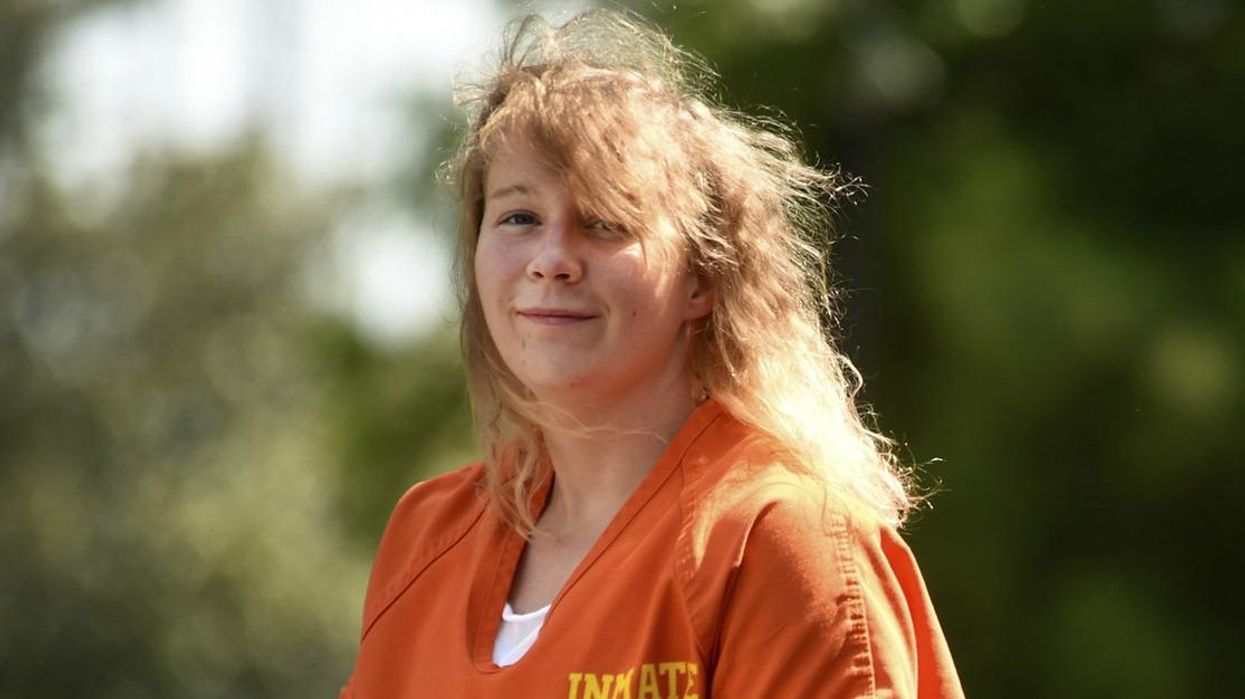
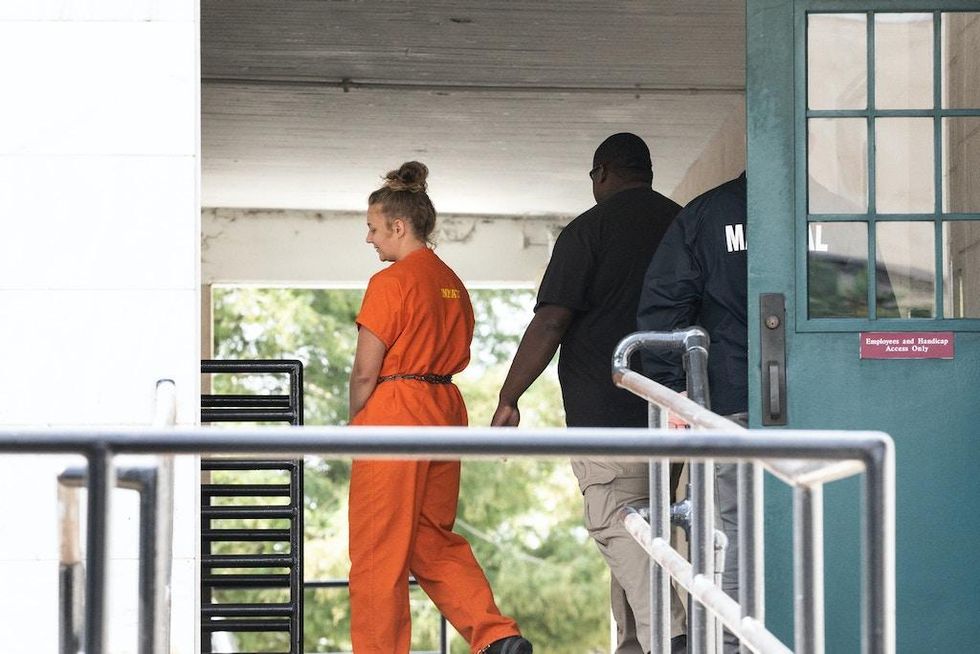
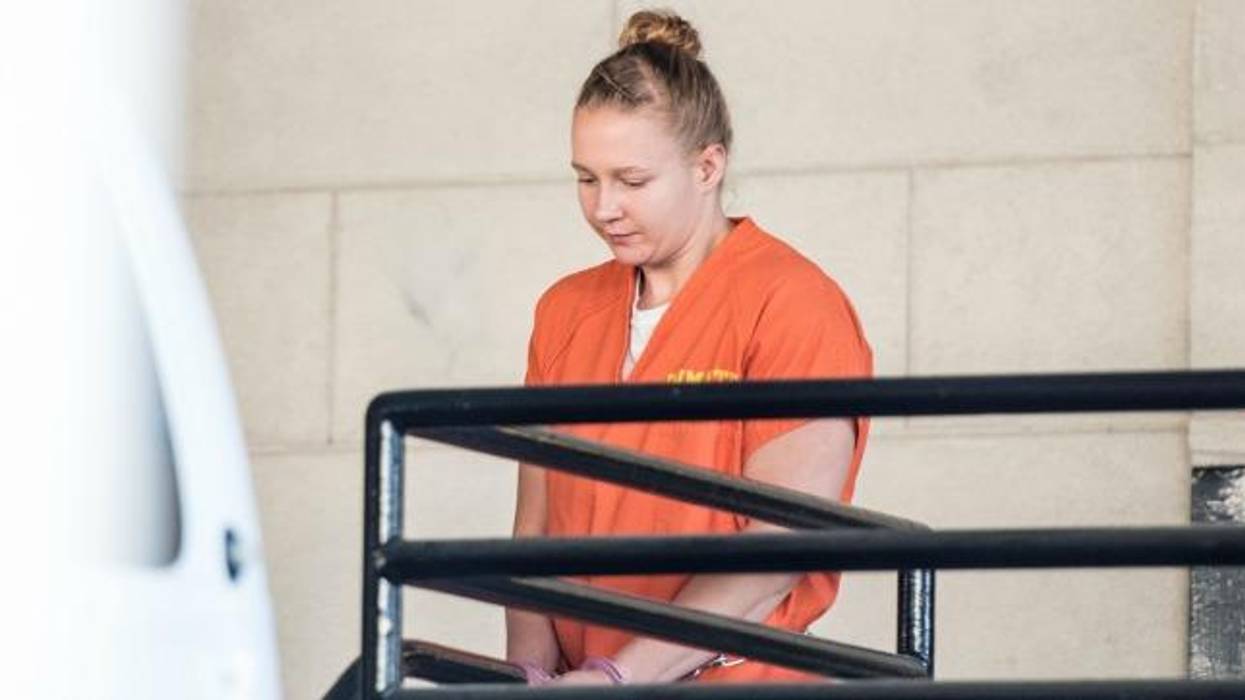
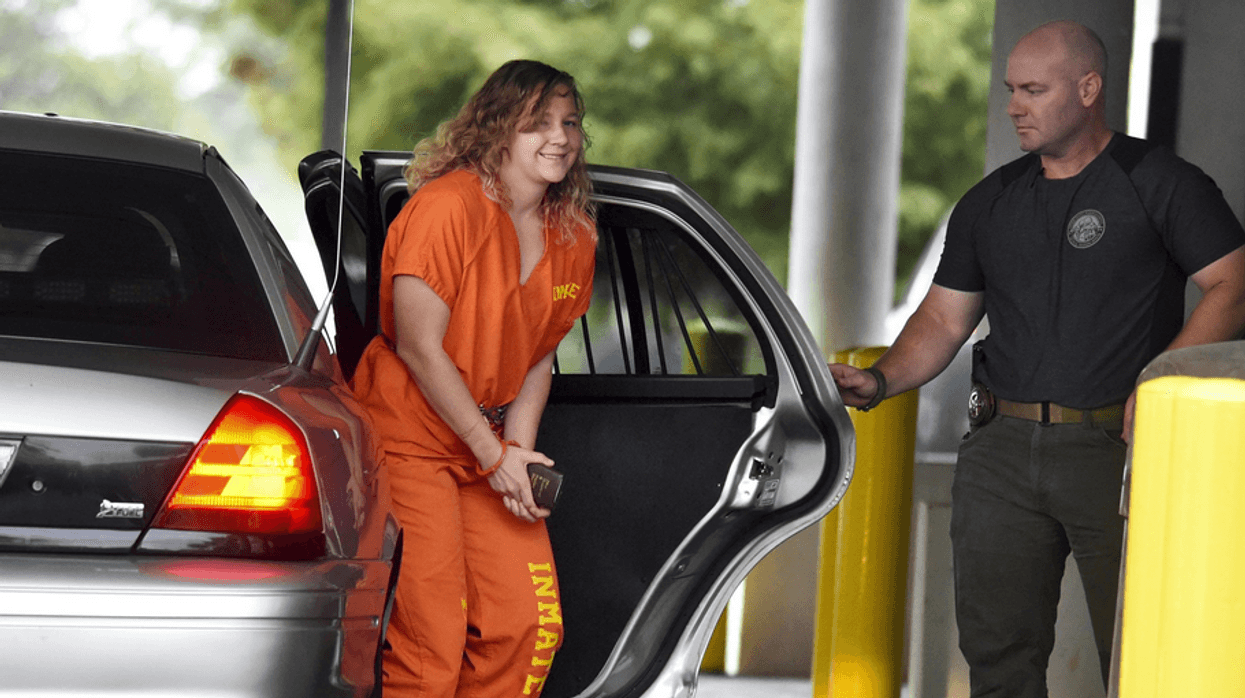
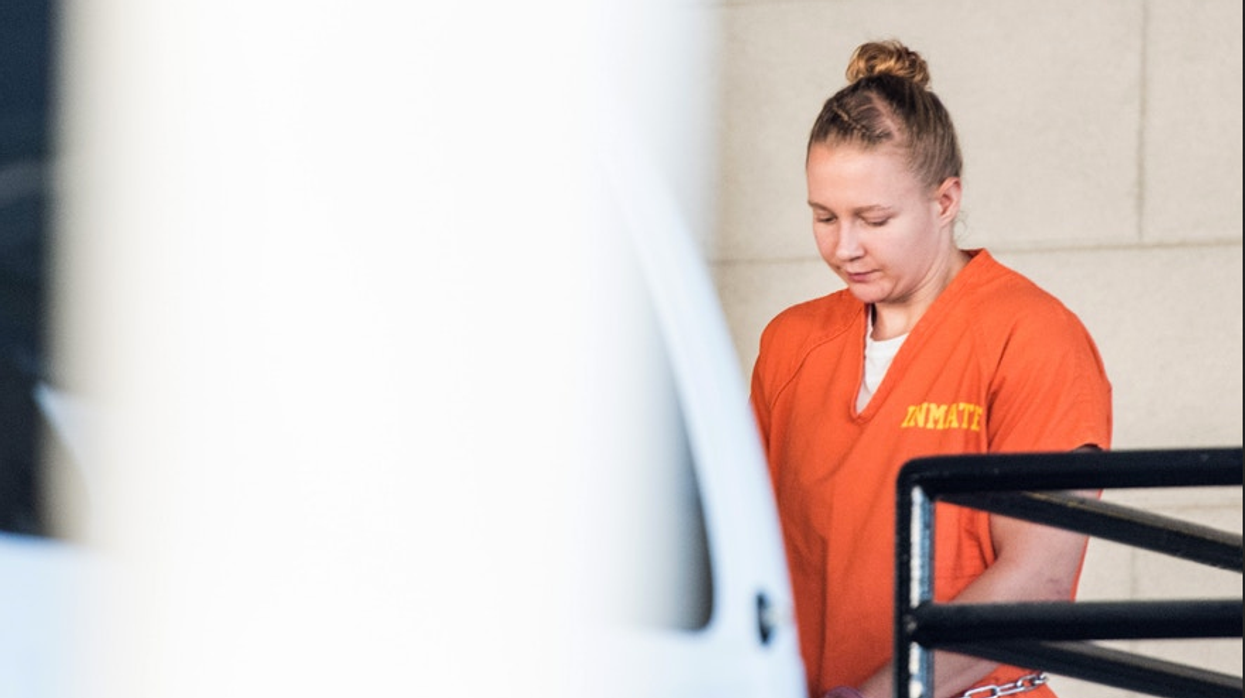
Former National Security Agency contractor Reality Winner was sentenced to five years and three months in prison at a federal courthouse in Augusta, Georgia. It was part of a plea agreement approved by the court, where Winner admitted she disclosed classified information in violation of the Espionage Act.
Winner will be incarcerated at Federal Medical Center, Carswell in Fort Worth, Texas, primarily because she has been bulimic for 12 years. In a statement read before the court, Winner said bulimia has been "a constant struggle" for her and expressed fear that, if she wasn't incarcerated at a medical facility, she could turn to bulimia as a coping mechanism. She also suffers from depression after the death of her father in 2016, mere months before the act for which she was prosecuted.
Defense attorney Joe Whitley described Winner's disclosure as a "poorly considered act of political passion and protest" in an effort to ensure the judge accepted the plea agreement.
Additionally, Winner spoke about her motivations for learning the languages and cultures of countries in the Middle East. Following the attacks on September 11, she said she wanted to intellectually understand what had happened. Her interest in language is what ultimately led her to her line of work.
Defense attorney Joe Whitley described Winner's disclosure as a "poorly considered act of political passion and protest" in an effort to ensure the judge accepted the plea agreement.
After incarceration, Winner will be subject to three years of supervised release. She will not be required to pay a fine. The judge also did not say whether time served would be factored into her sentence.
Winner apologized in her statement and indicated she took full responsibility for her action.
The plea agreement reflected the seriousness of the espionage defense, Judge James Randal Hall said, adding the oft-heard refrain that it would promote respect for the law.
Prosecutors claimed Winner's disclosure of the NSA report "caused exceptionally grave damage to national security." However, that was never proven during course of this case and in fact, prosecutors claimed it didn't have to be proven to convict her of violating the Espionage Act.
In a statement after the hearing, Justice Department representatives celebrated Winner's sentence as the longest ever for a defendant convicted of making an unauthorized disclosure.
Winner was in the United States Air Force for six years. She is fluent in Dari, Farsi, and Pashto and worked as a language analyst. When she left the Air Force, she was employed by Pluribus International and worked for the NSA at Fort Gordon.
She disclosed a copy of an intelligence report from the NSA that alleged Russian hackers targeted voter registration systems during the 2016 election. It was provided to the Intercept, which made several mistakes related to source protection that led authorities to identify Winner as the person who gave the report to the media outlet.
Winner was arrested on June 3, 2017, after FBI agents raided her home. In a small back room in her home, agents controlled her movements, never told her she was "free to leave," nor did they inform her she had the right to remain silent. The FBI successfully induced a confession that agents recorded. (What happened during the raid was challenged by defense attorneys through a motion to suppress statements, but ultimately, no ruling on the motion was ever issued by the court.)
She was denied bail. Prosecutors used her service and training in the Air Force against her to make the case she would flee if she was not kept in prison. They also promoted the idea that Winner had no respect for the U.S. government and persuaded the court (as well as an appeals court) that she may be some kind of disloyal American.
For one year and 83 days, she was detained at Lincolnton County Jail. There she was assaulted by a state inmate. Her mental health deteriorated, as a psychologist was hired to help her with depression. Her struggle with an eating disorder worsened because the jail did not or would not accommodate her diet.
A trial was scheduled and postponed at least two times before her attorneys recognized it would be nearly impossible for her to defend herself in court. For example, her defense was hindered significantly when the court rejected 40 out of 41 subpoenas that were requested so evidence could be compiled to possibly show the government had not taken appropriate steps to protect information in the NSA report.
A sensitive compartmented information facility, or SCIF, was setup at the courthouse in Augusta for Winner to meet with her attorneys and work on her defense. Throughout this part of her case, she was routinely dehumanized, as she was shackled 12 hours each day. The shackles were at her waist so she could not drink a water bottle with her own hands.
When she wanted to use the bathroom, according to her mother, Billie Winner-Davis, officers would do a "complete strip search on her." Any time she was "taken from the SCIF to return to jail," they did a strip search on her.
Humiliating and degrading strip searches served the purpose of domination and ensured Winner would recognize who was in control over her.
She changed her plea from not guilty to guilty on June 26 and acknowledged in court the elements of the offense, which prosecutors brought against her.
Her sentence for violating the Espionage Act is extraordinary, particularly when compared to sentences issued in other leak prosecutions. Yet, it is representative of the extent to which the government will go to make examples out of whistleblowers.
There is no public interest defense available to individuals charged under the Espionage Act, a World War I-era law that is antiquated. It forces a person who reveals information potentially of publicly value to defend their act in terms of whether they are guilty of betraying the country or not. It was not initially used to punish sources and control the flow of information to the press, and yet, especially since President Barack Obama's administration, the Justice Department has relied on the law to expand its ability to silence national security whistleblowers.
Reality Winner, the former NSA contractor accused of releasing national security information to the media, will have been in jail for more than a full year without being convicted of a crime. Her trial, originally scheduled for October 2017, has been pushed back multiple times and is now on the docket for October 2018. It's anyone's guess whether the case will drag on even longer.
Something curious has happened along the way: Winner's case fell out of the public consciousness. National media pays scant attention to her plight, and many advocates from the left to the center of the political spectrum -- all of whom should have ample reason to loudly protest the many injustices in her case -- have been largely silent.
Winner, unfortunately, is caught between two camps -- a whistleblower without a constituency -- even as her alleged transgression proved a pivotal moment in the hot-burning media story of the investigation into potential attempts by Russia to interfere in the 2016 election.
Winner's arrest -- for leaking a document that media reports have said was the subject of a June 5, 2017, story at The Intercept -- was the opening salvo of the Trump administration's promised crackdown on leaks. (The Intercept has stated it has no knowledge of the source's identity; its parent company, First Look Media, has contributed to her legal defense through its Press Freedom Defense Fund.) Winner received wide coverage at the time of her arrest in June 2017. Since then, however, the coverage has fallen off sharply, even though media organizations should have an incentive to extensively cover, and even protest, such leak prosecutions as an affront to press freedom.
Some local media in Georgia -- not least the Atlanta Journal-Constitution, the leading large paper near the site of the trial -- have been regularly covering the case. But, aside from a profile in New York Magazine, there has been virtually no substantial national coverage of Winner's case. At most, Winner might garner mentions in occasional brief write-ups when the judge rules against her defense team, which has happened with virtually every major motion Winner's lawyers have put forward.
Meanwhile, the story of Russian interference in the election has dominated front-page headlines for a year. Despite being consistently the most covered news story of the Trump presidency -- with a seemingly avid readership -- a whistleblower accused of releasing a top-secret National Security Agency document that gave the public an unprecedented window into how U.S. intelligence agencies think Russia tried to interfere has been all but forgotten.
The unfortunate silence on Winner's case runs through political circles as well. Winner's cause has been largely neglected by many political advocates -- both on the left, which usually shows strong support for whistleblowers targeted by the U.S. government, and on the moderate and liberal wing of the Democratic Party, which has trumpeted the Russian interference scandal as the crime of the century.
The lack of attention from the media and the political establishment has dampened activism. The Stand With Reality campaign has struggled to garner donations to support her legal and public defense, and group has barely 2,000 Twitter followers. (I helped start the Stand With Reality campaign, but am not involved in day-to-day operations.) This is in contrast to whistleblower Chelsea Manning's advocacy campaign, which was able to raise over half a million dollars for her legal defense, or the effort to pardon Edward Snowden, which was the topic of many of the country's leading newspaper editorial boards.
Read the full article at The Intercept.
Reality Winner, the 25-year-old Air Force veteran and NSA contractor charged with mailing classified material to a news outlet, is a classic whistleblower. She hasn't claimed that mantle, which is understandable given America's love-hate relationship with whistleblowers. They are alternately celebrated and denounced, depending on who has the microphone and who has the power.
"The most successful whistleblowers--from Daniel Ellsberg to Edward Snowden--have gone to the media, which brings the benefits of speed, objectivity and investigative resources."
A whistleblower is a current or former employee who reveals what she reasonably believes evidences fraud, waste, abuse, illegality, or a danger to public health and safety. The individual can disclose their concerns to their superiors, Congress, an interest group representative, or the media. Unfortunately, often nothing gets fixed when employees report internally; in fact, they often become the target of any investigation that ensues. This is especially true in the Intelligence Community, where whistleblowers lack strong protection from retaliation. It is easier to shoot the messenger than listen to the message. And the message here is one that has been contested by the President of the United States: that Russia tried--strenuously--to hack our presidential election.
When you can't shoot the messenger--many whistleblowers like Edward Snowden and Thomas Drake had unassailable personal and professional records--those in power will then go after a subsidiary issue: how the leak occurred. In the case of Reality Winner, she has been criticized for mailing the information from her hometown post office in Augusta, Georgia. She has been criticized for using snail-mail, instead of a whistleblower submission system like SecureDrop. (Here it is worth noting that whistleblowers who have blown the whistle over encrypted channels have sometimes faced added charges for obstruction of justice.) She has been criticized for her choice of the media outlet to which to leak.
Her undoing, however, was not because of her choices. Whistleblowers face a panoply of hard choices--whether to complain internally or go public, whether to report anonymously or identify themselves, whether to protect their colleagues from their life-altering decision or put them in the position of being witnesses. There is no right answer. As a general matter, whistleblowers try to call out wrongdoing while sustaining the least damage to themselves, their families, and their colleagues.
The most successful whistleblowers--from Daniel Ellsberg to Edward Snowden--have gone to the media, which brings the benefits of speed, objectivity and investigative resources. When Reality Winner picked this and true path that I and so many other whistleblowers have taken, I doubt she was thinking about how it could land her in jail. I am quite confident she was more concerned about correcting the public and historical record, and giving the truth a fighting chance in a political landscape increasingly overrun with lies. Many whistleblowers pay a very high price. Chelsea Manning was tortured and imprisoned. Thomas Drake faced life in prison and was left bankrupt and blacklisted. What the government has never managed to take away, however, is their integrity or their voices. And despite their ordeals, the whistleblowers who have suffered the most have often amplified their voices once it was safe to do so. They have continued to advocate for the causes they believe and against the injustices they faced: surveillance reform, ending torture, accountability for war crimes. The least we can do is protect them.
A day after her arrest was announced publicly by the U.S. Justice Department, Reality Winner, the 25-year-old alleged source of a leaked National Security Agency document detailing Russian hacking efforts, has found a vocal ally in the world's best known whistleblower of the contemporary era: Edward Snowden.
Snowden, who first made headlines around the world in 2013 when he went public as the source of a massive trove of NSA documents detailing the agency's global "collect-it-all" surveillance dragnet, released a statement Tuesday evening saying that while much remains unknown about the details of the case, the Justice Department's decision to file charges under the 'Espionage Act' is deeply troubling.
"This often-condemned law," he explained, "provides no space to distinguish the extraordinary disclosure of inappropriately classified information in the public interest--whistleblowing--from the malicious disclosure of secrets to foreign governments by those motivated by a specific intent to harm to their countrymen.
Snowden further argues that Winner should be released on bail pending her trial and said that for the government to hold any "citizen incommunicado and indefinitely while awaiting trial for the alleged crime of serving as a journalistic source should outrage" anyone concerned about the free press, whistleblower protections, or the public's right to know.
Released on the website of the Freedom of the Press Foundation, a journalism advocacy group for which Snowden serves as board president, his statement follows in full:
The Justice Department released an indictment of twenty five year-old NSA contractor Reality Winner yesterday, just a few hours after the Intercept posted a story based on a top secret document that described how the NSA believes Russian actors tried to hack into US voting infrastructure. Much is unknown, as the public is made to depend upon the potentially unreliable claims of government prosecutors, while Winner is held in jail without any contact with the public.
What we do know is clear: Winner is accused of serving as a journalistic source for a leading American news outlet about a matter of critical public importance. For this act, she has been charged with violating the Espionage Act--a World War I era law meant for spies--which explicitly forbids the jury from hearing why the defendant acted, and bars them from deciding whether the outcome was to the public's benefit. This often-condemned law provides no space to distinguish the extraordinary disclosure of inappropriately classified information in the public interest--whistleblowing--from the malicious disclosure of secrets to foreign governments by those motivated by a specific intent to harm to their countrymen.
The prosecution of any journalistic source without due consideration by the jury as to the harm or benefit of the journalistic activity is a fundamental threat to the free press. As long as a law like this remains on the books in a country that values fair trials, it must be resisted.
No matter one's opinions on the propriety of the charges against her, we should all agree Winner should be released on bail pending trial. Even if you take all the government allegations as true, it's clear she is neither a threat to public safety nor a flight risk. To hold a citizen incommunicado and indefinitely while awaiting trial for the alleged crime of serving as a journalistic source should outrage us all.