

SUBSCRIBE TO OUR FREE NEWSLETTER
Daily news & progressive opinion—funded by the people, not the corporations—delivered straight to your inbox.
5
#000000
#FFFFFF
To donate by check, phone, or other method, see our More Ways to Give page.
Daily news & progressive opinion—funded by the people, not the corporations—delivered straight to your inbox.
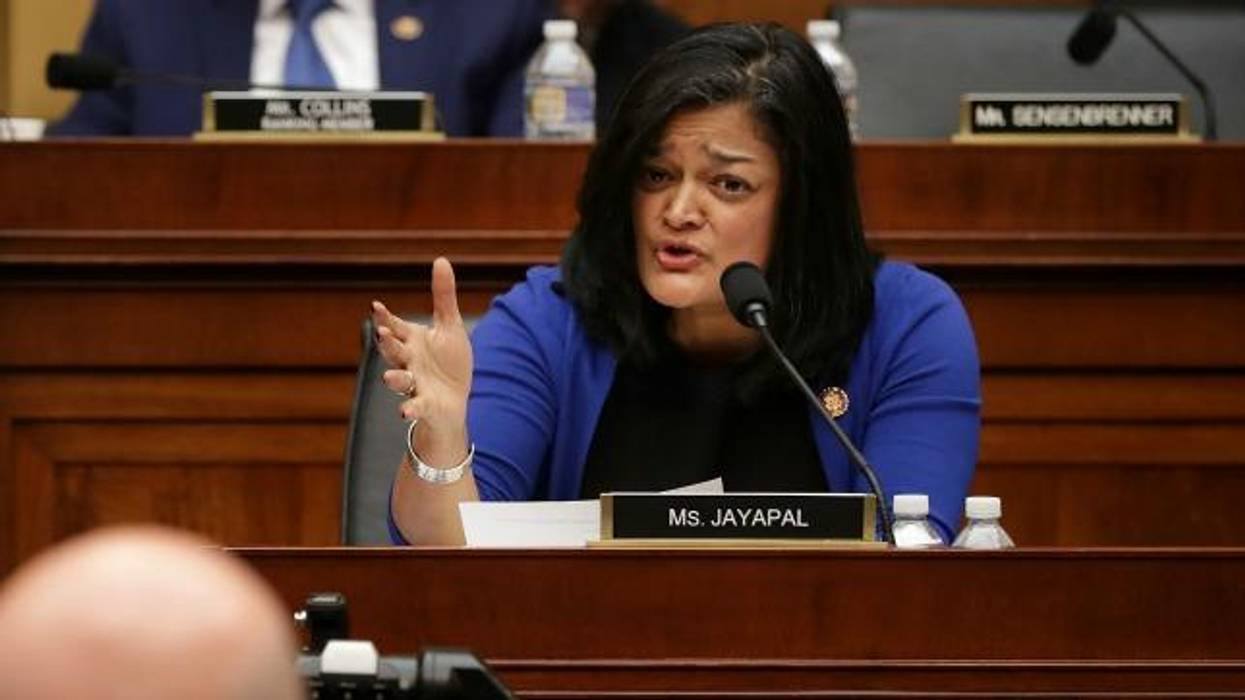
Rep. Pramila Jayapal (D-Wash.) took to social media on Monday to debunk President Donald Trump's "wild claims and lies" about asylum-seekers at the southern border.
The congresswoman's morning Twitter thread comes as another Democrat--California Gov. Gavin Newsom--refuses to be part of Trump's "political theater" and is set to order the withdrawal of the majority of the state's National Guard troops now at the border.
Japaypal, referencing data on the number of people being processed under the current administration, suggests, "Trump doesn't want asylum seekers processed anywhere."
The Washington Democrat's thread comes days after she lambasted "the horror of family separations that occurred at the border" as she grilled Acting Attorney General Matthew Whitaker during a congressional hearing on Friday.
While Whitaker at one point falsely claimed there "was no family separation policy," Jayapal said: "So these parents were in your custody, your attorneys are prosecuting them, and your department was not tracking parents who were separated from their children."
"Do you know what kind of damage has been done to children and families across this country? Children who will never get to see their parents again?" Jayapal asked. "Do you understand the magnitude of that?"
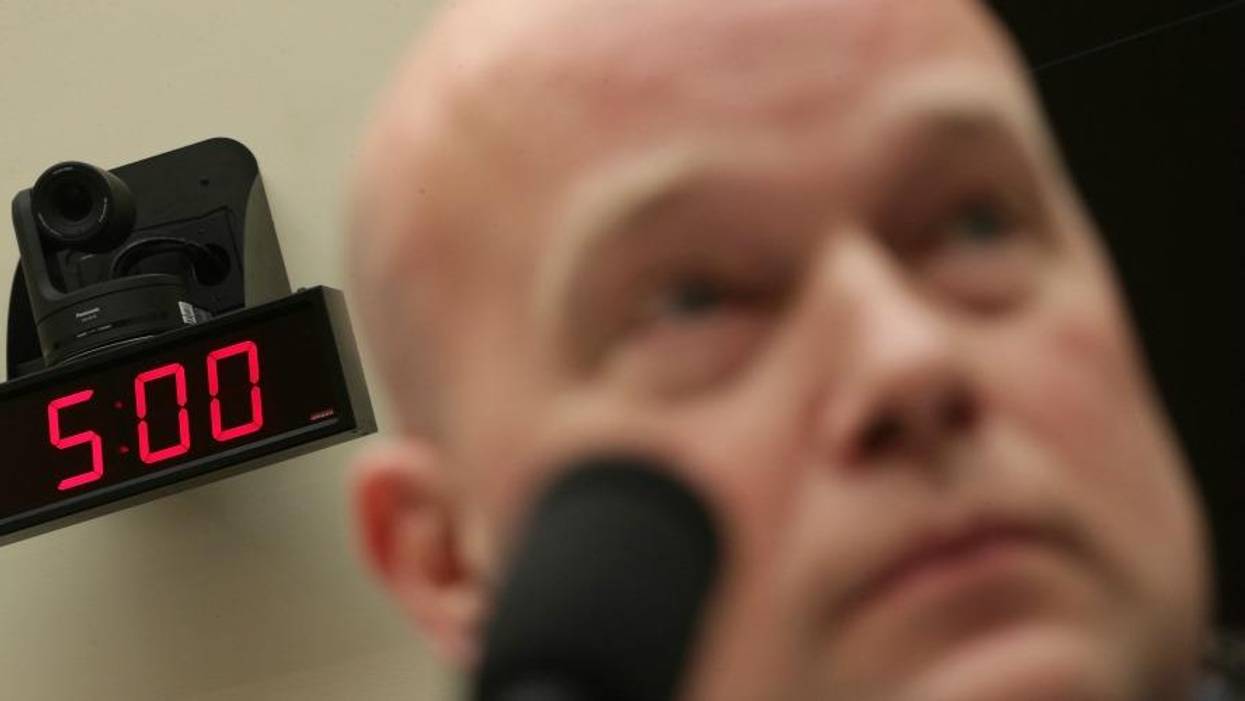
Moments into his testimony before the House Judiciary Committee on Friday, acting Attorney General Matthew Whitaker helped set the tone for the hearing by refusing to directly answer questions from Democrats and drew audible gasps when he told committee chairman Jerrold Nadler (D-NY) that his "five minutes were up."
Nadler called the hearing to provide oversight of the U.S. Department of Justice, which Whitaker has overseen since former Attorney General Jeff Sessions was fired in November. Whitaker agreed to testify at the hearing where Democrats' questioning largely focused on his oversight of Special Counsel Robert Mueller's investigation.
The acting attorney general first challenged Nadler's line of questioning when the chairman asked whether he had been briefed on Mueller's investigation in December 2018, including just before announcing that he would not recuse himself from the probe. Whitaker demanded to know the "basis" of the question.
"It is our understanding that at least one briefing occurred between your decision not to recuse yourself on December 19 and six days later, Christmas Day," Nadler said.
Whitaker then said he would not answer questions based on representatives' "speculation."
The exchange grew more contentious when Whitaker flatly refused to answer Nadler when he asked whether Whitaker's approval had ever been requested for action by Mueller's probe.
"Mr. Chairman, I see that your five minutes is up," Whitaker said. "I'm here voluntarily, I agreed to five-minute rounds."
The remark drew a surprised look from the chairman as well as gasps and laughter from the room.
On social media, critics expressed shock at Whitaker's conduct, with some asserting that his rebuke of Nadler--like Supreme Court Justice Brett Kavanaugh's angry testimony before a Senate committee in September--was likely for President Donald Trump's benefit.
The ignorance & lack of respect for a coequal branch of govt is indeed astonishing, & the chairman can make whatever rules he wants in his own hearing.
Let's also remember that like every other cabinet official (& one SupCt Justice), Whitaker is playing to an audience of one. https://t.co/PdDTWr7BJq-- Tamara Cofman Wittes (@tcwittes) February 8, 2019
Whitaker continued the tone of his testimony, repeating his challenge of the committee's right to question his actions as head of the Justice Department when her demanded to know if Rep. Sheila Jackson Lee (D-Texas) was basing a question on "anonymous sources." He then asked whether she was permitted to continue with her questioning despite going over her five-minute limit.
"Mr. Attorney General, we are not joking here and your humor is not acceptable," she said. "You are here because we have a constitutional duty to ask questions and the Congress has the right to establish rules."
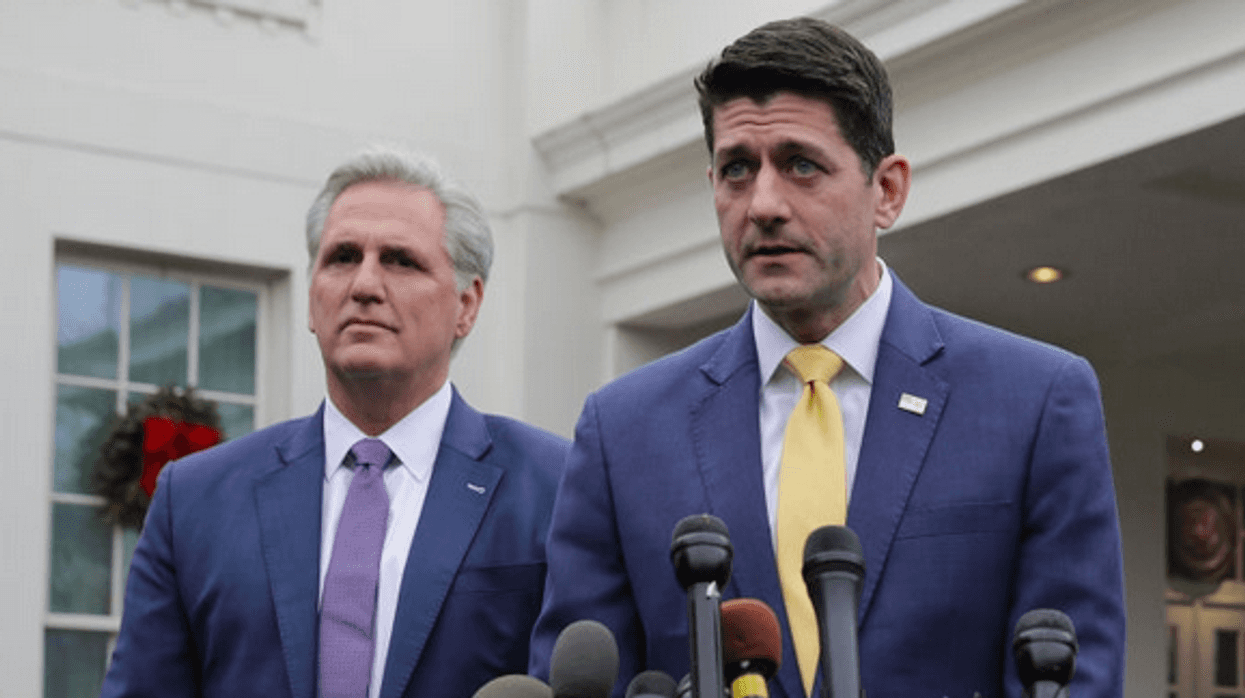
As the hero croons in that classic old musical Brigadoon, what a day this has been, what a rare mood I'm in.
But that guy was singing that his mood was almost like being in love. On Thursday night, the mood I was in was almost like being in complete frustration and despair, reeling at the feckless, foolish witlessness of the monumental blockhead we have in the White House. He and his apparatchiks despoil the country and democracy like the Vandals sacked Rome.
During the course of Thursday in Washington -- mind you, this one single day:
Thursday was, as a cabdriver said to me back at the height of the Iranian hostage crisis, a whole lotta chaotic. Yet this seems much, much worse than that disaster. This is a Perfect Storm of ineptitude and malice that is truly frightening. All the grownups have now left the building.
In the wake of the day's craziness, the Dow closed down 464 points. The market, it's said, is headed for the worst December since the Great Depression. But intractable in his ignorance, Trump may go on in this shambles of a presidency for at least another 25 months, unless before its official end, he destroys us all.
Mueller will issue his final report, Democrats with a new House majority will ratchet up investigations and maybe even impeach. A greater scandal could be revealed that might shake even Trump's fanatical supporters to the core. But until the next election rolls around or GOP leadership and Senate Republicans suddenly become patriots, renouncing their putrescent Pied Piper and calling for his impeachment and conviction, resignation or invocation of the 25th Amendment, we are in for it.
It's pouring here in New York as I write this and even more so in Washington. They reported on the news the other night that the capital is having its rainiest year on record. See, a friend of mine said, the heavens weep in shame.
What a day this has been.
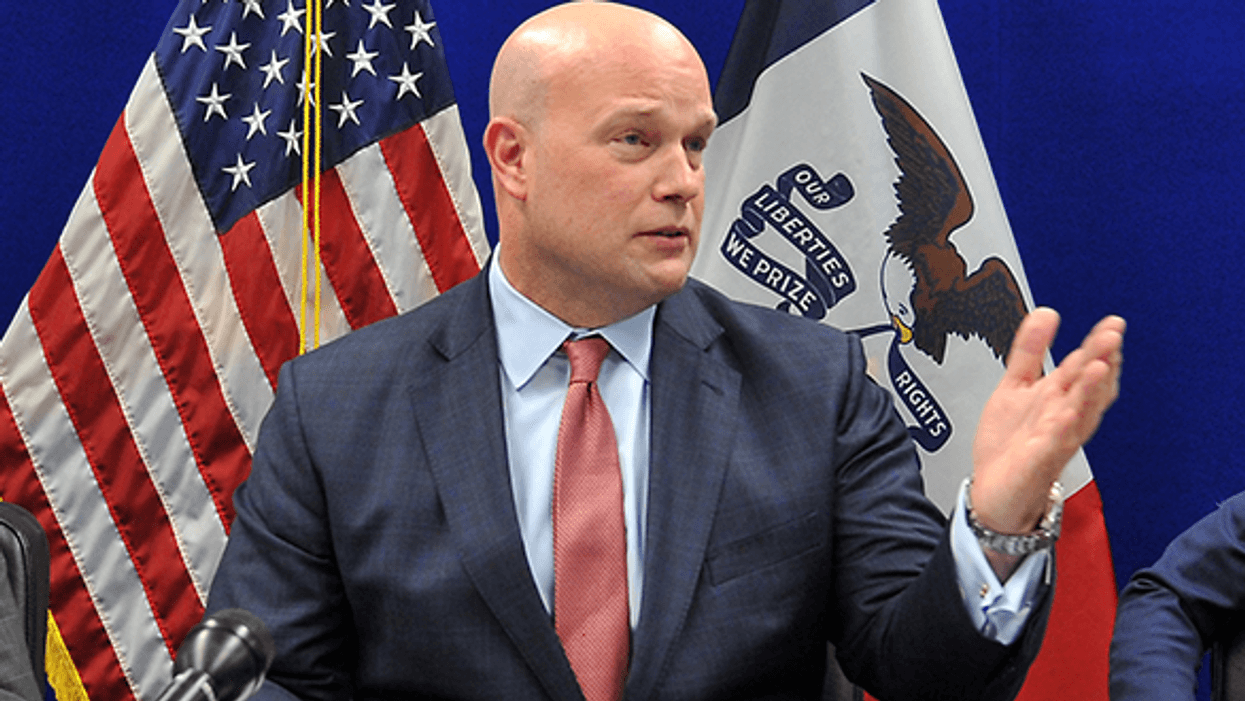
Last week ended with an extraordinary request of the U.S. Supreme Court: Decide in a pending gun case out of Nevada whether Matthew Whitaker, the acting attorney general, can lawfully lead the Justice Department or whether his dubious appointment taints everything the DOJ now does. President Trump spent the weekend defending Whitaker's promotion -- but the case for Whitaker gets less credible by the day.
That's largely because Trump continues to be unable or unwilling to talk about Whitaker in any way other than to incriminate them both in some sort of obstruction of justice. On Sunday the president told a reporter that he would not stop Whitaker if Whitaker moved to curtail special counsel Robert Mueller's investigation into the Trump team's Russia ties. He also claimed, implausibly, that he did not know that Whitaker long has been critical of the scope of the Mueller probe. Whitaker shared his concerns in public as early as August 2017 when he wrote this op-ed piece. Does anyone believe Trump wasn't aware of it?
It's easy to understand why Trump would want a toady at the Justice Department as the Mueller probe enters what we all presume are its final phases. Whitaker's predecessor, Jeff Sessions, had recused himself from oversight of the Mueller probe, whatever that actually meant in real life. But Whitaker comes with no such restraints. That means everything to Trump, and it explains why the White House won't dare subject Whitaker to a confirmation process.
What's harder to understand about what we are seeing is precisely what Whitaker has done to otherwise deserve the promotion he has just received. When Whitaker was a federal prosecutor in Iowa during the Bush administration, he was no star. He exhibited instead what many considered an overzealous yearning for partisan prosecutions. After Whitaker left the federal government, he was an advisory board member of a Miami company accused of fraud by its investors. That didn't go so well. His main contribution as a board member appears to have been efforts to silence critics of the company by threatening them with legal action.
There is nothing in Whitaker's experience or background that justifies the position he now holds. In 2016, Whitaker's company defaulted on its federal obligations over a taxpayer-subsidized apartment rehabilitation project in Iowa. This may seem like the ordinary course of business to a president who has been serially bankrupt, but it shows nothing of the integrity and respect for the rule of law an attorney general must have. Whitaker's relationship with Sam Clovis, a political operative now a Mueller witness, alone should disqualify him from overseeing the special counsel's work.
And now there are other concerns as well. On Saturday, for example, we learned there are questions about whether Whitaker has complied with the Ethics in Government Act, which requires senior government officials to publicly disclose certain financial information. The Justice Department reportedly has failed or refused to provide this information about Whitaker despite requests to do so from an ethics organization. Indeed, DOJ officials evidently won't even disclose when they plan to disclose Whitaker's information. What's in those financial records? Why can't we see them?
It's too early to know how the Supreme Court will react to the Whitaker problem they've just had handed to them. It's likely they won't react at all, at least on the merits, at least for now. But the argument being made by the respected Supreme Court litigator Thomas Goldstein and others -- that the Justice Department cannot lawfully represent the federal government in court if it is led by an unlawful attorney general -- is a serious one the courts cannot ignore for long. The Office of Legal Counsel memo, drafted and disclosed last week, is nothing more than an earnest effort at making a bad legal position look palatable.
Even if Whitaker's appointment were legitimate, and in the view of at least experts, it is not, he is not nearly as qualified as are other Justice Department officials Trump bypassed when he picked Whitaker to be his "eyes and ears" into the Mueller probe. And even if Congress passes that bill designed to protect Mueller -- don't bet on it -- it still leaves us with an attorney general who is unqualified to otherwise run the Justice Department. How weak is Whitaker's support? Washington viewers of Fox News lately got to see a new commercial from a conservative group advocating for Whitaker's recusal with the message: "America needs an attorney general who doesn't play politics."
Every attorney general plays politics. Some play it more artfully than others. But no attorney general has ever been appointed solely and expressly to offer political protection to a president under an existential investigation. Maybe enough congressional Republicans will stand up to Trump and force him to nominate a legitimate attorney general. Maybe the federal courts will void the Whitaker pick. Maybe members of the Democratic-controlled House of Representatives next term can figure out a way to hold Whitaker accountable. Maybe. Maybe. Maybe. Today there is little reason to feel thankful for any of this.

Denouncing President Donald Trump's appointment of acting attorney general Matthew Whitaker--a fervent critic of the Russia probe--as a blatant effort to "subvert the Constitution to protect himself and evade accountability," three Democratic senators on Monday filed suit against the White House and demanded that Whitaker be barred from temporarily serving as the nation's top law enforcement official.
"Americans prize a system of checks and balances, which President Trump's dictatorial appointment betrays."
--Sen. Richard Blumenthal
"The stakes are too high to allow the president to install an unconfirmed lackey to lead the Department of Justice--a lackey whose stated purpose, apparently, is undermining a major investigation into the president," declared Sen. Sheldon Whitehouse (D-R.I.), who joined fellow Democratic Sens. Mazie Hirono (Hawaii) and Richard Blumenthal (Conn.) in filing the lawsuit.
"We want the court to make clear that the Senate must confirm Matthew Whitaker's appointment as acting attorney general--otherwise this temporary appointment violates the Constitution's Appointments Clause," Hirono added in a statement.
As Common Dreams reported, Trump immediately selected Whitaker as acting attorney general after he fired previous Attorney General Jeff Sessions earlier this month.
Legal experts and progressive advocacy groups immediately raised alarm at the prospect of Whitaker overseeing Special Counsel Robert Mueller's Russia probe, given that he argued in an opinion piece last year that the investigation has gone "too far."
The day after Sessions' ouster, hundreds of thousands of people took to the streets across the nation to highlight the "existential threat" Whitaker poses to Mueller's investigation.
While the Justice Department has predictably defended Trump's appointment of Whitaker as legal, Sen. Blumenthal argued in a statement that Whitaker must be confirmed by the Senate in order to lawfully serve as acting attorney general.
"Installing Matthew Whitaker so flagrantly defies constitutional law that any viewer of School House Rock would recognize it. Americans prize a system of checks and balances, which President Trump's dictatorial appointment betrays," Blumenthal said. "President Trump is denying senators our constitutional obligation and opportunity to do our job: scrutinizing the nomination of our nation's top law enforcement official. The reason is simple: Whitaker would never pass the advice and consent test."

In two separate letters released on Wednesday, nearly 2,000 lawyers and more than two dozen advocacy groups demanded that lawmakers and the Justice Department do everything in their power to ensure that the Trump administration does not undermine Special Counsel Robert Mueller's investigation.
In an open letter signed by more than 1,600 attorneys from across the country, DOJ officials and lawmakers were urged to affirm that "no person is above the law, including the President of the United States," and to protect the country from President Donald Trump's "outrageous attempt to undermine the investigation" into his 2016 campaign.
The lawyers' demands were bolstered by a letter sent to all 535 members (pdf) of the House and Senate by 29 national organizations and ethics experts, outlining why Acting Attorney General Matthew Whitaker must be forced to recuse himself from Mueller's probe and decrying the precarious position into which Trump threw the investigation and the country when he appointed Whitaker last week.
"A generation ago, President Richard Nixon assaulted the rule of law by firing a prosecutor investigating the Watergate scandal. But his attack on our democracy was thwarted by dedicated public servants...So must it be in our time." --1,600 lawyers in letter to lawmakers
"Mr. Whitaker is unfit for his new job and must recuse himself from overseeing the Mueller investigation," wrote the groups and experts, which included Indivisible, Common Cause, and former White House ethics lawyers Norm Eisen and Richard Painter. "We call on you to take all necessary steps to help ensure that Mr. Whitaker is removed from overseeing the Mueller investigation. Furthermore, the Mueller investigation must be protected from any interference and allowed to proceed to its full and appropriate conclusion."
Whitaker was named as Jeff Sessions' successor last Wednesday after Sessions was forced to resign from his attorney general position, following months of clashes with the president. Sessions's decision to recuse himself from overseeing Mueller's probe was a frequent subject of Trump's vitriol, as the president appeared to believe the attorney general's job was to defend him--not the U.S. Constitution and the nation.
With Sessions out at the Justice Department, oversight of the investigation is now in Whitaker's hands rather than Deputy Attorney General Rod Rosenstein's--intensifying fears among progressives that he could help Trump to undermine the inquiry.
Noting Whitaker's well-documented hostility toward the investigation, the lawyers wrote, "President Trump's removal of former Attorney General Jeff Sessions is clearly a maneuver to obstruct or end Special Counsel Robert Mueller's investigation into possible illegal activities by his campaign."
In their letter, the 29 groups and experts--noting that Whitaker had previously been described in the press as "the 'eyes and ears' of the White House" in the DOJ--detailed some of Whitaker's attacks on the probe:
In August 2017 Whitaker identified himself with the position that the Mueller investigation is a "lynch mob." Whitaker retweeted a Philadelphia Inquirer article titled "Note to Trump's lawyer: Do not cooperate with Mueller lynch mob." Whitaker said , in retweeting the article, "Worth a read." Mr. Whitaker also denied there was any evidence that Russia intervened in the 2016 election five months after the intelligence community issued a report concluding that Russia president Vladimir Putin had ordered a campaign to influence the 2016 presidential campaign.
Those statements and more, both letters argued, amount to an "irreparable" and "profound" conflict of interest and give lawmakers plenty of reason to demand that Whitaker recuse himself from overseeing the investigation.
In addition to demanding that elected officials call for Whitaker's recusal, the 29 groups made a point of asking Senate Majority Leader Mitch McConnell to put partisanship aside and allow the Senate to vote on legislation introduced earlier this year to protect the Mueller inquiry.
"We reject Senator McConnell's unfounded speculation that the investigation is safe from interference and that therefore there is no need for this bipartisan legislation," the groups wrote. "We call on Senator McConnell not to partner with President Trump in his efforts to undermine and potentially kill the Mueller investigation."
The 1,600 attorneys pointed to historical precedent in their demand that McConnell and others defend the Constitution and the nation instead of allowing Trump to thwart Mueller's work.
"A generation ago, President Richard Nixon assaulted the rule of law by firing a prosecutor investigating the Watergate scandal," wrote the attorneys in their letter. "But his attack on our democracy was thwarted by dedicated public servants, independent and impartial courts, aggressive bipartisan congressional oversight, and an overwhelming public outcry, led in no small part by lawyers from every branch of our profession. So must it be in our time. This is our challenge and responsibility."
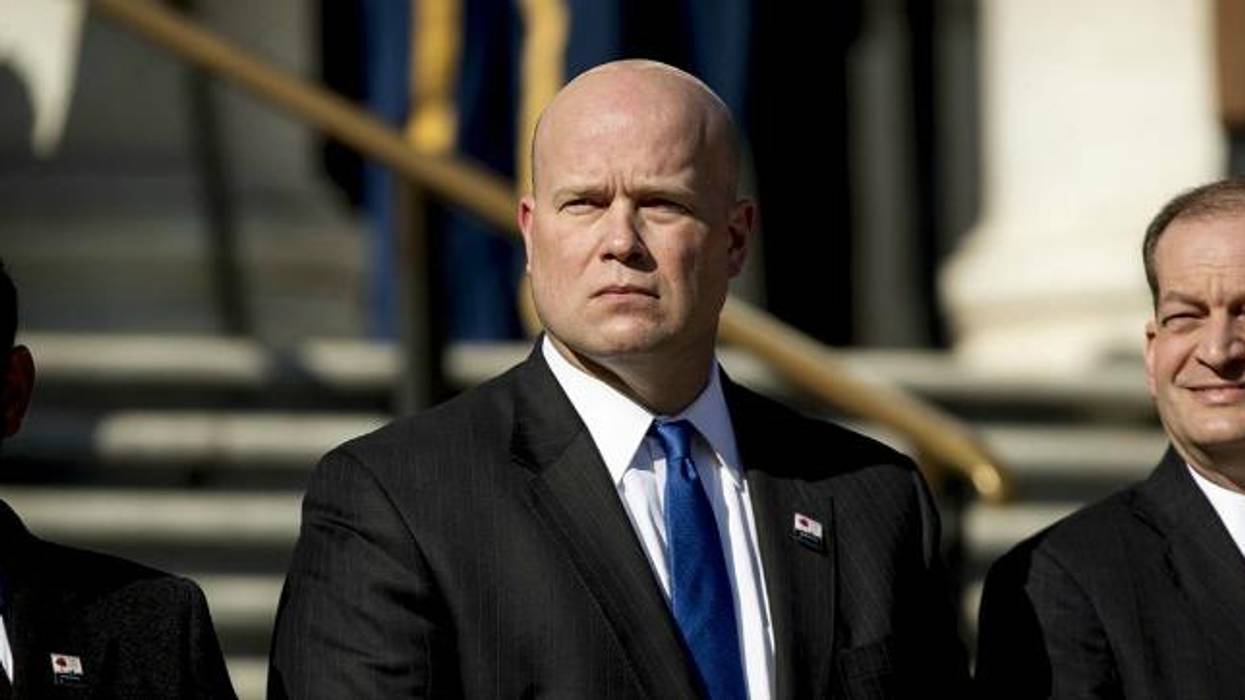
Maryland on Tuesday mounted the first court challenge to President Donald Trump's appointment of Matthew Whitaker as acting attorney general after he fired Jeff Sessions last week.
The state, according to the New York Times, is requesting an injunction to prevent Whitaker from acting as attorney general, arguing that under federal law, the position should instead belong to Deputy Attorney General Rod Rosenstein, who has been overseeing Special Counsel Robert Mueller's probe of alleged election meddling and obstruction of justice since Sessions recused himself.
Trump's appointment of Whitaker, an outspoken critic of the Mueller investigation, has been widely denounced as a ploy hamstring the probe.
The action comes as part of an ongoing case about the Affordable Care Act in which Sessions is named as a defendant. As Sessions is no longer the nation's top law enforcement official, Judge Ellen L. Hollander of the Federal District Court for the District of Maryland must decided who is the legal successor in the case.
While the Trump administration has claimed that Whitaker meets all requirements under the Federal Vacancies Act of 1998, Maryland, as the Times reports, argues that under the Attorney General Succession Act and the appointments clause of the Constitution--which states that "principal officers" of the federal government must be appointed "with the advice and consent of the Senate"--Sessions' successor must be Rosenstein until the Senate confirms a permanent replacement.
The significant authority of attorney general, the filing reportedly declares, "calls for the highest levels of integrity and personal judgment, prerequisites safeguarded by the Constitution's command that principal officers be subject to the oversight and check provided by Senate confirmation." The president, it states, may not "bypass the constitutional and statutory requirements for appointing someone to that office."

Jeff Sessions is out as attorney general, replaced by a bootlicking Trump stooge named Matt Whitaker. Given that President Trump openly said on national television in 2017 that he fired then-FBI Director James Comey to try to stop the Russia investigation, it's a safe bet that acting Attorney General Matt Whitaker -- like Robert Bork before him -- will be the cat's paw Trump will use to halt or impede Special Counsel Robert Mueller's Russia probe.
This would be obstruction of justice.
Let's examine Whitaker's career up to now. Before serving as Sessions' chief of staff, he was a U.S. attorney in Iowa from 2004 to 2009. He mounted a campaign for Democrat Tom Harkin's Senate seat, and lost to Republican Joni Ernst. Afterwards, he joined the board of a company called World Patent Marketing. What did this company do? The Washington Post reports:
The company was shut down earlier this year amid an FTC probe that accused it of being a sham group that cheated inventors by falsely promising them help with marketing their ideas in exchange for exorbitant fees. "For the last three years, Defendants have operated an invention-promotion scam that has bilked thousands of consumers out of millions of dollars," the agency alleged in a recently unsealed court filing. "In truth and in fact, Defendants fail to fulfill almost every promise they make to consumers."
Before going to the Trump administration, Whitaker had a cushy job at a conservative nonprofit funded by dark money. In 2017, he published an op-ed on CNN's website arguing that the Mueller probe "is going too far," because it was looking into Trump's personal finances. (Heaven forfend!) He also tweeted an article calling this probe a "lynch mob."
Finally, he is good friends with Sam Clovis, a witness in the Mueller investigation due to his communication with George Papadopoulos (who pleaded guilty to lying to the FBI). In an ethical government, that alone would probably make Whitaker recuse himself as Sessions did. But more fundamentally, any Trump selection for attorney general, acting or otherwise, should recuse himself because Trump is the subject of the investigation. The conflict of interest is inherent and inescapable.
In U.S. law, obstruction of justice includes "endeavors to influence, obstruct, or impede the due administration of justice." In more plain language: "A person obstructs justice when they have a specific intent to obstruct or interfere with a judicial proceeding." For a concrete example, John Mitchell, H.R. Haldeman, and John Erlichman were convicted of obstruction of justice for (among other things) paying bribes to the Watergate burglars in an attempt to keep them quiet.
Whitaker's argument that Mueller doesn't have authority to investigate Trump's opaque personal finances is ridiculous. Whether you think he should or not, it is indisputable that Mueller does have wide powers: He has been tasked with investigating "any links and/or coordination between the Russian government and any individuals associated with the campaign of President Donald Trump," and "any matters that arose or may arise directly from the investigation," and then prosecuting any federal crimes he deems "necessary and appropriate." (Incidentally, it seems pretty clear the probe could go for a decade straight and not run out of people to prosecute.)
President Trump has already almost certainly committed obstruction of justice by firing Comey (he admitted he did it to stop the investigation on TV!) but directly shutting down or meddling with the investigation itself could not possibly be anything but obstruction. It would be the subject of a criminal investigation using his political authority to slow or stop that investigation. That is obstruction of justice.
Though they will surely try, not even the Trump hacks at The Federalist could come up with a definition of impeding or obstructing "the administration of justice" that doesn't include that. House Democrats, and the nation as a whole, better be ready to face up to this reality.
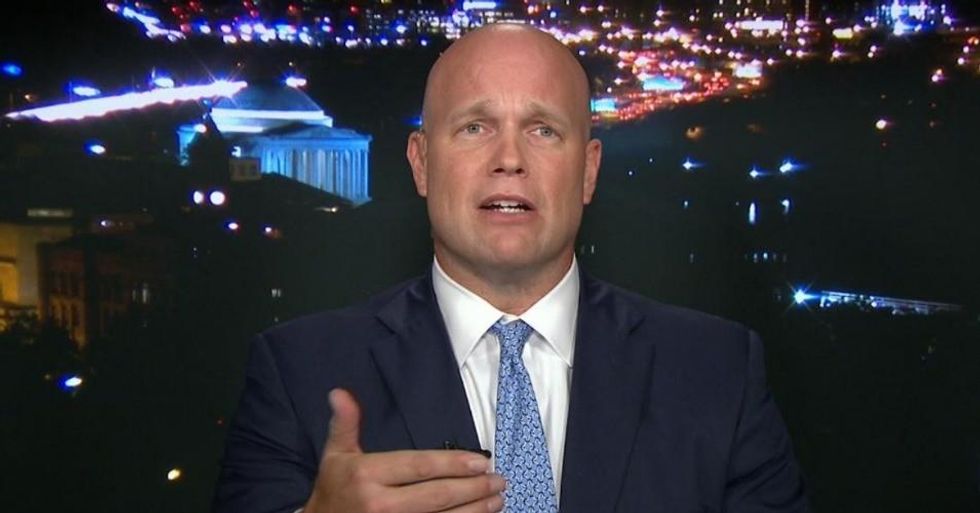
Democratic lawmakers on Sunday demanded assurances from the Justice Department that acting Attorney General Matthew Whitaker will recuse himself from overseeing Special Counsel Robert Mueller's investigation into President Donald Trump's 2016 campaign, calling a failure to do so a clear breach of ethics.
In a letter (pdf) to the department's top ethics official, Democrats who are expected to wield subpoena power in the upcoming congressional session wrote that Whitaker's well-documented history of hostility towards the Mueller probe amounts to a clear conflict of interest, and necessitates a recusal in the same way former Attorney General Jeff Sessions' own meetings with Russians during the 2016 campaign did.
"There are serious ethical considerations that require Mr. Whitaker's immediate recusal from any involvement with the Special Counsel investigation," wrote the Democrats. "The official supervising the Special Counsel investigation must be--in both fact and appearance--independent and impartial. Regrettably, Mr. Whitaker's statements indicate a clear bias against the investigation that would cause a reasonable person to question his impartiality."
Among the seven signers of the letter to Lee Lofthus, Assistant Attorney General for Administration, were Reps. Jerry Nadler (D-N.Y.) and Adam Schiff (D-Calif.). Nadler is expected to take control of the House Judiciary Commitee in January while Schiff will chair the House Intelligence Committee.
Both congressmen spoke with the press on Sunday about their plans to ensure that Whitaker's stated views about the Mueller probe do not interfere with or even shut down the investigation.
"We have every right to expect all of the employees of the Justice Department to follow the ethics rules and that means especially the attorney general," Schiff told Chuck Todd on NBC's "Meet the Press" on Sunday. "We are going to find out whether he made commitments to the president about the probe, whether he is serving as a back channel to the president or his lawyers about the probe, whether he's doing anything to interfere with the probe. Mr. Whitaker needs to understand that he will be called to answer. And any role that he plays will be exposed to the public."
On CNN's "State of the Union," Nadler stated unequivocally that his first priority as the incoming chairman "is to protect the Mueller investigation" and said Whitaker's failure to recuse himself will result in a subpoena.
"The president's dismissal of Attorney General Sessions, and his appointment of Whitaker, who is a complete political lackey, is a real threat to the integrity of that investigation," Nadler told Jake Tapper.
"We will subpoena...Mr. Whitaker," he added.
According to the Washington Post, Whitaker currently has no intention of recusing himself from supervising the investigation.
Before becoming Sessions' chief of staff at the DOJ in 2017, Whitaker was a conservative commentator for CNN, where he wrote an op-ed in August 2017 entitled "Mueller's Investigation of Trump Is Going Too Far."
Whitaker, the Democrats noted, also has close ties with former Trump campaign chairman Sam Clovis, a grand jury witness in the Mueller probe, having served on Clovis's campaign to be Iowa's state treasurer in 2014.
"Mr. Whitaker's relationship with Mr. Clovis, who is a grand jury witness in the Special Counsel investigation, as well as Mr. Whitaker's other entanglements, raise additional concerns about his ability to supervise the investigation independently and impartially," wrote the lawmakers.

Matthew Whitaker, the new acting attorney general, arrived in classic Trumpian fashion: via tweet, unvetted for his current post, and awash in a brew of extreme opinions, conflicts of interest, corrupt intent, and disregard for the rule of law. Particularly troubling are his past comments on Special Counsel Robert Muller's investigation, since Whitaker is taking over the department at a pivotal point in the probe.
For the last year, Whitaker had been chief of staff to Jeff Sessions, the attorney general forced out this week. Before that he was in private practice in Des Moines, Iowa, after serving as U.S. Attorney for the Southern District of Iowa for five years, ending in 2009. But it's his loyalty to the president that really seems to recommend him for the job. Whitaker has signaled in past writings and interviews that he would satisfy the president's desire to tame Mueller 's ongoing investigation into Russian interference in the 2016 presidential election, and many possible related misdeeds by the Trump family.
Before becoming Sessions' chief of staff, Whitaker made no secret of his dislike of the Mueller investigation. In the wake of the Comey firing, he sneered at demands for an independent investigation as "hollow calls...[and] craven attempts to score cheap political points and serve the public in no measurable way." After Mueller's appointment, he warned that the inquiry was verging on becoming a "mere witch hunt."
And there's more. Whitaker argued that a Mueller investigation into the president's finances would be a "red line." He referred to Mueller's team as a "lynch mob" and decried the raid on former Trump campaign chairman Paul Manafort's house as intimidation. He is a close political ally of Sam Clovis, the former national co-chairman of the Trump campaign who has spent 19 hours testifying or interviewing with the Mueller team. He has spoken in support of the meeting Donald Trump Jr. took with a bevy of Russians to learn negative information about Hillary Clinton during the presidential campaign.
It's no surprise, then, that the first thing we learned about Whitaker's interim leadership of the Department of Justice was that he would be taking over supervision of the Mueller investigation from Deputy Attorney General Rod Rosenstein, who had overseen the probe after Sessions recused himself from that role. Trump has effectively pulled off the neat trick of appointing his own prosecutor. For the American public to have confidence in any outcome of the investigation, the president cannot have influence -- or appear to have influence -- over the process.
Best of all, Trump avoided the Senate's advise and consent role by using a statute that allows him to hand-pick an acting successor to Sessions for at least 210 days. No vetting necessary for the job other than the president's own inclinations and whims.
The timing is more than a little suspicious. Trump announced Sessions' ouster a few hours after Politico reported that Trump, Jr., thinks he could be indicted. As of Wednesday, Mueller, who has spent the last 60 days avoiding any major actions that could affect elections, was free to issue indictments. But now he will have to run any major decisions by Whitaker, including all indictments or a report of his findings, now that he is clear of the customary DOJ pre-election quiet time. CNN has reported that the team had begun drafting its final report.
Sessions reportedly asked to serve out the week but was told to clear out immediately. Now, Whitaker and the president have the maximum amount of time between taking control of the Mueller investigation and when the first set of Democratic-controlled House subpoenas might fly on January 3.
Aside from the essential questions about the threat Whitaker poses to Muller's investigation, it's also debatable whether Trump's appointment of Whitaker is even legal. It is certainly not standard procedure to precipitously elevate someone to be the nation's top law enforcement officer when they haven't been confirmed for that position by the Senate.
In the event the Attorney General resigns or is unable to perform his or her job, the Department of Justice's line of succession is fixed by a specific statute and codified in a memorandum order. It involves putting people who have gone through the Senate vetting and confirmation process for the role in charge of the nation's most powerful law enforcement apparatus. Trump made an end run of that specific law by using a generic HR statute, the Federal Vacancies Reform Act. But some people question whether he's allowed to use that statue and ignore the more precise law.
Even more, while Sessions and the White House may have framed his departure as a resignation, there is no question he was fired. In those circumstances, the Vacancies Reform Act may not be usable by the president. This precise issue was the subject of litigation earlier this year after Trump fired Veterans Administration Secretary David Shulkin and appointed Robert Wilkie to serve in an acting capacity. The case never made it to judgment because the Senate cured the problem by confirming Wilkie. But now we have the Whitaker appointment to test the question. Only this time, rather than testing the acting VA secretary's authority regarding veterans' benefits, we'll get to see challenges to the entire law enforcement apparatus of the nation including the validity of surveillance warrants and capital case decisions.
After more than a year of sniping from the sidelines about the Mueller probe and Sessions, Trump has finally acted. His intentions could not be clearer. The president is using his power to fire and hire for personal advantage and to place himself above the law. The threat to the rule of law could not be more imminent.