

SUBSCRIBE TO OUR FREE NEWSLETTER
Daily news & progressive opinion—funded by the people, not the corporations—delivered straight to your inbox.
5
#000000
#FFFFFF
To donate by check, phone, or other method, see our More Ways to Give page.
Daily news & progressive opinion—funded by the people, not the corporations—delivered straight to your inbox.
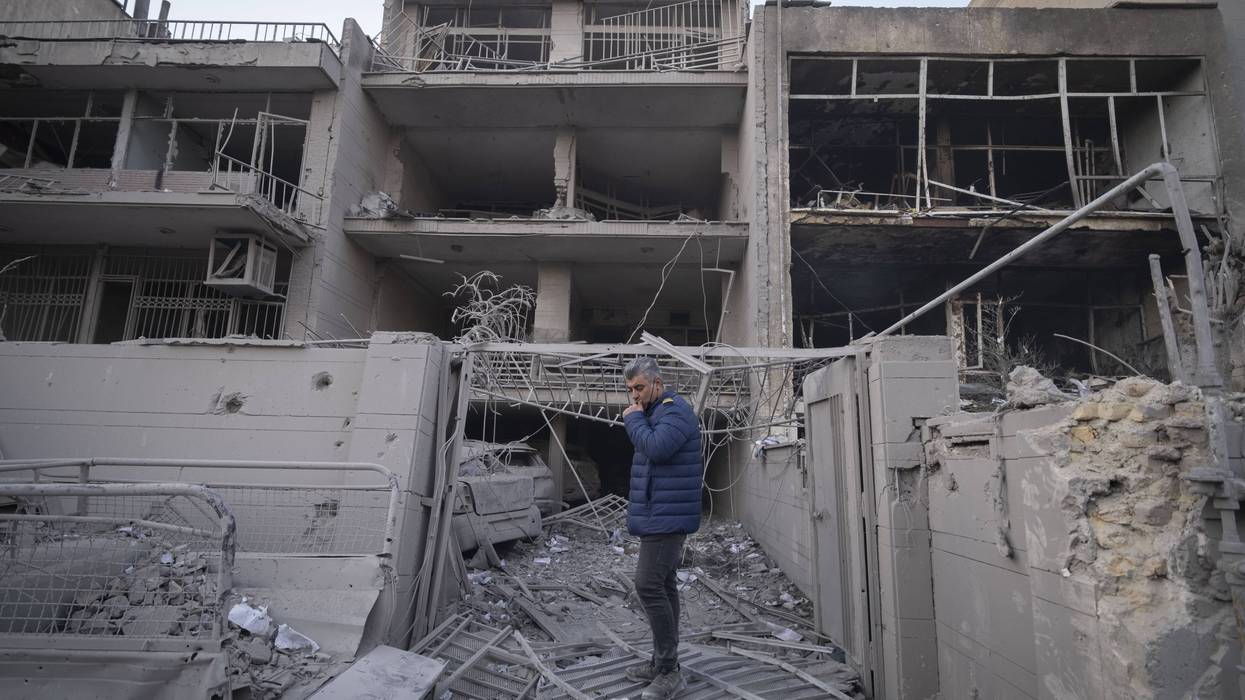
“The last time a country ‘unconditionally surrendered’ to the US was after we dropped atomic bombs on Japan,” noted one foreign policy scholar.
President Donald Trump’s demand for an ‘unconditional surrender” from Iran is raising fears that the massive military campaign he unleashed this past weekend will turn into an unmitigated disaster, potentially unseen since the Second World War.
“There will be no deal with Iran except UNCONDITIONAL SURRENDER,” the president wrote Friday morning on Truth Social. “After that, and the selection of a GREAT & ACCEPTABLE Leader(s), we, and many of our wonderful and very brave allies and partners, will work tirelessly to bring Iran back from the brink of destruction, making it economically bigger, better, and stronger than ever before.”
Dylan Williams, vice president for government affairs at the Center for International Policy, explained how unprecedented this demand was.
"The invasion and occupation of Iraq and replacing the Taliban with the Taliban after 20 years in Afghanistan were disastrous enough without seeking their formal surrender,” he said.
Each of those conflicts entailed the deployment of more than a million US soldiers and dragged on for years, costing hundreds of thousands of lives.
“The last time a country ‘unconditionally surrendered’ to the US was after we dropped atomic bombs on Japan,” Williams added.
With each passing day, the Trump administration has seemed to extend its projections for the scope and duration of its regime-change campaign in Iran.
Last Saturday, the first day of “Operation Epic Fury,” which killed Iranian Supreme Leader Ayatollah Ali Khamenei, Trump projected that the war would be over in “four weeks or less.” The next day, he adjusted that to say it could go on for “four to five” weeks, or perhaps “much longer.”
By Wednesday, Defense Secretary Pete Hegseth said the war could drag on for as long as “eight weeks.” That same day, Politico reported that US Central Command (CENTCOM) had requested additional intelligence officers for its Tampa headquarters to support Iran operations for “at least 100 days but likely through September.”
According to data analyzed by the Human Rights Activists News Agency (HRANA), part of a US-based human rights monitor for Iran, at least 1,168 civilians have been killed in the US-Israeli war against Iran, where Hegseth boasted earlier this week that the US is raining down “death and destruction from the sky all day long.”
Investigations have revealed that the deadly bombing of a girls' school, which killed at least 175 people last weekend, mostly children, was "likely" carried out by the US, and several other schools have also been attacked.Following retaliation from the Iranian-aligned militia Hezbollah, Israel has launched a new onslaught into Lebanon. This week, the Israeli military ordered more than half a million people to flee their homes immediately and has pounded Beirut and other areas with airstrikes, killing more than 200 as of Friday, according to the Lebanese health ministry.
Trump reportedly began the war expecting a swift and painless display of overwhelming force akin to his abduction of Venezuelan President Nicolás Maduro in January. But Iran has mounted a fearsome retaliation that has hit US bases and other infrastructure in several of the wealthy Persian Gulf states aligned with the US and Israel, killing at least six American troops.
"Trump demands Iran's unconditional surrender," said Sina Toosi, a senior fellow at the Center for International Policy. "Meanwhile, the Strait of Hormuz remains closed, global economic costs are rapidly mounting, Iranian missile and drone strikes continue, several US [missile defense] and radar facilities have been hit, interceptors are being drained, and Israeli air defenses are showing strain."
"Inside Iran, there are no signs of regime disintegration or unrest. The Islamic Republic’s base, and beyond it, continues to be mobilized in the streets across the country while officials assert they are prepared for a long war," he continued. "Gulf allies haven’t joined in attacking Iran and appear more angry that Trump launched this war against their wishes."
"The reality on the ground," Toosi said, "looks nothing like the fantasy seemingly in Trump's head and being sold by some in Washington."
Trita Parsi, the executive vice president at the Quincy Institute for Responsible Statecraft, said that Trump’s demand for an unconditional surrender suggests that rather than seeking an offramp, he is retreating further into delusion about the ease with which the US can force Iran to capitulate.
“He was lulled into believing that Iranian surrender is in the cards,” Parsi said. “It isn’t.”
Parsi said Trump rejected diplomatic solutions, including a deal mediated by Oman just before the attack began, under which Iran had agreed to stop stockpiling enriched uranium and degrade what it has to the point where it could not be used for a nuclear weapon.
“The false lure of surrender,” he said, “is why his war is turning into a disaster.”
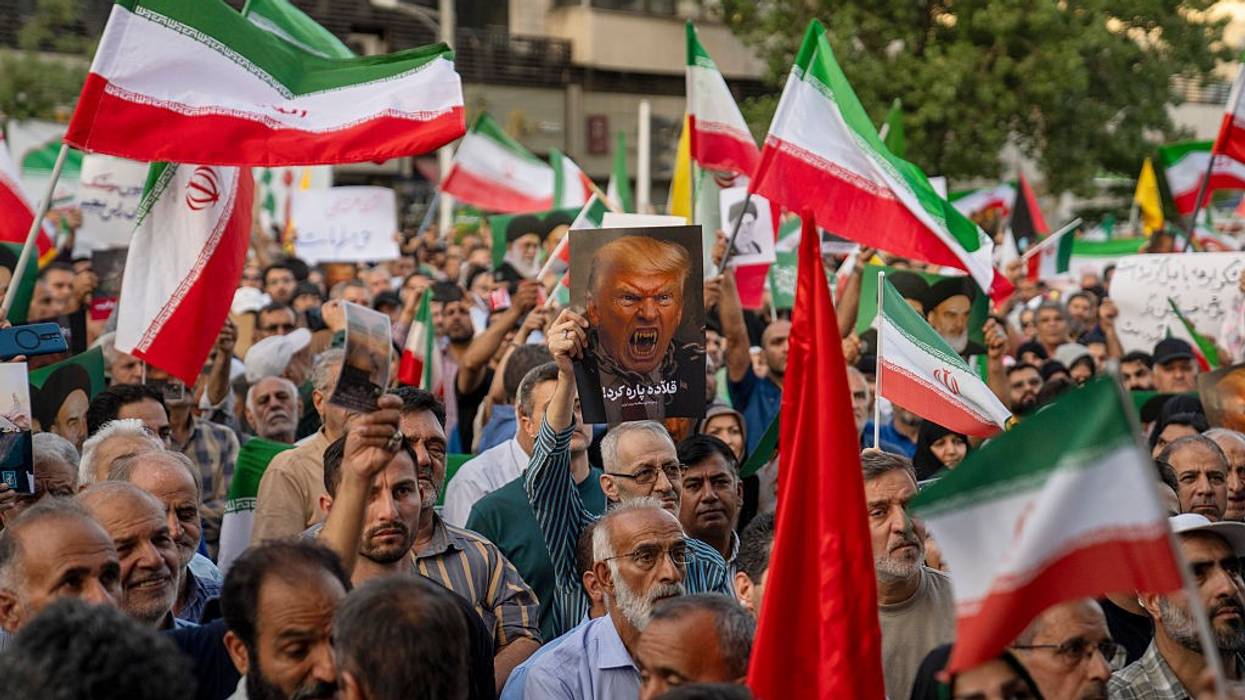
Trump's vision is of a world where the strong do what they can and the weak suffer what they must. It has nothing to do with peace.
It’s been said that Donald Trump’s decision to join Israel’s war with Iran underscores his failures as a peacemaker. This is a preposterous statement because the idea of Trump being “a peacemaker and unifier” has always been nothing short of preposterous.
Yes, long before his ascendance to the White House, Trump had managed to paint him as a peacemaker, promising to end America’s “endless wars.” But most people in the United States of Amnesia seem to have forgotten that during his first four-year tenure in the White House Trump embarked on a dangerous path with a series of reckless foreign policy decisions that threatened peace and made the world a far more dangerous place. Trump 1.0 walked away from an Iran deal and withdrew from the Intermediate-Range Nuclear Forces (INF) Treaty and the Open Skies Treaty while U.S. air wars became broader and “increasingly indiscriminate.” Iraq, Somalia, and Syria were among the countries that Trump loosened the rules of engagement for U.S. forces. Trump also ordered the killing of Iranian Gen. Qasem Soleimani and threatened “fire and fury” against North Korea.In addition, Trump increased tensions between Israelis and Palestinians by recognizing Jerusalem as Israel’s capital and moving the U.S. embassy there from Tel Aviv. The president of the Palestinian Authority Mahmoud Abbas said at the time that Trump’s decision undermined all peace efforts and called his actions “a crime,” while the political leader of the Hamas movement, Ismail Haniya, who was assassinated by the Israeli Mossad in Tehran on July 31, 2024, called for a new “intifada.” Shortly upon assuming the Office of the President of the United States for the second time, Trump embarked on a jingoistic journey by threatening to take over Greenland (an idea he had floated back in 2019), make Canada the 51st state, reclaim the Panama Canal, and attack Mexico. And just as he had done during his first term in office, he withdrew the U.S. from the landmark Paris climate agreement, even though the climate crisis is an existential one and is expected to increase the risk of armed conflict.
So much for Trump being a peacemaker.
Trump is also a notorious braggart. He repeatedly said that he would end the war in Ukraine in 24 hours upon taking office and boasted that the October 7 attack on Israel by Hamas militants would not have happened if he were president. Yet, five months into his second term in the White House and all that Trump has accomplished in connection with the war in Ukraine is to receive Putin’s middle finger. With regard to Gaza, of course, there is no difference between “genocide Joe” and Trump. Biden funded and armed the Israeli genocide of Palestinians in Gaza while Trump has not only continued to provide Israel with the weapons that is using to slaughter innocent people, mostly women and children, but has floated a plan to “clean out” Gaza and move Palestinians to Egypt and Jordan.
It is hilarious to see Trump’s decision to join Israel in its war with Iran as some sort of a setback in his quest to become a global peacemaker. Trump was never a peacemaker and, in fact, has always been a warmonger. His politics in general, both domestic and foreign, has never been about the pursuit of unity but rather about sowing seeds of division.
Trump’s view of international order is one based on pure power politics and the fear factor. As such, coercion, intimidation, violence and ultimately war are the means through which he understands that U.S. dominance in the international system can be maintained and reinforced. It’s a vision of a world where the strong do what they can and the weak suffer what they must.
Nonetheless, let’s not have any illusions that today’s world is the world that Trump himself has somehow created. We live in a dark world because the powers that be are fundamentally dark forces in themselves, and the most powerful nations call the shots on the international stage. And this is not to imply that the rest of the world is occupied by saintly creatures. Horrendous governments, religious fanatics and extremists of every twisted stripe ready and willing to engage in bloodshed are in plenty supply across the world. But none bears greater responsibility for international injustices and conflicts across the world than the country that stands as the most powerful actor in the world since the end of the Second World War.
Take the U.S. war on terror, which started following the September 11 attacks in 2001. It has been a disaster on multiple fronts. With the U.S. carrying out anti-terror measures in a total of 85 countries, nearly one million people were killed as a result of combat operations, almost 400,000 of them civilians, while an estimated 3.6-3.8 million “died indirectly in post-9/11 war zones,” according to the “Cost of War” project of Brown University.
There is little doubt that NATO, led by the U.S., provoked Russia into invading Ukraine in 2022. The U.S. and its allies have also repeatedly sabotaged possibilities for peace after Russia's invasion. Three years and four months after Russia’s full-scale invasion of Ukraine, there is still no potential for a negotiated end to the war. Nearly 630 days since Israel launched a retaliatory incursion into Gaza, and the slaughtering of innocent people continues on a daily basis as part of what has been widely recognized, even by leading Israeli Holocaust and genocide scholars such as Omer Bartov and Raz Segal, to be an outright genocidal campaign by the neo-fascist Benjamin Netanyahu government. None of this horror would be happening if it were not for the full support provided to Netanyahu’s government by the United States and, to a lesser extent, by some of its key allies. Americans and Europeans alike have as much Palestinian blood on their hands as the Israelis themselves.
Notwithstanding interstate cooperation and the evolution of international law, the international system remains fundamentally anarchic. One of the most important provisions in the Charter of the United Nations, Article 2(4), prohibits the use of force in any manner inconsistent with the purposes of the organization. As a global hegemon, the U.S. has consistently sough to assert its dominant position internationally by acting in violation of the Charter. The use of force against Iran, both by Israel and the U.S., is in clear violation of Article 2(4) of the UN Charter and amounts therefore to a crime of aggression. Yet, there is no international authority to punish Israel and the U.S. for their unlawful actions. Not only that, but both the U.S. presidency and U.S. lawmakers, as well as Israel’s intelligence agencies, are audacious enough to threaten an independent international organization like the International Criminal Court for pursuing international justice. Both Israel and the U.S. feel exempt from accountability for war crimes, crimes against humanity, and genocide simply because of their overwhelming military power and because of the lack of an overarching authority to enforce rules.
And then, of course, there is Europe’s hypocrisy over Israeli and U.S. aggression against Iran. Consider, for example, the pathetic response of G7 leaders to the conflict between Israel and Iran, which started with the former launching blistering attacks on the latter’s nuclear and military structure. Instead of condemning the Netanyahu government for engaging in yet another display of state-sponsored terrorism by “bombing its way to a new neighborhood” as part of a strategic plan to change the face of the Middle East, the leaders of some of the world’s major liberal democracies issued a statement asserting that Israel has the right to defend itself, thereby endorsing its actions, and identified Iran as “the principle source of regional instability and terror.” If propaganda is the intentional twisting of facts, the European Union’s (EU) response to Israel’s crime of aggression against Iran is so surreal that it doesn’t even qualify as propaganda.
The EU’s response to the U.S. strikes on Iran was equally astonishing and jaw-dropping. No European leader dared to condemn Donald Trump’s strikes on Iran. In fact, German chancellor Friedrich Merz said outright that “there is no reason to criticize” either U.S. or Israeli bombing of Iran. But as the Brussels-based foreign policy expert and non-resident fellow at the Quincy Institute for Responsible Statecraft Eldar Mamedov pointed out “This hypocrisy does more than expose EU moral posturing -- it actively erodes the foundations of international law and the much-vaunted ‘rules-based international order.”’
And then one wonders why there is such strong anti-establishment sentiment in contemporary democracies.
Be that as it may, it is about time that we put an end to the myth of Trump as the “peacemaker” president. He is a warmonger as well as a serial liar and a world-class hypocrite.

Weapons contractors could not be happier, but for the rest of us the state of world affairs is beyond alarming.
Much to my astonishment, some voters thought Donald Trump might be a “peace president.” I never bought it, so won’t outline the case for such magical thinking here, but his major increase already excessive U.S. weapons transfers to Israel as it continues its illegal genocide against Palestinians in Gaza, and recent, contradictory statements by Trump and Secretary of State Marco Rubio regarding working to end Russia’s illegal war in Ukraine, or throwing in the towel on diplomacy, should by now have disabused anyone that Trump is a consistent peace advocate.
In the wake of his and Elon Musk’s taking a sledgehammer to all manner of government programs, in both domestic and foreign policy, there is real concern more countries than the current nine—the U.S., Russia, China, the United Kingdom, France, Israel, India, Pakistan and North Korea, which are all upgrading their nuclear arsenals, at an exorbitant opportunity cost to be paid in unmet human and environmental needs—might decide to build their own nuclear weapons. Unfortunately, the view is one of unpredictability, rather than stability, coming from Washington. That should frighten us all. So Donald Trump looks now to be more of a Proliferation President than a Peace President.
In an interview last fall with Fox News personality Sean Hannity, President-Elect Donald Trump stated, “nuclear weapons are the biggest problem we have.” Were he prone to reflection and self-accountability (admittedly a laughably far-fetched notion), Trump might admit he exacerbated the problem in his first term in office.
Trump petulantly pulled the U.S. out of the multilateral Iran anti-nuclear deal, which had effectively capped Iran’s nuclear program well short of the ability to produce The Bomb. Now his administration is exploring a new agreement to limit Iran’s nuclear program, and/or threatening to bomb Iran if it doesn’t agree to whatever he proposes. To Trump’s credit, he recently told Israel not to attack Iran’s nuclear facilities, which it would need U.S. military assistance including in-air refueling to do, though Israeli Prime Minister Benjamin Netanyahu hasn’t given up on the idea. The world, already aflame in too many places, holds its breath.
Moreover, Trump ditched the Intermediate Nuclear Forces (INF) Treaty, and the Open Skies Treaty. He infamously threatened North Korea with “fire and fury” before embarking on failed, bizarre bromance summits with Kim Jong Un. Just last week the U.S. flew nuclear capable bombers over North Korea on the birthday of its founder, Kim Il Sung. The North Korean government understandably viewed the U.S. war drills with South Korea as a “grave provocation” and threatened unspecified retaliation. Meanwhile, nuclear weapons and overall Pentagon spending soared, under Biden and now Trump, to over $1 trillion per year. Weapons contractors could not be happier, but for the rest of us, the state of world affairs is beyond alarming.
After four years in which former President Joe Biden did little to correct these problems, the world faces Trump anew with considerable trepidation. Might he reverse course and embrace an historic opportunity to halt the new arms race and pursue nuclear cuts? He can’t just be trusted to do so, though perhaps his ego (desire for a Nobel Peace Prize?) and whatever strange symbiotic authoritarian relationship he has with Russian President Vladimir Putin might factor in. Trump is planning a military parade in Washington on his birthday in June, and wants to build Golden Dome, a Star Wars-type missile defense system over the U.S., which again might well spur other countries to increase their nuclear weapons in order to overwhelm such a system, whether it would work to protect the United States (highly unlikely) or not.
Regardless, history shows us that progress toward peace, disarmament, and enhanced global security for all only happens with sustained public pressure. It can’t be left only to capricious politicians. The wild card of Trump aside, there needs to be a two-track strategy to advance an anti-nuclear, pro-disarmament agenda.
On the one hand, those who have realistic ideas about increasing world peace need to continue advocating prudent steps to reduce the nuclear danger via international disarmament diplomacy; rejecting Sole Authority for any president to launch a nuclear first strike; declaring a No First Use of nuclear weapons policy for the United States, regardless of who is in the White House; cutting funding for the New Arms Race (the estimated $1.7 trillion over thirty years “nuclear modernization” scheme, especially the Sentinel Intercontinental Ballistic Missile, which doesn’t work and is absurdly over budget, and other new nuclear weapons systems); and building support for the UN’s Treaty on the Prohibition of Nuclear Weapons.
On the other hand, while President Trump is unpredictable—and could possibly leverage several factors to pursue nuclear weapons reductions with Russia, China (very doubtful), and possibly other states—the Dr. Strangeloves in the “defense establishment” are pushing hard for the possible resumption of full-scale nuclear weapons explosive testing, which the U.S. has eschewed since 1992, and possibly exceeding New START deployment limits of 1,550 strategic nuclear warheads for both Russia and the U.S. That treaty, the only one remaining that limits U.S. and Russia’s deployed nuclear arsenals, is set to expire February 4, 2026, with no talks to extend or improve it ongoing. The Nukes Forever crowd propose increasing funding for and accelerating new nuclear weapons systems and warhead factories, and limiting congressional oversight while streamlining approval for such unproven programs, and more.
Anyone who cares about U.S. and global security needs to oppose, and in some cases work to pre-empt, such steps toward the nuclear brink. Stopping any move to resume nuclear weapons testing might well be key to reviving broad domestic and global opposition to nuclear weapons.
A clear eyed analysis shows Trump has never shown genuine interest in peace except for possible political gain. Then there is his bizarre bond with his tyrannical counterpart, Vladimir Putin, at the expense of Ukraine's (and Europe's) independence. This Trump-Putin relationship, along with Trump's fanciful yet terrifying imperialist goals (including possible conquest of Panama, Greenland, Gaza, and maybe Canada) and the high stakes economic, political and possibly military competition with China, make him seem much more militaristic than pacific.
So those expecting Trump to be a Peace President are likely to be sorely disappointed. The rest of us should remain vigilant and advocate opportunities for real progress toward peace and disarmament.
To highlight the human rights implications of the proposed nuclear agreement between Iran and the P5+1 nations, dozens of Iranian civil society leaders and pro-democracy activists have launched a new social media campaign expressing their support for the deal in a series of short, moving videos.
Many of the campaign's participants have been persecuted in Iran for their beliefs or activism, sentenced to house arrest or lengthy prison terms. Others who recorded videos include celebrated filmmaker Jafar Panahi, Nobel Peace Prize laureate Shirin Ebadi, and human rights lawyer Nasrin Sotoudeh. One renowned Iranian political prisoner, Zia Nabavi--currently serving a sentence of ten years on charges of "creating unease in the public mind"--recorded his message from inside a prison cell.
"While one cannot be sure of what the future may hold, it can be said that the Iran Deal is a better choice for all of us as it demonstrates a more hopeful and peaceful tomorrow," Nabavi says.
"Those who have paid the highest price for the cause of democracy and human rights in Iran support the nuclear deal, not despite their pro-democracy and human rights activism, but precisely because of it."
--Mohamadreza Jalaeipour, Green Movement
"I support the Iran deal because I strongly believe that sanctions are violating the human rights of the Iranian people and more importantly because I support security and peace," says Ghoncheh Ghavami, the British-Iranian student who was jailed in 2014 for trying to attend a men's volleyball game. "It's time for Americans to contact their representatives in Congress and ask them to vote for peace. The whole world is watching."
Despite a well-funded opposition campaign, the Obama administration is "clearly winning the battle over the Iran deal," National Iranian American Council (NIAC) president Trita Parsi declared on Tuesday. It has done so "largely by focusing on the undeniable non-proliferation benefits of the deal."
"Put simply," Parsi wrote, "the deal ensures that two disasters are avoided: The disaster of Iran getting a nuclear bomb and the disaster of going to war with Iran."
But there are "numerous other benefits with this deal," he continued. "Dividends that the Obama administration have not relied on to seal the deal, but that are equally valid. One is how it improves the prospects for Iran moving in a positive direction internally regarding democratization and human rights."
And that aspect is what the new video campaign aims to underscore.
"We did this to show the American public and the world that not only the overwhelming majority of Iranians but also almost all leading Iranian human rights and pro-democracy activists, political prisoners, and independent voices of Iran's civil society wholeheartedly support the Iran Deal," Mohamadreza Jalaeipour, a former political prisoner who is at the helm of the video project, explained to Parsi.
"Those who have paid the highest price for the cause of democracy and human rights in Iran support the nuclear deal, not despite their pro-democracy and human rights activism, but precisely because of it," he said.
Meanwhile, U.S. Sen. Patty Murray (D-Wash.) formally announced Tuesday that she would support the agreement. Politico noted that this move brings the Obama administration closer to the 34 votes needed in the Senate to sustain any presidential veto of the resolution of disapproval on the nuclear deal.
"I support this deal because I believe it puts us in a better and stronger position to prevent Iran from developing nuclear weapons now and in the future," Murray said. "This deal gives us more tools to respond--not less, and it keeps the international community behind us in that effort."
"Just five more Senators need to endorse the agreement to ensure that a forthcoming resolution of disapproval can be blocked," NIAC Action said in a press statement.
"This deal is proving that it can stand on its own merits, but the battle is far from won," NIAC Action said. "Opponents of the agreement are already looking to additional legislation that could complicate implementation and kill the deal. The more lawmakers that come out in support now, the stronger the firewall will protect the agreement. It's time for other key Senators who have not announced their decision...to give peace a chance by publicly endorsing this deal."
While also foregoing the opportunity to condemn the establishment of a torture program authorized and ordered by his brother, Republican presidential candidate Jeb Bush has said he won't rule out the future use of torture if he becomes commander-in-chief and deems it necessary.
"I don't want to make a definitive, blanket kind of statement," Jeb Bush told an audience of potential voters in Iowa on Thursday in response to a question regarding the use of torture ordered by former president George W. Bush and the executive order put in place by President Barack Obama that explicitly ended the agency's abusive interrogation program.
According to various reports on the exchange, Bush suggested there may be occasions when brutal behavior--which under his brother's watch included severe beatings, waterboarding, prolonged sleep deprivation inside cramped boxes, death threats against family members, and "much worse"--may be necessary "to keep the country safe." That's why, he reportedly stated, "I'm not saying in every condition, under every possible scenario," he would reject the use of torture.
"True to his family values," scoffed The Nation's John Nichols on Twitter in response, "Jeb Bush just can't rule out torture."
Later in the day, according to the Guardian, Jeb Bush said there was a difference between enhanced interrogation and torture but declined to be specific. "I don't know. I'm just saying if I'm going to be president of the United States, you take this threat seriously."
These kinds of responses, according to Trevor Timm of the Freedom of the Press Foundation, is "what happens when you don't prosecute officials for illegally torturing people."
Though many political commentators often discuss the challenge Jeb will face when it comes to distancing himself from his brother's legacy, Timm suggests that Jeb can certainly (and increasingly) be judged on his public comments, especially regarding foreign policy. So far, Timm observed in a subsequent tweet, the American people have learned from Jeb Bush that his foreign policy could be summarized with these key points: "Maybe send more troops to Iraq, rip up the Iran deal and maybe bomb them, and maybe torture more people."
As the June 30 deadline for a nuclear deal between Iran and world powers approaches, opponents of diplomacy this week are unleashing a multimillion-dollar arsenal of advertisements aimed at persuading a handful of lawmakers from both parties to sabotage the agreement.
The stakes are high, with many analysts warning that a failure of the talks could put the U.S. on a path to yet another war. With that danger in mind, grassroots pro-diplomacy groups in the U.S. are doing what they can to counter the spending blitz. As Stephen Miles of Win Without War told Common Dreams, "a number of groups with shadowy donors and benign-sounding names that are part of a well-funded and orchestrated campaign to kill an Iran deal."
One of the groups most focused on sabotaging the pact is the American Security Initiative, which is chaired by prominent former senators, including Joseph Lieberman (I-Ct.). Politico reported Tuesday that ASI "will spend about $1.4 million on the ad buys, beginning Wednesday, and run a full-page ad in The New York Times on June 29."
An ad featured on the organization's website severely condemns the pending deal, and urges constituents to tell Sen. Chuck Schumer (D-N.Y.) to reject any accord that does not include "unconditional inspections." Similar ads will target Sens. John Thune (R-S.D.), Jon Tester (D-Mont.), Jim Risch (R-Id.), Roger Wicker (R-Miss.), Ben Cardin (D-Md.) and Chris Coons (D-Del.). The website discloses no useful information about who is providing the financial muscle behind this endeavor.
ASI, however, is not alone in its lobbying efforts.
Also this week, an organization called Secure America Now launched a $1 million advertisement blitz targeting Schumer, Sens. Richard Blumenthal (D-Ct.), Michael Bennet (D-Colo.), and Angus King of (I-Maine).
An inflammatory ad on the group's website, which also doesn't disclose funding sources, invokes IEDs in Iraq that have "killed or maimed America's troops overseas." The narrator, who says her father was killed in Iraq by such explosives, states: "And now President Obama would do a deal that lets Iran get a nuclear weapon."
A similar group, United Against Nuclear Iran, has also unleashed a campaign to the tune of millions of dollars.
The pressure efforts are relevant because thanks to recently passed legislation, Congress will have 30 to 60 days to review any final agreement between the p5+1 countries—the U.S., Russia, China, United Kingdom, France, Germany—and Iran. If Congress were to vote against the deal and amass the votes to override a presidential veto, Obama's hands would be tied on sanctions relief, and the deal would likely be tanked.
Given those dynamics, opponents of diplomacy are scrambling to get a veto-proof majority.
But, according to Miles, "While they have millions of dollars, we have the American public on our side, and we are going to work hard to make sure their voices are heard in Washington. I think the reality is that this is going to come down to a handful of Democrats who will have a choice to make. Are they going to kill the deal and put America back on the path to war?"
Numerous polls show that the majority of the American public supports a negotiated agreement with Iran.
And this support extends far beyond U.S. borders. A report released this week by the International Campaign for Human Rights in Iran finds that civil society leaders interviewed unequivocally support a deal and fear that, if diplomacy were to fail, the results would be catastrophic for ordinary Iranians--who continue to suffer from years of devastating sanctions.
In an article published Wednesday in Foreign Policy, Trita Parsi of the National Iranian American Council wrote: "If the United States and its partners and Iran manage to come to a deal by the end of this month, it will be a break from the pattern as old as humanity itself in which diplomacy is used to conclude, rather than prevent, war."
Pro-diplomacy groups say that the coming weeks will be a critical time for advocates of diplomacy to take to the streets, call their lawmakers, and otherwise publicly voice their support for a deal.