
SUBSCRIBE TO OUR FREE NEWSLETTER
Daily news & progressive opinion—funded by the people, not the corporations—delivered straight to your inbox.
5
#000000
#FFFFFF
To donate by check, phone, or other method, see our More Ways to Give page.


Daily news & progressive opinion—funded by the people, not the corporations—delivered straight to your inbox.
"Our politicians have failed us," a campaigner said. "European leaders' continued support for the fossil fuel industry raises serious questions about their commitment to effective climate action."
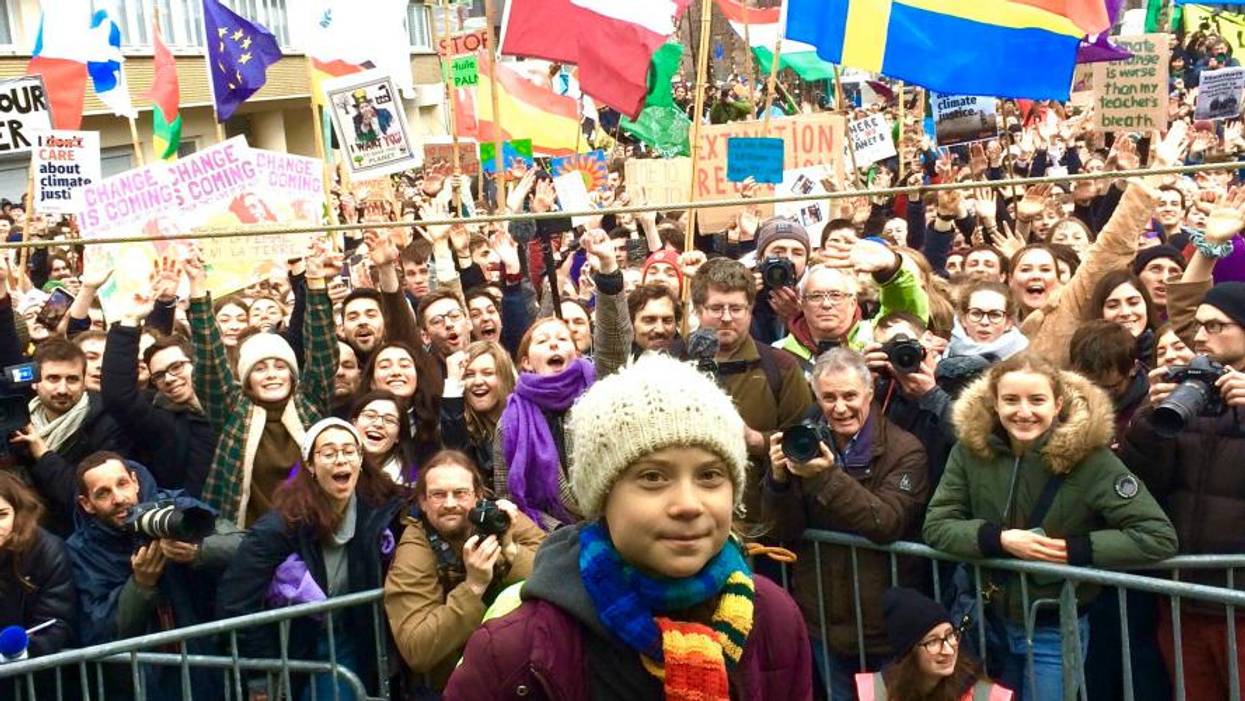
Renowned activist Greta Thunberg was detained on Saturday at a climate protest in Brussels aimed at ending European Union fossil fuel subsidies.
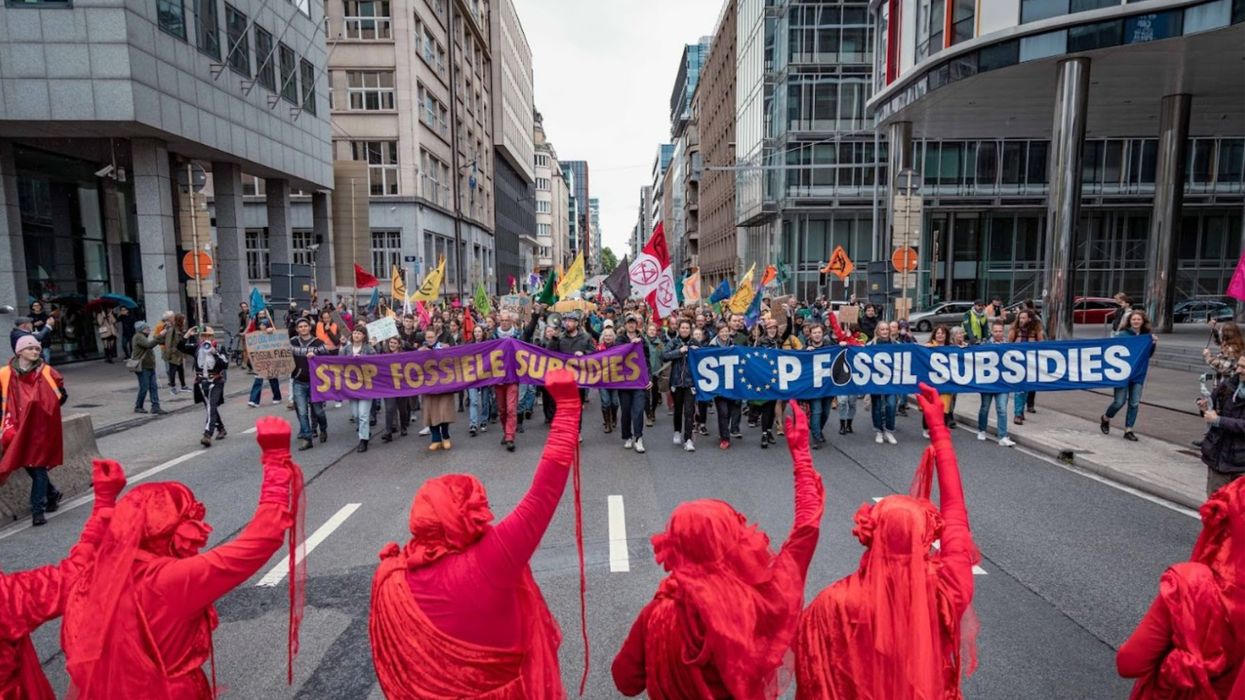
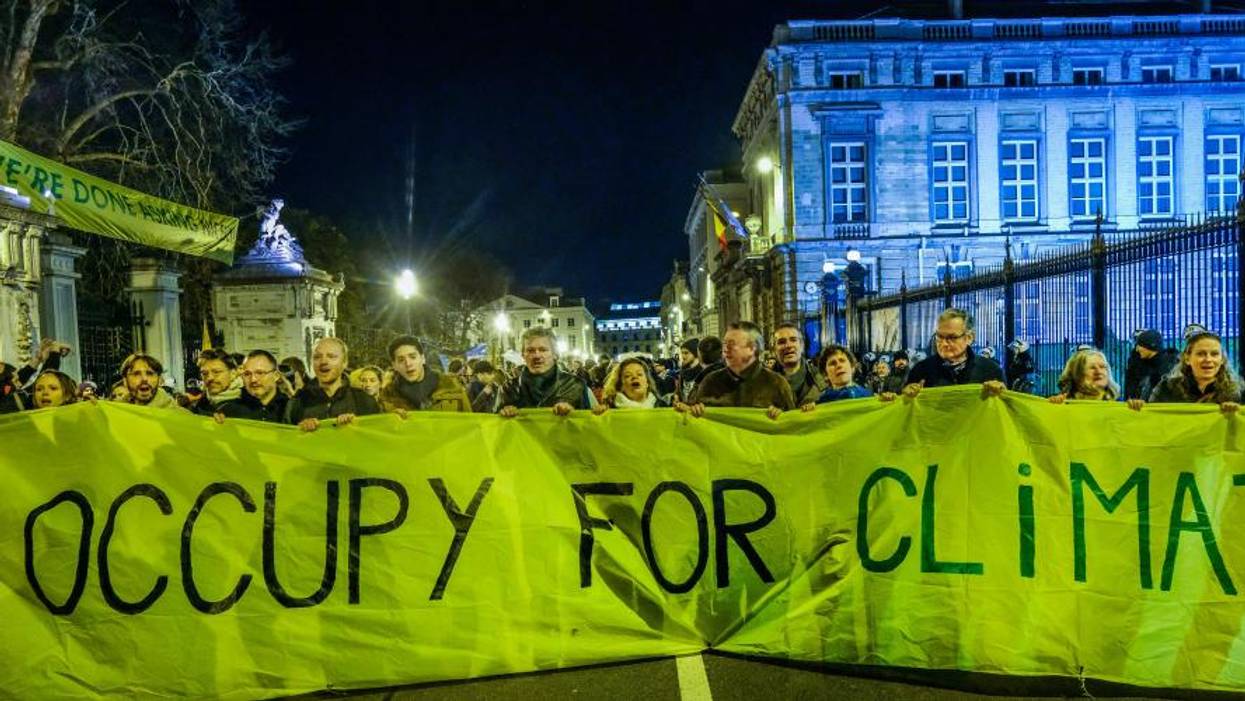
The protest included hundreds of campaigners from Extinction Rebellion and other groups; they came together under the name United for Climate Justice (UCJ). One group of them marched in an area near the European Parliament, while another group that included Thunberg blocked a section of the Boulevard du Jardin Botanique.
"Our politicians have failed us," Paolo Destilo, a UCJ spokesperson, told Politico. "European leaders' continued support for the fossil fuel industry raises serious questions about their commitment to effective climate action."
Another UCJ spokesperson, Angela Huston Gold, pointed to devastating floods that recently hit Europe and Africa as a warning sign for the planet.
"Increasingly frequent and extreme natural disasters are likely to claim a billion victims by the end of the century, mainly due to the use of fossil fuels," Huston Gold said in a statement, citing a 2023 study in Energies, a journal. "To avoid ecological and social collapse, fossil fuel subsidies must end now."
😊Happy to see @GretaThunberg keeping us company! pic.twitter.com/yVwj1IPeTR
— stopfossilsubsidies (@stopfossilsubs) October 5, 2024
The European Commission published a report last year showing that the EU spent 123 billion euros ($135 billion) on fossil fuel subsidies in 2022, an increase on previous years that was caused by policy decisions following Russia's invasion of Ukraine. (2022 was the last year included in the report.) The Organization for Economic Co-operation and Development listed still higher figures for 2022.
EU's Eighth Environment Action Program, which entered into force in May 2022, calls for a phaseout of fossil fuel subsidies, but national governments haven't taken action, so progress is "uncertain," according to the European Environment Agency, which is part of the EU.
Thunberg on Saturday told Politico that European Commission President Ursula von der Leyen, who's been in office since 2019, was not a green champion.
UCJ on Tuesday sent an open letter to von der Leyen and other EU institutional leaders calling for a phaseout of fossil fuel subsidies by 2025. "The EU should provide technical and financial assistance to member states facing challenges in meeting phaseout deadlines and offer incentives for achieving milestones ahead of schedule," it says.
Staffers at the European Commission were in fact among the demonstrators in Brussels on Saturday, Politico reported.
"There's a lot of tools the institutions have now to fight climate change, but since the [European Parliament elections in June] there's been a lot of backtracking," one commission staffer told Politico, given anonymity in order to speak freely.
"It's now all about competitiveness and the 'clean industrial deal,' whatever that means," the staffer added. "The urgency has been lost—the Parliament has shifted to the right, the commission in many ways has shifted to the right—and discussion of the climate has faded into the background."
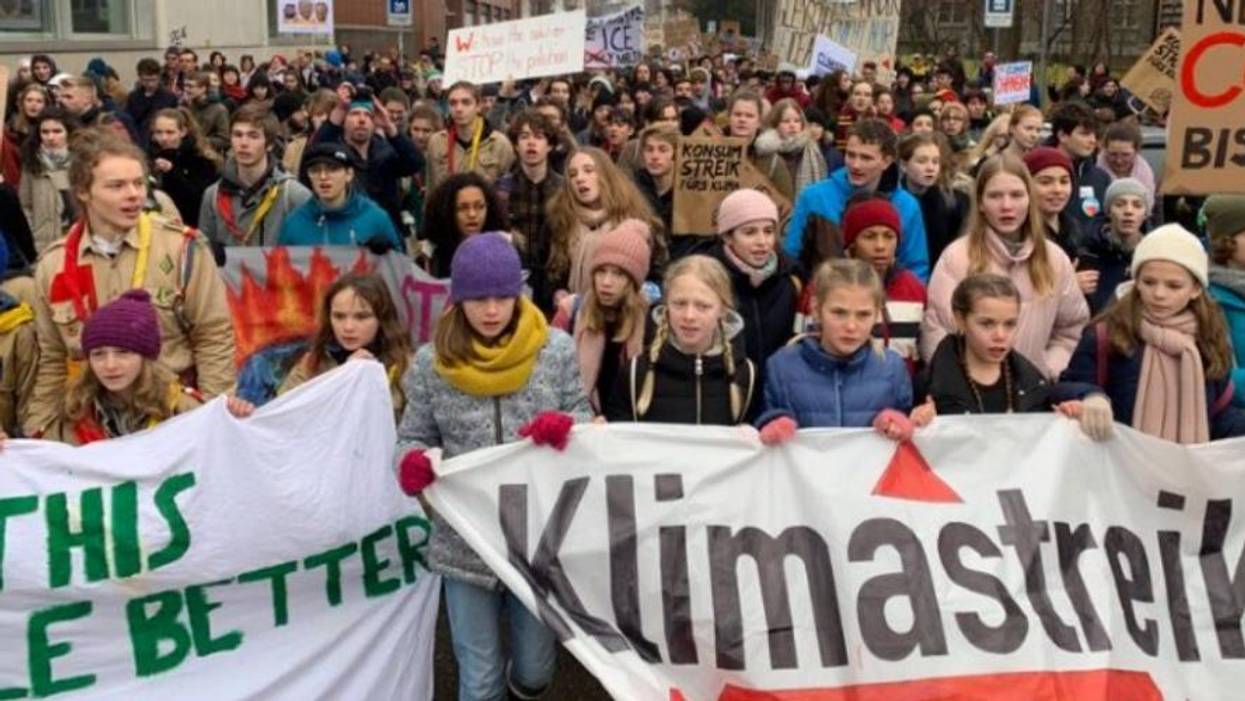
Thunberg, who's now 21, came to fame as a 15-year-old activist in Sweden who helped form the global school strikes for climate movement. She's been arrested numerous times, including at a pro-Palestinian demonstration in Denmark earlier this month.
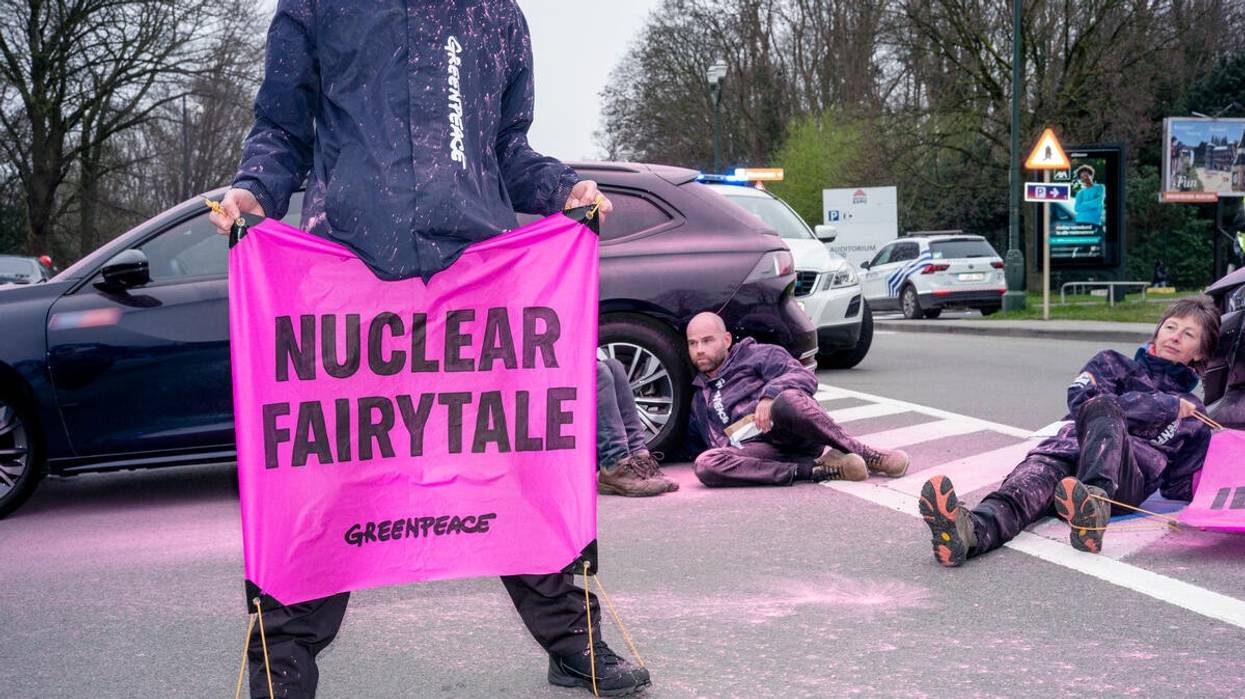
Thunberg and other activists who sat with interlocked arms on the Boulevard du Jardin Botanique were arrested and taken to the police station, according to The Brussels Times.
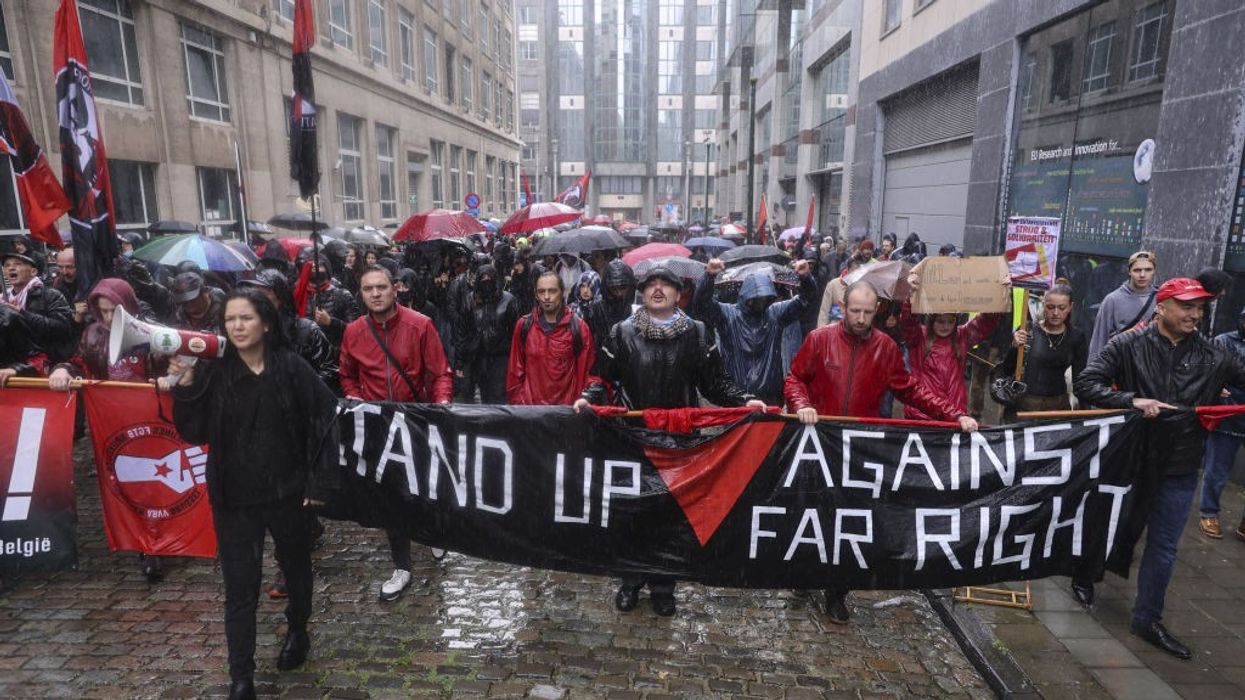
"It's important to show that we're in solidarity with everyone, whatever their nationality, whatever they earn, whatever they do," said a member of the Anti-Fascist Coordination of Belgium.
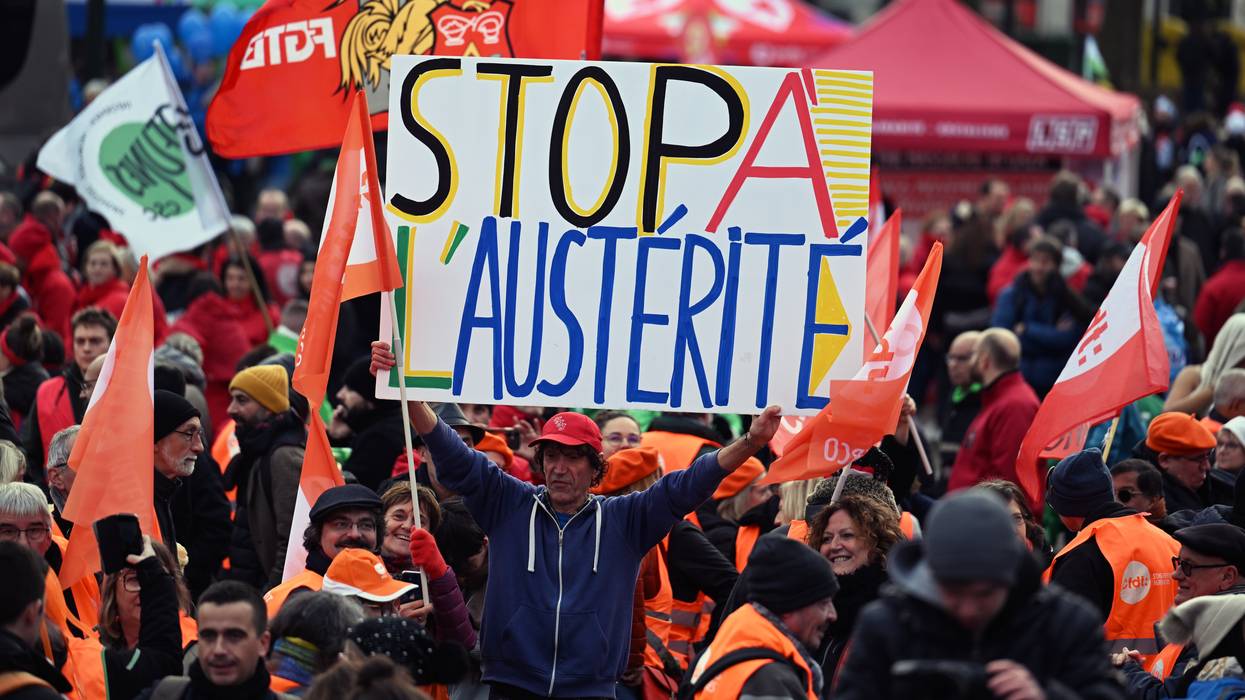
Thousands of people came together in Brussels on Sunday to march against the far-right parties' recent gains in the European Union elections—the second such protest in the Belgian capital since the results were announced earlier this month.
Sunday's march was organized by the Anti-Fascist Coordination of Belgium. The Brussels Times reported that "some 20 social movements and organizations are part of the CAB, including Young FGTB, Ades network, the Anti-Fascist Front of Liège, MOC Brussels, ASBL Garance, Ecolo J, and Mrax."
The organizers aimed to offer a "popular response and a contrasting social agenda" to the E.U.'s far-right movement, which they said "exacerbates social degradation" and promotes "absolutely disastrous policies" targeting democratic rights, the LGTBQ+ community, migrants, women, and workers.
"It will never be the far right that calls for taxing the richest, increasing the number of social housing, or implementing an ecological transition rooted in a logic of social justice, which is necessary for our common future."
"The far right will never demand higher wages for all," the organizers said. "It will never be the far right that calls for taxing the richest, increasing the number of social housing, or implementing an ecological transition rooted in a logic of social justice, which is necessary for our common future."
CAB member Sixtine Van Outryve told Euronews that "this march is important today to show a message of hope in the face of the messages of despair that the far right wants to bring us."
"It's important to show that we're in solidarity with everyone, whatever their nationality, whatever they earn, whatever they do," she said. "We stand together and we want a society that doesn't divide us. A society that doesn't exclude, a society that isn't racist or sexist."
"Many of us were shocked by the election results, showing far-right breakthroughs at the European level," Van Outryve added, expressing concern about the "alarming" normalization of far-right discourse.
The right-wing surge in the 27-member bloc's elections was widely anticipated, as key figures from across the continent and beyond collectively campaigned against migrants, feminism, socialism, LGBTQ+ rights, and the United Nations.
Parties that did well in the E.U. contests included Italian Prime Minister Giorgia Meloni's Brothers of Italy, Germany's Alternative für Deutschland, and Marine le Pen's National Rally in France, where President Emmanuel Macron responded to the results by calling snap national elections scheduled for June 30 and July 7.
As The Guardian reported earlier this month, "A surge in support for far-right parties in France, Germany, and Austria was tempered by strong support for centrist and left-wing groups in other countries."
The mixed results mean Ursula von der Leyen—who is tied to Germany's center-right Christian Democratic Union and the European People's Party—is expected to secure a second five-year term as president of the European Commission.
The Sunday march preceded a Monday evening meeting for heads of state and government to begin discussing who will fill that role and other top E.U. posts. In addition to the commission spot, The Guardian noted, "leaders will also decide on successors to Charles Michel, the president of the European Council, and Josep Borrell, the E.U.'s top diplomat."
"Consensus is also firming around Portugal's Socialist former Prime Minister António Costa to take over from Michel in chairing E.U. Council meetings," according to the British newspaper. "Estonia's prime minister, Kaja Kallas, is a favorite to take over from Borrell."
"The fact that national governments are subsidizing fossil fuels is akin to a crime against humanity," said one Extinction Rebellion organizer.
The climate action group Extinction Rebellion Belgium on Saturday decried what it called "disproportionate police violence" against nonviolent demonstrators who were arrested during a protest in Brussels demanding an end to fossil fuel subsidies.
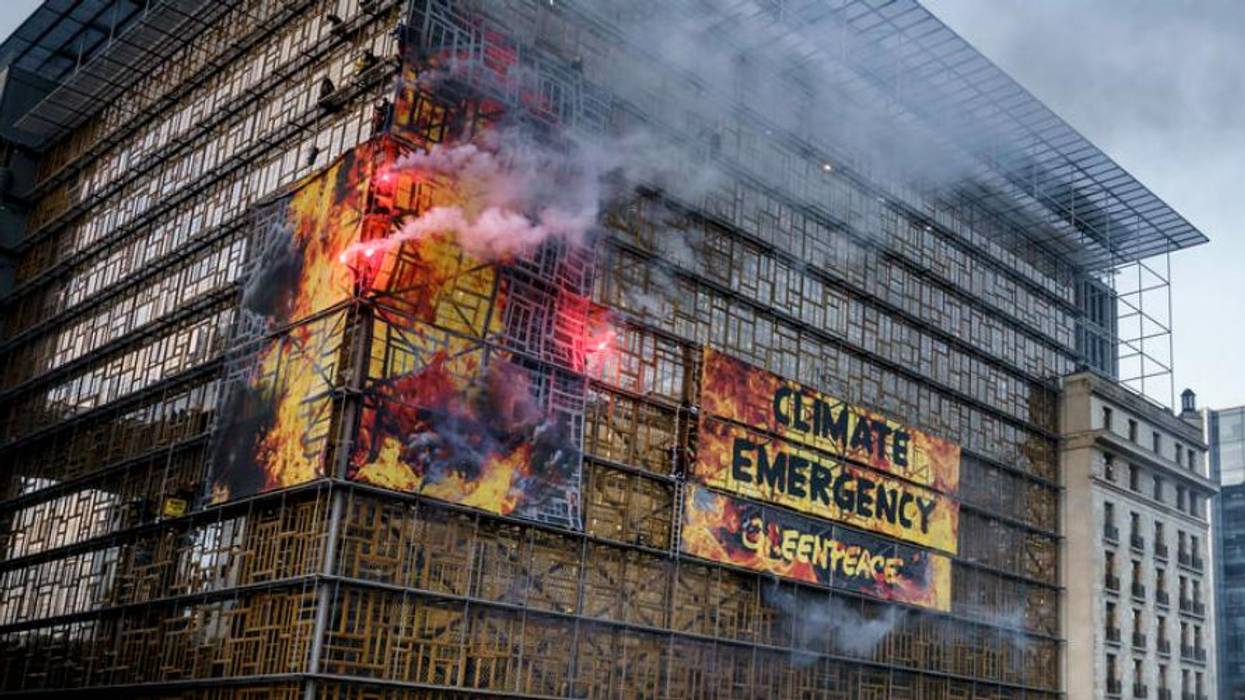
Hundreds of Extinction Rebellion-led climate defenders blocked Rue Belliard in the European Quarter, the de facto European Union capital, during EU Open Day, when agencies of the 27-nation bloc open their doors to the public. In what Extinction Rebellion called an "unprecedented police response," officers allegedly struck protesters with batons and used chemical agents against demonstrators.
Brussels police said 132 activists—some of whom glued themselves to the ground—were arrested.
"This police behavior toward nonviolent protesters exercising their freedom of assembly is illegal and authoritarian," Extinction Rebellion Belgium said in a statement Saturday.
"We call on the police to exercise restraint and respect the right to demonstrate peacefully and without violence," the group added.
The activists are calling on European governments to stop subsidizing fossil fuels amid a worsening planetary crisis. They're also demanding the declaration of a climate emergency.
"National and European governments are spending at least €405 billion each year subsidizing major fossil fuel corporations," protest spokesperson Bertina Maes told The Brussels Times. "That's ten times more than what's spent on climate policy."
Maes said the Belgian government alone spent as much as €20 billion ($21.5 billion) on fossil fuel subsidies in 2020, more than 2% of the country's gross domestic product.
"The fact that national governments are subsidizing fossil fuels is akin to a crime against humanity," she asserted.
This weekend's demonstration and arrests come a month before E.U. parliamentary elections. According to an April Eurobarometer survey conducted by the European Parliament, climate action is the fifth-most important issue to voters, after poverty and social exclusion, health, jobs, and defense and security.