

SUBSCRIBE TO OUR FREE NEWSLETTER
Daily news & progressive opinion—funded by the people, not the corporations—delivered straight to your inbox.
5
#000000
#FFFFFF
To donate by check, phone, or other method, see our More Ways to Give page.
Daily news & progressive opinion—funded by the people, not the corporations—delivered straight to your inbox.
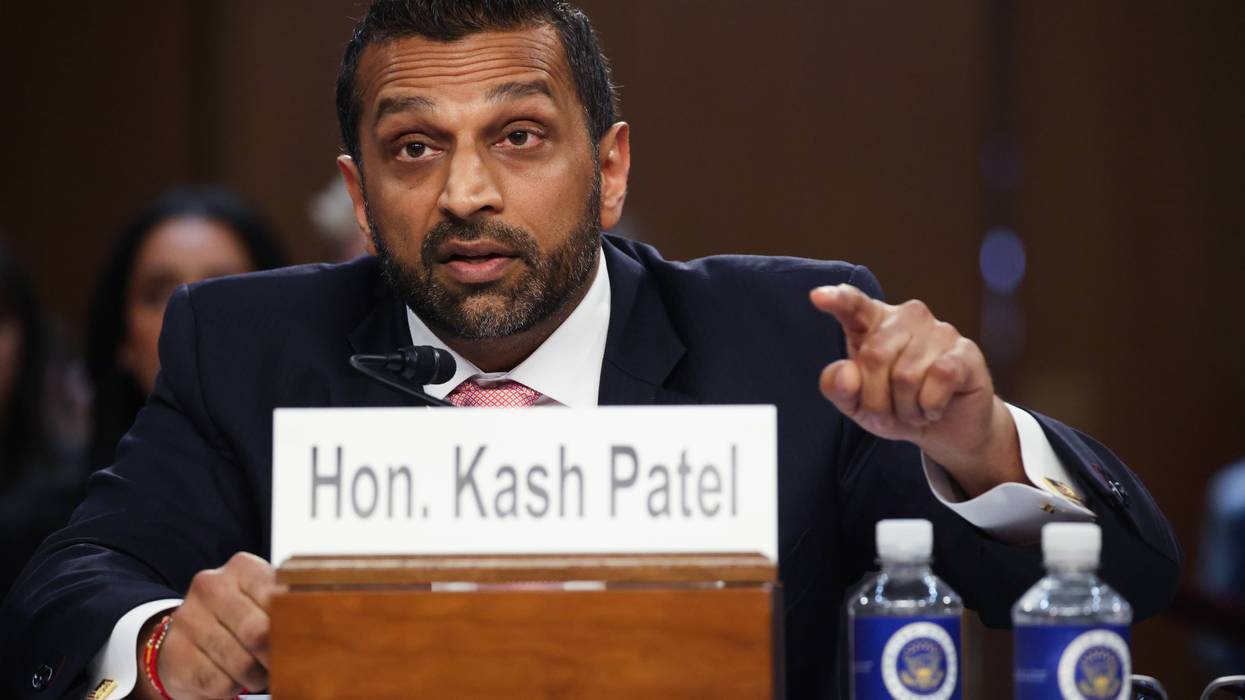
One critic said his comments made clear that "Patel’s leadership at the FBI has been plagued by inappropriate politicization, rampant mismanagement of funds and resources, and a lack of regard for public safety."
The US Senate Judiciary Committee's Tuesday oversight hearing for the Federal Bureau of Investigation covered a wide range of topics, from alcoholism and bestiality to a snorkeling tour of Pearl Harbor and President Donald Trump's persistent but baseless claims that he won in 2020—and FBI Director Kash Patel came under fire for bolstering the Republican's election lies.
Sen. Peter Welch (D-Vt.) pointed out that just a few days ago, Trump said: "We had a rigged election, as you know. It was totally rigged. Because I won three times. I didn't win twice. I won three times."
The senator then asked Patel if he agreed with Trump's declaration that he won the 2020 election. Although the president's attempts to abuse the US courts to cling to power affirmed his loss, the FBI director responded that "there are many ongoing investigations surrounding that matter, so I'm not gonna comment on it and stylize the evidence."
After giving Patel another opportunity to answer, which the agency leader used to effectively repeat his response, Welch highlighted the FBI's January raid of an election hub in Fulton County, Georgia—which critics, at the time, condemned as an ominous signal that Trump and his allies would do whatever they could to interfere with this November's midterms.
Welch stressed that the raid occurred despite two recounts in Georgia following the 2020 contest—including one by hand, which showed that Trump lost the state by 11,779 votes—"and no investigation has found any evidence of wrongdoing."
Patel refused to even confirm that there haven't yet been any related indictments, saying, "That matter is ongoing."
Asked by Welch if he would promise to "not in any way interfere in the will of the American people when they go to the polls" this November, Patel said, "I pledge unequivocally that I will not participate in your charade of lies," and signaled that FBI agents would be present at some polling stations for the midterms.
Welch also cited Trump's claims that this year's elections are rigged if Republicans lose and Democrats can only win if they cheat. The senator asked Patel if he agreed with the latter, and the bureau chief again refused to comment on what he called "ongoing investigations."
Watch the full hearing below:
Lisa Gilbert, co-president of the watchdog group Public Citizen, said in a statement that "while under oath today, Kash Patel peddled dangerous conspiracy theories and misinformation in order to appease Donald Trump's ego."
"His cowardly statement supporting Trump's claim that the only way Democrats could possibly win in November is if the party cheats is particularly rich given Trump's attempt to overturn the results of the 2020 election and his more recent offer to pay $5k to each American if his own party wins the upcoming election," she continued.
"These sycophantic statements and his testimony throughout the hearing make it clear that Patel’s leadership at the FBI has been plagued by inappropriate politicization, rampant mismanagement of funds and resources, and a lack of regard for public safety," she added. "With Patel at the helm of the agency, dedicated career officers have been dumped over loyalty tests, child predators have been protected, and taxpayer dollars have been wasted going after Trump's personal enemies. Every day Patel remains in charge of the FBI is a day too long."
In addition to Welch, several other Democrats had testy exchanges with Patel throughout the hearing—including Sen. Cory Booker (NJ), who blasted the director as an "incompetent lackey" and said: "He's like an 18-year-old kid who wants to join a fraternity that he could never be a member of, doing keg stands and chugging with friends. He's an embarrassment to the agency and wouldn't qualify even to be an FBI agent."
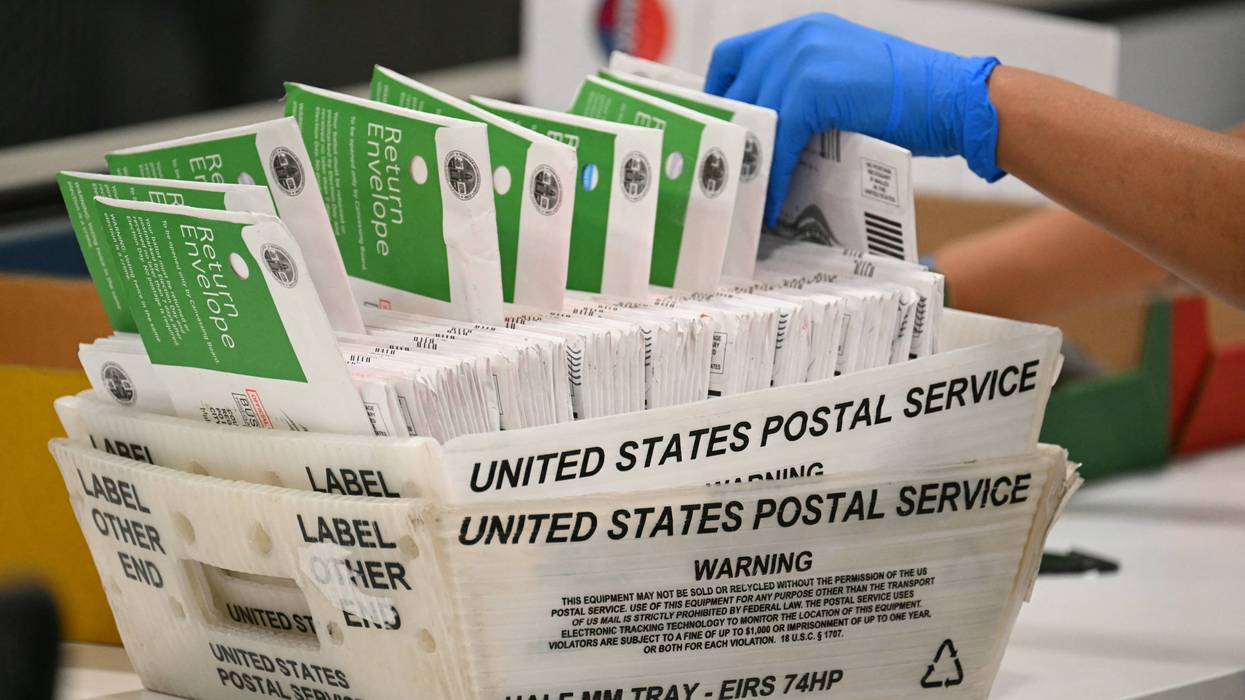
One voting rights advocate said the administration "is abusing the Census Bureau data to generate sensational headlines that Trump wants."
As he gears up to sow doubt about this year's midterms, President Donald Trump is once again attempting to use the government to lend legitimacy to his long-debunked claims that he was cheated out of the 2020 election.
In a Tuesday post to Truth Social, Trump shared a report from the US Census Bureau, which he said "proves that over 24,000 Noncitizens voted illegally" after an analysis of 128 million voter records.
"I WON THE ELECTION," he declared, adding that the bureau would soon analyze the remaining 32 million voting records and that the number of illegitimate votes would "explode."
The report Trump was referring to was real, but highly unusual. The seven-page document posted on the Census Bureau website did not list any authors.
While the use of the "Census Bureau" label implies an air of seriousness and professionalism, Misty Heggeness, a former senior adviser for the Census Bureau, told Democracy Docket that the lack of clear authorship signified that it was "suspect of any integrity or rigor" and said it would be hard to trust unless career bureau staff put their name on it.
Sure enough, NPR reported on Wednesday that "work on the analysis was not conducted by career civil servants at the Census Bureau, and the team behind it included individuals affiliated with the America First Policy Institute," a Trump-aligned think tank that has helped to turn the president's election denial narrative into Republican policy.
The group has helped to push for aggressive voting rights restrictions in states, and its director for "election integrity" policy, Thomas Lane, was involved in the effort to create a slate of fake electors in Arizona, one of several states where Trump claimed to have won in 2020.
Earlier this year, according to CNN, Trump "installed a group of partisan analysts" from AFPI inside the Census Bureau. But their identities have not been publicly disclosed, and other bureau officials who spoke to NPR did not identify which AFPI officials worked on the new report "because they fear retaliation at work."
Bureau officials told CNN that the lack of listed authors suggests that the career employees were "sidelined."
Experts who reviewed the report have identified several "fatal" flaws that make its conclusions difficult to take seriously.
The authors of the report used a commercial voter database and matched its records to those from the Internal Revenue Service, Social Security Administration, State Department, and Department of Homeland Security, and matched noncitizen records to those identified as voters in 2020.
As Yunior Rivas and Jim Saksa of Democracy Docket explained, there are numerous problems with this approach:
Record matching... is fallible. The Census Bureau previously published research in 2014 specifically devoted to measuring false matches in the same identification system...
Census researchers have previously warned that the likelihood of successfully linking administrative records can vary across demographic groups, potentially introducing bias when researchers analyze only records they can confidently match.
That limitation is particularly significant when the result in question is relatively small compared with the enormous volume of records being searched: A mistaken link between an eligible citizen’s voter record and another person’s immigration record could produce a false positive.
The report also does not address another obvious danger: mistaking a naturalized citizen for a noncitizen due to an older immigration record... If evidence of a person’s citizenship is missing or fails to link correctly, the methodology can treat the existing noncitizen record as evidence of the person’s status at the time they voted. The report does not estimate how frequently such a misclassification could occur.
Aaron Reichlin-Melnick, a fellow at the American Immigration Council noted that the system used to find noncitizen voters is "riddled with false positives." According to the Texas Tribune, when states like Texas and Missouri used the tool, it resulted in hundreds of voters being flagged incorrectly.
But even if the Census Bureau report were factually bulletproof, it would be far short of what Trump needs to claim that he "won" the election. The number of supposedly illegitimate votes is not anywhere near enough to swing the result in any of the states where Trump lost to former President Joe Biden, who won the national popular vote by more than 7 million.
The report claims to have found 1,100 noncitizen votes in Arizona, which Biden won by 10,457; 400 noncitizen votes in Georgia, which Biden won by 11,779; and 500 noncitizen votes in Wisconsin, which Biden won by 20,682. Since voting is secret, there is also no basis to assume that all of these votes went to Biden.
Commerce Secretary Howard Lutnick, whose department contains the Census Bureau, has said the report was "just the beginning" and that the next one "will likely show tens of thousands of additional illegal voters.”
But the first report says it analyzed the vast majority of those who voted in 2020. Assuming that the remaining 32 million votes had similar match rates, it would only generate about 6,000 more supposedly illegitimate votes.
Even if every single one of those votes went for Biden, which can't be proved, it would still not be enough to swing a single state to Trump, let alone enough for him to declare victory.
Trump used this report to call for Congress to pass his "SAVE America Act," which would abolish most forms of mail-in voting and introduce new proof of citizenship requirements that voting rights experts have warned would lead millions of eligible voters to be wrongly kicked off the rolls.
He has also signed an executive order directing states to verify their voter lists against a federal citizenship verification system that has been found to erroneously flag many eligible voters.
Amanda Carpenter, an editor at the nonpartisan group Protect Democracy, said the Census Bureau report was "nothing but junk data science" and that Lutnick "is abusing the Census Bureau data to generate sensational headlines that Trump wants."
"He has been searching for these massive pots of fraudulent votes for years," Carpenter said. "It is like they are looking for the Loch Ness Monster. It does not exist, but they keep searching, and hoping, and lying and pointing to something shadowy that you kind of have to squint real hard at to pretend is there, but it isn't."
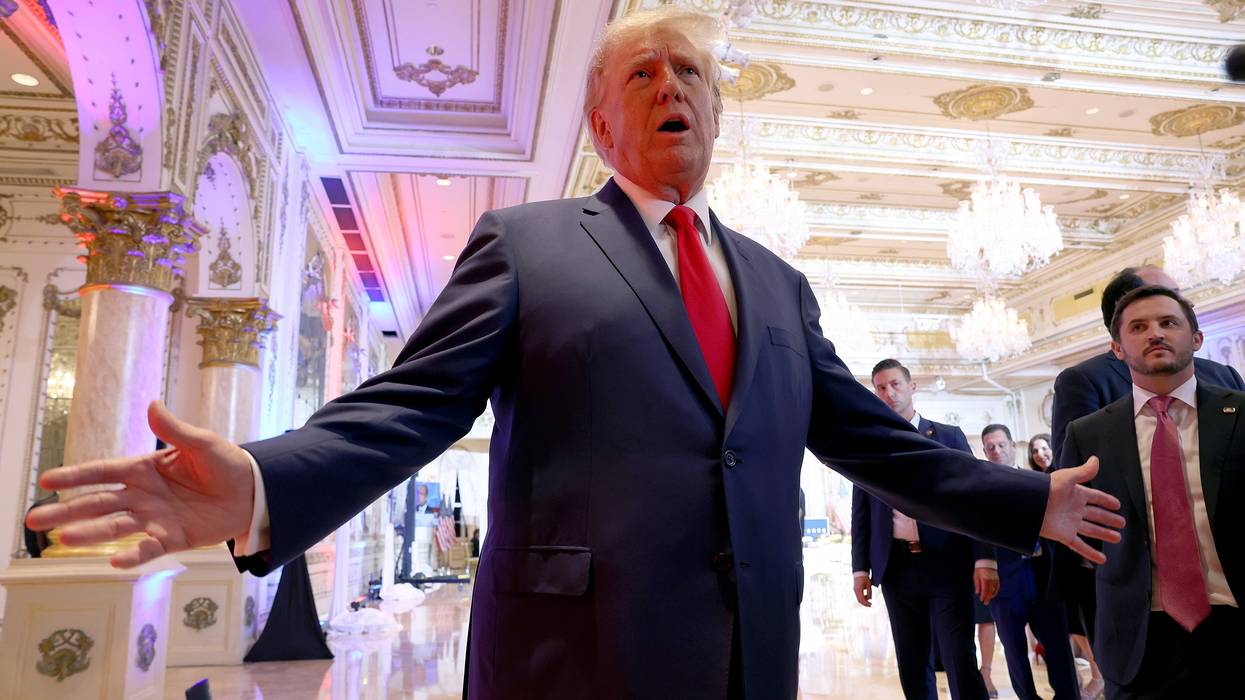
Many commentators have drawn parallels between Trump’s life and that of the fictional billionaire in Orson Welles’ classic film, Citizen Kane, but things have changed and those parallels no longer seem to apply. Or do they?
In a 2002 video, Donald Trump was interviewed about his favorite movie, Orson Welles’ 1941 classic, Citizen Kane. In the discussion, he likened himself to the film’s principal character, Charles Foster Kane—a man portrayed as rising to become the richest and most powerful man in the world. But, as Trump noted, there was a price to pay. Kane ends his life in solitude, divorced and bereft of friends: “I think you learned in Kane,” he concluded, “that maybe wealth isn’t everything because he had the wealth but he didn’t have the happiness... In real life I do believe that wealth does in fact isolate you from other people.”
Trump isn’t the only one who has seen a resemblance between him and his fictional counterpart. Over the years, many commentators have pointed out the similarities:
That was then; this is now—and things have changed. A fresh look at the comparison shows that the arc of Trump’s life has departed significantly from that of Charles Foster Kane:
The question now is, what happens after Trump leaves office on January 20, 2029—assuming that he does leave office. It seems improbable that he will, like Kane, willingly recede from public view and become isolated, personally and politically. But, in his declining years, will he find himself powerless to keep his friends and loyal entourage from slipping away? Will the GOP seek to distance itself more and more from him? Will his efforts to grab headlines fade as the news media loses interest in him? Will legal fees, criminal penalties, a collapse of his cryptocurrency and a downturn in the real estate market combine to decimate his financial empire? Will Melania seek a multimillion dollar divorce settlement? In other words, will the arc of Trump’s life begin to realign with that of Charles Foster Kane?
On Kane’s deathbed, he utters the single word, “Rosebud,” which we later learn was the name emblazoned on his childhood sled. In his 2002 video, Trump explains that, “I think the significance is bringing a lonely, rather sad figure back into his childhood.” Did he foresee that nostalgia for a simpler, happier time in his life—perhaps before his political career—might be his own destiny? Probably not. But time will tell where the parallels between Charles Foster Kane and Donald J. Trump ultimately end.
The objective of President Trump's warnings about election integrity are no longer merely to challenge an outcome, but to suggest that only a result delivering victory to Trump or his movement is legitimate.
Less than 10 days after President Donald Trump described the electoral system as “dangerous and under threat,” a federal appeals court blocked his administration from enforcing an order tightening mail-in voting rules in 23 states. The ruling showed that the dispute is not only about cybersecurity or foreign threats, but also about the rules that will determine the legitimacy of the 2026 midterms. Democracies begin to erode when citizens no longer believe the ballot box reflects their genuine will. Electoral legitimacy depends less on a flawless voting process than on public acceptance of rules that allow even the losing side to accept the outcome.
Viewed from this perspective, the most significant element of Trump’s White House speech was not his claims about China, Russia, Iran, or North Korea, but the way he portrayed the American electoral system itself. Trump described it as “dangerous and under threat”—a characterization that goes beyond a warning about cybersecurity or foreign interference. It raises a fundamental question: Is the principal problem the external threats facing America’s electoral system, or the effort to persuade Americans that the system itself can no longer be trusted?
To support his claim, Trump presented a series of alleged threats. He said declassified intelligence documents showed that China obtained information from 220 million American voter-registration records and that intelligence officials concealed the matter. He also warned that China, Russia, Iran, and North Korea can penetrate America’s electoral infrastructure. Yet these countries are not the center of his narrative. Rather, they serve as evidence for a broader claim: that the US electoral system is vulnerable, insecure, and needs fundamental redesign.
The distinction between issuing a security warning and discrediting an electoral system becomes clear here. Few deny that foreign powers attempt to influence rival states’ political and information environments. Like many democracies, the United States faces cyber threats and influence operations. But there is a crucial difference between strengthening election security and cultivating the belief that the entire electoral process is fundamentally unreliable. The former protects democratic institutions; the latter erodes public trust.
If a society believes elections are valid only when they produce one faction’s preferred outcome, the problem is no longer a particular election; it is the erosion of democratic competition and the transformation of elections from a solution to political conflict into a source of crisis.
The significance becomes clearer when Trump’s remarks are placed within the US political context. The 2026 midterms are not an ordinary contest for the president. Declining approval ratings, public dissatisfaction with the consequences of the war with Iran and rising energy prices, and the risk of losing the House have placed Republicans in a difficult position. If Democrats regain the House, another effort to impeach Trump could follow—a possibility he has raised. For Trump, who refused to accept the outcome of the 2020 election, elections are not merely an institutional process; they are part of a struggle over his political legitimacy.
This backdrop helps explain the Trump administration’s effort to expand the federal role in election administration. The White House’s pressure on congressional Republicans to pass the SAVE America Act—which would require proof of citizenship at registration, photo identification when voting, and the sharing of voter information with the federal government—rests on a single assumption: that the existing system requires sweeping changes to improve security and public confidence. The question is not whether electoral reforms are open to debate, but how they are presented: as reforms to improve a functioning system, or an attempt to rescue one that has already failed?
Here the meaning of Trump’s speech becomes more apparent. Before the election, he is constructing a framework through which the outcome is interpreted. If Republicans prevail, the election will be presented as proof of the system’s integrity. But if the result contradicts White House expectations, explanations are already prepared: foreign governments, the intelligence community, structural weaknesses, or the electoral process itself. This is political failure insurance.
Failure insurance does not require conclusive proof of a conspiracy. It consists of building a narrative that reduces the political cost of defeat before it occurs. Within this framework, losing is no longer necessarily the consequence of voters’ choices; it can be attributed to a “dangerous and under threat” electoral system. This is the key difference from 2020. Then, Trump’s allegations emerged after the results were announced. Now, the narrative of distrust is being constructed before voting begins. The objective is no longer merely to challenge an outcome, but to suggest that only a result delivering victory to Trump or his movement is legitimate.
Democracies have never been built on the assumption that elections are flawless. They rest on the principle that political disputes can be resolved within a shared institutional framework and that even the losing side accepts the legitimacy of the process. If a society believes elections are valid only when they produce one faction’s preferred outcome, the problem is no longer a particular election; it is the erosion of democratic competition and the transformation of elections from a solution to political conflict into a source of crisis.
The irony is that, for decades, the United States applied this standard when assessing elections in other countries. Washington argued that without public trust, even legally conducted elections cannot enjoy political legitimacy. Today, however, the president is invoking the same logic to describe America’s own electoral system. This is more than a domestic dispute; it raises questions about the credibility of the democratic model America has long sought to project abroad.
Ultimately, the central question raised by Trump’s recent speech may not be whether China gained access to voter-registration data, or how capable Russia, Iran, and North Korea are of penetrating America’s electoral infrastructure. The fundamental question is why, on the eve of one of the most consequential elections of his presidency, the president of the United States has chosen to convince millions of Americans—before the first ballot is cast—that their electoral system is “dangerous and under threat.”
Placed alongside political realities, the implications are troubling. Trump’s speech cannot be understood as a warning about election security or dismissed as another chapter in the disputes following the 2020 election. It represents an attempt to redefine the relationship between the voter and the ballot box—a relationship in which electoral legitimacy derives not from public trust and established institutions, but from the narrative advanced by those in power. This is how democracy begins to erode from within, long before fraud or foreign interference damages it. The greatest threat to American elections may lie not in Beijing, Moscow, Tehran, or Pyongyang, but in the moment when the president, seeking to insure himself against defeat, persuades his own citizens that the ballot box can no longer be trusted.
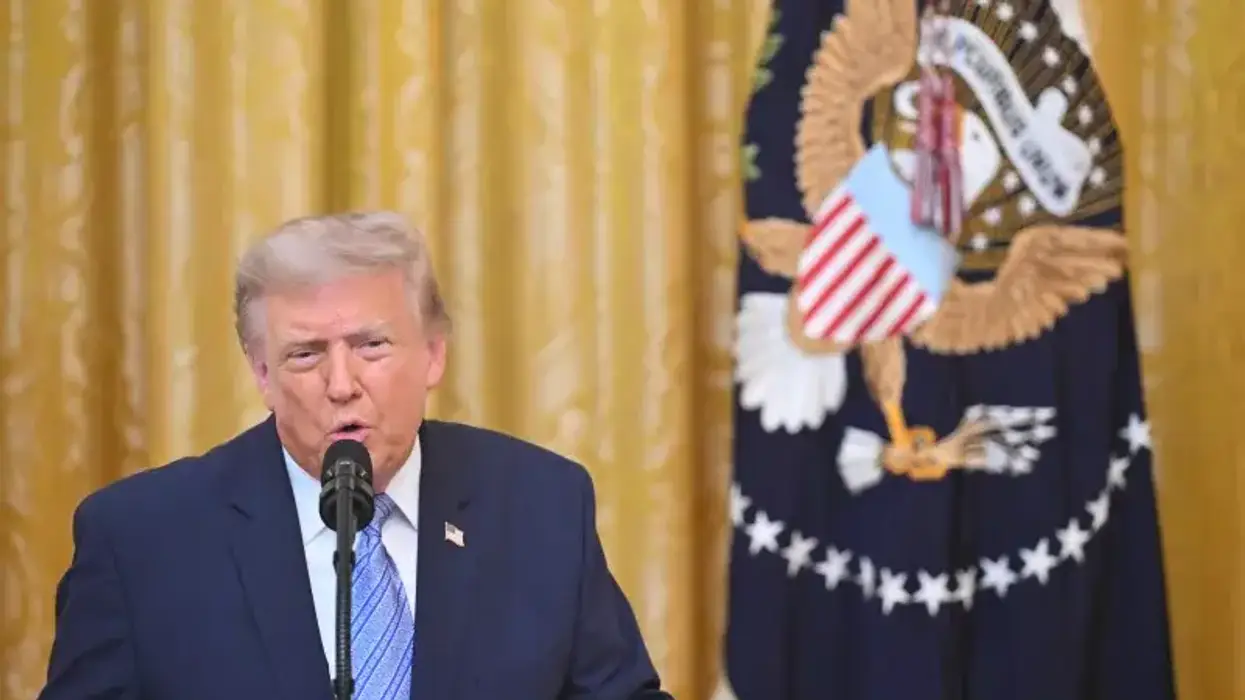
The president's speech was riddled with so many lies that I’m reluctant to dignify them with rebuttals, but you should have them.
The real message to be drawn from Trump’s address to the nation Thursday night is that he will call into question the votes of every state and city that chooses a Democratic senator or representative in the 2026 midterm elections. He’ll push Republican governors and mayors not to certify the results. He’ll demand recounts and audits.
We’ve been here before, but this time he’s even less restrained than he was in 2020 and is surrounded by people who will do his bidding.
His address to the nation was absurd. It was riddled with so many lies that I’m reluctant to dignify them with rebuttals, but you should have them.
He mentioned a newly-declassified investigation into a voter registration group in Muskegon, Michigan that apparently had invited fraudulent registrations in 2020—but Trump didn’t mention that the applications had been caught and none of them had resulted in any ballots being sent out incorrectly. The FBI closed the investigation, stating “the investigation to date did not identify a criminal violation or a priority threat to national security.”
He alleged, once again, that foreign powers have hijacked votes, or that federal or state officials plotted to rig either the 2020 election. But no evidence has ever emerged showing that vote counts have been manipulated or corrupted. Intelligence reports, state audits of vote tallies and lawsuits have repeatedly affirmed official results in 2020 and other years. Nothing suggests China manipulated votes. Instead, US intelligence assessment says China “probably also continued longstanding efforts” to gather information on US voters and public opinion and to use that information to influence US policy “as it has during all election cycles since at least 2008.”
The most significant foreign influence operations occurred in the 2016 presidential election and were conducted by Russia, in favor of Trump, according to the Mueller report. To the extent that this and other reports appeared to cast doubt on the legitimacy of Trump’s victory, they have had the effect of fueling his distrust of US intelligence agencies.
Despite his repeated assertions that US elections are not secure, Trump during his second term has significantly cut the budget of the Cybersecurity and Infrastructure Security Agency, including its election work. That’s because Trump grew contemptuous of the agency, and the government’s election security work generally, after it validated the integrity of the 2020 election.
So the entire performance was fake—an extension of his Big Lie that the 2020 election was “stolen” from him.
It was also a commercial for the “Save America Act,” which would make it harder for many American citizens to vote. Voters would have to prove their citizenship in person upon registering to vote, with documents such as an enhanced form of REAL ID (a state ID card compliant with federal regulations) that indicates American citizenship; a birth certificate; a passport or military identification card.
An estimated 9 percent of eligible voters, or 21.3 million Americans, either do not have documents that prove their citizenship, such as passports and birth certificates, or cannot retrieve them in a day or less, according a study by the Center for Democracy and Civic Engagement at University of Maryland and the Brennan Center for Justice. And 45 states do not issue the kind of enhanced driver’s license indicating citizenship status that would be needed to verify voting eligibility.
The point is that American democracy is acutely endangered by a sociopath who will stop at nothing to get the results he wants.
This means that you and I and every other patriotic American have to do whatever we can to ensure free and fair elections, and fight Trump’s torrent of lies and authoritarian moves.
If you’re anything like me, you’re worn out by Trump. You’d like nothing better than to tune him out. I get it. But American democracy is seriously on the line here. We must keep up—and accelerate—the fight.
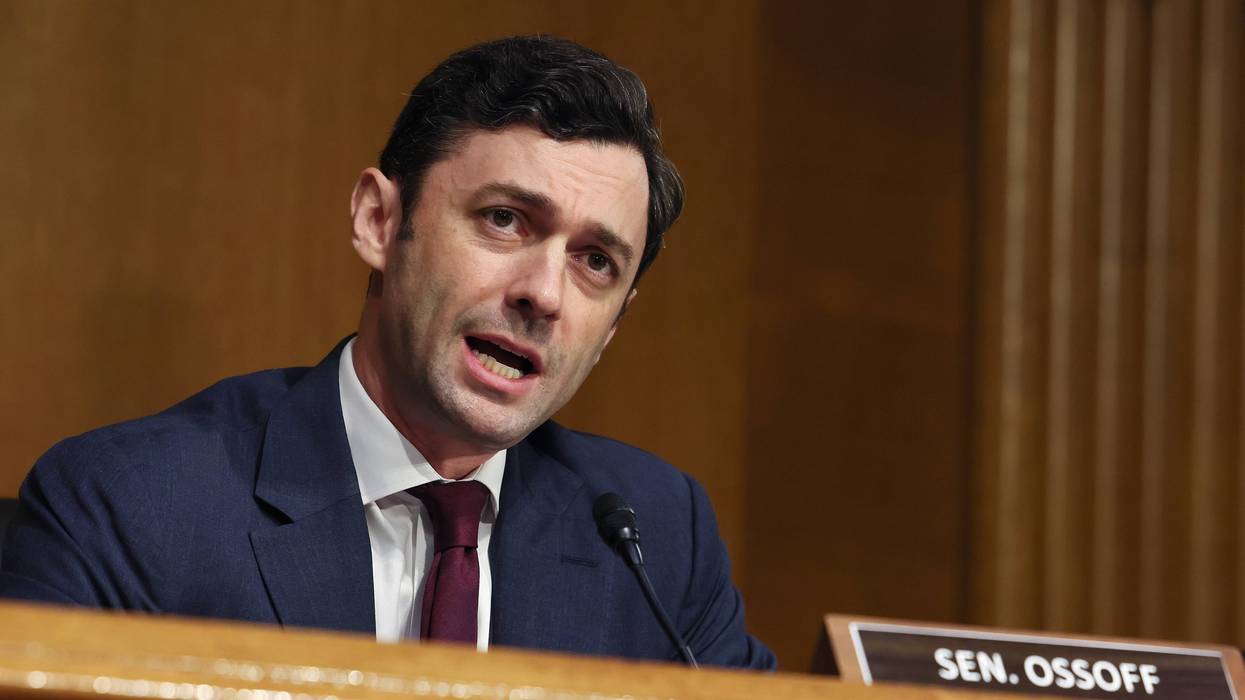
"If the president declares Georgia's elections illegitimate, or if the president declares Georgia's sitting United States senators illegitimate, he is declaring Georgia voters illegitimate."
Sen. Jon Ossoff on Thursday delivered a preemptive rebuttal to President Donald Trump's planned Thursday night speech on election security in the United States.
While speaking with reporters, Ossoff (D-Ga.) predicted that Trump would use the speech to once again peddle lies about the 2020 presidential election, which he lost to former President Joe Biden.
"Here's what's going to happen tonight," Ossoff began. "The world's most famous sore loser will deliver a primetime presidential sour-grapes address to pursue his six-year-old grievances about the 2020 election, while his war in the Middle East spirals out of control, the cost of living continues to rise for Americans across the country."
Ossoff: "Here's what's going to happen tonight: the world's most famous sore loser will deliver a prime-time presidential sour grapes address to pursue his 6-year-old grievances about the 2020 election, while his war in the Middle East spirals out of control and the cost of… pic.twitter.com/isF9qqrLz0
— Aaron Rupar (@atrupar) July 16, 2026
The Georgia Democrat said he expected Trump to "reheat debunked conspiracy theories" about the 2020 election, while all but daring the president to declare the results in his home state illegitimate.
"Let me be very clear about this," said Ossoff, who was elected in 2020 and is up for reelection this year. "If the president declares Georgia's elections illegitimate, or if the president declares Georgia's sitting United States senators illegitimate, he is declaring Georgia voters illegitimate."
Ossoff then reminded reporters that it was Trump who attempted to steal the 2020 election when he called Republican Georgia Secretary of State Brad Raffensperger and asked him to "find" the votes necessary to overturn Biden's victory in the state.
"It's Donald Trump who tried to defraud Georgia voters in that election," the senator said, "Donald Trump who tried to commit election fraud."
Ossoff's broadside against Trump's 2020 election lies came one day after he cornered Jay Clayton, Trump's nominee to be the next director of national intelligence, during a Senate confirmation hearing over his refusal to say who won the 2020 election.
"Isn’t it humiliating to be unable to answer this question?" Ossoff asked Clayton at one point. "To have to indulge the president’s delusions?"
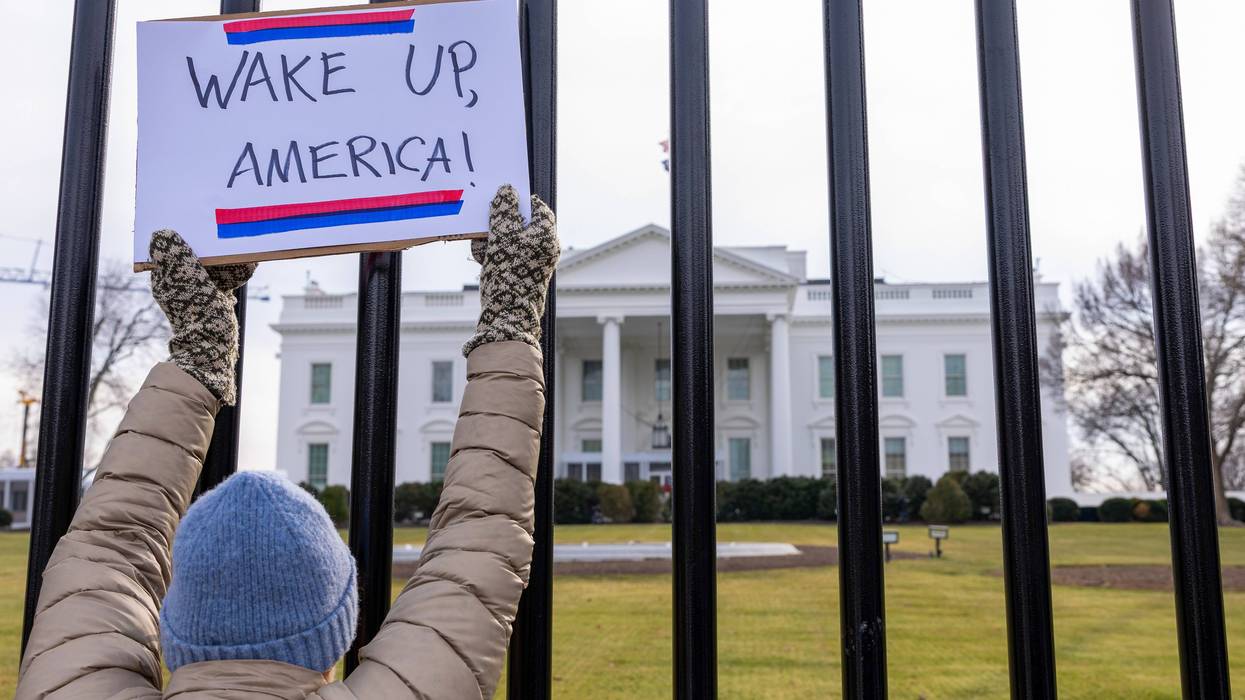
"There should be a huge peaceful crowd in front of the White House, watching the speech tomorrow night... and every time he lies, they can roar out, YOU LIED! YOU LIED! YOU LIED!"
Renowned consumer advocate Ralph Nader called for a large demonstration in front of the White House Thursday night to protest President Donald Trump's primetime speech, during which he is expected to rehash his false claim that the 2020 election was stolen amid fears that he is working to sabotage the upcoming midterms.
“There should be a huge peaceful crowd in front of the White House, watching the speech tomorrow night at 9 pm,” Nader wrote in a Wednesday social media post, “and every time he lies, they can roar out, YOU LIED! YOU LIED! YOU LIED!”
Nader added that “there are already ground-level groups in Washington, DC who can turn out 200 to 300 people” each to protest Trump’s speech.
“If you’re listening, ground-level activists,” Nader emphasized, “this is a great opportunity for you at 9 pm, Thursday.”
After former President Joe Biden won the 2020 election, Trump refused to concede, lied incessantly to sow doubt about the results, tried to enlist officials including Georgia Secretary of State Brad Raffensperger and former Vice President Mike Pence to illegally overturn it, and then incited a violent riot at the US Capitol when those efforts failed.
According to a Tuesday report from NBC News, Trump during his speech is expected to "highlight findings that his administration says show foreign interference in the 2020 election," even though there has never been any proof that actions taken by foreign actors at all affected the outcome.
A Wednesday report from Reuters claimed that the White House was "deciding whether the president's remarks would include the disclosure of sensitive intelligence related to China's intention or ability to interfere in the 2020 US election," as some administration officials "worried the information could be misleading."
Axios reported on Thursday that many TV networks are "in a bind" over whether they want to air Trump's speech.
"The networks face pressure from both sides," Axios reported. "They've spent years trying to avoid amplifying Trump's false claims about widespread fraud in the 2020 election. Yet they also must contend with an FCC that, under chairman and Trump ally Brendan Carr, has opened a series of investigations into broadcast networks.
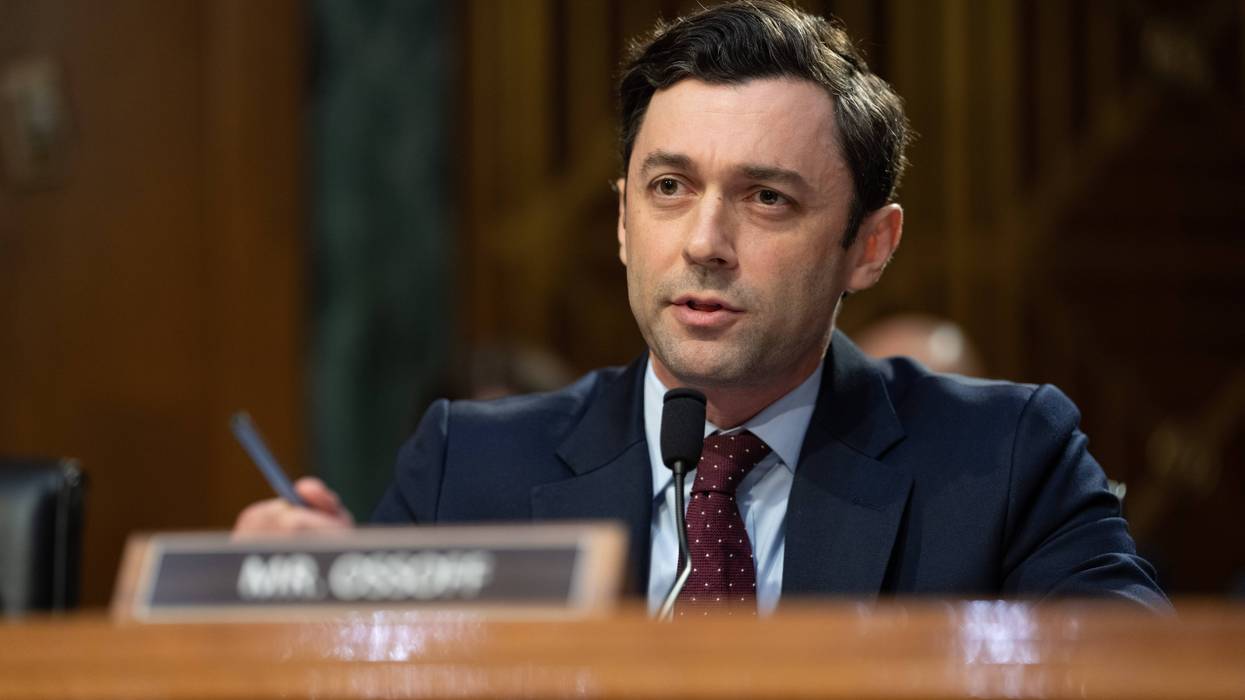
"You refuse to answer a basic question about who won a presidential election, but you asked to lead America's intelligence community?"
Sen. Jon Ossoff on Wednesday put President Donald Trump's nominee to be the next director of national intelligence on the spot by asking him about the results of the 2020 presidential election.
During a confirmation hearing before the Senate Intelligence Committee, Ossoff (D-Ga.) asked Jay Clayton, nominated by Trump to replace former DNI Tulsi Gabbard, who won the 2020 election.
"I'm not going to do this with you," Clayton replied.
Sen. Ossoff asks Trump's Director of National Intelligence nominee who won the 2020 election. pic.twitter.com/J3u5mqHqTt
— Ossoff's Office (@SenOssoff) July 15, 2026
"This is a job interview," Ossoff said. "We have established that you have an obligation to be honest and forthright with the committee, yes? You do have an obligation to honest and forthright with the committee?"
"Yes," Clayton said.
"Who won the 2020 election?" Ossoff pressed.
"Like I said, I'm not going to get into that with you," Clayton said.
After former President Joe Biden won the 2020 election, Trump refused to concede, told multiple lies to sow doubt about the results, tried to enlist officials including Georgia Secretary of State Brad Raffensperger and former Vice President Mike Pence to illegally overturn it, and then incited a violent riot at the US Capitol when those efforts failed.
Ossoff told Clayton that he would keep asking him about the 2020 election results because "you're not being honest and forthright with the committee."
"I'm not going to engage in the theater," Clayton shot back.
After being pressed by Ossoff again, Clayton simply sat in silence, which appeared to make the Georgia Democrat incredulous.
"You refuse to answer a basic question about who won a presidential election," Ossoff said, "but you asked to lead America's intelligence community? Isn't it humiliating to be unable to answer this question, to have to indulge the president's delusions?"
"We know, you know, everybody in this room knows the truthful answer to that question," Ossoff continued. "Why can you not give it?"
Sean Vitka, executive director for Demand Progress, said after the hearing that Clayton's refusal to answer Ossoff's question was disqualifying.
"Clayton’s trainwreck hearing showed us that he is willing to deny objective reality to avoid upsetting the president," Vitka said. "Someone like that must not be allowed to be the director of national intelligence, who wields vast power and must lead the intelligence community with nonpartisan integrity and independence from political pressure."
Vitka added that Democrats serving on congressional intelligence committees need to understand "the clear danger someone like Clayton would pose as Trump’s point man on government surveillance."
By constantly raising the alarm about election fraud, Trump seeks to stir fear, doubt, and confusion in the minds of voters.
With 112 days to go until Election Day, President Donald Trump’s drive to undermine the vote continues. As time runs short, his efforts grow more aggressive, more brazen. But they are facing pushback with ever greater assurance.
Last Friday, Trump pushed out the remaining commissioners on the Election Assistance Commission. This tiny agency exists to provide help and funding for states. Trump had previously tried to force the commission to implement his pet voter suppression policy—requiring a passport to register to vote—but a federal court barred it from doing so in a lawsuit brought last year by the Brennan Center and others. Now, without any commissioners, the agency can’t do much of anything.
Another federal judge quashed Justice Department subpoenas issued to hundreds of election workers in Fulton County, Georgia. The judge said the subpoenas were “staggering,” and that the Justice Department was engaged in a “fishing expedition.”
Also last week, the Department of Justice (DOJ) sent a scarifying letter to state officials warning that they will be held criminally liable if noncitizens are found on the voter rolls or voting.
All of us who care about free, fair, and secure elections in 2026 should say loud and clear: Voters can vote with certainty.
Utah’s Republican lieutenant governor, who runs elections in that state, wrote: “Got another love letter this morning from the DOJ sprinkled throughout with threats of criminal prosecution. I’m sure I’m not the only chief election officer of a state who is being targeted for following state and federal laws by resisting DOJ’s demands for private voter data that have thus far been ruled illegal by at least a dozen courts. This is truly bizarre behavior by the federal agency that is supposed to be protecting civil rights.”
Trump even claimed that recently deceased Sen. Lindsey Graham’s (R-SC) last conversation with him involved his allegedly ardent support for the anti-voter SAVE Act.
Now comes word that on Thursday, Trump will deliver an address to the nation, rumored to be when he will reveal that the 2020 election was hacked by... China? Iran? Whoever.
Why is the president continuing to press on like this? Yes, he’s relitigating the 2020 election. And some of his desired election policy changes, were they to become law, could restrict the vote for millions.
But the bigger reason is to stir fear, doubt, and confusion in the minds of voters.
We’re seeing a psychological warfare campaign waged against American democracy by leaders of its own government.
People tell me of encounters they’ve recently had with voters. One voter is convinced she will have a hard time voting because she changed her name when she got married from the one on her birth certificate, even though the SAVE Act has not become law. Another worries that the Supreme Court’s Voting Rights Act ruling in Louisiana v. Callais means they cannot vote.
Crazy rumors fly. That former Venezuelan leader Nicolás Maduro, for example, will “confess” to stealing the 2020 election in exchange for leniency. And so on. Few pan out. But the decibel level can be deafening.
All this requires deftness by those who would protect the vote. Every election year, voting advocates like the Brennan Center weigh carefully whether and how to reassure voters, as merely mentioning the potential threats to voting could backfire and scare people away from the polls.
Latino voters and other immigrants, for example, may fear Immigration and Custom Enforcement being present at polling places. Even though such a deployment would be illegal, simply raising it as a possibility may cause voters to stay home. Fear would have done its work.
For other voters, though, we may see a new phenomenon: Efforts at suppression could fuel mobilization. In the South, Black voters are outraged by the efforts to redraw election maps after the Supreme Court’s Callais decision gutted the Voting Rights Act. They could turn out in historic numbers. People get really mad when you try to take something from them—and when it’s representation and the vote, watch out.
All of us who care about free, fair, and secure elections in 2026 should say loud and clear: Voters can vote with certainty. Make a plan to vote. Vote as early as you can. In person, via drop box, in the mail.
One hundred twelve days. It will feel like longer. But when this year is done, the strong response across the country to an egregious effort to undermine our democracy may be the real story.
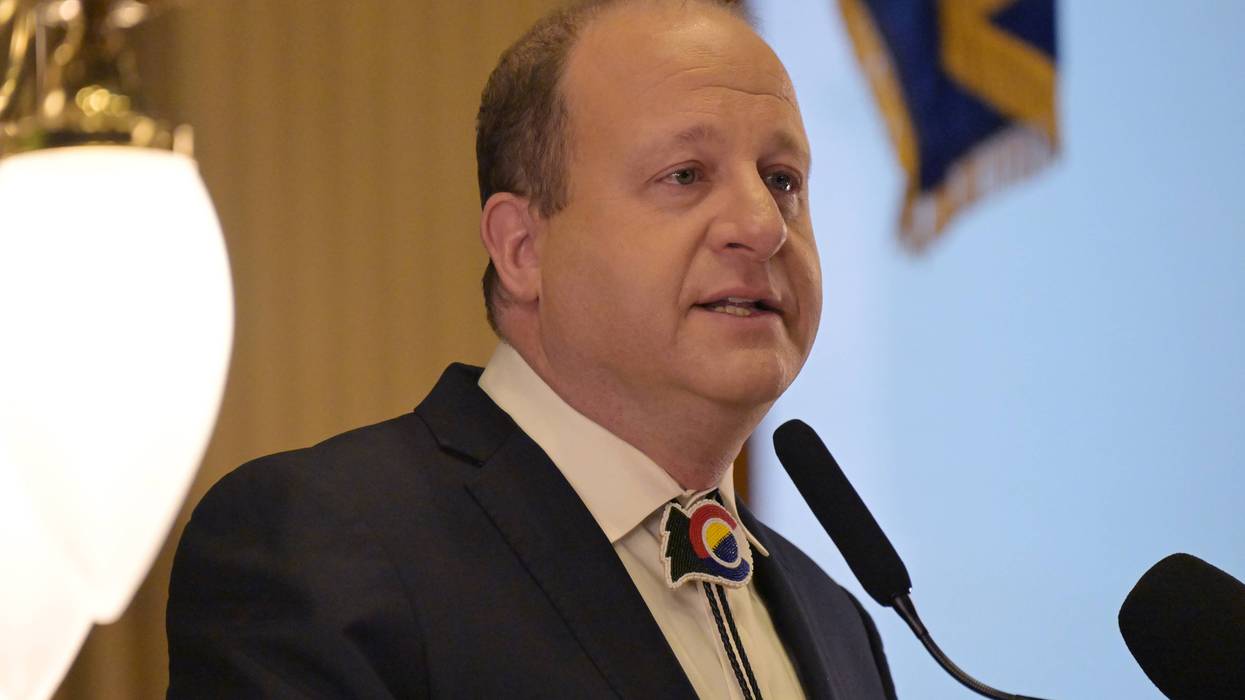
"Firing people who oppose you is also a page out of Trump's playbook," said US Rep. Pramila Jayapal.
US Congresswoman Pramila Jayapal on Thursday accused Democratic Colorado Gov. Jared Polis of conduct commonly seen from President Donald Trump's after Polis fired two members of the state clemency board, citing their decision to speak out publicly against his release of former county Clerk Tina Peters.
In 2024, Peters was sentenced to nine years in prison for tampering with voting equipment in an effort to prove the false claim that the 2020 election was rigged against Trump. The president, who faced his own legal challenges for spreading the falsehood and trying to overturn the election, issued a symbolic pardon for Peters and pressured Polis to commute her sentence, which Polis did in May, angering members of his own party and democracy advocates.
Two members of the state clemency board, Hannah Seigel Proff and Azra Taslimi, were among those who opposed Polis' decision, and they went against the board's usual custom of maintaining secrecy about its proceedings to reveal that the entire board had twice voted unanimously to reject Peters' bid for a shorter sentence, only to be overruled by the governor.
On Wednesday, Proff and Taslimi told The New York Times that they'd received dismissal letters from Polis, who told them they had "breached the required duty of confidentiality by publicly divulging board members’ votes."
Jayapal (D-Wash.) said Polis' commutation of Peters's sentence was akin to acting like the January 6, 2021 attack on the US Capitol by election-denying Trump supporters "didn't happen."
"Firing people who oppose you is also a page out of Trump's playbook," said the congresswomen.
The board members also revealed that Polis had passed over other deserving applications for parole before he allowed Peters to walk free on June 1.
"We have reviewed hundreds of applications that moved us to tears," they wrote in an op-ed at The Denver Post. "People who spent decades atoning for a single terrible decision, who attended college or seminary behind bars, completed countless programs, developed curricula for other incarcerated people, mentored young offenders, and raised thousands of dollars for victims’ rights organizations."
"Along with nine other members of the board, we have read applications supported by prosecutors who tried the case, by prison wardens who watched the transformation happen, and even by victims themselves," they continued. "And we have seen the governor fail to act or delay many of these applications."
A spokesperson for Polis told the Times that their decision to divulge the two unanimous votes against Peters' release threatened the "credibility of the board." Taslimi told 9NEWS Denver that Polis' real message in deciding to fire the two board members "is that the public doesn't have the right to know that his own advisory board told him no, twice, unanimously."
"That's not protecting the process, that's protecting himself from scrutiny," said Taslimi.
Gov. Jared Polis passed over other deserving inmates to give clemency to Tina Peters, according to two members of his clemency board who revealed Polis overruled the unanimous recommendation of his experts. Polis has now fired both of them. pic.twitter.com/N2bc8uxSc7
— Kyle Clark (@KyleClark) July 2, 2026
The two dismissed board members noted in their op-ed that Peters, unlike many of the people who have submitted clemency applications that have been rejected by Polis, has "expressed no contrition" for the crime she was convicted of.
"Within hours of her release, Peters appeared on a podcast and immediately resumed her attacks on the integrity of US elections," they wrote. "She repeated the debunked conspiracy theory that voting machines cheated Donald Trump out of reelection in 2020 and portrayed herself as a martyr to the effort to expose it. She called her release a miracle."
"The governor said he was moved by her admission that she made a mistake," they added. "She walked out of prison and told the world she made no mistake at all."
Proff told 9NEWS that she might regret her decision to speak out if her fellow board members were "disappointed" in her public revelations about the panel's operations.
"But I really have a feeling that the person who's upset," said Proff, "is the one that was using our board as backing for a politically unpopular and unjust decision."