

5
#000000
#FFFFFF
To donate by check, phone, or other method, see our More Ways to Give page.
Daily news & progressive opinion—funded by the people, not the corporations—delivered straight to your inbox.

Some argue that acknowledging difference divides us; I have spent seven years seeing it do quite the opposite.
A group of female high school students from immigrant families at an East Harlem high school spent eight weeks learning about each other through dance. Each one brought something from her own family's history, her own culture, her own story of how she ended up in that school. What happened in those eight weeks, the connections they made, and the way they saw each other afterward, is the kind of thing that takes most people a lifetime to figure out.
One student had spent years quietly sidestepping the question of where her family was from. You wouldn't know it anyway, she would think, and change the subject. Her family was from Burkina Faso, in West Africa, and she had never shared that part of herself publicly before. Over the course of the program, she learned a West African dance. Then she stood in front of an auditorium full of her peers and performed it. Afterward, she said she had finally been able to show people where she was from and "the music that really makes us happy." When she first heard about the program, she was skeptical enough to consider skipping it altogether. By the time it was over, she said she would go back "a hundred times."
I have been thinking about these young women a lot lately.
Programs like ours should be replicated and expanded, here and nationally, because they work. The problem is they reach too few students.
We are in a moment when programs designed to help young people understand each other across lines of culture, race, and background are being systematically dismantled. Legislation in dozens of states has sought to ban diversity training and culturally responsive curricula from public schools. Federal rollbacks have targeted initiatives designed to diversify the teaching workforce. Some states are eliminating restorative justice practices, which experts warn will push suspension rates up for minority students.
The argument, if it is offered at all, is that acknowledging difference divides us. I have spent seven years seeing it do quite the opposite.
Proven ways to build cross-cultural understanding in schools exist, and we should expand them, not dismantle them. Those young women in East Harlem are one example of what that looks like. For the past seven years, I have been bringing professional teaching artists into elementary, middle, and high school classrooms across New York City, working with students over several weeks to create and perform dances rooted in their own cultural backgrounds. The program has reached more than 45,000 students and audience members across the five boroughs. When I started it, after 30 years practicing family law, I was not thinking about cross-cultural programming. I was thinking about bringing something I loved to kids who might not have had the same access to it that I had.
What I found, in school after school, surprised me. Asking young people to learn from each other, to dance to music they hadn't heard, to tell someone else's story through movement and expression, built the kind of understanding that no lecture or mandatory training has reliably produced.
One student, who had walked in convinced that people from different backgrounds were simply not meant to mix, said by the end that she realized her classmates' families had crossed the same borders and carried the same fears. "We're way more connected than I thought," she said.
Another learned a classmate's dance rooted in a story of arranged marriage and flight across a border. She talked to that classmate about her family, about what had happened and how it had shaped her. "Now she's one of my closest friends," she said.
A third described watching a friend perform and said that even though nothing was spoken, a student in the audience cried. "She just felt what we were trying to show."
According to the 2025 Arts in Schools Report, dance reaches fewer students in New York City public schools than any other art form. NYC has made real strides in arts education, and that deserves acknowledgment. But the "dance gap" is a signal worth taking seriously, and it points to something larger: The tools that build human connection are being underused at exactly the moment we need them most.
Programs like ours should be replicated and expanded, here and nationally, because they work. The problem is they reach too few students.
Another young woman in the East Harlem program said she wanted the audience to leave with a sense of unity. "We should all love each other, try to understand each other, learn more about each other," she said, "so that we can become a beautiful nation and beautiful humans."
I couldn't agree more.
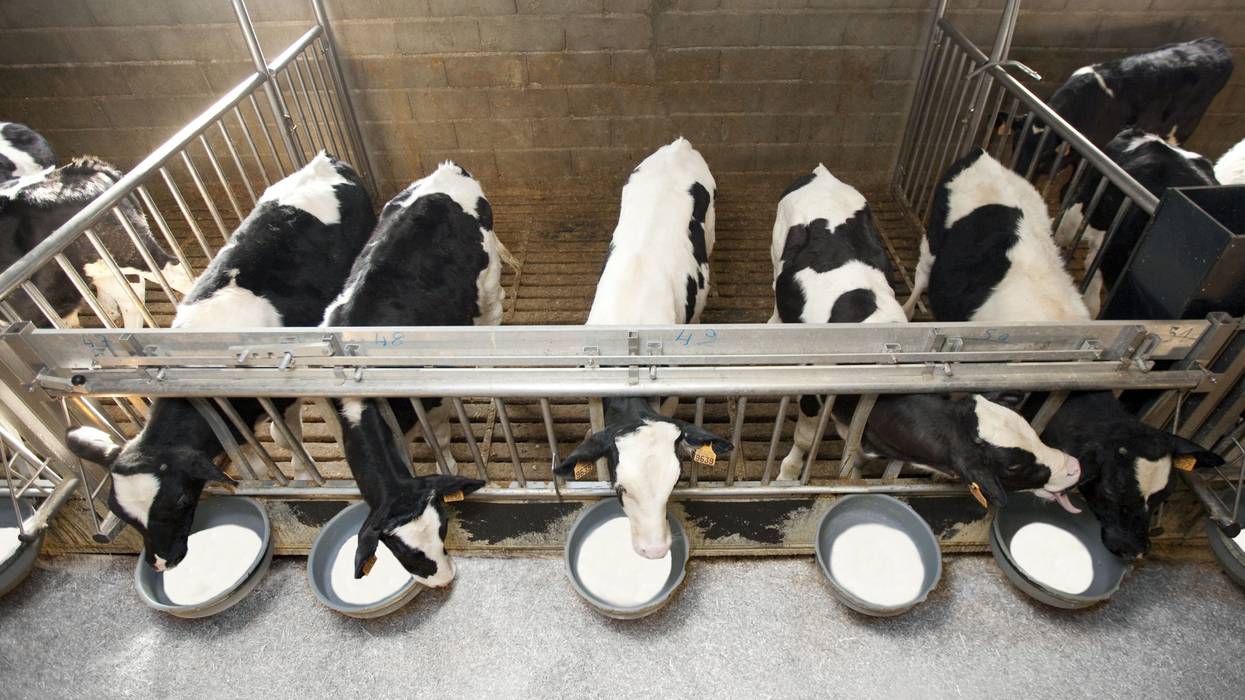
Federal agencies are protecting abusive industries while monitoring decent members of the public, hoping that we turn a blind eye to their assault on democracy and civil liberties.
The US government is rapidly installing Flock cameras and expanding the use of drones to follow the movements of ordinary people. A recent YouGov survey reveals that more Americans oppose such surveillance than support it, and yet, the government continues to track its citizens—while simultaneously bowing to Big Ag’s demands to ban drone footage and undercover investigations on factory farms.
Federal agencies are protecting abusive industries while monitoring decent members of the public, hoping that we turn a blind eye to their assault on democracy and civil liberties.
We have a right to personal privacy and to information that directly impacts our daily lives, including the truth about the food on our tables. In addition to animal agriculture’s irresponsible use of antibiotics, which contributes to the development of more virulent strains of pathogens, diet-related diseases cost our nation hundreds of billions of dollars every year. We could alleviate immense suffering by holding agribusiness accountable for the harm it causes and making needed reforms.
Instead of surveilling the everyday lives of Americans, our government should focus its cameras on industries that cause harm.
Americans are told that Flock cameras can be used to apprehend animal abusers, yet the industries responsible for the suffering of billions of animals are granted immunity. The majority of Americans are opposed to many of the cruel and painful practices routinely inflicted upon animals in our food system, and yet these practices are allowed to continue behind the closed doors of factory farms. We are told that constant monitoring is necessary for “public safety,” and yet the companies responsible for environmental destruction, worker exploitation, and threats to public health remain shielded from scrutiny. These double standards undermine transparency and erode trust, and it’s especially concerning when powerful individuals and institutions whose conduct is an affront to societal values are allowed to weaponize surveillance against their critics.
Flock cameras and emerging technologies could be used to manipulate narratives, confuse citizens, and silence critics, but factory farm operatives have been doing this for decades. It’s revealing to consider how much time and effort they’ve invested in concealing their misdeeds. They’ve passed “Ag-Gag” laws to criminalize whistleblowing and investigations that have exposed their cruelty. They’ve sued individuals, including Oprah Winfrey, for expressing concerns about irresponsible agricultural practices. And, they’ve labeled well-meaning animal rights and environmental advocates as “terrorists,” including in federal legislation entitled “The Animal Enterprise Terrorism Act.”
Powerful interests wield immense influence in the government and through technology and media platforms. These can be used to distract our attention and also to manipulate public opinion. They make it difficult to obtain factual information, and actively work to marginalize, scapegoat, and punish those who ask questions. This is not how civil society should work. Democratic institutions are supposed to value transparency and accountability and uphold basic standards that prevent abuses of power.
As digital tools become more central in daily life, we’re seeing shifts in how people connect, with stories shared through our phones increasingly shaping our beliefs and behavior. The recent interest in ever-increasing protein consumption, coupled with negative impressions people have of “fake” meat, is not a coincidence. The truth is that real meat comes from real animals who experience real suffering in intolerable conditions that are kept hidden from us.
Instead of surveilling the everyday lives of Americans, our government should focus its cameras on industries that cause harm, so at the very least, we can make informed decisions.

For a forest to recover from a fire takes more than planting a few new trees. Rolling back what amounts to a domestic counterrevolution is a daunting task, and it is easy to be misled.
Humpty dumpty sat on a wall
Humpty dumpty had a great fall
All the king’s horses and all the king’s men
Couldn’t put Humpty together again—Nursery Rhyme
Much can be said about President Donald Trump, but it is impossible to say that he has “done nothing.” This boorish, megalomaniacal, unpredictable, and frighteningly ignorant real-estate salesman has transformed his country by unleashing an avalanche of executive orders, edicts, institutional transformations, legislative shifts, and policy changes. Whether the nation can recover its democratic roots should not be taken for granted despite its institutional resilience and civic culture.
Trump-World is about more than Trump the president and demagogic ruler of the Republican Party. MAGA stands on tradition. Its base is rooted in the same backward classes, with a similar authoritarian and fascist ideological outlook as its right-wing extremist forerunners such as the “know-nothings,” the KKK, “America First!,” McCarthyism, and the White Segregationist Councils. Whatever the president’s decline in poll numbers, his mass base isn’t going anywhere and its racist, xenophobic, chauvinistic, and anti-working class beliefs are firmly entrenched. A reactionary sword of Damocles still hangs over a Democratic Party torn between a sclerotic mainstream and an exuberant faction of democratic socialists. Republicans collapse the former into the latter and then attack this essentially “center-left” political organization as “liberal,” “socialist,” communist, “Marxist,” and “anarchist,” even as Trump followers haven’t a clue what these words actually mean.
For a forest to recover from a fire takes more than planting a few new trees. Rolling back what amounts to a domestic counterrevolution is a daunting task, and it is easy to be misled. It is not a matter of the next election or putting together a grab bag of issues that will leave the public as confused as it was before, but a readiness to change institutions, reorient economic policy, and refashion foreign policy by highlighting three or four crucial points in each domain.
This calls for shifting away from Trump, the insufferable person, and focusing on Trump-World’s devastating attack on the welfare state, neofascist battle against civil liberties, cultural parochialism, and xenophobic-imperialist foreign policy.
Trump has issued over 500 executive orders in 2025-2026 alone. These now touch upon virtually every aspect of everyday life. Every progressive social movement with a marginalized constituency has come under attack through legislative and often coercive means. Public lands have been privatized, coal has been promoted while wind and solar energy projects have been shut down. Agencies such as the Internal Revenue Service, the Department of Justice, and the Department of Homeland Security have been “weaponized;” indeed, between the beginning of June and the end of August 2026, more than 150,000 arrests were made by Immigration and Customs Enforcement.
Meanwhile the “leftist” departments of education, environmental protection, and health and human serves have been gutted. Other regulatory agencies have been purged, including the Joint Chiefs of Staff. Legal gambits have insulated the presidency from criminal indictment, legal harassment of critics and “enemies” has become an everyday occurrence. The press has been intimidated, television shows have been canceled, and academic freedom is on the ropes. The threat to democracy is real and and the nation’s fabric is fraying. Drastic changes to the tax codes favoring elites and the top 0.1% have contributed to the greatest upward shift in wealth in American history. Unions have been banned from 40 federal agencies, collective bargaining agreements are imperiled, and worker health programs have been eviscerated. The new imbalance of class power is fixed, if not set in stone. Everything associaated with the “New Deal” of the 1930s, and the “Great Society” programs of the 1960s is hanging by a thread. With the Trumpist counterrevolution, the whole has become more than the sum of its parts, and everyday people find it difficult to process this avalanche of reactionary measures or the dangers that they pose. A mixture of political frustration and disorientation that provides fertile ground for nostalgia associated with the 1950s, when America was seemingly admired by the whole world.
US foreign policy has changed for the worse as multilateralism has surrendered to “America First!” Indeed, reference to the isolationist and quasi-fascist movement of the 1930s with the same name is not coincidental. Trump has identified the American national interest with his own. His personal enrichment by $2.6 billion in 2025-2026 occurred in concert with constantly fluctuating positions on the Russia-Ukraine War, the Iran War, NATO, the European Union, and Canada. The rule of thumb: Where cash is not to be made, support is not to be given. The United States has reneged on all major climate treaties. Aid to the United Nations, UNICEF, the World Health Organization, and the world’s most vulnerable nations has been cut to the bone. Trump has signed a sweeping bill imposing sanctions on Russia while simultaneously negotiating new “business deals” before the conflict ends, thus contradicting his previous warnings. His on-again, off-again imperialist threats to turn Canada into America’s 51st state, “protect” Greenland and Denmark, “run” Venezuela’s oil industry, create a “Gazan Riviera” (presumably based on Trump company investments), exploit Ukrainian minerals, sign a bill with sweeping sanctions and set up hotel deals in Russia, constitute the mix of personal and institutional goals that provide the president’s zigzag approach with a certain logic.
Trump’s foreign policy has no need for a state department, which has essentially been hollowed out along with the experts necessary to create prudent policies. Our president values the personal touch, and he is not above blackmail, threats, intimidation, bluster, and childish tantrums to get his way. None of this has worked. Trump has alienated NATO and the EU to Russia’s delight. Relations with Canada are at their lowest point amid a bitter tariff war. America’s squandering of military rources and diplomatic setbacks have left Taiwan and South Korea feeling increasingly uneasy as Chinese military actions linger in the background.
Trump’s record of failure is astonishing. After all the grandiose claims, mediation efforts to end the Russian-Ukraine War are stalled, policy toward Israel is an embarrassment, Venezuela has the same authoritarian regime, Iran’s geopolitical importance has actually increased, and there are rumblings about charging the United States with war crimes. Trump’s attempts to intimidate China have failed, the tariff offensive is tottering, and the president’s charismatic charm apparently hasn’t prevented North Korea’s “supreme leader” Kim Jong Un from further nuclear testing. Never has the moral and symbolic standing of the United States been lower, and never has it shown itself so incapable of distinguishing between democratic friends and authoritarian enemies.
“America First!” has turned into America last. Reversal of discrete policies is possible, restoring checks and balances is more difficult, and reigning in the charismatic presidency is likely. But this ignores the forest for the trees. Trump-World is more than the sum of its parts, and the avalanche of policies and edicts makes the counterrevolution difficult to process and threatens to overwhelm the ability of critics to prioritize their responses. MAGA will offer ongoing opposition to progressive forces and, in response, they must forward a rational and radical agenda of their own. This calls for shifting away from Trump, the insufferable person, and focusing on Trump-World’s devastating attack on the welfare state, neofascist battle against civil liberties, cultural parochialism, and xenophobic-imperialist foreign policy. That is what it will take for the United States to recover from its decade-long trauma—and even then...
The August level of $132.6 billion is the second-highest trade deficit on record, topped only by last year’s March deficit.
It’s been almost a year and a half since “Liberation Day,” the day that President Donald Trump announced his “reciprocal” tariffs, slapping tariffs on imports from our trading partners to punish them for selling us stuff. Ostensibly, the goal of the tariffs was to eliminate, or at least reduce, our trade deficit.
Trump seems to believe that we are being ripped off if we buy more goods from a country than we sell to them. There can be problems caused by a large trade deficit, especially one that is rapidly growing, as was the case in the first decade of this century. But it doesn’t make sense to claim a country is ripping us off by selling us stuff.
Anyhow, whatever problems we have with trade are poorly addressed by the sort of blanket tariffs imposed by Trump. We may want tariffs to promote the development of certain industries, like solar panels or electric vehicles, or to ensure a stable supply of essential products, like steel and rare earth minerals, but such efforts have little to do with Trump’s tariffs.
He said that he wanted to end the rip-off, which he defined as our trade deficit. It hasn’t worked out that way.
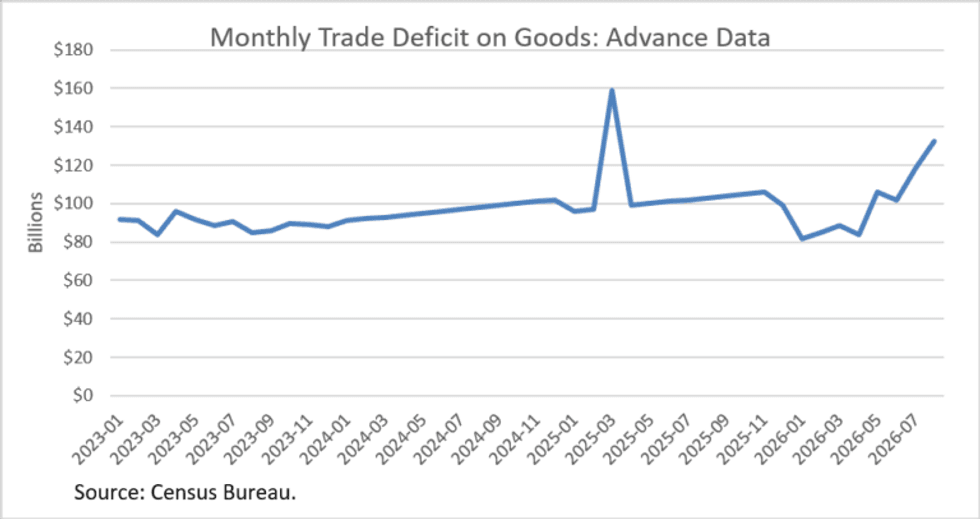
The monthly deficit had been around $90 billion through 2023. (Note that these are advance numbers based on incomplete data. They are generally higher than the final data the Census Bureau releases later.) It rose gradually in 2024, as the growth of the US economy outpaced the growth of our trading partners. This caused US imports to rise more than our exports to other countries. By the election, the trade deficit was up to $110 billion. It then began to rise more rapidly as consumers and businesses stocked up on imported goods in anticipation of Trump’s tariffs. The deficit hit an all-time record of $158.7 billion in March of 2025.
The deficit then fell both due to the impact of the tariffs and also because of the advance purchases in anticipation of the tariffs. By December, the deficit had risen back to $100 billion a month, roughly the same as the pre-election level.
The deficits have increased sharply again in 2026, driven in large part by a surge in semiconductor chips due to the AI boom. The August level of $132.6 billion is the second-highest deficit on record, topped only by last year’s March deficit.
It is worth mentioning that the US runs a substantial surplus on services, collecting around $30 billion more each month on items like patent and copyright fees, insurance, and financial services than what we pay to foreigners. I’m not sure if this means we’re ripping them off, but that is part of the larger score on the trade balance.

Whether we need to tear it all down and start anew or not, this is an opportunity to do something.
Tonight I find myself in Yakima. It is 90°F, and I can’t sleep. Fires burn across the valley, making the air brown and smell like a campfire. The only sounds are homeless youth setting up their tents as I walk down the Ave trying to think. No scholarly journal asked me to write about “morality” as they did Joan Didion who published her sublime essay that has haunted me for more than 30 years and speaks to me tonight along with works by Timothy Snyder, David Graeber, and James Baldwin. Maybe they inadvertently compelled me, or the times did. I hear many powerful people invoke “morality” in ways so vacuous of meaning from anything I recognize (no thanks to Nietzsche) that it seems to have disappeared from their minds entirely. I distrusted this word then, and I distrust it more and more every day. To deal with my feelings and cognitive complexity of “morality” in these times, my mind veers to the particular.
Here are some of my particulars. Settlers stole this land from the Yakama people, killing approximately 6,300 of them before 1,200 survivors signed a treaty leaving their descendants to suffer a slow torturous violence from poverty. Farmworkers here jeopardize their lives daily picking food for others who despise them. The local news talks about the fires burning all around us, which towns should evacuate, which community center has water and cots. They never say climate catastrophe. They don’t mention the latest kidnappings and disappearances. They continue ignoring news about the poisoned water wells that run brown from faucets and smell like the massive manure lagoons created by corporate-owned cattle farms. National news is negligible here, so not many people know about the latest pardoned January 6 insurrectionist, confident in his self-righteousness that our freedom was under siege, who said, “I will not stand by and let this go unanswered.”
All these instances do not help me trust “morality” more, but in a vague sense they help me grasp what it is not, because the insurrectionist meant something quite specific. According to his beliefs about god and flag, he meant that a person has a higher duty to shoot and leave on the ground to bleed out anyone who gets in the way of sustaining his tribalized views. Many of the insurrectionists expressed this twisted sense of “wagon-train morality,” not unlike the thousands of bureaucrats, politicians, and citizens who became Hitler’s willing executioners, so they could sleep without bad dreams.
We are now in a “moral” emergency, not a quandary or call to consider, but a state more grotesque than we’ve seen in my lifetime
I am trying, of course, to talk about social codes that shape our sense of “morality,” often formed by what we learn in childhood. Like many of us, my childhood was filled with Bible stories that warned us about the “wages of sin” for disobeying the 10 Commandments that Moses brought down from the mountain, intending to instill in us some sort of moral compass. For similar reasons, we were told to memorize the Lord’s Prayer and do unto others as you would have them do unto you. But these stories appear to be inadequate in preventing our tendency toward self-delusion, as the neuroscientists have explained our capacity for misperception, because far too many believed then and still believe, no matter the sin, we can obtain absolution from a priest, kneel, rub some beads, and all will be fine.
These stories were hardly sufficient then and seem less so now. After centuries of the church and social groups like the Freemasons that taught their catechism for centuries, those same men, most often men, many of them the very same teachers of virtue, killed and terrorized millions in their white hoods and from behind desks in government offices. When I was young the story about Flight 571 crashing into the Andes, and what the passengers had to do to survive, spread around the world. Many also watched Soylent Green, a popular dystopian 70s film. Both these stories were less about illuminating the complexities of our social code, but more to prevent us from crossing a line we should never cross by reminding us of a visceral feeling of revulsion if we did. Given our history with “morality” and our woefully deficient track record, perhaps it is time we try another way. If we tried to tell stories that engage our moral imagination, true stories of Tulsa, Trail of Tears, Wounded Knee, the Osage, the California genocide, Zoot Suite riots, Japanese internment, Indian boarding schools, and many, many others, not as cautionary tales but with an intention of sharing more values and countering a “doctrine of inevitability,” we might see a flash of hope’s light before change’s thunder.
Many of us relied on a “morality” described as duty in the Declaration of Independence, and like stories from our childhood, this seems grievously insufficient now, if it ever was. Perhaps a “morality” from Ubuntu and In lak’ech are worthy candidates for exploration and experimentation, but we may also need to clear our heads from the imprint of white supremacy culture before we dismiss them outright or misunderstand what we see in ourselves and others. Stories of Kondiarok, a genius and chief of the Windout Nation in the 17th century graciously offered a better way when he spoke with the European “intellectuals” of the day, even though they closed their ears and insisted their white supremacist ideology was better than his and his people’s “savagery.” Stories of Levi and Catharine Coffin and others who orchestrated the Underground Railroad by spending their own money to save the lives of thousands of slaves running for their lives without expectation of veneration could support teaching other values. Likewise, stories of Harriet Tubman and many other Black women, who cleaned their guns and readied themselves to shoot if it could save the lives of other Black people beyond their own families will do as well. These days I often think about the possible utility of the story “Rule by Tricks,” by Liu Ji in the 14th century, in which monkeys took down all the stockades used to harm them, leaving the sadistic old man to perish from starvation.
I don’t believe I’ve ever imposed my conscience on others, and I do not intend to start now. Not that I could, even if I wanted to, because this is only possible when we give away sovereignty of our own minds. But, if we are as clearheaded as we like to believe we are, expect to hold on to a Good Samariten view of “self,” or retain our grip on the notion that we are more civilized and evolved than Paleolithic warring tribes as truth—with our reptilian brain held in check so we can interrogate reality instead of fall for our biased perceptions—then we should be able to agree that protecting children from sexual violence and exploitation demands a “morality,” at a minimum, to disarm the perpetrators from continuing their evil acts. Some will say that this is setting our moral bar too low, and they would be correct. What then are we to do with it when these days bombs leave no human remains to retrieve and bury, when the bombardier sits comfortably on the other side of the planet pushing buttons, or when drivers of bulldozers plow over untold numbers of dead Palestinians who were just trying to love their children?
I long for any remnant of “morality” that used to lead us, in its most naked simplicity, to retrieve a young man from a cavern or a driver killed in a desert highway accident from the ravages of coyotes. In simpler times, Didion warned us about “fashionable madmen” who invoke a perversion of truth, about the sinister delusion of evil deeds, and now we see, or cannot look away from the madmen who steal, sell, and rape our children. We were in a state of madness when her essay was first published, and now these monstrous madmen run our concentration camps and surveillance data centers. (Oh, Ms. Didion, if you could see us now!) Now they seem to relish our hysteria and stoke self-delusion among as many of us as possible through algorithms, bots, and any other tool money can buy.
Tonight fear and grief reign heavier than the smoke. It is the sound of sorrow and wailing. If we listen, we can all hear this rending of hearts across the land, a siren warning, especially across the valley tonight, sending many to seek safety and closing themselves off in their houses, afraid to cross a street to see their neighbor. Some call their family members to find out who recently disappeared in an ICE SUV, whose child, parent, and grandparent can’t get off the floor, paralyzed from loss. Others cook their dinner outside among ash heaps and lay their heads down under tents or on bare ground struggling to sleep, not knowing when and if anyone will ever send relief.
While many of us feel like a shattered ceramic bowl from this incessant madness, I still believe we can piece ourselves back together, in the tradition of Kintsugi, and become something better, perhaps even beautiful. You see I want to be quite obstinate about insisting we are now in a “moral” emergency, not a quandary or call to consider, but a state more grotesque than we’ve seen in my lifetime which begs us to find truth in our hearts, a truth that lets us see each other’s full humanity, and to truly care for each other, and set a higher bar for our social code. I am well aware of the irony in my wish that during the period when Didion’s essay was widely read we had brought immortality to its knees and snuffed it out. But we can never go back, no matter how much we pray, and this is the moment we are given, a new moment to bring an end to this sinister madness, in spite of the seemingly impossibility of defining “morality” because it may not exist outside some ideal guiding light of our aspirations. This time we cannot cave to perfectionism’s demonic voice that may stymie us from action, or continue deluding ourselves, but instead listen closely to the better angels in our hearts. This time we must change course, take action, as expediently as possible, because we are now at a point of bad trouble that we’ve been in for years but is spreading like a pandemic. Whether we need to tear it all down and start anew or not, this is an opportunity to do something. We’ve been in bad trouble for far, far too long to do nothing.
Trump, having lost much of his leverage, knows he can’t even appear to accomplish much in 2027 and 2028.
It is hard to read President Donald Trump’s mind—what with his chronic lies, delusions, and fake promises. His incentives to finish his term are numerous—pomp and ceremony, daily vengeance, judicial immunity, Democratic leaders, for now, opposing impeachment (see "Open Letter to Representative Hakeem Jeffries", August 31, 2026), and immensely enriching himself using the punishing or rewarding powers of the presidency.
The rewards are insatiable. This failed businessman, riven with debts and losses, revealed in his 2025 financial disclosures a profit of $1.1 MILLION AN HOUR on a 40-hour week! He probably will reap more dollars in 2026, which he has ensured would be non-taxable by his captured Internal Revenue Service (See: "DOJ Settlement ‘Forever’ Bars IRS Trump Audits, Sparks Backlash").
Then, what could be the counter factors in his mind for resignation? Foremost, he is exhausted physically and mentally, declining at an accelerating rate, worrying his physicians and family. Over 30 prominent mental health professionals—some with expert witness credentials in courts—and physicians have observed his deterioration in a disciplined statement read into the Congressional Record on April 30 by Sens. Sheldon Whitehouse (D-RI) and Jack Reed (D-RI). (See also: "Midterm Countdown, 33 Days to Go: Language from Our Leader" by James Fallows.) Trump yearns for more R&R and golf and less grueling travel requirements.
He can claim that it is time to hand the great future of America to a younger generation of Republicans led by a new president, JD Vance.
Second, he would avoid the many investigations the Democrats would launch against his administration, coupled with negative headlines, disclosures by whistleblowers, congressional subpoenas, and charges of contempt of Congress.
Third, it resolves a messy presidential primary race by installing JD Vance—his present choice as successor—as a president who would maintain a compliant Department of Justice and, crucially, maintain loyalty to Trump across the board in his regime. This continuity might mitigate his base blaming him for November’s losses, since he demanded that the GOP candidates pretend that he is on the ballot. Trump cannot stand the shrinking of his MAGA base, plus the departure of his bone-tired, super loyal personal staff.
Fourth, his military intelligence and domestic advisers are briefing him on what is likely to come. Troubling scenarios would land on his desk for responses and decisions. They include the arrival of deadly drones; runaway AI Frankensteins; a possible pandemic (see: "Are We Ready for the Next One?" from Johns Hopkins University); more intensive storms, floods, droughts, and mega wildfires; all pressures that he can try but not succeed in avoiding. Moreover, there is a broad consensus that his deficits and national debt are surging from runaway military spending, corporate welfare, giveaways, huge tax reductions, and evasions by the super rich and mega corporations that will raise the hated interest rates everywhere.
Fifth, he is confident he can declare victory on every front, domestic and foreign, with rhetoric that he has been honing for years. He can say he has accomplished his pledges to the American people, showing his list of “promises made and promises kept.” He can claim that it is time to hand the great future of America to a younger generation of Republicans led by a new president, JD Vance, who is in his 40s.
Though contrary to his past boasts of being in “excellent health,” he could invoke “Drs. Orders” and wanting to spend more time with his family. Melania would certainly not object to this kind of resignation. She has not liked at all the limelight of being the first lady, and knows that the coming two years are going to be much more stressful for her and her husband.
Trump, having lost much of his leverage, knows he can’t even appear to accomplish much in 2027 and 2028, in addition to having lost his power to nominate toady judges through a Democratic Senate. Just as the obstinate Richard Nixon saw his Republican base shrinking in Congress, for a sliver of the serious impeachable offenses that Trump commits daily and boastfully. Remember Nixon resigned in 1974, saying he had lost his base of protection in Congress.
Given Trump’s propensity to double down on his crazed, often violent provocations abroad and in American cities, his base in Congress may similarly diminish and make a resignation of lame duck Donald involuntary.
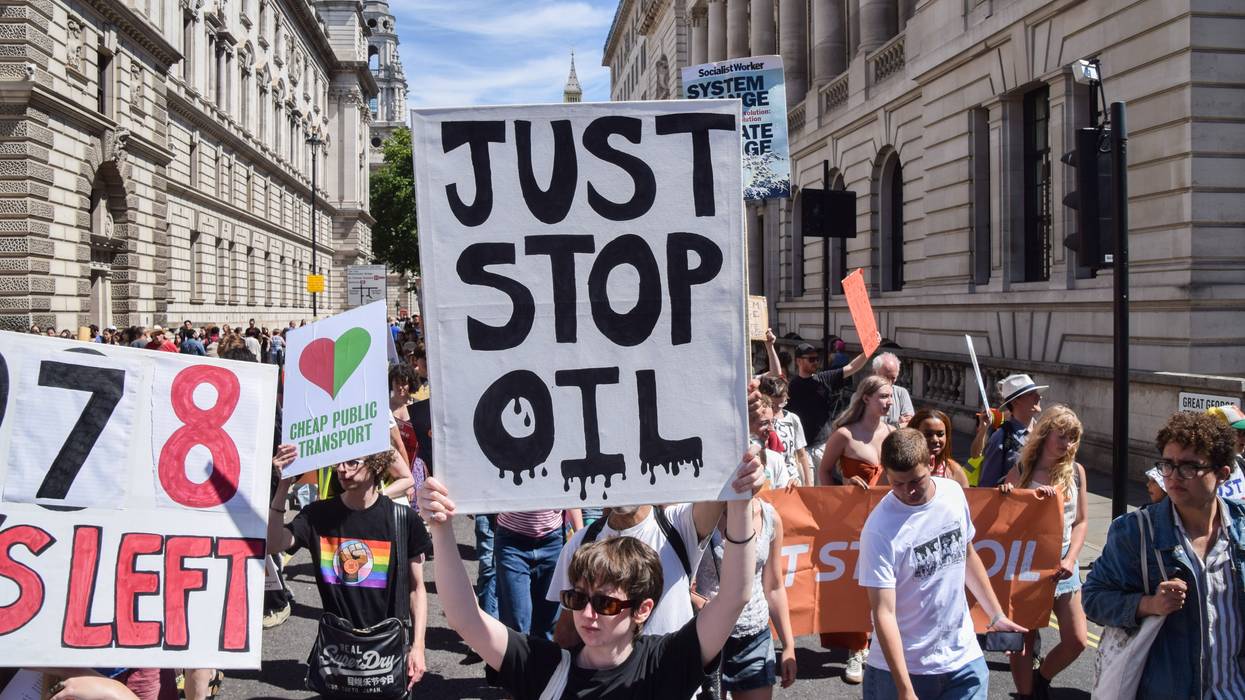
Starting a stupid and criminal war is probably the dumbest way to wake the world up to the need to kick their and our collective oil and gas addiction, but here we are.
The price of oil has come down marginally this past week, largely because the Iranians are letting oil tankers transit the Gulf of Hormuz (presumably in an effort to work out a peace deal with President Donald Trump).
Meanwhile, though, the big lesson the world seems to have learned because of Trump’s fiasco—other than that our military is under the control of an irresponsible alcoholic and a narcissist and unreliable wannabe king—is that it’s high time to get off fossil fuels.
Starting a stupid and criminal war is probably the dumbest way to wake the world up to the need to kick their and our collective addiction, but here we are: The war has done more to encourage conservation and the transition to renewables than any other single effort by anybody anywhere in recent memory.
Instead of subsidizing fossil fuels to jack the profits of the companies that fund the GOP, we should be taxing them the way Europe does and using that money to turn every American roof into a power plant.
A new report from the International Energy Agency found that global demand for oil has fallen 2.5% this year, the equivalent of taking 42 million gas-burning cars off the road.
I’ve been watching all this from an odd vantage point. Three years ago we put solar panels and batteries on our all-electric house, where our winter electric bills had been running as high as $200 a month.
Now, the only time we buy electricity at all is in the dead of winter, and even then it costs a fraction of what it used to because I can download power at night when it’s cheapest. Between that and having an electric car I charge off my rooftop, energy prices exploding because of Trump’s and Bibi’s war haven’t much affected us directly.
But such benefits shouldn’t be limited to people who can afford to put solar panels on their roofs and live in blue states with huge solar subsidies. Every American should have such an option.
I first understood how this could work for an entire country back in September of 2009, when I was invited to join German Member of Parliament Hermann Scheer as a keynote speaker at a conference at the Centre de Cultura Contemporània de Barcelona.
Almost a decade earlier, Scheer had shepherded his “100,000 Rooftops” program through the German Parliament and was eager to talk about how it worked and how it could work in Spain. As he laid out the concept to me over lunch, it was simple and elegant.
Banks would loan people the money to put rooftop solar on their houses at a super-low interest rate, with defaults backstopped by the government so there was no risk to the bank and they could make money on a super-low-interest loan. Power utilities would buy surplus power from those homes at a “feed-in tariff” rate that was higher than the retail price of electricity until the bank loans were paid off, typically in five to ten years.
The rates were set so that if the monthly loan payments on your rooftop system were $100, the local utility would be paying you around the same $100 a month. When the loan was paid off you’d own a solar system that would last for decades, and you’d have gotten it for free.
The extra expense to the utilities for those payments to consumers would still cost less than building a new power plant. The system let the Germans decommission a few and avoid building any new nuclear plants.
Politics intervened, of course, and the program wasn’t implemented as cleanly as Scheer described it to me, but it got a long way there, even though he died the following year at just 66. Today well over a million German homes have both solar panels and battery storage, and solar covers around 14% of the country’s electricity, all of it in the cloudiest country in Europe at the same latitude as Calgary, Canada.
And the rest of the world is following following at a faster and faster rate. The IEA now expects electric vehicles to make up a record 29% of all the cars sold on Earth this year, with sales records set in 50 countries last quarter as fuel prices from Trump’s war pushed drivers away from gasoline and diesel.
In the European Union overall, EVs are now more than 30% of sales and over 50% in China; they’re nearly 100% of sales in some countries like Norway. Here in America they’re just a pathetic 5.8% this year.
What explains the growing enthusiasm for electric cars around the world and here in America is, in large part, the price of fuel.
For a century in America the price of oil and its refined products has left out most of what they truly cost us. It doesn’t include the cancers and the asthma, the wildfires and the floods, or the wars we fight to keep tankers moving through places like the Strait of Hormuz.
Economists call these externalities, and the International Monetary Fund puts the worldwide total at $7 trillion a year in costs—subsidies, really—that the fossil fuel industry hands off to the rest of us. As I laid out in The Last Hours of Ancient Sunlight, we’ve been burning through millions of years of stored sunlight as if it were free of any real costs or externalities.
We figured out how to handle this problem of paying for externalities and discouraging destructive behavior long ago with alcohol and tobacco, which we tax heavily both to discourage their use and to pay for some of the damage they do to our individual health and to our society.
Europe has taxed fuel that way for decades. Germans pay upwards of $3 a gallon in fuel taxes, while our federal gas tax has been stuck at 18.4 cents since 1993.
And you can see the results in any European town: People drive smaller cars and fewer miles, they take the train, and because driving is expensive they walk to the bakery and the hardware store down the street, which also has the added benefit of boosting Europeans’ health while keeping their money circulating in the local economy.
A high price cuts consumption whether it comes from a war or from a tax, but what separates the two is where the money ends up.
Europe is now extending the principle to trade with a carbon charge at its border, which is the closest the world has yet come to the international price on carbon we need to make it reflect the very real damage it’s doing to our lives and environment.
None of this is happening here in the United States, however, because of the Republican Party’s Faustian bargain with the fossil fuel industry.
Ronald Reagan took Jimmy Carter’s solar panels off the White House roof to make his oil industry donors happy, and every Republican administration since has handed our public lands and resources to the industry at giveaway prices while the industry pours money into gifts, trips, and Republicans’ campaigns.
Trump made the deal explicit at Mar-a-Lago in 2024 when he asked oil executives for a billion dollars and promised to gut our climate rules in return, a promise he’s kept by killing the wind, solar, and EV incentives that would’ve let millions of American families do what we did with our house and car (both bought and installed with credits from the Obama administration and our enlightened Oregon state government).
So when the price of gas and diesel begins to fall back and Trump and the GOP start taking credit, remember what this year proved: Instead of subsidizing fossil fuels to jack the profits of the companies that fund the GOP, we should be taxing them the way Europe does and using that money to turn every American roof into a power plant.
Call your members of Congress through the Capitol Switchboard at 202-224-3121 and tell them you want fossil fuels priced at what they really cost us and rooftop solar financed the way Germany did it.
And if you found this useful, please share it with your friends and family and consider subscribing to and supporting The Hartmann Report, because reader-supported media is how ideas like these get past the industry’s wall of money.
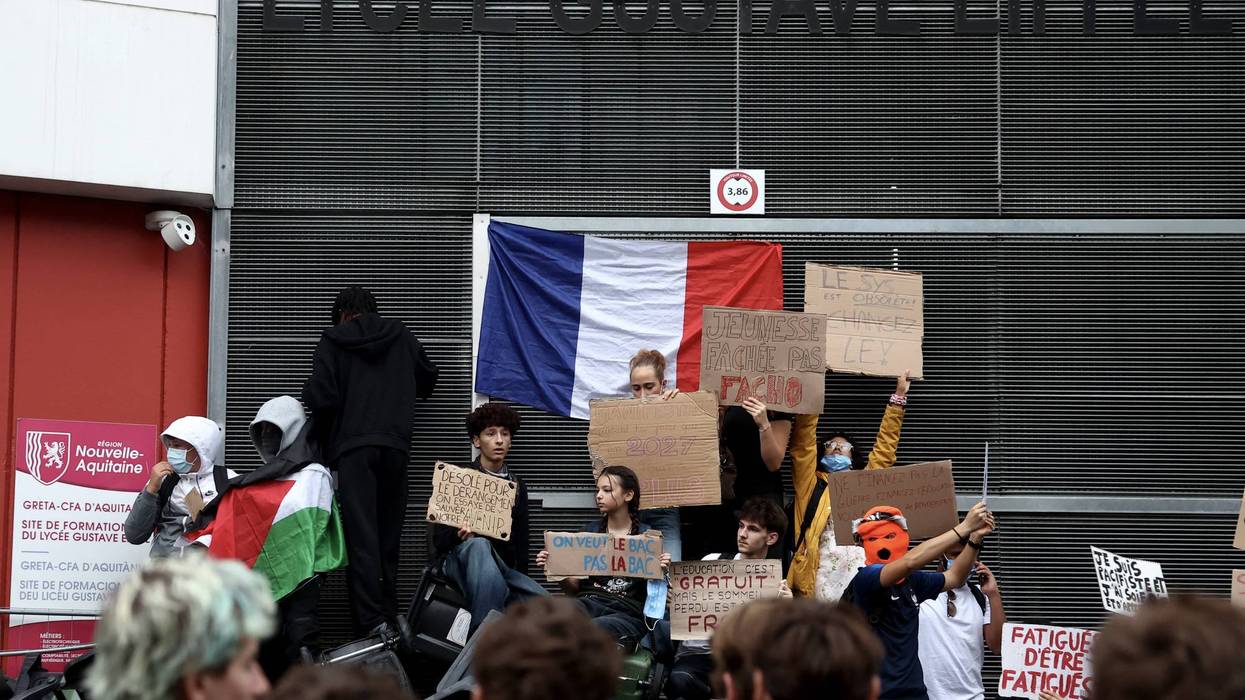
The French student movement has a long history of political activism based on organized protests and occupations not only for the improvement of their learning experience and school conditions but also against capitalism, consumerism, imperialism, and police repression.
France is presently in the throes of nationwide student protests that have turned increasingly violent as the police crack down on students, using tear gas and heavy-handed tactics as students blockade entrances to their schools and even set fire to several schools across France.
The students, aged between 15 and 18, are protesting over poor school conditions (overcrowded classrooms, crumbling infrastructure, heavy workloads, teacher shortages) and demand increased funding for schools. Thousands have been detained, mostly minors, and dozens injured, including some 50 law enforcement officers.
The high school protests begun in Aubervilliers, a low-income Paris suburb, but quickly spread nationwide, as usually happens with students protests in France. University students have now joined high school schools across France, thus creating an even more volatile situation for the French government. Incidentally, the student protests are unfolding alongside massive public-sector protests over pay and working conditions.
French students have also shown that they are always on the side of the workers’ fight for better working conditions and in their struggle for an alternative socioeconomic and political order.
France is indeed in crisis mode, economically, politically, and socially. Weak growth and deteriorating public finances have been the norm for several years now, while austerity is being advanced by the political establishment as the only available solution to the country’s economic problems and financial misery. French Prime Minister Sébastien Lecornu presented an austerity-driven government budget on October 1 that proposes 43 billion euros in new fiscal measures to reduce the deficit.
However, the budget bill is surely expected to face a rough ride as France has a deeply divided parliament that has repeatedly rejected austerity-driven budget proposals, forcing in fact several prime ministers since 2022 to step down. Lecornu’s government may very well be the next one to collapse as it is highly unlikely that either Marine Le Pen’s far-right National Rally (RN) party or Jean-Luc Mélenchon’s left-wing France Unbowed (LFI) party (which France’s Interior Ministry has actually classified as far left) will make compromises, especially in light of the fact that France’s next presidential election is scheduled for April 18 and May 2, 2027, and looks like the run-off election will be between Le Pen and Mélenchon.
In addition, France’s bond market is under growing pressure as its 10-year yield has reached the highest level since 2002. With the cost of borrowing money hitting a peak, France, which has faced sluggish growth for years, is likely to see even slower growth in 2027 than in 2026. This situation seems to be serving the far-right RN party particularly well, which has already scored a “historic victory” by securing enough seats in the recently held Senate election to establish its own caucus for the first time.
In the meantime, the student protests are being used both by Le Pen and government officials to target Jean-Luc Mélenchon’s party for allegedly deploying agitators and using rhetoric to stoke students’ anger.
There is little doubt that the concerns of French students are legitimate. Their grievances with the poor state of schools have been building since this summer’s heatwaves, which exposed “the poor state of schools, with poor insulation and no air conditioning,” according to Vincent Latour, a professor of British Studies at the University of Toulouse-II-Le Mirail. Moreover, the president of Union Syndicale Lycéenne (USL), 19-year old Ryad Rani, said that student grievances had elicited no response from the government and that the movement will continue with the protests until its demands are satisfied.
The French student movement has a long history of political activism based on organized protests and occupations not only for the improvement of their learning experience and school conditions but also against capitalism, consumerism, imperialism, and police repression. It doesn’t need outside agitators in order to mobilize and take action into its own hands and is definitely not controlled by any political party. French students have also shown that they are always on the side of the workers’ fight for better working conditions and in their struggle for an alternative socioeconomic and political order, which is precisely why the current student protests coincided with the public-sector workers strike against the government’s austerity policies. And poor school conditions are not the only reason behind the ongoing student protests. As Mael Breton, a high school student taking part in the protests said, “We want fewer police because we think there is a huge amount of police repression, both against high school student movements and social movements more generally.”
It is true that local MPs from the LFI party were quick to lend support to the protests and the blockades once they started. But those actions were not initiated by the LFI, and students outright rejected “claims that they are manipulated by radical-left politicians.” Once the protests and the blockades started, students utilized various social media platforms to articulate their grievances and make their slogans and the measures taken known to the rest of French society.
The year 1968 was one of great turmoil and unrest. We live in a different world today. But what was true for workers and students in May 68, remains true for today’s generation of French students: “The struggle continues.”

While the words reverberate through the halls of the United Nations, children are still killed in front of their families, mass funerals remain part of Gaza’s daily rhythm.
When I first saw footage of Gaza doctor Munir al-Bursh and his family kneeling beside the white-shrouded body of his son, surrounded by mourners, I thought it was an old video. It was not.
My conclusion, however, was understandable. In December 2023, only months after the start of the Israeli genocide in Gaza, the al-Bursh family was targeted in an Israeli attack. Dr. Munir, director-general of Gaza’s Ministry of Health, was wounded. So were other members of his family. His daughter, Jinan, only 13, was killed.
That same day, Gaza’s beloved doctor was back at work, joining the many doctors across the strip trying to save lives as Israel’s killing machine claimed them by the thousands.
Between today and the next UN General Assembly lies an entire year—365 days in which those words can either acquire meaning or become yet another entry in the long archive of speeches on Palestine.
Alas, the latest footage was not old footage resurfacing. It was a new coffin, a new funeral, another child buried by the same family. This time, the attack took place during what some in the media continue to call the "Gaza ceasefire."
On September 19, an Israeli drone strike killed al-Bursh’s eldest son, Basir, outside a tent west of Jabaliya refugee camp.
“We were together side by side,” the grieving father recalled. Basir had warned him, “The Israelis are targeting both of us.” Moments later, his son stepped outside the tent and was killed.
One can be forgiven for confusing Gaza’s present with its recent past. The scenes emerging today are almost indistinguishable from those that preceded the so-called ceasefire of October 2025. The sequence repeats itself with terrible familiarity: Israeli strikes, shelling, and sniping; Palestinians killed; the bereaved carrying their dead through Gaza’s destroyed streets, searching among the ruins for somewhere to bury them.
Al-Bursh’s story is part of this terrible continuum, but its significance extends beyond his personal loss. Throughout the genocide, he and other Palestinian doctors became Gaza’s de facto spokespeople. They counted the dead and wounded, documented hunger and destruction, and chronicled the collapse of the medical system from within its hospitals. In the process, they became Gaza’s highest moral authority, more credible than politicians or self-proclaimed leaders.
And the world listened. Gaza’s doctors forged a bond with global civil society that no political institution could manufacture.
Perhaps that helps explain the staggering price Gaza’s medical community has been made to pay. According to the World Health Organization, more than 1,700 healthcare workers have been killed since 2023, amid at least 920 attacks on healthcare.
Dr. Hussam Abu Safiya, like Dr. al-Bursh, became a symbol of that medical resistance. The director of Kamal Adwan Hospital remained at his post through siege and repeated Israeli attacks before Israeli forces detained him in December 2024. He remains imprisoned without charge or trial, amid reports from his lawyer of beatings and deteriorating health.
Dr. al-Bursh, meanwhile, remains steadfast despite repeated blows that would have broken many others. His wife, too, embodies sumud, the Palestinian tradition of steadfastness nurtured at home and passed from one generation to the next.
Even in the immediate aftermath of his son’s killing, al-Bursh continued warning about Gaza’s collapsing healthcare system. Indeed, hospitals have been forced to suspend scheduled surgeries and outpatient services, while severe shortages of fuel, medicines, and equipment continue.
“The limited quantities of fuel reaching the enclave barely keep health facilities alive,” al-Bursh warned a day after his son’s murder.
His statement came as world leaders gathered thousands of miles away, in New York, for the 81st session of the United Nations General Assembly.
And once again, Palestine echoed through speech after speech, though this time the language carried a new urgency.
Spanish Prime Minister Pedro Sánchez condemned “the genocide that Netanyahu continues to perpetrate in Gaza.” UN Secretary-General António Guterres described Israel’s mass extermination as involving “a scale of killing and destruction unlike anything I have witnessed” during his tenure. Even French President Emmanuel Macron called Gaza “a spectacle that shames us all,” asking: “What is our credibility worth if we remain inactive on Gaza?”
Then came Israeli Prime Minister Benjamin Netanyahu.
Dozens of delegates walked out as he approached the podium, leaving row upon row of empty seats, while protests continued outside the UN. Netanyahu responded by calling those who departed “moral cowards.”
One might pause here and speak of tides turning, currents changing, and a world slowly loosening the decades-long grip of Israel and its American benefactor.
But Gaza does not have the luxury of time. While the words reverberate through the halls of the United Nations, children are still killed in front of their families. Mass funerals remain part of Gaza’s daily rhythm. Approximately 1.7 million people remain displaced, many under inadequate shelter, without sufficient clean water or sanitation. Hospitals remain crippled. And above this landscape of ruin, the drones still circle.
Between today and the next UN General Assembly lies an entire year—365 days in which those words can either acquire meaning or become yet another entry in the long archive of speeches on Palestine. However, there is time for rhetoric to become policy: for sanctions to be imposed, boycotts activated, meaningful aid delivered, and those responsible for war crimes held accountable.
Until then, Dr. Munir al-Bursh and thousands of Gaza’s men and women will continue to hold the fort amid shattered hospitals, destroyed homes, and an exhausted population.
Their resilience is extraordinary. But Gaza cannot be expected to endure simply because it has proved capable of enduring.
In New York, Palestine is spoken of from the podium. In Gaza, Palestinians are still being carried to their graves.
It is time to close the distance between words and action, once and for all.

The administration’s agenda for the last two years is built around the concept of less access to life. It has committed billions of taxpayer dollars to this mission.
It’s such a simple idea—that our nation was founded to provide its citizens and new arrivals with more life. Our unique form of government, grounded in the notion of self-determination, explicitly seeks to expand life possibilities for more people so that they might realize gifts granted at birth. Why didn’t this occur to me sooner? After all, “life” so clearly precedes “liberty and the pursuit of happiness” in the Declaration of Independence.
To our detriment, we are now living through a period where the person we elected president, whose predecessors largely upheld the nation’s founding principles, seeks to bury its most basic intent. The administration’s agenda for the last two years is built around the concept of less access to life. It has committed billions of taxpayer dollars to this mission. When superimposed on their repetitive attempts to disempower women, people of color, and ethnic minorities, the four efforts that follow cap a prolonged assault on life:
The allocation of vast resources to expel several hundred thousand people from the country, sidestepping their due process rights. All emigrated to fulfill more of life’s possibilities in safer and more nurturing surroundings. A strong majority have bolstered the nation’s economic might and cultural richness. Read this Guardian article for a full grasp of the horrifying actions done in our name and paid for with taxpayer dollars. For those expelled, life’s possibilities have been lessened. Ours too are diminished, as their contributions are subtracted from community life.
Preserving an entitlement to more life in all its various forms inspires a cause that warrants universal backing.
The denial of science-based findings regarding climate disruption and positive health measures. This translates into many more citizens having fewer life options. On the climate front, the administration has contended that more oil enhances our lives. The truth is that more oil equals less life. Profligate burning of it disrupts the proper functioning of the atmosphere, sickens more people, and causes extreme weather that results in severe dislocations and needless deaths. At the same time, disregarding years of learning regarding preventive health measures and positive treatment protocols shrinks the chances of more of us for a full life.
The constriction of public discourse by curtailing press freedom and criminalizing constitutionally protected citizen dissent. The upshot is that the breadth and depth of the field of ideas available to us as citizens is considerably constrained. Life’s richness is fed with bursts of fresh air, not with heavy doses of government suppression. When the range of the possible is narrowed, there is less of life’s potential.
The direction of public resources in support of the fortunes of a few extremely wealthy people. This distortion shuts off opportunities for more citizens to spread their economic wings in pursuit of a better life. The so-called “American Dream” has become a mirage of unrealizable expectations for 90% of the population. Ironically, it was the throttling of these expectations that stoked the anger and resentment of a plurality of our fellow citizens and led to the election of a person committed to limiting life chances for millions.
These acts, designed to deprive constituents of more life, are evidence of a transgression more egregious than all the others this administration has perpetrated. It demands immediate attention and redress.
Strategically speaking, fighting for more life is easier to grasp than fighting for democracy, The latter asked people to stand together in defense of an abstract idea. For some it had partisan overtones. In contrast, preserving an entitlement to more life in all its various forms inspires a cause that warrants universal backing. It would be sufficient for undertaking a mass movement fueled by nonviolent direct action.
Who of us, regardless of political affiliation, would advocate for less life? This is the cause for which we must fight now—to regain the ground we have lost, and to realize even more fully the primary intent of the Declaration of Independence: more life.

Standing alone, neither the expanded SAVE program nor the citizenship lists may be capable of changing the outcome of the midterms. But they do not stand alone.
Just when it seemed the Supreme Court might be prepared to stop Donald Trump from sabotaging the midterm elections, the six Republican justices who dominate the court handed the president a potentially far-reaching victory on September 25 with another ruling on its emergency “shadow” docket. The ruling in Department of Homeland Security v. League of Women Voters permits the administration and Republican-led states to use a newly expanded federal database to review state voter lists, overturning a lower-court decision that had concluded the database could not be used for the midterms because it violates federal privacy laws and the Administrative Procedure Act.
The Systematic Alien Verification for Entitlements program was created in 1986 to allow federal, state, and local government agencies to verify the citizenship and immigration status of noncitizens applying for public benefits, relying on records maintained by the Department of Homeland Security (DHS), the Department of Justice (DOJ), and the Department of State. However, in March 2025, Trump promulgated Executive Order 14248 (titled “Preserving and Protecting the Integrity of American Elections”), that revamped the program to permit state and local authorities to verify the citizenship status of registered voters so they could purge noncitizens from the rolls—a purpose the SAVE program was never intended to serve. The executive order also directed the Social Security Administration (SSA) to make its records available to the DHS for that purpose. Two months later, the DHS, acting on its own, launched a modified SAVE program that allows state and local authorities to conduct unlimited bulk searches of multiple individuals at once.
In September 2025, the League of Women Voters, together with its affiliates in Texas, Louisiana, and Virginia, and the Electronic Privacy Information Center sued the federal government, claiming that the expanded SAVE program violated the Social Security Act, the federal Privacy Act, and the Administrative Procedure Act. On June 22 of this year, District Court Judge Sparkle L. Sooknanan, who sits in Washington, DC, blocked the revamped SAVE program from being used for the midterm elections. The Justice Department, led by Solicitor General D. John Sauer, took its case to the US Court of Appeals for the DC Circuit, and, after failing to secure relief there, turned to the Supreme Court’s shadow docket, where the administration has enjoyed great success.
In one Texas county alone, searches conducted under the database returned an astounding error rate of 21%. There is no reason to believe the master citizenship lists will be any more reliable.
The high court granted Sauer’s request with a seven-page unsigned “per curiam” ruling, holding that the plaintiffs’ claims about the expanded database lacked merit, and that “the Federal Government has an obligation to respond to requests from state and local election officials seeking to verify the citizenship of voters.” In their dissent, the court’s three Democrats argued that the use of the database will result in voter disenfranchisement.
On its face, as some commentators have noted, the court’s ruling appears limited in scope because the National Voter Registration Act (NRVA) of 1993 prohibits states from conducting “systematic” purges of registered voters in the 90-day “quiet period” prior to elections. If the terms of the NRVA are faithfully and literally applied, this means that states can utilize the expanded SAVE program to conduct only “individualized” (one at a time) citizenship checks of prospective voters in the weeks remaining before the midterms. Use of the SAVE program is also voluntary, as states are not compelled but only urged to use the system.
The problem is that neither the NRVA nor the Supreme Court’s shadow docket ruling defines what is meant by “systematic” purges, and that individual purges can easily be aggregated to have a mass impact. In a post for Democracy Docket, reporter Yunior Rivas explained the problem this way:
Now, a crucial voter protection [under the NRVA] could hinge on whether the Supreme Court [in subsequent cases that will surely come its way before the midterms] wants to narrow the definition of “systematic” as applied to purges. And there’s reason to fear that it does [ … by allowing states to] run thousands of voters through SAVE and then evade the NVRA’s quiet period by treating each resulting citizenship challenge as an “individualized” inquiry.
Rivas also observed that the Supreme Court’s shadow docket decision does not prevent the Trump administration from preparing master citizenship lists for each state, which GOP-led states could use to purge unlimited numbers of individual voters without even using the SAVE program.
In fact, those citizenship lists are being compiled pursuant to Executive Order 14399, which directs the DHS, SSA, and State Department to create lists of all “confirmed” citizens residing in every state who are entitled to vote. Once again, states are not required by the order to use the lists to purge their voting rolls, but the order stipulates that election officials in states that permit noncitizens to vote will be referred to the DOJ for possible criminal prosecution.
On September 14, the Supreme Court handed Trump a rare shadow-docket defeat, preventing the US Postal Service from interfering with mail-in balloting. But that decision did not address the legality of the citizenship lists. The legality of the lists is currently pending in litigation brought by the Electronic Privacy Information Center and the public-interest groups Protect Democracy and Citizens for Responsibility and Ethics in Washington, but no decision has been rendered.
Meanwhile, the clock is ticking.
According to the DOJ, 27 states, including Texas, Florida, Georgia, Ohio, and Indiana, have agreed to use the expanded SAVE database, which in practice has proven to be plagued by serious mistakes. In one Texas county alone, searches conducted under the database returned an astounding error rate of 21%. There is no reason to believe the master citizenship lists will be any more reliable.
Standing alone, neither the expanded SAVE program nor the citizenship lists may be capable of changing the outcome of the midterms. But they do not stand alone. They are part and parcel of a multifaceted plan to sabotage the elections, engineered by a president with dictatorial aspirations and a core of committed quislings determined to keep him and the MAGA movement in power through the midterms and beyond.