

SUBSCRIBE TO OUR FREE NEWSLETTER
Daily news & progressive opinion—funded by the people, not the corporations—delivered straight to your inbox.
5
#000000
#FFFFFF
To donate by check, phone, or other method, see our More Ways to Give page.
Daily news & progressive opinion—funded by the people, not the corporations—delivered straight to your inbox.
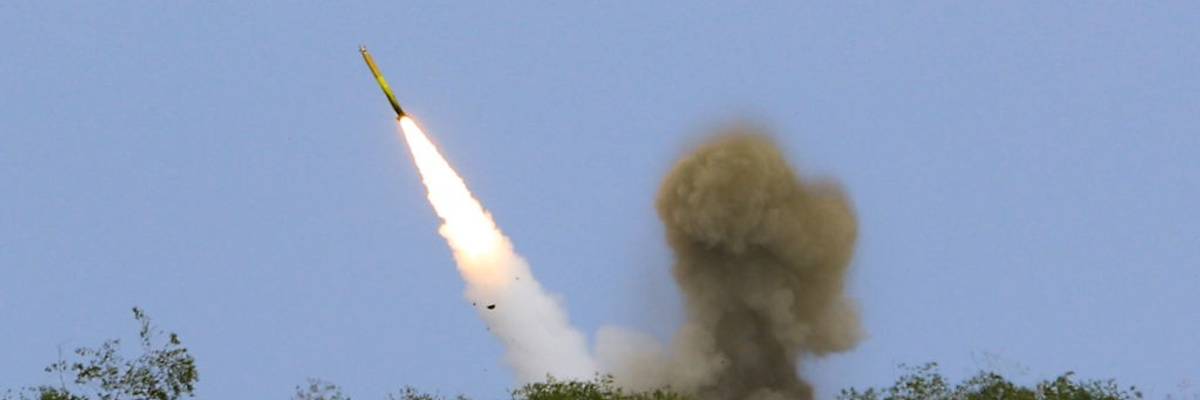
A rocket is launched using the HIMARS light multiple rocket launcher during the Combined Joint Littoral Live Fire Exercise as part of the U.S.-Philippines Balikatan Exercises, amid rising tensions with China, in San Miguel, Zambales, The Philippines, on 28 April 2023.
From the battlefield to the classroom, you cannot bomb and slaughter your way to safety.
Hey China, quit threatening us! We’ll kick your ass.
Yeah, bad China, maybe worse than Russia, e.g.:
“The People’s Republic of China, which is increasingly challenging the United States economically, technologically, politically, and militarily around the world, remains our unparalleled priority.”
The words are those of Avril Haines, director of national intelligence, addressing a Senate committee recently. As The New York Times noted, she “reinforced the message that President Biden and his top foreign policy aides have been sending on China... that while Russia is a medium-term challenge, China is the greatest long-term rival of the United States and is the only nation with the power and resources to reshape the American-led international order.”
War is minimally questioned—taken for granted—in the mainstream consciousness.
Indeed, things are bad enough that members of the House select committee on China “war-gamed” a possible military confrontation between the United States and China, should it invade Taiwan. The result was hell for both sides. Fasten your seat belts, ladies and gentlemen. War looms!
War is minimally questioned—taken for granted—in the mainstream consciousness, or what I would call the consensus groupthink, which is quietly structured into mainstream reporting. Conflict between nations instantly summons the possibility of war; that’s just the way it is, no matter the certainty of “collateral damage.” Missing from such reporting is any vision of the world that looks beyond the inevitability of war, that transcends militarism. For instance:
“The concept of ‘national security’ has been thrown around promiscuously for generations,” Chris Wright writes at Common Dreams, “not only in politics and the popular media but even the international relations scholarship. Rarely is it noticed that the term, unless clarified, is meaningless...
“Was George W. Bush,” Wright asks, “protecting America’s ‘security’ by invading Afghanistan and Iraq, thereby massively increasing terror, and terrorist recruiting, across the Middle East? Is the government protecting Americans’ present and future security by subsidizing the fossil fuel industry, thus accelerating global warming?”
And why, he asks, does security not seem to mean spending money, at the level unquestioningly dished out to the Pentagon, on such necessities as national health care, housing, infrastructure repair. Security, apparently, is always—and only—a question of maintaining power. It’s not about cooperation, whatever that might mean.
And it’s definitely not about finding a way to dismantle the world’s nuclear weapons, including (oh my God!) our own. As long as maintaining power is the endpoint of political thought, nukes will not go away. The chances are far more likely that they’ll be used.
Yeah, security.
This is bigger than politics, bigger than journalism. Humanity, humanity! Let’s not dismiss our future with a bloody shrug. We can move beyond today’s consensus. As Brad Wolf writes:
“War is a language of lies. Cold and callous, it emanates from dull, technocratic minds, draining life of color. It is an institutional offense to the human spirit.
“The Pentagon speaks the language of war. The President and Congress speak the language of war. Corporations speak the language of war. They sap us of outrage and courage and the appreciation of beauty. They commit carnage of the soul.”
We cannot leave the human future in the hands of caged liars, also known as politicians. But what is our option? Wolf makes a startling leap of awareness: “A poet is needed to tell the truth. Poetry recognizes not the ideal but the real. It cuts to the bone. It doesn’t flinch. It doesn’t look away.”
These words push poetry beyond anything I had ever envisioned, but, as I think about this in my shocked and doubting way, slowly something starts to make sense: Struggling to tell the truth—to chip off a minuscule fragment of truth from the not-yet-known—is not the same thing as being right. It’s the opposite of being certain. But truth, when you manage to find words for it, resonates.
So do bombs, you might say, but after a bomb has exploded, there’s nothing left but a few wailing survivors (at best). The basic premise of war is that we are good and they are evil and, that being the case, kill the bad guys. How does this make us secure?
Hmmm. Poetry, you say? Here’s a fragment of a poem I wrote almost 25 years ago, called “Vigil.” I wrote it in the wake of the Columbine High School massacre in 1999, inspired by the alleged “vigil” some gun-rights advocates held outside the school gymnasium when President Clinton visited, apparently addressing the possibility of gun control. They held signs, some of which declared: “Gun Control Kills Kids.”
… I am in awe
of the deadeye imperturbability
of the armed righteous,
who look upon the world’s suffering
and see targets.
They stand in potent prayer
with hands clasped
and arms extended,
judgment on a hairtrigger,
God in the recoil…
And life goes on, at least for some, as I veer my pen away from the gun-rights protesters and toward the politicians and militarists of the world. You cannot bomb and slaughter your way to security any more than you can kill your way to the truth.
Dear Common Dreams reader, It’s been nearly 30 years since I co-founded Common Dreams with my late wife, Lina Newhouser. We had the radical notion that journalism should serve the public good, not corporate profits. It was clear to us from the outset what it would take to build such a project. No paid advertisements. No corporate sponsors. No millionaire publisher telling us what to think or do. Many people said we wouldn't last a year, but we proved those doubters wrong. Together with a tremendous team of journalists and dedicated staff, we built an independent media outlet free from the constraints of profits and corporate control. Our mission has always been simple: To inform. To inspire. To ignite change for the common good. Building Common Dreams was not easy. Our survival was never guaranteed. When you take on the most powerful forces—Wall Street greed, fossil fuel industry destruction, Big Tech lobbyists, and uber-rich oligarchs who have spent billions upon billions rigging the economy and democracy in their favor—the only bulwark you have is supporters who believe in your work. But here’s the urgent message from me today. It's never been this bad out there. And it's never been this hard to keep us going. At the very moment Common Dreams is most needed, the threats we face are intensifying. We need your support now more than ever. We don't accept corporate advertising and never will. We don't have a paywall because we don't think people should be blocked from critical news based on their ability to pay. Everything we do is funded by the donations of readers like you. When everyone does the little they can afford, we are strong. But if that support retreats or dries up, so do we. Will you donate now to make sure Common Dreams not only survives but thrives? —Craig Brown, Co-founder |
Hey China, quit threatening us! We’ll kick your ass.
Yeah, bad China, maybe worse than Russia, e.g.:
“The People’s Republic of China, which is increasingly challenging the United States economically, technologically, politically, and militarily around the world, remains our unparalleled priority.”
The words are those of Avril Haines, director of national intelligence, addressing a Senate committee recently. As The New York Times noted, she “reinforced the message that President Biden and his top foreign policy aides have been sending on China... that while Russia is a medium-term challenge, China is the greatest long-term rival of the United States and is the only nation with the power and resources to reshape the American-led international order.”
War is minimally questioned—taken for granted—in the mainstream consciousness.
Indeed, things are bad enough that members of the House select committee on China “war-gamed” a possible military confrontation between the United States and China, should it invade Taiwan. The result was hell for both sides. Fasten your seat belts, ladies and gentlemen. War looms!
War is minimally questioned—taken for granted—in the mainstream consciousness, or what I would call the consensus groupthink, which is quietly structured into mainstream reporting. Conflict between nations instantly summons the possibility of war; that’s just the way it is, no matter the certainty of “collateral damage.” Missing from such reporting is any vision of the world that looks beyond the inevitability of war, that transcends militarism. For instance:
“The concept of ‘national security’ has been thrown around promiscuously for generations,” Chris Wright writes at Common Dreams, “not only in politics and the popular media but even the international relations scholarship. Rarely is it noticed that the term, unless clarified, is meaningless...
“Was George W. Bush,” Wright asks, “protecting America’s ‘security’ by invading Afghanistan and Iraq, thereby massively increasing terror, and terrorist recruiting, across the Middle East? Is the government protecting Americans’ present and future security by subsidizing the fossil fuel industry, thus accelerating global warming?”
And why, he asks, does security not seem to mean spending money, at the level unquestioningly dished out to the Pentagon, on such necessities as national health care, housing, infrastructure repair. Security, apparently, is always—and only—a question of maintaining power. It’s not about cooperation, whatever that might mean.
And it’s definitely not about finding a way to dismantle the world’s nuclear weapons, including (oh my God!) our own. As long as maintaining power is the endpoint of political thought, nukes will not go away. The chances are far more likely that they’ll be used.
Yeah, security.
This is bigger than politics, bigger than journalism. Humanity, humanity! Let’s not dismiss our future with a bloody shrug. We can move beyond today’s consensus. As Brad Wolf writes:
“War is a language of lies. Cold and callous, it emanates from dull, technocratic minds, draining life of color. It is an institutional offense to the human spirit.
“The Pentagon speaks the language of war. The President and Congress speak the language of war. Corporations speak the language of war. They sap us of outrage and courage and the appreciation of beauty. They commit carnage of the soul.”
We cannot leave the human future in the hands of caged liars, also known as politicians. But what is our option? Wolf makes a startling leap of awareness: “A poet is needed to tell the truth. Poetry recognizes not the ideal but the real. It cuts to the bone. It doesn’t flinch. It doesn’t look away.”
These words push poetry beyond anything I had ever envisioned, but, as I think about this in my shocked and doubting way, slowly something starts to make sense: Struggling to tell the truth—to chip off a minuscule fragment of truth from the not-yet-known—is not the same thing as being right. It’s the opposite of being certain. But truth, when you manage to find words for it, resonates.
So do bombs, you might say, but after a bomb has exploded, there’s nothing left but a few wailing survivors (at best). The basic premise of war is that we are good and they are evil and, that being the case, kill the bad guys. How does this make us secure?
Hmmm. Poetry, you say? Here’s a fragment of a poem I wrote almost 25 years ago, called “Vigil.” I wrote it in the wake of the Columbine High School massacre in 1999, inspired by the alleged “vigil” some gun-rights advocates held outside the school gymnasium when President Clinton visited, apparently addressing the possibility of gun control. They held signs, some of which declared: “Gun Control Kills Kids.”
… I am in awe
of the deadeye imperturbability
of the armed righteous,
who look upon the world’s suffering
and see targets.
They stand in potent prayer
with hands clasped
and arms extended,
judgment on a hairtrigger,
God in the recoil…
And life goes on, at least for some, as I veer my pen away from the gun-rights protesters and toward the politicians and militarists of the world. You cannot bomb and slaughter your way to security any more than you can kill your way to the truth.
Hey China, quit threatening us! We’ll kick your ass.
Yeah, bad China, maybe worse than Russia, e.g.:
“The People’s Republic of China, which is increasingly challenging the United States economically, technologically, politically, and militarily around the world, remains our unparalleled priority.”
The words are those of Avril Haines, director of national intelligence, addressing a Senate committee recently. As The New York Times noted, she “reinforced the message that President Biden and his top foreign policy aides have been sending on China... that while Russia is a medium-term challenge, China is the greatest long-term rival of the United States and is the only nation with the power and resources to reshape the American-led international order.”
War is minimally questioned—taken for granted—in the mainstream consciousness.
Indeed, things are bad enough that members of the House select committee on China “war-gamed” a possible military confrontation between the United States and China, should it invade Taiwan. The result was hell for both sides. Fasten your seat belts, ladies and gentlemen. War looms!
War is minimally questioned—taken for granted—in the mainstream consciousness, or what I would call the consensus groupthink, which is quietly structured into mainstream reporting. Conflict between nations instantly summons the possibility of war; that’s just the way it is, no matter the certainty of “collateral damage.” Missing from such reporting is any vision of the world that looks beyond the inevitability of war, that transcends militarism. For instance:
“The concept of ‘national security’ has been thrown around promiscuously for generations,” Chris Wright writes at Common Dreams, “not only in politics and the popular media but even the international relations scholarship. Rarely is it noticed that the term, unless clarified, is meaningless...
“Was George W. Bush,” Wright asks, “protecting America’s ‘security’ by invading Afghanistan and Iraq, thereby massively increasing terror, and terrorist recruiting, across the Middle East? Is the government protecting Americans’ present and future security by subsidizing the fossil fuel industry, thus accelerating global warming?”
And why, he asks, does security not seem to mean spending money, at the level unquestioningly dished out to the Pentagon, on such necessities as national health care, housing, infrastructure repair. Security, apparently, is always—and only—a question of maintaining power. It’s not about cooperation, whatever that might mean.
And it’s definitely not about finding a way to dismantle the world’s nuclear weapons, including (oh my God!) our own. As long as maintaining power is the endpoint of political thought, nukes will not go away. The chances are far more likely that they’ll be used.
Yeah, security.
This is bigger than politics, bigger than journalism. Humanity, humanity! Let’s not dismiss our future with a bloody shrug. We can move beyond today’s consensus. As Brad Wolf writes:
“War is a language of lies. Cold and callous, it emanates from dull, technocratic minds, draining life of color. It is an institutional offense to the human spirit.
“The Pentagon speaks the language of war. The President and Congress speak the language of war. Corporations speak the language of war. They sap us of outrage and courage and the appreciation of beauty. They commit carnage of the soul.”
We cannot leave the human future in the hands of caged liars, also known as politicians. But what is our option? Wolf makes a startling leap of awareness: “A poet is needed to tell the truth. Poetry recognizes not the ideal but the real. It cuts to the bone. It doesn’t flinch. It doesn’t look away.”
These words push poetry beyond anything I had ever envisioned, but, as I think about this in my shocked and doubting way, slowly something starts to make sense: Struggling to tell the truth—to chip off a minuscule fragment of truth from the not-yet-known—is not the same thing as being right. It’s the opposite of being certain. But truth, when you manage to find words for it, resonates.
So do bombs, you might say, but after a bomb has exploded, there’s nothing left but a few wailing survivors (at best). The basic premise of war is that we are good and they are evil and, that being the case, kill the bad guys. How does this make us secure?
Hmmm. Poetry, you say? Here’s a fragment of a poem I wrote almost 25 years ago, called “Vigil.” I wrote it in the wake of the Columbine High School massacre in 1999, inspired by the alleged “vigil” some gun-rights advocates held outside the school gymnasium when President Clinton visited, apparently addressing the possibility of gun control. They held signs, some of which declared: “Gun Control Kills Kids.”
… I am in awe
of the deadeye imperturbability
of the armed righteous,
who look upon the world’s suffering
and see targets.
They stand in potent prayer
with hands clasped
and arms extended,
judgment on a hairtrigger,
God in the recoil…
And life goes on, at least for some, as I veer my pen away from the gun-rights protesters and toward the politicians and militarists of the world. You cannot bomb and slaughter your way to security any more than you can kill your way to the truth.

