SUBSCRIBE TO OUR FREE NEWSLETTER
Daily news & progressive opinion—funded by the people, not the corporations—delivered straight to your inbox.
5
#000000
#FFFFFF
To donate by check, phone, or other method, see our More Ways to Give page.
Daily news & progressive opinion—funded by the people, not the corporations—delivered straight to your inbox.
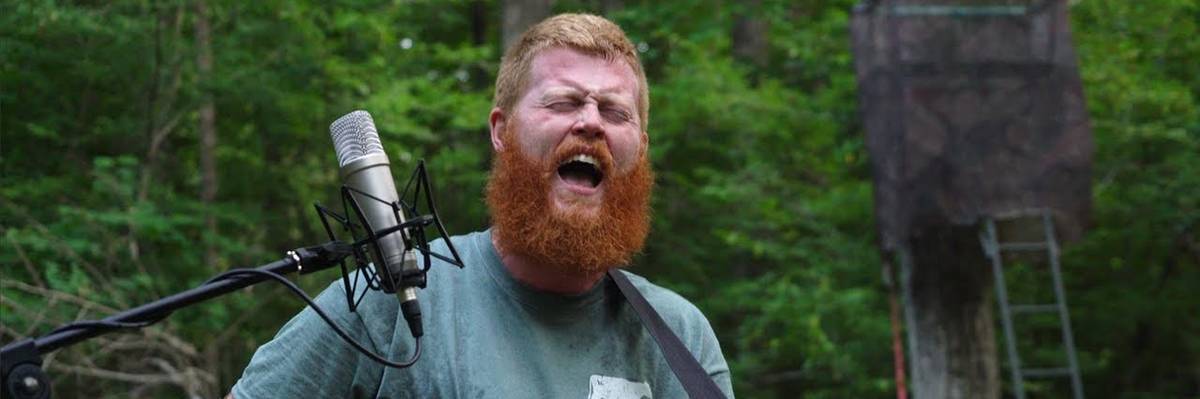
Singer songerwriter Oliver Anthony singing his hit " Rich Men North Of Richmond."
We could better tax the rich men near and far from Richmond by getting rid of the special low tax rate on capital gains income and making it the same as taxes on work.
Oliver Anthony’s smash country hit “Rich Men North of Richmond” has gone through an entire story arc in just a few weeks. When conservatives heard the song’s anger, apparent ire toward northerners, and lyrics punching down at people on welfare, some lauded it as an anthem for our times — helping send it to the top of the Billboard charts, and inspiring Fox News to reference it in the first question at last week’s Republican presidential debate.
But Anthony changed the narrative late last week by saying: “It was funny seeing my song at the presidential debate ’cause it’s like, I wrote that song about those people.” He also tweeted “I. Don’t. Support. Either. Side. Politically. Not the left, not the right. I’m about supporting people and restoring local communities.”
Fair enough. Let’s leave the song, particularly the parts about welfare and obesity, behind. But lines like “I’ve been sellin’ my soul, workin’ all day, overtime hours for bullshit pay” and “your dollar ain’t shit and it’s taxed to no end ’cause of rich men north of Richmond” strike a truthful chord. For those of us at the Institute on Taxation and Economic Policy who examine tax policy through the lens of how much working (and poor) people are taxed compared to rich men north (and south) of Richmond, it’s hard not to take this as a jumping off point to amplify some important facts.
Oliver Anthony - Rich Men North Of Richmondwww.youtube.com
In Virginia, where Anthony is from, middle-class, working-class and poor families all pay a larger share of their income in state and local taxes than households in Virginia’s top 1 percent. That’s because the state relies more on sales taxes, which poor and working families disproportionately shoulder, and less on income taxes that better target the rich. Virginia lawmakers also let multinational corporations stash their earnings in tax havens to avoid state taxes, something local businesses can’t get away with. The tax laws in most other states create the same problems.
There is a better way. While Gov. Glenn Youngkin recently pushed for more high-income and business tax cuts, some Virginians are trying to increase what the wealthiest pay and redirect resources toward families with children. And some states, like Minnesota, already have a system that does more for kids and communities by taxing rich people and corporations.
I’ll admit I’ve been humming lines from Oliver’s song, but what sticks in my head more is the response from labor balladeer Billy Bragg, who’s been refining his political and economic views for decades.
Nationwide, income from wealth gets a special lower tax rate, so someone whose money comes from their big investment portfolio pays less than someone who earns the same amount by working. And don’t get me started on the breaks available to the uber-rich, whose stock portfolios balloon until they pass them on to their children without anyone ever paying anything on the increase. Finally, wealthy corporations often dodge federal taxes — in 2020, we found that 55 of the nation’s most profitable corporations paid zero in federal income taxes.
We could better tax the rich men near and far from Richmond by getting rid of the special low tax rate on capital gains income and making it the same as taxes on work; by cracking down on tax avoidance by multinational corporations; and by turning state tax codes right side up, replacing sales taxes with new income tax brackets for earnings over $150,000, over $250,000, and over $1 million. This would generate the money needed to deliver more for working families — from child care, to health care, to affordable college. And it would raise that money from those who derive the most benefit from capitalism.
I’ll admit I’ve been humming lines from Oliver’s song, but what sticks in my head more is the response from labor balladeer Billy Bragg, who’s been refining his political and economic views for decades. Bragg’s new song, “Rich Men Earning North of a Million,” taps proud musical traditions that give voice to economic hardship, from spirituals to the blues, bluegrass, country, rock and hip-hop.
Billy Bragg - Rich Men Earning North of a Millionwww.youtube.com
I’ve added Bragg’s newest to my playlist. And my hunch is that Anthony wouldn’t like me citing his song any more than he liked the Republicans doing so. But I can’t ignore the anger of someone working for “bullshit” pay who is pissed off at the power that rich men have in our political system and in our tax code. I’ll take the sentiments from both musical voices to honor working class narratives, channel feelings of disempowerment, and push for a more economically just country. Starting with better taxing rich men, wherever they live.
Dear Common Dreams reader, It’s been nearly 30 years since I co-founded Common Dreams with my late wife, Lina Newhouser. We had the radical notion that journalism should serve the public good, not corporate profits. It was clear to us from the outset what it would take to build such a project. No paid advertisements. No corporate sponsors. No millionaire publisher telling us what to think or do. Many people said we wouldn't last a year, but we proved those doubters wrong. Together with a tremendous team of journalists and dedicated staff, we built an independent media outlet free from the constraints of profits and corporate control. Our mission has always been simple: To inform. To inspire. To ignite change for the common good. Building Common Dreams was not easy. Our survival was never guaranteed. When you take on the most powerful forces—Wall Street greed, fossil fuel industry destruction, Big Tech lobbyists, and uber-rich oligarchs who have spent billions upon billions rigging the economy and democracy in their favor—the only bulwark you have is supporters who believe in your work. But here’s the urgent message from me today. It's never been this bad out there. And it's never been this hard to keep us going. At the very moment Common Dreams is most needed, the threats we face are intensifying. We need your support now more than ever. We don't accept corporate advertising and never will. We don't have a paywall because we don't think people should be blocked from critical news based on their ability to pay. Everything we do is funded by the donations of readers like you. When everyone does the little they can afford, we are strong. But if that support retreats or dries up, so do we. Will you donate now to make sure Common Dreams not only survives but thrives? —Craig Brown, Co-founder |
Oliver Anthony’s smash country hit “Rich Men North of Richmond” has gone through an entire story arc in just a few weeks. When conservatives heard the song’s anger, apparent ire toward northerners, and lyrics punching down at people on welfare, some lauded it as an anthem for our times — helping send it to the top of the Billboard charts, and inspiring Fox News to reference it in the first question at last week’s Republican presidential debate.
But Anthony changed the narrative late last week by saying: “It was funny seeing my song at the presidential debate ’cause it’s like, I wrote that song about those people.” He also tweeted “I. Don’t. Support. Either. Side. Politically. Not the left, not the right. I’m about supporting people and restoring local communities.”
Fair enough. Let’s leave the song, particularly the parts about welfare and obesity, behind. But lines like “I’ve been sellin’ my soul, workin’ all day, overtime hours for bullshit pay” and “your dollar ain’t shit and it’s taxed to no end ’cause of rich men north of Richmond” strike a truthful chord. For those of us at the Institute on Taxation and Economic Policy who examine tax policy through the lens of how much working (and poor) people are taxed compared to rich men north (and south) of Richmond, it’s hard not to take this as a jumping off point to amplify some important facts.
Oliver Anthony - Rich Men North Of Richmondwww.youtube.com
In Virginia, where Anthony is from, middle-class, working-class and poor families all pay a larger share of their income in state and local taxes than households in Virginia’s top 1 percent. That’s because the state relies more on sales taxes, which poor and working families disproportionately shoulder, and less on income taxes that better target the rich. Virginia lawmakers also let multinational corporations stash their earnings in tax havens to avoid state taxes, something local businesses can’t get away with. The tax laws in most other states create the same problems.
There is a better way. While Gov. Glenn Youngkin recently pushed for more high-income and business tax cuts, some Virginians are trying to increase what the wealthiest pay and redirect resources toward families with children. And some states, like Minnesota, already have a system that does more for kids and communities by taxing rich people and corporations.
I’ll admit I’ve been humming lines from Oliver’s song, but what sticks in my head more is the response from labor balladeer Billy Bragg, who’s been refining his political and economic views for decades.
Nationwide, income from wealth gets a special lower tax rate, so someone whose money comes from their big investment portfolio pays less than someone who earns the same amount by working. And don’t get me started on the breaks available to the uber-rich, whose stock portfolios balloon until they pass them on to their children without anyone ever paying anything on the increase. Finally, wealthy corporations often dodge federal taxes — in 2020, we found that 55 of the nation’s most profitable corporations paid zero in federal income taxes.
We could better tax the rich men near and far from Richmond by getting rid of the special low tax rate on capital gains income and making it the same as taxes on work; by cracking down on tax avoidance by multinational corporations; and by turning state tax codes right side up, replacing sales taxes with new income tax brackets for earnings over $150,000, over $250,000, and over $1 million. This would generate the money needed to deliver more for working families — from child care, to health care, to affordable college. And it would raise that money from those who derive the most benefit from capitalism.
I’ll admit I’ve been humming lines from Oliver’s song, but what sticks in my head more is the response from labor balladeer Billy Bragg, who’s been refining his political and economic views for decades. Bragg’s new song, “Rich Men Earning North of a Million,” taps proud musical traditions that give voice to economic hardship, from spirituals to the blues, bluegrass, country, rock and hip-hop.
Billy Bragg - Rich Men Earning North of a Millionwww.youtube.com
I’ve added Bragg’s newest to my playlist. And my hunch is that Anthony wouldn’t like me citing his song any more than he liked the Republicans doing so. But I can’t ignore the anger of someone working for “bullshit” pay who is pissed off at the power that rich men have in our political system and in our tax code. I’ll take the sentiments from both musical voices to honor working class narratives, channel feelings of disempowerment, and push for a more economically just country. Starting with better taxing rich men, wherever they live.
Oliver Anthony’s smash country hit “Rich Men North of Richmond” has gone through an entire story arc in just a few weeks. When conservatives heard the song’s anger, apparent ire toward northerners, and lyrics punching down at people on welfare, some lauded it as an anthem for our times — helping send it to the top of the Billboard charts, and inspiring Fox News to reference it in the first question at last week’s Republican presidential debate.
But Anthony changed the narrative late last week by saying: “It was funny seeing my song at the presidential debate ’cause it’s like, I wrote that song about those people.” He also tweeted “I. Don’t. Support. Either. Side. Politically. Not the left, not the right. I’m about supporting people and restoring local communities.”
Fair enough. Let’s leave the song, particularly the parts about welfare and obesity, behind. But lines like “I’ve been sellin’ my soul, workin’ all day, overtime hours for bullshit pay” and “your dollar ain’t shit and it’s taxed to no end ’cause of rich men north of Richmond” strike a truthful chord. For those of us at the Institute on Taxation and Economic Policy who examine tax policy through the lens of how much working (and poor) people are taxed compared to rich men north (and south) of Richmond, it’s hard not to take this as a jumping off point to amplify some important facts.
Oliver Anthony - Rich Men North Of Richmondwww.youtube.com
In Virginia, where Anthony is from, middle-class, working-class and poor families all pay a larger share of their income in state and local taxes than households in Virginia’s top 1 percent. That’s because the state relies more on sales taxes, which poor and working families disproportionately shoulder, and less on income taxes that better target the rich. Virginia lawmakers also let multinational corporations stash their earnings in tax havens to avoid state taxes, something local businesses can’t get away with. The tax laws in most other states create the same problems.
There is a better way. While Gov. Glenn Youngkin recently pushed for more high-income and business tax cuts, some Virginians are trying to increase what the wealthiest pay and redirect resources toward families with children. And some states, like Minnesota, already have a system that does more for kids and communities by taxing rich people and corporations.
I’ll admit I’ve been humming lines from Oliver’s song, but what sticks in my head more is the response from labor balladeer Billy Bragg, who’s been refining his political and economic views for decades.
Nationwide, income from wealth gets a special lower tax rate, so someone whose money comes from their big investment portfolio pays less than someone who earns the same amount by working. And don’t get me started on the breaks available to the uber-rich, whose stock portfolios balloon until they pass them on to their children without anyone ever paying anything on the increase. Finally, wealthy corporations often dodge federal taxes — in 2020, we found that 55 of the nation’s most profitable corporations paid zero in federal income taxes.
We could better tax the rich men near and far from Richmond by getting rid of the special low tax rate on capital gains income and making it the same as taxes on work; by cracking down on tax avoidance by multinational corporations; and by turning state tax codes right side up, replacing sales taxes with new income tax brackets for earnings over $150,000, over $250,000, and over $1 million. This would generate the money needed to deliver more for working families — from child care, to health care, to affordable college. And it would raise that money from those who derive the most benefit from capitalism.
I’ll admit I’ve been humming lines from Oliver’s song, but what sticks in my head more is the response from labor balladeer Billy Bragg, who’s been refining his political and economic views for decades. Bragg’s new song, “Rich Men Earning North of a Million,” taps proud musical traditions that give voice to economic hardship, from spirituals to the blues, bluegrass, country, rock and hip-hop.
Billy Bragg - Rich Men Earning North of a Millionwww.youtube.com
I’ve added Bragg’s newest to my playlist. And my hunch is that Anthony wouldn’t like me citing his song any more than he liked the Republicans doing so. But I can’t ignore the anger of someone working for “bullshit” pay who is pissed off at the power that rich men have in our political system and in our tax code. I’ll take the sentiments from both musical voices to honor working class narratives, channel feelings of disempowerment, and push for a more economically just country. Starting with better taxing rich men, wherever they live.