SUBSCRIBE TO OUR FREE NEWSLETTER
Daily news & progressive opinion—funded by the people, not the corporations—delivered straight to your inbox.
5
#000000
#FFFFFF
To donate by check, phone, or other method, see our More Ways to Give page.
Daily news & progressive opinion—funded by the people, not the corporations—delivered straight to your inbox.
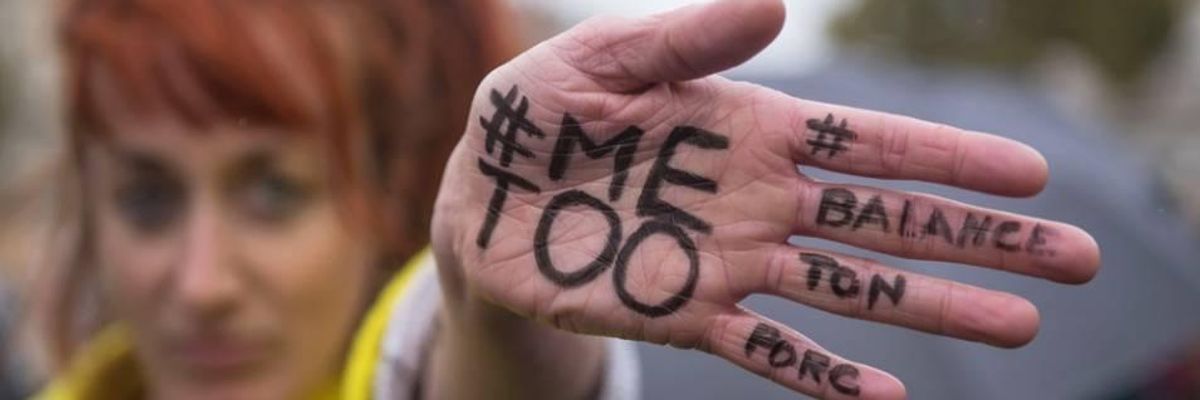
Women have shared stories of sexual harassment with the hashtag #MeToo.
Without Section 230’s protections, Americans would know less about police brutality, allegations of sexual abuse by the powerful, or the options for women seeking an abortion in states that allow them. The measure must be protected.
Black History Month is a powerful reminder that each American, no matter their stature, has an ability to affect great change. That’s due in large part to the free speech protections afforded us under the First Amendment. During the 1960s, social justice advocates exercised their free speech rights through rallies, protests, and speeches, paving the way for the passage of the Civil Rights Act and Voting Rights Act.
Today, it’s far easier to advance social progress through online platforms, thanks to a federal statute that fosters open inquiry, debate, and commentary.
That statute—Section 230 of the Communications Decency Act—gives platforms legal immunity for what third parties post. For example, Yelp is not liable for anything written in its reviews, no matter how scathing they are. This immunity has allowed ideas on the Internet to explode, leading to breakthroughs that have improved our lives.
Yet Section 230 is now under bipartisan siege, with dozens of bills in Congress proposing to reform it and presidential candidates calling for its revocation because they believe online platforms have either become too political or engage in censorship.
In fact, the U.S. government allegedly threatened to revoke Section 230 immunity from social media platforms if they didn’t take down what the government deemed misinformation about Covid and vaccines. The charges are at the center of a legal dispute that the U.S. Supreme Court is set to hear during their current session.
Section 230 is now under bipartisan siege, with dozens of bills in Congress proposing to reform it and presidential candidates calling for its revocation because they believe online platforms have either become too political or engage in censorship.
Advocates for reform or revocation of Section 230 should be careful what they wish for. The immunity they currently provide removes the fear of liability, resulting in more speech, which has been advantageous for three of the major civil rights issues of the current era.
The first is the Black Lives Matter Movement. Legal immunity for social platforms has enabled African Americans and other minorities to call attention to the sometimes-deadly realities associated with police interactions in their communities. In the wake of live streaming and online postings of police brutality and the accompanying Black Lives Matter protests, some states attempted to criminalize the recording or posting of encounters with law enforcement online. Thanks to Section 230 protections, users could continue posting video and commentary about policing and BLM.
The second is the #MeToo Movement. Section 230 has allowed women to raise awareness about workplace sexual harassment. In the absence of immunity, powerful alleged abusers could threaten the platforms with legal liability for defamation and have claims about them, even true ones, to be taken down.
Finally, there’s abortion. Just four days after the Supreme Court ruled that abortion is not protected by the federal Constitution, South Carolina legislators proposed a law making it “unlawful to aid, abet, or conspire with someone to procure an abortion,” including providing information about abortion “by Internet or other mode of communication.” Without Section 230, any social media platform, website, or Internet service provider that hosted such information could potentially be criminally liable under such a statute.
Consider what would happen if Section 230 did not exist. If the government or another powerful entity wanted to suppress speech it doesn’t like, it could either take legal action against the speaker themselves or the distributor of the speech.
In most cases, it’s far more effective to go after the distributor. Threatening the author of an offensive book might cause the author to self-censor, but there is no guarantee. Threatening Barnes & Noble or Amazon is more effective because there is little economic incentive for them to continue carrying the book with the threat of government action.
Further, because distributors disseminate the work of many authors, it can compound the likelihood that they will censor more speech on the same subject. The Supreme Court has recognized that permitting distributor-level threats gives the government a potential end-around the First Amendment since it results in censorship of the speaker.
Without Section 230’s protections, Americans would know less about police brutality, allegations of sexual abuse by the powerful, or the options for women seeking an abortion in states that allow them. Social media users, particularly those in underserved, underrepresented, and otherwise resource-poor communities, would be less able to discuss those issues online.
Social media is not perfect. But the immunity provided by Section 230 makes it better, not worse.
Dear Common Dreams reader, It’s been nearly 30 years since I co-founded Common Dreams with my late wife, Lina Newhouser. We had the radical notion that journalism should serve the public good, not corporate profits. It was clear to us from the outset what it would take to build such a project. No paid advertisements. No corporate sponsors. No millionaire publisher telling us what to think or do. Many people said we wouldn't last a year, but we proved those doubters wrong. Together with a tremendous team of journalists and dedicated staff, we built an independent media outlet free from the constraints of profits and corporate control. Our mission has always been simple: To inform. To inspire. To ignite change for the common good. Building Common Dreams was not easy. Our survival was never guaranteed. When you take on the most powerful forces—Wall Street greed, fossil fuel industry destruction, Big Tech lobbyists, and uber-rich oligarchs who have spent billions upon billions rigging the economy and democracy in their favor—the only bulwark you have is supporters who believe in your work. But here’s the urgent message from me today. It's never been this bad out there. And it's never been this hard to keep us going. At the very moment Common Dreams is most needed, the threats we face are intensifying. We need your support now more than ever. We don't accept corporate advertising and never will. We don't have a paywall because we don't think people should be blocked from critical news based on their ability to pay. Everything we do is funded by the donations of readers like you. When everyone does the little they can afford, we are strong. But if that support retreats or dries up, so do we. Will you donate now to make sure Common Dreams not only survives but thrives? —Craig Brown, Co-founder |
Black History Month is a powerful reminder that each American, no matter their stature, has an ability to affect great change. That’s due in large part to the free speech protections afforded us under the First Amendment. During the 1960s, social justice advocates exercised their free speech rights through rallies, protests, and speeches, paving the way for the passage of the Civil Rights Act and Voting Rights Act.
Today, it’s far easier to advance social progress through online platforms, thanks to a federal statute that fosters open inquiry, debate, and commentary.
That statute—Section 230 of the Communications Decency Act—gives platforms legal immunity for what third parties post. For example, Yelp is not liable for anything written in its reviews, no matter how scathing they are. This immunity has allowed ideas on the Internet to explode, leading to breakthroughs that have improved our lives.
Yet Section 230 is now under bipartisan siege, with dozens of bills in Congress proposing to reform it and presidential candidates calling for its revocation because they believe online platforms have either become too political or engage in censorship.
In fact, the U.S. government allegedly threatened to revoke Section 230 immunity from social media platforms if they didn’t take down what the government deemed misinformation about Covid and vaccines. The charges are at the center of a legal dispute that the U.S. Supreme Court is set to hear during their current session.
Section 230 is now under bipartisan siege, with dozens of bills in Congress proposing to reform it and presidential candidates calling for its revocation because they believe online platforms have either become too political or engage in censorship.
Advocates for reform or revocation of Section 230 should be careful what they wish for. The immunity they currently provide removes the fear of liability, resulting in more speech, which has been advantageous for three of the major civil rights issues of the current era.
The first is the Black Lives Matter Movement. Legal immunity for social platforms has enabled African Americans and other minorities to call attention to the sometimes-deadly realities associated with police interactions in their communities. In the wake of live streaming and online postings of police brutality and the accompanying Black Lives Matter protests, some states attempted to criminalize the recording or posting of encounters with law enforcement online. Thanks to Section 230 protections, users could continue posting video and commentary about policing and BLM.
The second is the #MeToo Movement. Section 230 has allowed women to raise awareness about workplace sexual harassment. In the absence of immunity, powerful alleged abusers could threaten the platforms with legal liability for defamation and have claims about them, even true ones, to be taken down.
Finally, there’s abortion. Just four days after the Supreme Court ruled that abortion is not protected by the federal Constitution, South Carolina legislators proposed a law making it “unlawful to aid, abet, or conspire with someone to procure an abortion,” including providing information about abortion “by Internet or other mode of communication.” Without Section 230, any social media platform, website, or Internet service provider that hosted such information could potentially be criminally liable under such a statute.
Consider what would happen if Section 230 did not exist. If the government or another powerful entity wanted to suppress speech it doesn’t like, it could either take legal action against the speaker themselves or the distributor of the speech.
In most cases, it’s far more effective to go after the distributor. Threatening the author of an offensive book might cause the author to self-censor, but there is no guarantee. Threatening Barnes & Noble or Amazon is more effective because there is little economic incentive for them to continue carrying the book with the threat of government action.
Further, because distributors disseminate the work of many authors, it can compound the likelihood that they will censor more speech on the same subject. The Supreme Court has recognized that permitting distributor-level threats gives the government a potential end-around the First Amendment since it results in censorship of the speaker.
Without Section 230’s protections, Americans would know less about police brutality, allegations of sexual abuse by the powerful, or the options for women seeking an abortion in states that allow them. Social media users, particularly those in underserved, underrepresented, and otherwise resource-poor communities, would be less able to discuss those issues online.
Social media is not perfect. But the immunity provided by Section 230 makes it better, not worse.
Black History Month is a powerful reminder that each American, no matter their stature, has an ability to affect great change. That’s due in large part to the free speech protections afforded us under the First Amendment. During the 1960s, social justice advocates exercised their free speech rights through rallies, protests, and speeches, paving the way for the passage of the Civil Rights Act and Voting Rights Act.
Today, it’s far easier to advance social progress through online platforms, thanks to a federal statute that fosters open inquiry, debate, and commentary.
That statute—Section 230 of the Communications Decency Act—gives platforms legal immunity for what third parties post. For example, Yelp is not liable for anything written in its reviews, no matter how scathing they are. This immunity has allowed ideas on the Internet to explode, leading to breakthroughs that have improved our lives.
Yet Section 230 is now under bipartisan siege, with dozens of bills in Congress proposing to reform it and presidential candidates calling for its revocation because they believe online platforms have either become too political or engage in censorship.
In fact, the U.S. government allegedly threatened to revoke Section 230 immunity from social media platforms if they didn’t take down what the government deemed misinformation about Covid and vaccines. The charges are at the center of a legal dispute that the U.S. Supreme Court is set to hear during their current session.
Section 230 is now under bipartisan siege, with dozens of bills in Congress proposing to reform it and presidential candidates calling for its revocation because they believe online platforms have either become too political or engage in censorship.
Advocates for reform or revocation of Section 230 should be careful what they wish for. The immunity they currently provide removes the fear of liability, resulting in more speech, which has been advantageous for three of the major civil rights issues of the current era.
The first is the Black Lives Matter Movement. Legal immunity for social platforms has enabled African Americans and other minorities to call attention to the sometimes-deadly realities associated with police interactions in their communities. In the wake of live streaming and online postings of police brutality and the accompanying Black Lives Matter protests, some states attempted to criminalize the recording or posting of encounters with law enforcement online. Thanks to Section 230 protections, users could continue posting video and commentary about policing and BLM.
The second is the #MeToo Movement. Section 230 has allowed women to raise awareness about workplace sexual harassment. In the absence of immunity, powerful alleged abusers could threaten the platforms with legal liability for defamation and have claims about them, even true ones, to be taken down.
Finally, there’s abortion. Just four days after the Supreme Court ruled that abortion is not protected by the federal Constitution, South Carolina legislators proposed a law making it “unlawful to aid, abet, or conspire with someone to procure an abortion,” including providing information about abortion “by Internet or other mode of communication.” Without Section 230, any social media platform, website, or Internet service provider that hosted such information could potentially be criminally liable under such a statute.
Consider what would happen if Section 230 did not exist. If the government or another powerful entity wanted to suppress speech it doesn’t like, it could either take legal action against the speaker themselves or the distributor of the speech.
In most cases, it’s far more effective to go after the distributor. Threatening the author of an offensive book might cause the author to self-censor, but there is no guarantee. Threatening Barnes & Noble or Amazon is more effective because there is little economic incentive for them to continue carrying the book with the threat of government action.
Further, because distributors disseminate the work of many authors, it can compound the likelihood that they will censor more speech on the same subject. The Supreme Court has recognized that permitting distributor-level threats gives the government a potential end-around the First Amendment since it results in censorship of the speaker.
Without Section 230’s protections, Americans would know less about police brutality, allegations of sexual abuse by the powerful, or the options for women seeking an abortion in states that allow them. Social media users, particularly those in underserved, underrepresented, and otherwise resource-poor communities, would be less able to discuss those issues online.
Social media is not perfect. But the immunity provided by Section 230 makes it better, not worse.