SUBSCRIBE TO OUR FREE NEWSLETTER
Daily news & progressive opinion—funded by the people, not the corporations—delivered straight to your inbox.
5
#000000
#FFFFFF
To donate by check, phone, or other method, see our More Ways to Give page.


Daily news & progressive opinion—funded by the people, not the corporations—delivered straight to your inbox.

For seniors needing quality care in their final years and the families who love them, this is good policy by Kamala Harris—and good politics too.
Tight elections often come down to who has the strongest close. Kamala Harris has certainly had a strong one. One of the strongest elements has been her support for Medicare at Home, which would expand Medicare to include in-home care. There is plenty of evidence that this issue moves voters, and for swing voters looking for one more data point in that decision, this could be the tipping point.
Harris spoke about Medicare at Home when appearing on the Howard Stern Show earlier this month. This part of the conversation with Stern scored in the 95th percentile in determining a voter's opinion of Harris as a candidate, far outpacing all other messages.
This aligns with what we’ve found in Wisconsin. Senior Voters for Care, of which I am affiliated, teamed up with Hart Research Associates to conduct a poll of 800 likely voters over 55 in Wisconsin on views on long-term care.
The poll found that 71% of swing voters and 64% of independent voters said that if a candidate had a plan to provide more funding for long-term care, they would view that candidate more favorably. Kamala Harris has that plan.
The issue of long-term care has been a hot one in the state as a number of conservative county boards have pushed to privatize county-owned nursing homes despite their being five-star facilities and, in most cases, on solid financial footing. The issue has stirred up a hornet’s nest with seniors across partisanship, flooding into county board meetings, marching (and driving their tractors) in local parades, and organizing to stop the sale every step of the way.
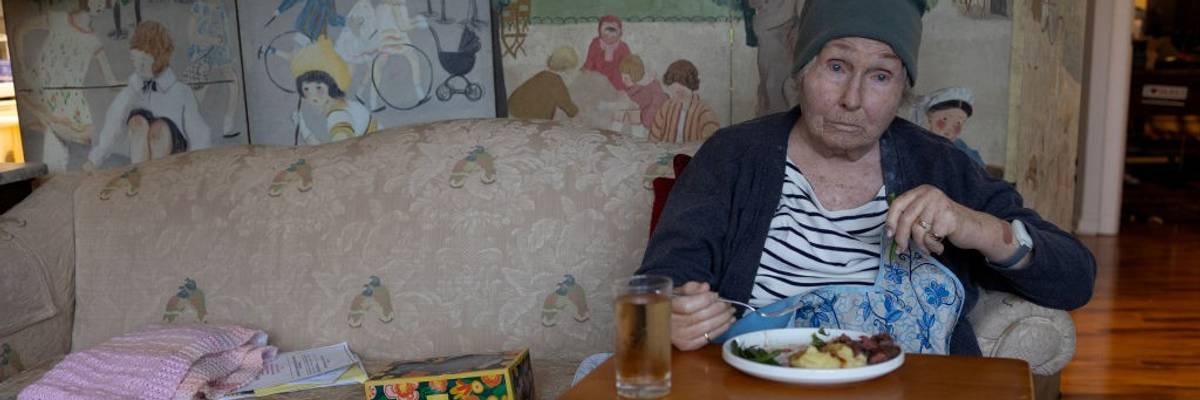
The number of Wisconsinites 75 and older is projected to grow by 75% over the next two decades. If the state’s senior population continues to grow as projected, it will need 10,000 more registered nurses, CNAs, and home health care aids by 2030.
The most popular solution among those polled to the state’s looming care crisis was raising caregivers' wages to help attract and retain workers. Ninety-three percent of the people polled supported this measure, including 87 percent of Republicans and 93 percent of independents.
Nearly as popular was expanding Medicaid to increase access to necessary long-term care, with 87% overall backing this initiative, including 93% of Independents.
This is a big deal because Medicare at Home is essentially these two solutions put together, though even better, in that it would expand one of the most popular social programs in the country–Medicare. Chances are that support for this proposal would have outpaced the question we asked because, through Medicare, this long-term care benefit would be available to all of us, while Medicaid is only for those of us with low incomes and very little wealth. Because Medicare does not cover long-term, many families spend down their savings to qualify for Medicaid.
My family is spending my mom’s life savings and the money made from selling her house to pay for her assisted living care at $6,000 a month. It’s a common experience for many voters.
The poll found that 71% of swing voters and 64% of independent voters said that if a candidate had a plan to provide more funding for long-term care, they would view that candidate more favorably. Kamala Harris has that plan.
The Vice President’s plan to win the Presidency banks on some rapidly aging states. Wisconsin's 85-and-over population is expected to double between now and 2040. Michiganders over 85 are the state’s fastest-growing age group, and Pennsylvania’s over-65 population is already more than 2.2 million.
Medicare at Home is the right policy at the right time and appears to be good politics. If enough people heard about it in the campaign's closing weeks, it could be one of the parts of her strong finish that helps put her over the top.

Dear Common Dreams reader, It’s been nearly 30 years since I co-founded Common Dreams with my late wife, Lina Newhouser. We had the radical notion that journalism should serve the public good, not corporate profits. It was clear to us from the outset what it would take to build such a project. No paid advertisements. No corporate sponsors. No millionaire publisher telling us what to think or do. Many people said we wouldn't last a year, but we proved those doubters wrong. Together with a tremendous team of journalists and dedicated staff, we built an independent media outlet free from the constraints of profits and corporate control. Our mission has always been simple: To inform. To inspire. To ignite change for the common good. Building Common Dreams was not easy. Our survival was never guaranteed. When you take on the most powerful forces—Wall Street greed, fossil fuel industry destruction, Big Tech lobbyists, and uber-rich oligarchs who have spent billions upon billions rigging the economy and democracy in their favor—the only bulwark you have is supporters who believe in your work. But here’s the urgent message from me today. It's never been this bad out there. And it's never been this hard to keep us going. At the very moment Common Dreams is most needed, the threats we face are intensifying. We need your support now more than ever. We don't accept corporate advertising and never will. We don't have a paywall because we don't think people should be blocked from critical news based on their ability to pay. Everything we do is funded by the donations of readers like you. When everyone does the little they can afford, we are strong. But if that support retreats or dries up, so do we. Will you donate now to make sure Common Dreams not only survives but thrives? —Craig Brown, Co-founder |
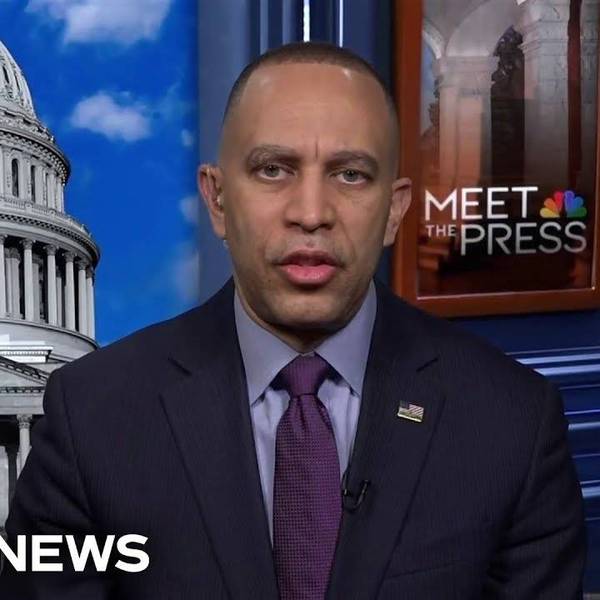
George Goehl is a long-time community organizer and the host of To See Each Other, which this season follows seniors in rural Wisconsin fighting to save beloved public nursing homes.
Tight elections often come down to who has the strongest close. Kamala Harris has certainly had a strong one. One of the strongest elements has been her support for Medicare at Home, which would expand Medicare to include in-home care. There is plenty of evidence that this issue moves voters, and for swing voters looking for one more data point in that decision, this could be the tipping point.
Harris spoke about Medicare at Home when appearing on the Howard Stern Show earlier this month. This part of the conversation with Stern scored in the 95th percentile in determining a voter's opinion of Harris as a candidate, far outpacing all other messages.
This aligns with what we’ve found in Wisconsin. Senior Voters for Care, of which I am affiliated, teamed up with Hart Research Associates to conduct a poll of 800 likely voters over 55 in Wisconsin on views on long-term care.
The poll found that 71% of swing voters and 64% of independent voters said that if a candidate had a plan to provide more funding for long-term care, they would view that candidate more favorably. Kamala Harris has that plan.
The issue of long-term care has been a hot one in the state as a number of conservative county boards have pushed to privatize county-owned nursing homes despite their being five-star facilities and, in most cases, on solid financial footing. The issue has stirred up a hornet’s nest with seniors across partisanship, flooding into county board meetings, marching (and driving their tractors) in local parades, and organizing to stop the sale every step of the way.
The number of Wisconsinites 75 and older is projected to grow by 75% over the next two decades. If the state’s senior population continues to grow as projected, it will need 10,000 more registered nurses, CNAs, and home health care aids by 2030.
The most popular solution among those polled to the state’s looming care crisis was raising caregivers' wages to help attract and retain workers. Ninety-three percent of the people polled supported this measure, including 87 percent of Republicans and 93 percent of independents.
Nearly as popular was expanding Medicaid to increase access to necessary long-term care, with 87% overall backing this initiative, including 93% of Independents.
This is a big deal because Medicare at Home is essentially these two solutions put together, though even better, in that it would expand one of the most popular social programs in the country–Medicare. Chances are that support for this proposal would have outpaced the question we asked because, through Medicare, this long-term care benefit would be available to all of us, while Medicaid is only for those of us with low incomes and very little wealth. Because Medicare does not cover long-term, many families spend down their savings to qualify for Medicaid.
My family is spending my mom’s life savings and the money made from selling her house to pay for her assisted living care at $6,000 a month. It’s a common experience for many voters.
The poll found that 71% of swing voters and 64% of independent voters said that if a candidate had a plan to provide more funding for long-term care, they would view that candidate more favorably. Kamala Harris has that plan.
The Vice President’s plan to win the Presidency banks on some rapidly aging states. Wisconsin's 85-and-over population is expected to double between now and 2040. Michiganders over 85 are the state’s fastest-growing age group, and Pennsylvania’s over-65 population is already more than 2.2 million.
Medicare at Home is the right policy at the right time and appears to be good politics. If enough people heard about it in the campaign's closing weeks, it could be one of the parts of her strong finish that helps put her over the top.
George Goehl is a long-time community organizer and the host of To See Each Other, which this season follows seniors in rural Wisconsin fighting to save beloved public nursing homes.
Tight elections often come down to who has the strongest close. Kamala Harris has certainly had a strong one. One of the strongest elements has been her support for Medicare at Home, which would expand Medicare to include in-home care. There is plenty of evidence that this issue moves voters, and for swing voters looking for one more data point in that decision, this could be the tipping point.
Harris spoke about Medicare at Home when appearing on the Howard Stern Show earlier this month. This part of the conversation with Stern scored in the 95th percentile in determining a voter's opinion of Harris as a candidate, far outpacing all other messages.
This aligns with what we’ve found in Wisconsin. Senior Voters for Care, of which I am affiliated, teamed up with Hart Research Associates to conduct a poll of 800 likely voters over 55 in Wisconsin on views on long-term care.
The poll found that 71% of swing voters and 64% of independent voters said that if a candidate had a plan to provide more funding for long-term care, they would view that candidate more favorably. Kamala Harris has that plan.
The issue of long-term care has been a hot one in the state as a number of conservative county boards have pushed to privatize county-owned nursing homes despite their being five-star facilities and, in most cases, on solid financial footing. The issue has stirred up a hornet’s nest with seniors across partisanship, flooding into county board meetings, marching (and driving their tractors) in local parades, and organizing to stop the sale every step of the way.
The number of Wisconsinites 75 and older is projected to grow by 75% over the next two decades. If the state’s senior population continues to grow as projected, it will need 10,000 more registered nurses, CNAs, and home health care aids by 2030.
The most popular solution among those polled to the state’s looming care crisis was raising caregivers' wages to help attract and retain workers. Ninety-three percent of the people polled supported this measure, including 87 percent of Republicans and 93 percent of independents.
Nearly as popular was expanding Medicaid to increase access to necessary long-term care, with 87% overall backing this initiative, including 93% of Independents.
This is a big deal because Medicare at Home is essentially these two solutions put together, though even better, in that it would expand one of the most popular social programs in the country–Medicare. Chances are that support for this proposal would have outpaced the question we asked because, through Medicare, this long-term care benefit would be available to all of us, while Medicaid is only for those of us with low incomes and very little wealth. Because Medicare does not cover long-term, many families spend down their savings to qualify for Medicaid.
My family is spending my mom’s life savings and the money made from selling her house to pay for her assisted living care at $6,000 a month. It’s a common experience for many voters.
The poll found that 71% of swing voters and 64% of independent voters said that if a candidate had a plan to provide more funding for long-term care, they would view that candidate more favorably. Kamala Harris has that plan.
The Vice President’s plan to win the Presidency banks on some rapidly aging states. Wisconsin's 85-and-over population is expected to double between now and 2040. Michiganders over 85 are the state’s fastest-growing age group, and Pennsylvania’s over-65 population is already more than 2.2 million.
Medicare at Home is the right policy at the right time and appears to be good politics. If enough people heard about it in the campaign's closing weeks, it could be one of the parts of her strong finish that helps put her over the top.