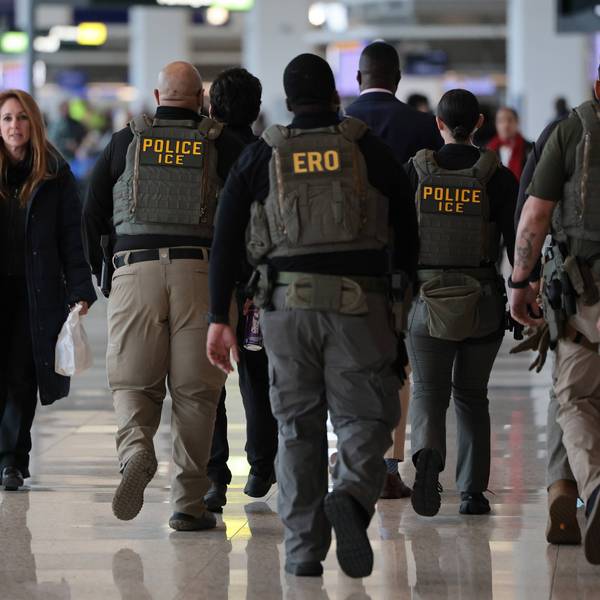

The cash bail system has kept the bail bond business afloat for decades, as accused offenders have been forced to make payments to get out of jail ahead of trials.
Freedom Isn’t Free When You’re Black and Poor
The unforgiving reality of cash bail transforms “innocent until proven guilty” into “guilty until proven wealthy.”
When I was 17, I was charged with a crime I didn’t commit.
During an argument, I was arrested and wrongfully accused of threatening someone with a firearm, which I hadn’t done. My bail was set impossibly high, far beyond what I could afford, especially as a father to a newborn son. Forced to wait for my day in court behind bars, I came to a heartbreaking realization: If I or someone in my family had been wealthy, I could have walked free. Instead, I was denied my presumption of innocence and ripped from my family because I couldn’t pay for my freedom.
The American criminal justice system, which promises equal justice under the law, punishes poverty, tears families apart, and devastates communities like mine.
We need a system where release is based on case-by-case assessments of safety, not wealth.
Sadly, my story isn’t unique. It reflects a system that routinely prioritizes wealth over justice, especially for Black Americans. As someone who personally faced the burdens of cash bail and now works to alleviate that burden for others through The Bail Project—a national nonprofit providing free bail assistance and pretrial support to thousands of low-income people every year—I firmly believe that we have two systems of justice: one for the wealthy and one for everyone else.
This system incarcerates over 60% of people arrested before trial simply because they can’t afford bail. Safety, not wealth or race, should determine who is held or released before trial. Yet, wealth often dictates freedom. Many accused face nonviolent, low-level charges and pose no risk to public safety, but the unforgiving reality of cash bail transforms “innocent until proven guilty” into “guilty until proven wealthy.”
When someone is arrested, a court can impose a cash bail amount: a sum of money required for their release before trial. If you have the funds, you’re released from jail, no matter the circumstances. If you don’t, you’re locked up. Sometimes for weeks, months, or even years.
Judges tasked with setting bail often make these critical decisions in less than five minutes, relying on limited information and implicit biases that disproportionately affect Black defendants, during hearings that rarely require evidence, and often proceed without legal counsel for the defendants. As a result, Black defendants are detained more often than white defendants facing the same charges. On average, courts impose bail amounts nearly $10,000 higher for Black individuals than their white counterparts.
This disparity has devastating consequences, especially in communities of color. Being jailed before trial makes it harder to fight your case, leading many to plead guilty, even if they’re innocent, just to get out. It risks jobs, housing, physical health, and child custody while exposing legally innocent people to unsafe and traumatizing jail conditions.
Consider Christopher, a Black Gulf War veteran who was arrested for alleged possession of a controlled substance. His bail was set at $1,000: an insurmountable sum for him. Christopher was forced to wait in jail for six weeks before his case was dismissed. During that time, he lost his job as a house painter and his PTSD worsened. All of that suffering, and it was for nothing.
Then there’s Ashley, a Black woman eight months pregnant when a scheduling error led to her arrest for a nonviolent misdemeanor. Unable to pay a $11,500 bail, Ashley spent three weeks in a filthy, overcrowded jail cell, sleeping on the floor without a mattress. She lost her job, her apartment, and was forced to sleep in her car with her newborn daughter after giving birth.
We need a system that ensures fairness and protects safety for everyone. We need a system where release is based on case-by-case assessments of safety, not wealth.
Fortunately, alternatives to cash bail exist and work. Illinois became the first state to completely eliminate cash bail in 2023, and judges now determine who needs to be detained pretrial based on risk to others, not money. This shift has kept communities safe while reducing the number of people needlessly incarcerated pretrial. Nationally, more than 30 cities have safely minimized the use of cash bail, according to research from the Brennan Center for Justice.
This Black History Month, as we reflect on how far we’ve come and how far we still have to go to achieve racial equality, let’s not overlook the urgent need for bail reform. Ending cash bail is more than public policy; it’s a moral imperative.
It’s time to put an end to cash bail and write a safer, fairer future for everyone.
We are at a crossroads
This country and this world are at a monumental crossroads. In a few short weeks, US voters will have an opportunity to beat back the forces of fascism and confront the billionaires who are rigging the economy, our media system, and our democracy, making it increasingly impossible for ordinary people to get by. We’re not just talking about the election. We’re talking about what must be done once these fascist elements are vanquished from power. We need a bolder set of solutions than what either major party has so far been willing to offer and a working-class movement ready to fight like hell for it. Trump didn't emerge from nowhere. The conditions that fueled MAGA authoritarianism were created by decades of radical neoliberal economic policies and a corrupt political system dominated by corporate interests. They slashed taxes on the super-rich, promising that the benefits would trickle down. They said giveaways to the corporate titans would make life more affordable for the rest of us. It was all bullshit. And when a bitter, betrayed populace searches for someone to blame, right-wing demagogues have little trouble finding scapegoats. People know when they're being lied to, but you won't hear any of this from the corporate media. Only independent journalism—powered and funded by people who believe in building a better world—can deliver truly trustworthy daily news. Our Fall Campaign is underway, and we need your help. To power our newsroom through the rest of the year, we need to raise $125,000 by midnight on October 31. So if you share our vision, please contribute whatever you can to sustain our work. |
When I was 17, I was charged with a crime I didn’t commit.
During an argument, I was arrested and wrongfully accused of threatening someone with a firearm, which I hadn’t done. My bail was set impossibly high, far beyond what I could afford, especially as a father to a newborn son. Forced to wait for my day in court behind bars, I came to a heartbreaking realization: If I or someone in my family had been wealthy, I could have walked free. Instead, I was denied my presumption of innocence and ripped from my family because I couldn’t pay for my freedom.
The American criminal justice system, which promises equal justice under the law, punishes poverty, tears families apart, and devastates communities like mine.
We need a system where release is based on case-by-case assessments of safety, not wealth.
Sadly, my story isn’t unique. It reflects a system that routinely prioritizes wealth over justice, especially for Black Americans. As someone who personally faced the burdens of cash bail and now works to alleviate that burden for others through The Bail Project—a national nonprofit providing free bail assistance and pretrial support to thousands of low-income people every year—I firmly believe that we have two systems of justice: one for the wealthy and one for everyone else.
This system incarcerates over 60% of people arrested before trial simply because they can’t afford bail. Safety, not wealth or race, should determine who is held or released before trial. Yet, wealth often dictates freedom. Many accused face nonviolent, low-level charges and pose no risk to public safety, but the unforgiving reality of cash bail transforms “innocent until proven guilty” into “guilty until proven wealthy.”
When someone is arrested, a court can impose a cash bail amount: a sum of money required for their release before trial. If you have the funds, you’re released from jail, no matter the circumstances. If you don’t, you’re locked up. Sometimes for weeks, months, or even years.
Judges tasked with setting bail often make these critical decisions in less than five minutes, relying on limited information and implicit biases that disproportionately affect Black defendants, during hearings that rarely require evidence, and often proceed without legal counsel for the defendants. As a result, Black defendants are detained more often than white defendants facing the same charges. On average, courts impose bail amounts nearly $10,000 higher for Black individuals than their white counterparts.
This disparity has devastating consequences, especially in communities of color. Being jailed before trial makes it harder to fight your case, leading many to plead guilty, even if they’re innocent, just to get out. It risks jobs, housing, physical health, and child custody while exposing legally innocent people to unsafe and traumatizing jail conditions.
Consider Christopher, a Black Gulf War veteran who was arrested for alleged possession of a controlled substance. His bail was set at $1,000: an insurmountable sum for him. Christopher was forced to wait in jail for six weeks before his case was dismissed. During that time, he lost his job as a house painter and his PTSD worsened. All of that suffering, and it was for nothing.
Then there’s Ashley, a Black woman eight months pregnant when a scheduling error led to her arrest for a nonviolent misdemeanor. Unable to pay a $11,500 bail, Ashley spent three weeks in a filthy, overcrowded jail cell, sleeping on the floor without a mattress. She lost her job, her apartment, and was forced to sleep in her car with her newborn daughter after giving birth.
We need a system that ensures fairness and protects safety for everyone. We need a system where release is based on case-by-case assessments of safety, not wealth.
Fortunately, alternatives to cash bail exist and work. Illinois became the first state to completely eliminate cash bail in 2023, and judges now determine who needs to be detained pretrial based on risk to others, not money. This shift has kept communities safe while reducing the number of people needlessly incarcerated pretrial. Nationally, more than 30 cities have safely minimized the use of cash bail, according to research from the Brennan Center for Justice.
This Black History Month, as we reflect on how far we’ve come and how far we still have to go to achieve racial equality, let’s not overlook the urgent need for bail reform. Ending cash bail is more than public policy; it’s a moral imperative.
It’s time to put an end to cash bail and write a safer, fairer future for everyone.
- ACLU of Florida Sues Leon County Clerk for Exploiting Cash Bail ›
- Why Mutual Aid Is Vital to Criminal Justice Reform’s Next Chapter ›
- Land of the Unfree ›
- A Year of the Illinois Pretrial Fairness Act Sets a National Model for Reform ›
- On First Day in Office, LA County District Attorney George Gascon Announces Move to End 'Unsafe and Unjust' Cash Bail ›