SUBSCRIBE TO OUR FREE NEWSLETTER
Daily news & progressive opinion—funded by the people, not the corporations—delivered straight to your inbox.
5
#000000
#FFFFFF
To donate by check, phone, or other method, see our More Ways to Give page.
Daily news & progressive opinion—funded by the people, not the corporations—delivered straight to your inbox.
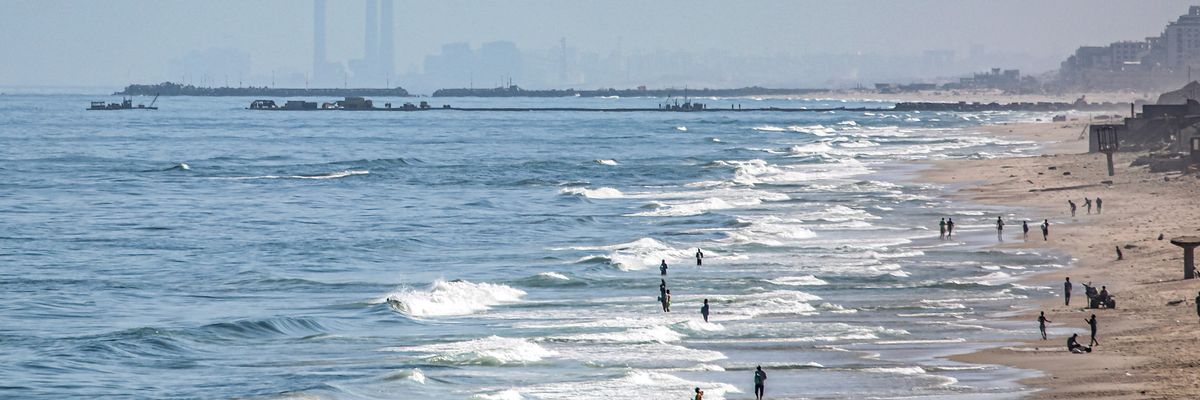
This picture taken on May 16, 2024 shows the temporary U.S.-built Trident Pier connecting to the coastline in Gaza.
Like outside humanitarian workers and other critics, USAID staffers warned the pier would detract from efforts to step up aid deliveries via border crossings.
Palestinian civilians, humanitarian aid workers on the ground in Gaza, United Nations Secretary-General António Guterres, and other rights advocates all said the same thing earlier this year as U.S. President Joe Biden announced plans to construct a $230 million temporary pier to deliver relief to Gaza residents being starved by Israel's aid blockade: The pier was no substitute for reopening border crossings and would undercut efforts to pressure Israel to do so.
Their warnings went unheeded, but a report released by the Office of the Inspector General at the U.S. Agency for International Development (USAID) on Tuesday showed that outside critics were echoing concerns that were also being brought up within the agency.
"Multiple USAID staff expressed concerns that the focus on using JLOTS [the Joint Logistics Over-the-Shore system] would detract from the agency's advocacy to open land crossings in Israel and Egypt, which were seen as more efficient and proven avenues for delivering aid to Gaza," wrote Inspector General Paul K. Martin in the report.
The critics both inside and outside of USAID were concerned that the temporary Trident Pier, which included an offshore barge and a causeway leading to the Gaza shore, would fail to provide the level of aid needed to save Palestinians from starvation and the diseases that they were becoming more vulnerable to due to months of acute food insecurity.
At the time that Biden announced the pier's planned construction in his State of the Union address in March, the United Nations had just reported that at least 20 children had died from starvation, including a 14-day-old baby. Jamie McGoldrick, U.N. humanitarian coordinator for the occupied Palestinian territory, issued an urgent call for at least 300 aid trucks to cross through the Karem Abu Salem and Rafah bording crossings, and said, "Right now, we're lucky if we are getting about 150."
With USAID allowing Israel to inspect all aid deliveries that arrived at the Trident Pier, which was eventually built in May, critics at the time warned that the temporary port would do nothing to ensure relief got to starving Palestinians faster.
Itay Epshtain, a special adviser to the Norwegian Refugee Council based in Israel, said the inspector general's report on Tuesday represented "one more 'I told you so'" for those who had denounced the pier as a "PR move" last spring.
When the Trident Pier was announced, Epshtain said that "creativity is no substitute to upholding international law" by pressuring Israel to reopen all border crossings and to stop denying entry to humanitarian aid trucks.
The failure of the project became evident well before Martin released his report on Tuesday, with the pier shutting down on July 17 after operating for just 20 days.
Biden had set a goal of feeding 1.5 million people in Gaza for 90 days, but the operation brought in enough aid deliveries to feed just 450,000 people.
Martin noted in the report's conclusion that "about 96% of the population in Gaza, or 2.15 million people, continues to face severe
food insecurity and is at a high risk of famine."
The report also details the challenges faced by USAID, the Department of Defense, the World Food Program (WFP), and other partners after the pier was built.
The pier "was frequently rendered inoperable due to structural challenges caused by high winds and rough seas," and the WFP raised concerns at the outset that "lack of community buy-in among Palestinians for the maritime corridor could result in significant safety and security risks and compromise its operations."
The U.N. agency had warned USAID that it required "the clear and visible distinction between humanitarian and military actors" in order to participate in the project, but WFP officials were forced to pause their participation in June after the Israel Defense Forces (IDF) conducted a raid on the Nuseirat refugee camp, killing hundreds of Palestinians.
"Social media posts showed video of the IDF with the JLOTS pier in the background, resulting in the inference that Israel had used the pier inconnection with the military operation. In a statement on June 8, U.S. Central Command officially denied that the IDF used the pier in a military operation. The next day, WFP publicly announced a pause in operations at the temporary pier to conduct a security review."
Such security issues, "coupled with high winds and rough seas in the Mediterranean Sea near the Gaza coast, impaired the agency's ability to deliver the intended amounts of aid through the maritime corridor," reads the inspector general's report. "As USAID continues to respond to humanitarian needs in Gaza, it should examine its experience with JLOTS."
Dear Common Dreams reader, It’s been nearly 30 years since I co-founded Common Dreams with my late wife, Lina Newhouser. We had the radical notion that journalism should serve the public good, not corporate profits. It was clear to us from the outset what it would take to build such a project. No paid advertisements. No corporate sponsors. No millionaire publisher telling us what to think or do. Many people said we wouldn't last a year, but we proved those doubters wrong. Together with a tremendous team of journalists and dedicated staff, we built an independent media outlet free from the constraints of profits and corporate control. Our mission has always been simple: To inform. To inspire. To ignite change for the common good. Building Common Dreams was not easy. Our survival was never guaranteed. When you take on the most powerful forces—Wall Street greed, fossil fuel industry destruction, Big Tech lobbyists, and uber-rich oligarchs who have spent billions upon billions rigging the economy and democracy in their favor—the only bulwark you have is supporters who believe in your work. But here’s the urgent message from me today. It's never been this bad out there. And it's never been this hard to keep us going. At the very moment Common Dreams is most needed, the threats we face are intensifying. We need your support now more than ever. We don't accept corporate advertising and never will. We don't have a paywall because we don't think people should be blocked from critical news based on their ability to pay. Everything we do is funded by the donations of readers like you. When everyone does the little they can afford, we are strong. But if that support retreats or dries up, so do we. Will you donate now to make sure Common Dreams not only survives but thrives? —Craig Brown, Co-founder |
Palestinian civilians, humanitarian aid workers on the ground in Gaza, United Nations Secretary-General António Guterres, and other rights advocates all said the same thing earlier this year as U.S. President Joe Biden announced plans to construct a $230 million temporary pier to deliver relief to Gaza residents being starved by Israel's aid blockade: The pier was no substitute for reopening border crossings and would undercut efforts to pressure Israel to do so.
Their warnings went unheeded, but a report released by the Office of the Inspector General at the U.S. Agency for International Development (USAID) on Tuesday showed that outside critics were echoing concerns that were also being brought up within the agency.
"Multiple USAID staff expressed concerns that the focus on using JLOTS [the Joint Logistics Over-the-Shore system] would detract from the agency's advocacy to open land crossings in Israel and Egypt, which were seen as more efficient and proven avenues for delivering aid to Gaza," wrote Inspector General Paul K. Martin in the report.
The critics both inside and outside of USAID were concerned that the temporary Trident Pier, which included an offshore barge and a causeway leading to the Gaza shore, would fail to provide the level of aid needed to save Palestinians from starvation and the diseases that they were becoming more vulnerable to due to months of acute food insecurity.
At the time that Biden announced the pier's planned construction in his State of the Union address in March, the United Nations had just reported that at least 20 children had died from starvation, including a 14-day-old baby. Jamie McGoldrick, U.N. humanitarian coordinator for the occupied Palestinian territory, issued an urgent call for at least 300 aid trucks to cross through the Karem Abu Salem and Rafah bording crossings, and said, "Right now, we're lucky if we are getting about 150."
With USAID allowing Israel to inspect all aid deliveries that arrived at the Trident Pier, which was eventually built in May, critics at the time warned that the temporary port would do nothing to ensure relief got to starving Palestinians faster.
Itay Epshtain, a special adviser to the Norwegian Refugee Council based in Israel, said the inspector general's report on Tuesday represented "one more 'I told you so'" for those who had denounced the pier as a "PR move" last spring.
When the Trident Pier was announced, Epshtain said that "creativity is no substitute to upholding international law" by pressuring Israel to reopen all border crossings and to stop denying entry to humanitarian aid trucks.
The failure of the project became evident well before Martin released his report on Tuesday, with the pier shutting down on July 17 after operating for just 20 days.
Biden had set a goal of feeding 1.5 million people in Gaza for 90 days, but the operation brought in enough aid deliveries to feed just 450,000 people.
Martin noted in the report's conclusion that "about 96% of the population in Gaza, or 2.15 million people, continues to face severe
food insecurity and is at a high risk of famine."
The report also details the challenges faced by USAID, the Department of Defense, the World Food Program (WFP), and other partners after the pier was built.
The pier "was frequently rendered inoperable due to structural challenges caused by high winds and rough seas," and the WFP raised concerns at the outset that "lack of community buy-in among Palestinians for the maritime corridor could result in significant safety and security risks and compromise its operations."
The U.N. agency had warned USAID that it required "the clear and visible distinction between humanitarian and military actors" in order to participate in the project, but WFP officials were forced to pause their participation in June after the Israel Defense Forces (IDF) conducted a raid on the Nuseirat refugee camp, killing hundreds of Palestinians.
"Social media posts showed video of the IDF with the JLOTS pier in the background, resulting in the inference that Israel had used the pier inconnection with the military operation. In a statement on June 8, U.S. Central Command officially denied that the IDF used the pier in a military operation. The next day, WFP publicly announced a pause in operations at the temporary pier to conduct a security review."
Such security issues, "coupled with high winds and rough seas in the Mediterranean Sea near the Gaza coast, impaired the agency's ability to deliver the intended amounts of aid through the maritime corridor," reads the inspector general's report. "As USAID continues to respond to humanitarian needs in Gaza, it should examine its experience with JLOTS."
Palestinian civilians, humanitarian aid workers on the ground in Gaza, United Nations Secretary-General António Guterres, and other rights advocates all said the same thing earlier this year as U.S. President Joe Biden announced plans to construct a $230 million temporary pier to deliver relief to Gaza residents being starved by Israel's aid blockade: The pier was no substitute for reopening border crossings and would undercut efforts to pressure Israel to do so.
Their warnings went unheeded, but a report released by the Office of the Inspector General at the U.S. Agency for International Development (USAID) on Tuesday showed that outside critics were echoing concerns that were also being brought up within the agency.
"Multiple USAID staff expressed concerns that the focus on using JLOTS [the Joint Logistics Over-the-Shore system] would detract from the agency's advocacy to open land crossings in Israel and Egypt, which were seen as more efficient and proven avenues for delivering aid to Gaza," wrote Inspector General Paul K. Martin in the report.
The critics both inside and outside of USAID were concerned that the temporary Trident Pier, which included an offshore barge and a causeway leading to the Gaza shore, would fail to provide the level of aid needed to save Palestinians from starvation and the diseases that they were becoming more vulnerable to due to months of acute food insecurity.
At the time that Biden announced the pier's planned construction in his State of the Union address in March, the United Nations had just reported that at least 20 children had died from starvation, including a 14-day-old baby. Jamie McGoldrick, U.N. humanitarian coordinator for the occupied Palestinian territory, issued an urgent call for at least 300 aid trucks to cross through the Karem Abu Salem and Rafah bording crossings, and said, "Right now, we're lucky if we are getting about 150."
With USAID allowing Israel to inspect all aid deliveries that arrived at the Trident Pier, which was eventually built in May, critics at the time warned that the temporary port would do nothing to ensure relief got to starving Palestinians faster.
Itay Epshtain, a special adviser to the Norwegian Refugee Council based in Israel, said the inspector general's report on Tuesday represented "one more 'I told you so'" for those who had denounced the pier as a "PR move" last spring.
When the Trident Pier was announced, Epshtain said that "creativity is no substitute to upholding international law" by pressuring Israel to reopen all border crossings and to stop denying entry to humanitarian aid trucks.
The failure of the project became evident well before Martin released his report on Tuesday, with the pier shutting down on July 17 after operating for just 20 days.
Biden had set a goal of feeding 1.5 million people in Gaza for 90 days, but the operation brought in enough aid deliveries to feed just 450,000 people.
Martin noted in the report's conclusion that "about 96% of the population in Gaza, or 2.15 million people, continues to face severe
food insecurity and is at a high risk of famine."
The report also details the challenges faced by USAID, the Department of Defense, the World Food Program (WFP), and other partners after the pier was built.
The pier "was frequently rendered inoperable due to structural challenges caused by high winds and rough seas," and the WFP raised concerns at the outset that "lack of community buy-in among Palestinians for the maritime corridor could result in significant safety and security risks and compromise its operations."
The U.N. agency had warned USAID that it required "the clear and visible distinction between humanitarian and military actors" in order to participate in the project, but WFP officials were forced to pause their participation in June after the Israel Defense Forces (IDF) conducted a raid on the Nuseirat refugee camp, killing hundreds of Palestinians.
"Social media posts showed video of the IDF with the JLOTS pier in the background, resulting in the inference that Israel had used the pier inconnection with the military operation. In a statement on June 8, U.S. Central Command officially denied that the IDF used the pier in a military operation. The next day, WFP publicly announced a pause in operations at the temporary pier to conduct a security review."
Such security issues, "coupled with high winds and rough seas in the Mediterranean Sea near the Gaza coast, impaired the agency's ability to deliver the intended amounts of aid through the maritime corridor," reads the inspector general's report. "As USAID continues to respond to humanitarian needs in Gaza, it should examine its experience with JLOTS."