SUBSCRIBE TO OUR FREE NEWSLETTER
Daily news & progressive opinion—funded by the people, not the corporations—delivered straight to your inbox.
5
#000000
#FFFFFF
To donate by check, phone, or other method, see our More Ways to Give page.
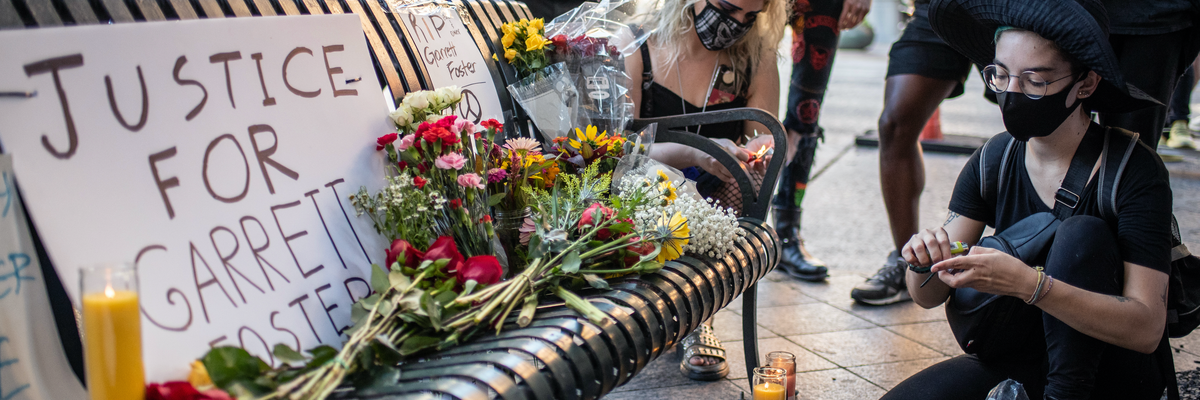
Republican Texas Gov. Greg Abbott drew widespread condemnation from legal experts after he said Saturday that he is "working as swiftly" as the law allows to pardon a man who was convicted the previous day of murdering a racial justice protester in 2020.
Daniel Perry, a U.S. Army sergeant, was convicted by an Austin jury on Friday of murder and aggravated assault with a deadly weapon for the fatal shooting of 28-year-old Garrett Foster, an armed Air Force veteran participating in a Black Lives Matter protest in the Texas capital following George Floyd's murder by Minneapolis police.
After tweeting that he "might have to kill a few people on my way to work" as an Uber driver, Perry accelerated his car into a crowd of racial justice protesters in downtown Austin on July 25, 2020. As Foster, who was pushing his fiancée's wheelchair, approached Perry's vehicle carrying an AK-47 rifle in accordance with Texas law, Perry opened his window and shot Foster four times in the chest and abdomen with his .357 Magnum pistol. When asked by police if Foster had pointed his rifle at him, Perry admitted that he did not, but said that "I didn't want to give him a chance to aim at me."
After an eight-day trial and 17 hours of deliberation, the Austin jury rejected Perry's claim of self-defense. However, Abbott tweeted that "Texas has one of the strongest 'stand your ground' laws of self-defense that cannot be nullified by a jury or a progressive district attorney," a reference to Travis County District Attorney José Garza, a Democrat.
"Unlike the president or some other states, the Texas Constitution limits the governor's pardon authority to only act on a recommendation by the Board of Pardons and Paroles," Abbott wrote. "Texas law does allow the governor to request the Board of Pardons and Paroles to determine if a person should be granted a pardon. I have made that request and instructed the Board to expedite its review."
"I look forward to approving the board's pardon recommendation as soon as it hits my desk," he added.
Rick Cofer, a partner at the Austin law firm of Cofer & Connelly, noted that "Garrett Foster was killed protesting the killing of George Floyd," and that "in 2022, the Texas Board of Pardons unanimously recommended that Floyd be pardoned for a drug charge, in which a crooked cop planted drugs."
"Facing pressure, Abbott got the board to yank the recommendation," Cofer added. "Now the man who killed Garrett Foster, while Foster protested George Floyd's murder, will be pardoned. George Floyd's pardon is still stuck with the Board of Pardons. If a fiction author wrote this, no one would believe it."
David Wahlberg, a former Travis County criminal court judge, said he has never heard of a case in which a governor sought to pardon a convicted felon before their verdict was appealed.
"I think it's outrageously presumptuous for someone to make a judgment about the verdict of 12 unanimous jurors without actually hearing the evidence in person," Wahlberg told the Austin American-Statesman.
Wendy Davis, an attorney and former Texas state lawmaker and Fort Worth city councilmember, called Abbott's move "nothing more than a craven political maneuver."
"Our democracy is imperiled when any branch of government moves to usurp another," Davis argued on Twitter. "And it's happening all over this country on a regular basis."
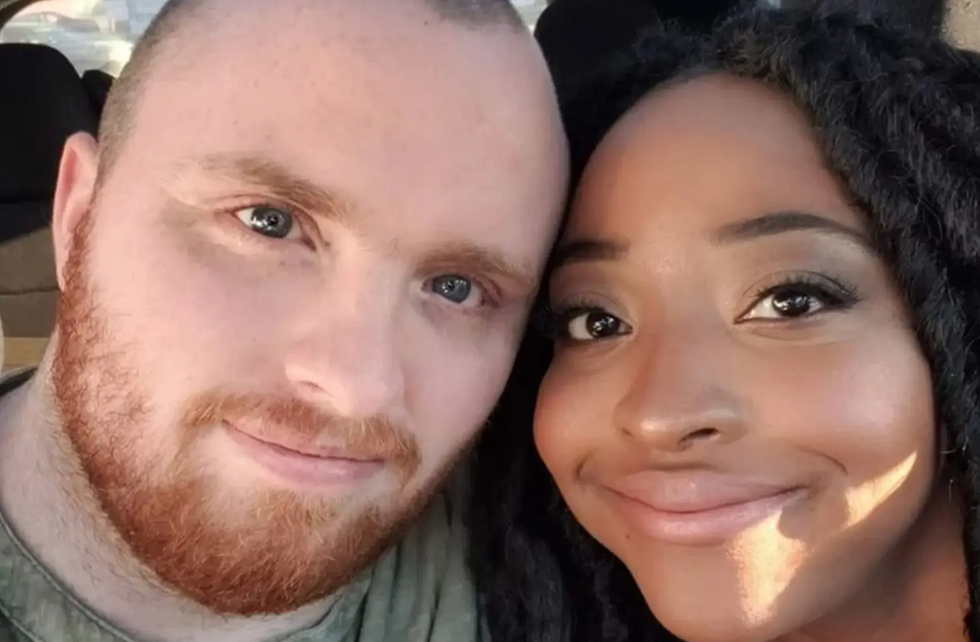 Garrett Foster is seen here with his fiancée Whitney Mitchell, who was present when Foster was murdered. (Photo: Garrett Foster/Facebook)
Abbott's announcement came less than 24 hours after Fox News opinion host Tucker Carlson sharply criticized the governor on his show, claiming that "there is no right of self-defense in Texas."
The governor also faced pressure from right-wing figures including Kyle Rittenhouse, who was acquitted of murder and other charges after he shot dead two racial justice protesters and wounded a third in Kenosha, Wisconsin in 2020.
Abbott has also threatened to "exonerate" 19 Austin police officers indicted for attacking and injuring Black Lives Matter protesters in 2020, asserting that "those officers should be praised for their efforts, not prosecuted."
Republican Texas Gov. Greg Abbott drew widespread condemnation from legal experts after he said Saturday that he is "working as swiftly" as the law allows to pardon a man who was convicted the previous day of murdering a racial justice protester in 2020.
Daniel Perry, a U.S. Army sergeant, was convicted by an Austin jury on Friday of murder and aggravated assault with a deadly weapon for the fatal shooting of 28-year-old Garrett Foster, an armed Air Force veteran participating in a Black Lives Matter protest in the Texas capital following George Floyd's murder by Minneapolis police.
After tweeting that he "might have to kill a few people on my way to work" as an Uber driver, Perry accelerated his car into a crowd of racial justice protesters in downtown Austin on July 25, 2020. As Foster, who was pushing his fiancée's wheelchair, approached Perry's vehicle carrying an AK-47 rifle in accordance with Texas law, Perry opened his window and shot Foster four times in the chest and abdomen with his .357 Magnum pistol. When asked by police if Foster had pointed his rifle at him, Perry admitted that he did not, but said that "I didn't want to give him a chance to aim at me."
After an eight-day trial and 17 hours of deliberation, the Austin jury rejected Perry's claim of self-defense. However, Abbott tweeted that "Texas has one of the strongest 'stand your ground' laws of self-defense that cannot be nullified by a jury or a progressive district attorney," a reference to Travis County District Attorney José Garza, a Democrat.
"Unlike the president or some other states, the Texas Constitution limits the governor's pardon authority to only act on a recommendation by the Board of Pardons and Paroles," Abbott wrote. "Texas law does allow the governor to request the Board of Pardons and Paroles to determine if a person should be granted a pardon. I have made that request and instructed the Board to expedite its review."
"I look forward to approving the board's pardon recommendation as soon as it hits my desk," he added.
Rick Cofer, a partner at the Austin law firm of Cofer & Connelly, noted that "Garrett Foster was killed protesting the killing of George Floyd," and that "in 2022, the Texas Board of Pardons unanimously recommended that Floyd be pardoned for a drug charge, in which a crooked cop planted drugs."
"Facing pressure, Abbott got the board to yank the recommendation," Cofer added. "Now the man who killed Garrett Foster, while Foster protested George Floyd's murder, will be pardoned. George Floyd's pardon is still stuck with the Board of Pardons. If a fiction author wrote this, no one would believe it."
David Wahlberg, a former Travis County criminal court judge, said he has never heard of a case in which a governor sought to pardon a convicted felon before their verdict was appealed.
"I think it's outrageously presumptuous for someone to make a judgment about the verdict of 12 unanimous jurors without actually hearing the evidence in person," Wahlberg told the Austin American-Statesman.
Wendy Davis, an attorney and former Texas state lawmaker and Fort Worth city councilmember, called Abbott's move "nothing more than a craven political maneuver."
"Our democracy is imperiled when any branch of government moves to usurp another," Davis argued on Twitter. "And it's happening all over this country on a regular basis."
Garrett Foster is seen here with his fiancée Whitney Mitchell, who was present when Foster was murdered. (Photo: Garrett Foster/Facebook)
Abbott's announcement came less than 24 hours after Fox News opinion host Tucker Carlson sharply criticized the governor on his show, claiming that "there is no right of self-defense in Texas."
The governor also faced pressure from right-wing figures including Kyle Rittenhouse, who was acquitted of murder and other charges after he shot dead two racial justice protesters and wounded a third in Kenosha, Wisconsin in 2020.
Abbott has also threatened to "exonerate" 19 Austin police officers indicted for attacking and injuring Black Lives Matter protesters in 2020, asserting that "those officers should be praised for their efforts, not prosecuted."
Republican Texas Gov. Greg Abbott drew widespread condemnation from legal experts after he said Saturday that he is "working as swiftly" as the law allows to pardon a man who was convicted the previous day of murdering a racial justice protester in 2020.
Daniel Perry, a U.S. Army sergeant, was convicted by an Austin jury on Friday of murder and aggravated assault with a deadly weapon for the fatal shooting of 28-year-old Garrett Foster, an armed Air Force veteran participating in a Black Lives Matter protest in the Texas capital following George Floyd's murder by Minneapolis police.
After tweeting that he "might have to kill a few people on my way to work" as an Uber driver, Perry accelerated his car into a crowd of racial justice protesters in downtown Austin on July 25, 2020. As Foster, who was pushing his fiancée's wheelchair, approached Perry's vehicle carrying an AK-47 rifle in accordance with Texas law, Perry opened his window and shot Foster four times in the chest and abdomen with his .357 Magnum pistol. When asked by police if Foster had pointed his rifle at him, Perry admitted that he did not, but said that "I didn't want to give him a chance to aim at me."
After an eight-day trial and 17 hours of deliberation, the Austin jury rejected Perry's claim of self-defense. However, Abbott tweeted that "Texas has one of the strongest 'stand your ground' laws of self-defense that cannot be nullified by a jury or a progressive district attorney," a reference to Travis County District Attorney José Garza, a Democrat.
"Unlike the president or some other states, the Texas Constitution limits the governor's pardon authority to only act on a recommendation by the Board of Pardons and Paroles," Abbott wrote. "Texas law does allow the governor to request the Board of Pardons and Paroles to determine if a person should be granted a pardon. I have made that request and instructed the Board to expedite its review."
"I look forward to approving the board's pardon recommendation as soon as it hits my desk," he added.
Rick Cofer, a partner at the Austin law firm of Cofer & Connelly, noted that "Garrett Foster was killed protesting the killing of George Floyd," and that "in 2022, the Texas Board of Pardons unanimously recommended that Floyd be pardoned for a drug charge, in which a crooked cop planted drugs."
"Facing pressure, Abbott got the board to yank the recommendation," Cofer added. "Now the man who killed Garrett Foster, while Foster protested George Floyd's murder, will be pardoned. George Floyd's pardon is still stuck with the Board of Pardons. If a fiction author wrote this, no one would believe it."
David Wahlberg, a former Travis County criminal court judge, said he has never heard of a case in which a governor sought to pardon a convicted felon before their verdict was appealed.
"I think it's outrageously presumptuous for someone to make a judgment about the verdict of 12 unanimous jurors without actually hearing the evidence in person," Wahlberg told the Austin American-Statesman.
Wendy Davis, an attorney and former Texas state lawmaker and Fort Worth city councilmember, called Abbott's move "nothing more than a craven political maneuver."
"Our democracy is imperiled when any branch of government moves to usurp another," Davis argued on Twitter. "And it's happening all over this country on a regular basis."
Garrett Foster is seen here with his fiancée Whitney Mitchell, who was present when Foster was murdered. (Photo: Garrett Foster/Facebook)
Abbott's announcement came less than 24 hours after Fox News opinion host Tucker Carlson sharply criticized the governor on his show, claiming that "there is no right of self-defense in Texas."
The governor also faced pressure from right-wing figures including Kyle Rittenhouse, who was acquitted of murder and other charges after he shot dead two racial justice protesters and wounded a third in Kenosha, Wisconsin in 2020.
Abbott has also threatened to "exonerate" 19 Austin police officers indicted for attacking and injuring Black Lives Matter protesters in 2020, asserting that "those officers should be praised for their efforts, not prosecuted."