SUBSCRIBE TO OUR FREE NEWSLETTER
Daily news & progressive opinion—funded by the people, not the corporations—delivered straight to your inbox.
5
#000000
#FFFFFF
To donate by check, phone, or other method, see our More Ways to Give page.
Daily news & progressive opinion—funded by the people, not the corporations—delivered straight to your inbox.
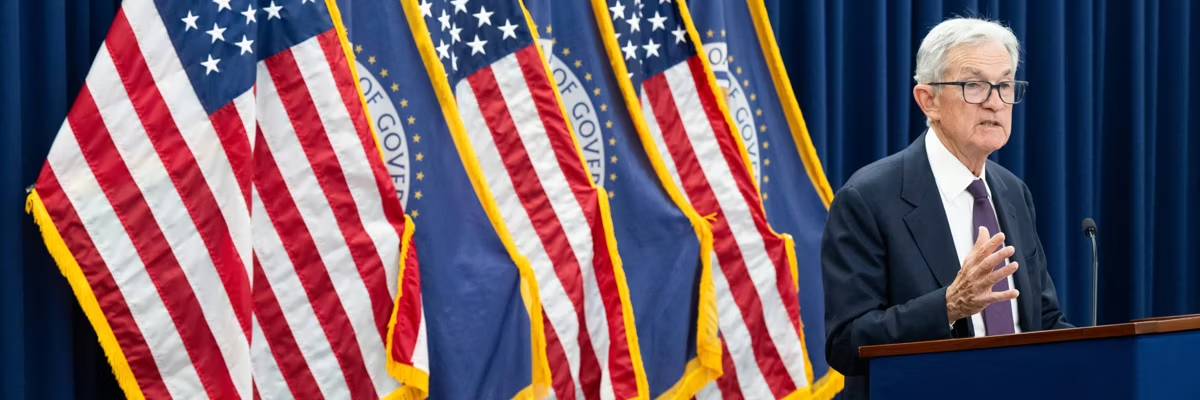
US Federal Reserve Chair Jerome Powell speaks during a press conference in Washington, DC on January 28, 2026.
"There can be little doubt that having a Wall Street lawyer-lobbyist in charge of supervising and regulating his former Wall Street clients will likely result in a catastrophe for the American people."
The Federal Reserve board has quietly appointed a prominent Wall Street lawyer and lobbyist as the central bank's director of supervision and regulation, a move that one critic said was worse than "putting the fox in charge of the henhouse."
"This is like appointing a lifelong arsonist as a fire chief," Dennis Kelleher, president and CEO of Better Markets, said in response to the Fed's decision to put Randall Guynn in a position to regulate the industry he has long represented.
Politico reported Tuesday that "Guynn, a prominent Wall Street lawyer, will become the next director of supervision and regulation at the Federal Reserve, effective March 8."
Before joining Fed staff last year as an adviser to the central bank's vice chair for supervision, Guynn worked for close to four decades at the corporate law firm Davis Polk & Wardwell, where he recently chaired the company's Financial Institutions Group. According to Guynn's bio, he has "focused on advising banks of all sizes on their most critical financial regulatory issues and transactions."
Reuters, which first reported earlier this month that the Fed was expected to appoint Guynn to the bank policing role, noted that the decision "would mark a departure for the central bank, which since at least 1977 has filled the job with long-serving Fed career staff."
"The only reasonable expectation is that his leadership of Fed supervision and regulation will accelerate the Fed’s current push to implement policies that favor the biggest, most dangerous banks."
In a statement, Kelleher of Better Markets described Guynn as a "lawyer-lobbyist" who has "spent his entire professional life—almost 40 years—zealously and exclusively representing the interests of the financial industry, including the biggest financial firms on Wall Street."
A 2024 paper published in Cambridge University's Perspectives on Politics journal identified Guynn as part of a "vast subterranean world of regulatory influence-seeking" that has managed to escape the scrutiny of legislative lobbying.
"Reporting exceptions under the Lobbying Disclosure Act allow many of the most powerful advocates to characterize their activity as lawyering, not lobbying, and thereby fly under the radar," the paper notes.
Kelleher argued that, given Guynn's history, "the only reasonable expectation is that his leadership of Fed supervision and regulation will accelerate the Fed’s current push to implement policies that favor the biggest, most dangerous banks—his former clients just ten months ago and presumably his current circle of professional and personal friends."
"That will crush small banks, harm the Main Street economy, and make another financial crash inevitable. That’s what happened in the early 2000s when the Fed’s misguided belief that Wall Street could regulate itself directly led to the catastrophic 2008 crash," said Kelleher. "We don’t have to speculate. We can look at his attached record or read the remarkable story of how, as a lawyer-lobbyist prior to joining the Fed staff last year, he was instrumental in pushing through a back-door merger approval by the Fed."
"There can be little doubt that having a Wall Street lawyer-lobbyist in charge of supervising and regulating his former Wall Street clients will likely result in a catastrophe for the American people," he added.
Dear Common Dreams reader, It’s been nearly 30 years since I co-founded Common Dreams with my late wife, Lina Newhouser. We had the radical notion that journalism should serve the public good, not corporate profits. It was clear to us from the outset what it would take to build such a project. No paid advertisements. No corporate sponsors. No millionaire publisher telling us what to think or do. Many people said we wouldn't last a year, but we proved those doubters wrong. Together with a tremendous team of journalists and dedicated staff, we built an independent media outlet free from the constraints of profits and corporate control. Our mission has always been simple: To inform. To inspire. To ignite change for the common good. Building Common Dreams was not easy. Our survival was never guaranteed. When you take on the most powerful forces—Wall Street greed, fossil fuel industry destruction, Big Tech lobbyists, and uber-rich oligarchs who have spent billions upon billions rigging the economy and democracy in their favor—the only bulwark you have is supporters who believe in your work. But here’s the urgent message from me today. It's never been this bad out there. And it's never been this hard to keep us going. At the very moment Common Dreams is most needed, the threats we face are intensifying. We need your support now more than ever. We don't accept corporate advertising and never will. We don't have a paywall because we don't think people should be blocked from critical news based on their ability to pay. Everything we do is funded by the donations of readers like you. When everyone does the little they can afford, we are strong. But if that support retreats or dries up, so do we. Will you donate now to make sure Common Dreams not only survives but thrives? —Craig Brown, Co-founder |
The Federal Reserve board has quietly appointed a prominent Wall Street lawyer and lobbyist as the central bank's director of supervision and regulation, a move that one critic said was worse than "putting the fox in charge of the henhouse."
"This is like appointing a lifelong arsonist as a fire chief," Dennis Kelleher, president and CEO of Better Markets, said in response to the Fed's decision to put Randall Guynn in a position to regulate the industry he has long represented.
Politico reported Tuesday that "Guynn, a prominent Wall Street lawyer, will become the next director of supervision and regulation at the Federal Reserve, effective March 8."
Before joining Fed staff last year as an adviser to the central bank's vice chair for supervision, Guynn worked for close to four decades at the corporate law firm Davis Polk & Wardwell, where he recently chaired the company's Financial Institutions Group. According to Guynn's bio, he has "focused on advising banks of all sizes on their most critical financial regulatory issues and transactions."
Reuters, which first reported earlier this month that the Fed was expected to appoint Guynn to the bank policing role, noted that the decision "would mark a departure for the central bank, which since at least 1977 has filled the job with long-serving Fed career staff."
"The only reasonable expectation is that his leadership of Fed supervision and regulation will accelerate the Fed’s current push to implement policies that favor the biggest, most dangerous banks."
In a statement, Kelleher of Better Markets described Guynn as a "lawyer-lobbyist" who has "spent his entire professional life—almost 40 years—zealously and exclusively representing the interests of the financial industry, including the biggest financial firms on Wall Street."
A 2024 paper published in Cambridge University's Perspectives on Politics journal identified Guynn as part of a "vast subterranean world of regulatory influence-seeking" that has managed to escape the scrutiny of legislative lobbying.
"Reporting exceptions under the Lobbying Disclosure Act allow many of the most powerful advocates to characterize their activity as lawyering, not lobbying, and thereby fly under the radar," the paper notes.
Kelleher argued that, given Guynn's history, "the only reasonable expectation is that his leadership of Fed supervision and regulation will accelerate the Fed’s current push to implement policies that favor the biggest, most dangerous banks—his former clients just ten months ago and presumably his current circle of professional and personal friends."
"That will crush small banks, harm the Main Street economy, and make another financial crash inevitable. That’s what happened in the early 2000s when the Fed’s misguided belief that Wall Street could regulate itself directly led to the catastrophic 2008 crash," said Kelleher. "We don’t have to speculate. We can look at his attached record or read the remarkable story of how, as a lawyer-lobbyist prior to joining the Fed staff last year, he was instrumental in pushing through a back-door merger approval by the Fed."
"There can be little doubt that having a Wall Street lawyer-lobbyist in charge of supervising and regulating his former Wall Street clients will likely result in a catastrophe for the American people," he added.
The Federal Reserve board has quietly appointed a prominent Wall Street lawyer and lobbyist as the central bank's director of supervision and regulation, a move that one critic said was worse than "putting the fox in charge of the henhouse."
"This is like appointing a lifelong arsonist as a fire chief," Dennis Kelleher, president and CEO of Better Markets, said in response to the Fed's decision to put Randall Guynn in a position to regulate the industry he has long represented.
Politico reported Tuesday that "Guynn, a prominent Wall Street lawyer, will become the next director of supervision and regulation at the Federal Reserve, effective March 8."
Before joining Fed staff last year as an adviser to the central bank's vice chair for supervision, Guynn worked for close to four decades at the corporate law firm Davis Polk & Wardwell, where he recently chaired the company's Financial Institutions Group. According to Guynn's bio, he has "focused on advising banks of all sizes on their most critical financial regulatory issues and transactions."
Reuters, which first reported earlier this month that the Fed was expected to appoint Guynn to the bank policing role, noted that the decision "would mark a departure for the central bank, which since at least 1977 has filled the job with long-serving Fed career staff."
"The only reasonable expectation is that his leadership of Fed supervision and regulation will accelerate the Fed’s current push to implement policies that favor the biggest, most dangerous banks."
In a statement, Kelleher of Better Markets described Guynn as a "lawyer-lobbyist" who has "spent his entire professional life—almost 40 years—zealously and exclusively representing the interests of the financial industry, including the biggest financial firms on Wall Street."
A 2024 paper published in Cambridge University's Perspectives on Politics journal identified Guynn as part of a "vast subterranean world of regulatory influence-seeking" that has managed to escape the scrutiny of legislative lobbying.
"Reporting exceptions under the Lobbying Disclosure Act allow many of the most powerful advocates to characterize their activity as lawyering, not lobbying, and thereby fly under the radar," the paper notes.
Kelleher argued that, given Guynn's history, "the only reasonable expectation is that his leadership of Fed supervision and regulation will accelerate the Fed’s current push to implement policies that favor the biggest, most dangerous banks—his former clients just ten months ago and presumably his current circle of professional and personal friends."
"That will crush small banks, harm the Main Street economy, and make another financial crash inevitable. That’s what happened in the early 2000s when the Fed’s misguided belief that Wall Street could regulate itself directly led to the catastrophic 2008 crash," said Kelleher. "We don’t have to speculate. We can look at his attached record or read the remarkable story of how, as a lawyer-lobbyist prior to joining the Fed staff last year, he was instrumental in pushing through a back-door merger approval by the Fed."
"There can be little doubt that having a Wall Street lawyer-lobbyist in charge of supervising and regulating his former Wall Street clients will likely result in a catastrophe for the American people," he added.