SUBSCRIBE TO OUR FREE NEWSLETTER
Daily news & progressive opinion—funded by the people, not the corporations—delivered straight to your inbox.
5
#000000
#FFFFFF
To donate by check, phone, or other method, see our More Ways to Give page.
Daily news & progressive opinion—funded by the people, not the corporations—delivered straight to your inbox.
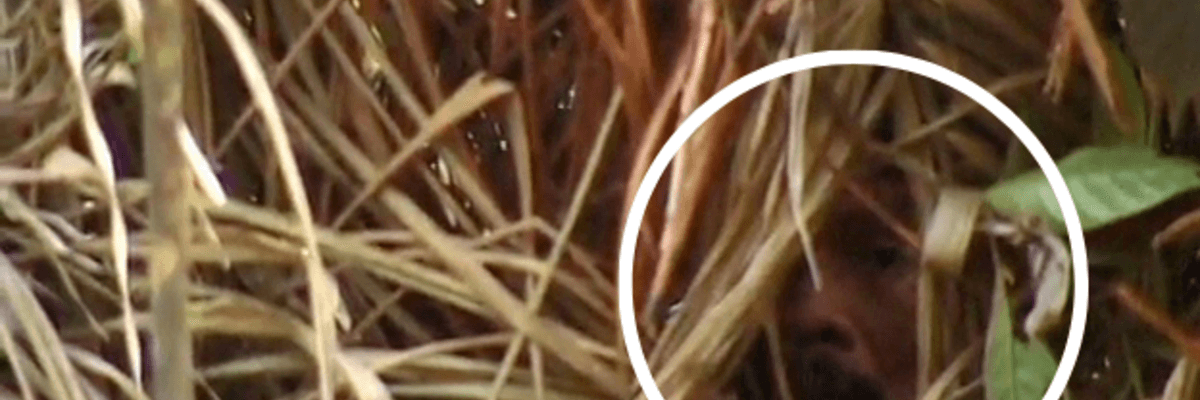
The man known as the "Indian of the Hole" captured in rate footage looks out from his hut--a still from the film Corumbiara, by the filmmaker Vincent Carelli. (Image: (c) Vincent Carelli)
Activists and conservationists worldwide mourned Monday following news that a man believed to be the last of a remote Brazilian tribe was found dead after years of resisting all efforts by the outside world to contact or interfere with him.
Known by defenders of Indigenous rights as "Indian of the Hole" or "The Man of the Hole" (Indio do Buraco)--a name given due to pits he dug for shelter, concealment, and possibly hunting--he was the only inhabitant of Tanaru Indigenous Territory in Rondonia state, in the western Brazilian Amazon. First encountered 26 years ago, the man--believed to be approximately 60 years old at the time of his death--lived reclusively in the remote region after other members of his tribe were thought to have been poisoned by ranchers who wanted to develop the land where they lived.
OPI, the Observatory for the Human Rights of Uncontacted and Recently-Contacted Peoples, issued a statement (translated here into English) bemoaning that "another Indigenous person, the last representative of his people, has died."
"In the recent past," the group continued, "he was the victim of an atrocious extermination process, as a result of the installation of large state-sponsored farms. He witnessed the death of his people, lost his territory to pastures and was sentenced to spend the rest of his life in a small portion of forest interdicted by justice, surrounded by large farms in the region of the Corumbiara River in Rondonia."
"For resisting with extreme determination to any endeavors of contact," OPI added, the man "died without letting know which ethnicity he belonged to, nor the motivations of the holes he dug inside his house."
As The Guardian reports, "Officials know very little about the man, but his determined independence and evident solace helped create a mystique around him that captured the attention of activists and media across Brazil and around the world."
Survival International, which advocates for Indigenous rights and autonomy in Brazil and elsewhere around the world, called the death of the man--whose remains were recently found in a state of decomposition in the Tanaru territory--a symbol of genocide against the Amazon's Indigenous peoples. The group called the region where he lived as "a small island of forest in a sea of vast cattle ranches, in one of the most violent regions in Brazil."
Fiona Watson, research and advocacy director for Survival International who visited the man's territory in 2004 with a government monitoring team, commented on the man's passing.
"No outsider knew this man's name, or even very much about his tribe--and with his death the genocide of his people is complete," said Watson. "For this was indeed a genocide--the deliberate wiping out of an entire people by cattle ranchers hungry for land and wealth."
What the man symbolized, said Watson, was "both the appalling violence and cruelty inflicted on Indigenous peoples worldwide in the name of colonization and profit, but also their resistance. We can only imagine what horrors he had witnessed in his life, and the loneliness of his existence after the rest of his tribe were killed, but he determinedly resisted all attempts at contact, and made clear he just wanted to be left alone."
Watson also invoked the policies of Brazilian President Jair Bolsonaro who is notorious for his antagonism toward the Indigenous people of Brazil and his wanton destruction of the Amazon rainforest by backing the logging, cattle, and mining interests who have sought massive profits from the region's land and natural resources.
"If President Bolsonaro and his agribusiness allies get their way," warned Watson, "this story will be repeated over and over again until all the country's Indigenous peoples are wiped out. The Indigenous movement in Brazil, and Survival, will do everything possible to ensure that doesn't happen."
According to government officials with Funai, which monitored the man from a distance, it appeared the man had prepared for his death and that neither foul play nor a violent end was suggested. A forensic doctor with the nation's federal police is expected to carry out an autopsy and anthropologists and other researchers are expected to try to learn more about how he lived.
Following the man's death, OPI renewed its called for the Tanaru reserve where he lived his final years to be permanently protected as a memorial to Indigenous genocide.
Dear Common Dreams reader, It’s been nearly 30 years since I co-founded Common Dreams with my late wife, Lina Newhouser. We had the radical notion that journalism should serve the public good, not corporate profits. It was clear to us from the outset what it would take to build such a project. No paid advertisements. No corporate sponsors. No millionaire publisher telling us what to think or do. Many people said we wouldn't last a year, but we proved those doubters wrong. Together with a tremendous team of journalists and dedicated staff, we built an independent media outlet free from the constraints of profits and corporate control. Our mission has always been simple: To inform. To inspire. To ignite change for the common good. Building Common Dreams was not easy. Our survival was never guaranteed. When you take on the most powerful forces—Wall Street greed, fossil fuel industry destruction, Big Tech lobbyists, and uber-rich oligarchs who have spent billions upon billions rigging the economy and democracy in their favor—the only bulwark you have is supporters who believe in your work. But here’s the urgent message from me today. It's never been this bad out there. And it's never been this hard to keep us going. At the very moment Common Dreams is most needed, the threats we face are intensifying. We need your support now more than ever. We don't accept corporate advertising and never will. We don't have a paywall because we don't think people should be blocked from critical news based on their ability to pay. Everything we do is funded by the donations of readers like you. When everyone does the little they can afford, we are strong. But if that support retreats or dries up, so do we. Will you donate now to make sure Common Dreams not only survives but thrives? —Craig Brown, Co-founder |
Activists and conservationists worldwide mourned Monday following news that a man believed to be the last of a remote Brazilian tribe was found dead after years of resisting all efforts by the outside world to contact or interfere with him.
Known by defenders of Indigenous rights as "Indian of the Hole" or "The Man of the Hole" (Indio do Buraco)--a name given due to pits he dug for shelter, concealment, and possibly hunting--he was the only inhabitant of Tanaru Indigenous Territory in Rondonia state, in the western Brazilian Amazon. First encountered 26 years ago, the man--believed to be approximately 60 years old at the time of his death--lived reclusively in the remote region after other members of his tribe were thought to have been poisoned by ranchers who wanted to develop the land where they lived.
OPI, the Observatory for the Human Rights of Uncontacted and Recently-Contacted Peoples, issued a statement (translated here into English) bemoaning that "another Indigenous person, the last representative of his people, has died."
"In the recent past," the group continued, "he was the victim of an atrocious extermination process, as a result of the installation of large state-sponsored farms. He witnessed the death of his people, lost his territory to pastures and was sentenced to spend the rest of his life in a small portion of forest interdicted by justice, surrounded by large farms in the region of the Corumbiara River in Rondonia."
"For resisting with extreme determination to any endeavors of contact," OPI added, the man "died without letting know which ethnicity he belonged to, nor the motivations of the holes he dug inside his house."
As The Guardian reports, "Officials know very little about the man, but his determined independence and evident solace helped create a mystique around him that captured the attention of activists and media across Brazil and around the world."
Survival International, which advocates for Indigenous rights and autonomy in Brazil and elsewhere around the world, called the death of the man--whose remains were recently found in a state of decomposition in the Tanaru territory--a symbol of genocide against the Amazon's Indigenous peoples. The group called the region where he lived as "a small island of forest in a sea of vast cattle ranches, in one of the most violent regions in Brazil."
Fiona Watson, research and advocacy director for Survival International who visited the man's territory in 2004 with a government monitoring team, commented on the man's passing.
"No outsider knew this man's name, or even very much about his tribe--and with his death the genocide of his people is complete," said Watson. "For this was indeed a genocide--the deliberate wiping out of an entire people by cattle ranchers hungry for land and wealth."
What the man symbolized, said Watson, was "both the appalling violence and cruelty inflicted on Indigenous peoples worldwide in the name of colonization and profit, but also their resistance. We can only imagine what horrors he had witnessed in his life, and the loneliness of his existence after the rest of his tribe were killed, but he determinedly resisted all attempts at contact, and made clear he just wanted to be left alone."
Watson also invoked the policies of Brazilian President Jair Bolsonaro who is notorious for his antagonism toward the Indigenous people of Brazil and his wanton destruction of the Amazon rainforest by backing the logging, cattle, and mining interests who have sought massive profits from the region's land and natural resources.
"If President Bolsonaro and his agribusiness allies get their way," warned Watson, "this story will be repeated over and over again until all the country's Indigenous peoples are wiped out. The Indigenous movement in Brazil, and Survival, will do everything possible to ensure that doesn't happen."
According to government officials with Funai, which monitored the man from a distance, it appeared the man had prepared for his death and that neither foul play nor a violent end was suggested. A forensic doctor with the nation's federal police is expected to carry out an autopsy and anthropologists and other researchers are expected to try to learn more about how he lived.
Following the man's death, OPI renewed its called for the Tanaru reserve where he lived his final years to be permanently protected as a memorial to Indigenous genocide.
Activists and conservationists worldwide mourned Monday following news that a man believed to be the last of a remote Brazilian tribe was found dead after years of resisting all efforts by the outside world to contact or interfere with him.
Known by defenders of Indigenous rights as "Indian of the Hole" or "The Man of the Hole" (Indio do Buraco)--a name given due to pits he dug for shelter, concealment, and possibly hunting--he was the only inhabitant of Tanaru Indigenous Territory in Rondonia state, in the western Brazilian Amazon. First encountered 26 years ago, the man--believed to be approximately 60 years old at the time of his death--lived reclusively in the remote region after other members of his tribe were thought to have been poisoned by ranchers who wanted to develop the land where they lived.
OPI, the Observatory for the Human Rights of Uncontacted and Recently-Contacted Peoples, issued a statement (translated here into English) bemoaning that "another Indigenous person, the last representative of his people, has died."
"In the recent past," the group continued, "he was the victim of an atrocious extermination process, as a result of the installation of large state-sponsored farms. He witnessed the death of his people, lost his territory to pastures and was sentenced to spend the rest of his life in a small portion of forest interdicted by justice, surrounded by large farms in the region of the Corumbiara River in Rondonia."
"For resisting with extreme determination to any endeavors of contact," OPI added, the man "died without letting know which ethnicity he belonged to, nor the motivations of the holes he dug inside his house."
As The Guardian reports, "Officials know very little about the man, but his determined independence and evident solace helped create a mystique around him that captured the attention of activists and media across Brazil and around the world."
Survival International, which advocates for Indigenous rights and autonomy in Brazil and elsewhere around the world, called the death of the man--whose remains were recently found in a state of decomposition in the Tanaru territory--a symbol of genocide against the Amazon's Indigenous peoples. The group called the region where he lived as "a small island of forest in a sea of vast cattle ranches, in one of the most violent regions in Brazil."
Fiona Watson, research and advocacy director for Survival International who visited the man's territory in 2004 with a government monitoring team, commented on the man's passing.
"No outsider knew this man's name, or even very much about his tribe--and with his death the genocide of his people is complete," said Watson. "For this was indeed a genocide--the deliberate wiping out of an entire people by cattle ranchers hungry for land and wealth."
What the man symbolized, said Watson, was "both the appalling violence and cruelty inflicted on Indigenous peoples worldwide in the name of colonization and profit, but also their resistance. We can only imagine what horrors he had witnessed in his life, and the loneliness of his existence after the rest of his tribe were killed, but he determinedly resisted all attempts at contact, and made clear he just wanted to be left alone."
Watson also invoked the policies of Brazilian President Jair Bolsonaro who is notorious for his antagonism toward the Indigenous people of Brazil and his wanton destruction of the Amazon rainforest by backing the logging, cattle, and mining interests who have sought massive profits from the region's land and natural resources.
"If President Bolsonaro and his agribusiness allies get their way," warned Watson, "this story will be repeated over and over again until all the country's Indigenous peoples are wiped out. The Indigenous movement in Brazil, and Survival, will do everything possible to ensure that doesn't happen."
According to government officials with Funai, which monitored the man from a distance, it appeared the man had prepared for his death and that neither foul play nor a violent end was suggested. A forensic doctor with the nation's federal police is expected to carry out an autopsy and anthropologists and other researchers are expected to try to learn more about how he lived.
Following the man's death, OPI renewed its called for the Tanaru reserve where he lived his final years to be permanently protected as a memorial to Indigenous genocide.