SUBSCRIBE TO OUR FREE NEWSLETTER
Daily news & progressive opinion—funded by the people, not the corporations—delivered straight to your inbox.
5
#000000
#FFFFFF
To donate by check, phone, or other method, see our More Ways to Give page.
Daily news & progressive opinion—funded by the people, not the corporations—delivered straight to your inbox.
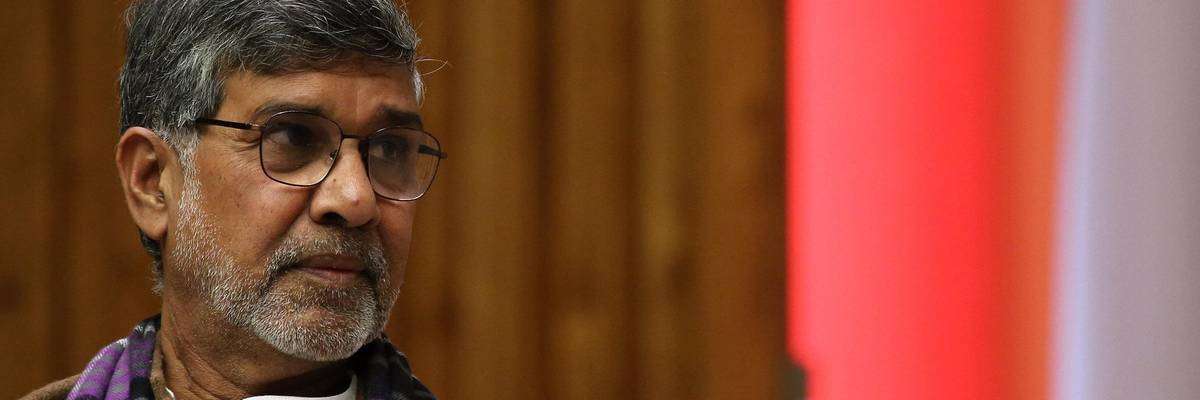
Nobel Peace Prize winner Kailash Satyarthi speaks at the United Nations calling for a global community to end child labor at the United Nations on March 17, 2015 in New York City. (Photo: Neilson Barnard/Getty Images for Kailash Satyarthi)
Nobel Peace laureate Kailash Satyarthi has called on world leaders to reflect upon the longterm impacts of the choices they make today, urging them to support a proposal to waive Covid-19 vaccine patents and other related intellectual property restrictions.
Satyarthi made the demands in a keynote address at the opening of the World Health Organization's annual World Health Assembly, which is attended by global health ministers and delegations from WHO member states. The weeklong, virtual event kicked off Monday and runs through June 1.
Saying he was representing the "voice of the millions of voiceless children who are left behind"--those suffering from hunger and poverty, forced into exploitation, and facing "the worst health outcomes" and barriers to education and proper sanitation--Satyarthi said the assembly comes at "a defining time in our society" that should spur contemplation of the "human costs" of choices made.
He derided the fact that a mere 0.13% of the estimated $8 trillion spent by world governments last year to fight the Covid-19 pandemic went to the "most marginalized communities," who are suffering "immeasurable misery."
Beyond being a health and economic crisis, Satyarthi said the pandemic represents a "crisis of justice, crisis of civilization, and a crisis of humanity."
Satyarthi is founder of the Kailash Satyarthi Children's Foundation, which works to end child labor and exploitation. He won the Nobel Peace Prize in 2014 for his work to end child slavery. The award that year was jointly won by child education activist Malala Yousafzai.
"While the world has suffered as one," Satyarthi said, "we have not suffered equally."
He cited as one example the fact that "two-thirds of the world's largest companies made an additional $109 billion in 2020." At the same time, he said, "140 million children and their families will be pushed into acute poverty."
"This is unacceptable. This is injustice," he said.
"I have heard the children scream in their sleep and the deafening silence in the day," said Satyarthi, who lamented that there are now 152 million children forced into labor across world. Unfortunately, he continued, the pandemic is set to drive that number up by millions.
Warning that the next wave of coronavirus infections is likely to target children, he said, "We cannot wait for the house to be on fire again for us to have the extinguishers ready."
"If we don't learn from our mistakes, we will not be losing our people because of the virus but because of our lack of preparedness, apathy, and complicity."
The global COVAX vaccine initiative is a "step in the right direction," Satyarthi said, but "only compassionate politics and moral leadership can give it any meaning." And "it is the hour of crisis that true character of leaders is demonstrated."
"This is the time to act," Satyarthi said and laid out a number of recommendations for policymakers.
United Nations agencies "must stand united now," and inter-agency, high-level groups should be set up to recommend "concrete and time-bound actions to safeguard our children."
"Secondly, I demand a waiver of all intellectual property restrictions on Covid vaccine manufacturing, democratization of technical knowledge, and access to raw material[s]," Satyarthi said.
He also pointed to a recent call from over 170 former world leaders and Nobel laureates for that IP waiver proposal to be passed. Satyarthi further welcomed U.S. President Joe Biden's recent support for that effort at the World Trade Organizations, and said "other countries must also do the same."
"We are at a crossroads," said Satyarthi, warning that future generations would "pay the price of our choices we make today."
"Profit, politics, and property can wait," he said, "but not our children."
"Let us globalize compassion for our children," he added. "Let us globalize compassion as we move forward from the wreckage of this pandemic."
Dear Common Dreams reader, It’s been nearly 30 years since I co-founded Common Dreams with my late wife, Lina Newhouser. We had the radical notion that journalism should serve the public good, not corporate profits. It was clear to us from the outset what it would take to build such a project. No paid advertisements. No corporate sponsors. No millionaire publisher telling us what to think or do. Many people said we wouldn't last a year, but we proved those doubters wrong. Together with a tremendous team of journalists and dedicated staff, we built an independent media outlet free from the constraints of profits and corporate control. Our mission has always been simple: To inform. To inspire. To ignite change for the common good. Building Common Dreams was not easy. Our survival was never guaranteed. When you take on the most powerful forces—Wall Street greed, fossil fuel industry destruction, Big Tech lobbyists, and uber-rich oligarchs who have spent billions upon billions rigging the economy and democracy in their favor—the only bulwark you have is supporters who believe in your work. But here’s the urgent message from me today. It's never been this bad out there. And it's never been this hard to keep us going. At the very moment Common Dreams is most needed, the threats we face are intensifying. We need your support now more than ever. We don't accept corporate advertising and never will. We don't have a paywall because we don't think people should be blocked from critical news based on their ability to pay. Everything we do is funded by the donations of readers like you. When everyone does the little they can afford, we are strong. But if that support retreats or dries up, so do we. Will you donate now to make sure Common Dreams not only survives but thrives? —Craig Brown, Co-founder |
Nobel Peace laureate Kailash Satyarthi has called on world leaders to reflect upon the longterm impacts of the choices they make today, urging them to support a proposal to waive Covid-19 vaccine patents and other related intellectual property restrictions.
Satyarthi made the demands in a keynote address at the opening of the World Health Organization's annual World Health Assembly, which is attended by global health ministers and delegations from WHO member states. The weeklong, virtual event kicked off Monday and runs through June 1.
Saying he was representing the "voice of the millions of voiceless children who are left behind"--those suffering from hunger and poverty, forced into exploitation, and facing "the worst health outcomes" and barriers to education and proper sanitation--Satyarthi said the assembly comes at "a defining time in our society" that should spur contemplation of the "human costs" of choices made.
He derided the fact that a mere 0.13% of the estimated $8 trillion spent by world governments last year to fight the Covid-19 pandemic went to the "most marginalized communities," who are suffering "immeasurable misery."
Beyond being a health and economic crisis, Satyarthi said the pandemic represents a "crisis of justice, crisis of civilization, and a crisis of humanity."
Satyarthi is founder of the Kailash Satyarthi Children's Foundation, which works to end child labor and exploitation. He won the Nobel Peace Prize in 2014 for his work to end child slavery. The award that year was jointly won by child education activist Malala Yousafzai.
"While the world has suffered as one," Satyarthi said, "we have not suffered equally."
He cited as one example the fact that "two-thirds of the world's largest companies made an additional $109 billion in 2020." At the same time, he said, "140 million children and their families will be pushed into acute poverty."
"This is unacceptable. This is injustice," he said.
"I have heard the children scream in their sleep and the deafening silence in the day," said Satyarthi, who lamented that there are now 152 million children forced into labor across world. Unfortunately, he continued, the pandemic is set to drive that number up by millions.
Warning that the next wave of coronavirus infections is likely to target children, he said, "We cannot wait for the house to be on fire again for us to have the extinguishers ready."
"If we don't learn from our mistakes, we will not be losing our people because of the virus but because of our lack of preparedness, apathy, and complicity."
The global COVAX vaccine initiative is a "step in the right direction," Satyarthi said, but "only compassionate politics and moral leadership can give it any meaning." And "it is the hour of crisis that true character of leaders is demonstrated."
"This is the time to act," Satyarthi said and laid out a number of recommendations for policymakers.
United Nations agencies "must stand united now," and inter-agency, high-level groups should be set up to recommend "concrete and time-bound actions to safeguard our children."
"Secondly, I demand a waiver of all intellectual property restrictions on Covid vaccine manufacturing, democratization of technical knowledge, and access to raw material[s]," Satyarthi said.
He also pointed to a recent call from over 170 former world leaders and Nobel laureates for that IP waiver proposal to be passed. Satyarthi further welcomed U.S. President Joe Biden's recent support for that effort at the World Trade Organizations, and said "other countries must also do the same."
"We are at a crossroads," said Satyarthi, warning that future generations would "pay the price of our choices we make today."
"Profit, politics, and property can wait," he said, "but not our children."
"Let us globalize compassion for our children," he added. "Let us globalize compassion as we move forward from the wreckage of this pandemic."
Nobel Peace laureate Kailash Satyarthi has called on world leaders to reflect upon the longterm impacts of the choices they make today, urging them to support a proposal to waive Covid-19 vaccine patents and other related intellectual property restrictions.
Satyarthi made the demands in a keynote address at the opening of the World Health Organization's annual World Health Assembly, which is attended by global health ministers and delegations from WHO member states. The weeklong, virtual event kicked off Monday and runs through June 1.
Saying he was representing the "voice of the millions of voiceless children who are left behind"--those suffering from hunger and poverty, forced into exploitation, and facing "the worst health outcomes" and barriers to education and proper sanitation--Satyarthi said the assembly comes at "a defining time in our society" that should spur contemplation of the "human costs" of choices made.
He derided the fact that a mere 0.13% of the estimated $8 trillion spent by world governments last year to fight the Covid-19 pandemic went to the "most marginalized communities," who are suffering "immeasurable misery."
Beyond being a health and economic crisis, Satyarthi said the pandemic represents a "crisis of justice, crisis of civilization, and a crisis of humanity."
Satyarthi is founder of the Kailash Satyarthi Children's Foundation, which works to end child labor and exploitation. He won the Nobel Peace Prize in 2014 for his work to end child slavery. The award that year was jointly won by child education activist Malala Yousafzai.
"While the world has suffered as one," Satyarthi said, "we have not suffered equally."
He cited as one example the fact that "two-thirds of the world's largest companies made an additional $109 billion in 2020." At the same time, he said, "140 million children and their families will be pushed into acute poverty."
"This is unacceptable. This is injustice," he said.
"I have heard the children scream in their sleep and the deafening silence in the day," said Satyarthi, who lamented that there are now 152 million children forced into labor across world. Unfortunately, he continued, the pandemic is set to drive that number up by millions.
Warning that the next wave of coronavirus infections is likely to target children, he said, "We cannot wait for the house to be on fire again for us to have the extinguishers ready."
"If we don't learn from our mistakes, we will not be losing our people because of the virus but because of our lack of preparedness, apathy, and complicity."
The global COVAX vaccine initiative is a "step in the right direction," Satyarthi said, but "only compassionate politics and moral leadership can give it any meaning." And "it is the hour of crisis that true character of leaders is demonstrated."
"This is the time to act," Satyarthi said and laid out a number of recommendations for policymakers.
United Nations agencies "must stand united now," and inter-agency, high-level groups should be set up to recommend "concrete and time-bound actions to safeguard our children."
"Secondly, I demand a waiver of all intellectual property restrictions on Covid vaccine manufacturing, democratization of technical knowledge, and access to raw material[s]," Satyarthi said.
He also pointed to a recent call from over 170 former world leaders and Nobel laureates for that IP waiver proposal to be passed. Satyarthi further welcomed U.S. President Joe Biden's recent support for that effort at the World Trade Organizations, and said "other countries must also do the same."
"We are at a crossroads," said Satyarthi, warning that future generations would "pay the price of our choices we make today."
"Profit, politics, and property can wait," he said, "but not our children."
"Let us globalize compassion for our children," he added. "Let us globalize compassion as we move forward from the wreckage of this pandemic."