

SUBSCRIBE TO OUR FREE NEWSLETTER
Daily news & progressive opinion—funded by the people, not the corporations—delivered straight to your inbox.
5
#000000
#FFFFFF
To donate by check, phone, or other method, see our More Ways to Give page.
Daily news & progressive opinion—funded by the people, not the corporations—delivered straight to your inbox.
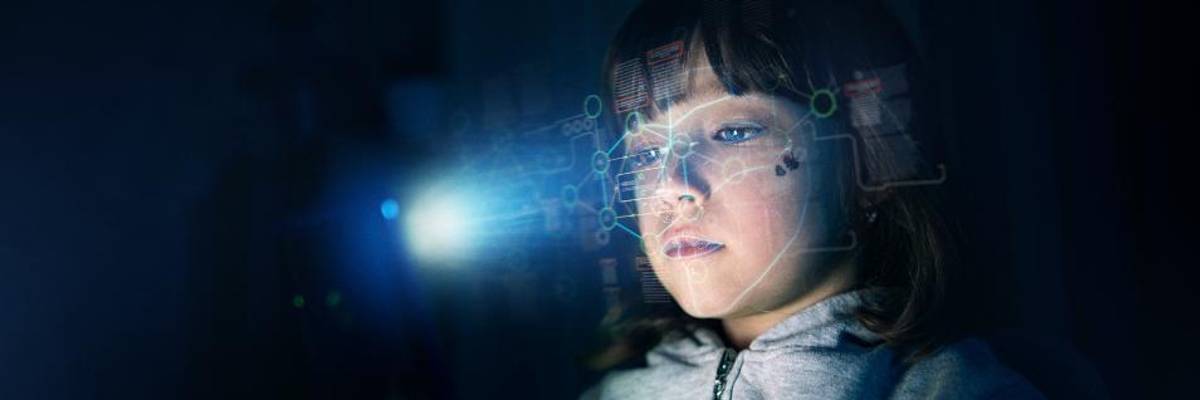
New York state on Tuesday enacted a moratorium on the use of biometric technology in schools. (Photo: Getty Images)
Civil liberties advocates and parents across New York state celebrated Tuesday after Gov. Andrew Cuomo signed into law a first-of-its-kind moratorium on biometric surveillance tools, including facial recognition, in schools statewide until at least July 2022--legislation that supporters said should inspire policymakers throughout the U.S.
The measure signed by Cuomo was passed by state lawmakers in July on the heels of a lawsuit, filed by the New York Civil Liberties Union (NYCLU), alleging that the state Education Department violated student data privacy laws by approving the Lockport City School District's use of such technology in November 2019.
The Democratic governor's move will halt the Lockport surveillance system, which began in January. While the school district's superintendent, Michelle Bradley, criticized the legislation in an email to the Lockport Union-Sun & Journal this summer, local parent and plaintiff Jim Shultz welcomed Cuomo's signature on Tuesday.
"The Lockport school district made our students guinea pigs in an experiment in high-tech surveillance of all their movements," Shultz said. "They wasted $2.7 million in taxpayer dollars doing it. Of course facial recognition in schools needs to be studied before any other school district--in New York or anywhere else--does this again."
Lockport's system--along with 11 other currently approved projects--was funded by taxpayers under New York's Smart Schools Bond Act, according to the NYCLU.
The legislation bars the purchase or use of biometric technology by public and private schools, and orders a study of whether it is appropriate in educational institutions. The moratorium will be in effect until July 1, 2022 or the study is completed and the state education commissioner authorizes its use--whichever is later.
As the NYCLU noted:
The law will require the commissioner of education, in consultation with the New York State Education Department's chief privacy officer, to evaluate the privacy implications of biometric identifying technology and whether the technology differs in accuracy rate depending on the race, national origin, gender, age, or any other factor of those being scanned. The bill also requires feedback from teachers, school administrators, parents, school safety experts, and data privacy experts before the commissioner makes any recommendations about the use of this technology.
In a statement Tuesday, Cuomo said that "the safety and security of our children is vital to every parent, and whether to use this technology is not a decision to be made lightly."
The Democratic lawmakers who sponsered the legislation--Assembly Member Monica Wallace and State Sen. Brian Kavanagh--applauded the governor's decision to sign the measure.
"It makes no sense to bring this aggressive surveillance technology into our schools when no one has made a compelling case, either that it will meaningfully improve security or that it can be used without violating the privacy and civil rights of students, staff, and visitors," Kavanagh said. "This law will ensure that state education officials review this technology and vouch for it before any young people are subjected to it. I expect that they will conclude that it is neither necessary nor appropriate in schools."
Leaders at the NYCLU expressed hope that the legislation will motivate other states to follow suit. As executive director Donna Lieberman put it: "The moratorium on biometric surveillance is a landmark piece of legislation that should serve as a national model to stop the proliferation of faulty, harmful facial recognition technologies in schools."
"For children, whose appearances change rapidly as they grow, and for people of color and women more broadly, the accuracy of biometric technologies is highly questionable," she noted. "This is especially important as schools across the state begin to acknowledge the experiences of Black and Brown students being policed in schools and funneled into the school-to-prison pipeline."
Stefanie Coyle, deputy director for the NYCLU's Education Policy Center, declared that "New York should never dedicate funding to invasive and biased surveillance technology, and now many more school districts across the state will be blocked from deploying these harmful systems."
"There is such an overwhelming need for resources in the classroom and to support remote learning," she added, "and we hope this will be a part of a shift toward a model of education that centers students' needs rather than exposes them to law enforcement and discipline."
Dear Common Dreams reader, It’s been nearly 30 years since I co-founded Common Dreams with my late wife, Lina Newhouser. We had the radical notion that journalism should serve the public good, not corporate profits. It was clear to us from the outset what it would take to build such a project. No paid advertisements. No corporate sponsors. No millionaire publisher telling us what to think or do. Many people said we wouldn't last a year, but we proved those doubters wrong. Together with a tremendous team of journalists and dedicated staff, we built an independent media outlet free from the constraints of profits and corporate control. Our mission has always been simple: To inform. To inspire. To ignite change for the common good. Building Common Dreams was not easy. Our survival was never guaranteed. When you take on the most powerful forces—Wall Street greed, fossil fuel industry destruction, Big Tech lobbyists, and uber-rich oligarchs who have spent billions upon billions rigging the economy and democracy in their favor—the only bulwark you have is supporters who believe in your work. But here’s the urgent message from me today. It's never been this bad out there. And it's never been this hard to keep us going. At the very moment Common Dreams is most needed, the threats we face are intensifying. We need your support now more than ever. We don't accept corporate advertising and never will. We don't have a paywall because we don't think people should be blocked from critical news based on their ability to pay. Everything we do is funded by the donations of readers like you. When everyone does the little they can afford, we are strong. But if that support retreats or dries up, so do we. Will you donate now to make sure Common Dreams not only survives but thrives? —Craig Brown, Co-founder |
Civil liberties advocates and parents across New York state celebrated Tuesday after Gov. Andrew Cuomo signed into law a first-of-its-kind moratorium on biometric surveillance tools, including facial recognition, in schools statewide until at least July 2022--legislation that supporters said should inspire policymakers throughout the U.S.
The measure signed by Cuomo was passed by state lawmakers in July on the heels of a lawsuit, filed by the New York Civil Liberties Union (NYCLU), alleging that the state Education Department violated student data privacy laws by approving the Lockport City School District's use of such technology in November 2019.
The Democratic governor's move will halt the Lockport surveillance system, which began in January. While the school district's superintendent, Michelle Bradley, criticized the legislation in an email to the Lockport Union-Sun & Journal this summer, local parent and plaintiff Jim Shultz welcomed Cuomo's signature on Tuesday.
"The Lockport school district made our students guinea pigs in an experiment in high-tech surveillance of all their movements," Shultz said. "They wasted $2.7 million in taxpayer dollars doing it. Of course facial recognition in schools needs to be studied before any other school district--in New York or anywhere else--does this again."
Lockport's system--along with 11 other currently approved projects--was funded by taxpayers under New York's Smart Schools Bond Act, according to the NYCLU.
The legislation bars the purchase or use of biometric technology by public and private schools, and orders a study of whether it is appropriate in educational institutions. The moratorium will be in effect until July 1, 2022 or the study is completed and the state education commissioner authorizes its use--whichever is later.
As the NYCLU noted:
The law will require the commissioner of education, in consultation with the New York State Education Department's chief privacy officer, to evaluate the privacy implications of biometric identifying technology and whether the technology differs in accuracy rate depending on the race, national origin, gender, age, or any other factor of those being scanned. The bill also requires feedback from teachers, school administrators, parents, school safety experts, and data privacy experts before the commissioner makes any recommendations about the use of this technology.
In a statement Tuesday, Cuomo said that "the safety and security of our children is vital to every parent, and whether to use this technology is not a decision to be made lightly."
The Democratic lawmakers who sponsered the legislation--Assembly Member Monica Wallace and State Sen. Brian Kavanagh--applauded the governor's decision to sign the measure.
"It makes no sense to bring this aggressive surveillance technology into our schools when no one has made a compelling case, either that it will meaningfully improve security or that it can be used without violating the privacy and civil rights of students, staff, and visitors," Kavanagh said. "This law will ensure that state education officials review this technology and vouch for it before any young people are subjected to it. I expect that they will conclude that it is neither necessary nor appropriate in schools."
Leaders at the NYCLU expressed hope that the legislation will motivate other states to follow suit. As executive director Donna Lieberman put it: "The moratorium on biometric surveillance is a landmark piece of legislation that should serve as a national model to stop the proliferation of faulty, harmful facial recognition technologies in schools."
"For children, whose appearances change rapidly as they grow, and for people of color and women more broadly, the accuracy of biometric technologies is highly questionable," she noted. "This is especially important as schools across the state begin to acknowledge the experiences of Black and Brown students being policed in schools and funneled into the school-to-prison pipeline."
Stefanie Coyle, deputy director for the NYCLU's Education Policy Center, declared that "New York should never dedicate funding to invasive and biased surveillance technology, and now many more school districts across the state will be blocked from deploying these harmful systems."
"There is such an overwhelming need for resources in the classroom and to support remote learning," she added, "and we hope this will be a part of a shift toward a model of education that centers students' needs rather than exposes them to law enforcement and discipline."
Civil liberties advocates and parents across New York state celebrated Tuesday after Gov. Andrew Cuomo signed into law a first-of-its-kind moratorium on biometric surveillance tools, including facial recognition, in schools statewide until at least July 2022--legislation that supporters said should inspire policymakers throughout the U.S.
The measure signed by Cuomo was passed by state lawmakers in July on the heels of a lawsuit, filed by the New York Civil Liberties Union (NYCLU), alleging that the state Education Department violated student data privacy laws by approving the Lockport City School District's use of such technology in November 2019.
The Democratic governor's move will halt the Lockport surveillance system, which began in January. While the school district's superintendent, Michelle Bradley, criticized the legislation in an email to the Lockport Union-Sun & Journal this summer, local parent and plaintiff Jim Shultz welcomed Cuomo's signature on Tuesday.
"The Lockport school district made our students guinea pigs in an experiment in high-tech surveillance of all their movements," Shultz said. "They wasted $2.7 million in taxpayer dollars doing it. Of course facial recognition in schools needs to be studied before any other school district--in New York or anywhere else--does this again."
Lockport's system--along with 11 other currently approved projects--was funded by taxpayers under New York's Smart Schools Bond Act, according to the NYCLU.
The legislation bars the purchase or use of biometric technology by public and private schools, and orders a study of whether it is appropriate in educational institutions. The moratorium will be in effect until July 1, 2022 or the study is completed and the state education commissioner authorizes its use--whichever is later.
As the NYCLU noted:
The law will require the commissioner of education, in consultation with the New York State Education Department's chief privacy officer, to evaluate the privacy implications of biometric identifying technology and whether the technology differs in accuracy rate depending on the race, national origin, gender, age, or any other factor of those being scanned. The bill also requires feedback from teachers, school administrators, parents, school safety experts, and data privacy experts before the commissioner makes any recommendations about the use of this technology.
In a statement Tuesday, Cuomo said that "the safety and security of our children is vital to every parent, and whether to use this technology is not a decision to be made lightly."
The Democratic lawmakers who sponsered the legislation--Assembly Member Monica Wallace and State Sen. Brian Kavanagh--applauded the governor's decision to sign the measure.
"It makes no sense to bring this aggressive surveillance technology into our schools when no one has made a compelling case, either that it will meaningfully improve security or that it can be used without violating the privacy and civil rights of students, staff, and visitors," Kavanagh said. "This law will ensure that state education officials review this technology and vouch for it before any young people are subjected to it. I expect that they will conclude that it is neither necessary nor appropriate in schools."
Leaders at the NYCLU expressed hope that the legislation will motivate other states to follow suit. As executive director Donna Lieberman put it: "The moratorium on biometric surveillance is a landmark piece of legislation that should serve as a national model to stop the proliferation of faulty, harmful facial recognition technologies in schools."
"For children, whose appearances change rapidly as they grow, and for people of color and women more broadly, the accuracy of biometric technologies is highly questionable," she noted. "This is especially important as schools across the state begin to acknowledge the experiences of Black and Brown students being policed in schools and funneled into the school-to-prison pipeline."
Stefanie Coyle, deputy director for the NYCLU's Education Policy Center, declared that "New York should never dedicate funding to invasive and biased surveillance technology, and now many more school districts across the state will be blocked from deploying these harmful systems."
"There is such an overwhelming need for resources in the classroom and to support remote learning," she added, "and we hope this will be a part of a shift toward a model of education that centers students' needs rather than exposes them to law enforcement and discipline."

